
Posted on

Reversible Mounting Methods for Valuable Prints

Reversible Mounting Methods for Valuable Prints

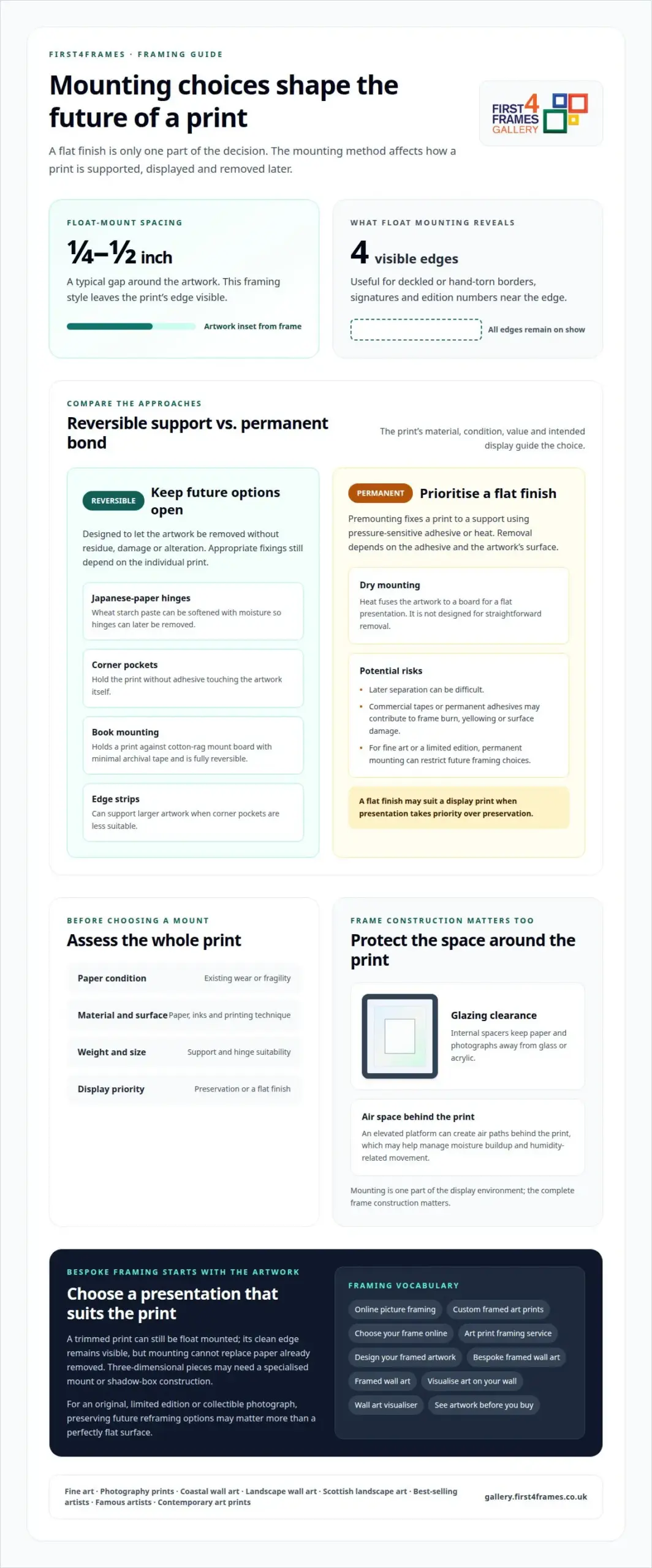
Is dry mounting safe for a photograph you may want to preserve or reframe? It can create a smooth, flat presentation, but it bonds the print to its support and is not designed to be undone without risk. For valuable prints, that distinction matters.

So, what is a reversible mounting technique? It secures artwork in a way intended to let it be removed later without residue, damage or alteration. Archival hinges and corner pockets avoid permanently bonding a print to a backing board. The right choice depends on the paper, its condition and how it will be displayed.

This guide explains how reversible mounting works, how adhesives and trimmed edges affect your options, and when dry mounting may be unsuitable for photographs or collectible prints. You’ll also learn how float mounting displays a print’s full edge and what to consider when choosing a presentation that protects the work and looks at home on your wall.

Key Takeaways

  • Choose a bespoke frame to suit your print, its condition and intended display, not appearance alone.
  • A trimmed print can still be float mounted; its edge and position on the backing shape the finished result.
  • Pressure-sensitive adhesives and dry mounting can make removal difficult, so consider their impact before framing a photograph or collectible print.
  • Archival hinges and corner pockets offer alternatives for preserving a print and keeping future reframing options open.

Can I float mount a print that has already been trimmed?

Yes. A trimmed print can still be float mounted using hinges attached to its reverse and a backing board. The cut edge remains visible, but mounting cannot replace paper that has already been removed. The right choice depends on the print’s material, condition, value and intended display.

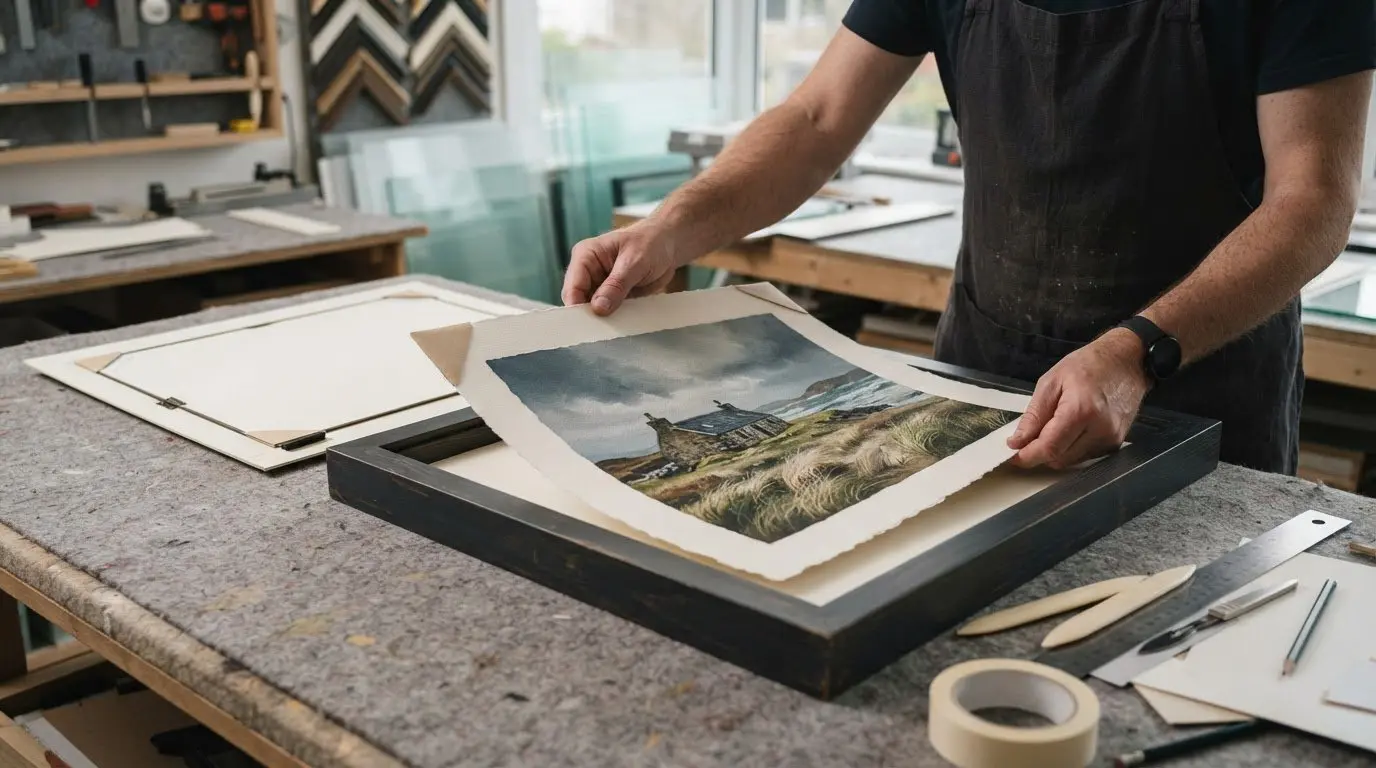
Reversible mounting can suit flat paper artwork, photographs and posters. Japanese-paper hinges or corner pockets can hold a print without permanently bonding it to the board. Three-dimensional pieces need a different approach, such as a specialised mount or shadow-box construction, because their shape and depth affect how they can be supported.

For an original, limited edition or collectible photograph, preserving future options may matter more than achieving a perfectly flat surface. Hinge mounting or corner pockets allow removal without adhesive touching the print itself. Edge strips can support larger artwork when corner pockets are less suitable. A small, replaceable print intended mainly for display may call for different priorities.

Float mounting displays all four edges, making it useful for deckled paper, hand-torn borders, signatures or edition numbers near the edge. A trimmed sheet can still gain this presentation, though its clean edge, rather than an irregular deckled edge, becomes part of the design. A typical float mount leaves a gap of 1/4 to 1/2 inch around the artwork.

Protection also depends on spacing and frame construction. Internal spacers keep paper and photographs away from glass or acrylic, while an elevated platform can create air paths behind the print. This may help manage moisture buildup and humidity-related movement, but mounting is only one part of the display environment.

Book mounting offers another option for valuable or rare artwork. It holds a print against cotton-rag mount board with minimal archival tape, without adhesive touching the artwork, and is fully reversible. It can suit a piece where preservation takes priority over a raised float effect.

Premounting with pressure-sensitive and dry adhesives

Premounting fixes a print to a support before framing, using pressure-sensitive adhesive or heat. Whether it can later be removed depends on the adhesive and the artwork’s surface.

Conservation Adhesives and Hinge Papers

Conservation adhesives can secure prints while allowing the mounting method to be reversed. Wheat starch paste can attach Japanese mulberry paper hinges to a print’s reverse; moisture can later soften the paste so the hinges can be removed. This matters when an original or collectible may need reframing. Hinge paper and adhesive are chosen to support the work without bonding its face to the board. Some wet hinges use kozo paper or pre-gummed conservation tape activated with de-ionised water. When wet methods do not suit the artwork, heat-activated conservation adhesive may be used with flexible hinges. The adhesive must suit the inks and printing technique.

Permanent Adhesive Risks

Pressure-sensitive tapes, spray mounts and dry mounting can bond a print permanently to its support. Dry mounting uses heat to fuse artwork to a board, creating a flat presentation, but it is not designed for straightforward removal. Commercial tapes and permanent adhesives can cause frame burn, yellowing or surface damage as acidic materials migrate into paper. Adhesive applied directly to a print also makes later separation more difficult. For fine art or a limited edition, this can compromise the sheet and restrict future framing choices. Permanent mounting may suit a display print when a flat finish is the priority, but it places preservation second.

Removal and Reversibility Limitations

Reversible mounting uses removable fixings, while permanent mounting bonds or alters the artwork. Japanese-paper hinges with wheat starch paste can be humidified and removed by a conservator; corner pockets hold a print without adhesive touching it. These options reduce the risks of removal, but don’t make every print suitable for every method. Paper condition, ink and the artwork’s weight affect the support and hinge choice. What adhesives or fixings allow damage-free removal? Properly selected hinges and pockets avoid permanent bonding, though removal still depends on the print and its condition. Reversible methods may not hold every large or delicate work securely. For prints you’re choosing to display, explore the fine art print gallery alongside your mounting needs.
Reversible Mounting Methods for Valuable Prints

What Is Reversible Mounting?

Reversible mounting secures artwork while allowing later removal without residue, damage or alteration. For fine art, archival materials support both preservation and a considered visual presentation.

Archival Materials and Methods

Archival mounting uses selected materials and fixings to support artwork while minimising the risk of damage. Acid-free mount board provides a stable foundation, while cotton-rag board is made from cotton fibres rather than wood pulp. Japanese-paper hinges or corner pockets can hold a print without permanently bonding it. These choices matter when future reframing or preservation is important. A mat can also keep paper away from glazing, though protection depends on the complete frame.

Guidance for Reversible Mounting

For preservation-focused framing in the UK, prioritise methods designed for safe removal. Hinge mounting and corner pockets are reversible options for paper artwork, including valuable prints and historical documents. The appropriate method depends on the artwork’s material, condition, size and intended display. Acid-free board and suitable hinges help support the work, but no single material makes every mounting arrangement appropriate. A conservator considers the complete object, its weight and its visual presentation.

Mounting Steps, Tools, and Materials

A reversible mount starts with acid-free board and a suitable fixing, such as Japanese-paper hinges or corner pockets. First, assess the paper’s condition, weight and surface. Then position the artwork on the board and choose fixings that support it without permanent bonding. Attach hinges with conservation-grade wheat starch paste, or use pockets to hold the edges. Finally, place the mounted piece in its frame with space between the artwork and glazing. These materials form the essential toolkit.

Conservation Uses for Artworks and Photographs

Conservators use reversible mounting to support original artwork, photographs and historic paper while keeping future treatment possible. For a signed print, hinges can hold the sheet without covering a signature near its edge. Corner pockets can support a delicate photograph without adhesive touching its surface. The mount’s weight and the paper’s condition guide the choice of fixing. This approach balances secure display with the option to remove or reframe the work later.

Reversible mounting for valuable prints

For a valuable print, mounting affects both its display and its future options. An original, limited edition, historic document or collectible photograph may later be reframed, sold or assessed. A permanent bond can alter the artwork, so consider preservation before choosing a presentation.

Hinge mounting can support paper prints while allowing removal. Two hinges are sufficient for standard prints up to 11×14 inches, while three are recommended for artwork up to 20×24 inches. Position hinges about 1 to 2 inches from the top corners. The number and placement should reflect the print’s weight, opacity and any waviness.

Corner pockets hold a print without adhesive touching the artwork itself, and work best for small to medium pieces up to approximately 16×20 inches. For larger works, edge strips along the top or all four sides can provide firmer support. The right mounting method depends on the sheet’s size and condition, not value alone.

Float mounting can keep a valuable print’s full perimeter visible, including a signature, edition number or rare mark near the edge. Hinges connect the artwork to a backing board or raised platform, leaving the sheet’s edges uncovered by a window mat. Match the fixing method to the inks and printing technique, as unsuitable adhesives can affect the surface.

Auction houses, insurers and conservators look for evidence of how a work has been mounted. For collectible pieces, reversible fixings help preserve options for future reframing or assessment. A permanent method may be less suitable when the print’s condition and provenance matter. Consider these factors alongside the visual finish before framing.

Choosing a print and planning its presentation can go hand in hand. Explore fine art prints with preservation in mind.

First4Frames Gallery helps you shape a considered presentation for artwork you value. Its handmade, bespoke frames are made to order from high-quality materials, with 2 mm float glass fitted as standard. Custom Picture Framing can bring together the print, frame and finish; Ready-to-Hang Framed Art and Giclée Fine Art Prints offer other routes to framed wall art.

For online picture framing, choose your frame online and design your framed artwork to suit your space. Explore fine art, Scottish landscape art, coastal wall art, landscape wall art and contemporary art prints by artists, including best-selling and famous artists. Photography prints and custom framed art prints can also make a room feel personal. Use a wall art visualiser to visualise art on your wall and see artwork before you buy; consider how the frame complements the image. A bespoke art print framing service can create framed wall art to suit your space.

To discuss a framing choice for your print, contact First4Frames Gallery.

Give your print a thoughtful next chapter

A print’s presentation can shape how it feels in a room and how easily its display can change later. Before choosing a frame, consider the artwork’s purpose, the space it will inhabit and whether you may want a different arrangement in future. That intention can guide a choice that works both visually and practically.

Understanding what a reversible mounting technique means is a useful starting point, not a one-size-fits-all answer. The paper, printing process and condition all affect which approach suits a particular piece. If you are unsure how to bring those considerations together, discussing your print can help clarify the right presentation.

Let the artwork lead the decision, then choose a frame that gives it room to be appreciated. For guidance on your next framing decision, contact First4Frames Gallery and take the next step with confidence.

Frequently Asked Questions

Is dry mounting safe for photographs?

Dry mounting can flatten a photograph, but it bonds the image permanently to a support, making it unsuitable when future removal matters. Heat and adhesive may also affect the photograph’s surface or contribute to discolouration over time. For a valuable or irreplaceable photograph, a removable fixing is the more preservation-focused choice. The print’s process, condition and intended use all influence the decision.

Can a float mount be undone if a collector wants to reframe the art later?

Often, yes, if the float presentation uses reversible fixings rather than a permanent bond. Appearance alone does not show whether it can be undone: hinges, pockets or permanent adhesive may sit behind the same visible edges. Before reframing a collectible, establish how the print is attached. If removal involves delicate or valuable work, a conservator can assess the fixing and paper first.

What Is Archival Mounting?

Archival mounting describes a preservation-minded choice of materials and methods, rather than one specific look or technique. It aims to reduce risks from unsuitable supports and fixings. The term does not automatically mean a mount is reversible: archival materials can still be used in a way that makes a print difficult to remove. For a collectible, find out what touches the artwork and how the attachment can be separated.

What does reversible mounting mean?

Reversible mounting means the artwork can be separated from its support without residue, damage or alteration, when the method and condition allow. Put simply, a reversible mounting technique preserves the option to reframe or reassess the piece later. Keep a note of the fixing and materials used. This record can help a future framer or conservator understand how the work is held.

What UK guidance or standards apply to reversible mounting?

For preservation-focused framing in the UK, prioritise methods designed for safe removal, such as hinge mounting or corner pockets, with acid-free board and suitable archival fixings. The right method depends on the artwork’s material, condition, size and intended display.
Posted on

Float Mounting for Artwork: A Complete Guide to This Modern Framing Style

Float Mounting for Artwork: A Complete Guide to This Modern Framing Style

Have you ever admired a piece of art that seems to hover within its frame, casting a soft, captivating shadow? This modern, gallery-quality display can truly elevate a piece, but the terminology can be confusing. If you’re unsure what ‘float mounting’ means, if it’s the right choice for your treasured print, or how it differs from traditional framing, you’ve come to the right place. We believe understanding the beautiful technique of float mounting for artwork should be simple and inspiring, not a source of worry about potential damage.

As passionate artisans with decades of experience, we want to give you the confidence to make the perfect choice. In this complete guide, we’ll demystify the process, exploring what float mounting is and when to use it for a spectacular effect. You’ll discover how our bespoke, archival-quality craftsmanship not only creates a stunning display but also protects your art for years to come. Prepare to see your art in a whole new, professional light.

What is Float Mounting? A Modern Approach to Framing

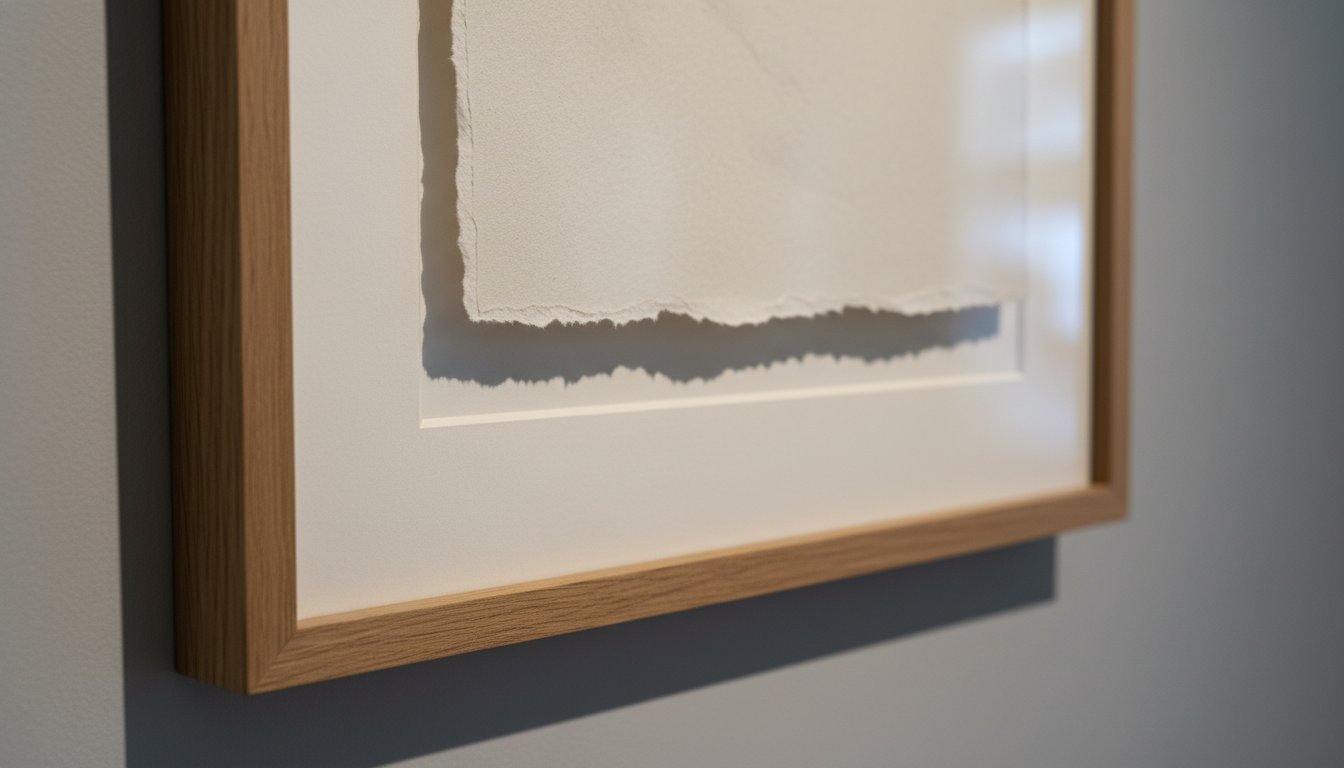
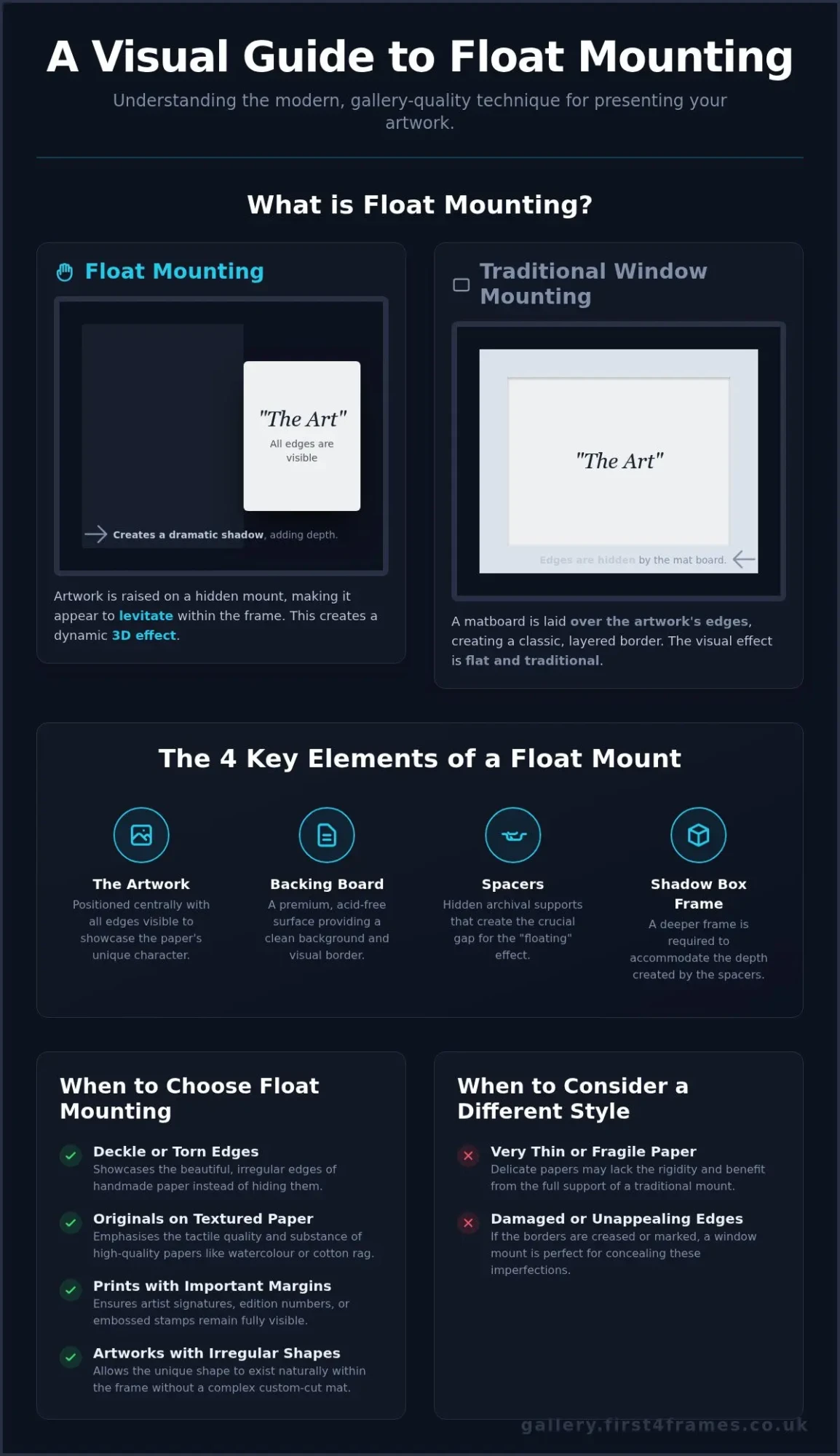
Imagine your artwork not just displayed, but truly presented. Float mounting is a premium framing technique where your art is raised on a hidden, archival-quality mount. This elevates the piece away from the backing board, making it appear as if it is levitating or ‘floating’ within the frame. This subtle separation creates a soft, dramatic shadow beneath the artwork, adding a spectacular sense of depth and drawing the viewer’s eye directly to the piece itself.

To see this beautiful technique in action, watch this helpful demonstration from the experts:

This modern approach stands in beautiful contrast to traditional window mounting. In a window mount, a bespoke matboard is cut with an aperture and laid over the edges of the artwork, creating a classic border. While a standard picture framing mat serves to protect and frame the image, float mounting celebrates the entire piece, edges and all. For a quick comparison, see our table below.

Feature Float Mounting Window Mounting
Artwork Edges Completely visible and celebrated Overlapped and hidden by the mat
Visual Effect Dynamic 3D effect with a shadow Flat, layered, and traditional
Best For Original art, textured paper, modern interiors Photographs, prints, classic decor

The Key Elements of a Float Mount

The magic of float mounting lies in a few essential components working in perfect harmony:

  • The Artwork: Positioned centrally with every edge visible, showcasing the paper’s unique character.
  • The Backing Board: A premium, acid-free surface that provides a clean background and a visual border around the art.
  • The Spacers: Hidden supports, often made from archival foam board, that create the crucial gap between the art and the backing.
  • The Frame: A deeper frame, known as a ‘shadow box’, is required to accommodate the depth created by the spacers.

Why It’s a Favourite for Galleries and Artists

The preference for float mounting for artwork in professional galleries and studios comes down to respect for the art. This method offers a contemporary and sophisticated presentation that treats the artwork as a physical object, not just an image. It honours the craftsmanship by highlighting the unique qualities of the paper itself-be it a delicate, deckled edge on watercolour paper or the rich texture of a handmade print. It’s a statement that the art, in its entirety, is the hero.

When to Choose Float Mounting for Your Artwork

Float mounting is a spectacular way to present a piece, but its modern, gallery-style finish isn’t the perfect fit for every single artwork. This bespoke technique, which shouldn’t be confused with other display methods as detailed in this helpful guide on Float mounting vs. floater frames, is all about celebrating the artwork as an object. The decision hinges on the unique characteristics of your piece-its paper, the condition of its edges, and its overall style. This guide will help you determine if it’s the ideal choice to create that stunning, three-dimensional effect you’re looking for.

Ideal Candidates for Float Mounting

This premium presentation style truly shines when paired with specific types of art. It turns the entire piece, paper and all, into the star of the show. Consider this method if your artwork has:

  • Deckle or Torn Edges: The feathered, irregular edges of handmade paper are a beautiful feature. Float mounting showcases this unique texture rather than hiding it behind a window mount.
  • Originals on Heavy, Textured Paper: For works on high-quality, heavyweight paper (like watercolour or cotton rag), floating the art emphasises its tactile quality and substance.
  • Prints with Important Margins: If an artist’s signature, edition number, or an embossed stamp sits in the margin, float mounting ensures these vital details remain visible and part of the overall presentation.
  • Artworks with an Irregular Shape: Instead of commissioning an awkward, custom-cut window mount, floating an unusually shaped piece allows it to exist naturally within the frame.

When to Consider a Different Framing Style

While beautiful, float mounting for artwork isn’t a universal solution. In some cases, a traditional window mount provides better aesthetic or physical support. You might prefer a different style if:

  • The paper is very thin or fragile: Delicate papers, like those from old books or certain rice papers, may lack the rigidity to be float mounted and benefit from the full support of a traditional mount.
  • The edges are damaged or unappealing: If the borders of your artwork are creased, stained, or simply not intended to be seen, a window mount is perfect for creating a clean, crisp finish.
  • A classic aesthetic is preferred: Float mounting offers a contemporary look. For a more traditional or formal presentation, the classic elegance of a window mount is often a better match.
  • You are working to a tighter budget: As a more labour-intensive, bespoke process, float mounting typically costs more than standard mounting. It’s a premium service with a price tag to match.

The Professional Process: How a Float Mount is Constructed

Creating a genuine float mount is a meticulous craft that blends precision engineering with art conservation. It’s far more than simply sticking a picture to a board; it’s a bespoke technique designed to enhance and protect your piece. We use only premium, archival-grade materials to ensure your artwork is preserved without damage for decades to come. Understanding the craftsmanship involved highlights why trusting a professional framer is essential for any valuable or sentimental artwork.

Step 1: Preparing the Foundation

The process begins with a solid, stable base. We cut a sheet of high-quality, acid-free mountboard to the final dimensions of your chosen frame. Centred on this backing, we then secure a smaller, hidden ‘riser’-typically made from conservation-grade foam board. This riser is the hidden hero of the float mount, providing the crucial elevation that lifts your artwork away from the backboard and creates the signature shadow effect.

Step 2: Hinging the Artwork

This is where true conservation expertise comes into play. The artwork is carefully positioned and attached to the riser using a time-honoured method known as ‘T-Hinging’. We use delicate, strong Japanese paper and a reversible, pH-neutral wheat starch paste. This secure method is central to professional float mounting for artwork and is completely reversible, meaning the hinges can be removed by a conservator in the future without leaving any residue or causing damage. These principles are core to all archival framing, including advanced museum mounting techniques.

Step 3: Creating Space and Assembling

To complete the floating effect and protect the art’s surface, we fit spacers to the inside edge of the frame’s rebate. These spacers create a vital air gap between the artwork and the glazing (the glass or acrylic). This gap prevents moisture transfer and stops the art from ever touching the glass, which could cause irreversible damage over time. Finally, the glazing, the mounted artwork, and the backing are all carefully layered and secured within the frame, ready to display.

Float Mounting for Artwork: A Complete Guide to This Modern Framing Style

Key Benefits: Why Float Mounting is Worth It

While the visual appeal of float mounting is undeniable, its benefits extend far beyond a beautiful first impression. This premium technique is a thoughtful investment, offering a perfect marriage of superior aesthetics and professional-grade preservation. It’s a method designed to honour the art, allowing the piece to be the undisputed star of the show while ensuring it’s protected for decades to come. By respecting the integrity of the artwork and presenting it in its entirety, it provides a viewing experience that is both spectacular and sincere.

Unmatched Visual Impact

The defining feature of float mounting is the breathtaking 3D effect it creates. By elevating the artwork from the backing board, it casts a soft shadow that adds depth and a dynamic quality to the entire presentation. This clean, gallery-style aesthetic is perfectly suited to modern interiors, offering a minimalist frame that doesn’t compete with the art. The artwork’s own edges-whether crisp and clean or beautifully deckled-become an integral part of the composition.

Complete and Unobstructed View

Unlike traditional window mounts that cover the perimeter of your print, the great advantage of float mounting for artwork is that it leaves the piece completely visible. This means crucial details are never hidden from view. You can fully appreciate:

  • The artist’s signature
  • Edition numbers on limited prints
  • Embossments or watermarks from the printmaker
  • The unique texture and quality of the fine art paper

This method celebrates the artwork as a complete object, not just an image.

Superior Archival Protection

At First4Frames Gallery, our craftsmanship is rooted in conservation. Float mounting is an excellent choice for archival protection because the artwork never makes direct contact with the glazing (glass or acrylic). This crucial separation prevents potential moisture damage or the image adhering to the surface over time. We use only 100% acid-free, conservation-grade materials to prevent yellowing and degradation, and our non-invasive hinging technique can be safely reversed by a professional, protecting the long-term value of your piece.

To see how this beautiful technique transforms a piece of art, explore some stunning examples in our online gallery.

Your Artwork, Expertly Float Mounted by First4Frames

Achieving the perfect float mount is more than a technical process; it’s an art form that demands a passion for creativity and an expert’s eye for detail. With over 20 years of experience in bespoke picture framing, our team at First4Frames understands how to make your art the undeniable focal point of any room. We combine time-honoured craftsmanship with the finest archival materials to ensure your piece is not just displayed, but beautifully preserved. Trust us to transform your artwork into a stunning, gallery-worthy centrepiece that will be cherished for a lifetime.

Our Bespoke Consultation Process

Your vision is the starting point for everything we do. Our friendly, personalised consultation process is designed to bring that vision to life. We take the time to understand your artwork and what you want to achieve with its display. Our experts will:

  • Discuss your artwork’s unique characteristics and your personal style.
  • Guide you through our extensive collection of premium frame mouldings and backing colours to find the perfect combination.
  • Advise on whether float mounting for artwork is the ideal technique to create the dramatic, 3D effect you desire for your specific piece.

Commitment to Quality and Craftsmanship

We treat every piece of art that enters our workshop with the care and respect it deserves. From our dedicated workshop in Falkirk, our skilled framers employ professional conservation techniques to protect your art from environmental damage and ensure its longevity. Every frame is meticulously constructed, creating a bespoke home for your artwork that is built to last. This commitment to quality is the cornerstone of our service, giving you complete peace of mind.

Ready to give your art the display it deserves? Get a bespoke framing quote today.

Elevate Your Art with Expert Float Mounting

As we’ve explored, float mounting offers a stunning, contemporary way to display your cherished pieces. This technique creates a beautiful shadow effect that makes your art appear to levitate within the frame, drawing the eye directly to the unique edges and texture of the work. It’s the perfect choice for adding depth and a modern, gallery-quality feel to your home.

When you’re ready to experience the unique beauty of float mounting for artwork, trust the passionate experts. With over 20 years of professional framing experience, our team at the First4Frames workshop in Falkirk, Scotland, handles every piece with meticulous care. We use only archival, conservation-grade materials to create a bespoke frame that not only looks spectacular but also protects your art for a lifetime.

Ready to give your art the presentation it truly deserves? Explore our bespoke framing services and get a personalised quote.

Frequently Asked Questions About Float Mounting

Does float mounting cost more than standard framing?

Yes, float mounting typically costs more than standard framing. This is because the process requires more specialist materials, such as spacers to create the floating effect and often a deeper, more premium frame profile. The craftsmanship involved is also more detailed and time-consuming. While the exact price varies, you can generally expect to invest a little more for this spectacular, three-dimensional finish, but the stunning result is well worth it for a treasured piece.

Will float mounting damage my original artwork?

When carried out by a professional, float mounting is a completely safe and archival method that will not damage your artwork. We use conservation-grade, acid-free materials and specialised hinging techniques to secure the art to the backing board. This process is fully reversible, ensuring your piece is preserved in its original condition. Entrusting your art to an expert guarantees its protection and a beautiful, lasting display that honours the piece.

Can you float mount a canvas painting?

Absolutely! While the technique is slightly different, you can achieve a beautiful floating effect with a canvas. This is typically done using a ‘floater frame’. The stretched canvas is set into a deep frame, leaving a small, uniform gap all around the edge. This creates the illusion that the canvas is suspended within the frame, offering a clean, contemporary finish that allows the entire painted surface, including the sides, to be visible.

What is a ‘deckle edge’ and why is it good for float mounting?

A ‘deckle edge’ is the beautifully feathered, untrimmed edge found on high-quality, handmade paper. It’s a sign of true craftsmanship. This unique detail is why float mounting for artwork is such a perfect choice for these pieces. A traditional window mount would hide these gorgeous, irregular edges, but float mounting elevates the paper, turning the deckle edge into a celebrated feature of the final, stunning presentation.

How deep does a frame need to be for float mounting?

To create a successful float mount with a noticeable 3D effect, the frame needs a sufficient internal depth, known as the ‘rebate’. We recommend a frame with a rebate of at least 25mm. This depth is necessary to accommodate the backing board, the spacers that lift the artwork, the artwork itself, and the protective glazing on top. This ensures there is enough space to create that beautiful shadow and sense of dimension.

Is the artwork permanently stuck down in a float mount?

No, in a professionally executed float mount, your artwork is never permanently stuck down. We use a conservation method involving acid-free ‘T-hinges’ made from Japanese paper. These are applied only to the top edge of the artwork, allowing it to hang naturally and respond to environmental changes without buckling. This technique is completely reversible, meaning the artwork can be safely removed from the frame in the future without any damage.