
Posted on

How to Choose a Frame for a Charcoal Drawing with Glass

How to Choose a Frame for a Charcoal Drawing with Glass

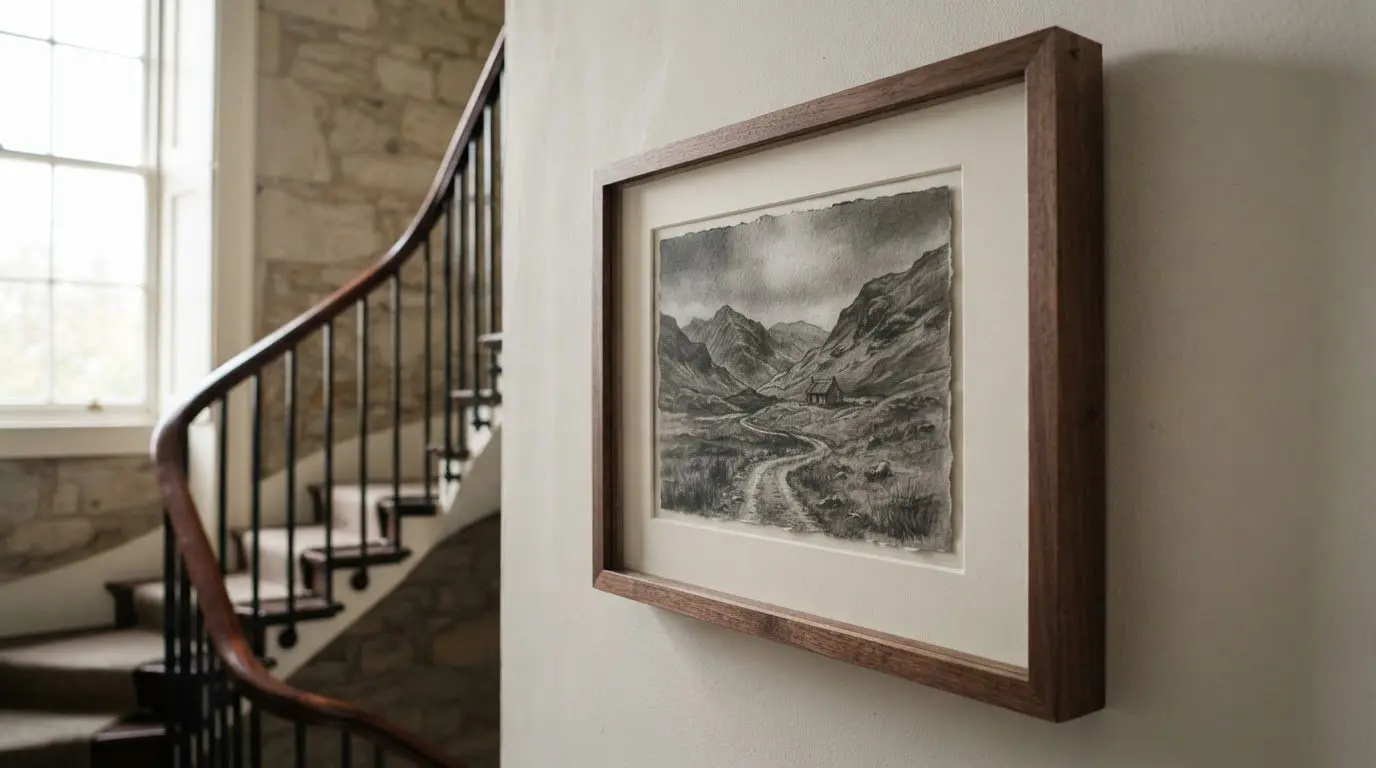
Glass can protect a charcoal drawing, but it shouldn’t touch the artwork. The key to how to choose a frame for a charcoal drawing is creating a clear gap between paper and glazing, using a mount or spacers within a deep frame. This helps keep loose charcoal away from the glass.

It’s natural to want protection from dust, fingerprints and accidental smudges. With Online picture framing, choices such as Custom framed art prints and Bespoke framed wall art can help you consider how a frame complements delicate artwork. Choose your frame online with its profile and finish in mind, and Design your framed artwork around the drawing’s character.

Visualise art on your wall by considering how framed work might sit in your space. A Wall art visualiser can help you See artwork before you buy, while an Art print framing service may offer inspiration beyond charcoal. Explore ideas from Fine art and Photography prints to Contemporary art prints, Coastal wall art and Landscape wall art, including Scottish landscape art, Best-selling artists, Famous artists and Framed wall art.

Key Takeaways

  • Frame charcoal with glazing for protection, but keep the drawing separated from the glass to help prevent contact with loose particles.
  • Look for a deep frame that can accommodate a mount or spacers, creating room between the artwork and glazing.
  • Choose a frame size that allows the drawing, mount and protective materials to fit together without crowding the artwork.
  • For a made-to-measure finish, consider bespoke framing that can be tailored to the drawing’s dimensions and presentation.

Should Charcoal Drawings Be Framed with Glass?

In the UK, framing cost depends on the drawing’s dimensions, frame, mount and glazing. A bespoke design using specialist materials differs from a simpler frame, so these choices determine the final price.

  1. How a professional chooses glass or acrylic glazing for a charcoal drawing

    Choose glazing that protects the delicate surface without touching it. Glass creates a clear barrier against dust, fingerprints and accidental smudging. Acrylic is lighter, but static can attract loose charcoal particles. Avoid placing acrylic directly against the drawing, as removing it could smear the image. The right option depends on the artwork and the space available inside the frame.

  2. How a professional selects UV-filtering glazing for a charcoal drawing

    Select UV-filtering glazing if the display may receive sunlight. UV protection can reduce the drawing’s exposure, but it doesn’t make direct sunlight harmless, so placement still matters. Available glazing products vary: some offer UV blocking from 40% to 95%, while true conservation-standard glass is described as deflecting 99% of UV. Match the level of protection to the display conditions and framing requirements.

  3. How professional framing keeps charcoal away from the glazing

    Create a physical gap between the charcoal and glazing. A mount or spacers can hold the surface away from the glass, while a deep frame accommodates the added depth. This separation gives loose particles space to fall into a concealed area instead of collecting against the image. Check that the frame depth accommodates the glazing, mount and artwork together.

  4. How a professional selects a mount and safely mounts a charcoal drawing

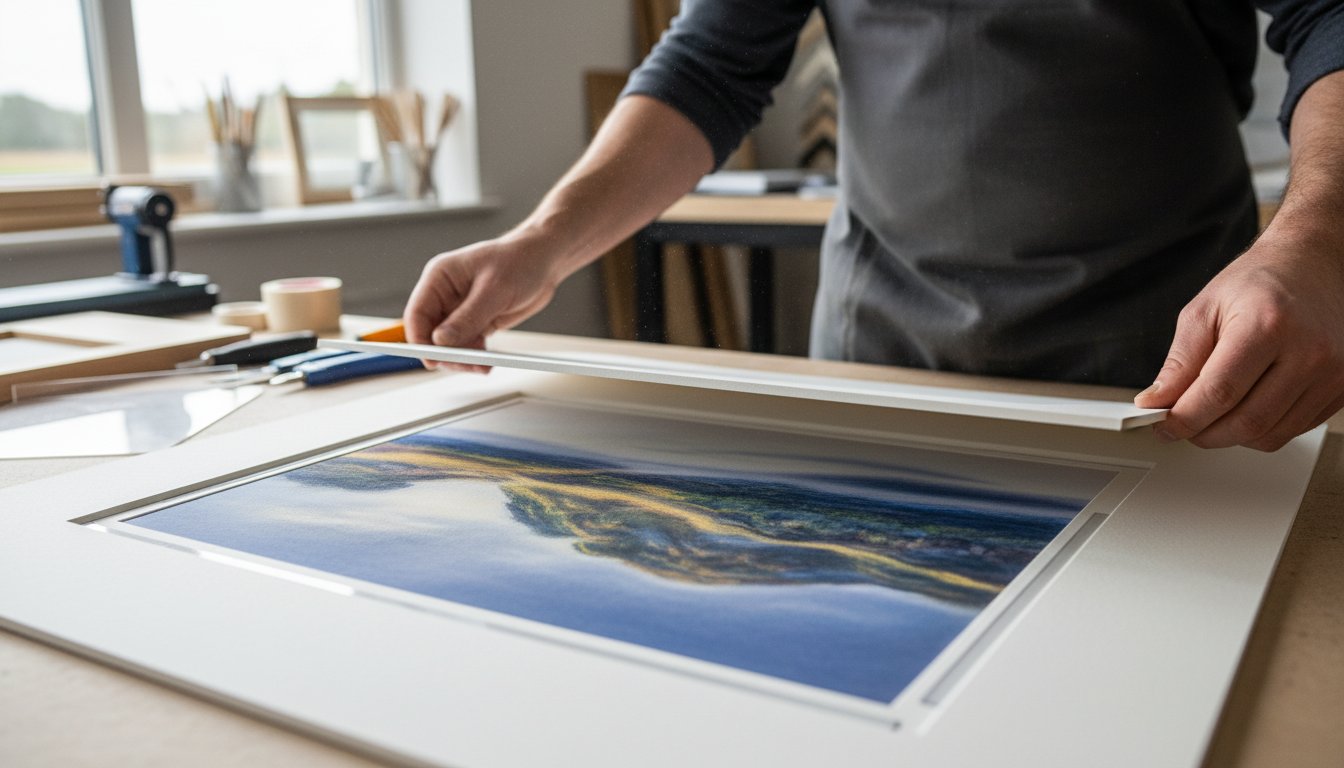
    Use a mount to separate the image from the glazing and create a neat border. A professional can secure the drawing with T-hinges, V-hinges or acid-free photo corners, rather than permanent methods such as dry mounting. Suitable protective materials include acid-free mat board, archival backing board and conservation tape. These support the paper while keeping adhesive away from the delicate charcoal surface.

How a professional chooses a deep frame to create a gap between glass and artwork

  1. Assess the complete frame depth. A charcoal drawing needs room for its paper, mount, spacers, backing and glazing. A professional considers these layers together, rather than choosing a frame based only on the artwork’s dimensions. A shallow profile may compress the assembly and bring the glass too close to the charcoal. A deeper profile gives the framing more room to protect the work.
  2. Plan the separation behind the mount. Spacers beneath a mount create a gap between the drawing and glazing. Loose charcoal dust can fall into this concealed space instead of sitting on the image or pressing against the glass. Choose spacer depth to suit the artwork and assembled frame, rather than adding bulk without a protective purpose.
  3. Consider a dust-collecting mount arrangement. A double-mat dust trough uses a bottom mat with smaller borders and a top mat with larger borders. This leaves a space between the mats where loose particles can collect. The arrangement may suit delicate dry media, provided it fits comfortably within the chosen frame.
  4. Balance protection with visual effect. Frame depth affects how far the artwork sits behind its front edge. Choose a profile that accommodates protective layers and complements the drawing’s scale and finish. A restrained finish can keep attention on charcoal’s tonal range, while a well-proportioned mount gives the image breathing room without making the display feel crowded.
  5. Review the assembled design. The professional checks that the glazing, mount, spacers and backing fit together without pressing against the artwork. For ideas on how frame profiles and finishes shape a display, browse framed artwork designs before settling on the final effect.

How to Choose a Frame for a Charcoal Drawing with Glass

Protecting and displaying fragile dry-media work

Charcoal particles rest on the paper’s surface, so professional framing should support the sheet and protect it on display. Careful handling and appropriate materials help protect its delicate marks from damage.

  1. Choose a stable backing board. Acid-free backing helps prevent the drawing from resting against acidic materials that can harm paper over time. A professional selects a board that supports the sheet evenly and helps reduce the risk of warping. It also provides a stable base for the frame’s protective layers.
  2. Avoid permanent mounting. Dry mounting fixes artwork to a board with adhesive and should not be used for charcoal. Instead, a professional can attach the drawing using a suitable reversible method that keeps adhesive away from the image. This matters because pressure can shift or smear loose charcoal particles.
  3. Use conservation materials throughout. Acid-free mat board, archival backing boards and conservation tape help create a considered framing package. Together, these materials support the paper and limit contact with unsuitable components. For a fragile charcoal sheet, a professional considers every layer, not just the visible mount or frame finish.
  4. Choose a safe display position. Hang the framed work indoors in a dry space, away from direct sunlight, excessive humidity, fireplaces and heating vents. Moisture can build up inside a frame in a damp room and contribute to mould. A hallway away from a radiator, for example, may be a more suitable spot.
  5. Clean only the outside surfaces. Wipe the frame and glass with a soft microfibre cloth. Don’t open the frame or touch the drawing. This keeps routine dusting separate from the charcoal. In a gallery or busy room, gently cleaning the exterior helps maintain a clear view without disturbing the artwork.

How a professional chooses the right frame size for a charcoal drawing

  1. Measure the sheet and image separately. A charcoal drawing may occupy only part of a larger sheet, so the paper dimensions and visible image area can differ. Record both before planning the mount opening. This keeps important marks visible while allowing the surrounding paper to remain part of the presentation where appropriate.
  2. Allow room for a balanced mount. A standard minimum mount width is about 5 cm or 2.5 inches on each side. That border gives the drawing visual breathing space and helps separate it from the glazing. The best proportion depends on the artwork’s shape, the available paper margin and the overall display effect.
  3. Use proportions as a guide, not a rule. The Golden Ratio is given as 1.64 for the relationship between a mount and the artwork. A professional can use it as a starting point when judging the balance between image and border, then adjust the design to suit the drawing. A narrow portrait and a broad landscape may call for different visual proportions.
  4. Include every framing layer in the finished dimensions. The frame must accommodate the drawing, mount, backing board, spacers and glazing. These components affect the internal space, while the frame profile determines the external size. Plan the complete assembly so the paper isn’t squeezed and each protective layer fits correctly.
  5. Consider where the framed work will hang. A frame that suits a small study wall may feel out of scale above a large piece of furniture. The drawing’s orientation, mount width and frame finish all contribute to its presence. To explore framed artwork styles before deciding on the final presentation, browse the gallery.

First4Frames Gallery offers Custom Picture Framing for charcoal drawings that need a carefully planned fit. Each frame is made by hand for the individual order, using high-quality materials and 2 mm float glass. For charcoal, the design can account for the mount and spacing needed to keep the drawing away from the glazing.

Choose bespoke framing when a standard frame doesn’t suit the drawing’s dimensions or the depth needed for protection. Ready-to-Hang Framed Art is another option if you’re selecting a finished artwork that is already framed. The right choice depends on whether you’re framing your own drawing or choosing framed art.

For help with a framing choice or a made-to-measure design, contact First4Frames Gallery.

Give Your Drawing a Thoughtful Place to Shine

Knowing how to choose a frame for a charcoal drawing gives you a useful starting point for displaying it with care. Next, consider how the piece will sit alongside the art and photographs already in your home. A considered frame can help it fit into a collection while keeping the drawing’s character at the centre.

First4Frames Gallery offers Custom Picture Framing for individual artwork, Ready-to-Hang Framed Art, and Giclée Fine Art Prints. These options can support different projects, from framing a charcoal drawing to choosing a print for another wall. Select the route that suits the artwork you want to enjoy, and let its presentation reflect your space and personal taste.

Contact First4Frames Gallery to discuss the next step for your artwork. Your drawing deserves a setting that lets its expressive marks take their place on the wall.

Frequently Asked Questions

Why do frames matter?

Frames give artwork a finished boundary and help it sit cohesively within a room. They can also connect separate pieces when displayed together. A consistent frame finish, for example, can bring several drawings together in a gallery wall, while distinct profiles let each work retain its character. Consider the whole display, not just the individual sheet.

What type of frame is best for a charcoal drawing?

The best frame suits the drawing’s character and intended display. A restrained profile can keep attention on subtle tonal changes, while a more pronounced finish may complement bold, high-contrast marks. For a group of artworks, consider how the frame relates to neighbouring pieces. Bespoke framing offers a made-to-measure presentation.

What glazing is best for framing charcoal artwork?

Choose glazing by balancing the view of the artwork with the display’s practical needs. Float glass offers a clear view of fine tonal transitions, while acrylic is lighter and may suit situations where reducing weight matters. Consider how each presents the charcoal’s soft shading and crisp edges, which are central to the drawing’s visual effect.

How much space should be left between charcoal paper and the glass?

Measure clearance from the highest charcoal marks, not just from the back of the paper. Charcoal can sit unevenly across a sheet, so the most prominent strokes determine the closest point to the glazing. Leave those marks clear of the glass throughout the frame, including at the edges where the paper may not lie perfectly flat.

How can you prevent charcoal from smudging or fading in a frame?

Tell the framer whether the artist applied fixative and which product they used. Fixative can change charcoal’s appearance by darkening or dulling its tones, and spraying it may blur or smear the image. Hairspray isn’t a suitable substitute because it can contribute to yellowing. Knowing how the drawing was treated helps the framer plan its handling and presentation without altering the surface.
Posted on

Framing a Pastel Drawing: The Professional Guide to Preservation & Style

Framing a Pastel Drawing: The Professional Guide to Preservation & Style

Imagine spending 30 hours carefully layering soft pigments to create a masterpiece, only to watch a fine mist of dust settle on the mount the moment you pick it up. It’s a frustrating reality for many collectors at gallery.first4frames.co.uk who find that the velvety texture they love is also the most difficult to protect. You’ve probably felt that same hesitation when framing a pastel drawing, fearing that static electricity might pull those vibrant colours right off the paper and onto the glass.

We believe a frame should do the heavy lifting in the relationship between the art and your room. This guide will show you how to safeguard your delicate artwork using professional spacers and pH-neutral materials that stop dust in its tracks. You’ll learn how to choose a frame that acts as a guardian for your piece, ensuring it remains as spectacular as the day it was finished. Whether you need bespoke services from our main workshop or you’re browsing the curated collections at gallery.first4frames.co.uk, our 20 years of experience ensures your art is in safe hands. We’ll also explain why our 5-star Google rating reflects our commitment to preserving your most cherished works for decades.

Key Takeaways

  • Learn why specialized spacers are vital for protecting delicate, unfixed pigments from smudging against the glass.
  • Discover how to select acid-free mount boards that act as a beautiful bridge between your artwork and your room décor.
  • Master the art of framing a pastel drawing by choosing frame weights and colours that enhance the unique, ethereal texture of the medium.
  • Leverage our 20+ years of craftsmanship and top-rated professional service to ensure your original artwork is preserved to gallery standards.
  • Explore the advantages of our bespoke “one-stop-shop” for transforming digital creations into spectacular Giclée prints and professionally framed masterpieces.

Why Framing a Pastel Drawing Requires a Specialized Approach

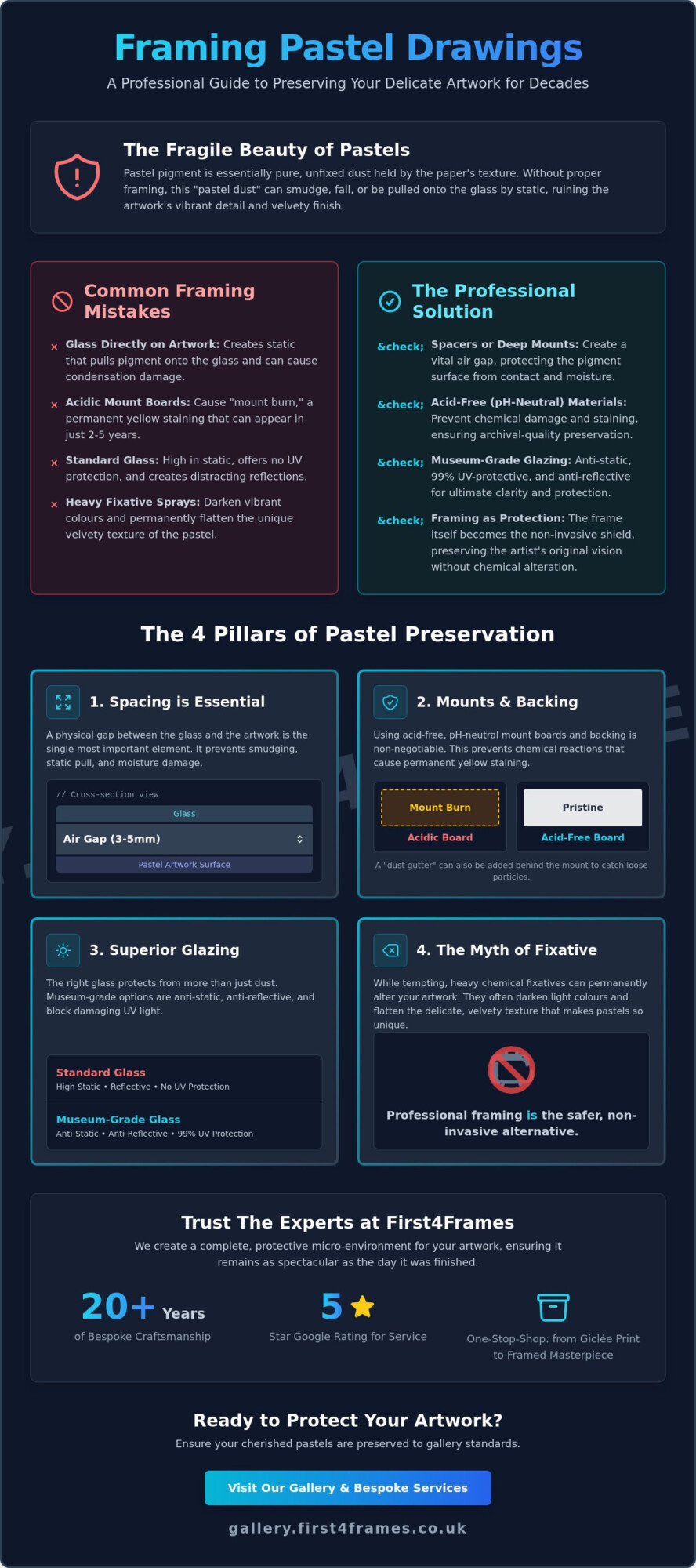
Pastel art captures a luminosity and texture that other mediums simply can’t match. These pieces are incredibly delicate because the pigment remains “unfixed” on the paper surface. To appreciate the depth of what pastel drawings are, you must understand that the medium is essentially pure powder held by the tooth of the paper. This means framing a pastel drawing isn’t just about aesthetics; it’s a critical preservation step. Without a professional approach, the slightest vibration or touch can cause the pigment to fall or smudge. It’s a fragile balance that requires expert handling.

To better understand the technical requirements of this process, watch this helpful video on using spacers:

At First 4 Frames, we treat every piece with the respect it deserves, drawing on over 20 years of bespoke craftsmanship. Traditional framing often fails because the glass sits directly against the artwork. For pastels, this creates a static charge that pulls “pastel dust” onto the glass, clouding the image and ruining the fine details. This is why a static-free environment and specialized glazing are essential. Our goal is to create a protective micro-environment. This involves using deep mounts or spacers to keep the glass away from the pigment. Our high ratings on Google and Trustpilot reflect our commitment to these technical standards. If you’ve recently acquired a piece from our online art gallery, you’ll know that the tactile quality of the surface is its greatest asset.

The Myth of Fixative

Many artists feel tempted to use heavy chemical fixatives to lock the powder in place. We generally advise against this for fine art. Heavy sprays often darken vibrant colours and flatten the signature velvet texture that makes pastels unique. Professional framing provides a much safer alternative. By using the right materials from our bespoke framing service, you can secure the artwork without altering its chemical composition. This preserves the artist’s original vision while offering a permanent shield against the elements. For those looking to reproduce their own work, our print and frame service ensures that even digital copies maintain that sense of depth and quality.

The Technical Essentials: Spacers, Mounts, and Protective Glass

Pastel particles are incredibly delicate. They don’t have a hard binder like oil or acrylic paints, so they stay susceptible to smudging long after the artist finishes the work. Professional framing a pastel drawing requires a physical barrier between the pigment and the glass. Without this vital gap, temperature changes can cause condensation to form inside the frame. This moisture makes the pastel stick to the glazing, which often leads to irreparable damage. We always use acid-free mount boards to prevent “mount burn”. This yellow staining occurs when lignin in cheap boards reacts with the paper, a process that can begin to show visible damage within just 2 to 5 years.

Deep-Dive into Spacing Techniques

Spacing creates the breathing room your art needs to stay preserved. You can choose hidden plastic spacers tucked under the frame lip or visible double mounts to add aesthetic depth. If your work features heavy impasto or thick layers of pigment, aim for a gap of 3mm to 5mm. A dust gutter is a recessed area behind the mount. This clever design feature lets loose pigment particles fall out of sight instead of settling on the mount surface where they become an eyesore. Properly framing a pastel drawing with these gutters keeps the presentation clean for decades.

Choosing the Right Glass

Standard glass is often a poor choice for pastels because it carries a static charge that can literally pull pigment off the paper. Museum-grade glass is the superior alternative. It offers 99% UV protection and an anti-reflective coating that’s almost invisible to the eye. This clarity lets you see every stroke and texture without distracting room reflections getting in the way. Our team treats every piece with the care of a knowledgeable artisan, ensuring the frame acts as a bridge between your room décor and the artwork. You can see how these premium finishes look by browsing our online gallery. For a bespoke service that protects your investment, visit First 4 Frames to talk through your specific requirements.

Framing a Pastel Drawing: The Professional Guide to Preservation & Style

Choosing the Perfect Frame Style for Your Pastel Artwork

Framing a pastel drawing requires a delicate touch to match the medium’s ethereal, soft quality. We’ve spent over 20 years perfecting the “bridge” concept, where the frame acts as a vital link between the artwork and your room’s decor. A frame shouldn’t just sit on the edge of a picture; it should do the heavy lifting in the relationship between the art and the space it inhabits.

When you’re working with vibrant Scottish landscapes, such as the high-intensity works by Jolomo (John Lowrie Morrison), the framing choice is crucial. His bold use of colour needs a frame with enough visual weight to contain the energy without being overbearing. We often suggest choosing mount colours that pull out the mid-tones rather than the brightest highlights. This creates a professional, grounded look that draws the eye into the centre of the piece.

Texture and Tone

Natural wood grains like oak, ash, or lime often complement the organic, dusty feel of pastel strokes. These materials mirror the tactile nature of the medium. If you’re framing contemporary pastel abstracts, a sleek, modern frame in matte black or white provides a sharp, clean contrast that feels fresh.

To add a spectacular layer of depth, consider using multiple mounts. A double mount allows you to show a thin “pop” of colour, perhaps a deep Highland blue or a sunset orange, that mimics a specific pigment in the drawing. This technique adds a bespoke touch that makes the final product feel truly unique.

Commercial Considerations

If you’re preparing work for a UK gallery, neutral tones and simple profiles are usually preferred to ensure the art remains the focus. However, if you’re staging a property for sale, the frame should feel like a premium piece of furniture. Our Bespoke Picture Framing Services cater to both needs, providing the craftsmanship required to protect your investment. Whether it’s for a private collection or a public exhibition, the right frame ensures your pastel remains vibrant for decades.

Find your next inspiration by browsing our curated collection at the First 4 Frames Gallery.

For over 20 years, our workshop in Falkirk has served as a sanctuary for delicate original artworks. We understand that framing a pastel drawing requires a specialized touch, as the loose pigments need careful handling to prevent smudging or ghosting on the glass. Our team treats every piece with the reverence it deserves, ensuring your investment remains protected for decades. We’ve spent two decades perfecting the balance between aesthetic beauty and archival safety.

Our reputation isn’t just something we talk about; it’s backed by hundreds of five-star reviews on Google and Trustpilot. When you bring your precious artwork to us, you’re choosing a trusted professional who treats your art as if it were our own. We take pride in being a reliable partner for local creators, acting as experts in framing a pastel drawing for local artists and collectors alike. Our process is designed to be entirely hassle-free, taking you from an initial consultation to a final, ready-to-hang product without any stress.

We offer a unique one-stop-shop advantage for digital artists through our specialized branches. If you’ve created a piece digitally, we can produce high-quality Giclée prints that look identical to the original. These prints use lightfast inks that won’t fade over time. It’s a seamless journey from your digital file to a professionally framed masterpiece, all handled under one roof by people who love art as much as you do.

The First4Frames Quality Guarantee

We source only the best materials to act as a bridge between your room decor and your artwork. Every frame uses premium mounts and archival techniques to ensure longevity. We don’t believe in guesswork. Every project is unique, which is why we provide detailed, bespoke quotes tailored to your specific requirements. Whether you’re an artist preparing for an exhibition or a collector preserving a family heirloom, our service handles everything with precision. You can Contact Our Framing Experts today to discuss your next project and receive a tailored quote.

Give Your Pastel Artwork the Protection it Deserves

Your art is an investment that requires more than just a standard frame. Successful framing a pastel drawing relies on using technical spacers to prevent smudging and choosing the right mount to create that essential bridge between your décor and the piece itself. At First4Frames Gallery, we’ve spent over 20 years perfecting this craft. Our team understands that delicate pigments need specialist care to stay vibrant. With high ratings on both Google and Trustpilot, you can trust our expert artisans to handle your work with the respect it deserves. Whether you’re showcasing a new Giclée print or a cherished original from our gallery collection, we provide the premium materials needed for lasting preservation. We’re proud to be your one-stop-shop for bespoke framing in the UK. We’ll help you select a style that pulls every viewer into the picture while ensuring the physical safety of the medium. It’s a delicate process, but your creativity deserves a professional finish that stands the test of time.

Get a Bespoke Quote for Your Pastel Framing Project

We look forward to helping you transform your artwork into a spectacular focal point for your home.

Frequently Asked Questions

Do I need to spray fixative on my pastel drawing before framing?

You don’t strictly need to use fixative, and many professional artists featured on gallery.first4frames.co.uk avoid it to preserve the original “velvet” texture of the pigment. Fixatives can often darken the tonal values of a piece by 10 to 15 percent, which might alter the artist’s intent. If you choose to skip the spray, our bespoke framing service at first4frames.co.uk uses specialist techniques to ensure your artwork remains secure and vibrant without chemical intervention.

Can I frame a pastel drawing without a mount?

You should never frame a pastel drawing directly against the glass without a mount or a spacer to create a physical gap. Without this essential 2mm to 5mm of breathing space, static electricity will pull the loose pastel dust off the paper and onto the glazing. Our craftsmen have over 20 years of experience building these protective barriers. We use premium, acid-free mounts that act as a bridge between your room décor and the artwork while protecting the delicate surface.

What is the best type of glass for framing a pastel portrait?

Anti-reflective glass with 99 percent UV protection is the gold standard for any professional pastel portrait. Standard glass creates distracting reflections that obscure the fine details and can lead to pigment fading over time. At First 4 Frames, we source only the best museum-quality glazing to ensure your portrait looks spectacular from every angle. This high-standard approach is why we maintain such excellent ratings on Google and Trustpilot.

How do I transport a pastel drawing to a framer safely?

You should transport your drawing by sandwiching it between two sheets of pH-neutral glassine paper and taping it firmly between two pieces of rigid foam board. Don’t use standard plastic folders or cling film, as these materials generate high levels of static that will ruin the image. As a trusted professional, we’ve seen how proper transport prevents 90 percent of accidental damage before the framing process even begins. Simply bring your secured package to our workshop for a hassle-free experience.

Why is my pastel drawing smudging against the glass?

Smudging happens because the artwork is touching the glazing, allowing the pastel particles to transfer via contact or static attraction. This is a common issue with DIY framing but is easily avoided by using a “gutter” or a deep mount during the process of framing a pastel drawing. If you’re looking for a professional result, our print and frame service at prints.first4frames.co.uk ensures every piece is mounted with the correct depth. We create a dedicated space for any loose dust to fall harmlessly behind the mount rather than onto the glass.