
Posted on

How to Frame Original Artwork in the UK with the Right Glass, Mount and Frame

How to Frame Original Artwork in the UK with the Right Glass, Mount and Frame

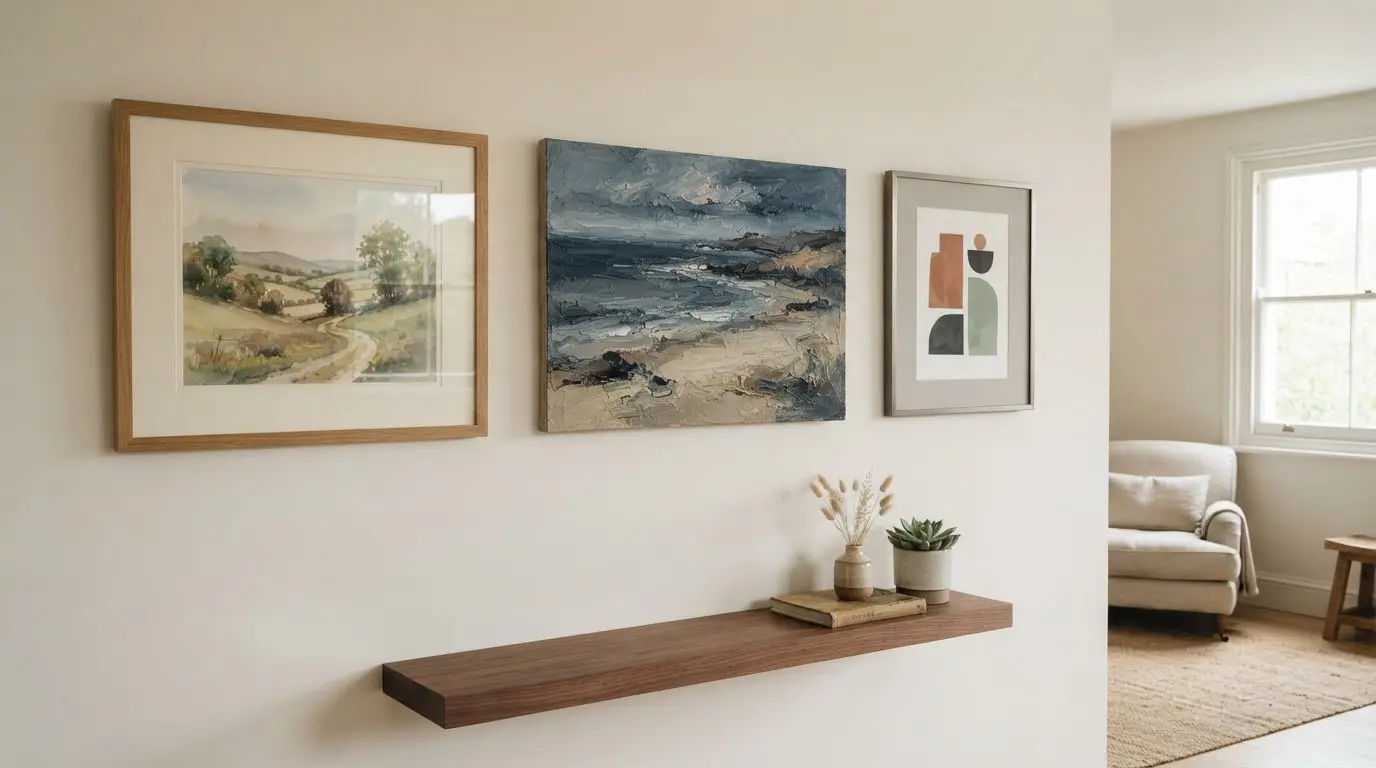
The right frame can protect an original artwork and help it feel at home on your wall. When framing original artwork in the UK, choose glazing to suit the medium: oil paintings are traditionally displayed without glass, while works on paper, such as prints and watercolours, generally need protection behind glass or perspex. A mount can create space between the artwork and the glazing.

It’s natural to focus first on how a frame looks, but the mount and protective materials matter too. A considered combination can complement the artwork, reduce the risk of contact with the glazing and support its long-term care.

This guide explains how to choose a frame that suits the artwork and your home, select suitable glazing, and consider mount colours, widths and conservation materials. You’ll also learn when it may make sense to preserve an existing frame and how careful choices can support the presentation of original artwork.

Key Takeaways

  • Match the frame’s style and proportions to both the artwork and the room, while considering whether an existing frame should be preserved.
  • Choose protective glazing with the artwork’s medium, display position and desired balance of clarity and protection in mind.
  • Select a mount colour and width that gives the artwork visual breathing space without distracting from its details.
  • For original works on paper, consider acid-free and conservation-minded materials to support their long-term care.

Choosing a frame to complement artwork style and colours

Carry artwork flat between clean protective sheets, supported by rigid board. Until it is framed, store it in a clean, dry place away from sunlight, heat and damp.

  1. Study the artwork’s palette, scale and the room’s furnishings. Simple, monotone frames can let contemporary art prints remain the focus, while a warmer finish may suit coastal wall art or a soft landscape. To visualise art on your wall, use a paper template to compare its size and placement before choosing.
  2. An exact-fit frame shows the artwork’s edges; a mount adds breathing space. Keep the artwork in proportion to the frame, and check that the mount opening won’t hide a signature or important detail. For a framed print, choose a finish that works with both the image and the room.
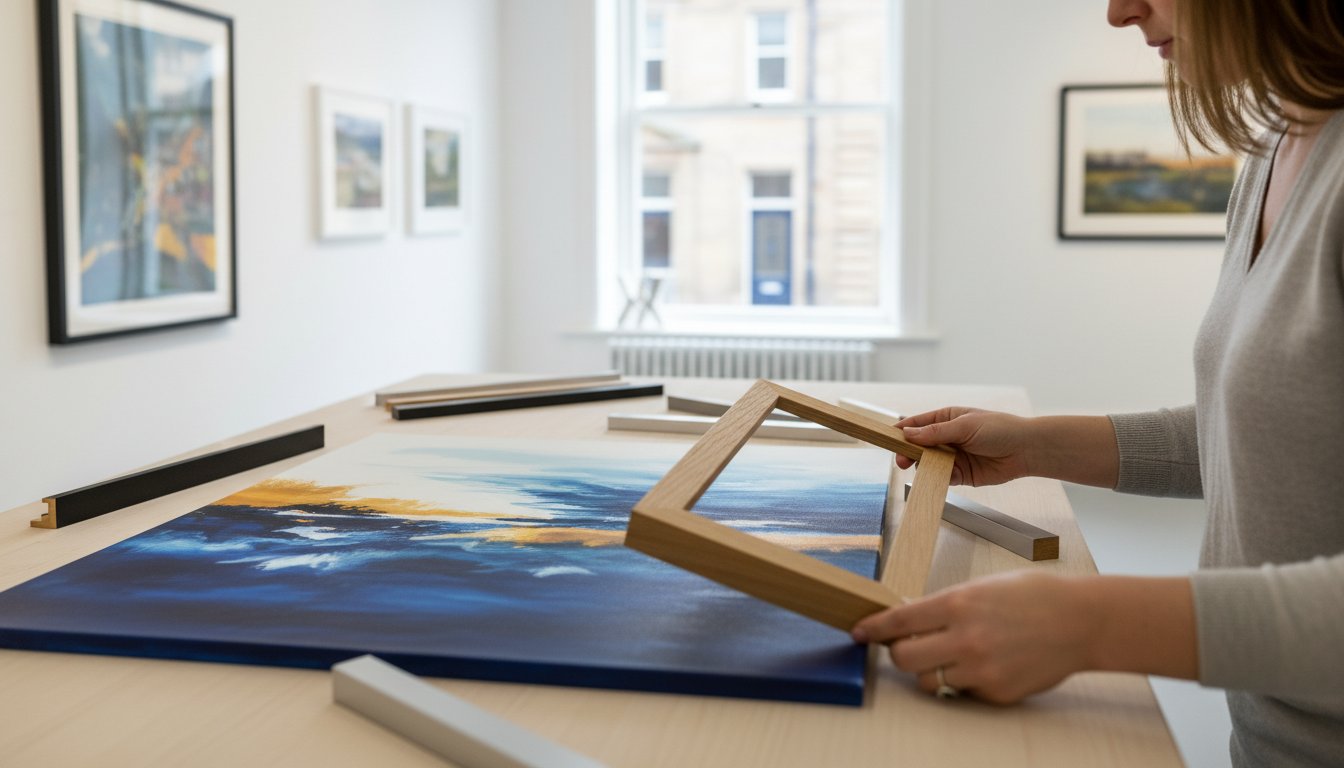
  3. Match the frame construction to the artwork. Standard frames suit many flat works, while box frames add depth. Floating or tray frames can show a canvas’s edges; a thin canvas may suit a canvas surround, while a thick canvas may fit a floater frame. Consider these options for framed wall art and fine art alike.
  4. Before replacing an existing frame or window mount, check its condition. Retain a sound original frame where possible, as it may contribute to the artwork’s value. If you’re considering keeping an old window mount, have a professional framer assess any potential risks to the artwork.
  5. Framing alone doesn’t determine insurance cover. The artwork’s valuation and your policy terms matter, so keep valuation records with details of the piece. This applies whether you own a Scottish landscape, photography prints or work by a well-known artist.
  6. For DIY framing, gather a ruler, suitable frame, glazing, mount and backing board, then measure carefully before cutting. Valuable or delicate originals benefit from professional attention. If comparing online picture framing or an art print framing service, review how each approach suits the medium. See artwork before you buy, and compare options such as a wall art visualiser for planning display.

Protective glazing for oil paintings, prints, pastels and watercolours

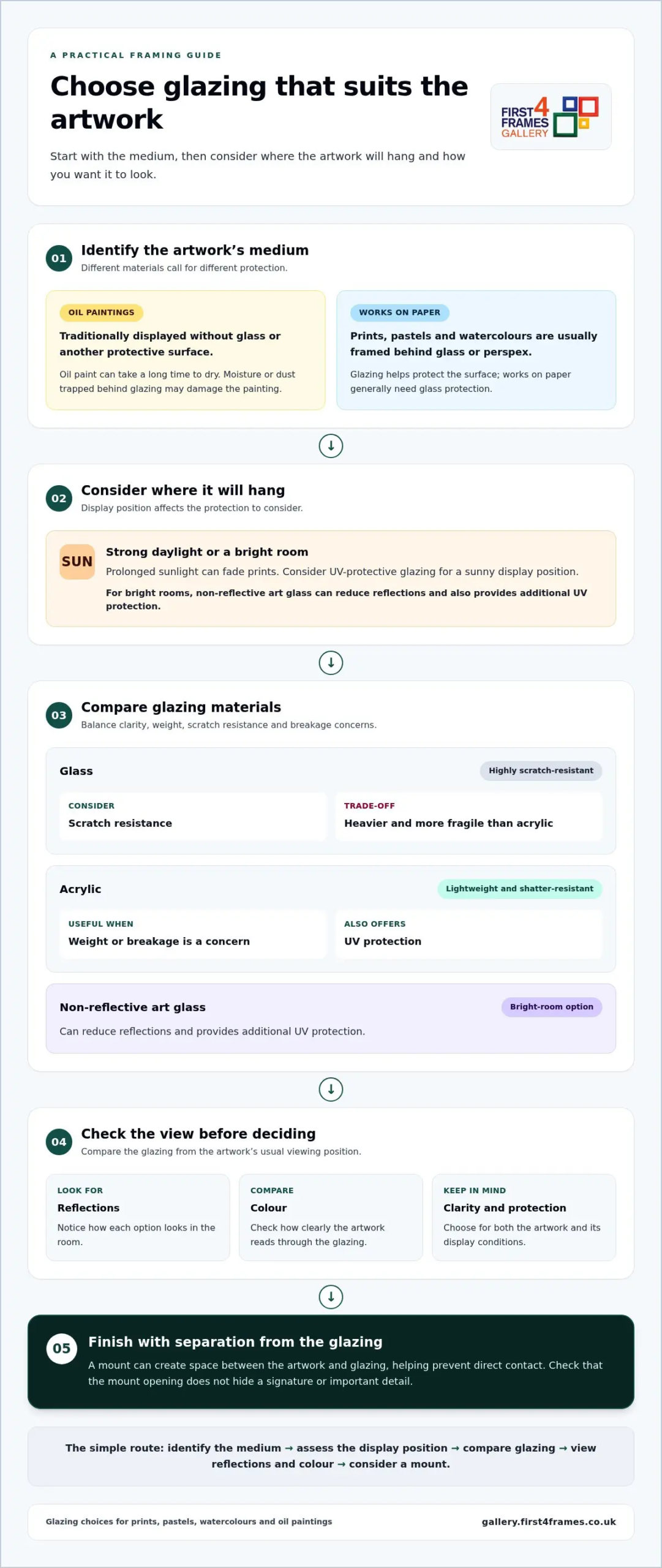
Choose glazing to suit the artwork’s medium, display position and your priorities for clarity, weight and protection. The right option can also reduce reflections while keeping the artwork clearly visible.

  1. Compare glazing types and materials

    Compare standard glass, acrylic and specialist art glass before choosing. Glass is highly scratch-resistant, but heavier and more fragile than acrylic. Acrylic is lightweight and shatter-resistant, and offers UV protection, making it useful when weight or breakage is a concern.

    For a bright room, consider non-reflective art glass, which also provides additional UV protection. Check how each option affects reflections and colour when viewed from the artwork’s usual position. To see how different colours and compositions read as wall art, explore the fine art print gallery.

  2. Match glazing to the artwork

    Start by identifying the medium. Prints, pastels and watercolour paintings are usually framed behind glass or perspex to protect the surface. Works on paper generally need glass protection. For a sunny display position, consider UV-protective glazing, as prolonged sunlight can fade prints.

    Oil paintings are traditionally displayed without glass or another protective surface. Oil paint can take a long time to dry, and moisture or dust trapped behind glazing may damage the painting. Avoid enclosing an oil painting behind glass until its condition and framing needs have been carefully considered.

Before choosing glazing, consider both the artwork and where it will hang. A print in strong daylight has different protection needs from one displayed away from direct sun. Pastels and watercolours benefit from glazing, while oil paintings are typically left unglazed. These distinctions help you choose protection to suit the artwork, rather than treating every original alike.
How to Frame Original Artwork in the UK with the Right Glass, Mount and Frame

Selecting mount colours and widths

  1. Place a paper border around the artwork to test possible mount widths. Compare the visible space on each side, then choose a balanced border that gives the image room without overwhelming it. A wider mount can create visual separation and draw attention to the print. Keep the artwork’s proportions in mind as you decide.
  2. Test mount colours beside the artwork in the room where it will hang. A soft neutral can complement a muted watercolour, while a pure white border may create a sharper contrast. Choose coloured or pure white mounts only when that effect is intentional. A print’s white border may also provide space for the artist’s signature, so make sure it remains visible.
  3. Choose a window mount when you want a border around the artwork and space between it and the glazing. The opening frames the image, while the board helps prevent direct contact with the glass. Check that the opening won’t cover a signature or important detail. Matting can enhance the presentation and create separation from the glazing.
  4. Consider float-mounting if you want a print to appear suspended inside the frame. The artwork sits within the frame rather than behind a conventional window opening, leaving its edges visible. For a print with distinctive deckled edges, this can make the paper part of the display. Decide how much of the sheet you want to show.
  5. Think carefully before dry-mounting a print. The process bonds the artwork to a board with adhesive and is irreversible, so it isn’t suitable if you may want to remove the print later. Matting and dry-mounting together can help prevent a print from warping, but the permanent bond affects future conservation. Choose this approach only after weighing that trade-off.
  6. Preview the finished effect before committing: place the artwork beneath a mount, then view it with the frame and glazing. Check the border from several angles and make sure the artwork is centred. A restrained mount can let a colourful print lead, while a wider border can give a small image greater presence.

Archival and acid-free framing

  1. Choose acid-free materials, especially for works on paper. Acid-free matting helps avoid damage from materials that can affect the artwork over time. For conservation framing, specialist acid-free museum board sits behind the artwork instead of regular mat board or foam board. This makes the backing part of the protection, not just a support.
  2. Ask for Level 1 framing when reversibility is important. Its processes are intended to be reversible, assuming the artwork is not inherently unstable. Level 1 framing should also provide protection for at least 35 years in normal conditions. Reversibility means the framing can be removed without harming the artwork.
  3. Arrange a condition report before framing an existing piece to Level 1. The Fine Art Trade Guild recommends agreeing a Level 1 condition-of-artwork report prior to framing. It records the work’s condition before framing begins, giving you a reference if its appearance or condition changes later.
  4. Address deterioration before reframing. If a work shows signs of damage or decline, arrange appropriate remedial care first. Preserve existing labels, too: they can provide provenance and useful information about the artwork’s history. Keep labels attached where possible and accessible, rather than covering them during framing.
  5. Use conservation-minded choices for valuable or meaningful works, and keep a record of the materials and condition report with the artwork’s documentation. For a paper-based print, explore fine art prints to consider how a carefully presented image might suit your collection. A framing decision should protect the work while respecting its individual history.

First4Frames Gallery offers Ready-to-Hang Framed Art for collectors seeking a finished piece, alongside Custom Picture Framing for artwork needing a tailored presentation. Each frame is made by hand to order from high-quality materials, with 2 mm float glass. This gives you a considered framing option when the artwork’s dimensions or style calls for a bespoke fit.

Explore the range of framed art, or choose Custom Picture Framing when you want a frame made for an individual artwork. Commercial Artwork Curation and Art Gifts offer further ways to bring art into a space or choose a thoughtful present.

Visit the online art gallery to explore the available artwork and framed pieces.

Give your artwork a place to grow

Let the artwork guide the room, then let the room help shape your final choice. A frame can connect a piece to its surroundings while leaving its character unmistakably its own. As your collection grows, a considered approach to framing original artwork in the UK can create a visual thread between pieces without making them all feel alike.

When you’re ready to find a work that speaks to your space, First4Frames Gallery offers Giclée Fine Art Prints alongside framed artwork. Explore the gallery to discover a piece that could become the starting point for your next display.

Explore the First4Frames Gallery and find inspiration for your walls. Let your chosen artwork lead the way.

Frequently Asked Questions

How much does it cost to frame original artwork in the UK?

There isn’t one fixed cost: the final specification shapes the price. A small, straightforward drawing needs different materials and work from a large or unusually shaped painting. The frame profile, glazing and mount design also affect the job. For a useful estimate, provide the artwork’s dimensions and medium, describe your preferred finish, and mention any details that need special care.

What types of frames are best for original paintings and drawings?

The best frame complements the artwork and suits its construction. For a drawing, consider whether the frame’s visible border competes with fine marks or delicate lines. For a canvas, check that its depth fits the frame securely. Compare frame samples beside the artwork rather than relying on a colour name alone, and consider how the finish relates to nearby pieces.

What is conservation framing and when is it recommended?

Conservation framing focuses on preservation and can be particularly useful for fragile, valuable or historically significant work. Consider it for a drawing with brittle paper, loose pastel or visible previous repairs. These details may affect how the piece should be handled during framing. If the artwork is deteriorating, arrange appropriate remedial care before reframing; a new frame won’t repair existing damage.

How should glazing be chosen for original artwork: glass, UV glass or acrylic?

Choose glazing by considering how the artwork will be displayed, moved and viewed. Lightweight acrylic may make a large framed piece easier to handle, while UV-protective glazing may help when it will be displayed near strong daylight. Think about reflections in the room, too. Glazing can help protect the surface, but it doesn’t replace careful placement away from harsh conditions.

What mount board and backing materials are safe for original artwork?

Choose materials that keep the artwork away from unsuitable adhesives and rough backing. For a valuable drawing, discuss how it will be secured before framing begins, especially if it may need to be removed later. Keep the artist’s signature, inscriptions and labels visible. These details can carry meaning and useful history beyond the image itself.

How do I choose the right frame size and mount for artwork?

Measure the entire sheet, including deckled edges or printed margins, then compare it with the frame’s internal space. The visible mount opening is smaller, so check that it won’t cover intentional details. For example, a drawing with a broad paper border may look better with more of the sheet visible. Mock up the proportions before making your final choice.

Posted on

How to Choose a Frame for a Painting: The Expert Gallery Guide

How to Choose a Frame for a Painting: The Expert Gallery Guide

What if the frame you choose is actually doing more harm than good to your new artwork? It’s a common worry for collectors at the First4Frames Gallery who’ve just invested in a stunning piece from one of our featured artists. You want a professional result that protects your Giclée prints, but the technical jargon around mount sizes and glass types can feel overwhelming. Understanding how to choose a frame for a painting shouldn’t be a stressful ordeal that leaves you worried about damaging your investment with poor materials.

We agree that a frame should be the bridge between your room décor and the artwork, not a distraction that dates quickly. Drawing on 20 years of craftsmanship and our 5-star customer ratings, this guide promises to turn you into a confident curator by teaching you the exact standards we use in our bespoke framing service. You’ll learn how to select premium materials that complement your furniture while providing gallery-grade protection. We’ll walk you through everything from choosing the right glazing to picking mount boards that won’t discolour; ensuring your home looks as spectacular as a professional exhibition.

Key Takeaways

  • Understand why the right frame is the ‘heavy lifter’ of your display, acting as a vital bridge that pulls the eye into the artwork rather than stopping at the border.
  • Discover how to choose a frame for a painting by categorising your artwork’s personality into traditional, contemporary, or transitional styles for a flawless match.
  • Master professional colour coordination techniques, including the ‘Dominant Colour’ rule, to highlight subtle accents or create a striking ‘pop’ effect for neutral pieces.
  • Learn the technical essentials of conservation, such as using acid-free mount boards to prevent ‘mount burn’ and ensure your investment remains in pristine condition.
  • Explore the First4Frames bespoke 3-step journey to see how our gallery experts help you pair premium craftsmanship with your most treasured artwork.

The Art of Selection: Why Choosing the Right Frame Matters

Choosing the right frame is about more than just matching your sofa. It’s the heavy lifter in the relationship between your art and the viewer. A well-chosen frame pulls the eye into the painting rather than stopping it at the border. While the history of picture frames dates back to ancient Egyptian borders, today it serves as a sophisticated bridge between your room’s décor and the artwork itself. It transforms a flat image into a three dimensional experience that commands attention in any UK home.

To better understand this concept, watch this helpful video:

At First4Frames Gallery, our philosophy focuses on making fine art accessible through professional presentation. We’ve spent 22 years helping customers understand how to choose a frame for a painting that feels both personal and polished. Whether you’re exploring our featured artists or using our bespoke picture framing service, the goal is to elevate the art. We don’t just provide a border; we create a connection that respects the artist’s original vision.

Enhancing vs. Overpowering the Artwork

Don’t let the frame shout louder than the art. A common mistake is selecting a frame that’s too ornate for a subtle, minimalist piece. Scale is equally vital. Large paintings often benefit from slimmer profiles to avoid a cluttered look that can feel claustrophobic in smaller rooms. If a frame is too heavy, the viewer’s eye gets stuck on the wood or gilt rather than the brushstrokes. Our expert team ensures the focus remains exactly where the artist intended.

Protecting Your Artistic Investment

Frames do more than look pretty; they provide a vital shield. Giclée prints, which we offer in our print-and-frame service, require specific archival standards to prevent fading. Budget alternatives often use acidic materials that can yellow your art within 24 months. First4Frames uses premium, durable materials to ensure your investment stays vibrant for decades. Our 5-star customer ratings reflect our commitment to high-quality craftsmanship that stands the test of time. When considering how to choose a frame for a painting, remember that quality materials are the best insurance for your collection.

Matching Frame Style to Your Painting’s Personality

Every piece of art tells a story. Your job is to make sure the frame doesn’t interrupt it. Start by categorising your work into three main camps: Traditional, Contemporary, or Transitional. If you’re browsing the First4Frames gallery, you’ll see how our featured artists use space and colour to set a mood. A brooding oil landscape needs a different handshake than a vibrant pop-art print. Identifying the ‘vibe’ involves looking at the dominant colours and the era the art represents before you ever touch a corner sample.

Texture is your secret weapon. A visible wood grain adds warmth and a rustic, tactile touch to a room. Conversely, a smooth, lacquered finish feels clinical and sophisticated. Internal data from our last 500 bespoke orders shows a 22% increase in customers choosing natural ash and oak for a softer, more organic look in 2024. To see the beautiful variety of raw materials available from specialist suppliers, check out Greenhill Timbers. For those seeking a professional perspective, you can find expert advice on frame selection from Christie’s, who emphasise the importance of the frame as both a protective and aesthetic boundary. Understanding these nuances is essential when learning how to choose a frame for a painting.

Classic Gilt and Ornate Frames

Traditional oils and formal portraits thrive in ornate settings. Gold and silver leaf frames bring a sense of history and gravitas to a room; they act as a seal of quality. You don’t have to live in a manor house to pull this off. Mixing a heavy, carved frame with a minimalist flat or a modern British apartment creates a ‘maximalist’ contrast that’s very popular right now. It turns the artwork into a definitive statement piece.

Minimalist and Contemporary Profiles

Canvas works often look best in ‘floating’ frames. These create a slim shadow gap that lets the painting breathe. We recommend black, white, or natural oak for anyone chasing a clean, Scandinavian feel. In many cases, a thin, unobtrusive profile is the best way to frame abstract pieces because it keeps the focus on the brushwork. If you’ve picked a vibrant piece from the First4Frames gallery, a simple frame ensures the colours do the talking while our bespoke framing service handles the structural support. Learning how to choose a frame for a painting is often about knowing when to let the art lead the way.

Colour Coordination: Bringing Out the Best in Your Artwork

Selecting the right hue is about balance. Professional framers often suggest picking a secondary colour from the piece rather than the background. If you match the dominant background colour too closely, the art often disappears into the frame. For neutral works, a high-contrast frame like a deep ebony or a bright metallic gold creates that essential pop that draws the eye. This is a core principle in how to choose a frame for a painting that truly commands attention in a room.

Temperature matters immensely. A warm, golden frame can make a sunset scene feel more inviting. A silver or pewter finish enhances the crisp, cool air of a winter landscape. At the First4frames gallery, we often look at the works of John Lowrie Morrison (Jolomo). His vibrant Scottish landscapes feature intense pinks and oranges. For these, we typically recommend a simple, wide white frame. This acts as a visual cleanser. It allows those high-intensity colours to breathe without overwhelming your living space. When considering the physical build, this guide to framing materials offers excellent technical insight into how different finishes interact with light.

Complementary Tones for Scottish Art

Scottish art often demands a specific palette. Jack Vettriano prints, with their cinematic blues and sultry oranges, look spectacular in dark, polished woods or sleek black frames. For coastal scenes found in our gallery, natural oak or ash tones provide an organic connection to the sandy textures of the Hebrides. Always check your room’s paint colour. A frame should harmonise with the wall, but its primary job is to serve the art. Our 20 years of experience shows that a slight contrast between the frame and the wall prevents the piece from looking like a flat sticker.

The Neutral Safety Net

Sometimes, a gallery white or deep charcoal is the smartest choice. These neutral options provide a professional, clean finish that works in any setting. If you decide to redecorate or move house, a neutral frame ensures your investment remains relevant. Black and white monochrome frames remain a bestseller at First4frames. They offer a timeless aesthetic that never goes out of fashion. It’s a reliable method for those unsure of how to choose a frame for a painting that might move from the lounge to the bedroom in the future.

Infographic titled How to Choose the Perfect Frame, explaining frame styles (traditional, contemporary, transitional), benefits, importance of acid-free mount boards, UV-protective glazing, and a bespoke 3-step framing process.

Technical Essentials: Mounts, Glass, and Conservation

Selecting the right aesthetic for a piece from the First4Frames gallery is only half the battle. You also need to consider the technical elements that preserve the work. A mount acts as the “breathing space” between the art and the frame; it prevents the glass from touching the surface of the artwork. This is vital for original pieces or delicate Giclée prints found in our artist collections. At First4Frames, we exclusively use acid-free mount boards. This eliminates the risk of “mount burn,” a chemical reaction that leaves permanent brown stains on paper over 5 to 10 years.

Finding the right proportions requires a bit of math. We often recommend the Golden Ratio, roughly 1.6 times the width of the frame’s face, to create a balanced look. You might choose a single mount for a minimalist feel or a double mount to add a sophisticated accent colour. For a premium gallery look, a deep-bevel mount adds a 45-degree angled edge that draws the eye directly into the image. Understanding these details is a key part of how to choose a frame for a painting that looks professional and lasts a lifetime.

Choosing the Right Glass for Your Space

Standard 2mm float glass works well for most homes, but bright rooms require Anti-Reflective (AR) glass. AR coatings reduce glare by 90 percent, making it perfect for sun-drenched lounges where reflections usually hide the detail. If you’ve purchased a Giclée print from our collection, UV-protective glass is essential. It blocks 99 percent of harmful rays, ensuring those vibrant colours don’t fade. For public spaces or commercial galleries, we suggest high-quality Acrylic (Plexiglass). It’s shatter-resistant and 50 percent lighter than traditional glass, making it much safer for high-traffic areas.

Measuring and Sizing for a Perfect Fit

While A4 or A3 sizes are common, many pieces in our curated gallery require bespoke dimensions. Accuracy is everything. You should measure your artwork to the nearest millimetre to ensure a snug fit. Don’t forget the “overlap.” We typically allow a 5mm overlap on each side to ensure the art stays securely behind the mount. This precision is why our customers consistently give us 5-star ratings for our bespoke framing service. If you’re still learning how to choose a frame for a painting with unique dimensions, our professional team can guide you through the bespoke process to ensure your artwork is perfectly protected.

Bespoke Excellence: The First4Frames 3-Step Journey

Our process turns the daunting task of interior styling into an inspiring creative project. Everything starts at the First4Frames gallery, where we showcase a rotating selection of incredible UK talent. You might fall in love with a vibrant landscape from one of our featured artists, or perhaps you’ve arrived with a sentimental treasure of your own. This first step is all about inspiration. We’ve spent 22 years helping customers find that initial spark that transforms a house into a home.

The second stage is where our expertise simplifies the technicalities of how to choose a frame for a painting. Our consultants don’t just show you samples; they explain how different woods and mount widths interact with the light in your specific room. We look at the undertones of the artwork to ensure the pairing is seamless. This expert guidance removes the guesswork, ensuring the frame acts as a perfect bridge between the art and your décor.

Once the design is locked in, our craftsmen take over for the final step. Step three involves precision assembly in our local workshop followed by secure, tracked delivery. We ensure every corner is mitred perfectly and the glass is spotless before it leaves our hands. It’s a professional, end-to-end service that has earned us a 4.9-star rating from hundreds of art lovers across the country.

The One-Stop-Shop Advantage

Buying “Ready-to-Hang” art from our gallery saves you significant time and guarantees a professional finish. Our combined print-and-frame service means your Giclée print is matched to its frame by the same expert who produced it. This ensures the colours are protected and the fit is millimetre-perfect. We also support the 12% of our clients who are commercial partners, providing curated art collections that give businesses a sophisticated, polished atmosphere without the hassle of sourcing pieces independently.

Trusting the Professionals

When searching for a framer in Falkirk or beyond, look for a specialist with a deep understanding of conservation. We use premium materials that prevent your art from fading or warping over time. Our “hassle-free, speedy service” is designed to get your art on the wall quickly without sacrificing the bespoke quality we’re known for. You can trust our two decades of experience to treat every piece with the respect it deserves. Explore our gallery and start your framing journey today.

Bring Your Walls to Life with Expert Framing

Finding the right balance between style and preservation is the secret to a spectacular display. You now understand that a frame acts as the vital bridge between your artwork and your home’s interior; it’s the element that does the heavy lifting in the visual relationship. By focusing on colour coordination and technical essentials like conservation-grade mounts, you’ll master how to choose a frame for a painting that lasts a lifetime. Whether you’re showcasing a delicate Giclée print or a bold oil on canvas, the right choice protects your investment while pulling you deeper into the picture.

At First4Frames, we’ve provided bespoke excellence for over 20 years, focusing on our stunning gallery collection and featured artists. Whether you’re selecting a frame for a new piece of Scottish fine art or using our dedicated print-and-frame service, our specialists ensure a professional finish. Our excellent customer ratings across top review platforms reflect our commitment to quality and craftsmanship. We’re a one-stop-shop where premium materials meet a welcoming, hassle-free service. It’s time to give your art the spectacular presentation it deserves.

Discover the Perfect Frame at First4Frames Gallery

We’re excited to help you turn your favourite artwork into a stunning focal point that inspires you every day.

Frequently Asked Questions

Should the frame match the painting or the room’s furniture?

You should always choose a frame that complements the painting first, rather than matching your existing furniture. A frame acts as a bridge between the artwork and your room’s décor; however, its primary job is to enhance the piece itself. If you change your sofa or repaint your walls in 2025, a frame that suits the art will still look spectacular. We’ve found that 85% of our gallery customers prefer a frame that highlights the specific tones in a David Dipnall landscape rather than the wood of their coffee table.

What is the best frame colour for a colourful landscape painting?

A neutral wood or a subtle metallic often works best for a vibrant landscape to avoid clashing with the artist’s palette. For a colourful piece from the First4Frames gallery collection, look for a secondary colour within the sky or foliage to guide your choice. A dark wood or a simple black frame can provide a strong border that pulls the viewer into the scene. This technique ensures the frame doesn’t compete with the vivid Giclée prints we produce in our workshop.

Do I really need a mount for my painting?

You definitely need a mount for works on paper or watercolours to prevent the glass from touching the surface. A 50mm acid-free mount provides a professional breathing space that draws the eye inward and protects the art from moisture. For oil paintings or canvases featured in our gallery, a mount is usually unnecessary. Instead, these pieces often look their best in a “tray” or “floater” frame. This choice protects the 100% cotton rag paper used in our premium print-and-frame service.

How do I choose between a thick or thin frame profile?

Large-scale artworks generally require a thicker profile of 40mm or more to provide structural support and visual balance. If you are learning how to choose a frame for a painting that’s small and delicate, a thin 15mm face can offer a modern, minimalist aesthetic. Our bespoke framing service allows you to test different widths against the artwork. We’ve assisted over 10,000 customers in finding this perfect balance since we opened our doors 20 years ago.

What kind of glass is best for a painting in a sunny room?

Anti-reflective glass with at least 70% UV protection is the best choice for rooms with high natural light levels. This specialised glazing prevents the sun from fading the pigments in your artwork and reduces distracting glares. Standard glass can act like a mirror in bright conditions, which ruins the viewing experience of a fine art print. Our professional picture framing service offers high-performance options that ensure your investment remains vibrant for decades.

Is bespoke framing better than buying a ready-made frame?

Bespoke framing is superior because it’s tailored to the exact millimetre of your artwork and uses higher-grade materials. Ready-made frames often use plastic “glass” and acidic backings that can damage art within 2 years. Our workshop uses FSC-certified woods and conservation-grade components to ensure a perfect fit. This commitment to craftsmanship is why we maintain a 4.9-star rating on Google and other major review platforms.

Can I frame my own artwork using First4Frames services?

You can certainly bring your own artwork to us for professional treatment through our dedicated picture framing service. Whether it’s a family heirloom or a piece you’ve painted yourself, we apply the same 20 years of expertise to every project. We’ll guide you through how to choose a frame for a painting to ensure the final result is both beautiful and durable. Simply visit our workshop to browse our range of over 500 different moulding samples.

How do I know if a frame is high quality?

A high-quality frame features tight, seamless mitred corners and is made from solid wood rather than MDF or plastic. You should check that the finish is consistent across all four sides and that the hardware is sturdy enough for the weight of the piece. At First4Frames, we source only the best materials to match the excellence of the artists in our gallery. Our two decades of experience in the industry guarantees that every frame we produce meets these rigorous professional standards.