
Posted on

Scottish Heritage Wall Art Can Settle a Traditional Study

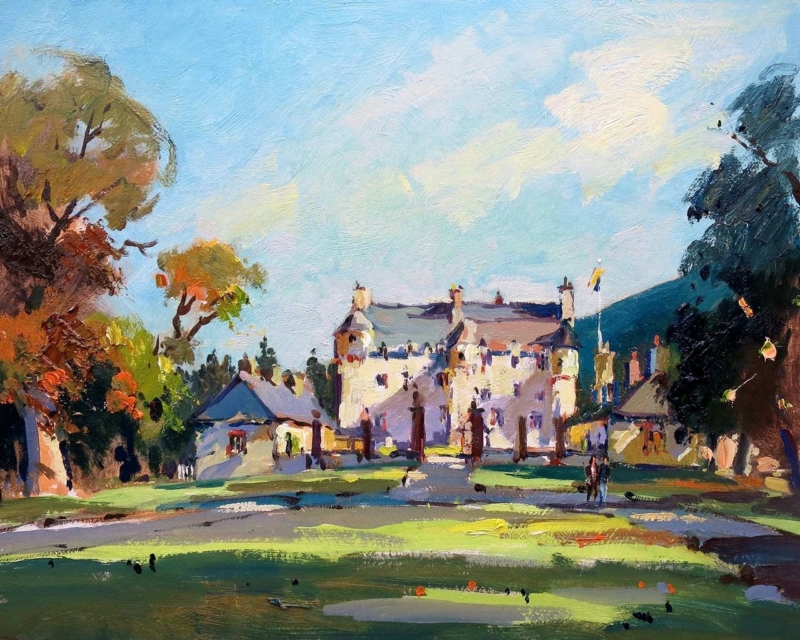
Image of Traquair House, Early Autumn by Josepth Maxwell Stuart

Scottish heritage wall art for a traditional study works best when the subject brings real history but the room remains comfortable for present-day use. Traquair House, Early Autumn by Joseph Maxwell Stuart offers architecture, landscape, and early autumn atmosphere together. It can sit naturally with books and timber without requiring tartan accessories or staged antiques.

Scottish heritage wall art for a traditional study - Traquair House, Early Autumn

Balance Scottish heritage wall art for a traditional study with the room

If the study is dark

Use a lighter mount and leave clear wall around the frame. Place the work near the reading zone, but angle lamps so reflected bulbs do not obscure the house or landscape.

If the study is pale

A deeper frame can connect the picture with a desk or bookcase. Repeat one autumn colour in leather, wool, or a single object rather than throughout the room.

The artwork can work above a low cabinet, beside a reading chair, or on the wall opposite the desk. Do not force it into a narrow shelf gap. The architecture needs enough breathing space to feel like a destination rather than another item catalogued among the books.

Keep the heritage reference current

Pair the framed print with useful contemporary lighting and clear work surfaces. The historical subject then adds depth while the room remains practical, personal, and easy to use.

Keep architectural and autumn detail distinct

Stone, foliage, and soft seasonal light require tonal control. Colour-managed Giclée production preserves those relationships, and bespoke hand finishing gives the print a substantial presentation suited to a book-lined room. All of that work is completed in-house in Falkirk.

For direct background on the location, visit Traquair House and its history. Browse more work by Joseph Maxwell Stuart, or view the exact Traquair House, Early Autumn framed print.

As Scottish heritage wall art for a traditional study, Traquair House, Early Autumn adds history and atmosphere while leaving the room grounded in everyday life.

Posted on

Traquair House, Early Autumn: Wall Art for Mixing Antique and Modern Furniture

Image of Traquair House, Early Autumn by Josepth Maxwell Stuart

wall art for mixing antique and modern furniture can do more than fill an empty space. It can give two different periods a shared visual language. Traquair House, Early Autumn by Joseph Maxwell Stuart is especially useful here. Its historic subject speaks naturally to older pieces, while the clear composition and autumn colour can sit comfortably beside simpler contemporary furniture.

wall art for mixing antique and modern furniture: Traquair House, Early Autumn by Joseph Maxwell Stuart

Why wall art for mixing antique and modern furniture matters

A room with furniture from several eras often feels more personal than a matched scheme. However, it still needs a point of connection. Artwork can provide that link through subject, colour, and finish. A view of a historic Scottish house acknowledges the character of an antique chest or dining table. The open landscape around it also gives cleaner modern shapes room to breathe.

The early-autumn palette helps too. Warm foliage can pick up the depth of older timber without making the entire room feel brown. Cooler sky and landscape notes can then relate to pale upholstery, painted joinery, glass, or metal. This balance is more convincing than trying to match every item directly.

Start with one visual bridge

Choose a wall that can be seen alongside both furniture styles. Above a sideboard, opposite a mixed dining set, or at the end of a sitting room can work well. Avoid surrounding the print with too many small period objects. Some clear wall gives the composition enough presence to connect the room rather than becoming another layer of detail.

  • Repeat one warm tone from the print in a cushion, lamp, or ceramic.
  • Let a modern piece keep its clean outline instead of crowding it with accessories.
  • Use the artwork’s historic subject as context, not as a reason to theme the room.

Frame for the room you have now

An ornate frame is not automatically the best partner for antique furniture. It may make the older side of the room too dominant. A restrained dark moulding can echo traditional timber while keeping the finished piece crisp. A lighter frame can be effective when the modern furniture is pale and the room needs a softer transition.

First 4 Frames can help compare those options in person. The framed print is prepared with colour-managed Giclée production and hand-finished presentation at the Falkirk workshop. That in-house approach makes it easier to choose a finish that respects the artwork and the room around it.

You can learn more about the real setting on Traquair House’s official website, or browse the wider Joseph Maxwell Stuart collection for another view with the right balance. When old and new furniture need a thoughtful link, view Traquair House, Early Autumn at First 4 Frames.