
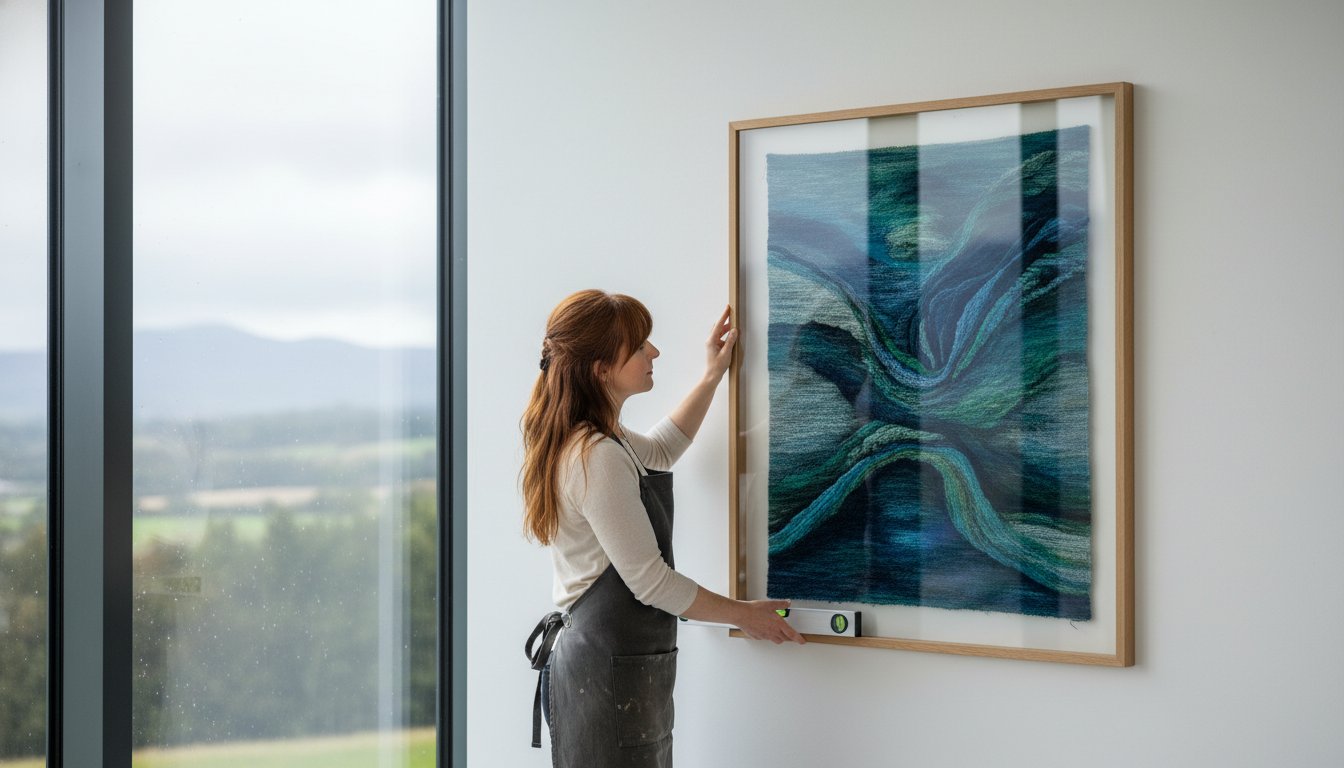
What if that cherished heirloom tapestry you’ve carefully stored is actually at risk the moment you decide to display it? Many collectors worry that framing a piece of fabric will lead to permanent sagging or irreversible UV damage. We understand that your textiles are more than just material; they’re stories and memories that deserve a professional touch. At First4Frames Gallery, we believe the right frame acts as a vital bridge between your room’s decor and the artwork itself. It provides the structural support your piece needs to stay perfectly centered and beautiful for years to come.
You’re right to be cautious about using standard adhesives or DIY stretching methods that can harm delicate fibers. This guide will show you how to achieve a spectacular, wrinkle-free display using conservation-grade techniques. We’ll explore the benefits of UV-protective glass and explain how maintaining a stable environment between 10°C and 20°C can prevent mold and fading. From bespoke mounting to choosing the perfect wood finish, you’ll learn how our expert craftsmanship ensures your textile art remains a protected and stunning focal point in any room.
Key Takeaways
- Understand the structural risks of textile display and how professional mounting prevents your art from sagging or warping over time.
- Discover the secrets of the lacing method for framing a piece of fabric, a hand-stitched technique that maintains perfect tension without damaging delicate fibers.
- Learn how to select the right materials, from acid-free foam boards to high-transmission Art Glass, to preserve colors and intricate stitchwork for years.
- Find out how our bespoke “one-stop-shop” service can source nearly any frame in the UK to perfectly complement your unique textile art and home interior.
Why Framing a Piece of Fabric is Essential for Preservation
Textile framing is a specialized preservation method that utilizes acid-free materials to secure and protect fabric within a professional enclosure. While some might suggest that textiles don’t require protection, the reality is that natural fibers are incredibly sensitive to their surroundings. Dust, fluctuating humidity, and airborne pollutants can settle into the weave, causing irreversible staining and fiber decay. We believe a frame acts as a vital bridge between your room’s decor and the artwork itself, providing a controlled micro-environment that keeps your piece pristine.
The process of framing a piece of fabric provides the necessary structural support to prevent the work from sagging or warping under its own weight. Unlike paper art, textiles are flexible and heavy; without proper tensioning, they’ll eventually bunch at the bottom of the frame. At First4Frames Gallery, our artisans use their 20 years of experience to ensure every heirloom or modern print is perfectly centered and supported. We’re a true one-stop-shop, and our customers often highlight our attention to detail in their reviews on Google and Trustpilot.
To better understand this concept, watch this helpful video:
The Battle Against Fading and Dust
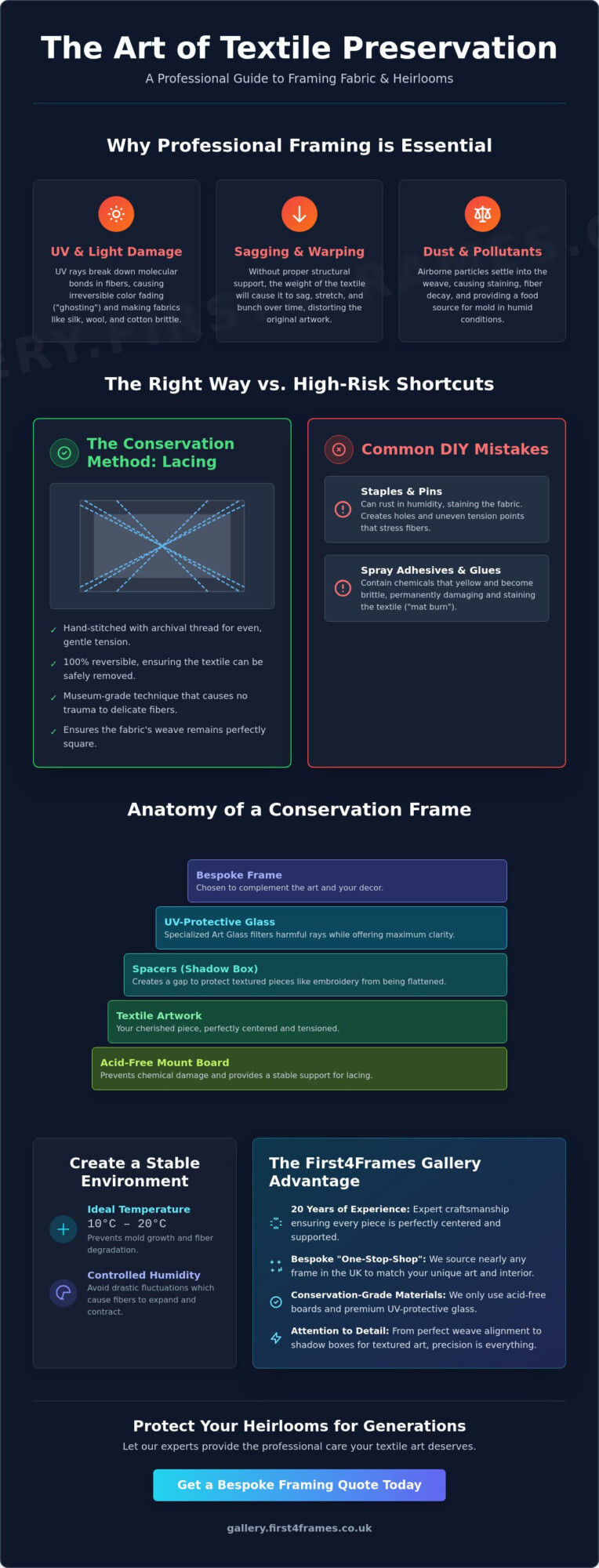
UV light is a constant threat to organic materials. It breaks down the molecular bonds in silk, wool, and cotton, leading to brittle fibers and “ghosting” where colors once thrived. Following the core principles of textile preservation, we recommend using specialized Art Glass. This premium option filters out harmful rays while offering incredible clarity, ensuring the vibrant reds and deep blues of your fabric stay spectacular for decades.
Creating a Physical Presence
A well-chosen frame does the heavy lifting in the relationship between the art and the viewer. It signals that a piece is “finished” and deserves to be treated as fine art rather than a simple craft project. By adding a bespoke border, you create a psychological boundary that pulls the viewer into the details of the stitching. Whether you choose to collect your finished piece from our workshop or have us ship it directly to your door, a professional frame from First4Frames Gallery elevates the entire aesthetic of your home.
Professional Techniques for Mounting and Stretching Fabric
Mounting is where true craftsmanship meets scientific preservation. When framing a piece of fabric, the primary goal is to provide tension without causing trauma to the fibers. Many DIY guides suggest using staples or spray adhesives, but these are high-risk shortcuts. Staples can rust over time, particularly in the UK’s varying humidity, while adhesives often contain chemicals that yellow and eventually eat away at delicate textiles. Our bespoke approach to framing a piece of fabric avoids these pitfalls entirely, focusing on reversible, conservation-grade methods.
We prefer the lacing method for most textiles. This process involves hand-stitching the fabric around a support board using a “criss-cross” pattern of archival thread. It provides even, gentle tension that keeps the fabric flat and perfectly aligned with the frame’s edges. This technique mirrors professional mounting techniques used by major museums. It ensures the textile can be safely removed, cleaned, or adjusted in the future without any permanent damage to the original piece.
Precision is everything in this stage of the process. We take great care to ensure the weave of your fabric is perfectly square to the frame. If the grain is off by even a few millimeters, the human eye picks it up immediately, making the display look “tilted.” For pieces with significant texture, such as heavy embroidery or raised appliques, we often recommend a shadow box. This creates a necessary gap between the glass and the material, allowing the texture to “breathe” and preventing the glass from flattening the delicate stitches.
Lacing vs. Adhesive: Why it Matters
Quick-fix adhesives are a nightmare for long-term preservation. They eventually become brittle and can cause “mat burn,” which is a permanent dark staining on the fabric. Lacing is entirely reversible. If you ever need to move the textile to a different frame, it simply requires snipping the threads. It’s a safer, more respectful way to handle your art. You can browse our gallery of spectacular framed art to see how these professional finishes look in practice.
Archival Materials for Long-Term Safety
The board behind your fabric is just as important as the wood around it. We use high-quality acid-free mountboard to ensure no harmful chemicals leach into the fibers. This is a non-negotiable standard for heirlooms. With over 20 years of experience, we source only the best materials to act as a protective shield for your most cherished memories.
Selecting the Perfect Frame and Glass for Your Textiles
Your choice of materials transforms the final aesthetic of your textile. When framing a piece of fabric, you aren’t just picking a border; you’re deciding how that piece interacts with your home. The frame acts as a bridge between the artwork and your room’s interior design. For instance, a heavy tartan or a traditional tapestry looks spectacular in rustic, natural woods like oak or walnut. Conversely, a minimalist silk scarf or modern embroidery often benefits from the clean lines of sleek metals or thin, black gallery frames. We pride ourselves on being a one-stop-shop, and if you don’t see the exact profile you want online, we can source almost any framing option available in the UK.
One vital technical detail involves the use of a “spacer.” This small, hidden component keeps the fabric from pressing directly against the glass. Without it, moisture can become trapped, leading to mold or fiber sticking. Conservation framing standards emphasize this gap to allow for natural fiber expansion and contraction. This attention to detail is why customers trust us with their most delicate fine art; it’s worth checking our reviews on Trustpilot and Google to see our commitment to quality.
Glass Options: Clear, Non-Reflective, and UV-Protective
Standard glass can act like a greenhouse for textiles, trapping damaging moisture and heat. For high-value heirlooms, we recommend “Art Glass.” This premium option offers high light transmission and low reflection, which is perfect for appreciating fine stitches. It ensures that the vibrant colors you love won’t fade over time. It’s a professional choice that makes the glass nearly invisible while providing essential protection against light damage.
Bespoke Frame Styles
It’s important to choose a picture frame that complements the depth of your fabric without overwhelming it. Consider the color carefully. Should the frame match a dominant thread in the textile or the wall it hangs on? Often, picking a secondary color from the fabric creates a more sophisticated, curated look. You can explore our full collection of bespoke frames to find the perfect match for your next project.
Bespoke Framing in the UK: The First4Frames Gallery Advantage
Choosing a professional for framing a piece of fabric is ultimately an act of trust. For over 20 years, we’ve dedicated ourselves to the fine art of craftsmanship, ensuring that every textile, from fragile heirlooms to bold modern prints, receives the protection it deserves. We don’t just sell frames; we provide a complete preservation service. Our expertise allows us to handle the unique challenges of fabric, ensuring your piece is perfectly centered and structurally sound for decades to come.
We operate as a true one-stop-shop for art enthusiasts across the country. If you have a specific vision in mind but don’t see the exact molding on our website, don’t worry. First4Frames Gallery has the capability to source almost any framing option available in the UK. This flexibility is a core part of our service, allowing us to create a bespoke bridge between your room’s decor and your artwork. Our commitment to quality and service is why our customers consistently leave glowing reviews on Trustpilot, Google, and Yell.
Logistics shouldn’t be a barrier to beautiful art. If you’re in Central Scotland, you can visit our Falkirk workshop for a local collection. It’s a great way to see our craftsmanship in person and discuss your project. For those further afield, we offer secure, professional shipping services throughout the UK. We take immense pride in our packaging, ensuring that your framing a piece of fabric project arrives at your door in perfect condition, ready to hang.
Custom Sourcing and Bespoke Options
First4Frames Gallery specializes in complex art in the frame projects for both private collectors and commercial clients. If you’re looking for a specific print or a non-standard frame size, we can often source these upon request. Our goal is to make fine art accessible and the process entirely hassle-free for you.
Start Your Framing Journey Today
Every textile project is unique, and we’re here to help you find the best options for yours. Whether you need advice on UV protection or want a quote for a large-scale piece, please contact us today. Our friendly artisans at First4Frames Gallery are ready to help you turn your fabric art into a spectacular focal point.
Transform Your Textiles into Timeless Art
Preserving your most cherished fabrics requires a blend of artistic vision and technical precision. We’ve explored how professional lacing prevents sagging without the need for damaging adhesives, and why high-quality Art Glass is essential for blocking harmful UV rays. By choosing the right materials, framing a piece of fabric becomes more than just a display; it’s a long-term investment in your home’s decor and the textile’s history. These techniques ensure that every thread remains as vibrant as the day it was created.
With over 20 years of expert craftsmanship, our team is ready to help you create a spectacular focal point for your space. You don’t have to take our word for it; check our 5-star reviews on Trustpilot and Google to see why we’re a trusted partner for collectors across the country. Whether you prefer secure UK-wide shipping or a local collection at our Falkirk workshop, we make the process hassle-free and straightforward. We’re your one-stop-shop for bespoke solutions, even for the most complex embroidery or heirloom projects.
Ready to give your fabric art the protection and presence it deserves? Start your bespoke framing journey with First4Frames today and let us build the perfect bridge between your room and your artwork. We’re excited to help you preserve your beautiful memories for years to come.
Frequently Asked Questions
Can I frame a piece of fabric in a standard photo frame?
No, standard photo frames are rarely deep enough to accommodate the thickness of textiles and the necessary mounting boards. When framing a piece of fabric, you need a frame with a deeper rebate to allow for spacers that prevent the material from touching the glass. Standard frames also lack the structural integrity to support the weight of stretched textiles. This can lead to the frame bowing or the glass cracking over time.
Should fabric art be framed with or without glass?
Fabric art should almost always be framed with glass to protect it from dust, pollutants, and UV damage. However, it’s vital to use a spacer or a deep mount so the fabric doesn’t press against the glazing. Direct contact can trap moisture and cause mold growth. We recommend UV-protective Art Glass, which blocks harmful light while remaining nearly invisible, ensuring your textile’s colors stay vibrant for decades.
How do you stop fabric from sagging in a frame?
The most effective way to prevent sagging is through professional lacing or stretching over an acid-free foam board. This technique provides even tension across the entire surface without using harmful chemicals. Unlike DIY methods that rely on double-sided tape, lacing is completely reversible and allows the fibers to sit naturally. This ensures your display remains perfectly flat and centered regardless of changes in room temperature or humidity.
Does framing damage the fabric over time?
Professional framing doesn’t damage fabric; instead, it acts as a protective shield against environmental decay. Damage only occurs when using non-archival materials like standard cardboard, acidic tapes, or metal staples that rust. By using acid-free mounting boards and reversible lacing techniques, we ensure the textile remains in its original condition. This archival approach is why framing a piece of fabric is the preferred method for preserving valuable family heirlooms.
How much does it cost to professionally frame a piece of fabric?
Bespoke framing costs in the UK vary based on the size and complexity of the piece. For a small A4-sized textile, prices typically range from £45 to £80. A medium A2-sized piece generally costs between £90 and £160, while larger items like a 100 x 70cm textile can range from £150 to over £250. Specialized projects like sports shirts usually cost between £180 and £300. Contact our Falkirk workshop for a precise quote for your specific project.