
Posted on

Choosing Quality Mountboard for Your Custom Frames

Choosing Quality Mountboard for Your Custom Frames

Did you know that the very thing meant to highlight your artwork could actually be slowly destroying it from the inside out? We understand how frustrating it is to see a cherished print start to yellow or ripple after just a few years in a standard, mass-produced frame. It’s a common worry for anyone investing in bespoke framing, and technical jargon like pH neutral or lignin-free often adds more confusion than clarity. The quality mountboard used on artwork in your frames is far more than just a decorative border; it’s a vital chemical shield that preserves the life and vibrancy of your piece.

We’re here to help you understand the difference between basic decorative boards and professional conservation mounting. You’ll discover how our handmade approach and use of premium materials, such as 2mm float glass instead of the cheap perspex used by others, create a professional, gallery-quality look for your home. We’ll walk you through the industry standards so you can choose the perfect level of protection for your art with total confidence, ensuring your memories remain in perfect condition for years to come.

Key Takeaways

  • Understand how professional-grade mountboard functions as both an aesthetic window and a protective barrier for your most precious pieces.
  • Learn why the quality mountboard used on artwork in your frames is essential for preventing “cockling” and maintaining the perfect air gap behind the glass.
  • Discover the benefits of our bespoke, handmade approach, featuring 2mm float glass for clarity that far surpasses standard online alternatives.
  • Master our simple two-step process for choosing the right mount colours and widths to create a high-end, gallery-quality display in any room.

What is Mountboard and Why is Quality Essential?

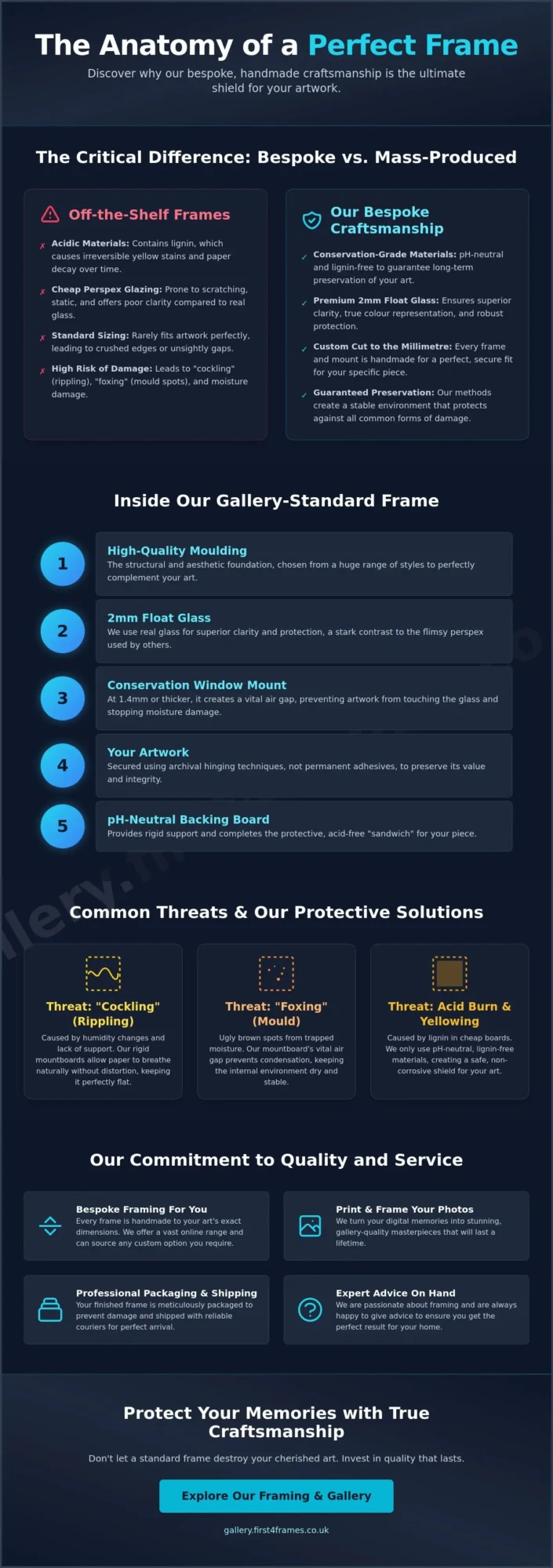
At First4Frames Gallery, we believe that the foundation of a great frame starts long before the wood is cut. What is Mountboard? In its simplest form, it is the thick, protective card that surrounds your artwork. However, the quality mountboard used on artwork in your frames is far more than just a decorative border. It serves as both a structural support and a chemical barrier, ensuring that your art remains isolated from environmental pollutants and the acidic components found in cheaper framing materials. We select our boards based on their ability to preserve the integrity of the paper and the vibrancy of the ink for decades to come.

The choice of material is the first line of defence for your art. While a standard frame might look acceptable on the day it’s bought, professional-grade mounting is an investment in the future of the piece. We treat every order with a focus on longevity, ensuring that the materials we use in our Falkirk workshop meet the rigorous standards expected by galleries and collectors alike.

Mountboard vs. Mat Board: Clearing the Confusion

It’s helpful to clear up some terminology, as you’ll often see different names used online. While the US typically uses the term “mat board,” here in the UK, we almost exclusively call it mountboard. It’s also vital to distinguish between the window mount, which creates the visual frame around the art, and the backing board. The backing board provides the rigid rear support that keeps everything flat and secure. At First4Frames Gallery, we ensure that every layer of the “sandwich” inside your frame meets our high professional standards, providing a complete environment of protection.

The Chemistry of Protection: pH Neutral and Acid-Free

The secret to long-term preservation lies in the chemistry of the board. A pH neutral state prevents harmful chemical migration from the mount to the artwork. Standard “white core” boards often contain lignin, a natural substance in wood pulp that eventually turns into acid. This acidity is what causes those unsightly brown stains on old prints. By using professional conservation-grade, lignin-free materials, we eliminate the risk of the “yellow edge” that plagues mass-produced frames. This commitment to quality materials is why the quality mountboard used on artwork in your frames is such a critical component of our bespoke service.

How Quality Mounting Prevents Artwork Damage

Paper art is a living material. It breathes. When humidity levels in your home shift, paper fibres naturally expand and contract. Without the right support, this movement leads to “cockling” or “buckling,” which are those frustrating ripples that ruin a smooth, professional look. The quality mountboard used on artwork in your frames provides the necessary structure to allow this natural movement while preventing permanent distortion. We see many pieces brought into our Falkirk workshop that have been damaged by tight, restrictive mounting, and we’re always happy to give advice on how to avoid these common pitfalls.

Beyond structural support, professional mounting guards against “foxing,” those unsightly brown mould spots caused by trapped moisture. We never use permanent adhesives that can devalue your art; instead, we use archival hinging techniques. This approach is essential for the conservation of precious items, ensuring the environment inside the frame remains stable and dry for years to come.

Creating the Vital Air Gap

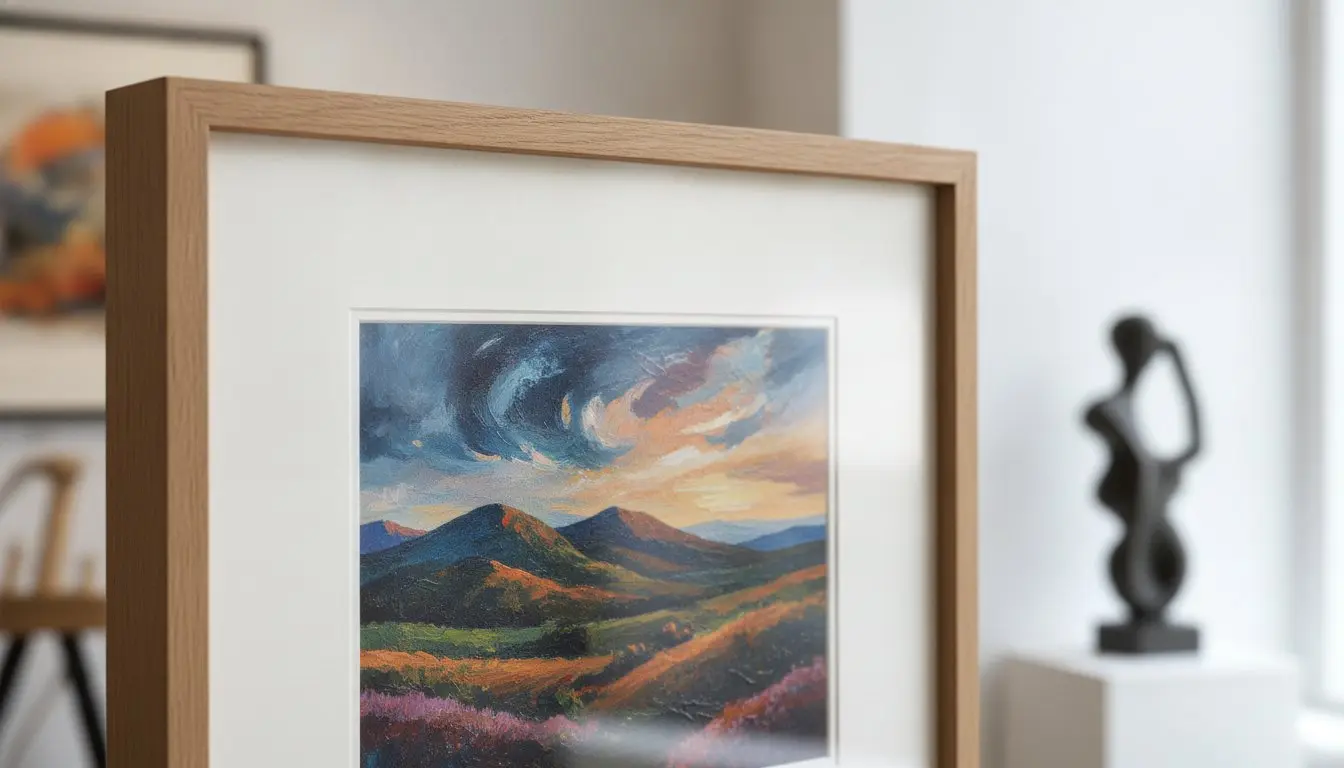
Your artwork should never touch the glass directly. When it does, even minor temperature changes can cause condensation to form on the inside of the pane. This moisture can cause the art to stick to the glass or lead to ink transfer, which is often irreversible. Our professional mountboards, usually 1.4mm to 2mm thick, create a safe buffer zone. We pair this protective gap with 2mm float glass for superior clarity, which is a significant upgrade over the thin perspex used by many other online galleries.

The Problem with “Off-the-Shelf” Standard Frames

Mass-produced frames frequently rely on thin, acidic paper inserts that offer no real protection. These generic sizes rarely fit your artwork perfectly, which often results in crushed edges or gaps. Our bespoke process ensures that every mount is cut to the exact millimetre of your specific print. This precision ensures the quality mountboard used on artwork in your frames acts as a perfect, tailored shield. If you’re ready to see the difference professional materials make, you can explore our range of ready-to-hang art to see these standards in action.
Choosing Quality Mountboard for Your Custom Frames

Every frame produced at First4Frames Gallery is a unique creation, hand-made to order in our Falkirk workshop. We don’t believe in the “one size fits all” approach of mass-produced alternatives that often fail to support your art correctly. Instead, we hand-make every order to ensure a perfect fit for your specific piece. By choosing our bespoke photo frames, you’re investing in a product where the quality mountboard used on artwork in your frames is just the beginning of a high-standard build. We take pride in being an approachable team, always happy to give advice to help you navigate the many choices available for your project.

Beyond the Board: 2mm Float Glass vs. Perspex

While many online galleries cut corners by using acrylic or perspex, we strictly use 2mm float glass for all our bespoke glazing. This choice provides superior clarity and a premium feel that plastic simply cannot match. Perspex is notoriously prone to scratching and attracts static electricity. This static can actually pull delicate particles off the surface of pastel or charcoal drawings, causing permanent damage. Our use of real glass ensures that the quality mountboard used on artwork in your frames works in harmony with the glazing to provide a clear, undistorted view of your art.

Professional Logistics and Packaging

Crafting a beautiful frame is only half the journey. We understand the anxiety of waiting for a fragile item to arrive, which is why we’ve perfected our professional logistics and packaging methods. Each finished frame is fully encased in protective materials designed to withstand transit, ensuring the delicate glass and mount arrive in perfect condition. We partner with reliable couriers for UK-wide delivery, so your order reaches you exactly as it left our hands. If you are looking for inspiration, you can view our latest work to see the quality of our finished products.

Choosing the Right Mount Style for Your Art

Once you understand the protective role of materials, you can focus on the aesthetic transformation. Selecting the right mount is an art form itself. We recommend a simple three-step approach to achieve that professional, bespoke look. First, choose a colour that picks out a subtle highlight from the artwork rather than simply matching your wall paint. This draws the viewer’s eye into the piece. Second, don’t be afraid of width. A wider mount often creates that sought-after “gallery-standard” feel, giving the art room to breathe. Finally, consider the depth of a double mount. This technique adds a sophisticated layer that can provide a tiny “pop” of contrasting colour. For inspiration on these pairings, feel free to browse our online gallery.

Single vs. Double Mounting

A single mount is a classic, clean choice. However, a double mount uses a second board underneath, typically showing just a 5mm “inner mount” or reveal. This creates a beautiful bevelled edge that adds 3D depth to the presentation. The quality mountboard used on artwork in your frames provides this structural “step” that guides the eye. While neutral off-whites are the most popular choice for a timeless look, a bold, contrasting inner mount can make a modern print truly stand out. It’s a simple way to add a touch of luxury to your bespoke frames.

Framing Your Own Memories

The quality mountboard used on artwork in your frames isn’t reserved just for high-end gallery pieces. We apply these same rigorous conservation standards to your personal photographs. If you have digital images you’d love to see on your wall, our photo printing and framing service ensures your memories are treated with the same hand-made care as a masterpiece. We use the same 2mm float glass and acid-free boards to ensure your family photos never fade or stain. Our team is always happy to give advice on which mount style will best suit your home and your history.

Give Your Artwork the Protection It Deserves

Choosing the right mount is about more than just picking a pretty colour; it’s about the chemistry of preservation and the precision of craftsmanship. High-quality materials act as a vital shield against environmental damage, while our bespoke sizing ensures your art is never crushed or distorted. We take pride in every piece we handle, ensuring that the quality mountboard used on artwork in your frames meets the highest conservation standards to prevent yellowing or staining over time.

Every order is hand-made in our Falkirk workshop using 2mm float glass as standard, providing a level of clarity and safety you simply won’t find in mass-produced frames. Whether you’re framing a rare print or a cherished family photograph, our team is always on hand to provide expert advice on all custom framing options. We’re dedicated to making professional-grade protection accessible for every home and every creative project.

Ready to transform your space? Browse our Gallery of Framed Prints or Start Your Bespoke Order Today. We look forward to helping you create a beautiful, lasting display that you can enjoy with total confidence for decades to come.

Frequently Asked Questions

Is all mountboard acid-free?

No, not all mountboard is acid-free or suitable for long-term preservation. Many mass-produced frames use standard boards that contain lignin, which breaks down into acid over time and stains your art. We only use conservation-grade materials that are lignin-free and pH neutral. This ensures the quality mountboard used on artwork in your frames acts as a protective shield rather than a source of chemical damage.

What is the difference between a single and a double mount?

The main difference is that a single mount uses one layer of board, whereas a double mount uses two layered boards for added depth. In a double mount, the top board is cut with a slightly larger window to reveal about 5mm of the board underneath. This technique adds a sophisticated, 3D effect. It’s an excellent way to introduce a secondary accent colour that draws the eye toward the finer details of your art.

Can I choose a custom mount colour for my frame online?

Yes, we offer a wide variety of mount colours that you can select directly through our online shop. We provide a large range of options to suit everything from traditional watercolours to modern giclée prints. If you don’t see the exact shade you need, our team in Falkirk is happy to give advice on custom combinations to ensure your bespoke frame looks perfect and fits your decor.

Does the mountboard touch the artwork directly?

Yes, the window mount sits directly against the surface of your artwork to secure it in place. Because of this direct contact, using professional-grade material is vital for the safety of your piece. The quality mountboard used on artwork in your frames prevents harmful chemicals from migrating into the paper. It also creates a crucial air gap between the art and the 2mm float glass, protecting it from condensation.

How do I know if my existing frame has an acidic mount?

You can identify an acidic mount by inspecting the bevelled edge of the window opening for any signs of yellowing or browning. If this edge has turned a dark cream, tan, or brown colour, the board is acidic and is likely “burning” your artwork. This discolouration is a clear sign that the materials are breaking down. We recommend replacing these old mounts with conservation-quality boards to stop the damage before it becomes permanent.
Posted on

Framing a Piece of Fabric: The Ultimate Guide to Preserving Textile Art

Framing a Piece of Fabric: The Ultimate Guide to Preserving Textile Art

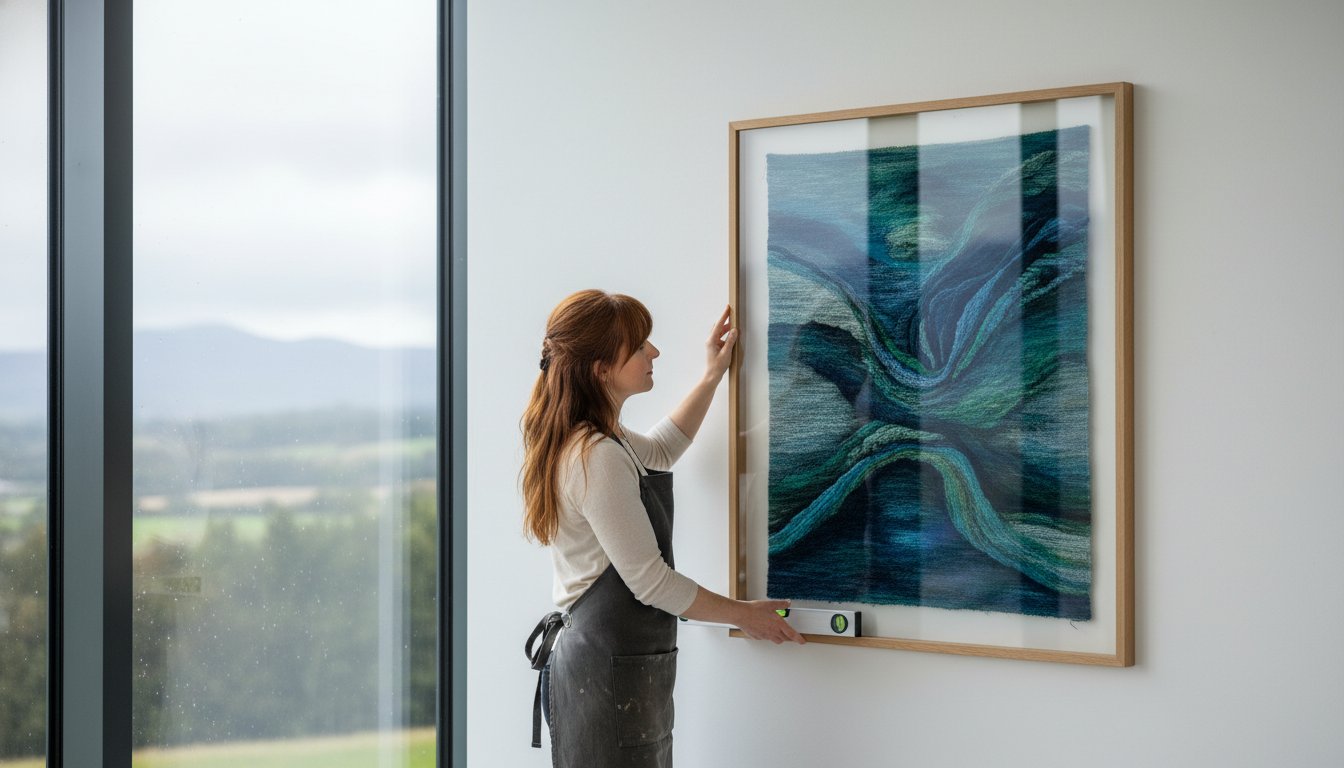
What if that cherished heirloom tapestry you’ve carefully stored is actually at risk the moment you decide to display it? Many collectors worry that framing a piece of fabric will lead to permanent sagging or irreversible UV damage. We understand that your textiles are more than just material; they’re stories and memories that deserve a professional touch. At First4Frames Gallery, we believe the right frame acts as a vital bridge between your room’s decor and the artwork itself. It provides the structural support your piece needs to stay perfectly centered and beautiful for years to come.

You’re right to be cautious about using standard adhesives or DIY stretching methods that can harm delicate fibers. This guide will show you how to achieve a spectacular, wrinkle-free display using conservation-grade techniques. We’ll explore the benefits of UV-protective glass and explain how maintaining a stable environment between 10°C and 20°C can prevent mold and fading. From bespoke mounting to choosing the perfect wood finish, you’ll learn how our expert craftsmanship ensures your textile art remains a protected and stunning focal point in any room.

Key Takeaways

  • Understand the structural risks of textile display and how professional mounting prevents your art from sagging or warping over time.
  • Discover the secrets of the lacing method for framing a piece of fabric, a hand-stitched technique that maintains perfect tension without damaging delicate fibers.
  • Learn how to select the right materials, from acid-free foam boards to high-transmission Art Glass, to preserve colors and intricate stitchwork for years.
  • Find out how our bespoke “one-stop-shop” service can source nearly any frame in the UK to perfectly complement your unique textile art and home interior.

Why Framing a Piece of Fabric is Essential for Preservation

Textile framing is a specialized preservation method that utilizes acid-free materials to secure and protect fabric within a professional enclosure. While some might suggest that textiles don’t require protection, the reality is that natural fibers are incredibly sensitive to their surroundings. Dust, fluctuating humidity, and airborne pollutants can settle into the weave, causing irreversible staining and fiber decay. We believe a frame acts as a vital bridge between your room’s decor and the artwork itself, providing a controlled micro-environment that keeps your piece pristine.

The process of framing a piece of fabric provides the necessary structural support to prevent the work from sagging or warping under its own weight. Unlike paper art, textiles are flexible and heavy; without proper tensioning, they’ll eventually bunch at the bottom of the frame. At First4Frames Gallery, our artisans use their 20 years of experience to ensure every heirloom or modern print is perfectly centered and supported. We’re a true one-stop-shop, and our customers often highlight our attention to detail in their reviews on Google and Trustpilot.

To better understand this concept, watch this helpful video:

The Battle Against Fading and Dust

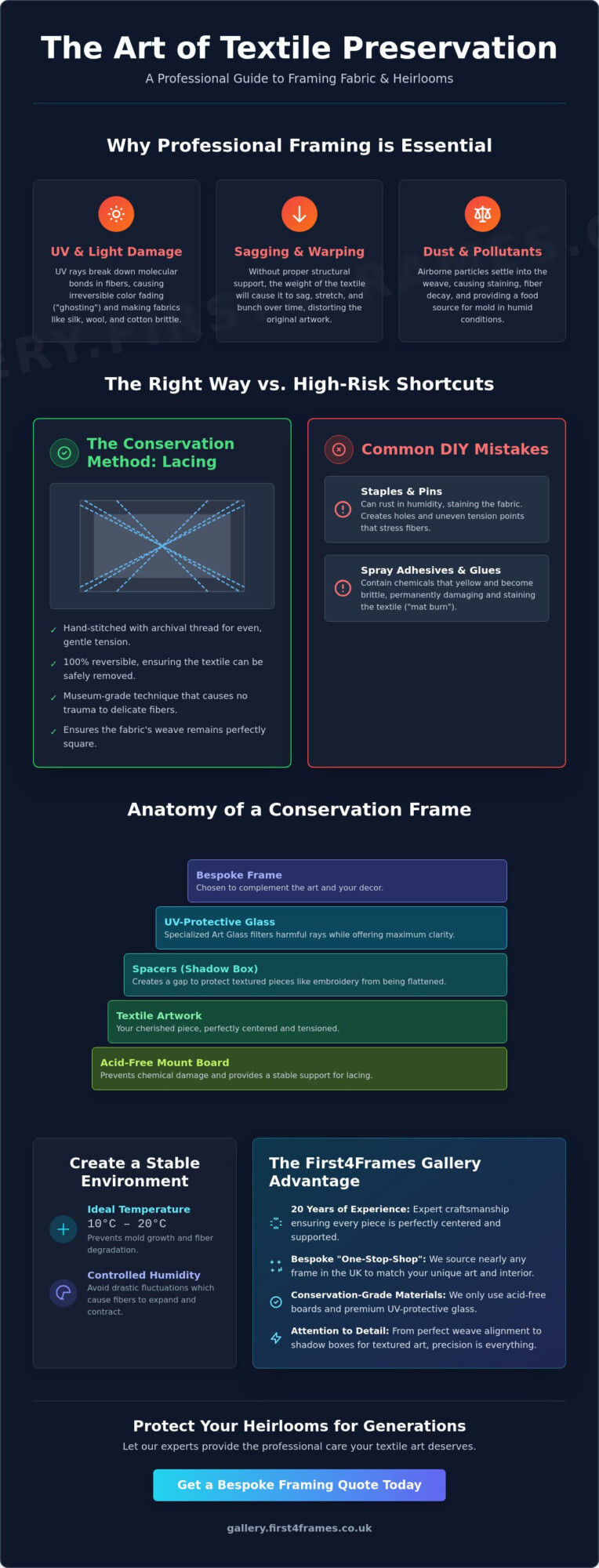
UV light is a constant threat to organic materials. It breaks down the molecular bonds in silk, wool, and cotton, leading to brittle fibers and “ghosting” where colors once thrived. Following the core principles of textile preservation, we recommend using specialized Art Glass. This premium option filters out harmful rays while offering incredible clarity, ensuring the vibrant reds and deep blues of your fabric stay spectacular for decades.

Creating a Physical Presence

A well-chosen frame does the heavy lifting in the relationship between the art and the viewer. It signals that a piece is “finished” and deserves to be treated as fine art rather than a simple craft project. By adding a bespoke border, you create a psychological boundary that pulls the viewer into the details of the stitching. Whether you choose to collect your finished piece from our workshop or have us ship it directly to your door, a professional frame from First4Frames Gallery elevates the entire aesthetic of your home.

Professional Techniques for Mounting and Stretching Fabric

Mounting is where true craftsmanship meets scientific preservation. When framing a piece of fabric, the primary goal is to provide tension without causing trauma to the fibers. Many DIY guides suggest using staples or spray adhesives, but these are high-risk shortcuts. Staples can rust over time, particularly in the UK’s varying humidity, while adhesives often contain chemicals that yellow and eventually eat away at delicate textiles. Our bespoke approach to framing a piece of fabric avoids these pitfalls entirely, focusing on reversible, conservation-grade methods.

We prefer the lacing method for most textiles. This process involves hand-stitching the fabric around a support board using a “criss-cross” pattern of archival thread. It provides even, gentle tension that keeps the fabric flat and perfectly aligned with the frame’s edges. This technique mirrors professional mounting techniques used by major museums. It ensures the textile can be safely removed, cleaned, or adjusted in the future without any permanent damage to the original piece.

Precision is everything in this stage of the process. We take great care to ensure the weave of your fabric is perfectly square to the frame. If the grain is off by even a few millimeters, the human eye picks it up immediately, making the display look “tilted.” For pieces with significant texture, such as heavy embroidery or raised appliques, we often recommend a shadow box. This creates a necessary gap between the glass and the material, allowing the texture to “breathe” and preventing the glass from flattening the delicate stitches.

Lacing vs. Adhesive: Why it Matters

Quick-fix adhesives are a nightmare for long-term preservation. They eventually become brittle and can cause “mat burn,” which is a permanent dark staining on the fabric. Lacing is entirely reversible. If you ever need to move the textile to a different frame, it simply requires snipping the threads. It’s a safer, more respectful way to handle your art. You can browse our gallery of spectacular framed art to see how these professional finishes look in practice.

Archival Materials for Long-Term Safety

The board behind your fabric is just as important as the wood around it. We use high-quality acid-free mountboard to ensure no harmful chemicals leach into the fibers. This is a non-negotiable standard for heirlooms. With over 20 years of experience, we source only the best materials to act as a protective shield for your most cherished memories.

Framing a Piece of Fabric: The Ultimate Guide to Preserving Textile Art

Selecting the Perfect Frame and Glass for Your Textiles

Your choice of materials transforms the final aesthetic of your textile. When framing a piece of fabric, you aren’t just picking a border; you’re deciding how that piece interacts with your home. The frame acts as a bridge between the artwork and your room’s interior design. For instance, a heavy tartan or a traditional tapestry looks spectacular in rustic, natural woods like oak or walnut. Conversely, a minimalist silk scarf or modern embroidery often benefits from the clean lines of sleek metals or thin, black gallery frames. We pride ourselves on being a one-stop-shop, and if you don’t see the exact profile you want online, we can source almost any framing option available in the UK.

One vital technical detail involves the use of a “spacer.” This small, hidden component keeps the fabric from pressing directly against the glass. Without it, moisture can become trapped, leading to mold or fiber sticking. Conservation framing standards emphasize this gap to allow for natural fiber expansion and contraction. This attention to detail is why customers trust us with their most delicate fine art; it’s worth checking our reviews on Trustpilot and Google to see our commitment to quality.

Glass Options: Clear, Non-Reflective, and UV-Protective

Standard glass can act like a greenhouse for textiles, trapping damaging moisture and heat. For high-value heirlooms, we recommend “Art Glass.” This premium option offers high light transmission and low reflection, which is perfect for appreciating fine stitches. It ensures that the vibrant colors you love won’t fade over time. It’s a professional choice that makes the glass nearly invisible while providing essential protection against light damage.

Bespoke Frame Styles

It’s important to choose a picture frame that complements the depth of your fabric without overwhelming it. Consider the color carefully. Should the frame match a dominant thread in the textile or the wall it hangs on? Often, picking a secondary color from the fabric creates a more sophisticated, curated look. You can explore our full collection of bespoke frames to find the perfect match for your next project.

Choosing a professional for framing a piece of fabric is ultimately an act of trust. For over 20 years, we’ve dedicated ourselves to the fine art of craftsmanship, ensuring that every textile, from fragile heirlooms to bold modern prints, receives the protection it deserves. We don’t just sell frames; we provide a complete preservation service. Our expertise allows us to handle the unique challenges of fabric, ensuring your piece is perfectly centered and structurally sound for decades to come.

We operate as a true one-stop-shop for art enthusiasts across the country. If you have a specific vision in mind but don’t see the exact molding on our website, don’t worry. First4Frames Gallery has the capability to source almost any framing option available in the UK. This flexibility is a core part of our service, allowing us to create a bespoke bridge between your room’s decor and your artwork. Our commitment to quality and service is why our customers consistently leave glowing reviews on Trustpilot, Google, and Yell.

Logistics shouldn’t be a barrier to beautiful art. If you’re in Central Scotland, you can visit our Falkirk workshop for a local collection. It’s a great way to see our craftsmanship in person and discuss your project. For those further afield, we offer secure, professional shipping services throughout the UK. We take immense pride in our packaging, ensuring that your framing a piece of fabric project arrives at your door in perfect condition, ready to hang.

Custom Sourcing and Bespoke Options

First4Frames Gallery specializes in complex art in the frame projects for both private collectors and commercial clients. If you’re looking for a specific print or a non-standard frame size, we can often source these upon request. Our goal is to make fine art accessible and the process entirely hassle-free for you.

Start Your Framing Journey Today

Every textile project is unique, and we’re here to help you find the best options for yours. Whether you need advice on UV protection or want a quote for a large-scale piece, please contact us today. Our friendly artisans at First4Frames Gallery are ready to help you turn your fabric art into a spectacular focal point.

Transform Your Textiles into Timeless Art

Preserving your most cherished fabrics requires a blend of artistic vision and technical precision. We’ve explored how professional lacing prevents sagging without the need for damaging adhesives, and why high-quality Art Glass is essential for blocking harmful UV rays. By choosing the right materials, framing a piece of fabric becomes more than just a display; it’s a long-term investment in your home’s decor and the textile’s history. These techniques ensure that every thread remains as vibrant as the day it was created.

With over 20 years of expert craftsmanship, our team is ready to help you create a spectacular focal point for your space. You don’t have to take our word for it; check our 5-star reviews on Trustpilot and Google to see why we’re a trusted partner for collectors across the country. Whether you prefer secure UK-wide shipping or a local collection at our Falkirk workshop, we make the process hassle-free and straightforward. We’re your one-stop-shop for bespoke solutions, even for the most complex embroidery or heirloom projects.

Ready to give your fabric art the protection and presence it deserves? Start your bespoke framing journey with First4Frames today and let us build the perfect bridge between your room and your artwork. We’re excited to help you preserve your beautiful memories for years to come.

Frequently Asked Questions

Can I frame a piece of fabric in a standard photo frame?

No, standard photo frames are rarely deep enough to accommodate the thickness of textiles and the necessary mounting boards. When framing a piece of fabric, you need a frame with a deeper rebate to allow for spacers that prevent the material from touching the glass. Standard frames also lack the structural integrity to support the weight of stretched textiles. This can lead to the frame bowing or the glass cracking over time.

Should fabric art be framed with or without glass?

Fabric art should almost always be framed with glass to protect it from dust, pollutants, and UV damage. However, it’s vital to use a spacer or a deep mount so the fabric doesn’t press against the glazing. Direct contact can trap moisture and cause mold growth. We recommend UV-protective Art Glass, which blocks harmful light while remaining nearly invisible, ensuring your textile’s colors stay vibrant for decades.

How do you stop fabric from sagging in a frame?

The most effective way to prevent sagging is through professional lacing or stretching over an acid-free foam board. This technique provides even tension across the entire surface without using harmful chemicals. Unlike DIY methods that rely on double-sided tape, lacing is completely reversible and allows the fibers to sit naturally. This ensures your display remains perfectly flat and centered regardless of changes in room temperature or humidity.

Does framing damage the fabric over time?

Professional framing doesn’t damage fabric; instead, it acts as a protective shield against environmental decay. Damage only occurs when using non-archival materials like standard cardboard, acidic tapes, or metal staples that rust. By using acid-free mounting boards and reversible lacing techniques, we ensure the textile remains in its original condition. This archival approach is why framing a piece of fabric is the preferred method for preserving valuable family heirlooms.

How much does it cost to professionally frame a piece of fabric?

Bespoke framing costs in the UK vary based on the size and complexity of the piece. For a small A4-sized textile, prices typically range from £45 to £80. A medium A2-sized piece generally costs between £90 and £160, while larger items like a 100 x 70cm textile can range from £150 to over £250. Specialized projects like sports shirts usually cost between £180 and £300. Contact our Falkirk workshop for a precise quote for your specific project.