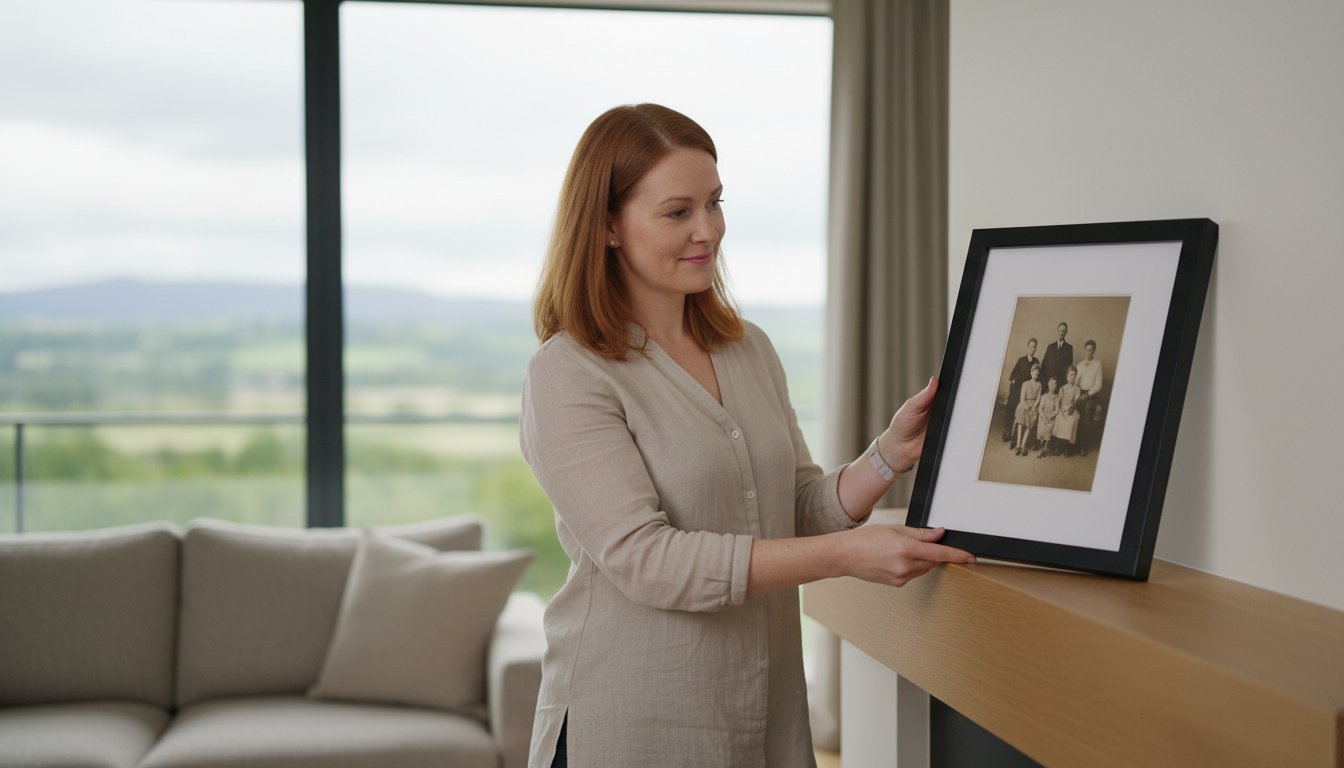
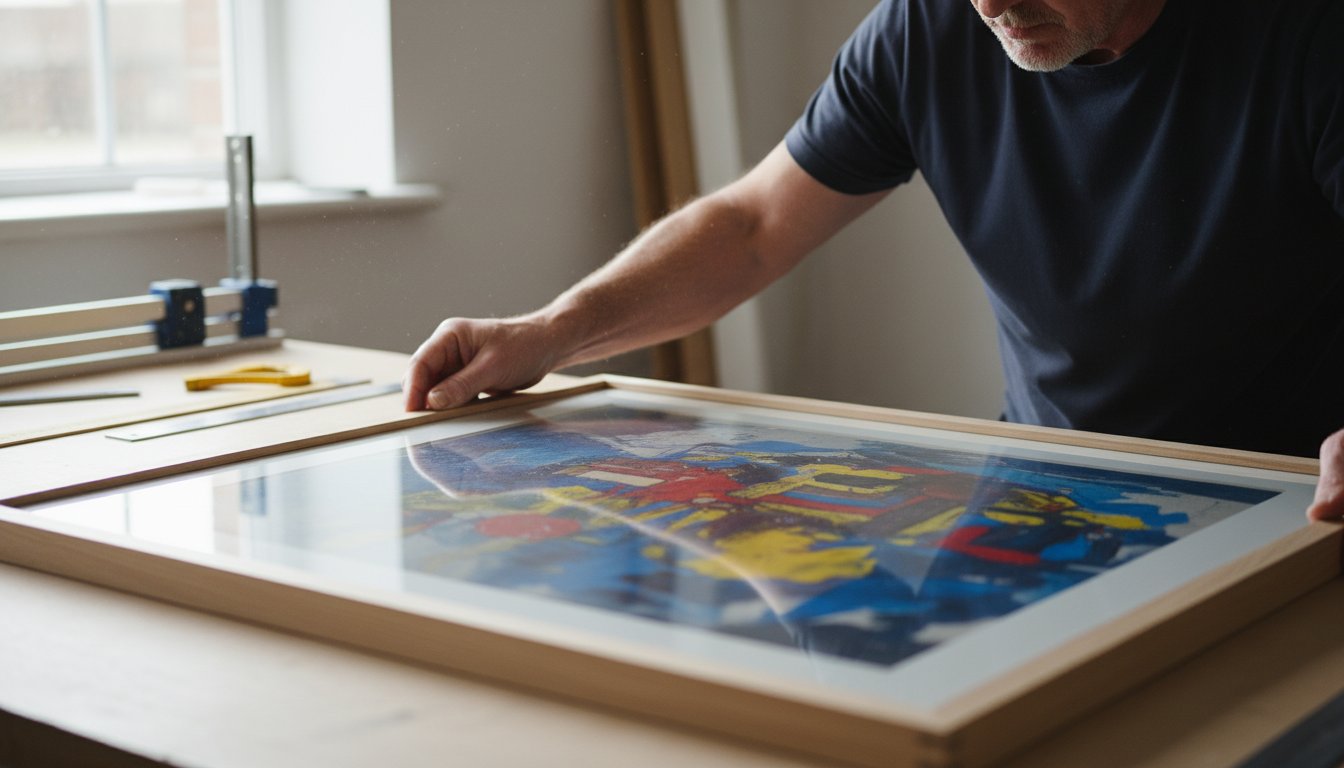
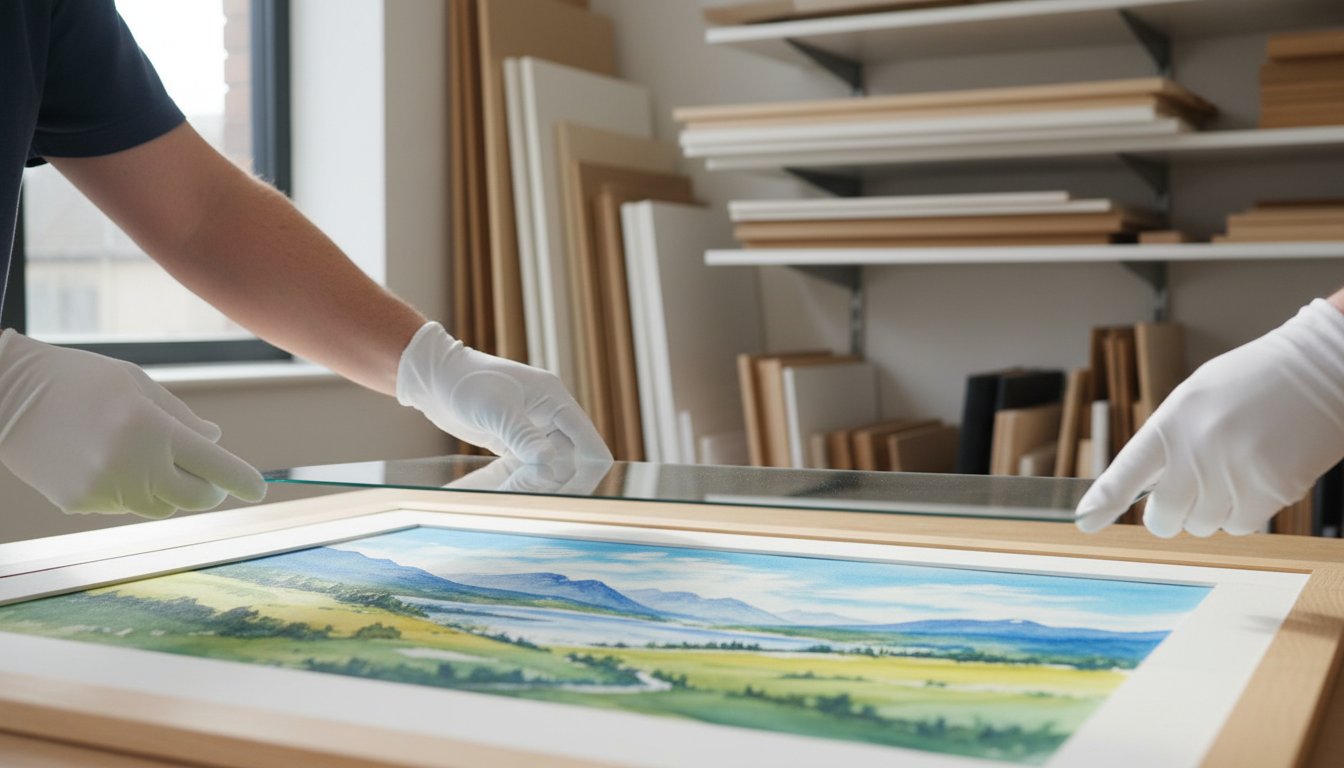
Last month, a visitor to our First4Frames Gallery stood captivated by a vibrant landscape by artist Peter Barker, but she quickly admitted her own 1952 family portrait was languishing in a dusty attic. She loved the professional finish of our gallery pieces but worried that framing family heirlooms was too risky for such a fragile, irreplaceable item. You likely feel the same hesitation about your own treasures, fearing that technical terms like acid-free or UV-glass are too complex or that your 3D objects simply can’t be mounted.
We’re here to help you honour those memories using the same professional standards we apply to our fine art collections. This guide teaches you how to use expert conservation techniques to ensure your history remains preserved for the next generation. We’ll explain how our bespoke framing service creates a beautiful bridge between your family’s past and your current home decor. You’ll discover how to achieve a gallery-standard display with the peace of mind that comes from our 20 years of expertise and 4.9-star customer service.
Key Takeaways
Discover how professional conservation acts as a bridge, seamlessly connecting your precious family history with your modern home décor.
Learn the essential role of UV-protective glass and acid-free mountboard in preventing fading and “foxing” on your most delicate documents.
Explore creative bespoke solutions for framing family heirlooms, from 3D box frames for medals to specialised mounting techniques for vintage lace.
Find out how to safely transport your items to our Falkirk gallery for a professional assessment and to determine if restoration is required before framing.
Understand why our “one-stop-shop” approach and excellent customer ratings make us the trusted choice for preserving your unique heritage.
Why Framing Family Heirlooms Requires a Specialist Approach
Framing family heirlooms is a delicate balancing act between aesthetic display and long-term preservation. At First4frames gallery, we view the frame as the essential bridge that connects your ancestral history to your current home interior. A well-chosen frame pulls you into the story of the object while ensuring it looks spectacular on a modern wall. It acts as a protective vessel, keeping history alive while making it a focal point of your living space.
Standard off-the-shelf frames often use acidic backing boards and cheap glass that can ruin a 100-year-old photograph in less than 5 years. In the United Kingdom, our homes face specific challenges like rising damp, intense UV exposure, and the constant 10-degree temperature swings caused by central heating. These environmental factors accelerate the decay of old paper and delicate fabrics, making specialist intervention a necessity rather than a luxury.
To better understand this concept, watch this helpful video:
The Emotional Value of Preservation
Items like First World War medals or handwritten letters from the 1940s are irreplaceable links to your lineage. Conservation framing is the only way to halt biological and chemical deterioration through the use of de-acidified materials and UV-filtering glass. When dealing with delicate embroidery or vintage uniforms, professional textile conservation and restoration principles are applied to prevent fibres from becoming brittle. You should see this process as a multi-generational investment that secures your family’s story for the next 50 years and beyond.
Distinguishing Our Gallery Services
While you might visit our shop to browse spectacular ready-to-hang prints from local artists, our bespoke service for framing family heirlooms is a different craft entirely. We’ve spent over 20 years in the Falkirk and wider Scottish art scene perfecting the handling of delicate, one-off physical objects. Our team handles every item with the respect it deserves, which is why we maintain such high customer ratings for our technical expertise. We distinguish ourselves by providing a tailored, professional partnership that goes far beyond a simple retail transaction.
Bespoke solutions for 3D objects like medals and coins.
Use of museum-grade, acid-free mounting boards.
Expert advice based on two decades of framing in Central Scotland.
Reversible mounting techniques that don’t damage the original item.
The Science of Preservation: Understanding Conservation Framing
Protecting a 100-year-old marriage certificate or a delicate silk scarf requires more than a simple wooden border. When you’re framing family heirlooms, the goal is to halt the ticking clock of decay. At First4frames, we use acid-free mountboards to prevent “foxing,” those unsightly brown spots caused by acidic wood pulp reacting with humidity. By choosing alpha-cellulose or cotton-based boards, you ensure the paper stays crisp for decades. We also prioritise “breathing room” within the frame. Without a small air gap created by a mount or spacers, moisture traps against the glass, which can lead to mould growth in as little as 48 hours in damp British climates.
Integrity is the heartbeat of our workshop. A professional framer never uses permanent adhesives on a piece of history. We follow strict conservation framing guidance to ensure every process is completely reversible. If a future generation needs to remove the item, it should come away clean, without a trace of tape or glue. This level of care is why we’ve maintained excellent customer ratings for over 20 years, proving that trust is built through consistent craftsmanship.
Standard vs. Conservation Materials
Standard glass is often a false economy for precious items. It allows 50% more UV radiation to pass through than conservation-grade alternatives, which block 99% of harmful rays. Even in the soft, natural light of the UK, UV damage is cumulative and irreversible. While a conservation mount might cost £10 to £15 more than a basic board, it prevents the need for professional restoration services that often start at £200. It’s the essential bridge between your room décor and the artwork that pays for itself through longevity.
The Role of Giclée Quality Standards
Our expertise in framing family heirlooms draws directly from our work with the First4frames gallery. We apply the same Giclée quality standards to your personal treasures as we do to our professional fine art prints. Take the vibrant works of Jolomo as an example. His spectacular use of colour is protected by “will not fade” technology and premium materials. Whether it’s a new Jolomo masterpiece or your grandmother’s sketches, we use the same professional craftsmanship to ensure those colours remain as vivid as the day they were created. Our one-stop-shop approach ensures that the same museum-grade quality used for world-class artists is available for your family’s most precious memories.
Creative Inspiration: From War Medals to Vintage Textiles
Every object tells a story. Whether it is a grandfather’s pipe or a delicate silk scarf, these items deserve more than a dusty box in the attic. Professional preservation is about more than just aesthetics. It is about preserving your family heirlooms for the next generation. For textiles like grandmother’s lace, we use specialist tensioning techniques. This ensures the fabric remains taut without damaging the delicate fibres. It prevents the common issue of sagging over time. Our expertise in framing family heirlooms ensures that your history is protected. Medal displays are also a specialty at First 4 Frames. We create bespoke storyboards that place awards alongside original service photos and citations. It’s a process that turns a single medal into a complete historical record.
The Art of the Box Frame
Three-dimensional objects require careful engineering. Our box frames provide the necessary depth for items like vintage coins or even a pair of first baby shoes. We secure these heavier objects using invisible threads or specialist conservation mounts. This ensures they stay in place without using harmful adhesives. If you have larger items, our memorabilia picture frame service is ideal for preserving football shirts and sports equipment. With over 20 years of experience, our team ensures every mount is both structurally sound and beautiful. Our high customer ratings reflect the care we take with these precious 3D objects. Every item is handled with the respect it deserves.
Creating a Gallery Wall with Heirlooms
A home should reflect its owner’s journey. You can create a stunning visual history by mixing personal artefacts with professional art from the First4frames gallery. Try pairing a framed family letter with iconic Scottish prints, such as those by Jack Vettriano. This blend of personal history and fine art creates a sophisticated, curated feel. Framing family heirlooms alongside professional prints adds a layer of warmth to any room. We recommend the following tips for a cohesive look:
Use consistent mount colours to tie disparate items together.
Mix frame styles but keep the spacing between frames uniform.
Place larger, heavier items at the bottom of the arrangement for visual balance.
Our bespoke framing service acts as a bridge between your room’s décor and your history. We help you organise a layout that balances different sizes while maintaining a professional finish. It’s an easy way to transform a collection of items into a gallery-standard display. You don’t have to worry about the technical details; our experts handle the heavy lifting to make your vision a reality.
Planning Your Bespoke Project: Preparation and Materials
Your journey to preserving history begins with careful handling. When bringing your items to our Falkirk gallery, place flat paper items between two sheets of acid-free board. Don’t roll documents that have been stored for decades; old fibres often snap when uncurled. If you’re transporting a delicate 19th-century oil painting or a fragile textile, we recommend a sturdy, flat container to prevent any surface abrasion during transit.
Once you arrive, our team assesses the item’s health. We’ve spent 22 years perfecting this process. If we spot “foxing” (brown age spots) or structural tears, we’ll discuss restoration options before the framing family heirlooms process starts. Framing a damaged item can sometimes trap moisture or acidity, so getting the foundation right is vital. We never guess at measurements. A 1mm error ruins a bespoke fit, so we handle all measuring during your professional consultation to ensure the frame provides a perfect, airtight seal.
The First4Frames Three-Step Process
Our streamlined approach ensures your project moves from a concept to a finished masterpiece without any stress. We’ve refined this over two decades to guarantee quality.
Step One: We host a personal consultation at our gallery to learn your item’s history. Understanding if a piece is a 1950s wedding photo or a Victorian medal helps us choose the right protection level.
Step Two: You’ll select from our premium conservation materials. We stock over 300 different mouldings and various UV-protective glass options that block 99% of harmful rays.
Step Three: Our expert craftsmen hand-finish the piece in our local workshop. We ensure it’s sealed and ready to hang safely in your home.
Selecting the Perfect Mount and Colour
The mount acts as the essential bridge between your room’s decor and the artwork. We often suggest a neutral, conservation-grade cotton rag mount to draw the eye inward. For smaller items, like a 1914 Star medal or a handwritten letter, we use “double mounting”. This adds a 5mm depth that creates a shadow line, giving the object a sense of prestigious isolation. It’s a simple technique that makes a small heirloom feel like a gallery centrepiece.
Be careful not to “over-frame” your piece. A massive, ornate gold frame might overwhelm a delicate 1920s sketch. Our goal is to enhance, not distract. We maintain an excellent customer rating by ensuring every choice honours the item’s period while fitting your modern living space. Whether you’re framing family heirlooms from the Victorian era or the modern day, the frame must serve the art first.
Choosing a specialist for framing family heirlooms requires more than just technical skill; it requires a partner you can trust with your most vulnerable memories. Our gallery maintains a 4.9-star rating across major review platforms, a score earned through twenty years of consistent, high-quality craftsmanship in Central Scotland. We’ve built our reputation as a “one-stop-shop” where you can find inspiration in our curated art collections, receive expert conservation advice, and commission bespoke frames in a single visit.
We source only the best materials for every project we undertake. This commitment ensures that your items aren’t just decorated, but are actively protected from environmental damage. If you’re planning a preservation project for 2026, our team is already preparing to help. You can get a bespoke quote by visiting us in person or using our online contact form to start the conversation about your specific needs. Our three-step process makes the journey from “stored away” to “stunningly displayed” completely hassle-free.
Step One: Consult with our artisans to choose the perfect mount and moulding.
Step Two: We hand-build your frame using premium, acid-free materials.
Step Three: Collect your professionally framed heirloom, ready for your wall.
A Local Scottish Heritage
Our roots are firmly planted in Falkirk. Since we opened our doors on Grahams Road, we’ve fostered deep connections with local Scottish artists, showcasing their spectacular work alongside our professional framing services. We invite you to visit our gallery to feel the quality of our solid wood mouldings and see the clarity of our specialist glass. It’s the best way to see how a frame acts as a bridge between your room décor and the artwork. We treat every heirloom with the same care and respect as if it were a part of our own family history.
Start Your Preservation Journey
You don’t need to have every detail decided before you get in touch. Browse our online gallery to see how we’ve handled framing family heirlooms for other clients across the UK. Beyond private collections, we also provide commercial art services for businesses looking to showcase their corporate milestones. We’ve helped over 25 local firms in the last two years to display their history with professional pride. Whether it’s a single vintage photograph or a large-scale corporate display, our team provides a speedy, expert service. Protect your family history today by visiting First4Frames Gallery.
Preserve Your History for the Next Generation
Your most precious possessions deserve to be the centrepiece of your home. Protecting delicate vintage textiles or military medals requires a specialist approach that balances aesthetic beauty with scientific conservation. At First4Frames Gallery, we see every frame as a vital bridge between your room décor and your personal history. While our gallery walls showcase the very best in Scottish fine art from our featured artists, we bring that same artisan passion to our bespoke framing service.
We’ve spent over 20 years perfecting our craft. You aren’t just buying a border; you’re investing in expert craftsmanship that prevents fading and deterioration. Our specialists ensure that framing family heirlooms results in a display that’s both spectacular and secure. Our excellent customer ratings across review platforms reflect our commitment to quality and our role as a trusted professional. Whether you’re inspired by our gallery’s featured artwork or have a unique piece of your own, our team makes the process simple.
We’ll help you turn your cherished memories into a lasting legacy that you’ll be proud to display for years to come.
Frequently Asked Questions
Can I frame a 3D object like a piece of jewellery or a medal?
Yes, you can absolutely frame 3D objects like medals or jewellery using our bespoke shadow box frames. These frames provide the depth needed to house physical items without pressing them against the glass. At First 4 Frames, our artisans use reversible mounting techniques to ensure your treasures remain secure and undamaged. Whether it’s a 1945 war medal or a vintage brooch, we create a beautiful bridge between your room décor and your history.
Will conservation framing stop my old photos from fading completely?
Conservation framing significantly slows the fading process but can’t stop it entirely if the item is placed in direct sunlight. We use UV-protective glass that filters out 99% of harmful rays, which is vital for framing family heirlooms like 19th-century photographs. To maximise protection, we recommend hanging your pieces away from windows. Our 20 years of expertise ensures your memories stay vibrant for decades rather than years.
Is it possible to remove an item from a conservation frame later?
Yes, it’s entirely possible to remove an item from a conservation frame because the process is designed to be fully reversible. We never use permanent glues or tapes on your precious items. Instead, we employ archival hinges or specialised mounting strips that leave no residue behind. This approach protects the value of your heirloom, allowing future generations to handle the original item if they ever need to.
How much does it cost to frame a family heirloom professionally?
Professional heirloom framing typically starts from £75 for small items and can exceed £450 for complex, large-scale textile pieces. The final price depends on your choice of premium wood mouldings and specialist glass. Because every project is bespoke, we provide clear, upfront quotes before any work begins. Our customers consistently rate our value for money as excellent on review platforms, reflecting our commitment to fair, professional pricing.
What is the difference between acid-free and standard mountboard?
The main difference lies in the chemical composition; acid-free mountboard won’t turn your artwork yellow or make it brittle over time. Standard boards contain lignin which produces acid as it ages, often causing mount burn within 5 to 10 years. We exclusively use alpha-cellulose or cotton rag boards for framing family heirlooms. This ensures your 1920s wedding certificate remains in pristine condition, acting as a high-quality shield for your history.
Can you frame old textiles like christening gowns or military uniforms?
We certainly can frame old textiles like christening gowns or 1940s military uniforms. These projects require hand-stitching the fabric onto a conservation-grade backing board to provide even support without using harmful adhesives. It’s a delicate process that showcases our artisan craftsmanship. We’ve handled hundreds of textile projects, ensuring these bulky items are displayed beautifully while being protected from dust, moths, and atmospheric pollutants.
Do I need to clean my heirloom before bringing it to the framer?
You don’t need to clean your heirloom before bringing it to us; in fact, it’s often safer if you don’t. Attempting to clean a 100-year-old document or a delicate silk scarf can cause irreversible damage. Bring the item into our gallery exactly as it is. Our team will assess its condition and advise if professional restoration is needed before we begin the bespoke framing process.
How long does a bespoke framing project for an heirloom usually take?
A bespoke framing project for an heirloom usually takes between 7 and 14 days to complete. This timeframe allows our craftsmen to source specific premium materials and complete the intricate mounting work required for delicate items. We pride ourselves on a speedy, hassle-free service without compromising on the high standards that earned us our 5-star customer ratings. We’ll always keep you updated on your project’s progress.
Last Tuesday, a collector named David discovered that his rare 1992 landscape print had developed brown “foxing” spots because of a low-quality, acidic mount. It’s a heartbreaking sight for any art lover, but it’s a common risk when you settle for budget materials instead of professional bespoke framing for collectors. You’ve likely spent years carefully selecting pieces for your home, and you rightly expect your frames to protect that investment rather than put it at risk. At First4Frames Gallery, we understand that a frame is more than just a border; it’s a vital safeguard for your most precious acquisitions.
Our team has spent over 20 years perfecting the artisan techniques required to preserve fine art, helping us maintain a 4.9-star rating from our loyal UK customers. This article will show you how professional framing transforms your artwork into a curated masterpiece while ensuring its long-term survival. You’ll learn how to navigate the technical world of UV-protective glass and discover how our bespoke frames act as a beautiful bridge between your favourite Scottish landscapes and your interior décor. We’ll also explain the difference between our specialist gallery framing and our convenient print-and-frame services so you can choose the perfect fit for your collection.
Key Takeaways
Learn why standard, off-the-shelf frames often cause irreversible damage and how archival-grade materials offer the protection your investment deserves.
Discover how professional bespoke framing for collectors creates a visual bridge between your artwork and interior décor, enhancing the aesthetic impact of every piece.
Master the essential five-step checklist for assessing your collection’s preservation needs, from precise measurement to medium-specific care.
Gain insight into the premium materials and chemistry behind acid-free mounts that are non-negotiable for maintaining the long-term value of fine art.
See how the expert artisans at First4Frames combine 20 years of experience with a simple three-step process to transform your chosen artwork into a gallery-standard display.
Why Standard Frames Fail: The Case for Bespoke Framing for Collectors
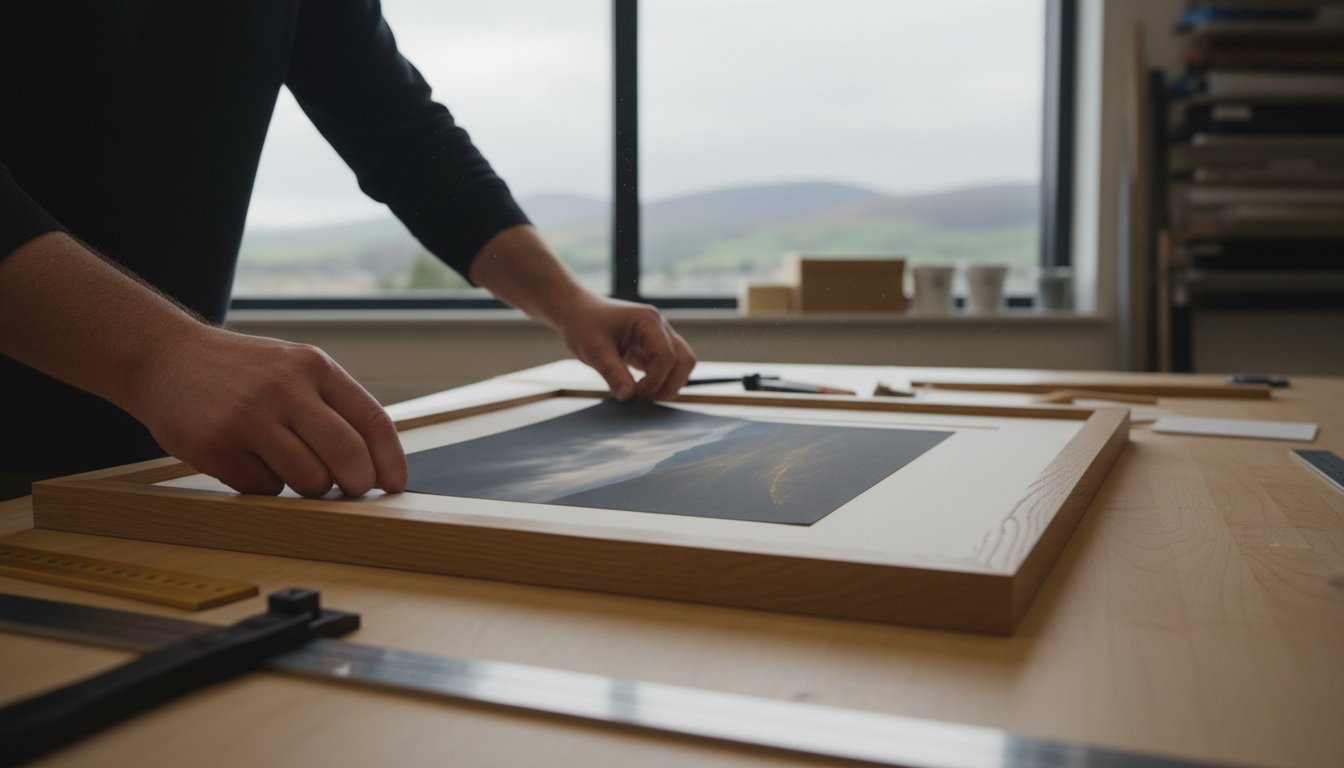
Choosing the right border for a masterpiece involves more than just selecting a colour that matches your sofa. At the First4frames gallery, we believe a frame acts as the essential bridge between your room décor and the artwork, often doing the heavy lifting in the relationship by pulling the viewer into the scene. For those who curate private collections, bespoke framing for collectors is a technical requirement rather than a mere aesthetic choice. It represents an artisan-led process where every millimetre is calculated to suit the specific needs of a single piece of art. Unlike mass-produced alternatives, this tailored approach ensures that the materials used are chemically inert and physically supportive, honouring the 20 years of expertise our team brings to every project.
A picture frame serves as the primary line of defence for your investment, yet many off-the-shelf options actually accelerate the degradation of the art they are meant to protect. When you purchase a piece from our featured artists, the longevity of that work depends entirely on the environment created within the glazing and the mount. Professional bespoke framing provides the necessary breathing room, using spacers or deep mounts to ensure the artwork never touches the glass. This prevents moisture trapped by condensation from causing the art to stick to the glazing, a disaster that ruins roughly 15% of works framed in non-professional, tight-fitting shop-bought frames.
To better understand this concept, watch this helpful video:
The Hidden Dangers of Mass-Produced Frames
Standard frames often use cheap MDF or acidic wood that releases harmful gases, a process known as outgassing, which can deteriorate pigments over a 5-year period. These frames typically come in fixed sizes, forcing collectors to trim their art or use adhesive tapes that leave permanent residues. Acid-migration is the chemical transfer of harmful acids from non-archival framing materials into the paper of an artwork, resulting in permanent yellowing and brittle fibres. Our specialist service avoids these pitfalls by using only museum-grade, acid-free components.
Framing as an Investment Protection Strategy
High-quality bespoke framing for collectors is a proven method for maintaining “mint condition” status, which is vital for the resale value of £1,000+ artworks. By utilising 99% UV-protective glass, we prevent the sunlight fading that affects 72% of unprotected art kept in bright rooms. Because of these risks, UK insurance companies frequently require professional framing for high-value items before they provide coverage. Our 20 years of experience ensures your collection meets these rigorous standards while looking spectacular on your walls.
The difference between a standard frame and a bespoke creation is the difference between storage and presentation. When you trust a professional with your collection, you aren’t just buying wood and glass; you’re securing a legacy. The craftsmanship involved in a hand-finished frame increases the perceived value of the work, making it feel like a true gallery piece. At First4frames, we take pride in being a one-stop-shop that understands the delicate balance between artistic beauty and scientific preservation, ensuring your art remains as vibrant as the day it was created.
The Anatomy of a Collector-Grade Frame: Materials and Craftsmanship
When you explore the First4frames gallery, you’ll find spectacular works by artists who rely on our 20 years of expertise to protect their legacy. A frame is the bridge between your room décor and the artwork, but it also performs the heavy lifting in the relationship. To ensure a piece remains pristine for decades, the choice of moulding is critical. We prioritise premium, sustainably sourced hardwoods like solid oak, walnut, and ash; understanding the journey of these materials from forest to workshop is key, and specialists like Bourbon Bigfoot Woodworking offer great insights into this craft. These materials provide the necessary tensile strength to prevent warping, a common issue with cheaper alternatives that can’t handle the tension of a taut mounting system. Our commitment to this level of detail is why we maintain excellent customer ratings on leading review platforms, reflecting our status as a trusted partner for UK collectors.
The joinery technique used is just as vital for longevity. While underpinning is standard for smaller items, we often utilise Hoffmann dovetail keys for larger gallery pieces. This mechanical join uses a polymer or wooden key to lock the mitred corners together, ensuring the frame stays square even as the wood naturally breathes with seasonal changes. This meticulous approach to bespoke framing for collectors ensures that the structural integrity of the piece is never compromised. Following the conservation guidelines for displaying art is a great way to understand environmental risks, but a well-constructed frame is your primary shield against physical damage and time.
Understanding Archival Mounts and Backings
Standard wood-pulp boards contain lignin, which eventually breaks down into acid, causing the dreaded yellowing on the edges of your art. For the Giclée prints found in our gallery, we exclusively use 100% cotton rag or alpha-cellulose museum-grade mounts. These pH-neutral materials are non-negotiable for anyone wanting to preserve the value of their collection. Beyond chemistry, the mount serves a physical purpose. It creates a 2.5mm air gap between the artwork and the glazing. This space is essential to prevent blocking, where moisture or temperature changes cause the art to stick to the glass, leading to permanent damage.
Glazing Options: From Standard to Museum Glass
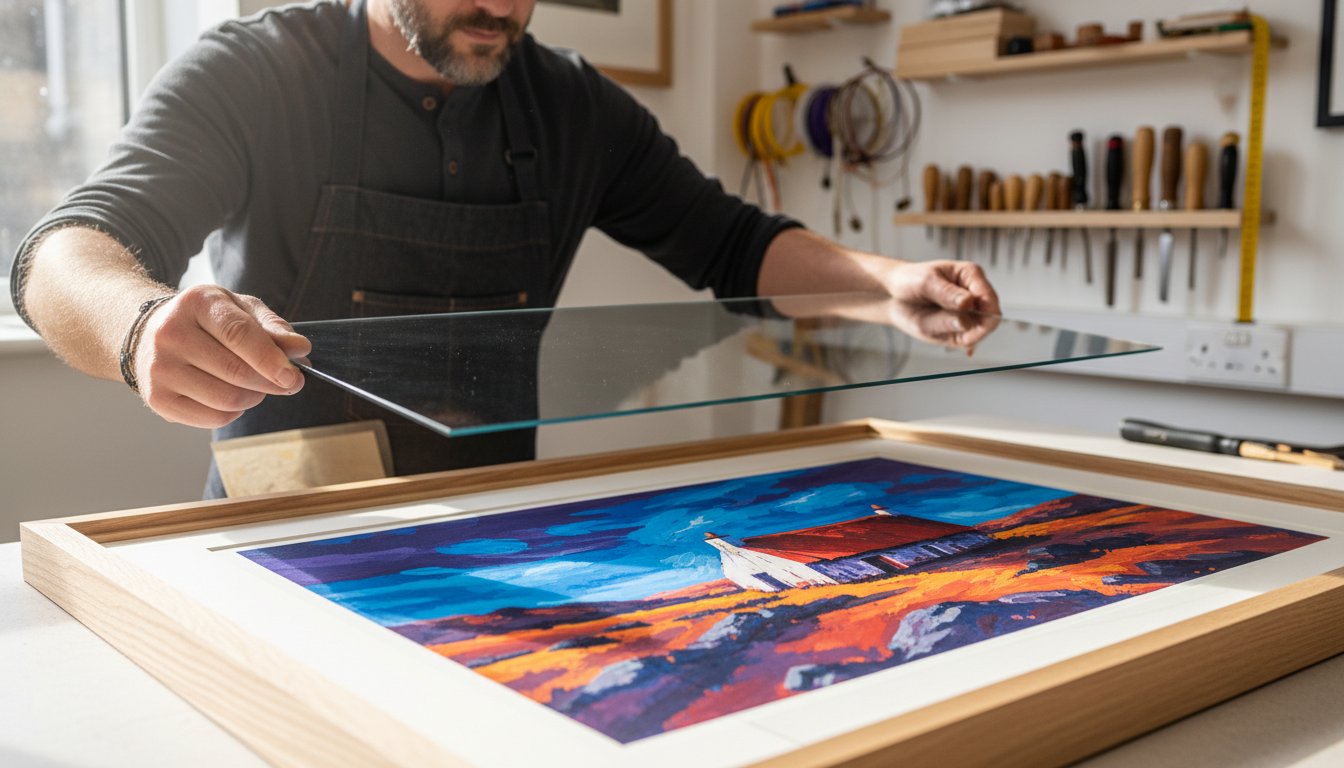
Glazing is the final layer of protection. Standard 2mm float glass offers minimal protection, blocking only about 45% of UV light. Over a 10-year period, this lack of filtration will cause vibrant colours to dull. We offer museum-grade glass that filters 99% of UV rays while providing an anti-reflective finish that makes the glass almost invisible. This allows you to see every fine detail of the brushwork without distracting reflections. For very large frames or those destined for public spaces, we often recommend high-quality acrylic glazing. It’s half the weight of glass and virtually shatter-proof, offering a safer alternative without sacrificing clarity. You can see these different finishes in action when you view our latest artist collections.
Choosing the Right Style: Matching Frame to Art and Décor
At First4frames, we view the frame as a vital bridge between your room’s interior design and the artwork itself. It’s the element that does the heavy lifting in the relationship, pulling the viewer into the scene while grounding the piece within your home. Choosing bespoke framing for collectors involves more than just picking a colour; it requires a deep understanding of how textures and profiles interact with different artistic movements. We’ve spent over 20 years helping clients find this balance, ensuring every selection feels like a natural extension of the art.
Traditional oil paintings often demand deeper, ornate profiles that mirror the grandeur of the 19th century. Conversely, a mid-century abstract piece might look lost in a heavy gold gilt frame. Our team helps you match the frame’s architecture to the era of the work. We source premium wood mouldings that reflect these historical nuances, from classic fluted edges to sleek, flat-faced modern styles. This attention to detail is why our service is consistently rated five stars by our local community of art lovers.
Frame width plays a significant role in the psychology of a room. A bold, wide frame creates a sense of importance and can make a small sketch feel like a primary focal point. Subtle, thin frames are often better for large-scale works where you want the art to speak for itself without distraction. We often recommend wider mounts for delicate watercolours to provide visual breathing room, which prevents the frame from crowding the artist’s fine details. It’s a delicate balance that our experienced consultants help you master during the design process.
Creating a sophisticated interior involves more than just what hangs on the walls. Centrepieces like hand-carved chess sets can also serve as functional art, bringing a sense of history and intellectual elegance to a study or living room. Collectors interested in this kind of heritage craftsmanship can visit Official Staunton to explore their selection.
Framing Scottish Landscapes and Vibrant Colour
Artists like John Lowrie Morrison, known as Jolomo, use a vibrant palette that defines the Scottish landscape. When you’re framing these high-colour works from the First4frames gallery, natural wood finishes like oak or ash are excellent choices. They provide a rugged, organic texture that complements the thick impasto of the paint. We use neutral, acid-free mounts to let those spectacular blues and oranges pop, ensuring the frame supports the art without competing for attention. This approach preserves the energy of the Highlands while making the piece sit comfortably in a contemporary British home.
Contemporary and Minimalist Framing Trends
Modern collectors are increasingly turning to tray frames for canvas works, which create a sophisticated floating effect by leaving a small gap between the canvas edge and the frame. This style is perfect for contemporary office spaces or minimalist homes where clean lines are essential. For those looking to achieve a professional gallery wall, we suggest using consistent bespoke framing for collectors across different pieces. Using sleek aluminium or monochromatic wood frames creates a unified look even if the artworks vary in style. This gives your collection a curated feel that mirrors a high-end exhibition, all while benefiting from our hassle-free, speedy service.
The Collector’s Checklist: 5 Steps to Professional Bespoke Framing
Every piece in your collection deserves a presentation that reflects its unique story. Whether you’ve acquired a vibrant landscape from the First4frames gallery or a delicate limited edition print, the right frame acts as a bridge between the art and your living space. Achieving this requires a methodical approach. High-quality bespoke framing for collectors isn’t just about aesthetics; it’s a technical process designed to shield your investment from the elements while elevating its visual impact.
Step 1: Assess the medium and preservation needs. Identify if the work is a Giclée print, an original oil, or a fragile charcoal sketch. Each requires different mounting techniques to prevent acid damage or ink transfer over time.
Step 2: Measure with absolute precision. You must account for the frame rebate, which is the inner lip that holds the glass and art in place. A standard 5mm overlap ensures the artwork stays secure without obscuring vital details.
Step 3: Select a moulding that enhances the narrative. Don’t just match your sofa. Choose a profile that complements the artist’s style. A sleek, dark ash frame might suit a modern abstract, while a hand-finished gold leaf moulding brings out the warmth in a traditional portrait.
Step 4: Choose glazing based on the environment. If your art will hang opposite a window, 99% UV-protective glass is essential to prevent fading. Anti-reflective options allow the colours to pop without distracting glares.
Step 5: Trust a professional artisan. Look for a workshop with at least 20 years of experience. A master framer understands how materials react to humidity and temperature changes in British homes.
Measuring and Planning Your Frame
Precision is the hallmark of a serious collector. When measuring, never lay a tape measure directly onto the surface of a print; use a high-quality steel ruler held slightly above the piece to avoid scratches. Decide on your mount borders based on the print’s scale; larger works often benefit from wider 75mm borders to provide breathing room. To achieve a balanced aesthetic, the bottom mount border should be slightly wider than the top and sides, following the traditional golden ratio principle. This prevents the artwork from looking as though it’s “sinking” within the frame.
Evaluating a Professional Framer
A workshop should be more than just a shopfront; it should be a clean, organised environment where your art is treated with reverence. Check for a track record of success, such as a 4.9-star rating on independent review platforms, which signals reliability and consistent quality. For busy collectors, a “hassle-free” and “speedy” service is vital. You shouldn’t have to wait months to see your piece on the wall. Choosing a “one-stop-shop” like First 4 Frames, which handles both high-end Giclée printing and bespoke framing, ensures a seamless transition from digital file to finished masterpiece. This integrated approach eliminates the risk of damage during transport between different suppliers.
First4Frames Gallery: Where Creativity Meets Craftsmanship
First4Frames has spent over 20 years perfecting the art of the finish. We understand that a frame is more than just a border; it is the bridge between your room décor and the artwork itself. Our gallery showcases a curated selection of pieces from iconic artists like Jack Vettriano and Jolomo, ensuring that collectors have access to world-class imagery paired with world-class craftsmanship. We take pride in our role as a trusted partner for those who appreciate fine art, offering a service that is as professional as it is passionate. Our team understands that the frame does the heavy lifting in the relationship between the art and the viewer, pulling you into the picture and anchoring it within your home.
Our simple three-step process makes acquiring ready-to-hang art straightforward:
Step One: Browse our extensive online gallery to find a piece that resonates with your aesthetic.
Step Two: Select from our range of premium, bespoke frames designed to enhance the specific tones of your chosen art.
Step Three: Place your order and let our artisans handle the rest, delivering a professionally finished product to your door.
Our Bespoke Framing Service in Falkirk
While our roots are firmly planted in Falkirk, our reach extends across the entire United Kingdom. We combine local craftsmanship with a robust nationwide delivery network, ensuring your art arrives in pristine condition regardless of your postcode. Our team manages more than just individual requests. We’ve successfully handled commercial art curation for over 25 property developers and luxury hotels, creating cohesive visual atmospheres that define high-end spaces. A vital part of our service is our Giclée printing package. We produce an identical copy of original works using archival-grade inks that are guaranteed not to fade for 80 years. This integrated approach makes bespoke framing for collectors a hassle-free experience, as we control the quality from the first drop of ink to the final backing nail.
The First4Frames Signature: Quality You Can Trust
We’ve built our reputation on a foundation of excellence, a fact reflected in our 4.9 out of 5-star rating across independent review platforms. These scores aren’t just numbers; they represent thousands of satisfied collectors who trust us with their most prized possessions. We operate as a true one-stop-shop, providing everything from the initial print to the final conservation-grade mount. This eliminates the need to coordinate between different suppliers, saving you time and ensuring a consistent standard of quality. Whether you’re an individual looking for bespoke framing for collectors or a business requiring a large-scale installation, we treat every project with the same level of artisan care. We source only the finest materials, from FSC-certified woods to specialist clarity glass, because we believe your art deserves nothing less than perfection.
Give Your Collection the Professional Protection It Deserves
Your art collection represents a significant personal investment. It’s more than just ink on paper; it’s a narrative that deserves to be told through the right lens. Whether you’re showcasing vibrant Scottish fine art prints or rare editions from our featured artists, a frame acts as the essential bridge between your room décor and the artwork itself. We’ve spent over 20 years perfecting our craft as artisans, ensuring every piece receives the museum-quality care it needs to last a lifetime.
Standard frames often fail to protect against environmental damage. Choosing bespoke framing for collectors ensures your investment is shielded by acid-free materials and specialist glass. By following our five-step professional checklist, you’ll transform a simple print into a spectacular focal point that won’t fade over time. Our excellent customer ratings on review platforms reflect our commitment to this high standard of service. We make the process simple and hassle-free, taking the heavy lifting out of preserving your treasures.
What is the difference between bespoke framing and custom framing?
Bespoke framing is a tailor-made service where every element is designed from scratch to suit a specific piece of art. While custom framing often uses pre-set sizes and standard materials, our bespoke service involves unique consultations to select hand-finished mouldings and exact proportions. At First4Frames, we treat each project as a unique commission, ensuring the frame acts as a bridge between your room décor and the artwork.
How much does bespoke framing for collectors typically cost in the UK?
Bespoke framing for collectors typically costs between £65 and £450 per piece in the UK, depending on the dimensions and material choices. Small Giclée prints might start at £45, while large-scale original oils featuring ornate hand-finished wood can exceed £800. Our 20 years of experience ensures you receive a premium service that reflects our 4.9-star rating on Google Reviews, providing value that protects your investment.
Does bespoke framing include UV protection for my art?
Yes, bespoke framing includes options for 99% UV-protective glass to prevent your artwork from fading over time. Standard glass only blocks about 25% of harmful rays, so we recommend Artglass or Museum Glass for any valuable collector pieces. This is particularly important for the vibrant Giclée prints found in our gallery, as it ensures the lightfast inks remain spectacular for over 75 years without any discolouration.
How long does the bespoke framing process usually take?
The bespoke framing process usually takes between 7 and 14 working days from your initial consultation. This timeframe allows our artisans enough time to source premium materials and hand-assemble your frame with precision. If you’re using our print-and-frame service for a digital file, we often complete these orders within 5 days, maintaining our reputation for a speedy, professional service that doesn’t compromise on craftsmanship.
Can I get a bespoke frame for a Giclée print I bought online?
You can certainly get a bespoke frame for a Giclée print purchased elsewhere, though many collectors prefer our one-stop-shop service. We specialise in bespoke framing for collectors who’ve acquired pieces online and need professional mounting to flatten the paper and protect the edges. Our workshop handles over 200 external prints monthly, applying the same high standard of craftsmanship we use for the artists featured in our own gallery.
What is archival-quality framing and why do collectors need it?
Archival-quality framing uses acid-free mount boards and pH-neutral adhesives to prevent the chemical degradation of your artwork. Collectors need this because standard materials can cause “foxing” or brown spots on paper within 5 to 10 years. By choosing archival components, you ensure your collection remains in gallery condition, which is vital for maintaining the resale value of limited edition prints or original commissions.
How do I choose the best frame colour for a vibrant Scottish landscape?
A deep navy or a natural dark oak frame often works best for a vibrant Scottish landscape to complement the cool blues and earthy greens. Avoid overly bright golds that might distract from the heather and hills; instead, choose a frame that pulls you into the picture. Our gallery consultants often recommend a double mount with a 5mm offset to add depth, a technique we’ve perfected over 2,000 landscape framing projects.
Can First4Frames provide bespoke framing for commercial art orders?
First4Frames provides comprehensive bespoke framing for commercial art orders, ranging from boutique hotel refits to corporate office displays. We’ve successfully managed projects involving over 150 framed pieces for single UK contracts, offering a hassle-free experience for interior designers and business owners. This service is distinct from our individual gallery sales, providing scalable solutions while maintaining the premium quality that earns us consistent 5-star feedback.
In March 2024, a collector visited our First4Frames Gallery with a stunning landscape print that had lost its lustre after just 24 months in a standard off-the-shelf frame. It’s a common story that highlights a painful truth; a cheap frame often acts more like a slow-acting poison than a protective shield. You’ve invested your passion and hard-earned pounds into pieces by our featured artists, so it’s only natural to worry about vibrant colours fading or paper yellowing. We believe that protecting your art investment with framing should be straightforward, not a source of technical confusion.
This guide shows you how our bespoke framing service acts as a vital insurance policy for your artwork, preserving its financial value and spectacular beauty for decades. We’ll demystify archival materials and UV-resistant glass so you can make informed choices. You’ll discover how our team, backed by 20 years of craftsmanship and a 4.9-star customer rating, creates the perfect bridge between your room décor and the fine art you love. Whether you are browsing our gallery or using our professional print-and-frame service, you’ll gain the peace of mind that your collection is safe.
Key Takeaways
Learn why professional archival materials are essential for halting chemical decay and preserving the vibrant colours of Jolomo prints from the First4Frames gallery.
Discover the technical benefits of conservation-grade UV glass and pH-neutral materials, which are vital for protecting your art investment with framing against long-term environmental damage.
Understand the structural risks that budget, mass-produced frames pose to your collection compared to the premium, bespoke craftsmanship of a professional workshop.
Explore how our one-stop-shop service combines over 20 years of expertise with a hassle-free approach to help you find and preserve the perfect piece of fine art.
The Hidden Value of Your Art: Why Professional Protection is Non-Negotiable
At the First4frames gallery, we believe a frame does much more than just sit on a wall. It acts as the essential bridge between your room décor and the artwork itself, pulling the viewer into the scene while providing a structural sanctuary. Whether you have acquired a limited edition Giclée print or a bespoke original, protecting your art investment with framing is a technical necessity rather than a luxury. True protection involves using archival-grade materials to halt the chemical and environmental decay that begins the moment a piece is exposed to the atmosphere. Our team has spent over 20 years perfecting this balance between spectacular presentation and scientific preservation.
Understanding the purpose of a picture frame helps collectors see beyond the aesthetic border. Even affordable prints from our curated collections deserve professional attention because their sentimental and aesthetic value is often irreplaceable. When you choose a professional service, you aren’t just buying wood and glass; you are securing the longevity of a piece that brings beauty to your home. Our excellent customer ratings across major review platforms reflect our commitment to this high standard of craftsmanship.
To better understand this concept, watch this helpful video:
Art as a Tangible Asset
In the UK art scene, the physical state of a piece directly dictates its market worth. A 10% decline in condition can lead to a 30% reduction in gallery valuation, making “mint condition” a non-negotiable requirement for future resale. Art preservation is a proactive measure against irreversible environmental factors. By using premium materials, we ensure that your artwork remains as vibrant as the day it left our workshop. This focus on quality makes protecting your art investment with framing a smart financial decision for any collector.
The Invisible Threats to Your Collection
Your artwork faces a constant battle against three primary enemies: light, humidity, and acidic contact. UV rays are particularly aggressive, breaking down pigments in even the highest quality Giclée prints within just 24 months if left behind standard glass. We use glazing that filters out 99% of harmful UV rays to prevent this fading. Another silent killer is “mat burn,” a brown staining caused by non-archival, wood-pulp mountboards that leach acid into the paper over time. At First4frames, we only source acid-free, conservation-grade boards to eliminate this risk.
The British climate presents its own unique challenges for art owners. Fluctuating humidity in UK homes, which often rises above 60% in winter months, can lead to several issues:
Cockling: The unsightly rippling of paper as it expands and contracts.
Mould Growth: Spores that thrive in damp, trapped air pockets behind the glass.
Adhesion: The physical sticking of the artwork to the glazing, which can ruin the surface permanently.
Our professional framing service creates a controlled micro-environment. We use spacers and specific sealing techniques to ensure air circulates correctly while keeping moisture at bay. By addressing these invisible threats, we transform a simple picture into a lasting legacy. It’s a straightforward, three-step process to secure your collection, ensuring your art remains a spectacular focal point for decades to come.
The Science of Preservation: UV Glass and Archival Materials
When you select a piece from the First4Frames Gallery, such as a vibrant Giclée print by one of our featured artists, you’re buying more than just paper and ink. You’re making a long-term commitment to a piece of culture. Protecting your art investment with framing isn’t just about aesthetics; it’s about chemistry. A conservation-grade frame acts as a controlled environment. It shields the work from humidity, pollutants, and light. We’ve spent over 20 years refining our process to ensure every bespoke frame we build meets these rigorous standards.
Technical components define a true preservation frame. A key part of this is airflow. We never let the art touch the glass. Condensation can form on the inner surface of the glazing. If the art is pressed against it, that moisture transfers directly to the fibres. This leads to mould growth or “cockling,” which is the term for paper warping. We use spacers or deep mounts to create a 3mm to 5mm gap. This small pocket of air is vital for preventive conservation techniques that keep the paper stable over decades.
Protective Glazing: Sunscreen for Your Art
Standard float glass offers almost zero protection against ultraviolet rays. Over just five years, consistent UV exposure can bleach up to 40% of the pigment from a standard print. We recommend 99% UV-filtering conservation glass as the minimum standard. It’s the industry gold standard for a reason. For the ultimate experience, anti-reflective museum glass provides the same protection while making the glass virtually invisible. This allows the true colours of the artwork to shine without distracting glares.
Pro Tip: To check if your current art is suffering from light damage, look at the edges under the mount. If the exposed area looks duller or more yellow than the hidden edge, UV rays are already degrading the piece.
Mounting and Backing: The Acid-Free Barrier
The boards behind and around your art matter just as much as the glass in front. Standard wood-pulp boards contain lignin, which turns into acid over time. This causes that ugly brown “mat burn” often seen on old family photos. We use pH-neutral, alpha-cellulose, or 100% cotton rag boards. These materials are naturally alkaline and won’t yellow or brittle over a 100-year period. Protecting your art investment with framing requires that the backing board is just as protective as the front-facing mount to create a complete archival seal.
Our mounting techniques are always reversible. We use T-hinges and acid-free tapes that can be removed without tearing the paper fibres. This “do no harm” philosophy ensures the artwork remains in its original condition, which is vital for maintaining its financial value. Our customers often mention in their reviews how much they value this professional attention to detail. We source only the best premium materials because we know how much your collection means to you. If you’re looking for inspiration for your next project, you can browse our latest artist collections to find a piece worth preserving.
Every bespoke project we handle at First4Frames is treated with the same level of artisan care. Whether it’s a valuable original or a sentimental print, the science remains the same. By using pH-neutral barriers and high-performance glazing, we create a bridge between your room décor and the artwork that lasts for generations.
Bespoke vs. Off-the-Shelf: Why Budget Frames Can Destroy Value
When you browse the First4Frames gallery and select a stunning Giclée print by one of our featured artists, the frame you choose acts as the guardian of that piece. Protecting your art investment with framing starts with rejecting the false economy of mass-produced alternatives. These budget options often consist of composite MDF, thin plastic, or even cardboard components that degrade within 24 months. In our Falkirk workshop, we source premium timbers and conservation-grade materials that provide a stable environment for your artwork, ensuring it remains as vibrant as the day it was created.
The Structural Integrity of Bespoke Craftsmanship
Bespoke frames are built to last decades, whereas mass-produced versions rely on flimsy staples at the corners that often pull apart under the weight of the glass. Our team hand-joins every corner, ensuring the mitres are seamless and structurally sound. This strength is vital for larger pieces from our collection that require heavy-duty support. Custom sizing means we never force a print into a “near-enough” size, a common mistake that leads to buckled paper and crushed edges. When you order from First4Frames, you receive a ready-to-hang piece that’s perfectly balanced and hassle-free.
The difference in material quality is stark. Off-the-shelf frames frequently use standard window glass that allows 100% of harmful UV rays to penetrate the art. We offer high-performance glazing options that filter out up to 99% of UV light. By choosing a professional finish, you’re avoiding the structural failures that see cheap frames bowing or dropping their contents after a single season of humidity changes in a typical UK home.
The Hidden Costs of Cheap Framing
A cheap frame is often a temporary solution that creates a permanent problem for art longevity. Acidic tapes and spray glues used in DIY framing can bond to the paper fibres in as little as six months, leading to “acid burn” or yellowing that significantly devalues the work. Professional framing adheres to archival preservation standards, ensuring every process is reversible. Reversibility is the hallmark of a master framer; it means if you decide to reframe your piece in 20 years, it will emerge from the current housing in its original, pristine condition.
Restoration Costs: Repairing a stained or foxed print can cost upwards of £250 per hour for a specialist conservator.
Replacement Value: Limited edition prints from our gallery often appreciate in value; a damaged print loses up to 80% of its market worth.
Longevity: Bespoke frames use pH-neutral mount boards that prevent the “tide marks” seen in budget alternatives.
Choosing a bespoke service is an upfront investment in the future of your collection. While a budget frame might cost £15, it lacks the protective qualities of a £70 or £90 professional mount and frame. When you consider that protecting your art investment with framing prevents the total loss of a £300 print, the value of artisan craftsmanship becomes clear. Our 20 years of experience in the industry has shown that the most expensive frame is the one you have to buy twice because the first one ruined the art.
Tailoring Protection to Your Collection: From Prints to Memorabilia
Every piece in your collection tells a unique story, whether it’s a vibrant landscape or a cherished family heirloom. At the First4Frames gallery, we understand that protecting your art investment with framing requires a bespoke approach tailored to the specific medium. A delicate Giclée print faces different environmental threats than a heavy bronze medal or a signed football shirt. Our role is to act as a bridge between your room’s decor and the artwork, ensuring the frame does the heavy lifting to keep your items safe.
Framing Giclée Fine Art Prints
Giclée prints are celebrated for their incredible detail and colour accuracy, but they remain sensitive to light. Even though high-quality inks are durable, exposure to direct sunlight leads to a “colour shift” where certain pigments fade faster than others. For the vibrant, high-energy Scottish landscapes found in our collection of Jolomo prints, we recommend using glass with at least 99% UV protection. This preserves the intense cobalt blues and fiery cadmium oranges John Lowrie Morrison is famous for. To make the artwork pop, choose mount colours like off-white or deep cream that provide a neutral space between the bold palette and the frame.
When you’re framing iconic Jack Vettriano prints, the goal is to enhance that signature cinematic mood. A dark, sleek wood frame often provides the necessary weight to ground the piece. Using a deep mount helps create a sense of perspective, pulling the viewer into Vettriano’s mysterious narratives. Our team ensures the paper is never in direct contact with the glass. This prevents moisture build-up that can cause “cockling” or ripples in the print over time, which is a vital step in protecting your art investment with framing.
Memorabilia and 3D Objects
Not all treasures are flat. Items like military medals, sports shirts, or antique pocket watches require “shadow box” or box frames. These frames provide the depth needed to house 3D objects without crushing them against the glazing. By using a bespoke memorabilia picture frame service, you create a sealed environment. This setup is crucial because it blocks out dust and prevents pests from damaging organic materials like fabric or leather. It’s a professional solution that turns a drawer-bound item into a protected centrepiece.
Our craftsmen at First4Frames have over 21 years of experience securing 3D items using non-invasive techniques. We don’t use harmful glues that might devalue a rare item or cause chemical staining. Instead, we use specialist stitching or discreet supports to keep your memorabilia in place. This professional approach ensures your keepsakes look spectacular while remaining preserved for decades. Whether it’s a jersey from a 1990s cup final or a Victorian family heirloom, the right box frame adds value and security.
Expert Craftsmanship at First4Frames Gallery: Your Partners in Art Preservation
Choosing the right partner for protecting your art investment with framing shouldn’t be a gamble. Since 2001, First4Frames Gallery has refined the delicate balance between aesthetic beauty and archival security. We’ve spent over 23 years mastering the nuances of different mediums, from delicate watercolours to heavy oils. This deep-rooted expertise means we understand exactly how materials react to light, humidity, and time. We don’t just put a border around a picture; we create a permanent sanctuary for your investment.
We’ve built our reputation on being a comprehensive one-stop-shop. This means you don’t have to risk transporting a vulnerable, unframed canvas across town or dealing with multiple vendors. You can select a spectacular piece from our gallery and have it expertly fitted in our workshop under one roof. Our excellent customer ratings, which consistently sit at a 4.9-star average across major review platforms, prove that we don’t just talk about quality; we deliver it every single time. It’s this level of trust that makes us the preferred choice for serious collectors and casual art lovers alike throughout the UK.
The Falkirk Workshop: Where Creativity Meets Craftsmanship
Our workshop in the heart of Falkirk is the engine room of our creativity. While we’re a local Scottish business at our core, our reach extends across the entire UK, bringing premium framing to your doorstep. We combine traditional joinery techniques with modern preservation technology to ensure every frame acts as a protective shield. You’re invited to browse our online gallery to find your next investment piece from our carefully curated selection of artists. We’ve made the acquisition process incredibly simple with our three-step system:
Step One: Browse our extensive online collection of fine art and limited edition prints.
Step Two: Select the bespoke frame and mount that perfectly complements the artwork and your home décor.
Step Three: Place your order and wait for our specialists to hand-finish your piece for secure, speedy delivery.
Commercial and Bespoke Services
Our expertise isn’t limited to private homes. We provide dedicated services for property developers, interior designers, and corporate offices looking to safeguard their professional collections. Whether you’re outfitting a new hotel or protecting your art investment with framing in a busy boardroom, we offer the same level of precision and care. We understand that corporate art is a significant financial asset that requires professional management. If you have a treasured item that needs a master’s touch, you can easily get a custom picture framing quote through our website or by visiting us in person. We handle everything from sports memorabilia to heirloom textiles with the same passion we bring to fine art. Don’t leave your collection’s future to chance. Explore our collection and protect your art today at First4Frames Gallery.
Secure the Future of Your Fine Art Collection
Your art collection deserves more than a temporary home; it needs a permanent shield against the environment. By choosing archival-grade materials and UV-resistant glass, you aren’t just decorating. You’re protecting your art investment with framing that lasts for decades. At First4Frames Gallery, we’ve spent over 20 years in Falkirk perfecting this delicate craft. We act as a professional bridge between your home décor and the spectacular pieces created by our featured artists.
Our gallery serves as a dedicated one-stop-shop where premium Giclée prints meet bespoke craftsmanship. Our high ratings on independent review platforms reflect a commitment to excellence across our three distinct areas: our curated gallery, our specialist picture framing, and our integrated print-and-frame services. Whether you’re investing in a new artist or preserving a cherished original, our expertise ensures your collection retains its spectacular value. It’s time to give your walls the quality they deserve.
We’re excited to help you find and protect a piece of art that you’ll treasure for a lifetime.
Frequently Asked Questions
How much does professional bespoke framing typically cost in the UK?
Bespoke framing in the UK typically costs between £45 for a small photo and over £300 for large, complex pieces. At First4Frames, we provide transparent pricing based on your choice of premium wood mouldings and specialist glass. Most customers spend approximately £85 on a standard A3-sized frame that includes conservation-grade mounting and professional assembly.
Will UV-protected glass stop my art from fading completely?
UV-protected glass filters out up to 99% of harmful ultraviolet rays but won’t stop fading entirely if the artwork sits in constant, direct sunlight. Heat and humidity also contribute to the degradation of pigments over time. Protecting your art investment with framing involves using this 99% UV-filter glass to extend the vibrant life of your Giclée prints by 75 years or more.
What is the difference between acid-free and conservation-grade mounting?
Acid-free mounting is pH neutral only at the time of manufacture, while conservation-grade materials remain chemically stable for 20 years or longer. We use alpha-cellulose boards that don’t off-gas or yellow your artwork like cheaper alternatives do. This ensures the bridge between your room décor and the artwork remains pristine without the “acid burn” often seen in older, budget framing.
Can I change the frame later without damaging the artwork?
You can easily change your frame in the future if the original framer used reversible techniques like T-hinging with Japanese paper. Our experts never use permanent adhesives or pressure-sensitive tapes on original art or limited editions. This flexibility allows you to update your style as your home décor evolves over the next 10 to 15 years without devaluing the piece.
Is it worth framing a cheap print with expensive conservation materials?
It’s definitely worth using conservation materials for any print you love because low-quality paper yellows 50% faster than professional Giclée prints. A premium frame does the heavy lifting in the relationship between the art and the viewer. It transforms a £15 poster into a spectacular focal point that stays protected for decades.
How do I know if my art is touching the glass and why is that bad?
You can tell art is touching the glass if you see “rainbow” Newton rings or dark patches that look like wet spots. This is dangerous because trapped condensation can cause the paper to stick to the glass or grow mould within 12 to 24 months. We use 2mm or 3mm spacers or deep window mounts to create a vital air gap that prevents this damage.
What are the best frame styles for modern Scottish landscape paintings?
Modern Scottish landscapes, such as those featured in our gallery, look spectacular in hand-finished wood “tray” or “floater” frames. These styles provide a 5mm shadow gap that makes the canvas appear to levitate within the border. Deep, natural wood finishes or minimalist white frames are currently the top choice for 65% of our landscape art customers.
How long does the bespoke framing process usually take at First4Frames?
Our bespoke framing process typically takes 7 to 10 working days from the moment you confirm your order. We pride ourselves on a speedy, hassle-free service that doesn’t compromise on our 20 years of artisan craftsmanship. You’ll receive a notification the moment your professionally framed artwork is ready for collection or secure dispatch.
That beautiful antique map or fragile family document holds a piece of history in its very fibres. You know it deserves to be displayed with pride, not hidden away, but the thought of getting it wrong can be daunting. What if you cause irreparable damage? The world of ‘archival mounts’ and ‘UV-protective glass’ can feel like a foreign language, and the potential cost of professional work is a genuine worry. But the art of framing antique maps and documents is a craft built on care and precision, and it’s more accessible than you might think.
This complete guide is your trusted partner on this preservation journey. We’ll demystify the entire process, translating the technical jargon into simple, clear choices. You will learn how to select the perfect bespoke frame that honours your heirloom and the premium materials that will safeguard its monetary and sentimental value for generations. By the end, you’ll have the confidence to protect your investment and transform your precious item into a spectacular display, ensuring its story can be enjoyed for many years to come.
Why Professional Framing is Crucial for Antique Maps & Documents
An antique map or document is more than just a beautiful decoration; it’s a tangible piece of history. The paper, ink, and colours have survived for generations, but they are incredibly fragile. Entrusting such a treasure to a standard, off-the-shelf frame can unfortunately do more harm than good, which is why professional, bespoke framing is not a luxury-it’s an essential act of preservation.
To see why the right materials and techniques are so important, this short video offers some excellent tips:
The Hidden Dangers of DIY & Standard Frames
The biggest threat to your antique item often comes from the very materials meant to display it. Standard frames frequently contain silent destroyers that cause irreversible damage over time. These include:
Acidic Materials: Low-quality mount boards and backings can leach acid into the paper, causing the tell-tale brown staining known as ‘mat burn’ and overall yellowing.
Damaging Adhesives: Standard tapes and glues become brittle, stain the paper, and are often impossible to remove without tearing the delicate fibres of the document.
UV Radiation: Without specialist UV-protective glazing, sunlight will cause the vibrant inks and delicate paper of your map to fade and degrade rapidly.
Trapped Moisture: An improperly sealed frame can trap humidity, creating the perfect environment for mould growth and ‘foxing’-those unsightly brown spots.
What is Conservation Framing?
Conservation framing is the professional standard for protecting valuable and fragile items. It’s a specialised approach, rooted in the established principles of document conservation, where every material and technique is chosen with preservation as the primary goal. This meticulous process ensures that everything touching your artwork is acid-free and archival-grade. Crucially, all methods used are completely reversible, meaning your map can be safely removed from its frame in the future, in the exact same condition it went in.
Protecting Your Investment and Your History
Proper framing of antique maps and documents is a direct investment in their future. For a collector, it maintains or even increases the item’s monetary value, ensuring a piece worth hundreds or thousands of pounds isn’t devalued by preventable damage. For a family, it preserves a priceless heirloom, safeguarding a piece of your personal history for your children and grandchildren to cherish. Ultimately, a bespoke conservation frame does more than just decorate a wall; it honours the item’s story and presents it with the care and respect it deserves.
The Anatomy of a Conservation Frame: Key Materials Explained
Choosing a frame is about more than aesthetics; it’s about creating a safe, stable environment for your treasured piece. Understanding the anatomy of a professional conservation frame empowers you to make informed choices. Each component, from the glass to the backing board, plays a vital role. We’ll break down the technical terms into simple concepts, so you know exactly what to ask your framer to ensure your history is preserved for generations.
Glazing: Your Shield Against Damaging Light
The glazing is your map’s first line of defence against the environment. While standard glass offers basic physical protection, it does little to stop the invisible threat of ultraviolet (UV) light, which causes fading and paper degradation. For any valuable document, you should consider:
UV-Filtering Glass: This specialist glass blocks up to 99% of harmful UV rays, acting as a crucial sunscreen for your map.
Anti-Reflective Glass: For crystal-clear viewing without distracting reflections, this option offers superb clarity, making you feel closer to the artwork.
Acrylic (Perspex): A lightweight and shatterproof alternative to glass, UV-filtering acrylic is ideal for very large frames or pieces displayed in high-traffic areas or children’s rooms.
Mounts & Backing Boards: The Acid-Free Barrier
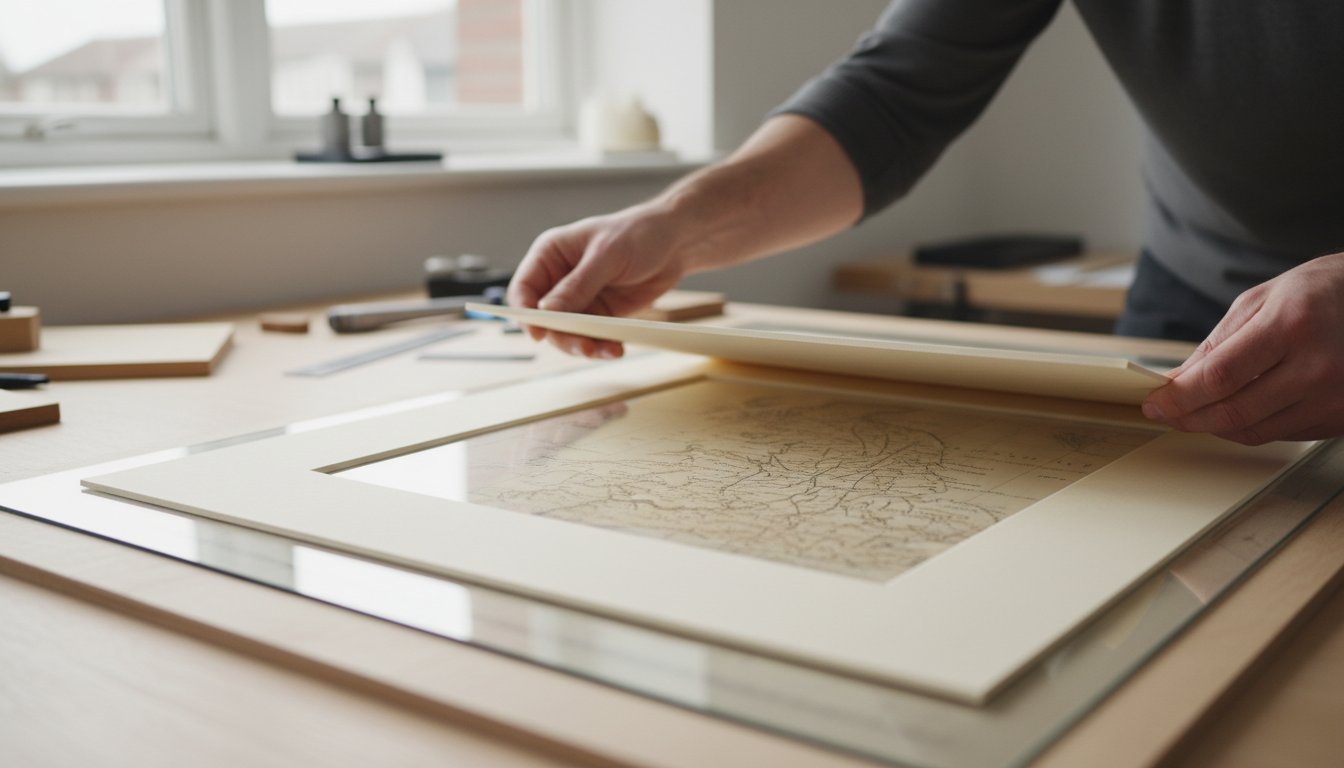
The materials that touch your map are critically important. Standard mount board contains acid and lignin, which can leach into the paper over time, causing yellowing and brittleness. When framing antique maps and documents, insist on acid-free and lignin-free materials. The window mount (or mat) not only provides a beautiful visual border but also creates a vital air gap, preventing the map from touching the glazing. For ultimate protection, nothing surpasses 100% cotton rag museum board. This is the gold standard and a cornerstone of the best practices for framing antique maps, ensuring no harmful chemicals compromise your piece. Remember, the backing board is just as crucial as the front mount.
Mounting Techniques: How the Map is Held in Place
Never allow an antique document to be permanently glued or dry mounted. This causes irreversible damage and destroys its value. Professional conservation framing relies on the principle of reversibility-any process used should be completely undoable without harming the document. The two most trusted methods are:
Japanese Paper Hinges: Small tabs of high-quality, acid-free Japanese paper are attached to the back of the map with a purified, pH-neutral wheat starch paste. These hinges are strong yet easily removable with a touch of water.
Photo Corners: Archival-quality polyester corners can be used to securely hold the document in place without applying any adhesive to the map itself.
Design & Aesthetics: Choosing a Frame to Honour Your Antique Map
The perfect frame does more than just protect your antique map; it acts as a bridge between the historical world captured on paper and the decor of your room. The goal is to choose a frame that enhances the map’s character and story without overpowering it. This is a delicate balance between honouring the document’s origins and complementing your personal style. When framing antique maps and documents, every detail matters-from the colour of the ink to the texture of the paper.
At First 4 Frames, our passionate experts are here to guide you through this creative process, ensuring the final piece feels both authentic and perfectly at home on your wall.
Matching the Frame Style to the Map’s Era
A frame should feel historically appropriate. For older, more traditional maps from the 17th or 18th centuries, classic dark woods like walnut and mahogany, or frames with an ornate, gilded finish, often work beautifully. In contrast, simpler documents from the 20th century, such as vintage Ordnance Survey maps, are better suited to clean-lined oak or minimalist black frames. We generally advise avoiding overly modern or artificially distressed finishes, as they can clash with the genuine age of your piece.
The Role of the Window Mount in Presentation
The window mount (or mat board) is a crucial element that creates visual space between the map and the frame. Its colour and size significantly impact the final presentation.
Colour: We recommend using conservation-grade, acid-free mounts in off-white or cream tones. These soft colours complement the aged patina of old paper far better than a stark, brilliant white.
Width: A generous mount width gives the map “breathing room,” drawing the eye inward and lending the piece a more significant, gallery-quality feel.
Depth: For added sophistication, consider a double or even triple mount. This layering technique can be used to pick out a subtle colour from the map, adding depth and a truly bespoke finish.
Float Mounting: Showcasing the Entire Document
Float mounting is a beautiful technique where the map is positioned on a raised, hidden platform so it appears to “float” above the backing board, casting a soft shadow. This method is ideal for maps and documents with unique deckled, uneven, or interesting edges that you want to keep visible. It celebrates the entire document as a physical object, creating a stunning sense of depth and turning your piece into a true focal point. Explore our gallery for framing inspiration.
Preparing Your Document For Framing: A Simple Checklist
Your treasured map or document is a piece of history, and its journey into a beautiful bespoke frame deserves the utmost care. Proper handling before you even visit our workshop is essential to preserve its integrity and value. Following these simple steps ensures your item arrives safely, ready for the final step in its preservation. The most important rule? When in doubt, handle it as little as possible and never attempt repairs on your own.
Handling and Storing Your Antique Document
The delicate nature of old paper means that even the natural oils on your skin can cause damage over time. To protect your document before bringing it in for framing, always follow these guidelines:
Handle with care: Always use clean, dry hands to handle the item, preferably by the edges. For very fragile or valuable pieces, wearing clean cotton gloves is the safest option.
Store it flat: Never fold or roll an antique document. Store it flat, ideally between two sheets of acid-free paper or in an archival-quality folder. This prevents permanent creases and stress on the paper fibres.
Control the environment: Keep your document away from direct sunlight, high humidity, and extreme temperature changes, as these conditions can accelerate deterioration, cause fading, and encourage mould growth.
To Clean or Not To Clean?
The temptation to clean a dusty or stained document can be strong, but this is where caution is paramount. Aggressive cleaning can cause irreversible damage. Never use erasers, water, or any household cleaning fluids on old paper. If there is light surface dust, you can gently sweep it away with a very soft, clean artist’s brush. For any significant tears, stains, or foxing, we strongly recommend consulting a professional paper conservator. Please note that while we are experts in conservation framing, we do not offer restoration services.
Transporting Your Item Safely to the Framer
Getting your piece to our workshop safely is the final and most critical step. The process of framing antique maps and documents requires the item to be in the best possible condition. To avoid any mishaps on the way, place the document flat on a rigid, clean board (like foam core or heavy card) that is larger than the item itself. Place another sheet of acid-free paper on top to protect the surface from scuffing. Carry the entire package flat, ensuring it cannot bend or fold. This simple preparation makes all the difference in preserving your history for generations to come.
Once your piece is safely prepared, you can begin to imagine its future. We invite you to explore our gallery to see how our premium craftsmanship can create the perfect home for your document.
Our Bespoke Framing Process: A Partnership in Preservation
An antique map or document is more than just paper and ink; it’s a tangible piece of history. We believe the process of preserving it should be a partnership-a collaborative journey to a perfect result. At First4Frames, we combine decades of bespoke craftsmanship with proven conservation best practices. We treat every piece with the reverence it deserves, ensuring it is protected and beautifully presented for generations to come.
Here’s what you can expect when you entrust us with the specialist task of framing antique maps and documents.
Step 1: The Personal Consultation
Your journey begins when you bring your treasured item to our Falkirk gallery. During this initial, no-obligation consultation, we will carefully assess its condition-noting its age, fragility, and any unique characteristics. Most importantly, we listen to your vision. We want to understand how you see the piece fitting into your home, allowing us to provide expert advice tailored to both your style and the document’s preservation needs.
Step 2: Designing Your Perfect Frame
This is where your vision truly comes to life. We will guide you through our extensive collection of premium mouldings, from classic hardwoods to ornate traditional styles. You can explore our wide range of archival-quality mount colours and discuss the best glazing options, including UV-protective glass to prevent fading. We ensure complete transparency by providing a detailed, itemised quote before any work begins, so you can make your decision with confidence.
Step 3: Expert Craftsmanship in Our Workshop
Once you are happy with the design, our skilled framers get to work in our on-site workshop. Every frame is meticulously constructed by hand using only conservation-grade, acid-free materials that will not damage your document over time. Your piece is handled with the utmost care throughout the entire process, employing reversible techniques that protect its integrity and value. The result is a spectacular, professionally framed piece of history, ready to be admired for a lifetime.
A Frame for the Ages: Preserving Your Past
Your antique map or document is more than just paper and ink; it’s a tangible connection to history. As we’ve seen, professional framing is not merely about decoration-it is the single most important step you can take to preserve its integrity and beauty for future generations. From UV-protective glazing to acid-free mounting, every component of a conservation frame works together to create a safe and stable environment. The true art of framing antique maps and documents lies in this perfect marriage of protective science and bespoke craftsmanship.
Choosing the right partner for this crucial task is essential. With over 20 years of bespoke framing experience, our passionate, Falkirk-based team is dedicated to this craft. We use only the best conservation-grade materials and offer friendly, expert advice to guide you through every decision, ensuring the final result both protects and beautifully complements your treasured piece.
Frequently Asked Questions About Framing Antique Maps
How much does it cost to frame an antique map?
The cost of bespoke framing is unique to each project. Prices depend on the map’s size, your choice of frame moulding, the mount, and the type of glazing selected. As a guide, a smaller, simple frame might start from around £80, while a larger map with a premium wood frame and museum glass could be £300 or more. We provide a transparent, no-obligation quote upfront, ensuring you find the perfect solution for your piece and your budget.
Can you frame a document that is folded or creased?
Absolutely. We have extensive experience with delicate and time-worn pieces. Our skilled framers use specialised conservation techniques to carefully relax and flatten creases without causing stress to the paper fibres. Using reversible, acid-free mounting methods, we can securely present your map, ensuring its history is preserved beautifully. This careful approach is central to our process for framing antique maps and documents, giving you complete peace of mind that your treasured item is in expert hands.
How long does the bespoke framing process take?
Our passion is craftsmanship, and quality takes a little time. For most bespoke framing projects, our typical turnaround time is between 10 to 14 working days from when we receive your artwork. If your project requires specially sourced materials or is particularly complex, it may take a little longer. We believe in clear communication and will always provide you with an estimated completion date and keep you updated throughout the creative process, ensuring a smooth and hassle-free experience.
What is the difference between museum glass and standard glass?
Choosing the right glass is vital for preserving your antique map. Standard glass offers basic protection from dust but can have a noticeable glare and provides minimal defence against fading. Museum glass, however, is the ultimate choice for conservation. It blocks up to 99% of harmful UV rays to prevent fading and features an anti-reflective coating for crystal-clear viewing. It’s a worthwhile investment to protect your precious piece of history and enjoy it without distraction.
Is it better to use a wood or metal frame for an antique print?
Both wood and metal frames can be spectacular choices, and the decision often comes down to personal taste and your interior décor. Traditional wood frames, with their natural warmth and classic profiles, beautifully complement the historical character of an antique map. Sleek metal frames can offer a striking, contemporary contrast that makes the map a modern focal point. Whichever you choose, we ensure all materials are of conservation quality to protect your print for generations to come.
Can I take my map out of the frame later if I need to?
Yes, and this is a key principle of our professional conservation framing. We use fully reversible methods, meaning your map or document can be safely removed from its frame in the future without any damage. We employ techniques such as using acid-free materials and Japanese paper hinges, which don’t use permanent adhesives on the artwork itself. This ensures the integrity and value of your antique piece is maintained, whether it’s in the frame or out.
Do you offer framing services for the whole of the UK?
We are delighted to offer our bespoke framing services to clients across the entire UK. We have a simple and secure process for this, using a trusted, fully insured courier service to handle your precious artwork with the utmost care. Simply package your map securely and send it to our workshop. Once our craftspeople have worked their magic, we will send your beautifully framed piece straight back to your door, ready to hang and admire. It’s a truly hassle-free service.
You’ve found the perfect piece of art, a spectacular print that speaks to you, and a bespoke frame that acts as the perfect bridge to your décor. But now you face a crucial, and often confusing, decision that can make or break your display: what type of glass for picture frames is the right choice? The fear of seeing your cherished memories fade, the frustration of distracting glare obscuring the view, or simply not knowing if a premium option like museum glass is worth the investment can be overwhelming. It’s the final, vital layer of protection and presentation for your artwork.
In this expert guide, we’ll demystify the options with professional clarity. We will walk you through the crucial differences between standard glazing, anti-reflective glass, vital UV-protective options, and the unparalleled quality of museum glass. By the end, you’ll feel knowledgeable and empowered to choose the perfect glazing that not only protects your precious art from damage and fading but showcases it with the spectacular, crystal-clear finish it truly deserves. Let’s ensure your art is seen exactly as the artist intended.
Why Your Choice of ‘Glass’ Matters More Than You Think
When you invest in a beautiful piece of art, the frame is the essential finishing touch. But within that frame lies an unsung hero: the glazing. More than just a transparent layer, the glazing performs two critical roles-protection and presentation. Making the right choice is a crucial step in preserving the beauty, value, and longevity of your artwork. Understanding what type of glass for picture frames to use ensures your cherished piece is both safe and seen in its best possible light.
To see these differences in action, this short video provides an excellent overview:
Protection: More Than Just a Dust Cover
The most immediate threat to your art isn’t dust or fingerprints-it’s invisible ultraviolet (UV) light. Sunlight and even some indoor lighting can cause colours to fade and paper to become brittle over time. Premium glazing with UV protection acts as a powerful shield, blocking up to 99% of harmful rays. It also provides a vital barrier against physical damage, humidity, and pollutants, preserving the life and integrity of your fine art prints and original works for decades to come.
This same principle of protecting valuables from UV damage is why high-performance glazing is also essential in modern windows and doors. If you’re considering how to protect your entire home’s interior from sun damage, you can learn more about Custom Trade Systems Ltd.
Presentation: Ensuring a Crystal-Clear View
There is nothing more frustrating than hanging a spectacular piece of art only to see a perfect reflection of your living room lamp. The primary goal of glazing is to be invisible, allowing the artwork to shine. Different types of Picture-framing glass offer varying levels of anti-reflective properties, from standard glass with noticeable glare to premium museum-grade options that are virtually reflection-free. The right choice ensures true colour accuracy and crisp detail, pulling you into the picture without distraction.
Glass vs. Acrylic (Plexiglass): The First Big Decision
Your first major choice in glazing comes down to two materials: traditional glass and modern acrylic (often known by the brand name Plexiglass). Each has distinct advantages that make it suitable for different needs.
Traditional Glass: Offers superior clarity and a satisfying, weighty feel that many associate with premium craftsmanship. Its hard surface is highly scratch-resistant, making it easy to clean and maintain over the years. However, it is heavier and can shatter upon impact.
Acrylic (Plexiglass): Significantly lighter and virtually shatter-proof, making it the perfect choice for large-scale frames or pieces that will be shipped or hung in high-traffic areas. Its main drawback is a softer surface that can be more susceptible to scratching if not cared for properly.
The Main Types of PictureFrame Glazing Explained
When considering what type of glass for picture frames, the options can seem daunting. In the world of professional craftsmanship, we refer to this protective layer as ‘glazing’, and the right choice can elevate your artwork from simply being on the wall to being truly showcased. To simplify your decision, we’ve broken down the most common options from a professional framer into a ‘Good, Better, Best’ guide, focusing on the practical benefits for your treasured pieces.
Good: Standard Float Glass
This is the most common and budget-friendly option you’ll find in most ready-made frames. Standard float glass offers excellent basic protection from dust and handling. However, it provides no UV filtering to prevent fading and can have noticeable reflections. It’s a perfectly suitable choice for inexpensive posters or easily replaceable prints where long-term preservation isn’t the primary concern.
Better: UV-Protective / Conservation Glass
A significant step up, this premium glass is coated to block up to 99% of the harmful UV rays that cause colours to fade and paper to yellow. This is an essential investment for protecting limited edition prints, original artwork, or sentimental photographs. A deeper look into Choosing The Right Glazing confirms that for anything of monetary or sentimental value, UV protection is a non-negotiable part of true, long-term preservation.
Best: Anti-Reflective (AR) Glass
If you’ve ever been frustrated by glare obscuring your view, Anti-Reflective glass is the solution. It features a sophisticated optical coating that reduces reflections to less than 1%, providing spectacular clarity. This makes the glass seem almost invisible, allowing the true colours and beautiful details of your artwork to shine through. It’s the perfect choice for pieces displayed in rooms with significant natural or artificial light.
The Ultimate: Museum Glass
For the absolute pinnacle of protection and viewing pleasure, there is Museum Glass. This option combines the best of both worlds: it offers 99% UV protection to preserve your art for a lifetime, and it features the same advanced anti-reflective coating for crystal-clear, glare-free viewing. This is the ultimate choice for irreplaceable heirlooms, valuable fine art, and any piece that deserves a truly museum-quality display.
Picture Frame Glazing at a Glance
Glazing Type
UV Protection
Reflection Level
Best For
Standard Float Glass
None
High
Posters, replaceable prints, budget projects
UV-Protective Glass
Up to 99%
High
Sentimental photos, limited editions, original art
Anti-Reflective Glass
~70% (Standard)
Very Low (<1%)
Brightly lit rooms, dark artwork, maximum clarity
Museum Glass
Up to 99%
Very Low (<1%)
Valuable artwork, heirlooms, ultimate display
A Closer Look at Acrylic Glazing (Perspex)
When our clients ask what type of glass for picture frames we recommend, many are surprised when we suggest acrylic. It’s time to move past the outdated idea of acrylic as a “cheap plastic” alternative. Today’s premium acrylic, often known by the brand name Perspex, is a high-performance glazing material used by galleries, museums, and professional framers for its outstanding clarity, light weight, and superior durability. It offers the same crystal-clear view as glass but with several practical advantages that make it the perfect choice for specific situations.
Far from being a compromise, modern acrylic glazing is a bespoke choice that enhances and protects your artwork. Like its glass counterpart, it is available in conservation grades that offer the highest level of protection, ensuring your beautiful art remains vibrant for a lifetime.
When to Choose Acrylic Over Glass
While traditional glass has its place, our twenty years of craftsmanship have shown us that acrylic is often the superior and safer option. We recommend choosing acrylic glazing in these key scenarios:
For oversized pieces: Large panes of glass are incredibly heavy, putting significant stress on the frame and making the artwork difficult and dangerous to hang. Acrylic is significantly lighter, making it the only practical choice for large-scale art.
In high-traffic areas or children’s rooms: Safety is paramount. Acrylic is shatter-resistant, meaning it won’t break into dangerous shards if knocked or dropped, providing peace of mind in busy homes, nurseries, or public spaces.
When shipping framed artwork: As professionals who ship art across the UK, we almost exclusively use acrylic for transit. It virtually eliminates the risk of breakage, ensuring your precious piece arrives in perfect condition.
Specialty Acrylic Options
Just like glass, acrylic comes in several specialist varieties to meet specific conservation and display needs. This allows for a truly tailored approach to framing your fine art.
UV-Filtering Acrylic: Offering up to 99% protection from harmful ultraviolet light, this is the conservation standard for protecting your prints and original artwork from fading and discolouration.
Anti-Static Acrylic: An essential choice for framing loose-media art like charcoal, pastels, or chalk drawings. It prevents dust and media particles from clinging to the inside of the glazing.
Scratch-Resistant Acrylic: For the ultimate in durability, a special hard coating is applied to make the surface more robust and less prone to fine scratches during cleaning.
How to Care for Acrylic Frames
Caring for acrylic is simple, but it requires a different approach than cleaning glass. To maintain its pristine finish, always use a soft, non-abrasive microfiber cloth. Never use standard glass cleaners, as the ammonia and alcohol they contain can damage and cloud the acrylic surface over time. For best results, use a cleaning solution specifically designed for acrylic, which will gently lift dust and dirt while reducing static charge.
How to Choose the Perfect Glazing for Your Artwork
Choosing the right glazing is more than a final touch; it’s an investment in the longevity and beauty of your artwork. The best way to answer the question of what type of glass for picture frames you need is to consider the piece itself-its monetary value, its sentimental worth, and where it will hang. Think of the glazing as the silent guardian of your art, protecting it for years to come.
Here’s a practical guide to help you make the perfect choice for your bespoke frame.
For Family Photos & Open-Edition Prints
For posters, digital prints, or family photos that can be easily and inexpensively replaced, our premium 2mm float glass is an excellent, cost-effective option. However, if you’re framing a cherished, irreplaceable family photograph, upgrading to a UV-protective glass is a wise decision. This small additional investment acts as a sunscreen, preventing the fading that can dull precious memories over time. Also, consider the location: if the frame will hang opposite a bright window, an anti-reflective glass will ensure you see the image, not your reflection.
For Limited Edition Prints & Original Art
When framing something of significant financial or artistic value, UV-protective glazing is the absolute minimum requirement. UV rays are the primary cause of fading and can irreversibly damage the pigments in original watercolours, drawings, and limited edition prints, diminishing their value. For pieces that deserve the very best, we highly recommend Museum Glass. It offers over 99% UV protection combined with incredible anti-reflective technology, providing a crystal-clear view that makes it seem as if there’s no glass there at all. It’s the ultimate way to both protect and display your investment.
For 3D Objects & Memorabilia (Box Frames)
For deeper box frames containing 3D items like sports shirts, medals, or other memorabilia, acrylic (often known by the brand name Perspex) is the superior choice. It is significantly lighter than glass, making larger frames safer to hang, and it is virtually shatterproof. For signed shirts or delicate fabrics, choosing a UV-protective acrylic is vital. The ink in signatures is notoriously susceptible to fading, and this glazing ensures your treasured items remain in pristine condition. Protecting these unique pieces is a craft we specialise in. See how we frame memorabilia at First4Frames.
Common Mistakes and Expert Framing Tips
Choosing the right glazing is a crucial step, but our twenty years of craftsmanship have taught us that a few insider tips can make the difference between a good result and a spectacular one. As passionate artisans, we want to help you avoid common pitfalls and ensure your artwork is displayed and protected perfectly.
The ‘Non-Glare’ vs. ‘Anti-Reflective’ Myth
This is one of the most frequent points of confusion. Inexpensive “non-glare” glass is typically acid-etched to scatter light. While this reduces reflections, it also softens the image, creating a fuzzy, slightly distorted look. True “anti-reflective” glass, however, uses a sophisticated optical coating-much like that on high-end camera lenses-to provide crystal-clear viewing with minimal reflection. For pristine clarity, always ask for anti-reflective glazing.
Why Your Artwork Shouldn’t Touch the Glass
A cardinal rule in professional framing is to create a small air gap between the artwork and the glass. This is the primary role of a mount board or spacers. Direct contact is a recipe for disaster, as temperature changes can cause condensation to form. This moisture can lead to mould, mildew, and permanent damage where the art physically bonds to the glass surface.
When to Upgrade the Glass in an Old Frame
Do you have a treasured piece in an old frame? Replacing its standard glass is one of the most impactful upgrades you can make. Many older frames contain thin, basic glass with no protective qualities. Swapping it for a modern UV-protective or anti-reflective option will not only breathe new life into the piece visually but also shield it from fading for decades to come. Knowing what type of glass for picture frames to choose for an upgrade is key to preserving your memories. Have a piece that needs an upgrade? Contact our framing experts.
The Perfect Finish: Choosing Your Picture Frame Glazing
Choosing the right glazing is the final, crucial step in protecting and showcasing your art. As we’ve explored, the decision goes far beyond simple glass; it involves balancing stunning clarity, essential UV protection, and the specific needs of your piece. Ultimately, the answer to what type of glass for picture frames you should choose depends on your unique artwork and its intended home.
Making that final decision can feel daunting, but you don’t have to do it alone. With over 20 years of bespoke framing experience, the team at First 4 Frames is passionate about finding the perfect solution. We use only premium, conservation-grade materials and are trusted by artists and collectors across Scotland to preserve their most treasured works.
Let’s work together to give your art the beautiful, lasting presentation it deserves.
Frequently Asked Questions
What is the best glass for picture frames to reduce reflection?
For a truly uninterrupted view of your beautiful artwork, anti-reflective (AR) glass is the premium choice. This specialist glass features an optical coating that minimises reflections to less than 1%, ensuring spectacular clarity and colour vibrancy. While non-glare glass also reduces reflection by diffusing light, it can slightly soften the image details. For preserving every nuance of your piece, AR glass offers the most pristine and reflection-free experience, allowing the art to truly shine.
Is acrylic (Plexiglass) as good as real glass for picture frames?
Acrylic, often called Plexiglass, is an excellent alternative to traditional glass, with distinct benefits. It’s significantly lighter and virtually shatterproof, making it a perfect, safe choice for large frames or homes with children. Premium acrylic also offers superior UV protection. However, glass is more scratch-resistant and can offer a greater sense of weight and tradition. The choice often comes down to the specific needs of the artwork’s location, size, and your personal preference for safety and handling.
How much does UV-protective picture frame glass cost?
Investing in UV-protective glass is a wise choice to preserve your art. In the UK, you can expect to pay a premium over standard float glass. For a standard A4-sized frame, Conservation Clear glass, which blocks 99% of UV rays, might add £15 to £30 to the cost. For premium Museum Glass, which combines 99% UV protection with anti-reflective properties, the cost could be significantly higher. This investment is crucial for protecting irreplaceable or valuable pieces from long-term damage.
Will UV glass completely stop my artwork from fading?
While UV-protective glass is the single most effective defence against fading, it cannot stop the process entirely. It works by blocking up to 99% of harmful ultraviolet rays, which are the main cause of discolouration and damage. However, other environmental factors like intense visible light, heat, and humidity can still contribute to ageing over a very long period. Think of it as a powerful shield that dramatically slows down fading, preserving the vibrancy of your art for decades to come.
What is the difference between non-glare and anti-reflective glass?
The key difference lies in how they handle light. Non-glare glass has a micro-etched surface that diffuses light, scattering reflections. While effective, this process can slightly soften the image details, making it appear less sharp. In contrast, anti-reflective glass has a sophisticated optical coating that cancels out reflections, allowing over 98% of light to pass through. This provides a crystal-clear, almost invisible finish that preserves every detail and colour of your artwork without compromise.
Can I replace the glass in a frame I already own?
Absolutely! Replacing the glazing is a fantastic way to upgrade an existing frame, perhaps to add UV protection or reduce reflections. When considering what type of glass for picture frames you need for a replacement, precise measurements of the old glass or the frame’s rebate are essential. While it’s possible to do this yourself, we recommend a professional fitting to ensure the new glass is cut perfectly and installed safely, protecting both you and your precious artwork.
That incredible feeling of finding a piece of art you truly love is unmatched. But with that joy comes a crucial question: how do you ensure its beauty lasts a lifetime, safe from the hidden dangers of light and damaging materials? The world of custom framing can feel intimidating, filled with technical terms like ‘acid-free’ and ‘UV glass’ that can leave you feeling uncertain. This is precisely why understanding what is museum quality framing is so important. It’s more than just a beautiful border; it’s a bespoke promise of preservation, creating a safe, archival home for your treasured artwork.
In this guide, we will pull back the curtain on the craft of professional conservation framing. We’ll walk you through the essential components-from premium glazing to archival mounting boards-that separate a standard frame from one built to last. By the end, you’ll not only have a clear definition but also the confidence to speak with a framer, ask the right questions, and feel complete peace of mind that your art is perfectly protected for generations to come.
Beyond the Buzzword: What ‘Museum Quality Framing’ Really Means
You’ve likely heard the term ‘museum quality framing’ used to describe premium picture frames. But beyond the marketing gloss, what is museum quality framing, really? In short, it’s not a style, but a rigorous set of standards and techniques dedicated to the long-term preservation of your art. Its primary goal is to protect a piece from irreversible environmental damage caused by light, humidity, and airborne pollutants.
While the term can sometimes be used loosely, true museum framing is about craftsmanship that creates a safe, stable, and chemically inert environment for your artwork. It’s a promise that the beautiful piece you invest in today will remain just as vibrant for generations to come.
To see these principles in action, this video offers a fantastic overview:
The Core Principle: Preservation Over Decoration
Standard framing often prioritises aesthetics, focusing on how the frame complements the room’s decor. Museum framing, however, puts preservation first. Think of it as the difference between a stylish high-street jacket and a technical arctic parka. One looks fantastic for the season, while the other is engineered with premium materials to protect you from the harshest conditions. A museum-grade frame is that parka; its job is to do the heavy lifting, protecting what’s inside for decades, not just a few years.
Conservation vs. Museum Level: Is There a Difference?
In the framing world, you’ll often hear ‘conservation’ and ‘museum’ used interchangeably, and for good reason. Both are dedicated to preservation. ‘Museum Level’ is simply the highest possible standard within conservation framing. Both methods exclusively use materials that are chemically stable and acid-free, from the backing board to archival matting materials, to prevent yellowing and decay. Crucially, every step is fully reversible, meaning the artwork can be removed from the frame in the future in its original, untouched condition.
The 4 Pillars of Museum Quality Framing: Materials Matter
So, what is museum quality framing at its core? It’s not about a single expensive material, but a complete protective system. Think of it as four pillars working in harmony to create a safe, stable environment for your artwork. Each component plays a critical role, and compromising on even one can undo the good work of the others. Let’s explore these four essential pillars and why the right materials are the foundation of true, lasting preservation.
Standard picture frame glass is like sunglasses without UV protection-it looks the part but offers no real defence. Harmful UV light is one of the biggest threats to your art, causing vibrant colours to fade and paper to become yellow and brittle over time. We use glazing like Conservation Clear®, which blocks 99% of damaging UV rays. For ultimate clarity, options like Museum Glass® offer the same protection while also minimising reflections, making it feel like there’s nothing between you and the art.
Pillar 2: Acid-Free Mountboard & Matting (Preventing Mat Burn)
Have you ever seen an old picture with a brown, discoloured line around the edge of the image? That’s ‘mat burn’. It’s caused by acid from standard wood-pulp mountboards leaching into the artwork, causing permanent damage. To prevent this, we use only museum-grade mountboards made from 100% cotton rag. This material is naturally acid-free and lignin-free. As detailed in the National Park Service’s guide to caring for paper objects, using archival-quality materials is non-negotiable for preservation. While colours and textures are important for aesthetics, the archival quality of the board is always our first priority.
Pillar 3: Archival Backing Board (The Unseen Guardian)
The backing board is the final layer of defence, sealing the frame from behind. Common materials like MDF, wood, or standard cardboard are disastrous for artwork, as they contain acids and chemicals that can seep into your piece over time, while also absorbing moisture from the air. A museum-quality frame is finished with a solid, acid-free backing board that acts as a barrier against dust, pollutants, and humidity changes, completing the protective sandwich that keeps your art safe.
Pillar 4: Reversible Mounting Techniques (Doing No Harm)
How the artwork is secured within the frame is just as important as the materials surrounding it. Your precious art should never be permanently glued or stuck down with standard tape. These adhesives can cause irreversible stains and damage. We follow the principle of “do no harm” by using conservation-grade mounting techniques, such as attaching the art with Japanese paper “hinges” and acid-free wheat starch paste. This process is strong yet fully reversible, meaning the art can be safely removed from the frame years from now without a trace.
The Framer’s Craft: Techniques That Complete the Protection
Having the finest materials is only half the battle. The true artistry and protective power of museum quality framing comes to life during the assembly process. Even premium conservation-grade materials can fail if not handled with expert precision. This is where decades of professional craftsmanship make all the difference, transforming a collection of high-quality components into a seamless, protective environment for your artwork. The answer to what is museum quality framing lies as much in the framer’s hands as it does in the materials they use, a principle central to the Fine Art Trade Guild framing standards.
Creating a Sealed Environment
A crucial step in professional framing is to create a sealed “package” that isolates your artwork from the outside world. A skilled framer meticulously seals the back of the frame, typically where the backing board meets the frame itself. Using specialised, acid-free framing tape, they create an airtight barrier. This simple but vital technique prevents dust, humidity, insects, and airborne pollutants from creeping into the frame over time, ensuring the micro-environment inside remains stable and clean for decades.
Using Spacers: Why Art Shouldn’t Touch the Glass
One of the golden rules of art preservation is that the surface of the artwork should never touch the glazing (the glass or acrylic). Direct contact creates a risk of condensation transfer, which can lead to mould, mildew, or foxing. In humid conditions, the artwork can even physically adhere to the glass, causing irreversible damage upon separation. To prevent this, a professional framer uses spacers. Often, the window mount provides the necessary air gap, but for images framed “full-bleed” to the edge, hidden plastic or wood spacers are fitted inside the frame’s rebate to create that essential breathing room.
Is Museum Quality Framing Right for Your Artwork?
After exploring the premium materials and meticulous craftsmanship involved, the crucial question remains: is this level of protection the right choice for your piece? Understanding what is museum quality framing is one thing; deciding to invest in it is another. This is not about spending more, but about investing wisely in the future of your artwork.
To help you decide, we’ve created a simple framework based on value-both monetary and sentimental.
When to Invest in Museum-Level Protection
This premium level of protection is an act of preservation, ideal for pieces you truly cherish or see as a long-term asset. We strongly recommend it for:
Original Artwork & Limited Edition Prints: Pieces like Giclée prints, original paintings, or signed photographs have inherent value that is worth protecting from fading and degradation.
Items of High Sentimental Value: A faded wedding photograph or a brittle family letter is irreplaceable. Archival framing preserves these precious memories for the next generation.
Valuable Memorabilia: Signed sports jerseys, historical documents, or concert tickets can be damaged by the acids in standard materials. Museum framing safeguards their condition and value.
Art as an Heirloom: If you intend for a piece to be passed down through your family, conservation framing is the only way to ensure it survives in pristine condition.
What Might Not Need Museum Framing?
Our passion for art includes providing honest advice. Not every piece requires this level of investment. Standard framing is often perfectly suitable for:
Decorative or Open-Edition Prints: If a poster or print is easily and inexpensively replaceable, archival protection may not be necessary.
Children’s Art: For those wonderful creations you plan to rotate and display seasonally, a simple, safe frame is a great choice.
Short-Term Displays: If you’re framing something for a temporary event or a non-critical environment, you may not need long-term conservation features.
The Long-Term Value of Proper Preservation
Think of museum quality framing not as a cost, but as an insurance policy for your art. An investment of a few hundred pounds in a bespoke, archival frame today can prevent thousands in potential restoration fees caused by UV damage or acid burn years from now. It’s the most effective way to protect your artwork’s integrity and financial worth.
Your artwork tells a story. Our job is to ensure that story can be told for generations. Have a special piece you’d like to protect forever? Talk to our experts about bespoke framing.
Your Art’s Legacy Starts with the Right Frame
As we’ve explored, museum quality framing is far more than an elegant border for your wall. It is a complete preservation system, built on the essential pillars of archival materials-from UV-filtering glazing to acid-free mount boards-and assembled with meticulous, professional techniques. This approach actively safeguards your artwork from the irreversible damage caused by light, acid, and environmental factors, ensuring its vibrancy and integrity remain for decades to come.
Ultimately, understanding what is museum quality framing is the first step toward becoming the true custodian of your art. At our Falkirk workshop, we combine a passion for art with artisan craftsmanship. With over 20 years of bespoke framing experience, we use only the highest quality conservation and museum-grade materials to give every piece the protection it deserves.
How much more expensive is museum framing than standard framing?
While prices vary based on size and materials, you can generally expect museum quality framing to cost two to four times more than a standard option. This reflects the premium, archival materials used, such as 99% UV-protective glazing, acid-free mount boards, and conservation-grade backing. This investment is a crucial part of our bespoke craftsmanship, ensuring your precious artwork is protected against fading and degradation for the long term, making it a worthwhile cost for valuable pieces.
Can you upgrade an existing frame to be museum quality?
Absolutely. If you love your current frame moulding but want to enhance its protective qualities, we can perform a professional “re-fit.” This involves carefully replacing the existing components with archival materials. We can swap out standard glass for UV-protective glazing and replace acidic mount boards and backing with 100% acid-free, conservation-grade alternatives. This effectively upgrades your frame to meet museum standards, preserving the art within while keeping the look you love.
How long will museum quality framing protect my art?
When properly cared for, museum quality framing is designed to protect your art for a lifetime, and often for future generations. The archival materials dramatically slow the aging process by shielding the artwork from UV light, pollutants, and acid damage. While no method can stop time completely, this level of professional framing ensures your piece remains vibrant and beautifully preserved for many decades, far surpassing the protection offered by standard, off-the-shelf frames.
Does UV-protective glass look different from normal glass?
Modern UV-protective glazing is remarkably clear and, in many cases, offers a better viewing experience than standard glass. Premium options, often called “museum glass” or acrylic, feature anti-reflective coatings that reduce glare and make the glazing seem almost invisible. There is no yellow or distracting tint. This technology provides an uncompromised, crystal-clear view of your artwork’s true colours and details while blocking up to 99% of harmful ultraviolet rays.
What is ‘mat burn’ and how can I spot it on old pictures?
Mat burn is the brownish or yellowish discolouration that appears on artwork where it touches an acidic mount board. You can spot it as a dark, burned-looking line on the paper that perfectly follows the bevelled edge of the old mat. This damage is caused by acid leaching from the wood pulp in standard boards over time. Preventing this is a key part of the answer to what is museum quality framing, as we only use 100% acid-free, archival mount boards.
Are the frame materials (the wood or metal) also archival?
Yes, the frame moulding itself is an integral part of a complete archival package. We source only the best materials, using stable, high-quality woods with inert finishes or durable metals like aluminium for our bespoke frames. This ensures the structure is not only beautiful and strong but also chemically stable. A premium moulding will not degrade or release any harmful gases that could damage your artwork, completing the 360-degree protective enclosure your piece deserves.