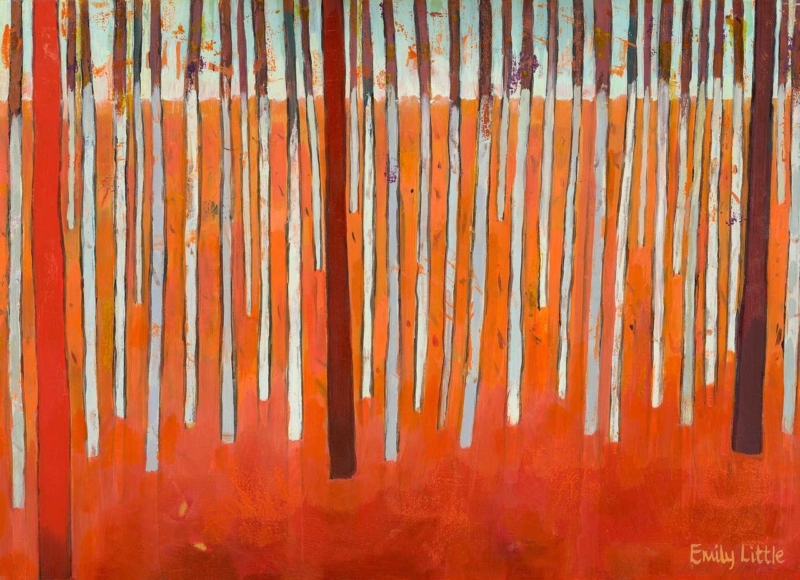
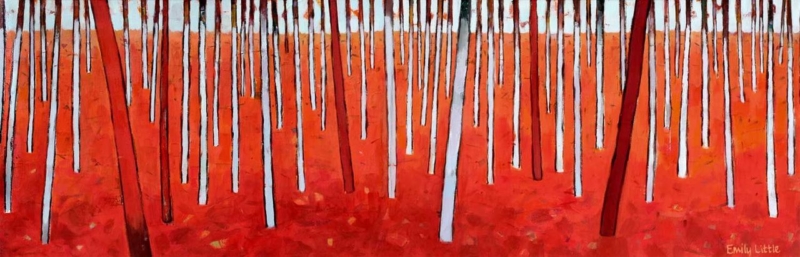
wall art for a windowless hallway can do more than fill an empty stretch between rooms. The right image can create a visual destination, suggest natural light, and make a narrow route feel less enclosed. Birch Forest by Emily Little offers that kind of lift. Its pale trunks and layered woodland space give the eye somewhere to travel, even when the hallway itself has no outside view.
What should wall art for a windowless hallway achieve?
A hall without daylight often feels flatter than the rooms around it. Painting every surface brilliant white does not always solve the problem. With no changing light to animate it, a pale corridor can still appear blank. Artwork introduces contrast and depth, giving the wall a point of interest that remains effective throughout the day.
A woodland subject is especially useful because paths, overlapping trunks, and changing tones imply distance. Birch Forest creates an opening rather than a hard visual stop. The effect is subtle, but it can make the walk from an entrance to the main rooms feel calmer and more intentional.
Place the image where it draws people forward
Start by standing at the entrance and noting the wall seen first. An artwork at the far end can act as a destination. On a longer side wall, the print can mark the midpoint and break up an uninterrupted run. Avoid squeezing it between several doors if a quieter section is available.
Check the main sightline from the front door or staircase.
Measure the clear wall after allowing for switches and door swings.
Set the centre at a comfortable viewing height, rather than aligning it with door tops.
Use one nearby light fitting to illuminate the picture evenly and avoid glare.
Let colour create light without looking washed out
Pale artwork needs enough tonal variation to remain visible in artificial light. The darker woodland notes in Birch Forest give the composition definition, while softer areas keep it open. This is more effective than choosing an image that is almost entirely white, which may disappear into the wall after sunset.
Warm bulbs can make cream, stone, and natural timber finishes feel welcoming. Cooler lighting can suit a crisp grey or blue scheme, but test it in the evening. The aim is to preserve the artwork’s quieter shifts rather than flood the glass with a bright hotspot.
Choose a frame that defines the view
A slim dark moulding can outline the woodland scene and give a pale hall useful contrast. A natural timber finish may connect it to flooring, a console, or stair details. In a narrow passage, a restrained profile is usually practical as well as visually tidy.
First 4 Frames produces colour-managed Giclée prints and completes framing in-house at the Falkirk workshop. This personal process helps customers compare moulding tones and finished scale, both of which matter when the viewing distance is short.
That stunning landscape you bought online loses all its soul the moment it’s trapped behind a sheet of cloudy, scratched perspex. It’s a common frustration for art lovers who want to bring the vibrant energy of modern Scottish artists into their homes but end up with flimsy frames that feel like an afterthought. We believe that a piece of art isn’t truly finished until it’s presented with the craftsmanship it deserves.
In this guide, you’ll learn how to select and visualise contemporary works while ensuring they’re protected by professional 2mm float glass for life-long clarity. We’ll show you how to use our digital tools to match art to your existing decor and why bespoke, hand-crafted framing makes the difference between a simple poster and a gallery-standard centrepiece. From choosing the right Giclée print to understanding the security of professional courier shipping, you’re about to discover how to transform your living space into a curated exhibition.
Key Takeaways
Discover how to identify authentic Giclée prints from modern Scottish artists that meet professional standards for colour longevity and archival quality.
Learn to use digital visualisation tools to select bespoke framing and mount colours that perfectly complement your home’s unique interior design.
Understand why 2mm float glass is the essential choice for gallery-standard clarity, offering a superior, scratch-resistant finish compared to cheap perspex.
Master the professional “eye-level rule” for hanging your artwork and find out how specialist courier shipping ensures your frame arrives ready to hang.
Defining Modern Scottish Artists and the Giclée Print Standard
Modern Scottish artists often draw from a rich, complex heritage, evolving from 19th-century pioneers into a diverse 21st-century scene. To understand the history of modern Scottish art, one must look at how contemporary creators blend traditional themes with bold, abstract techniques. This movement isn’t just about oil on canvas; it’s about making these visions accessible through premium reproductions that feel as alive as the original work.
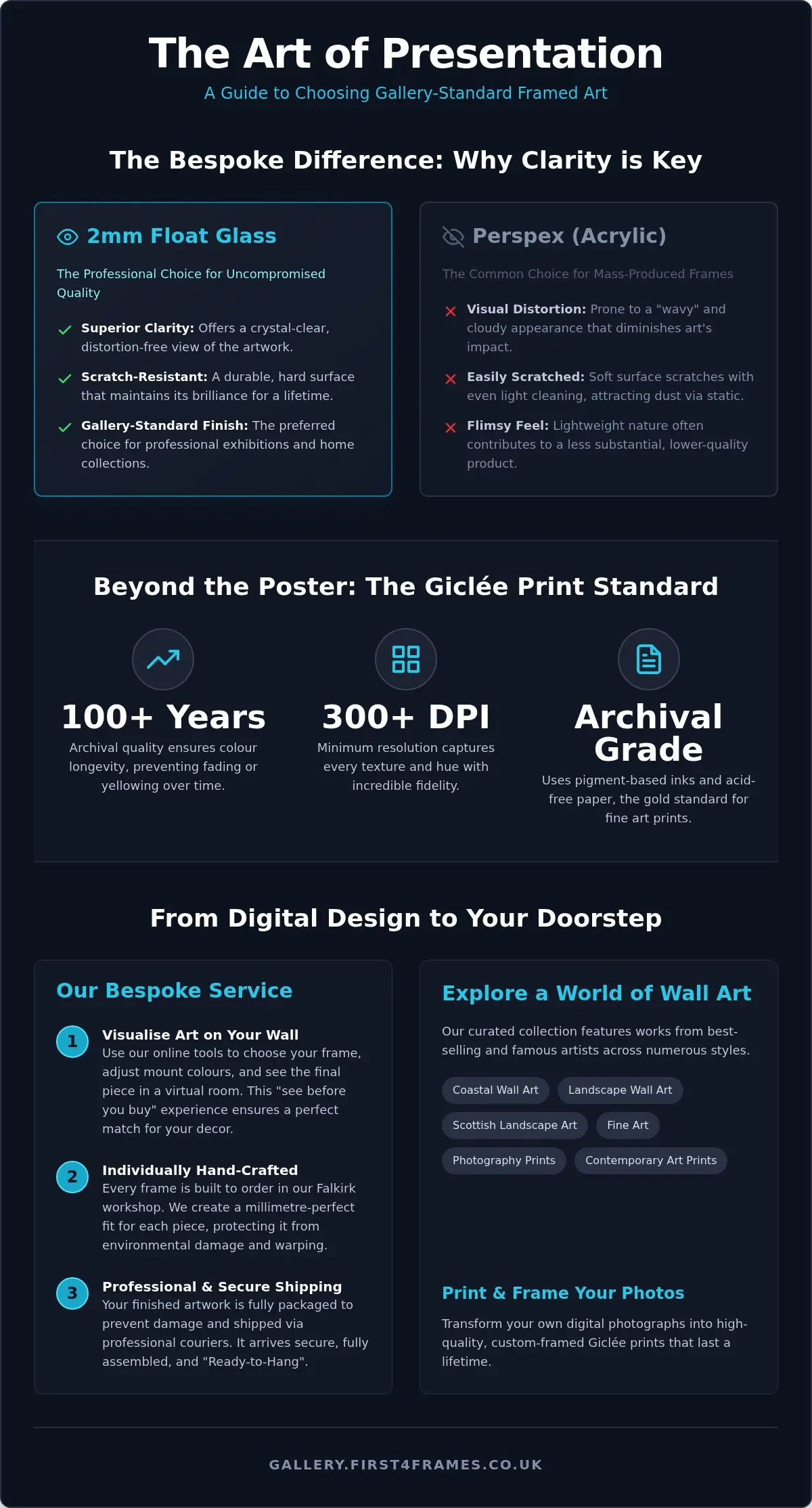
We don’t settle for standard posters. To achieve a gallery-standard aesthetic, we utilise Giclée printing. This technical standard requires pigment-based inks and archival-grade, acid-free paper to ensure your investment doesn’t yellow or fade. With a minimum resolution of 300 DPI, every texture and hue from your favourite Modern Scottish artists is captured with incredible fidelity. These prints are designed to last over 100 years, offering a lifespan that cheap, mass-produced alternatives simply can’t match.
Popular Styles: From Coastal to Scottish Landscape Art
Coastal wall art has surged in popularity across UK urban interiors. It brings a sense of airy, salt-sprayed calm to busy city homes, providing a visual window to the shore. Conversely, the enduring appeal of Scottish landscape art lies in its ability to capture the ethereal, shifting light of the Hebrides and the rugged Highlands. Whether you prefer vibrant abstract peaks or serene coastal scenes, contemporary art prints offer a sophisticated way to reflect the modern Scottish aesthetic on your own walls.
A print only becomes a true centrepiece when it’s properly housed. Moving beyond the “poster” look requires a bespoke approach. At our Falkirk workshop, we hand-craft every frame to a millimetre-perfect fit. We use 2mm float glass to provide superior clarity, avoiding the wavy, distorted look of cheap perspex. This “Ready-to-Hang” convenience is why many homeowners now choose our online gallery to find professionally finished pieces that arrive safe and ready to transform a room.
The Art of Selection: How to Choose Your Frame Online
Choosing the perfect frame is a creative act. The right choice respects the vision of Modern Scottish artists while grounding the piece in your room’s architecture. A minimalist wood frame might suit a coastal abstract, whereas an ornate bespoke finish adds gravity to a traditional landscape. Matching mount colours to your wall paint or upholstery ensures the artwork feels like a permanent part of the home rather than a temporary addition. This process turns a simple image into a structured focal point.
Visualise Art on Your Wall: The Digital Gallery Experience
Buying art online shouldn’t feel like a gamble. Our First4Frames Gallery visualiser allows you to test different combinations in real-time. You can adjust mount widths and frame styles to see how they interact with your existing furniture and lighting. This “see before you buy” approach eliminates the anxiety of a mismatch. It allows you to experiment with bold colours or classic neutrals before committing to a final design, ensuring the finished piece perfectly fits your environment.
Custom Framed Art Prints for Every Space
Planning a gallery wall requires precision and a cohesive strategy. Using standard photo and picture sizes helps you create a balanced layout that looks professional. Quality is the foundation of this aesthetic. We adhere to archival paper standards to ensure your Modern Scottish artists prints remain vibrant for decades. If you’re ready to start your collection, you can browse our curated gallery today to find the perfect match for your home.
The Bespoke Difference: Why 2mm Float Glass Beats Perspex
Many online retailers choose perspex because it’s lightweight and less fragile during transit. However, it often compromises the visual impact of the work. Perspex is prone to static that attracts dust and scratches with even light cleaning. We use 2mm float glass because it offers superior clarity and a distortion-free view. When you’re displaying works by Modern Scottish artists, you want to see the true colours and fine details without the “wavy” appearance common in cheap acrylic. Real glass provides a professional, scratch-resistant finish that maintains its brilliance for a lifetime.
Precision is the foundation of preservation. A bespoke frame ensures a millimetre-perfect fit that protects your art from environmental damage. Without a proper fit, contemporary art prints can warp or buckle due to fluctuations in temperature and humidity. Our individually crafted frames provide the necessary structural integrity to keep the paper flat and secure. This artisan approach isn’t just about looks; it’s a long-term investment in the safety of your collection.
Our expertise extends to your personal collection too. Through our print and frame service, you can transform your own digital photography into gallery-standard wall art. We apply the same rigorous standards to your memories as we do to the professional works in our gallery, ensuring every piece receives a hand-finished touch.
Hand-Made Craftsmanship in the UK
Every frame we produce is hand-crafted in our Falkirk workshop. We don’t rely on mass-produced, “one-size-fits-all” solutions. By maintaining local production, we can guarantee the quality of every bespoke photo frame that leaves our doors. Real glass remains the only choice for discerning collectors who value fidelity. To understand more about the technical nuances of our process, you can read our expert guide to Mastering Custom Picture Framing.
Bringing the Gallery Home: Delivery and Installation
The journey from our workshop to your wall is the final, critical step in the creative process. We understand the anxiety of waiting for a fragile item to arrive. Our packaging is engineered to protect the integrity of the frame and the clarity of the glass. By using professional couriers instead of standard postal networks, we ensure that your Modern Scottish artists collection is handled by specialists who understand the value of the contents. This secure logistics chain is what allows us to deliver a truly ready-to-hang product across the UK.
Professional Shipping and Logistics
Standard delivery services often struggle with the weight and fragility of glass-fronted art. We mitigate this risk by using reinforced, impact-resistant packaging and dedicated couriers. When your order arrives, look for intact outer boxing and corner protection. This level of care ensures that the superior clarity of your 2mm float glass is preserved, arriving without the scratches or cloudiness often found in cheaper alternatives.
Once your piece is unpacked, aim for professional placement. The “eye-level rule” suggests hanging the centre of the artwork approximately 145cm from the floor. This provides a natural viewing height for most adults. For larger rooms, consider spatial grouping strategies where multiple frames are hung with consistent 5cm to 10cm gaps. To maintain your investment, clean the glass with a dry microfibre cloth; never spray liquid directly onto the frame, as moisture can damage the Giclée print over time.
Final Touches for Your Interior
A single piece of statement landscape wall art can define an entire interior. Whether you’re showcasing Modern Scottish artists in a private lounge or a public lobby, the right placement is essential. This impact is why many UK businesses now use our commercial artwork curation services for office staging and property dressing. Well-chosen art makes a workspace feel inspiring and a listed property feel premium. If you’re looking to curate a larger space, you can contact the First4Frames team to discuss bespoke solutions tailored to your specific project needs.
Elevate Your Home with Professional Art Display
Creating a professional gallery in your own home starts with understanding the technical standards that preserve and enhance visual beauty. We’ve explored how Giclée prints and bespoke framing work together to protect the original vision of Modern Scottish artists. By choosing 2mm float glass over standard perspex, you ensure your chosen artwork remains clear, scratch-resistant, and vibrant for decades to come.
Every order we receive is individually hand-crafted in our Falkirk workshop. We combine traditional artisan skills with modern technology to deliver a finished product that’s truly ready to hang. Our secure shipping via professional UK couriers guarantees that your investment arrives in pristine condition, ready to become a focal point in your home or office. Whether you’re selecting a new coastal scene or framing a personal digital photograph, the right craftsmanship defines the final impact.
What is the difference between a Giclée print and a standard art print?
Giclée prints use pigment-based inks and archival, acid-free paper to ensure incredible colour longevity and fidelity. Unlike standard digital prints, they meet museum-quality standards, often lasting over 100 years without fading or yellowing. This makes them the preferred choice for collectors of modern Scottish artists who want to capture every brushstroke with precision. It is a professional standard that transforms a simple reproduction into a genuine fine art investment.
Why is 2mm float glass better than perspex for framing modern art?
We use 2mm float glass because it provides superior clarity and scratch resistance compared to cheap perspex alternatives. Perspex often has a wavy appearance and attracts dust through static; which can obscure the finer details of your art. Real glass offers a distortion-free view and a professional, heavy-duty feel. It ensures that the vibrant colours of your contemporary prints are seen exactly as the artist intended, without the cloudiness of acrylic.
Can I use the ‘Visualise art on your wall’ tool with my own digital photographs?
You can certainly use our digital tools to visualise how your own photographs will look when professionally framed. By uploading your images to our “print and frame” service, you can test different mount colours and frame styles against your actual wall decor. This eliminates purchase anxiety by showing you exactly how the finished piece will fit your space before we hand-craft the frame in our Falkirk workshop. It is a seamless way to design art.
How are framed prints packaged to ensure the glass doesn’t break during shipping?
Every framed print is secured using impact-resistant packaging and reinforced corner protection to prevent glass breakage. We don’t use standard postal services; instead, we rely on dedicated professional couriers who specialise in handling fragile, glass-fronted items throughout the UK. This secure logistics chain ensures your ready-to-hang piece arrives in perfect condition. Our Falkirk team monitors every stage of the delivery process to maintain our high standards of service and production quality.
Do you offer bespoke framing for art I already own, or just for prints in your gallery?
We provide a comprehensive custom picture framing service for artwork you already own as well as the prints in our gallery. Whether you have an original painting, a family photograph, or a piece by modern Scottish artists from another source, we can create a bespoke frame to your exact specifications. Every order is individually hand-finished in our Falkirk workshop to ensure a millimetre-perfect fit and a professional gallery-standard aesthetic for your home.
A heavy, bespoke frame is more than just a decoration; it’s a handcrafted investment that deserves a secure foundation. Many people assume a standard shop-bought hook is enough, but when you’re dealing with the weight of professional 2mm float glass and solid wood, the stakes are much higher. We understand the worry that comes with holding a large piece of Scottish landscape art and wondering if your wall can actually support it. You don’t want to risk a beautiful frame falling because of a confusing wall plug or a flimsy wire.
In this guide, you’ll learn exactly how to hang a large framed picture using professional-grade techniques that guarantee a level, secure finish. We’ll walk you through the best hardware for your specific wall type, from masonry to plasterboard, so you can display your bespoke framed wall art with total confidence. Whether you used our wall art visualiser to plan your space or you’re hanging a cherished family heirloom, these expert steps will ensure your display is as sturdy as it is stunning.
Key Takeaways
Identify whether your wall is plasterboard or masonry to select the correct heavy-duty fixings that prevent large frames from falling.
Master the professional method of how to hang a large framed picture by calculating the “drop” of hanging wires and using a spirit level for a perfectly straight finish.
Choose between a minimalist wire system for easy height adjustments or a structural gallery wall to turn your bespoke framed wall art into a striking focal point.
Learn why individually crafted frames with 2mm float glass offer superior structural integrity and clarity compared to mass-produced alternatives using cheap perspex.
Assessing the Structural Requirements for Large Framed Artworks
Weight is the most critical factor when learning how to hang a large framed picture. Plasterboard walls have significantly lower load-bearing limits than solid masonry, so understanding your surface is the first step. A standard nail might hold 4kg in drywall, but a heavy piece of picture frame art can easily exceed 15kg. You can identify your wall type with a simple tap; a hollow sound indicates plasterboard, while a dull thud suggests brick or stone.
Bespoke framed wall art is designed specifically to withstand this weight. Unlike mass-produced frames that often bow or pull apart at the corners under pressure, our hand-made frames use reinforced joins to maintain their shape. You can explore these structural nuances further in our guide on Mastering Custom Picture Framing.
Hardware Essentials for Heavy Lifting
Choosing the right hardware is non-negotiable for safety. While wires are popular for smaller items, heavy-duty D-rings or a French cleat system provide far better stability for oversized pieces. We always recommend specific heavy-duty fixings for our frames to support the weight of premium 2mm float glass. This glass offers incredible clarity but adds more mass than the cheap, scratch-prone perspex found in standard shop-bought frames. This structural integrity is vital when displaying large-scale Scottish landscape art or heavy photography prints.
Calculating Your Hanging Height
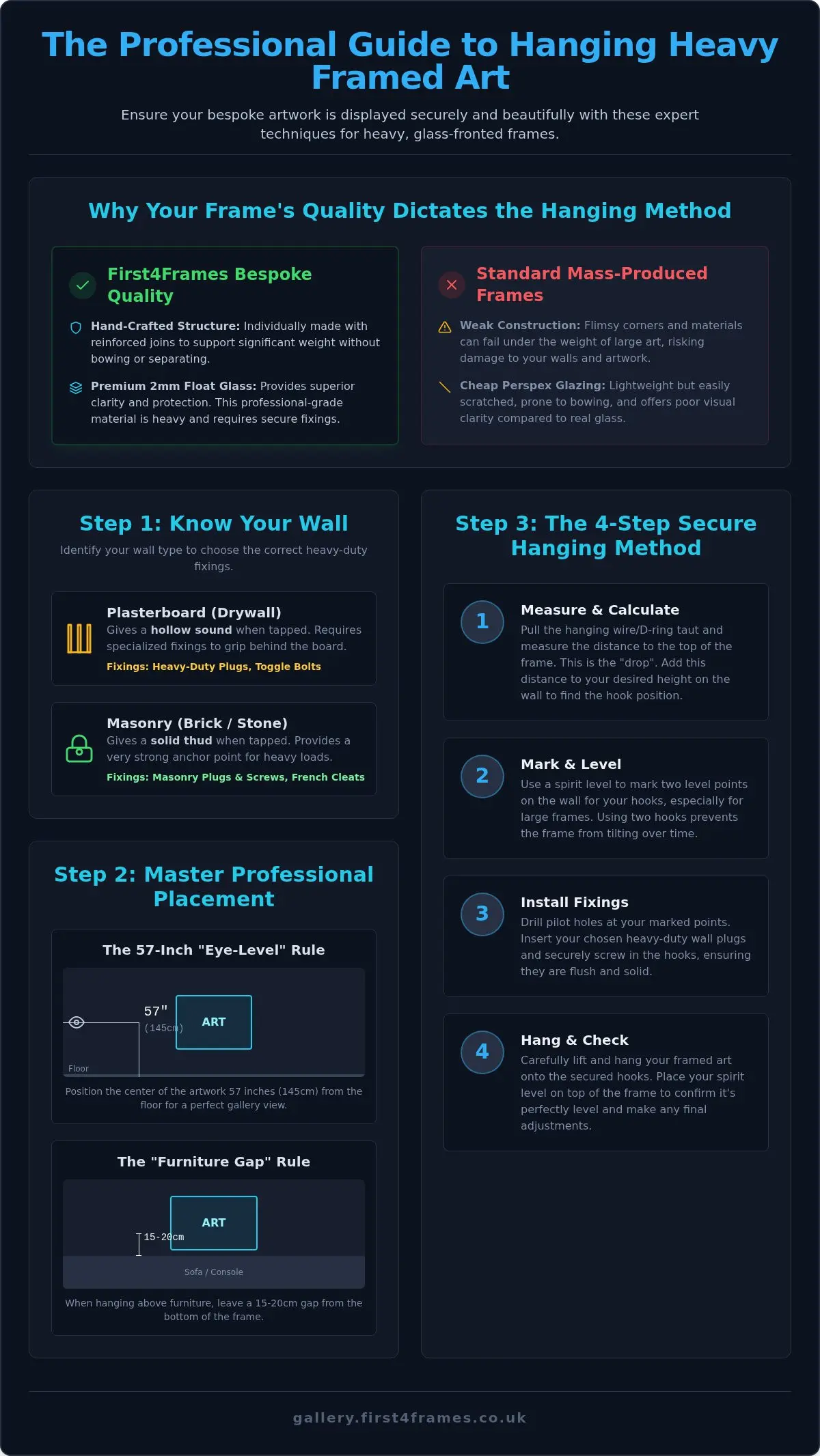
To achieve a professional gallery look, use the “57-inch rule.” This involves positioning the centre of the artwork 57 inches (roughly 145cm) from the floor, which is the standard eye level for most viewers. If you’re hanging art above a sofa or sideboard, maintain a gap of 15cm to 20cm between the bottom of the frame and the furniture. This ensures the piece feels anchored to the room’s design rather than floating awkwardly on its own.
Displaying Photos on a Wire vs. a Gallery Wall
Deciding how to present your art depends on both the room’s architecture and the specific style of the piece. If you have limited wall space or very high ceilings, a minimalist wire system offers a sleek solution for modern Landscape wall art. This method is particularly effective when researching how to hang a large framed picture without committing to a permanent spot, as it allows for effortless height adjustments. Conversely, a gallery wall creates a rich narrative by clustering smaller prints around a central anchor. This approach works perfectly for Coastal wall art collections where you want to evoke a sense of the seaside through multiple perspectives. Our online picture framing options make it simple to coordinate these layouts.
Pros and Cons of Wire Hanging Systems
Wire systems are ideal for contemporary art prints where you might want to refresh your collection frequently. They lend an industrial aesthetic that works beautifully in modern UK homes. However, because the fixings are often visible, they may not suit traditional decors where hidden brackets are preferred. Before you pick up a drill, use our wall art visualiser to visualise art on your wall. This tool allows you to see artwork before you buy and ensures your statement piece doesn’t overwhelm the room’s proportions.
Designing a Cohesive Gallery Wall Around Large Art
When creating a gallery wall, a single piece of large bespoke framed wall art often serves as the gravitational centre. This anchor piece dictates the placement of surrounding items, such as custom framed art prints or smaller photography. To maintain a professional standard, we recommend a spacing of 5cm to 7.5cm between each frame. This breathing room prevents the display from feeling cluttered. You can choose your frame online to ensure every element of your display meets our hand-made quality standards. This art print framing service ensures that even smaller items in your collection are protected by our premium 2mm float glass.
Step-by-Step: How to Hang a Large Framed Picture Securely
Learning how to hang a large framed picture securely is a process that begins with the right preparation. Before you reach for the drill, gather a spirit level, masking tape, and heavy-duty wall plugs suited to your specific wall type. If you’re unsure about the hardware required for heavy loads, our Ultimate Guide to Choosing and Hanging Art provides deeper technical insights into display safety and structural stability.
One often overlooked step when researching how to hang a large framed picture is measuring the “drop.” Pull the hanging wire taut towards the top of the frame and measure the distance from the wire’s highest point to the top edge of the frame moulding. This measurement tells you exactly where to place your hook so the top of your Scottish landscape art sits exactly where you planned. To avoid unnecessary pencil marks on your paint, use masking tape to mark the intended corners and the centre point first.
The Two-Person Technique
Large-scale art print framing service items are cumbersome and heavy. We strongly advise against hanging these solo. One person should focus on supporting the weight and positioning the frame, while the second person stands back to check the alignment and guide the frame onto the fixings. Clear communication is essential to prevent accidental drops or wall scuffs during the process.
Final Levelling and Buffing
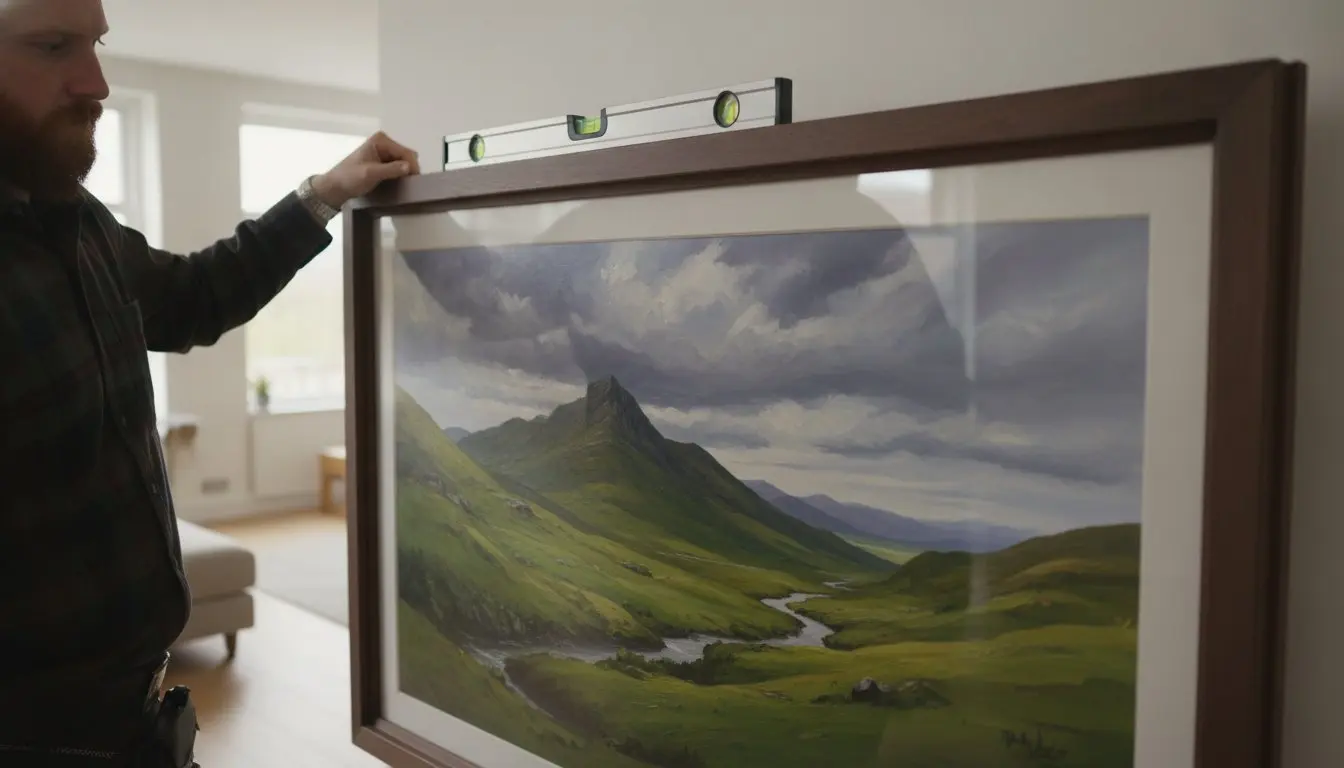
Once the frame is on the wall, place your spirit level directly on the top edge of the frame moulding. Avoid using the artwork itself as a guide, as internal mounts vary. Finally, give your display the finish it deserves. Because we use premium 2mm float glass rather than static-heavy perspex, a quick wipe with a lint-free cloth removes fingerprints. This ensures the clarity of your bespoke framed wall art is immediately visible.
The First4Frames Gallery Advantage: Bespoke Quality and Secure Delivery
First4Frames Gallery provides a structural foundation that mass-produced frames simply cannot offer. When you are determining how to hang a large framed picture, the integrity of the frame itself is paramount. Unlike standard, shop-bought options that may not fit your artwork properly, every frame from our Falkirk-based workshop is individually crafted for each order. This bespoke construction ensures your display is safe and secure, specifically designed to handle the weight of larger dimensions without bowing or failing over time.
We prioritize premium components, such as our 2mm float glass, which provides superior clarity compared to the dull, scratch-prone perspex used by many competitors. For those looking to coordinate their decor from home, our Online picture framing service provides extensive choice and expert advice. Whether you are framing a personal photograph or a piece of Fine art, our high-quality materials ensure your work is presented with professional fidelity and the traditional craftsmanship that defines our brand.
Custom Framing Options for Large Art
Our gallery features an expansive selection of framed wall art, including works by Best-selling artists and Famous artists. You can easily Design your framed artwork using our custom options, ensuring that even the largest pieces are tailored to your specific aesthetic. From Contemporary art prints to traditional subjects, our artisans treat every piece with a deep appreciation for the creative process, making specialized framing feel accessible and straightforward.
Preserving Your Art for Generations
We also offer a specialized print and frame service for digital photographs, ensuring they are printed to the highest quality to match our bespoke framing. To ensure your investment arrives in perfect condition, all finished frames are fully packaged to prevent damage and shipped via professional couriers. This secure logistical process means your Bespoke framed wall art is ready to hang the moment it reaches your door, preserved with high-quality materials to last for generations.
Elevate Your Home with Secure Art Displays
Hanging a significant piece of art shouldn’t be a source of stress. By understanding your wall’s structural limits and mastering the “drop” measurement, you’ve learned exactly how to hang a large framed picture with professional precision. The safety of your display starts with the frame’s construction. A bespoke, hand-made frame offers the reinforced strength that mass-produced alternatives simply can’t match, ensuring your artwork remains a stable focal point for years to come.
Every piece we create is hand-crafted in the UK and features superior 2mm float glass as standard for unmatched clarity. We guarantee your investment arrives safely through our secure courier shipping, fully packaged to prevent damage. Ready to find the perfect focal point for your room? Design your bespoke framed artwork and see it on your wall today using our digital visualiser tool. We’re here to help you turn your creative vision into a stunning, secure reality that you’ll be proud to display.
Frequently Asked Questions
How high should I hang a large framed picture?
Position the centre of your artwork at eye level, which is roughly 145cm from the floor. This “57-inch rule” creates a balanced look across your home. If you’re learning how to hang a large framed picture above a sofa or sideboard, maintain a gap of 15cm to 20cm. This ensures the frame feels connected to the furniture rather than floating awkwardly, creating a harmonious relationship between the art and your interior design.
Can I hang a heavy frame on a plasterboard wall?
Yes, you can hang heavy artwork on plasterboard by using specialized hollow wall fixings like toggle bolts or molly bolts. These anchors expand behind the board to distribute weight across a larger area. For maximum security, always try to locate a wooden stud using a stud finder. Screwing directly into the timber provides the most stable foundation for bespoke framed wall art, preventing the hardware from pulling through the relatively soft plasterboard surface.
Is it better to use a wire or D-rings for large art?
D-rings are the preferred choice for heavy artwork because they distribute weight directly to the wall fixings. While wires are convenient for smaller items, they can put significant inward stress on the frame’s corners and often cause the piece to lean forward. Using two D-rings ensures your display remains level and secure. This is vital for our hand-made frames, which utilize heavy 2mm float glass for clarity rather than lightweight, scratch-prone perspex.
How do I stop a large picture from tilting forward?
Forward tilt occurs when the hanging points are positioned too low on the frame. If you are struggling with how to hang a large framed picture so it sits flat, ensure your D-rings are mounted in the top third of the frame. Additionally, placing adhesive rubber bumpers on the bottom corners of the frame moulding provides extra grip. This creates a professional finish and prevents the frame from shifting or leaning away from the wall.
What is the best way to clean 2mm float glass on a large frame?
Clean your 2mm float glass using a soft, lint-free microfibre cloth and a mild, ammonia-free glass cleaner. Always spray the cloth first to avoid moisture entering the frame joins. This professional method preserves the exceptional clarity our glass provides, which is far superior to the dull, static-prone finish of perspex. Regular light dusting will keep your fine art prints looking pristine, ensuring the vibrant colours and details remain sharp for generations to come.
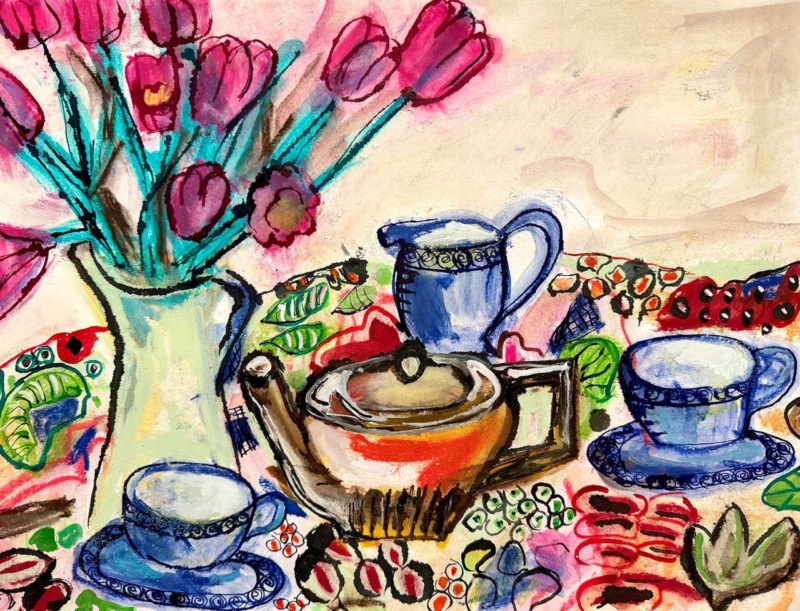
Choosing art for pale blue walls is less about a perfect match and more about depth. Blue Tea Set brings stronger blue notes and still-life structure. Against a softer wall, it can make a breakfast room feel layered rather than washed into one flat shade.
Layer art for pale blue walls instead of matching it
Element
Role
Pale blue paint
Creates a light field around the framed piece.
Deeper print blue
Adds focus and prevents a faded effect.
Neutral table and frame
Breaks up blue and grounds the scheme.
The tea-set subject suits an everyday dining corner. It suggests hospitality without spelling out a message and can connect with ceramics already used there. Mix in cream, timber, and warmer glazes instead of arranging only matching blue objects.
Test the blue in changing daylight
Pale paint can turn cool on an overcast morning and brighter in direct light. Natural timber adds warmth, while a slim dark frame gives the still life sharper definition. Both choices are more useful than copying the paint.
First 4 Frames completes bespoke framing and colour-managed Giclée printing in-house in Falkirk. This keeps the blues distinct and preserves contrast under changing domestic light.
As art for pale blue walls, Blue Tea Set works through tonal layering, familiar subject matter, and enough contrast to keep a calm breakfast room alive.
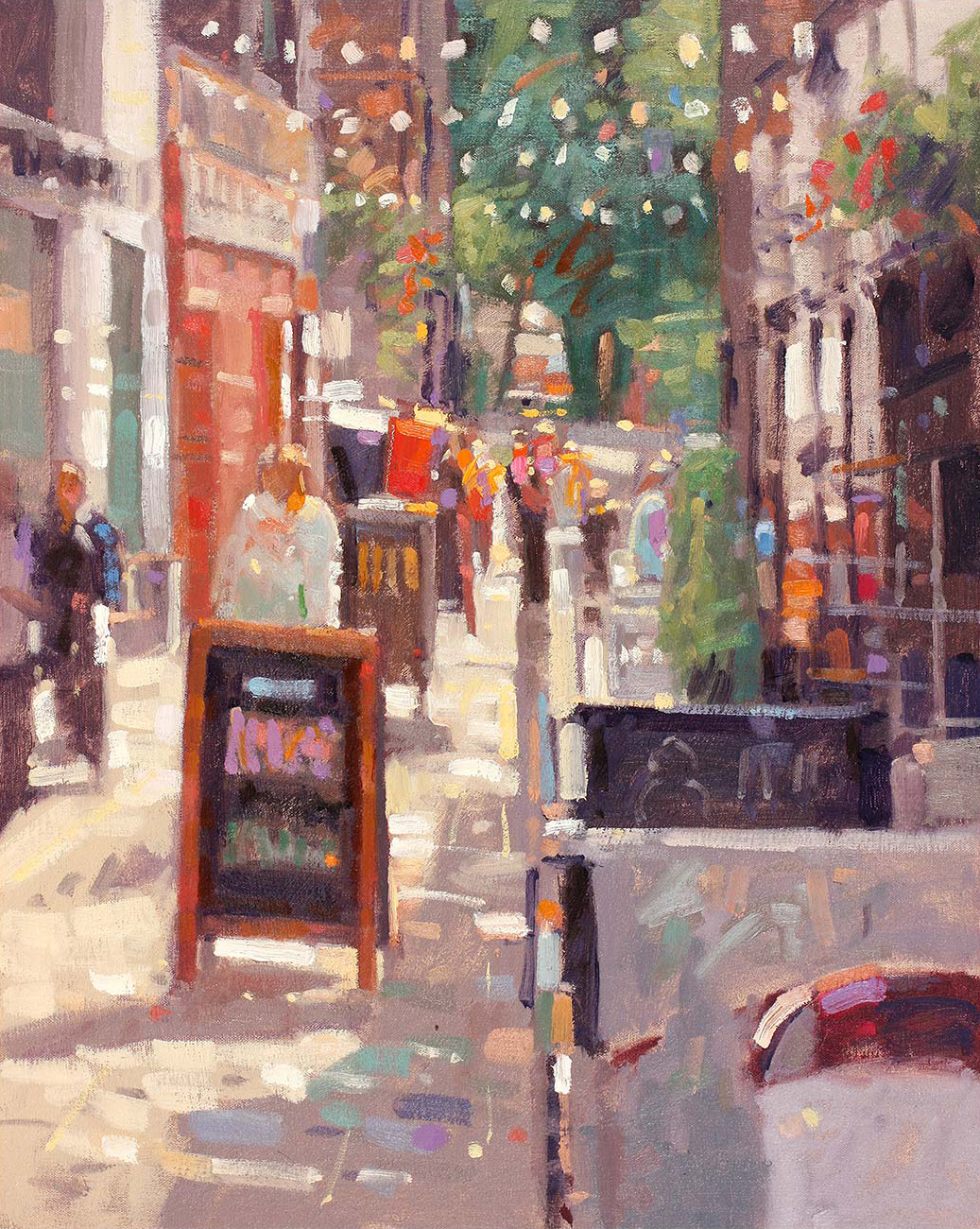
Colourful art prints can make a kitchen feel more sociable when their palette connects with how the room is used. Ashton Lane brings the glow and energy of a Glasgow lane into an eating corner. Its evening character suits coffee, supper, and conversation.
Connect colourful art prints with kitchen light
Judge the picture in daylight and under evening lamps. Warm pendants can draw out the lane’s glow, while natural light reveals brighter notes. Choose one connection, such as a cabinet or stool, instead of matching every colour.
Keep the artwork away from heat, steam, and cooking splashes.
Hang it where diners can enjoy the detail without blocking a route.
Use a frame with enough definition against tiles or patterned surfaces.
The subject also supports conversation. People who know Glasgow may recognise it, but the appeal does not depend on local knowledge. Lights, façades, and the sense of an evening out create a welcoming narrative.
First 4 Frames creates the Giclée print and bespoke frame in-house in Falkirk. Colour management keeps the varied palette balanced, and hand finishing makes the work feel integrated rather than like a casual kitchen poster.
Effective interior design wall art should solve a room problem as well as reward close looking. Alberi II introduces organic rhythm where furniture and architecture feel straight. Its tree-led forms soften cabinetry, echo windows, and bring movement to a contemporary scheme.
Use interior design wall art to repeat rhythm
Three details to coordinate
Repeat one quiet colour in a cushion, ceramic, or book spine.
Relate the frame to nearby timber without matching every grain.
Leave blank wall so the branching forms remain clear across the room.
Look for vertical elements before choosing a position. Tall glazing, shelving uprights, floor lamps, and fluted surfaces create a repeated beat. Alberi II can join that rhythm while loosening it, so an orderly room does not become rigid.
The upward movement is useful above low furniture. It balances a long sofa or sideboard and draws attention through the wall’s height without requiring an oversized frame.
At First 4 Frames, colour-managed Giclée printing and bespoke framing are completed in-house in Falkirk. Fine marks remain clear, and the moulding can be judged as part of the room solution.
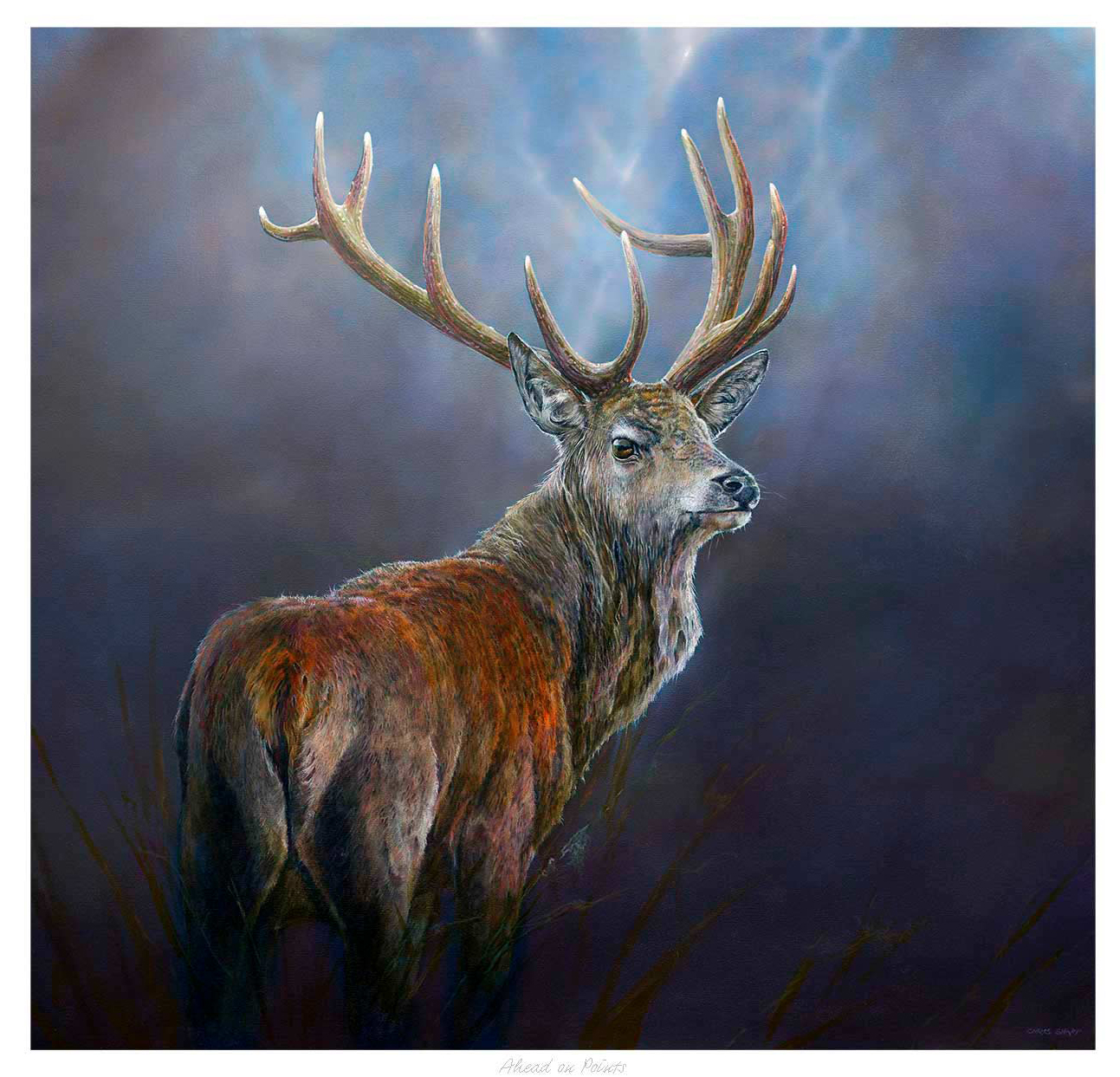
Stag wall art can bring calm concentration to a study when the image is chosen for poise rather than country-house nostalgia. Ahead on Points places an alert stag against misty blue. The silhouette has presence, yet the restrained setting feels clean and contemporary.
Keep stag wall art clear of rustic clichés
Let the animal be the only overt wildlife reference. Tartan cushions and decorative antlers would make the room too literal. A simple desk, wool upholstery, and one dark detail can echo the outline while keeping the study composed.
Decision
Useful approach
Wall
Soft grey, chalky white, or muted blue supports the haze.
Frame
A dark edge adds definition; quiet timber adds warmth.
Position
Keep it in the seated sightline and away from screen glare.
The title suggests alertness and readiness, qualities that suit a workspace. However, the image is not aggressive. Its blue atmosphere slows the composition and makes it a steady focal point.
First 4 Frames handles Giclée production and bespoke framing in-house in Falkirk. Careful colour management preserves the separation between animal and haze, while the frame gives the silhouette authority.
Meaningful gift wall art should connect with the recipient after the occasion has passed. Agnes and Magnus Go for a Stroll carries a gentle story of companionship and a shared path. It can mark a wedding, anniversary, new home, or close friendship without relying on a novelty slogan.
Choose meaningful gift wall art through association
Think about the relationship. The pair may recall partners, siblings, or friends who enjoy walking together.
Picture the home. The atmospheric palette is easier to place than an occasion-specific design.
Choose lasting presentation. A finished frame makes the gift ready to live with every day.
A personal gift need not explain the whole story; it should leave room for the recipient’s part in it.
The scene might suggest weekend walks, a favourite landscape, or the reassurance of moving through life beside someone familiar. It offers a prompt rather than dictating one fixed memory.
First 4 Frames makes the colour-managed Giclée print and bespoke frame in-house in Falkirk. The hand-finished result feels considered when it is unwrapped and does not leave the recipient searching for a suitable frame.
As meaningful gift wall art, Agnes and Magnus Go for a Stroll succeeds through companionship, atmosphere, and a story that can remain personal for years.
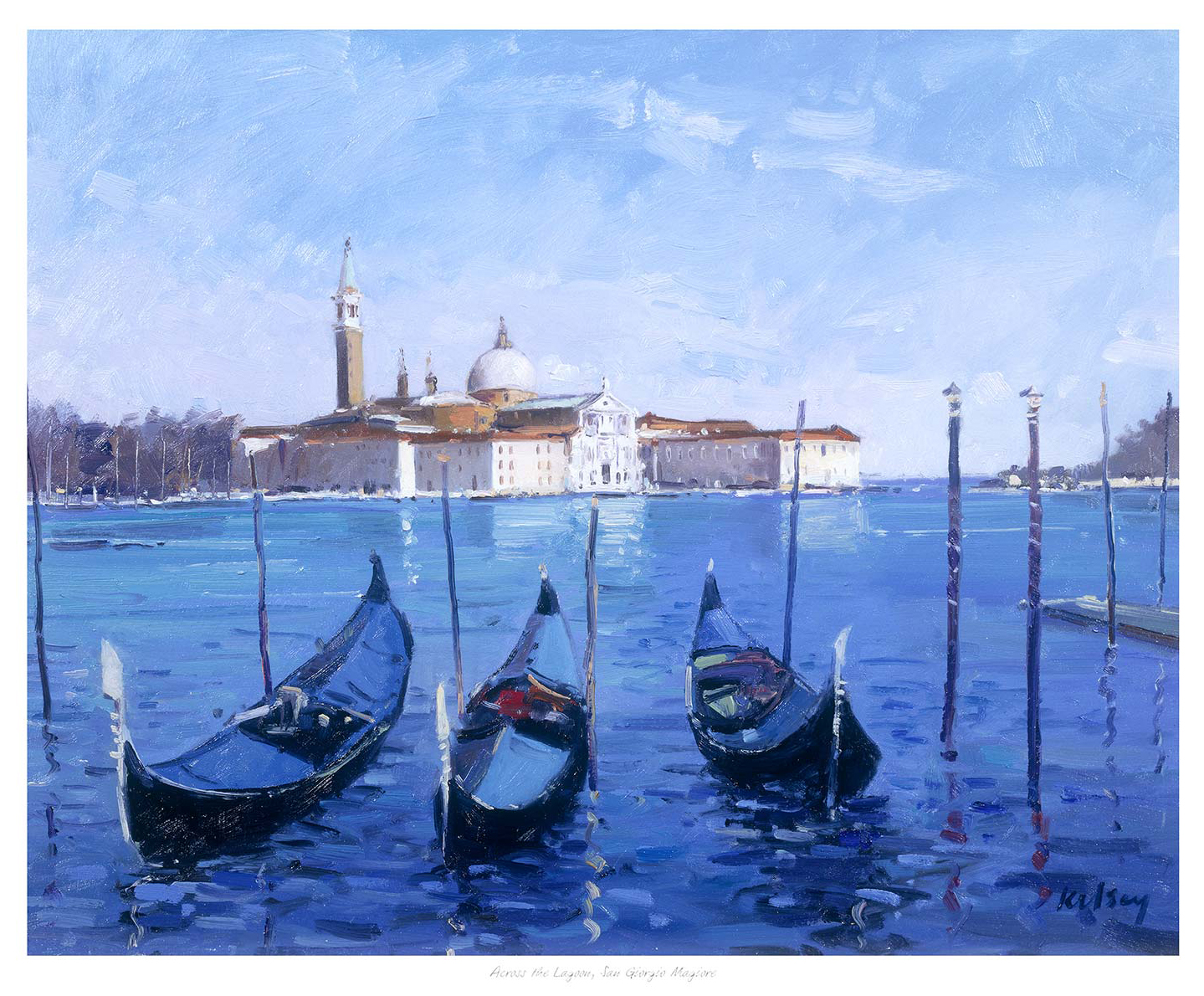
Museum quality art prints depend on faithful colour, sound materials, and presentation that respects the image. Across the Lagoon, San Giorgio Magiore makes that clear. Open water carries the eye towards San Giorgio Maggiore, while pale Venetian light gives the composition room to breathe.
Give museum quality art prints a measured border
Protect the light
A generous mount can extend the pause created by the lagoon. A quiet timber, muted silver, or simple dark edge should leave the reflected sky as the brightest element.
Respect the horizon
Hang the work level and leave clear wall around it. Crowded accessories interrupt the horizontal rhythm that gives this view its calm.
Compare narrow and wider margins beside the print before deciding. A wider mount suits a spacious wall, while a compact option can work above a console. In either case, the architecture should feel distant rather than boxed in.
First 4 Frames completes colour-managed Giclée production and bespoke framing in-house in Falkirk. This joined-up process keeps subtle blues, warm stone, and pale reflections distinct, then gives the image a hand-finished presentation.
Among museum quality art prints, Across the Lagoon, San Giorgio Magiore is a lesson in restraint: protect the colour, preserve the distance, and let the frame complete the view.
A housewarming gift for a tea lover should feel more personal than another packet of tea and more lasting than flowers. Tea with Friends by David Short turns the familiar ritual of sharing a pot into colourful framed art. It suits a new home because the subject is not simply about a drink. It is about welcome, conversation, and making time for people.
Why this housewarming gift for a tea lover has meaning
Good housewarming presents recognise the life someone hopes to create in a new place. For a person who always puts the kettle on when friends arrive, the ritual already says something about them. A framed image built around that shared moment reflects their hospitality without asking them to store another novelty cup or kitchen gadget.
The picture can also mark a relationship. It may suit a friend who hosted you through a difficult year, a relative moving closer to family, or a couple setting up home together. A short handwritten note can explain why the scene made you think of their table and the conversations held around it.
Match the gift to the home they are making
Tea with Friends has enough colour for a kitchen, breakfast room, or relaxed dining space. However, it need not hang beside a kettle. In a sitting room, its social subject can make the space feel welcoming. In a hallway, it can set a friendly tone as soon as guests arrive.
For a smaller home
Choose the more compact print size and reserve a clear section of wall. A defined display spot is kinder than giving a large piece that creates a placement problem.
For a larger shared room
Use the larger option above a sideboard or dining bench, where its colour and horizontal shape can hold the furniture below.
Keep the presentation personal
A colourful image rarely needs a highly decorative frame. A simple dark moulding can sharpen the composition in a contemporary kitchen. Natural timber can make it feel softer and more relaxed. If the recipient has strong tastes, invite them to choose the final frame while keeping the artwork itself as the surprise.
First 4 Frames produces Giclée prints with colour-managed equipment and completes the framing in-house in Falkirk. The hand-finished result arrives ready for proper display, which gives the present more permanence than a standard housewarming extra.
Add a note that turns art into a shared memory
Mention the first cup of tea you shared, a regular Sunday visit, or the promise of time together in the new home. That sentence supplies the private meaning that no generic gift message can provide. The artwork then becomes a reminder of friendship as well as a bright addition to the room.