A gift for a new business owner should recognise both the courage of starting and the work still ahead. Flowers disappear, business accessories can feel impersonal, and specialist equipment is best chosen by the owner. Gaun Yersel by Stewart Bremner takes a warmer route. Its familiar Scots encouragement says, in effect, keep going and trust yourself.
What makes art a useful gift for a new business owner?
New ventures often begin with practical purchases, long lists, and many decisions. A framed print serves a different purpose. It marks the personal achievement behind the company and can make an unfamiliar workspace feel owned. Unlike branded stationery or technology, it remains relevant as the business changes.
Gaun Yersel is direct without sounding like formal corporate motivation. The phrase has energy, humour, and a recognisable Scottish voice. That makes it particularly apt for a founder who values local character or has built their business around an individual point of view.
Choose the moment that gives the present meaning
At the launch
Give it when the doors open, the website goes live, or the first order is completed. A short card can record the exact milestone while the artwork stays uncluttered.
After the first hard stretch
Encouragement may matter even more a few months later. The print can acknowledge persistence when the novelty has passed and the real work is under way.
Think beyond a conventional office wall
The new owner may work from a studio, salon, treatment room, workshop, shop, or spare bedroom. A graphic print is flexible enough for these varied settings. It can greet visitors near the entrance, sit behind a desk for video calls, or add personality to a quieter staff area.
Before choosing the finished size, ask whether the business premises are permanent. A more compact framed version is easier to move and can also transfer to the owner’s home. If the recipient has a settled customer-facing space, a larger format can provide a confident focal point.
Let the message lead the presentation
Typographic art benefits from a frame that protects its graphic clarity. A clean dark moulding can sharpen the lettering, while natural timber may make the piece feel more relaxed and personal. There is no need to match the business logo unless the colours already work comfortably together.
First 4 Frames uses colour-managed Giclée production and hand-finishes bespoke framing in-house in Falkirk. The result arrives ready to hang, which is valuable for a busy recipient who is unlikely to have time for a separate framing job during a launch.
wall art for a dark green sofa needs to do more than repeat the colour of the upholstery. A successful piece should connect that strong furniture choice to the rest of the room and stop the seating from feeling like a heavy block. Woodland Bluebells by Sheila Fowler offers a useful balance. Its woodland greens relate naturally to the sofa, while bluebells, light, and receding trees open the view beyond it.
Why wall art for a dark green sofa should create contrast
Dark green upholstery can anchor a living room beautifully, but it already carries considerable visual weight. An artwork dominated by the same deep tone may make the wall and sofa merge into one dense area. At the other extreme, a very pale abstract can look disconnected from the furniture beneath it.
Woodland Bluebells bridges those two positions. The woodland subject shares the sofa’s natural colour family, yet the lighter path through the trees gives the composition space. Blue and violet notes add a second accent without fighting the green. The result feels coordinated, not matched by formula.
Build the room from three colour notes
Keep the sofa as the deepest green in the scheme.
Repeat one softer bluebell tone in a cushion, throw, or small ceramic.
Use the pale woodland light as a guide for walls, curtains, or a rug.
This limited approach keeps the room calm. It also means the artwork can provide the detailed colour variation while larger furnishings remain simple. There is no need to introduce botanical patterns everywhere. One well-placed landscape can carry the natural reference on its own.
Use woodland depth to lighten the seating wall
A sofa creates a strong horizontal line, especially when it sits against a plain wall. Hanging a woodland image above it introduces vertical trunks and a route into the distance. Those opposing directions bring useful structure to the arrangement and make the wall feel taller.
Measure from the outside edges of the sofa rather than from the whole wall. The framed piece should feel connected to the seating, with enough clear space around it to preserve the sense of woodland air. If a lamp or tall plant already occupies one side, centre the picture over the visual seating area instead of following the room’s mathematical midpoint.
Choose a frame that links, rather than competes
Natural timber can connect the print to wooden floors, side tables, or woven textures. A slim dark moulding may suit a more tailored room and provide a clean boundary between the image and a pale wall. Avoid choosing a green frame simply because the sofa is green; the artwork already supplies that relationship.
First 4 Frames produces colour-managed Giclée prints and completes bespoke framing in-house at the Falkirk workshop. That process makes it possible to judge the woodland’s subtle colour against the moulding, so the finished piece supports both the image and the room rather than relying on a generic frame.
The most understated design choices are often the hardest to get right. You might think a simple border is easy to find, but searching for the right minimalist frames for scandinavian interiors often leads to a cycle of disappointment. It’s frustrating when a beautiful print is let down by a bulky frame or cheap, yellowing perspex that lacks clarity. We believe your space should feel like a professionally staged sanctuary where every element serves a purpose. This guide will help you discover how to select the perfect minimalist frames that embody the “less is more” Scandinavian philosophy while ensuring gallery-grade protection for your artwork. We’ll show you why bespoke, hand-made quality from our Falkirk workshop surpasses off-the-shelf options. You’ll learn about the superior clarity of 2mm float glass and how our “Visualise art on your wall” tool can help you create a cohesive gallery wall. From Scottish landscape art to contemporary photography prints, it’s time to give your art the professional finish it deserves.
Key Takeaways
Learn how the Scandinavian “less is more” philosophy uses frames as a vital transition between your artwork and your home’s architecture.
Discover why choosing minimalist frames for scandinavian interiors requires a focus on slim-profile aluminium or solid wood to avoid the bulky look of standard frames.
Understand the technical advantage of 2mm float glass, which offers superior clarity and prevents the yellowing or warping often found with cheap perspex competitors.
Explore how to turn your personal digital photos into professionally staged art prints using a bespoke, hand-made service from our Falkirk workshop.
Understanding the Role of Minimalist Frames in Scandinavian Design
Scandinavian design is rooted in the concepts of balance, functionality, and a seamless connection to nature. When you select minimalist frames for scandinavian interiors, you aren’t just choosing a border. You’re selecting a vital transition between the artwork and the architecture of your home. A frame should never shout; it should whisper, allowing the art to breathe while anchoring it to the wall. Standard, bulky frames often disrupt the clean lines that define Nordic spaces, which is why bespoke framed wall art is essential for achieving the perfect proportions. You can even visualise art on your wall using our online tools to ensure the fit is seamless before you commit.
The Aesthetic Principles: Hygge and Lagom
True Scandi style balances two core ideas: Lagom, meaning “just enough,” and Hygge, which represents cozy warmth. Our minimalist frames embody Lagom by providing structural support without visual clutter. By using natural materials like solid wood, we also introduce Hygge into your living space. This creates a serene atmosphere where your gallery wall feels intentional rather than crowded. It’s about finding that sweet spot where the craftsmanship is evident but the aesthetic remains understated.
Why Generic Frames Fail the Scandi Test
Most mass-produced frames are made from plastic-wrapped MDF. These soul-less products often sag over time or feature chunky profiles that overwhelm delicate prints. Unlike these cheap alternatives, every frame from our Falkirk workshop is individually crafted to order. We avoid the common pitfalls of generic framing, such as:
Bulky profiles that distract the eye from the artwork.
Poorly fitted mounts that cause prints to ripple or warp.
Low-grade glazing that lacks clarity and yellows over time.
While competitors rely on thin perspex, we use 2mm float glass to ensure your art remains the focal point. This provides superior clarity, protecting your investment with a display that looks as professional as a gallery exhibition. Our hand-made approach ensures that your frame isn’t just a commodity, but a dedicated partner to the art it holds.
Essential Elements of a Quality Minimalist Picture Frame
Choosing minimalist frames for scandinavian interiors requires a discerning eye for material quality. While mass-market retailers often rely on plastic-wrapped MDF, these materials lack the structural integrity needed for a truly refined look. We prioritise solid wood and slim-profile aluminium, which provide the strength required to maintain clean lines without adding unnecessary bulk. These high-quality materials ensure your frame won’t warp or sag, even when holding larger prints.
Glazing Clarity: 2mm Float Glass vs. Perspex
The glazing is the window to your art. We define 2mm float glass as the professional standard for clarity and fidelity, ensuring your print’s colours remain true to the artist’s original vision. Many competitors use perspex to save on shipping costs, but this comes at a price for the customer. Perspex naturally attracts dust through static electricity and scratches easily during routine cleaning. Over time, it can even develop a hazy, yellowish tint that dulls your artwork. By using real glass, we guarantee a high-clarity display that stands the test of time.
Slim Profiles and Clean Joins
A minimalist frame lives or dies by its corners. Our bespoke, hand-made frames feature perfectly mitred joins that are individually checked at our Falkirk workshop. This precision allows for incredibly slim profiles that still feel substantial. You might also consider a “shadow box” mount, which adds a sophisticated sense of depth without increasing the frame’s external footprint. This technique is particularly effective for contemporary art prints that need room to breathe. Before choosing your style, you can browse our full selection of frames online to find the perfect match for your space.
Finally, don’t overlook what’s behind the art. Scandinavian homes are often flooded with natural light, which is beautiful but can be damaging. We use archival-grade backing materials to prevent the “yellowing” and acid damage that occurs with standard cardboard inserts. This ensures your investment stays as pristine as the day it was framed.
How to Match Minimalist Frames to Your Interior Palette
Selecting the right finish for minimalist frames for scandinavian interiors depends on the specific mood you want to create. Light oak and natural wood frames are perfect for adding organic warmth to “Cool Scandi” palettes dominated by greys and muted blues. These materials connect your art to the natural world, a core tenet of Nordic design. If you prefer a truly seamless look, matte white frames act as a “disappearing” border, making your walls feel airy and expansive. For those leaning into a “Modern Scandi” vibe, custom framed art prints in thin black profiles provide a sophisticated anchor. You can explore bespoke options to see how different finishes transform a room.
Choosing a Frame for Coastal and Landscape Wall Art
Scottish landscape art prints and coastal scenes rely on natural light and soft textures. These pieces benefit from neutral, slim-profile frames that don’t compete with the horizon line or the intricate details of the high-quality Giclée print. To ensure the frame matches your specific wall colour and furniture, use our Wall art visualiser to see artwork before you buy. This tool removes the guesswork, allowing you to design your framed artwork with total confidence. Our professional couriers then ensure your hand-made piece arrives in perfect condition, fully packaged for safety. If you’d like to understand exactly how framed pictures are packaged for shipping, our gallery-standard guide explains every step of the protective process.
The Power of the Mount (Matting)
A professional mount is the secret to making contemporary art prints feel like gallery acquisitions. We recommend using oversized white mounts to create “breathing room” around the image. This technique draws the eye inward and elevates the piece without adding unnecessary bulk. When choosing a mount colour, aim for a shade that complements the lightest tones in the art rather than trying to match the wall exactly. This creates a subtle layer of depth that enhances the 2mm float glass’s clarity. Unlike the flat look of cheap frames with plastic glazing, our hand-made approach in Falkirk ensures every layer of your display is perfectly aligned. Browse our full collection of framed wall art to find your perfect match.
First4Frames: Your Partner in Bespoke Scandinavian Framing
Creating a serene, Nordic-inspired home requires a partner who understands the nuances of artisan craftsmanship. At First4Frames Gallery, we provide a comprehensive art print framing service that prioritises quality over mass production. Every one of our minimalist frames for scandinavian interiors is individually hand-crafted in our Falkirk workshop. We don’t believe in the “one size fits all” approach of mass-market retailers who use cheap materials. Instead, First4Frames Gallery offers bespoke framing that respects the integrity of your artwork, ensuring a perfect fit every time. Our “print and frame” service also allows you to turn your own digital photography into professional wall art, printed to the highest Giclée standards.
Visualise Art on Your Wall Before You Buy
Choosing the right proportions for a minimalist space can be daunting. Our wall art visualiser removes this anxiety by allowing you to see exactly how a frame will look in your home. This online picture framing tool lets you experiment with different wood finishes and mount sizes, ensuring your bespoke framed wall art fits your room’s architecture. You can design your framed artwork and choose your frame online with total confidence, knowing the final product will match your vision.
From Scottish Landscapes to Contemporary Art
Our First4Frames Gallery features a curated collection of works by best-selling and famous artists. Whether you’re searching for evocative Scottish landscape art, serene coastal wall art, or bold contemporary art prints, our selection provides the perfect starting point for your gallery wall. We pair these fine art prints with our signature 2mm float glass, offering a level of clarity that cheap perspex simply cannot match.
Once your order is hand-crafted, we ensure it arrives in pristine condition. All finished frames are fully packaged in protective materials to prevent damage and shipped via professional couriers across the UK. To learn more about our gallery-standard approach to packaging framed pictures for shipping, we’ve outlined the full four-tier protective process in detail. It’s time to stop settling for standard frames that lack soul. Choose your frame online today and experience the difference of true UK-made quality from First4Frames Gallery.
Elevate Your Home with Professional Minimalist Framing
Creating a serene, Nordic-inspired sanctuary is about more than just choosing the right furniture. It’s about the uncompromising quality of the final touches. By selecting the right minimalist frames for scandinavian interiors, you ensure that your artwork doesn’t just hang on a wall; it becomes an essential part of your home’s architecture. We’ve explored how the right materials and professional 2mm float glass provide a level of clarity that cheap perspex simply can’t match. Every piece we create is individually hand-crafted in our Falkirk workshop, ensuring a bespoke fit for your most cherished prints. We then use professional courier shipping with full protective packaging to deliver your art safely to your door. Whether you’re staging a commercial property or curating your own gallery wall, we’re here to help you achieve a flawless, high-clarity display. Design your bespoke framed wall art today at First4Frames and bring a professional, hand-made finish to your living space.
Frequently Asked Questions
What is the best frame colour for a Scandinavian-style living room?
Natural wood and light oak are the premier choices for adding organic warmth to your space. These finishes perfectly complement the neutral palettes found in Nordic design. Alternatively, matte white frames offer a seamless look on light walls, while thin black profiles provide a sophisticated anchor. We recommend choosing a finish that mirrors other wood elements in your room to maintain a cohesive and balanced atmosphere.
Why should I choose 2mm float glass over perspex for my frames?
You should choose 2mm float glass because it provides superior clarity and colour fidelity. Unlike the cheap perspex used by many competitors, real glass doesn’t attract dust through static or scratch during routine cleaning. It remains perfectly flat over time, ensuring your art doesn’t warp or distort. This professional standard is essential for protecting the high-quality Giclée prints we produce in our Falkirk workshop.
Can I get a custom-sized minimalist frame for a non-standard art print?
We specialise in creating bespoke frames for any unique dimensions you require. Every frame is individually hand-crafted in the UK to match the specific proportions of your artwork. This ensures your non-standard prints fit perfectly without the awkward gaps often seen in standard, store-bought frames. Our online design tools make it easy to specify your exact measurements and select high-quality materials for a professional finish.
How do I create a Scandinavian gallery wall without it looking cluttered?
Focus on the principle of Lagom by using consistent spacing and a limited colour palette for your frames. Using oversized white mounts creates essential breathing room around your contemporary art prints, preventing the wall from feeling cluttered. We suggest sticking to two or three frame finishes at most. You can use our wall art visualiser to plan your layout and see the artwork before you buy.
Is it better to print my own photos or use a professional print and frame service?
A professional print and frame service is the best way to ensure gallery-grade results for your digital photography. We use premium Giclée printing techniques that provide deeper colours and better longevity than standard home printers. By choosing a professional partner, you guarantee that the print quality matches the hand-made excellence of your minimalist frames for scandinavian interiors. This all-in-one solution ensures your art is perfectly protected.
Choosing art for sandy beige walls is not simply a search for more beige. Luskentyre beach begins with warm dunes and pale shore, then opens into turquoise water, soft pink cloud, and distant mountains. Cooler notes stop a neutral room becoming flat while protecting its calm.
Layer art for sandy beige walls through temperature
Colour
Role in the room
Golden sand
Connects with the wall without disappearing into it.
Turquoise water
Adds freshness and cool contrast.
Pink cloud
Introduces gentle warmth for textiles or ceramics.
Distant mountain
Creates depth and gives the pale palette structure.
Use one or two secondary colours elsewhere. A blue-green cushion or muted rose ceramic is enough. Copying every beach colour would make the room feel too literal.
Separate shore from wall
A pale timber frame can continue the natural mood, but it needs tonal difference from the paint. A narrow darker edge creates stronger definition. Test both in the room’s real daylight.
First 4 Frames provides colour-managed production and bespoke framing in-house in Falkirk. This keeps delicate sand, sky, and water transitions clear and lets the final frame be judged as part of the room.
Office wall art can communicate energy without spelling out a motivational message. Salmon Leaping upstream in river catches the fish in mid-leap against the force of the river. Water droplets, current, and a taut body create purpose through action rather than words.
Let office wall art imply momentum naturally
Why the image suits focused work
Diagonal movement stops a blank wall feeling static.
The natural subject feels less corporate than arrows, skylines, or slogans.
The moment of effort suggests persistence without prescribing one message.
Place the work where it can be seen when looking away from a screen. A side wall, meeting corner, or clear space above low storage works better than a busy noticeboard.
Purposeful artwork can encourage focus quietly; it does not need to instruct the person looking at it.
A dark frame emphasises force and precision. Warmer timber makes the wildlife subject more approachable in a home office. Both are stronger than a literal river theme.
First 4 Frames can produce this image in a range of sizes and completes framing in-house in Falkirk. Colour-managed printing holds the water detail and the fish’s shape, while the frame gives the energetic moment a disciplined boundary.
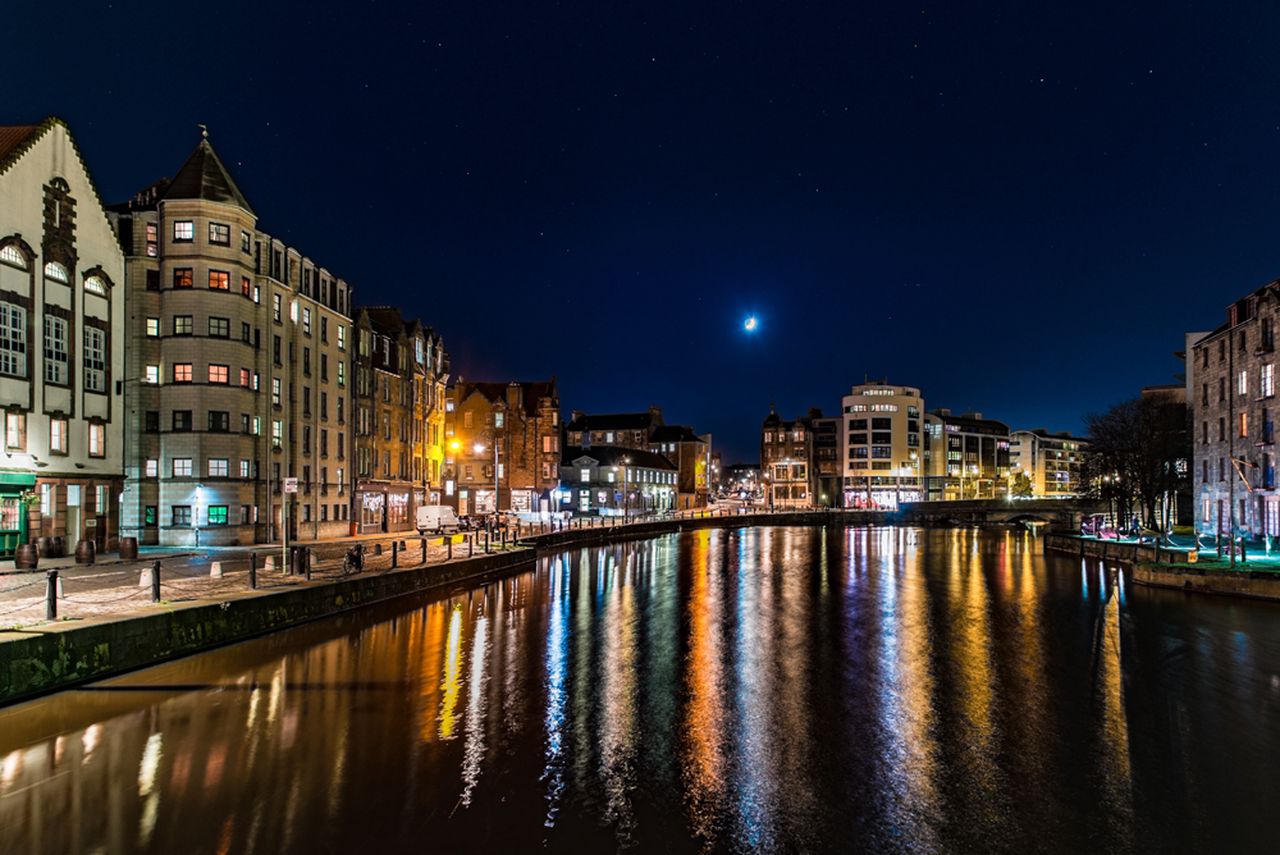
Good wall art for a room with statement lighting needs to hold its character after daylight fades. Night shot by Water of Leith is built around that transition. Warm riverside windows reflect in dark water, while a crescent moon and stars add a quieter layer.
Test wall art for a room with statement lighting at night
Switch on the fitting that defines the room. A sculptural pendant may cast warm pools, sharp shadows, or patterned reflections. Judge the artwork in those real conditions, not only in midday light.
Link, do not copy
The glowing windows can relate to warm bulbs, but the photograph need not repeat the fitting’s shape. Connection through light temperature feels subtler.
Control reflection
Move the hanging point if a bright bulb appears in the glazing. The river reflections should remain visible from the main seat.
Historic buildings add structure, yet the river softens their outlines. That balance suits a dining area, city apartment, or evening sitting room.
First 4 Frames completes the print and bespoke frame in-house in Falkirk. Colour-managed production preserves warm window light against the cooler night, while considered framing supports the architectural image.
Bedroom wall art does not have to be pale to feel restful. Northern Lights sets luminous aurora and stars above a dark rocky shore, open water, and distant snow-capped mountains. The broad sky creates depth, so the darker palette never feels enclosed.
Balance dark bedroom wall art with points of light
Decision
Useful approach
Wall colour
Soft grey, muted blue, or warm off-white lifts the illuminated sky.
Frame tone
A slim dark edge adds definition; natural timber prevents too much coolness.
Lighting
Use low side light instead of a spotlight reflected in the glazing.
Position the work where it can be enjoyed from the bed, but avoid an uncovered window opposite. Reflections can erase the stars by day. A side wall or carefully angled lamp protects the quieter detail.
One inky cushion or subtle green-grey throw is sufficient. The room will feel calmer when the photograph remains the main source of drama.
First 4 Frames offers colour-managed printing and bespoke framing from its Falkirk workshop. Tonal control keeps the black shoreline, blue night, green light, and fine stars separate instead of merging into one dark field.
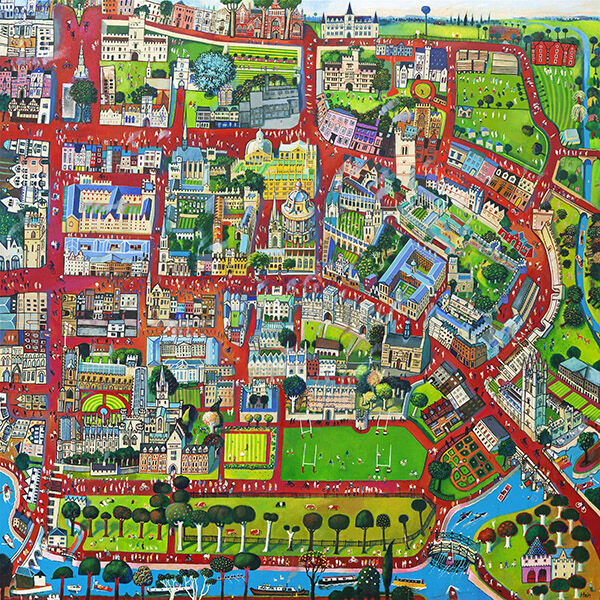
City wall art can celebrate an important place without depending on a date or slogan. Oxford gathers historic buildings, green spaces, sports grounds, roads, and river into one lively illustrated map. It suits graduation, relocation, or a first home because the story remains interesting after the occasion.
Choose city wall art with stories to revisit
Begin with the connection. Think about study, work, family, or a memorable visit.
Look beyond the centre. Parks, bridges, playing fields, and bends in the river give the eye many routes.
Plan its long-term home. A study, hallway, or reading corner invites repeat viewing.
A gift that does not expire
A graduation gift often focuses on one day. This print points backwards and forwards. Familiar streets recall a formative period, while the finished frame can move naturally into a later home or workspace.
Give the detailed composition a quiet wall and some viewing distance. A restrained moulding will contain the red routes and varied landmarks without making the map feel busy.
First 4 Frames handles colour-managed Giclée production and bespoke framing in-house in Falkirk. That care keeps small illustrated details legible and turns a place-led image into a substantial, ready-to-hang gift.
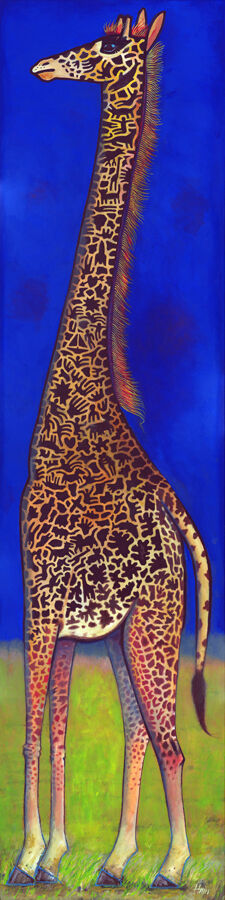
Well-chosen animal wall art can solve a difficult wall as well as add personality. Ginger uses a tall giraffe silhouette, intricate markings, and a deep blue field. Its upright shape gives a narrow landing or slim wall beside a doorway a clear purpose.
Use animal wall art to work with vertical proportion
Measure the useful width
Measure between switches, architraves, and furniture. Leave clear wall at each side so the frame looks deliberate rather than squeezed into the last available strip.
Keep the styling grown up
Let the giraffe provide the wit. Plain paint, one confident frame, and a small echo of orange or blue are enough. Extra safari motifs would make the artwork feel themed.
The maze-like pattern rewards close viewing on a landing, where people naturally slow down. From farther away, the clean outline still reads clearly. That change of scale gives the piece more staying power than a novelty illustration.
A narrow wall does not need a small idea; it needs artwork whose proportion belongs there.
First 4 Frames produces the Giclée print and bespoke frame in-house in Falkirk. Colour management keeps the orange, green, and blue distinct, while a hand-finished frame gives the playful subject a crisp architectural edge.
A gift for a jazz pianist should recognise more than the instrument. It should acknowledge the listening, improvisation, and personality behind the music. Blue Jazz by David Short translates that energy into colour and movement. As framed art, it can mark an achievement or celebration without becoming another piece of novelty music merchandise.
Why art makes a thoughtful gift for a jazz pianist
Musicians often own the practical tools they need, and specialist equipment is highly personal. Buying sheet music, pedals, or accessories without guidance can easily miss the mark. Artwork takes a different route. It reflects the recipient’s creative identity while leaving their carefully chosen setup alone.
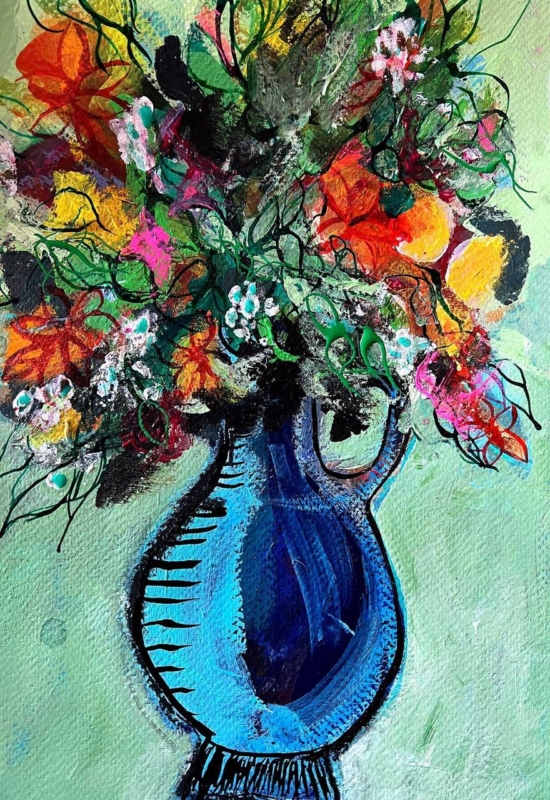
Blue Jazz also avoids a literal, diagram-like treatment of music. Its colour and visual rhythm suggest the feel of performance. That makes it appropriate for a pianist who values jazz as an expressive language, not simply as a decorative theme.
Match the reason for giving with a personal note
For a first performance
Mention the venue, tune, or moment that made the occasion memorable. The print then records a beginning without needing dates printed across the image.
For a retirement or milestone
Ask fellow players or students to sign a separate card. Their messages provide the history, while the artwork remains uncluttered and easy to display.
Think about display beyond the music room
A pianist may enjoy the piece near their instrument, but that is not the only option. Its strong blue palette can bring focus to a study, living room, or hallway. This flexibility matters when the piano already occupies most of one wall or the practice space contains shelves and acoustic equipment.
Consider the recipient’s home before choosing size. A compact print may suit a shelf-height wall or apartment. A larger framed version can hold its own above a sideboard in a shared room. The best gift is generous without creating an awkward placement obligation.
Frame the colour with confidence
Blue can feel crisp against a simple dark frame, while natural timber gives it a warmer, more relaxed edge. Avoid trying to match every shade to the room. One confident connection, perhaps to a chair, rug, or ceramic, is enough to make the picture feel settled.
First 4 Frames uses colour-managed Giclée production and hand-finishes framing in-house in Falkirk. That attention supports the variations in tone and line that give a lively image its sense of rhythm, and it turns the present into a ready-to-hang finished piece.
Give something connected to the music, not a cliché