
Posted on

Get a Framing Consultation: Expert Guidance for Your Artwork

Get a Framing Consultation: Expert Guidance for Your Artwork

You’ve found the perfect piece of art or a treasured photograph that deserves pride of place on your wall. But now comes the daunting part: choosing the frame. Faced with a sea of mouldings, mounts, and glazing options, it’s easy to feel overwhelmed, worried about making a costly mistake that fails to do your artwork justice. This is where expert guidance makes all the difference. When you get a framing consultation, you’re not just buying a frame; you’re partnering with a passionate specialist who understands how to make your art truly shine.

A frame is the essential bridge between your art and your home décor, and choosing the right one is a craft in itself. In this guide, we’ll demystify the bespoke framing process. Discover how our expert advice helps you navigate the choices with confidence, select the perfect premium materials to both enhance and preserve your piece for generations, and create a beautifully finished work of art you’ll be proud to display. Let’s turn your vision into a spectacular reality you can love for years to come.

Key Takeaways

  • A professional consultation is a creative collaboration, ensuring your frame does more than just surround your art-it enhances it.
  • Discover how bespoke framing can protect and elevate almost any item, from fine art prints to cherished family memorabilia.
  • A little preparation, like considering where your art will hang, helps our experts provide the best possible advice for a perfect result.
  • The best way to protect your treasures and find a style you love is to get a framing consultation with a skilled professional.

Why a Professional Framing Consultation is Your Most Important Step

Choosing a frame for your cherished artwork or print is about so much more than just picking four pieces of wood. It’s the final, crucial step in creating a beautiful presentation that protects your piece and enhances your home. This is where a professional framing consultation becomes your most valuable asset. It’s a creative collaboration between you and an expert artisan, transforming a good piece into a spectacular focal point. It’s the difference between an ‘okay’ result and a genuine ‘wow’ moment every time you walk into the room.

To see what this collaborative process looks like, watch this short video:

The Expert Eye for Design and Aesthetics

Our experts bring years of craftsmanship and a deep understanding of design principles to every project. We act as the bridge between your artwork and your room’s décor, considering everything from colour balance to proportion. We’ll guide you on:

  • Style & Mood: From traditional ornate frames that evoke a classic feel to sleek, modern profiles for a contemporary look, the style can completely change the artwork’s mood. Understanding the history of picture frames helps inform these creative choices.
  • Colour & Proportion: We help select the perfect mount colour and width to draw the eye inward, giving the artwork space to breathe without overwhelming it.
  • Your Space: We consider your existing décor, wall colour, and lighting to ensure the final piece feels perfectly at home.

The Science of Preservation Framing

A beautiful frame must also be a protective one. Our bespoke framing service uses conservation-grade materials to safeguard your art for decades to come. We protect your piece from common enemies like UV light, which causes fading, and humidity. By using acid-free mounts and backing boards, we prevent the yellowing and deterioration that can occur with standard materials, ensuring your treasured memories or valuable art remain in pristine condition.

Avoiding Costly Mistakes and ‘Framing Regret’

We’ve all seen it: a beautiful picture diminished by a poorly chosen frame. When you get a framing consultation, you eliminate the guesswork and avoid that sinking feeling of ‘framing regret’. Our experts ensure the choice complements, rather than competes with, your artwork. For larger or heavier pieces, we guarantee the structural integrity to hang it safely. Getting it right the first time saves you the significant time and expense of a costly re-frame down the line.

What to Expect During Your First4Frames Consultation

When you get a framing consultation with First4Frames, you’re not just scheduling a service; you’re starting a creative partnership. Our process is designed to be welcoming, collaborative, and genuinely inspiring. We believe the journey of framing your treasured piece should be as beautiful as the final result. This is a hands-on experience, not a transaction, where we take the time to understand your artwork and your vision, ensuring you leave feeling confident and excited about your bespoke frame.

Step 1: The Conversation – Understanding Your Piece

Every piece has a story, and we want to hear it. Our consultation begins with a friendly chat about your artwork. Is it a family heirloom, a travel souvenir, or a spectacular fine art print? We’ll ask where it will be displayed to consider lighting, décor, and the environment. This is your chance to share your personal style and any ideas you have. This initial conversation is crucial, as it allows us to tailor our suggestions perfectly to you and your home.

Step 2: Exploring the Options – A Hands-On Approach

This is where the magic happens. We’ll lay your artwork on our design table and bring out a curated selection of mount and frame samples. You can see and feel the quality of our premium mouldings and materials, from classic hardwoods to contemporary finishes. We will guide you through the technical choices, like selecting the right glazing-from standard to anti-reflective UV glass-explaining the benefits of each. This tactile process, guided by standards of excellence championed by organisations like the Professional Picture Framers Association (PPFA), makes it far easier to visualise the perfect combination and appreciate the craftsmanship involved.

Step 3: Visualisation and Finalising the Design

Once we’ve narrowed down the options, we’ll help you see how all the components work together to enhance your artwork. For more complex or large-scale projects, we can even create digital mock-ups to give you a precise preview. When you are completely happy with the design, we will finalise the specifications. To conclude, you will receive a clear, transparent, no-obligation quote in pounds (£). The decision to proceed is entirely yours, but our goal is to ensure that when you get a framing consultation with us, you leave with a perfect, bespoke design you truly love.
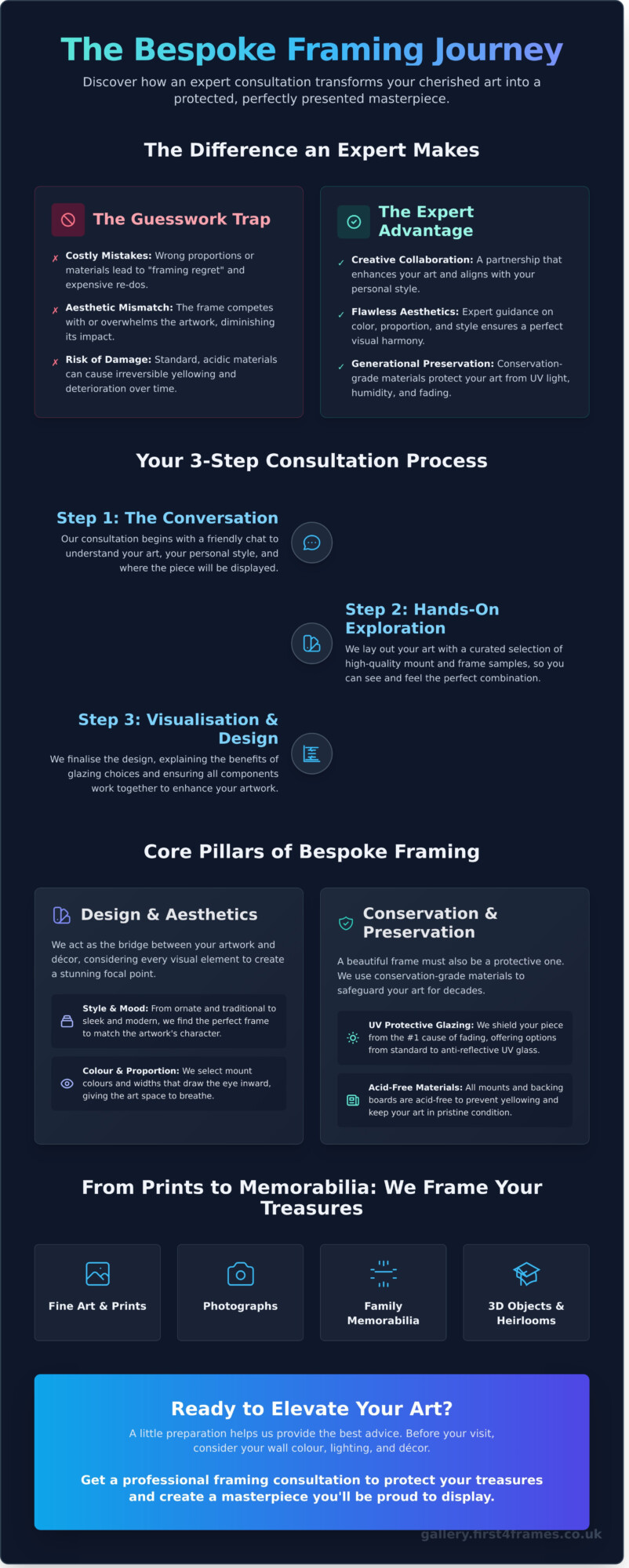
An infographic titled The Bespoke Framing Journey explains how expert consultation transforms art with sections on expert advantages, a three-step process, core principles, and various framed items like prints, keepsakes, and memorabilia.

How to Prepare for Your Consultation for the Best Results

A little preparation can make your time with our framing experts even more effective. When you come prepared, you help us give you the most accurate advice and bespoke recommendations for your piece. These simple steps ensure that when you get a framing consultation with us, the session is smooth, productive, and inspiring. And remember, our passionate team is here to guide you every step of the way, even if you’re unsure where to begin.

Bring Your Artwork and Key Information

The most crucial step is to bring the physical piece of art with you. This allows our experts to assess its condition, colours, and texture up close, ensuring we recommend the perfect materials. Seeing the work in person helps us advise on everything from UV-protective glazing to the nuances of preservation matting and framing. For very large or bulky items, please bring:

  • Accurate measurements (height, width, and depth).
  • Several clear, well-lit photographs of the piece.
  • A few photos of the room where the art will hang. This context is invaluable for choosing a frame that acts as a beautiful bridge between your artwork and your décor.

Consider Your Budget and Style

Having a general budget in mind helps us guide you toward the best options within your price range. Our extensive collection includes mouldings and materials to suit every project, from simple poster frames to elaborate, museum-quality displays. It’s also helpful to think about your personal taste. Are you drawn to modern minimalism, traditional elegance, or a more eclectic style? Don’t worry if you can’t put a name to it; we are experts at helping you define your aesthetic and finding the perfect frame to match.

Come with an Open Mind

While it’s great to have ideas, we encourage you to come with an open mind. With over two decades of experience, our framers have a trained eye for design and can offer suggestions you may not have considered. Sometimes the most unexpected combination of mount colour and frame style creates the most spectacular, head-turning result. We love the collaborative journey of finding that perfect finish that makes your art truly sing.

Ready to start the conversation? Book your free consultation today!

From Prints to Memorabilia: What Can We Frame for You?

At First4Frames Gallery, our passion for craftsmanship extends to almost any item you can imagine. With over two decades of experience, we have developed bespoke framing solutions for a spectacular range of art, objects, and personal treasures. No project is too big, too small, or too unusual for our dedicated team. From a single precious photograph to a large-scale original canvas, we treat every piece with the same professional care.

If you have something unique in mind, the best first step is to get a framing consultation with our experts. In the meantime, here are just a few examples of the items we regularly transform.

Fine Art, Giclée Prints, and Posters

A beautiful frame is the bridge between your art and your decor. We specialise in enhancing the beauty of original paintings and limited editions, ensuring the frame complements the artist’s vision without overpowering it. Our premium craftsmanship can make high-quality Giclée prints look like gallery masterpieces and elevate even simple posters into stylish, personal pieces of wall art that command attention.

Photographs, Diplomas, and Certificates

Your most important moments deserve to be preserved and displayed with pride. We create elegant, professional displays for diplomas and certificates that reflect your hard-earned achievements. For cherished family photos and portraits, we use conservation techniques and UV-protective glass to shield them from fading over time. Choose from countless options, from a classic single frame to a custom multi-opening collage that tells a bigger story.

3D Objects and Memorabilia

Some memories can’t be contained in a flat frame. Our custom box frames are the perfect solution for showcasing treasured 3D memorabilia, from sports shirts and medals to collectibles and sentimental objects. Using specialised, secure mounting techniques, we create a protected and stylish display that turns your memories into a unique and deeply personal piece of art for your home.

Whatever you wish to display, our team has the expertise to bring your vision to life. If you’re ready to protect and showcase your treasured items, get a framing consultation today and let’s create something spectacular together. You can also explore our online gallery for more inspiration.

Begin Your Bespoke Framing Journey

Your artwork deserves more than just a frame; it deserves a perfect presentation. A professional consultation is the vital first step-a collaborative journey where your vision meets our expertise. By understanding what to expect and preparing for your visit, you ensure the final result is a beautiful bridge between your piece and your space. It’s why it is so valuable to get a framing consultation with true artisans who are passionate about their craft.

With over 20 years of professional framing experience, our passionate team of local Scottish artisans at First 4 Frames is dedicated to this craft. We use only high-quality, conservation-grade materials to ensure your treasured prints, memorabilia, and artwork are protected and beautifully presented for a lifetime of enjoyment.

Ready to see the difference expert guidance can make? Book Your Free Framing Consultation at Our Falkirk Gallery and let’s create something spectacular together.

Frequently Asked Questions About Our Framing Consultations

How much does a framing consultation cost?

Our expert framing consultations are completely free of charge. We believe everyone deserves access to professional advice to find the perfect frame for their art. This is a no-obligation service designed to help you explore the possibilities for your piece. Our passion is helping you create a spectacular display, and this initial conversation is the first step in that creative journey. We are here to provide guidance and inspiration without any upfront cost.

How long does a typical framing consultation take?

A typical consultation lasts between 15 and 30 minutes. The exact time depends on your specific needs and the complexity of your project. During this dedicated session, we will discuss your artwork, your personal style, and your décor. We’ll explore different mount boards, mouldings, and glazing options to find the perfect combination. Our goal is to be thorough and helpful, ensuring you feel confident in your choices without taking up too much of your day.

Do I need to book an appointment for a consultation?

Yes, we highly recommend booking an appointment. While we do our best to accommodate walk-in visitors, booking ensures you have the undivided attention of one of our framing specialists. An appointment guarantees we have dedicated time set aside just for you to discuss your artwork in detail. This allows us to provide the focused, bespoke service your art deserves and helps us manage our time to give every client the best possible experience.

What should I do if I can’t bring my artwork to the gallery?

That’s no problem at all. We can still provide a comprehensive consultation remotely. Simply email us high-quality photographs of your artwork, along with its exact dimensions. We can then schedule a phone or video call to discuss your vision and show you samples. It’s now easier than ever to get a framing consultation from the comfort of your home, ensuring you receive the same expert advice and personalised service as an in-person visit.

Will you give me a quote during the consultation?

Absolutely. At the end of our discussion, we will provide you with a detailed, no-obligation quote. This quote will clearly outline the costs for all the chosen components, including the frame moulding, mount, glazing, and any other specialist materials or work required. We believe in complete transparency, allowing you to make an informed decision with a full understanding of the investment in your beautifully finished piece. There are no hidden fees or charges.

What’s the difference between your service and a cheap ready-made frame?

The difference lies in craftsmanship, quality, and preservation. A ready-made frame uses standard sizes and lower-grade materials that can damage your artwork over time. Our bespoke service creates a frame that is the perfect partner for your art-a bridge between the piece and your room’s décor. We use premium, conservation-grade materials that protect your art from fading and environmental damage, ensuring it remains beautiful for generations to come.
Posted on

Framed Giclée Prints: The Ultimate Guide to Museum-Quality Art

Framed Giclée Prints: The Ultimate Guide to Museum-Quality Art

Have you ever found the perfect piece of art, only to be stopped by a wave of questions? Is ‘Giclée’ just a fancy term? Will the colours fade over time? The world of Framed Giclee Prints can seem complex, and the search for stunning, ready-to-hang artwork can often feel more confusing than inspiring. We believe bringing fine art into your life should be a simple joy, a journey of discovery that ends with a piece you’ll treasure for a lifetime.

This guide is your one-stop resource for understanding true artistic quality. We’ll demystify the Giclée process, showing you why it’s the gold standard trusted by galleries for its spectacular colour and longevity. More importantly, we’ll guide you through selecting a bespoke frame that acts as the perfect bridge between the artwork and your home. Prepare to feel confident and inspired to choose a beautiful, museum-quality masterpiece that perfectly complements your space.

Key Takeaways

  • Understand the difference between a standard poster and a museum-quality Giclée print, defined by its superior printing technology and archival inks.
  • Discover the three core benefits of investing in Framed Giclee Prints: incredible colour accuracy, archival longevity, and lasting artistic value for your home.
  • Gain confidence in selecting the perfect artwork with a simple guide to matching style, colour, and size to your unique space.
  • Learn how combining a curated art gallery with expert, in-house framing craftsmanship ensures a perfect, ready-to-hang finish every time.

What is a Framed Giclée Print? Beyond the Standard Poster

When you’re looking to bring beautiful art into your home, you’ll quickly discover not all prints are created equal. You may have heard the term Giclée (pronounced “zhee-klay”), but what does it really mean? In simple terms, a Giclée print is the highest quality, most faithful art reproduction available today. It’s a world away from the mass-produced posters you might find in a high-street chain, offering spectacular colour, detail, and longevity.

To see the difference this level of craftsmanship makes, this video offers a clear explanation:

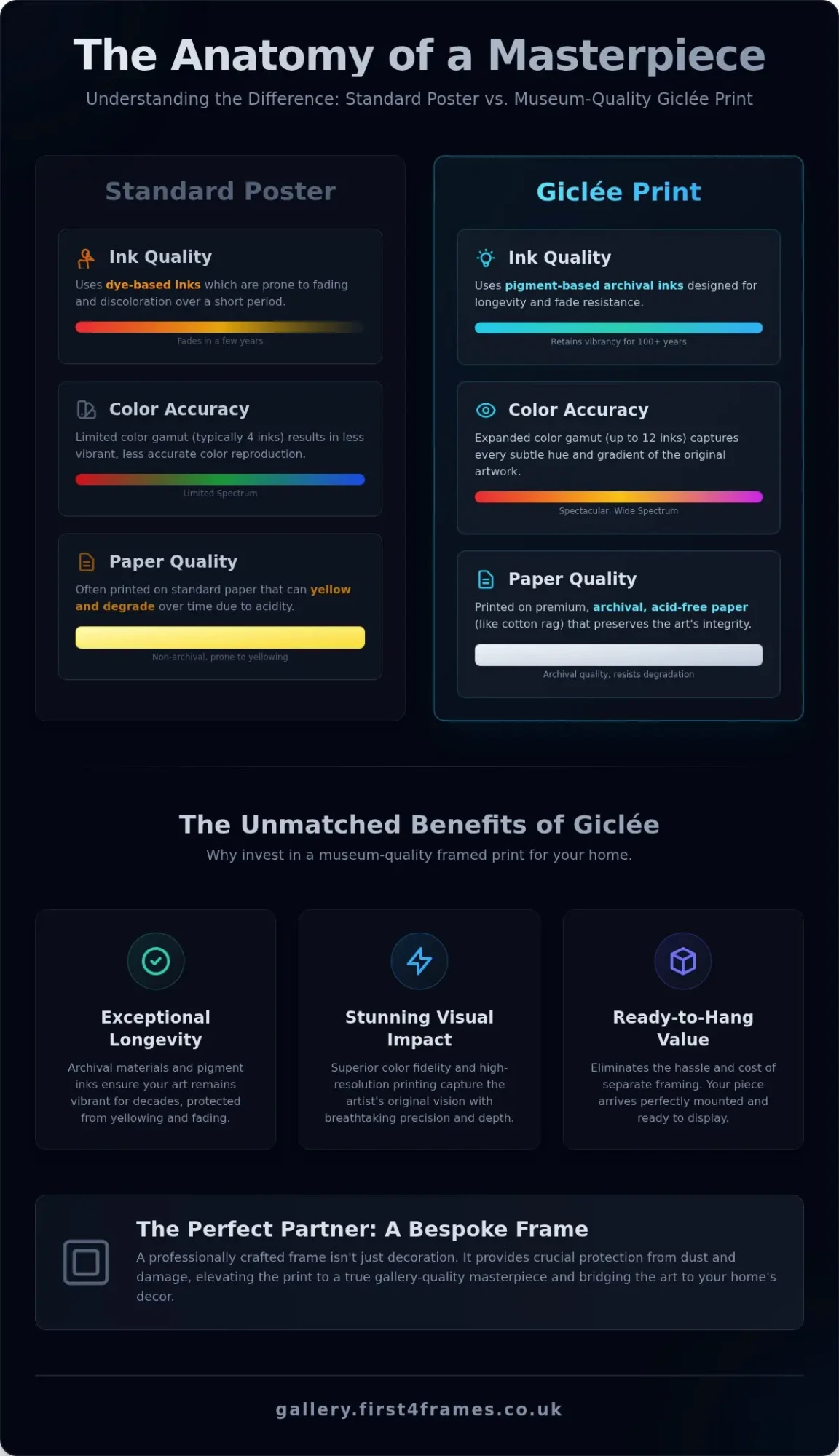
At its core, a Giclée is created using an advanced, high-resolution inkjet printer that sprays microscopic droplets of pigment-based ink onto archival-quality paper. Unlike standard lithograph or digital prints which often use dye-based inks and can fade in just a few years, the Giclée process is engineered for longevity and fidelity. For an in-depth look at the technology, a great resource explains in detail what is a Giclée print and how it became the gold standard for artists and galleries.

The Heart of the Art: The Giclée Print

The breathtaking quality of a Giclée print comes down to three premium components working in perfect harmony:

  • Ink Quality: We use pigment-based archival inks, which are far more resistant to fading than standard dyes. When kept out of direct sunlight, your print will retain its beautiful, vibrant colour for over 100 years.
  • Colour Accuracy: Giclée printers use up to 12 individual inks, creating a much wider colour gamut. This allows for stunningly accurate reproductions of an artist’s original work, capturing every subtle hue and delicate gradient.
  • Paper Matters: The foundation of a fine art print is the paper. We print on archival, acid-free papers, such as heavyweight cotton rag or premium canvas. This ensures the paper won’t yellow or degrade over time, preserving the integrity of the art.

The Perfect Partner: The Bespoke Frame

A beautiful print deserves a beautiful frame. With our Framed Giclee Prints, the frame isn’t an afterthought-it’s an essential part of the finished piece. A professionally crafted, bespoke frame acts as the perfect bridge between the artwork and your room’s decor. It does more than just look stunning; it provides crucial protection from dust, moisture, and accidental damage, all while giving the piece a polished, gallery-ready finish that elevates it from a simple print to a true work of art.

The Unmatched Benefits: Why Invest in Framed Giclée Art?

Choosing art for your home is more than a simple transaction; it’s a long-term investment in your environment and your daily enjoyment. When you select one of our framed giclée prints, you’re not just buying a picture. You are acquiring a gallery-quality piece built on three core pillars: exceptional longevity, stunning visual impact, and unbeatable value. It’s the pride of owning something truly special, delivered directly to your door.

Exceptional Longevity and Durability

A true piece of fine art is designed to endure. Our prints are created using archival-quality, acid-free materials, which means the paper will not yellow or degrade over time. Combined with pigment-based inks, this provides incredible fade resistance, ensuring your art looks as vibrant in decades as it does today. This beautiful print is then housed in a sturdy, professionally joined frame, expertly crafted to prevent warping and protect your investment for a lifetime of enjoyment.

Stunning Visual Impact and Colour Fidelity

The giclée process is where art and technology meet to create something spectacular. This advanced printing method captures the finest details and subtlest textures of the original artwork with breathtaking precision. The combination of high-resolution printing and premium paper results in rich, deep colours and an unparalleled depth that truly brings the artist’s vision to life. This level of quality goes far Beyond the Standard Poster, offering an almost identical reproduction that honours the original piece without compromise.

The ‘Ready-to-Hang’ Convenience and Value

Finding the perfect print is only half the battle; getting it professionally framed can be a time-consuming and costly extra step. Our service acts as your one-stop-shop, eliminating the hassle of sourcing a separate framer. Your artwork arrives perfectly mounted, framed, and ready to hang straight out of the box. This not only guarantees a flawless, professional finish but is often more cost-effective than buying a print and frame separately, saving you both time and money without any guesswork.

Framed Giclée Prints: The Ultimate Guide to Museum-Quality Art

How to Choose the Perfect Framed Giclée Print for Your Home

Embarking on the journey to find the perfect art for your home is an exciting process. A beautifully chosen piece can transform a room, adding personality and a sophisticated focal point. When you select a giclée print, you are investing in spectacular, lasting quality. As detailed in The Unmatched Benefits: Why Invest in Framed Giclée Art?, their archival nature means your chosen artwork will not fade, retaining its vibrant colours for a lifetime. This simple, three-step guide will empower you to choose with confidence, ensuring your new art creates perfect harmony in your space.

Step 1: Match the Art to Your Interior Style

The most successful art selections feel like a natural extension of your home’s personality. Before you start browsing our gallery of framed giclee prints, consider your existing decor. The goal is to create a cohesive look that feels intentional and curated.

  • For Modern & Minimalist Decor: Look for abstract pieces with clean lines, bold geometric prints, or striking black and white photography. These styles enhance a contemporary aesthetic without adding clutter.
  • For Traditional Spaces: Timeless subjects like sweeping landscapes, classical portraits, or elegant still life paintings work beautifully. They add a sense of history and warmth to classic interiors.
  • For Eclectic Rooms: Don’t be afraid to mix and match! The key to success in an eclectic space is to find a common thread. This could be a recurring accent colour or a thematic link that ties different pieces together.

Step 2: Select a Frame That Complements, Not Competes

A frame is more than just a border; it’s the bridge between the artwork and your room. Our first rule of thumb is that the frame should always complement the art first, and the room second. The right frame elevates the print, drawing your eye into the image.

  • Simple black, white, or grey frames are a perfect match for contemporary art, allowing the piece itself to take centre stage.
  • Natural wood frames, such as oak or ash, add warmth and texture, making them ideal for traditional, rustic, or Scandi-inspired decor.
  • Ornate, decorative frames can enhance the grandeur of classical art but may overwhelm modern, minimalist prints. Use them thoughtfully to create a powerful statement.

Step 3: Get the Size and Placement Right

Proper scale and placement are crucial for making your artwork look professional and balanced. Before you buy, take a moment to measure your wall and consider the surrounding furniture. Consider the room’s lighting, too-avoid hanging prints in direct, prolonged sunlight. Here are a few trusted guidelines from our experts:

  • Over a Sofa or Sideboard: The artwork should be approximately two-thirds the width of the furniture below it. This creates a pleasing visual anchor.
  • Hanging Height: Hang art so that its centre is at eye level, which is typically 57-60 inches (about 145-152cm) from the floor.
  • Create a Gallery Wall: If one large piece feels too imposing, group several smaller framed prints together to create a dynamic and personal display.

Feeling unsure about what will work best in your space? Our experts are here to help you choose.

The First4Frames Difference: Craftsmanship from Scotland

Navigating the world of fine art can be complex, but finding the perfect piece for your home shouldn’t be. After exploring what makes a quality Giclée print and how to choose the right frame, we want to introduce you to a simpler, more personal way. At First4Frames Gallery, we combine the heart of a curated art gallery with the soul of a master framer, all from our workshop in the heart of Scotland. We believe that beautiful, lasting art should be accessible, and our passion is to deliver it directly to you.

A Curated Collection of Fine Art

We partner with a diverse range of talented artists, with a special focus on celebrating the spectacular landscapes and vibrant creativity of Scotland. Each Giclée print in our collection is produced to the highest gallery standards, ensuring breathtaking colour accuracy and longevity. From sweeping Highland vistas to bold, modern abstracts, our gallery is a testament to artistic passion, offering something truly special for every taste and interior style.

Bespoke Framing by Master Craftsmen

A beautiful print deserves an exceptional frame. With over two decades of experience, our team of master craftsmen understands how to make art sing. We use only the finest materials, from solid wood mouldings to conservation-grade mounts that protect your art for a lifetime. Every single one of our framed Giclee prints is hand-built in our Falkirk workshop, ensuring a bespoke finish that perfectly bridges the gap between the artwork and your décor.

Your Simple, Three-Step Process to Perfect Art

We’ve streamlined the journey from discovery to display into three easy steps, making it effortless to find and own art you’ll love for years to come.

  • Step One: Browse our online gallery and discover a piece of art that speaks to you.
  • Step Two: Customise your selection by choosing from our wide range of high-quality, bespoke frames and mounts.
  • Step Three: Place your order with confidence. We’ll build, pack, and deliver your artwork to your door, ready to hang and enjoy.

Choosing art is a personal journey, and we are honoured to be a part of yours. It’s more than just a product; it’s a piece of an artist’s vision and a piece of our dedicated craftsmanship, brought together to add beauty to your space. Embark on your own journey of artistic discovery and see the difference for yourself. Explore the full collection today.

Bring Museum-Quality Art Into Your Home

As we’ve explored, investing in Giclée art is about more than just filling a space on your wall; it’s about choosing lasting quality, spectacular colour, and a piece that truly resonates. The right artwork, professionally framed, becomes a focal point that reflects your personal style and elevates your entire home. It’s a commitment to beauty and craftsmanship that standard posters simply cannot match.

At First4Frames, we combine this passion for fine art with over 20 years of bespoke framing experience. Each of our Framed Giclee Prints features exceptional work from curated Scottish and UK artists, protected by a beautiful frame hand-built right here in our Falkirk workshop. We believe that the perfect frame is the bridge between your décor and the artwork, creating a seamless and stunning display.

Ready to embark on your own journey of artistic discovery? Explore our gallery of ready-to-hang framed Giclée prints and find a piece you will treasure for a lifetime.

Frequently Asked Questions

How long will a framed Giclée print last without fading?

A professionally produced Giclée print is a true investment in longevity. By using premium archival pigment inks and acid-free fine art paper, our prints are designed to resist fading for a remarkable length of time. When displayed correctly, away from direct sunlight and high humidity, you can expect your beautiful artwork to retain its spectacular colour and detail for over 100 years, becoming a cherished piece for generations to come.

What is the main difference between a Giclée print and a standard art print?

The key difference lies in the quality and craftsmanship. A Giclée print uses a high-resolution inkjet process with up to 12 archival pigment inks on fine art paper, resulting in flawless colour accuracy and depth that is virtually identical to the original. Standard prints often use fewer, dye-based inks and lower-grade paper, which can lead to a less detailed image that is more susceptible to fading over a much shorter period.

Is a framed Giclée print worth the extra cost compared to a poster?

Absolutely. While a poster is a temporary decoration, our framed Giclée prints are a lasting piece of fine art. The superior printing process ensures vibrant, enduring colour, and the archival materials guarantee it won’t yellow or fade like a mass-produced poster. Paired with our bespoke, professional framing, it’s an investment in a premium piece that elevates your space with timeless quality and style, making it far greater value in the long run.

Can you create a framed Giclée print from my own photograph or artwork?

Yes, we would be delighted to transform your personal images into stunning works of art. Our bespoke printing and framing service is the perfect way to give your own photographs or digital artwork the professional finish they deserve. Simply provide us with a high-resolution digital file, and our expert team will handle the rest, creating a beautiful, gallery-quality piece that captures your memory with perfect clarity and colour for you to enjoy for years.

How should I clean and care for my framed Giclée print?

Caring for your print is simple. For the acrylic glazing, gently wipe the surface with a dry, soft microfibre cloth to remove dust. If you need to remove fingerprints, lightly dampen the cloth with water-never spray liquid directly onto the surface and avoid using harsh chemical cleaners. Dust the frame itself with a dry cloth. Most importantly, hang your artwork away from direct sunlight and areas of high humidity, such as bathrooms.

Do you offer different types of glass or glazing for frames?

We do. To ensure your artwork is perfectly protected and presented, we offer a selection of high-quality glazing options. Our standard offering is a premium acrylic glazing, which is lightweight and shatter-resistant. For rooms with challenging lighting, we can provide an anti-glare option to minimise reflections. We also offer a specialist UV-protective acrylic to provide maximum defence against fading for pieces hung in brighter spaces.

Posted on

How to Frame a Canvas Painting: A Complete Guide (DIY vs. Pro)

How to Frame a Canvas Painting: A Complete Guide (DIY vs. Pro)

You have a beautiful piece of art, a stretched canvas that deserves a place of honour on your wall. Yet that final, crucial step-framing-can feel daunting. The fear of damaging your painting, the confusing terminology of floater frames and stretcher bars, and the big question of DIY versus professional can leave your masterpiece leaning against a wall instead of being proudly displayed. We believe that learning how to frame a canvas painting should be an exciting and rewarding part of your artistic journey, not a source of stress.

This complete guide is designed to give you clarity and confidence. We’ll walk you through simple and satisfying DIY methods and help you understand when the premium craftsmanship of a professional is the right choice. You will discover the best frame styles to complement your art, acting as the perfect bridge between the canvas and your home décor. Let’s embark on this final step together and ensure your artwork is protected, enhanced, and ready to be admired for years to come.

Key Takeaways

  • The first step to a perfectly framed picture is identifying your canvas type to determine the right framing approach.
  • Explore the simple steps for how to frame a canvas painting at home, and learn which types of art are best suited for a DIY project.
  • Understand when to invest in a bespoke framer to ensure expert preservation and a flawless finish for valuable or sentimental art.
  • Discover how to choose the perfect frame style that enhances your artwork and acts as a beautiful bridge to your room’s decor.

First Steps: Understanding Your Canvas and Frame Options

Embarking on the journey of framing your art is a rewarding process that honours the piece and prepares it for display. The first, most crucial step in learning how to frame a canvas painting is to understand the artwork itself. The type of canvas you have dictates the entire approach, from the style of frame you choose to the hardware you’ll need. A beautiful frame acts as the perfect bridge between your art and your room’s décor, so getting these foundational details right is key to a spectacular, professional finish.

To help you get started, this video provides an excellent visual guide on preparing a canvas for framing:

Stretched Canvas vs. Canvas Board: What’s the Difference?

Most original paintings are created on stretched canvas, which is canvas fabric stretched over a wooden support frame called stretcher bars. This gives the artwork depth and dimension. A canvas board, by contrast, is a thin, rigid panel, making it flatter and often easier to fit into standard frames. It is vital to identify which you have, as the framing techniques are very different. Crucially, never cut a finished painting off its stretcher bars to make it fit a frame; this will ruin the artwork’s tension and value.

To Glass or Not to Glass? The Great Canvas Debate

Unlike paper prints, oil and acrylic paintings are rarely framed behind glass. The paint itself is durable, and artists typically apply a layer of varnish to protect the surface from dust, UV light, and environmental damage. Glass can introduce unwanted glare and, more seriously, trap moisture between its surface and the canvas, which can lead to mould and irreparable damage. Exceptions are sometimes made for delicate media like pastels on canvas or for pieces requiring extra protection in high-traffic areas.

Key Frame Styles for Canvas Paintings

The modern picture frame offers a beautiful array of styles designed specifically for canvas art. Your choice will dramatically influence the final presentation. Here are the most popular options:

  • Floater Frames: This contemporary, gallery-style frame creates the illusion that your canvas is “floating.” The artwork is mounted from behind, leaving a small, elegant gap between the canvas edge and the inside of the frame, showcasing the entire painting, including the sides.
  • Traditional Frames: A classic choice where the canvas is set into the frame from the back, much like a standard photograph. The frame’s lip (or rabbet) covers the very outer edge of the canvas, creating a timeless and defined border.
  • Tray Frames: Also known as cap frames, these are a simple and clean option where the canvas sits snugly inside a “tray.” The front of the canvas is often flush with the frame’s edge, offering a minimalist finish that doesn’t distract from the art.

The DIY Approach: How to Frame a Canvas at Home

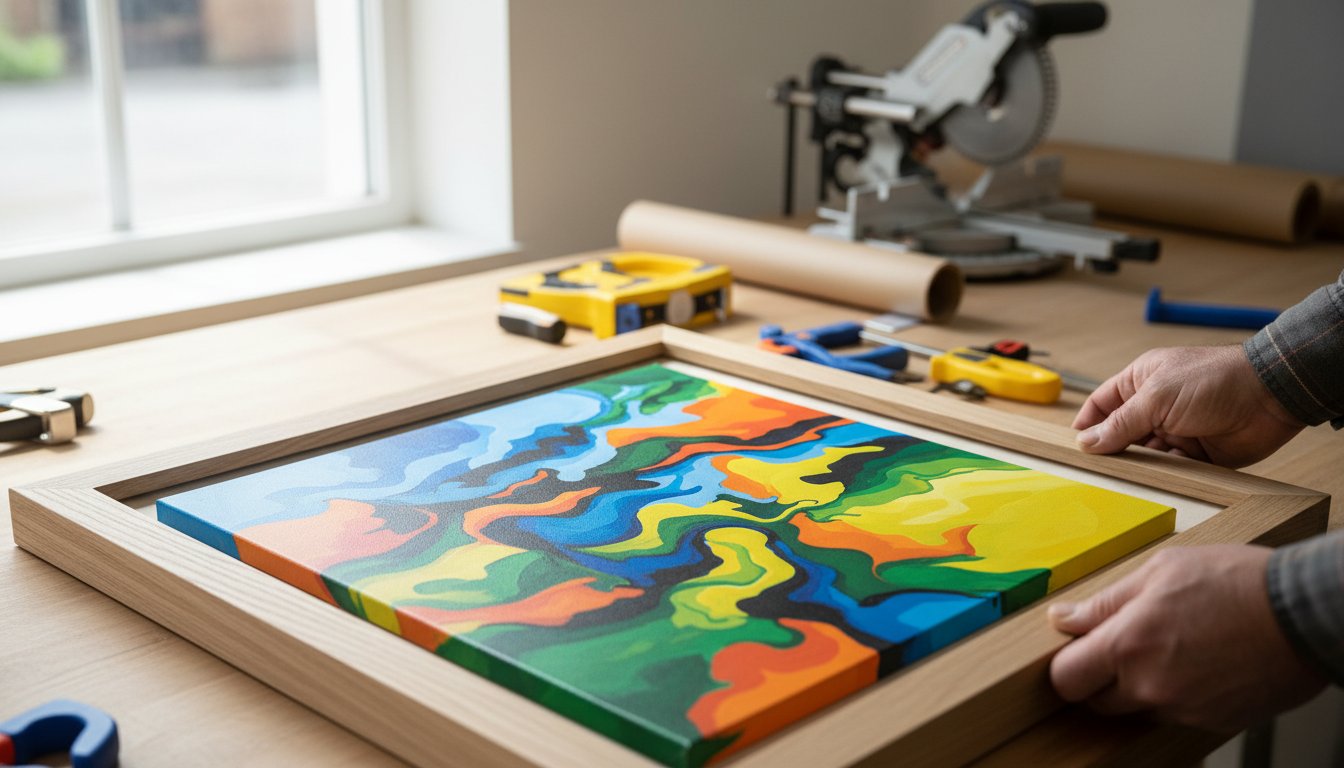
Framing a canvas yourself can be an incredibly satisfying project, adding a personal touch to your finished piece. This approach is best suited for inexpensive prints, personal art projects, or practice pieces where the stakes are low. For those keen to learn how to frame a canvas painting at home, we will guide you through the simplest and most common method: using a ready-made, open-back frame. While building a bespoke frame from scratch is a beautiful craft, it requires advanced woodworking skills and specialised tools, putting it beyond the scope of a simple home project.

Essential Tools and Materials You’ll Need

Before you begin, gather your supplies to ensure a smooth process. Working on a soft, clean surface, like a blanket-covered table, is essential to protect your artwork and the frame from scratches. Here’s what you’ll need:

  • Measuring tape
  • Pencil
  • Screwdriver (usually a small Phillips head)
  • Offset clips (also known as Z-clips)
  • Two D-rings
  • Picture-hanging wire

Offset clips are the key to this process. These small, Z-shaped metal brackets are designed to bridge the gap between the back of the canvas stretcher bar and the frame’s recess, holding your art securely in place. They come in various depths, so be sure to choose a size that matches the depth of your canvas.

Step-by-Step: Securing Your Canvas in a Frame

With your tools ready, you can begin. Step one: Measure your canvas. Carefully measure the height, width, and, most importantly, the depth of your canvas. These dimensions are critical for selecting the right frame. Step two: Purchase your frame. Look for an open-back frame that is slightly larger than your canvas, allowing for a small gap (around 5mm) on all sides. Selecting a style that complements your artwork is crucial; for expert guidance, this guide on How to Choose the Best Frame is an excellent resource. Step three: Position and secure the canvas. Gently place your artwork face-down into the frame. Centre it carefully and use offset clips to attach the stretcher bars to the frame, screwing them in at regular intervals. Step four: Attach hanging hardware. Measure about one-third of the way down from the top of the frame on both sides, and screw in your D-rings. Thread the picture wire between them, leaving a little slack, and twist to secure.

The Risks of DIY: When to Think Twice

While the DIY method for how to frame a canvas painting is rewarding, it’s not without risks. A slip of the screwdriver can easily scratch the frame or, worse, damage the artwork. Incorrect measurements can result in a poorly fitting canvas that looks unprofessional and may even fall out. For any artwork that is valuable, sentimental, or irreplaceable, we always recommend seeking a professional framer. Professionals use conservation-grade materials and techniques that protect your art from long-term damage caused by dust, humidity, and light-a level of protection that is difficult to achieve at home.

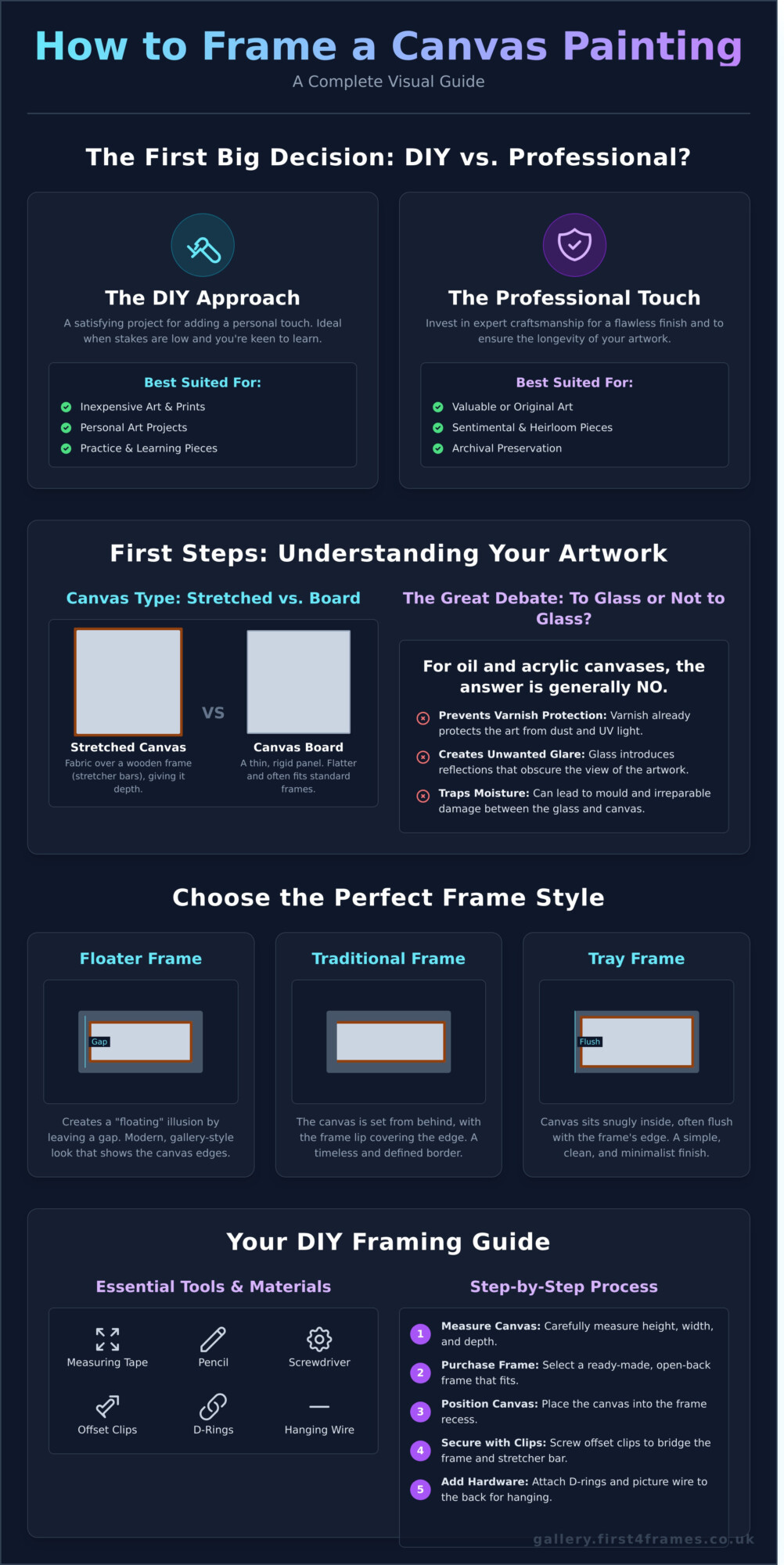
An infographic titled How to Frame a Canvas Painting compares DIY vs. professional framing, explains canvas types, frame styles (floater, traditional, tray), and lists tools, materials, and step-by-step DIY instructions.

The Professional Touch: Why Choose a Bespoke Framer

While learning how to frame a canvas painting yourself can be a rewarding project, certain pieces of art demand a level of precision and care that only a professional can provide. For original artwork, valuable prints, or pieces with deep sentimental value, entrusting them to a bespoke framer is an investment in their beauty and longevity. A custom frame is more than a border; it’s a bridge between your art and your space, built with premium materials and unparalleled craftsmanship.

Expert Guidance and Flawless Craftsmanship

A professional framer brings years of experience in both art handling and interior design. They act as your personal consultant, guiding you through an extensive collection of mouldings, mounts, and finishes to find the perfect style that enhances your painting without overpowering it. Using precision tools, they ensure every cut is clean and every join is seamless, delivering a gallery-quality finish that is simply unattainable with DIY methods.

Protecting Your Investment with Conservation Framing

A beautiful frame should also be a protective one. Professional framers use conservation-grade techniques to shield your art from damage over time. This is crucial for preserving both the financial and sentimental value of your investment. Key conservation methods include:

This focus on professional-grade protection isn’t unique to the art world; it’s a common practice for preserving any high-value item. For example, car enthusiasts often seek out specialists like Surrey Detailing to apply protective coatings that safeguard their vehicle’s finish and long-term value.

  • Acid-free materials: Using acid-free mount boards and backing prevents the yellowing and decay that can be caused by standard materials.
  • UV-protective glazing: Specialist glass or acrylic can be used to filter out up to 99% of harmful ultraviolet rays, preventing colours from fading.
  • Proper sealing: The frame is expertly sealed to protect the canvas from dust, humidity changes, and even insects.

These principles are backed by conservation experts worldwide. For a deeper understanding, the Canadian Conservation Institute’s Guide to Framing provides excellent detail on archival techniques.

The Bespoke Framing Process Demystified

The journey to a perfectly framed piece is a collaborative and enjoyable experience. It begins with a consultation where you discuss your artwork, your personal style, and the decor of the room where it will hang. An expert then carefully measures your canvas to ensure a flawless fit. You’ll explore a curated selection of beautiful frame mouldings before the framer begins the meticulous work of building a custom frame, tailored exactly to your artwork.

Ready to give your canvas the spectacular finish it deserves? Let our experts help you find the perfect frame. Explore our bespoke framing service.

Choosing the Perfect Frame Style to Complement Your Artwork

Once you’ve mastered the technical steps, the final, creative stage of learning how to frame a canvas painting is selecting a style that elevates both the art and your space. Think of the frame as the perfect bridge between your painting and your room’s decor. A truly great frame enhances the artwork, drawing the eye inward without ever overpowering the piece itself. The key is to consider the painting’s own character-is it modern, traditional, or abstract?-and harmonise it with the colours and textures of your home.

Floater Frames: The Modern Gallery Look

For a clean, contemporary finish, the floater frame is a spectacular choice. This style creates the illusion that your canvas is ‘floating’ within the frame, with a subtle shadow gap between the edge of the artwork and the frame profile. It is the perfect partner for modern and abstract paintings, as it allows the entire piece, including the painted sides of the canvas, to remain visible. This minimalist approach honours the artwork in its complete form, offering a sharp, professional gallery aesthetic.

Traditional Frames: Timeless Elegance

Traditional frames offer a sense of timeless elegance and are defined by a ‘rabbet’-a small lip that neatly covers the outer edge of the canvas. The possibilities are vast, from simple, warm wood profiles to ornate, gilded designs that echo classical craftsmanship. These frames are ideally suited for landscapes, portraits, and traditional still life paintings. When choosing, consider the era and mood of the artwork to create a pairing that feels both authentic and beautiful.

Matching the Frame to Your Interior Design

The final consideration is how the frame will integrate into your home. A beautiful frame choice connects the art to its surroundings, creating a cohesive and polished look. Here are a few guiding principles:

  • For a minimalist or Scandinavian interior, a simple black, white, or natural wood frame with clean lines maintains a sense of calm and order.
  • In a traditional or country-style home, a more ornate or dark wood frame can add warmth and character, complementing other antique or classic pieces.
  • Consider matching the frame’s colour or material to other accent elements in your room, such as metal light fittings, wooden furniture, or a colour from a patterned cushion.
  • Don’t be afraid to create a bold contrast. A sleek, modern frame can provide a stunning update for a traditional painting, just as an ornate frame can be an unexpected, dramatic touch for a piece of abstract art.

For inspiration on how different bespoke frame styles can transform a piece of art, we invite you to explore our online gallery.

The Perfect Frame: Your Artwork’s Final Flourish

Whether you choose the hands-on satisfaction of a DIY project or the unparalleled expertise of a professional, the perfect frame is what transforms a canvas into a true masterpiece for your wall. As we’ve explored, knowing how to frame a canvas painting is about more than just the mechanics; it’s an art form in itself, requiring a careful balance of style, colour, and preservation to truly honour the piece within.

For treasured artworks that deserve a flawless, lasting presentation, our bespoke service provides the ultimate solution. With over 20 years of professional framing experience, we use only the finest conservation-grade materials to protect and enhance your art. Trusted by artists and collectors across Scotland and the UK, our passionate artisans are dedicated to creating the perfect frame for your piece. Have a painting you need framed? Get a bespoke framing quote from our experts today and let’s create something beautiful together.

Frequently Asked Questions

Can you put a stretched canvas into a standard picture frame?

Generally, a standard picture frame is not suitable for a stretched canvas. These frames have a shallow recess (or rabbet) designed for a thin print, mount, and backing board. A canvas on stretcher bars is much deeper and simply won’t fit. You need a purpose-built canvas frame or a floater frame, both of which are specifically designed to accommodate the depth of a canvas and provide a beautiful, professional finish without damaging the artwork.

How much does it cost to have a canvas painting professionally framed?

The cost for professional canvas framing in the UK varies based on the artwork’s size and your choice of frame. For a small to medium-sized painting, you can typically expect to pay between £60 and £150. For larger pieces or bespoke frames crafted from premium woods, the cost could be £200 or more. The complexity of the frame style, such as a floater frame, and the finish you select will also influence the final price for this expert service.

Do you need to put glass over an oil or acrylic painting on canvas?

It is not recommended to put glass over oil or acrylic paintings. These paints are cured to be durable and are typically protected with a layer of varnish, which allows the painting to “breathe” with changes in humidity. Placing glass over the surface can trap moisture, potentially leading to damage, or cause the paint to stick to the glass. It also creates glare, which detracts from the rich texture and spectacular colours of the original artwork.

What is a floater frame and why is it used for canvases?

A floater frame is a modern style where the canvas is set into the frame with a small, uniform gap, creating the illusion that the artwork is floating within it. This design is perfect for canvases because it doesn’t cover the front edge of the painting. It allows the entire piece, including the painted sides, to be visible. This offers a clean, contemporary, and gallery-quality presentation that truly honours the artwork and the artist’s full intention.

How do you attach a canvas painting to a frame securely?

A key step in knowing how to frame a canvas painting is using the correct hardware for a secure fit. For a typical canvas frame, you use offset clips. These are small, Z-shaped brackets that screw into the back of the frame and overlap onto the stretcher bars, holding the canvas firmly. For a floater frame, the canvas is usually attached from the rear, with screws passing through the frame’s back support directly into the wooden stretcher bars.

Should the frame be wider or thinner than the canvas?

The choice between a wider or thinner frame is a matter of aesthetic balance and personal taste. A wide, substantial frame can add presence and a traditional feel, making a bold statement that complements the artwork. In contrast, a thin, minimalist frame provides a modern, subtle border that keeps the focus entirely on the art itself. Consider the style of the painting and your room’s decor to find the perfect bridge between the art and its new home.

Posted on

Fine Art Prints: The Ultimate Guide to Choosing & Collecting Art

Have you ever longed to transform a room with a beautiful piece of art, only to feel overwhelmed by the choice? The art world can seem intimidating, leaving you wondering what separates a cheap poster from a premium print, or if you’re choosing the right piece for your home and your budget. It’s a common feeling, but creating a home that truly reflects your style doesn’t have to be complicated or costly.

The secret lies in understanding the world of fine art prints-a spectacular and accessible way to bring lasting craftsmanship into your home. This guide is your trusted partner on this artistic journey. We’ll demystify what separates a simple poster from a premium, gallery-quality print and give you the confidence to choose the perfect piece for your space and budget. You’ll learn how to spot true quality, select the right size and style, and understand the lasting value of the art you bring into your life.

Key Takeaways

  • Spot a superior print by understanding the crucial trio of archival paper, pigment-based inks, and the artist’s signature.
  • Discover a simple framework for choosing art that not only matches your décor but also resonates with you personally.
  • Learn how the edition type (limited vs. open) directly impacts the value and collectability of fine art prints.
  • Discover why bespoke framing is not just a finishing touch, but an essential step in preserving your art’s beauty and value for years to come.

What Exactly Are Fine Art Prints? (Beyond Just a Poster)

When you hear the term ‘fine art prints,’ it’s easy to picture a simple poster, but the two could not be more different. A fine art print is a premium, high-quality reproduction of an original piece of artwork, created with meticulous care and professional-grade materials. Unlike mass-produced posters you might find in a high street shop, these prints are often produced in collaboration with the artist to ensure the final piece is a faithful and spectacular representation of their vision. This process honours the original artwork by adhering to the historical definition of fine art, which values aesthetic beauty and intellectual stimulation over purely commercial use.

To get a better sense of the technology and craftsmanship involved, this video offers a look into the world of professional art printing:

The Key Differences: Fine Art Print vs. Poster

Understanding what sets a fine art print apart comes down to four key elements of quality and intent:

  • Paper Quality: We use archival, acid-free papers that preserve the artwork’s integrity, whereas posters use thin, standard paper prone to yellowing.
  • Ink & Colour: Prints are made with fade-resistant pigment inks for vibrant, lasting colour. Posters typically use less durable dye-based inks that fade quickly in sunlight.
  • Lifespan: A fine art print is an investment designed to last for generations. A poster is a temporary decoration that may look tired within a few years.
  • Artist’s Intent: The print is intended to be a lasting piece of art in its own right, while a poster is created for mass-market appeal.

An Introduction to Giclée Prints

At the heart of modern fine art reproduction is the Giclée (pronounced “zhee-clay”) process. Considered the gold standard by galleries and artists, Giclée is a sophisticated inkjet printing method that uses high-resolution digital scans and sprays microscopic droplets of pigment-based ink onto archival paper. This technique captures the precise detail, subtle tones, and rich colour of the original artwork with breathtaking accuracy, creating a near-identical copy.

Why Choose a Fine Art Print for Your Home?

Investing in fine art prints is a beautiful and accessible way to bring more art into your life. It allows you to:

  • Own a piece from a beloved artist at a much more accessible price point than an original painting or sculpture.
  • Directly support the livelihood of talented contemporary artists, allowing them to continue their creative work.
  • Elevate your home decor with a piece of lasting quality and craftsmanship that tells a story.
  • Build a personal collection that truly reflects your unique taste and personality over time.

The Hallmarks of Quality: How to Spot a Superior Print

When you invest in art, you want to be confident in its quality. A superior print isn’t just a copy; it’s a carefully crafted piece designed to last for generations. The true value and beauty of fine art prints are determined by three essential pillars: the paper it’s printed on, the ink used to create the image, and the artist’s personal approval. Understanding these elements empowers you to read product descriptions like a professional and choose a print that you will cherish for a lifetime.

The Importance of Archival Paper

The foundation of any exceptional print is the paper. Look for descriptions that mention “archival” or “acid-free” paper. This means it’s chemically stable and won’t yellow or degrade over time. Premium papers, like 100% cotton rag, offer a beautiful texture and a substantial feel. Pay attention to the paper weight, measured in GSM (grams per square metre). A higher GSM, typically 250-310gsm for fine art, indicates a thicker, more durable paper that feels luxurious and hangs beautifully without buckling. The paper’s texture-from velvety smooth to subtly textured-can also be chosen to perfectly complement the artwork’s style.

Pigment Inks: The Secret to Lasting Colour

The vibrancy of a print depends entirely on the ink. The gold standard for fine art printing is pigment-based ink. Unlike standard dye inks which soak into the paper and can fade quickly when exposed to light, pigment inks are made of microscopic solid particles that sit on the paper’s surface. This creates incredibly rich, deep colours with superior lightfastness, meaning they resist fading for decades, often over 100 years. This technology is a key reason why Giclée prints are renowned for their longevity and stunning colour accuracy, capturing every nuance of the original artwork.

The Artist’s Signature and Edition Number

The final mark of quality comes directly from the artist. A hand-signed signature is more than just a name; it’s the artist’s seal of approval, confirming that the print meets their exacting standards. Many fine art prints are also part of a limited edition, indicated by a number like 15/50. This means your print is the 15th in a strictly limited run of 50, creating scarcity that enhances its value and collectability. To complete the package, always look for a Certificate of Authenticity (COA), which provides official documentation of the print’s origin, edition size, and the artist’s genuine signature.

How to Choose the Perfect Fine Art Print for Your Space

Now that you understand the craftsmanship behind high-quality giclée printing, it’s time for the most exciting part: choosing the perfect fine art print for your space. This is where the technical meets the personal. Selecting art is less about following strict rules and more about discovering a connection. It’s an opportunity to express your personality and transform a house into a home filled with inspiration.

Start with Your Personal Style and Taste

The best place to begin is with you. Allow yourself to browse different genres-from sweeping landscapes and intricate abstracts to powerful figurative works. Pay attention to your gut reaction. A piece of art should make you feel something. Consider the mood you want to cultivate. Are you aiming for a calm, serene atmosphere or a vibrant, energetic one? Don’t worry about passing trends; choose a piece you will genuinely love looking at every day for years to come.

Considering Colour, Scale, and Placement

Once you have a style in mind, it’s time to think about the practicalities. The right placement can make a good piece look spectacular. Here are a few trusted guidelines to help your chosen fine art prints shine:

  • Colour Palette: Use your print to either harmonise with your existing colour scheme or introduce a bold, exciting contrast that acts as a focal point.
  • Scale and Proportion: A common rule of thumb is to choose art that is approximately two-thirds the width of the furniture it hangs above, such as a sofa or console table.
  • Hanging Height: To ensure comfortable viewing, hang your print so its centre is at eye level-typically around 57-60 inches (145-152cm) from the floor.

Not sure where to start? Our team can help you find the perfect piece.

Art for Every Room: Ideas & Inspiration

Different spaces call for different artistic moods. While there are no hard rules, here are some ideas to get your creative journey started:

  • Living Room: This is the perfect place for a large statement piece that anchors the room or a curated gallery wall that tells a personal story.
  • Bedroom: Create a tranquil sanctuary with calming landscapes, soft abstracts, or intimate subjects that feel personal and reflective.
  • Home Office: Boost focus and creativity with inspiring or thought-provoking artwork. Choose a piece that motivates you throughout the workday.
  • Kitchen & Dining Area: This is a space for connection. Opt for fun, vibrant prints that can spark conversation over a meal.

Limited vs. Open Editions: Understanding Value & Collectability

As you explore the world of fine art, you’ll often encounter the terms ‘limited edition’ and ‘open edition’. This isn’t just industry jargon; it’s a crucial distinction that directly impacts a print’s price, rarity, and potential as a long-term investment. Understanding the difference empowers you to choose the perfect piece that aligns with both your budget and your passion for art.

What is a Limited Edition Print?

A limited edition print is one where a fixed, finite number of copies are ever produced from the original artwork. Once the edition sells out, no more will be created. This intentional scarcity is the primary driver of its value and collectability. Each print is almost always hand-signed and numbered by the artist, often in pencil, with a fraction like ’15/100′. This tells you it is the 15th print from a total edition of 100. For many collectors, purchasing a limited edition is a more direct investment in an artist’s career, securing a rare piece that may appreciate in value over time.

What is an Open Edition Print?

An open edition print, as the name suggests, can be reproduced an unlimited number of times based on demand. Because there is no limit to the supply, these prints are far more accessible and affordable. It’s important to note that ‘open edition’ does not mean lower quality. Many of our open edition pieces are stunning Giclée fine art prints, created with the same premium archival inks and papers as a limited edition. They are the perfect choice for those whose primary goal is aesthetic-to find a beautiful, high-quality piece of art to decorate their home or office.

Which One Should You Buy?

The right choice simply depends on your personal goals as a buyer. Both options are a wonderful way to support artists and bring craftsmanship into your home. Here’s a simple guide to help you decide:

  • Choose a limited edition if: You are an art collector, you’re interested in the potential for your art to increase in value, or you want to own a rarer piece with a unique connection to the artist.
  • Choose an open edition if: Your main goal is to find the perfect artwork for your decor, you are working with a more modest budget, or you’ve simply fallen in love with an image and want to enjoy it on your wall without the higher price tag.

Whether you’re starting a collection or simply styling a room, the perfect print is waiting for you. Explore our gallery to discover both limited and open editions from spectacular artists.

Caring for Your Art: The Crucial Role of Bespoke Framing

You’ve chosen a beautiful piece of art; now, the journey continues. A fine art print is more than just a picture on the wall-it’s an investment in your space and a piece you’ll treasure for years to come. To ensure its longevity and preserve its vibrant colours, proper care is essential. The single most important step you can take is professional framing. A frame is not merely a decorative border; it is the artwork’s first line of defence against the elements.

Protecting Your Print from Everyday Dangers

Before your print even reaches a frame, mindful handling and placement are key. To prevent damage and fading, always remember a few simple rules:

  • Avoid direct sunlight. UV rays are the primary cause of fading. Hang your art on a wall that doesn’t receive hours of direct sun.
  • Steer clear of humidity. High-moisture areas like bathrooms or kitchens can cause the paper to ripple or encourage mould growth.
  • Handle with care. Always hold your print by the edges to avoid transferring oils from your fingers onto the image surface.
  • Never use standard tape. Household adhesives are acidic and will cause permanent stains and damage to the paper over time.

Why Professional Framing is a Smart Investment

While off-the-shelf frames may seem convenient, they lack the protective qualities needed for high-quality fine art prints. A professional framer uses premium, conservation-grade materials to create a safe and stable environment for your art. This includes:

  • Archival, acid-free mounts and backing boards that won’t yellow or degrade the artwork.
  • UV-protective glazing options (glass or acrylic) to shield the print from 99% of harmful rays.
  • Proper sealing techniques to protect against dust, humidity, and even insects.
  • A perfect, bespoke fit that supports the print correctly, preventing warping or slipping.

The Frame: A Bridge Between Art and Decor

We believe a frame acts as the perfect bridge between your room’s decor and the artwork itself. It performs the heavy lifting, connecting the artist’s vision to your personal style. A thoughtfully chosen frame enhances the piece without overpowering it, drawing your eye into the image. Whether you opt for a classic wood finish to add warmth or a sleek modern profile for a contemporary feel, the right frame completes the picture, turning a beautiful print into a spectacular centrepiece for your home.

By investing in quality craftsmanship, you are not just decorating a wall; you are preserving a treasure for a lifetime. Explore our bespoke framing services to preserve your treasure.

Your Art Collecting Journey Starts Here

Armed with an understanding of what truly defines a superior print, you can now embark on your own collecting journey with confidence. Remember that the key is to find a piece that resonates with you personally, and that professional, bespoke framing is not just a finishing touch-it’s an essential part of preserving and presenting your art. This is your opportunity to turn a space you like into a home you absolutely love.

At First4Frames Gallery, we celebrate this journey by making it both simple and spectacular. We pair premium Giclée printing for lasting, vibrant quality with the passion of our expert craftsmen who create the perfect bespoke frame for every piece. Our curated collection of fine art prints from leading Scottish artists is the perfect place to begin.

Ready to transform your walls? Discover your perfect piece in our gallery of fine art prints.

Frequently Asked Questions

Are fine art prints a good investment?

While limited edition prints from renowned artists can appreciate in value, it’s best to view them as an investment in your home and personal enjoyment. The true value lies in how a beautiful piece of art enriches your living space and brings you joy every day. Choose a print because you love it, and any potential increase in monetary value will simply be a welcome bonus. It’s about curating a space that perfectly reflects your personal style.

How can you tell if a fine art print is authentic?

Authenticity is key to a print’s value. Look for a Certificate of Authenticity (COA) from the artist or publisher. For limited editions, check for the artist’s signature, typically in pencil, and an edition number (e.g., 15/100). The most reliable way to ensure you are buying a genuine piece is to purchase from a reputable gallery, a trusted professional framer, or directly from the artist’s studio. This guarantees the quality and origin of your artwork.

What is the difference between a fine art print and a canvas print?

The primary difference lies in the material and print quality. A fine art print, often a Giclée print, is created on premium, archival-grade paper using pigment-based inks for exceptional detail and longevity. A canvas print is printed directly onto canvas material, which has a distinct texture. While both can be beautiful, fine art prints typically offer superior colour accuracy and sharpness, and are considered the standard for museum-quality reproductions that will not fade over time.

How much should I expect to pay for a quality fine art print?

The cost of a quality fine art print in the UK can vary significantly. You might find beautiful open-edition prints from emerging artists starting from £40-£60. For limited-edition pieces from more established artists, prices can range from £100 to £500 or more, depending on the edition size and the artist’s reputation. Always consider the quality of the paper and printing technique, as these are crucial factors in the final price of the piece.

Can I frame a fine art print myself?

While you can frame a print yourself, we highly recommend professional framing to ensure its protection and longevity. A professional uses acid-free, archival materials that prevent yellowing and damage over time. They also ensure the print is perfectly sealed from dust and humidity. Investing in bespoke framing is the best way to safeguard your artwork and display it to its full potential, making it a spectacular centrepiece for any room.

How do I clean the glass on my framed print?

To clean the glass on your framed print safely, never spray cleaner directly onto the surface. Liquid can seep under the frame and damage the print or mount. Instead, lightly spray a small amount of ammonia-free glass cleaner onto a clean, soft microfibre cloth. Gently wipe the glass in a circular motion to remove dust and smudges. This simple technique keeps your artwork looking pristine without risking any damage to the frame or the precious print inside.