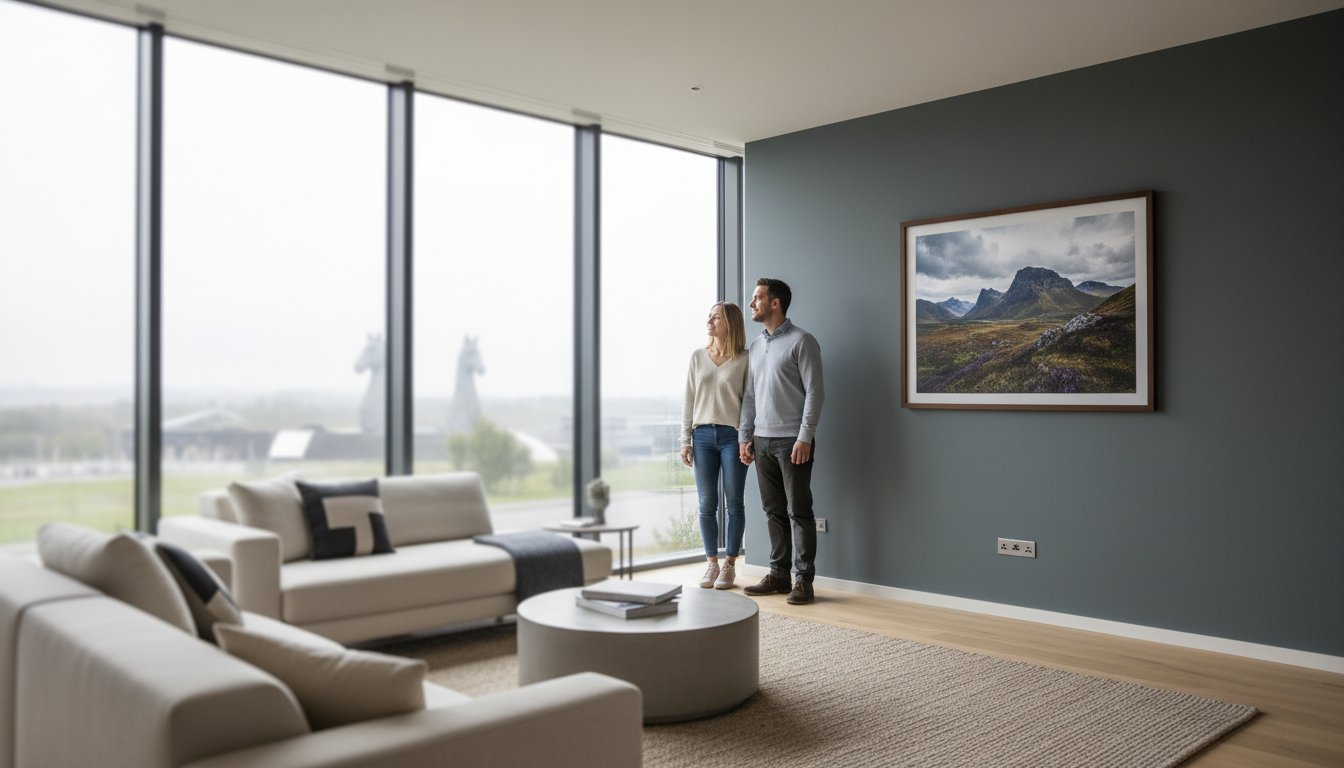
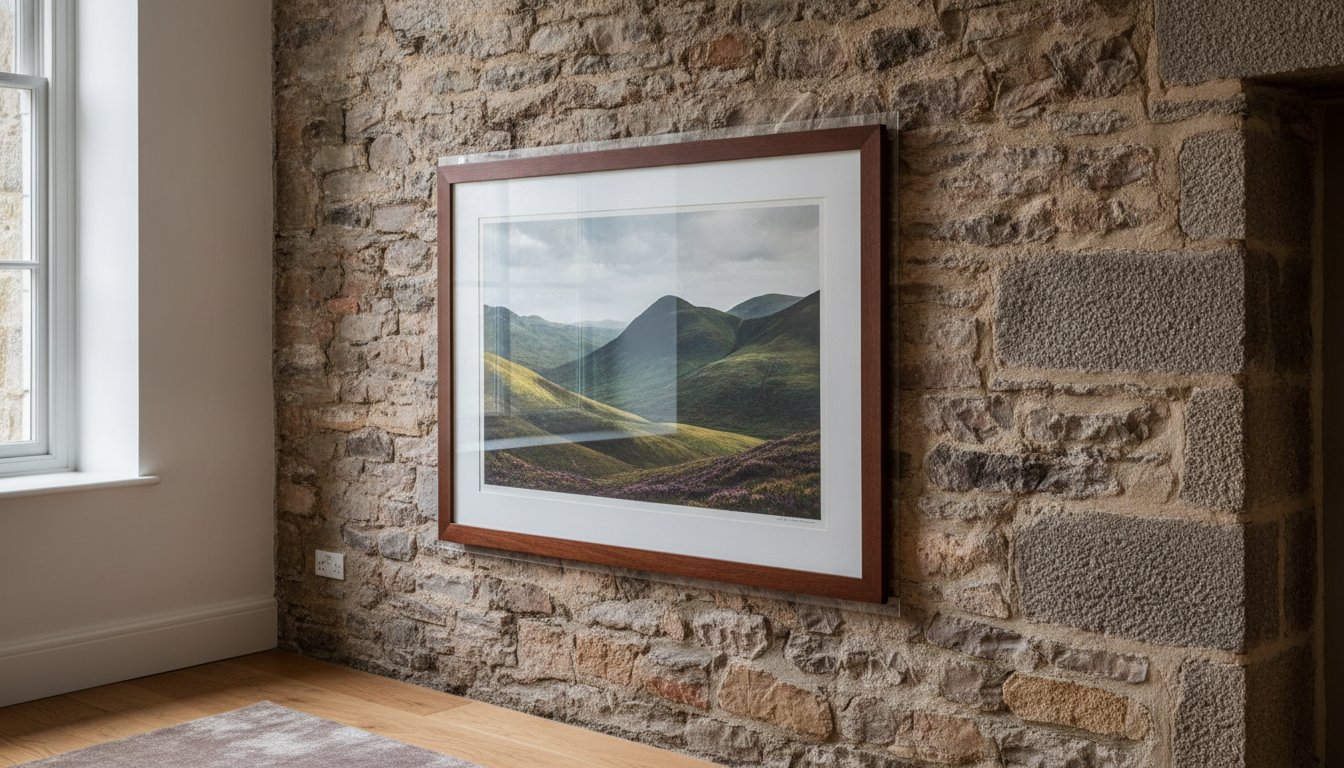
Imagine walking into your drawing room, expecting to admire a bespoke Scottish landscape print, only to find faint, brown “tide marks” creeping across the mount. It’s a heartbreaking moment for any collector; yet it’s a common reality when living in a period property where musty smells and damp walls are part of the building’s soul. Learning how to protect art from mould in old houses is essential if you want to prevent foxing from permanently devaluing your collection. You shouldn’t have to live in fear of ruining your favourite pieces simply because of the age of your property.
At First4Frames Gallery, we believe that your home’s historic charm shouldn’t come at the cost of your precious artwork. In this guide, you’ll discover how to create a protective micro-climate using professional preservation framing and strategic environmental controls. We’ll explore the technical benefits of using 2mm float glass over standard plastic alternatives, explain why “wall-distancing” is your best defence against damp, and show you how to use our wall visualiser to find the safest hanging spots in your home.
Key Takeaways
- Understand why solid stone walls in period properties create high-risk zones for mildew and discover how to protect art from mould in old houses by identifying early signs of foxing.
- Learn why bespoke framing using 2mm float glass provides a superior seal and clarity compared to mass-produced frames that often use moisture-absorbing MDF backings.
- Master the “air gap” technique using frame spacers to prevent damp transfer and use a wall art visualiser to identify the safest hanging locations in your home.
- Explore the benefits of Giclée fine art prints and archival materials that ensure your collection maintains its fidelity even in challenging environmental conditions.
Understanding Why Old Houses Put Your Art at Risk of Mould
Living in a beautiful Victorian terrace or a rustic stone cottage comes with unique challenges for any art collector. The organic materials found in your artwork, such as paper fibres and wooden stretchers, act as a primary food source for fungal spores. “Art mould” typically manifests as mildew, a fuzzy surface growth, or foxing, which are the stubborn reddish-brown spots often seen on antique prints. Applying professional collections care principles is the first step in learning how to protect art from mould in old houses.
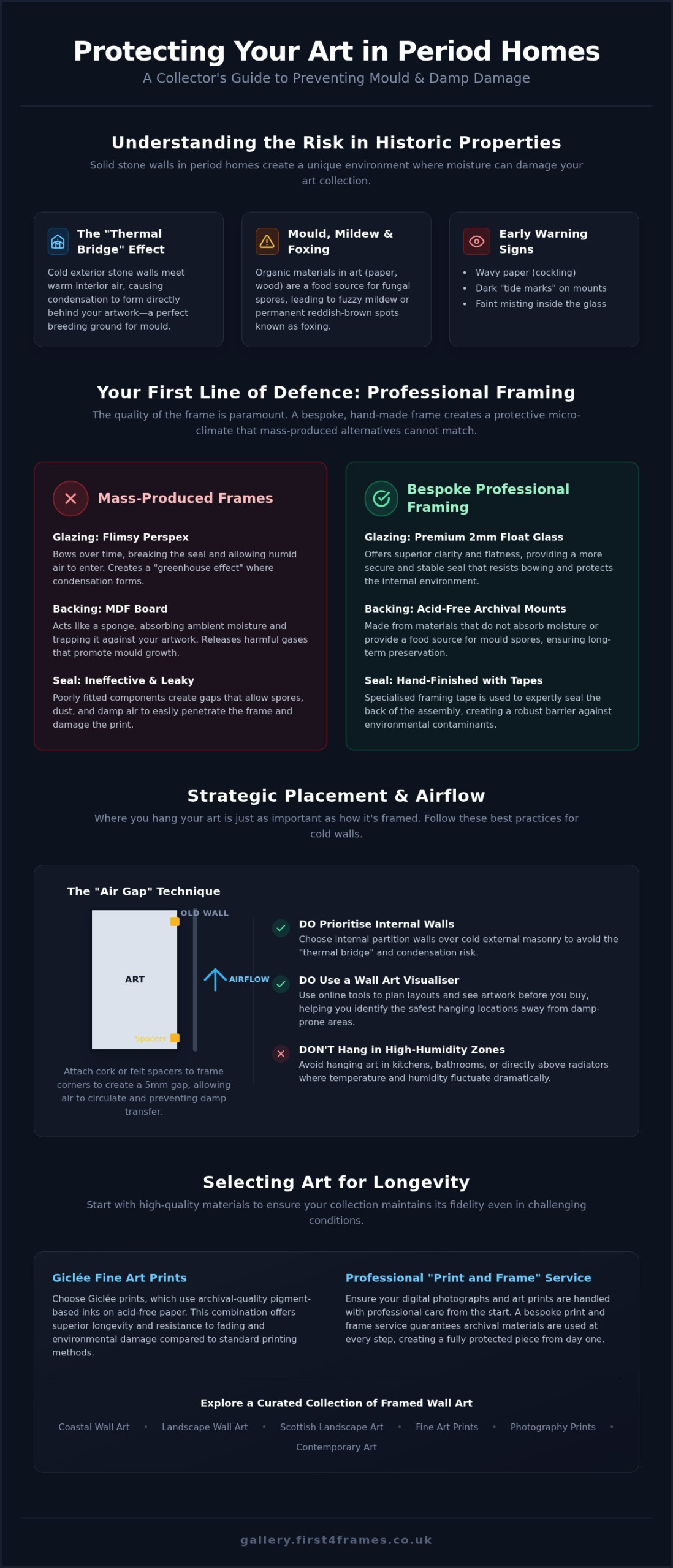
British period homes often feature solid stone or brick walls built without modern cavity insulation. These structures create “thermal bridges” where the cold exterior masonry meets the warm, humid air of a heated drawing room. Moisture condenses at this intersection, often directly behind your picture frames. Damp walls are dangerous. You should watch for early warning signs like wavy paper, known as cockling, dark “tide marks” on mount boards, or a faint misting on the interior of the glazing.
The Science of the Micro-Climate
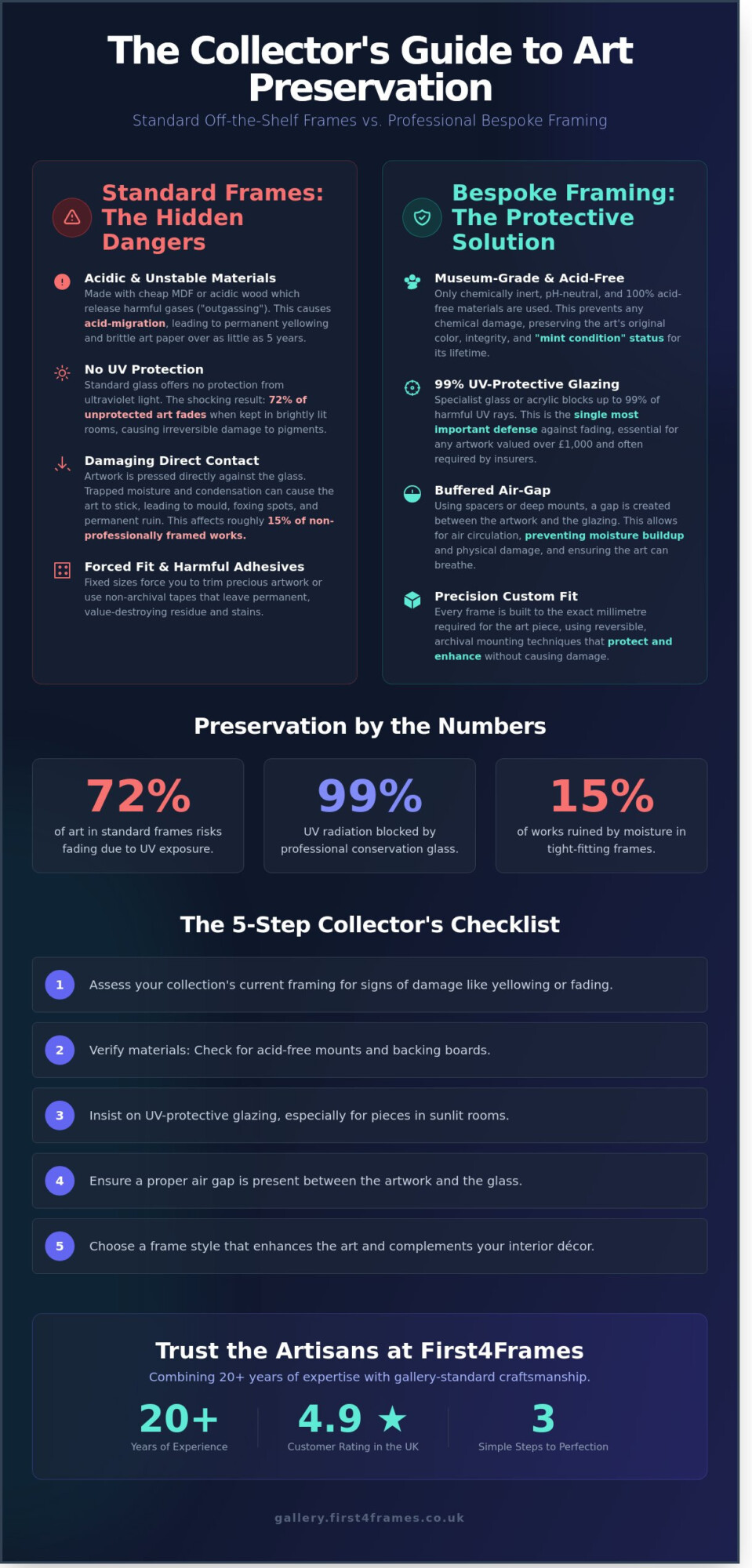
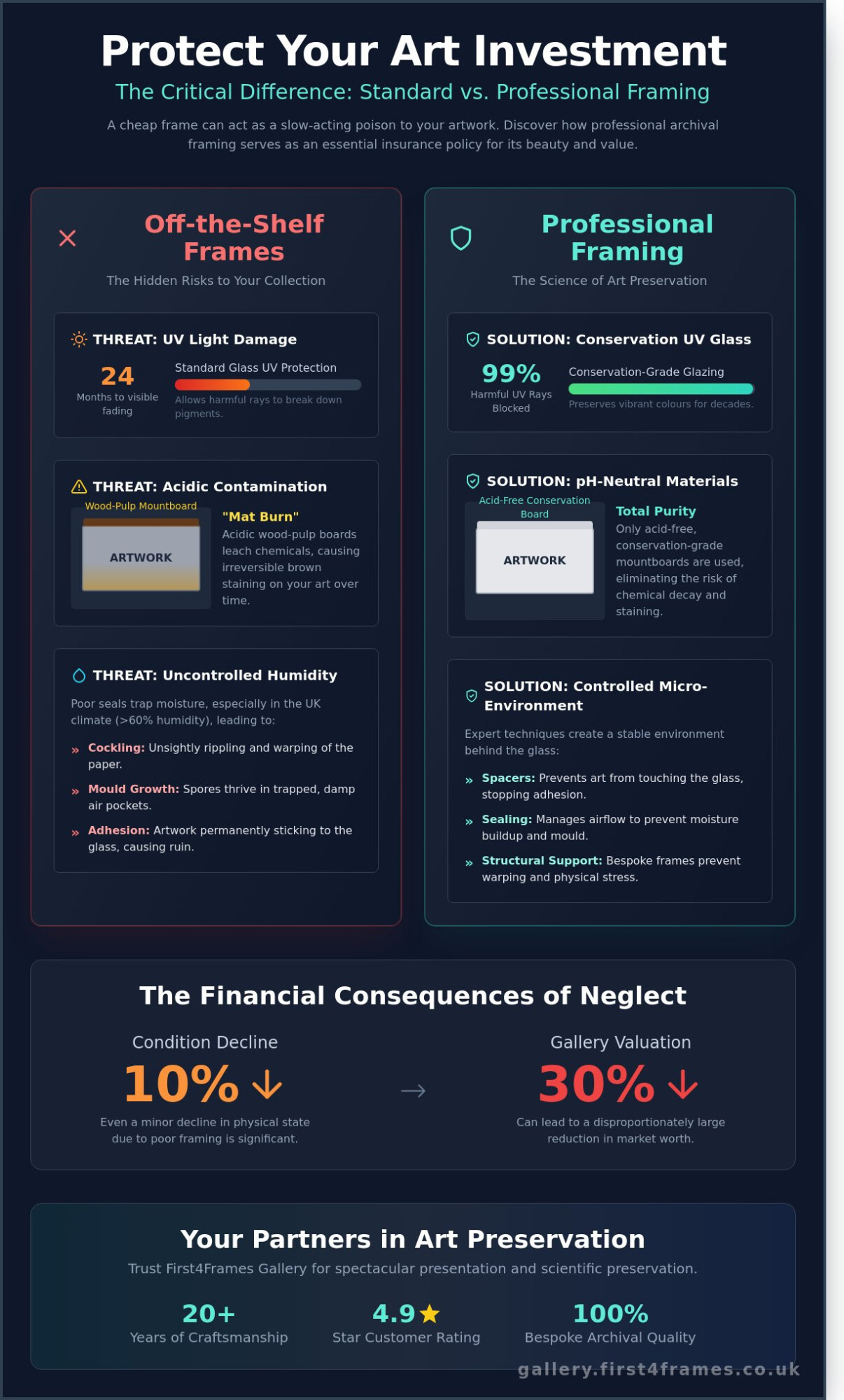
Cheap, mass-produced frames often rely on moisture-absorbing MDF backings and thin perspex. These materials trap humidity against the artwork, creating a stagnant micro-climate where spores thrive. Knowing how to protect art from mould in old houses isn’t just about a quick wipe; it’s about controlling the atmosphere. Unlike flimsy retail alternatives, a professional, sealed environment is your best defence. We believe in the power of a bespoke framed wall art solution. By using premium 2mm float glass for superior clarity and individually crafted frames, we ensure a flatter, more secure seal. This controlled environment prevents the damp air of an old house from ever reaching the delicate Giclée print or fine art photography inside.
Professional Framing: Your First Line of Defence Against Damp
The first line of defence for your artwork isn’t just the wall it hangs on; it’s the frame that protects it. Cheap, mass-produced frames often rely on MDF backings, which act like sponges in a damp room. These boards trap moisture and release harmful gases that encourage fungal growth. When considering how to protect art from mould in old houses, you must look for acid-free mounting boards and individually crafted frames. Following the NPS guide to preventing mold, we prioritise archival materials that don’t provide a food source for spores, ensuring your collection remains pristine.
Why Glass Quality Matters for Preservation
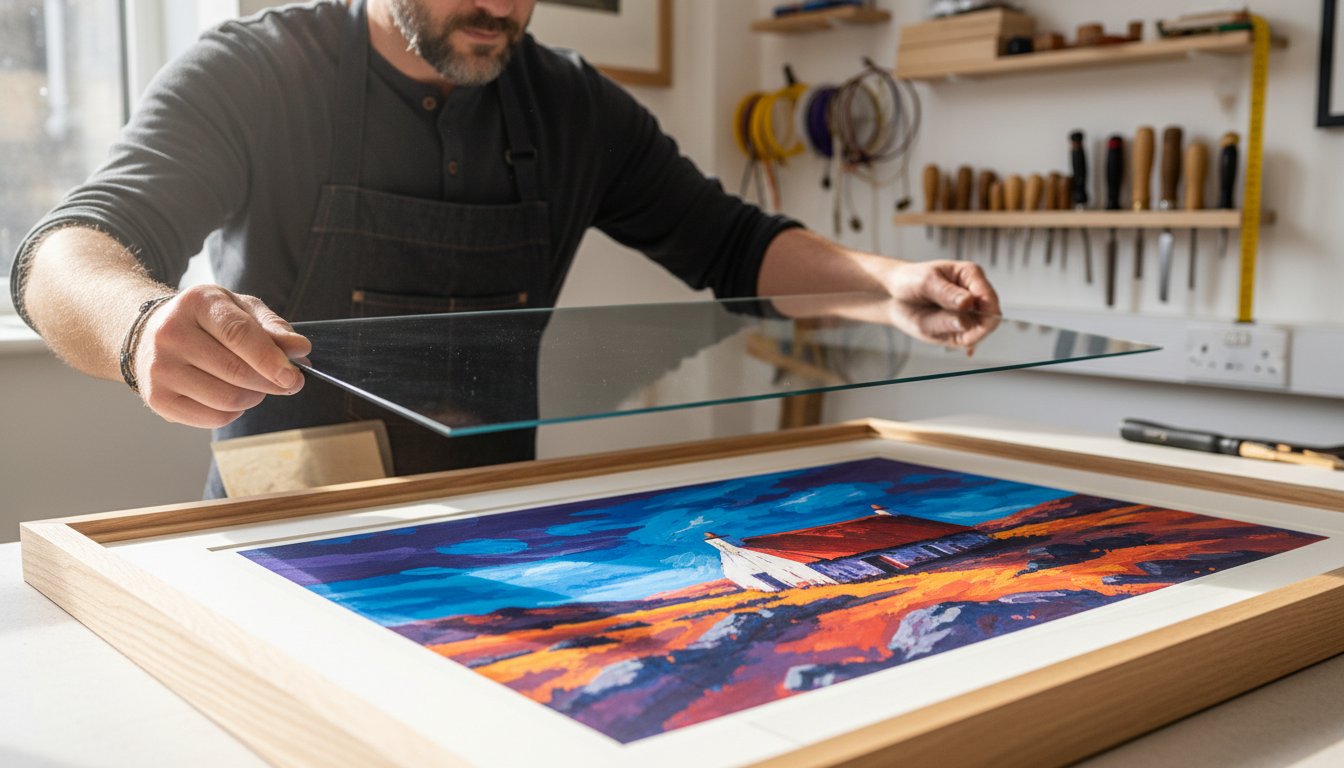
Glazing is more than just a window; it’s a structural barrier. Many budget retailers use flimsy perspex, but we use 2mm float glass for its exceptional clarity and flatness. Perspex can bow over time, breaking the seal and allowing humid air to enter. This creates a “greenhouse effect” where condensation forms on the inside of the glass, leading to water damage and mildew. High-quality glass provides a more secure, flatter seal that’s essential for preserving fine art prints in challenging environments.
Sealing and Backing Techniques
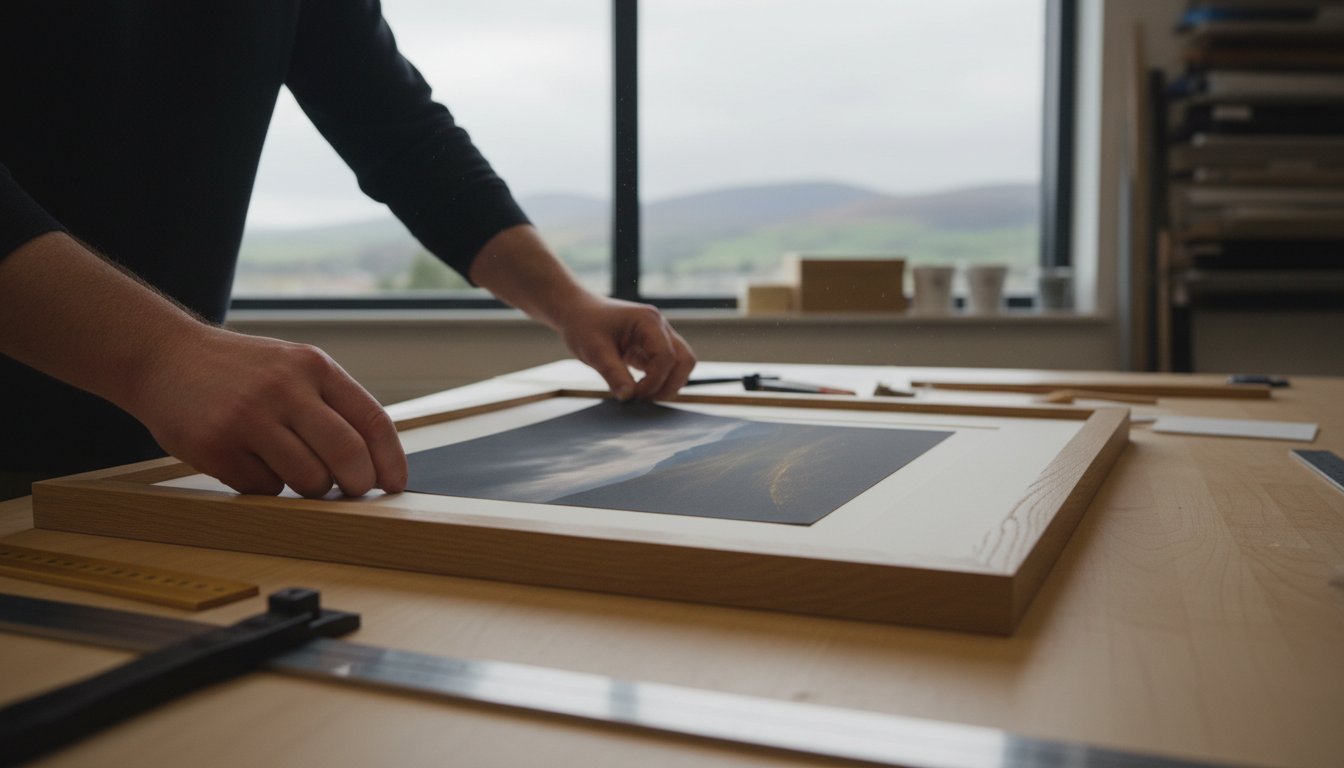
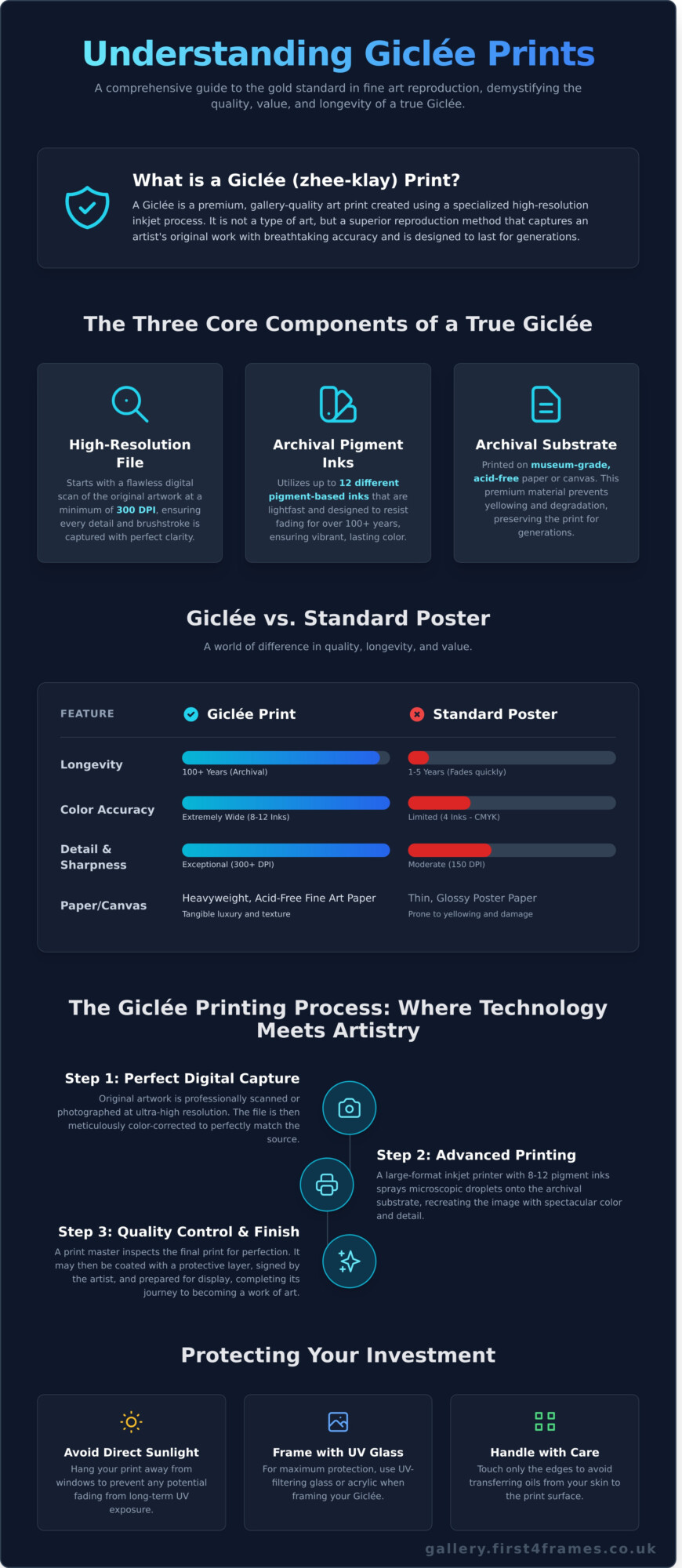
Professional sealing is what separates an artisan frame from a standard one. We use specialised framing tape to seal the back of the assembly, creating a barrier against dust and spores. This hand-finished approach ensures a tighter fit than any pre-made frame could offer. For a seamless experience, our “print and frame” service allows you to design your framed artwork using Giclée prints that are archival from the moment they’re created. Learn more about our bespoke photo frames and printing to see how we protect your memories with professional craftsmanship.
Strategic Placement and Airflow: How to Hang Art on Cold Walls
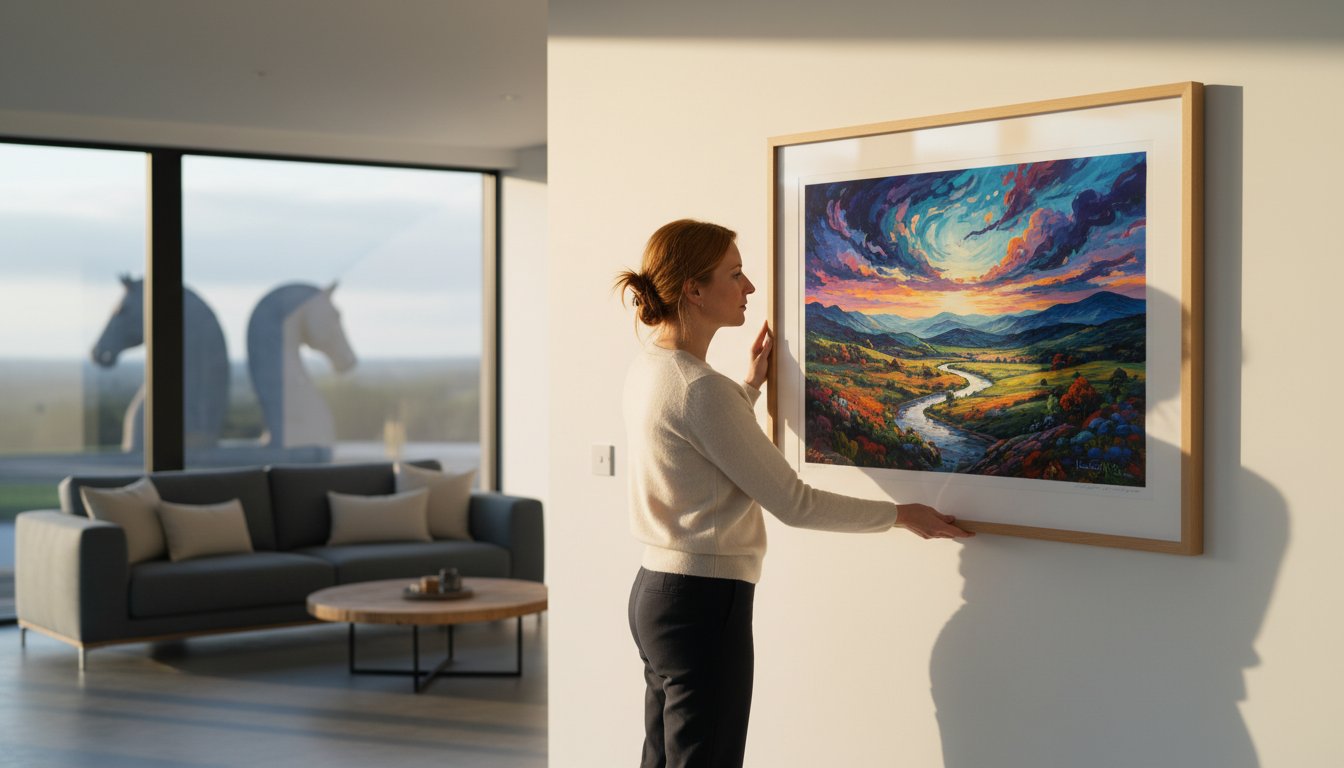
Learning how to protect art from mould in old houses requires more than just a sturdy frame; it demands a strategic approach to where you hang it. In period properties, external stone walls are often much colder than the room’s ambient temperature. This temperature difference causes moisture to settle behind the frame. To decide on the safest location, use our wall art visualiser to see artwork before you buy and test different layouts away from damp-prone corners.
- Prioritise internal walls: Choose internal partition walls over external masonry whenever possible to avoid the “thermal bridge” effect.
- Create a buffer: Attach cork or felt spacers to the bottom corners of your frame to ensure a 5mm gap for ventilation.
- Monitor humidity: Use a digital hygrometer to keep room humidity within a stable 40% to 55% range.
Creating a Buffer Zone
Avoiding High-Risk Areas
Don’t hang your collection above radiators or near single-glazed windows. Rapid temperature changes from radiators can warp wooden frames, while windows are magnets for condensation. If you’re looking to safely display Scottish landscape art in a traditional drawing room, stick to well-ventilated areas with consistent lighting. Avoid “dead air” spots like the narrow gaps behind doors or deep alcoves where moisture tends to linger. Ready to protect your collection? Visualise art on your wall today and plan your perfect, safe gallery layout.
Selecting the Best Framed Wall Art for Longevity
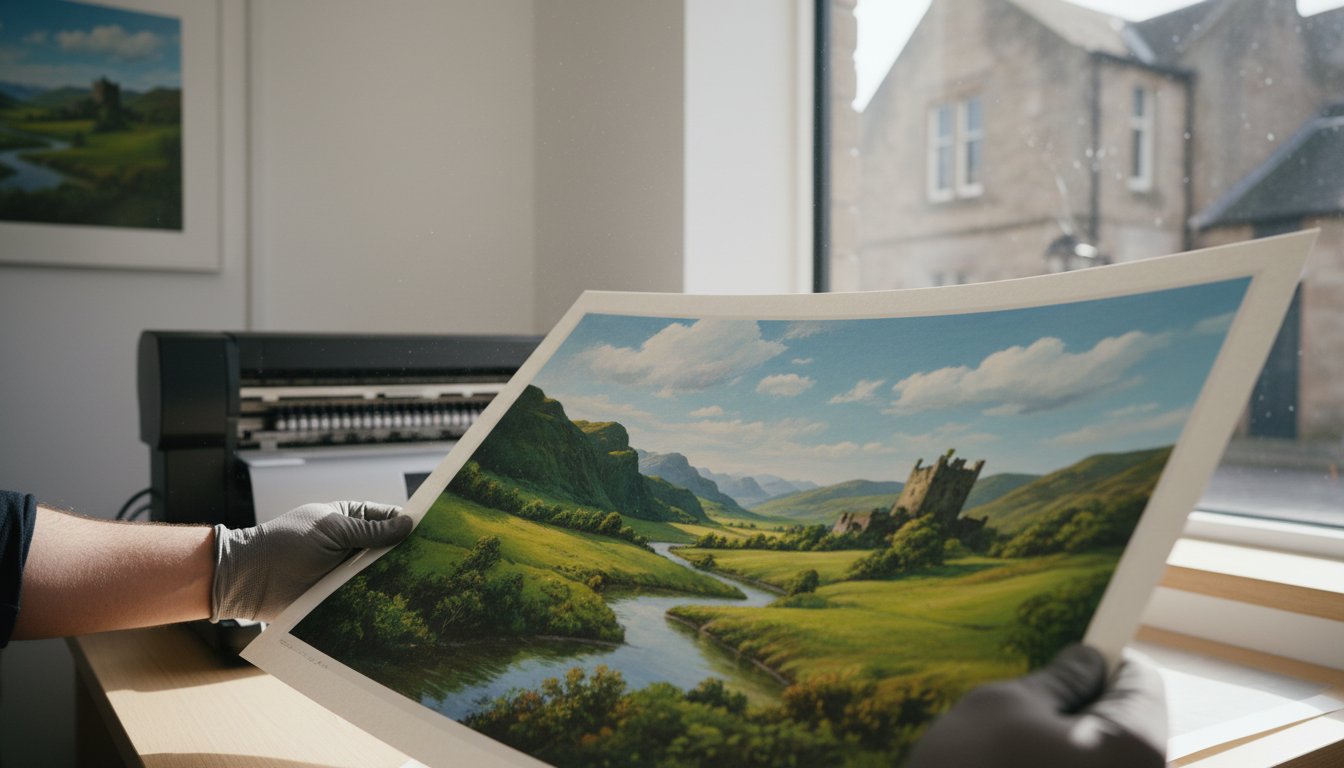
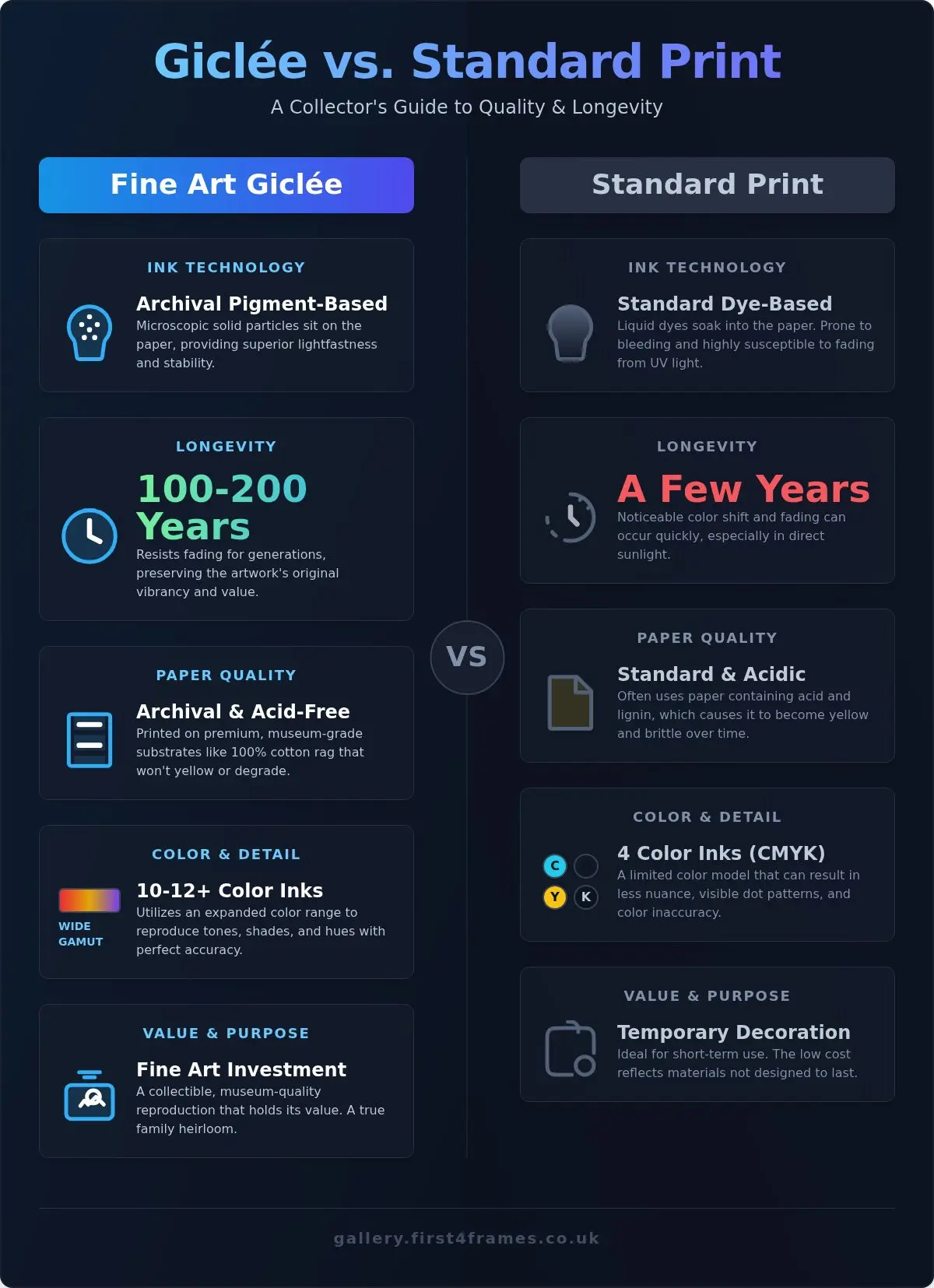
Choosing the right medium is just as vital as the frame when you’re figuring out how to protect art from mould in old houses. Giclée fine art prints are the superior choice for period properties because they use high-stability pigment-based inks and heavy archival paper. This is especially true for vibrant Contemporary art prints or atmospheric Coastal wall art, where maintaining colour fidelity is essential. Our selection includes works by Best-selling artists, ensuring that your chosen piece isn’t just beautiful but manufactured to museum-grade archival standards.
Our online picture framing service allows you to customise every element of your display to suit your specific environment. Whether you are looking for expansive Landscape wall art or works by Famous artists, you can choose your frame online to match the structural needs of your room. We recommend using our wall visualiser to “see artwork before you buy” to accurately assess the scale. This ensures your piece fits perfectly within the safe “airflow zones” we discussed earlier, keeping it away from damp corners. Bespoke framed wall art offers a level of protection that standard, pre-made frames simply cannot provide.
Investing in Quality Materials
Handmade frames built with traditional craftsmanship naturally outlast standard retail options. At First4Frames Gallery, every order is individually crafted in our workshop, ensuring the 2mm float glass and acid-free mounts create a permanent, protective seal. This bespoke approach is the most effective way to understand how to protect art from mould in old houses over several decades. To maintain this integrity, we use professional couriers and robust packaging to ensure your art print framing service arrives with its archival seals intact. For more advice, explore our full guide to choosing and displaying picture frames.
Preserve Your Collection for Generations
Your period home’s historic charm shouldn’t be a threat to your most cherished artwork. By combining the science of a sealed micro-climate with strategic airflow, you now have the essential tools for how to protect art from mould in old houses. Remember that the secret lies in the details; choosing internal partition walls, creating a 5mm ventilation gap, and insisting on archival Giclée prints. These small adjustments transform a vulnerable display into a lasting legacy that’s built to endure.
At First4Frames Gallery, every piece we produce is individually hand-made in the UK with a deep appreciation for craftsmanship. We use 2mm float glass for superior clarity and a secure seal, ensuring your art is shielded from the damp environments of older properties. To guarantee it reaches you safely, we use secure professional courier packaging for every order. Ready to transform your space? Design your bespoke framed artwork online today and enjoy the peace of mind that comes with professional preservation. Your art deserves a home as enduring as the building it inhabits.
Frequently Asked Questions
Can I remove mould from a paper art print myself?
You should avoid attempting to remove mould from a paper print yourself. Fungal spores are delicate and often penetrate deep into the paper fibres; meaning household cleaners or physical scrubbing will likely cause permanent damage. Professional conservation is the only safe route to restore the piece. Focus instead on stabilising your room’s humidity to prevent further growth while you seek expert advice for your collection.
Does 2mm float glass really protect art better than plastic or perspex?
Yes, 2mm float glass offers vastly superior protection compared to the flexible perspex found in budget frames. Plastic glazing can bow or warp over time; which breaks the archival seal and allows humid air to reach the artwork. Our float glass remains perfectly flat and rigid. This ensures a consistent micro-climate that is vital for anyone learning how to protect art from mould in old houses.
Is it safe to hang framed prints on an external stone wall in an old house?
It’s generally safer to avoid external stone walls because they’re prone to “thermal bridging” where condensation forms. If you must use an external wall, ensure you create a 5mm air gap using cork or felt spacers on the frame’s reverse. This passive ventilation prevents moisture from the cold masonry transferring directly into the timber frame and reaching your bespoke framed art prints.
What are the first signs that mould is growing inside my picture frame?
Look for “cockling,” which is when the paper appears wavy rather than flat against the mount. You might also notice “foxing,” appearing as small reddish-brown spots, or dark “tide marks” on the mount board. Another early warning is a faint misting on the interior of the glass. Identifying these signs early is a key part of how to protect art from mould in old houses.
How often should I check my framed art for damp damage?
You should inspect your collection at least once every three months, especially during the transition into autumn and winter. These seasonal shifts often cause humidity spikes in period properties. Check the back of the frames for any dampness or musty smells. Regular monitoring allows you to relocate pieces to drier internal walls before any significant fungal growth or permanent paper staining occurs.