Posted on

Choosing Art for a Conservatory or Sunroom: The Complete Guide

A conservatory is a room of light, a beautiful bridge between your home and garden. But this glorious abundance of sun can make choosing art feel like a risk. Will your cherished print fade to a pale ghost of its former self? Is it even possible to hang art when most of your walls are glass? It’s a common dilemma, but transforming this bright space with spectacular artwork is easier than you think. Finding the perfect art for a conservatory or sunroom simply requires a little expert knowledge and the right craftsmanship.

This is where we can help. In this complete guide, we’ll show you exactly how to select beautiful pieces that are protected for years to come. We’ll delve into the best materials, explore premium framing techniques designed to combat sun damage, and offer creative ideas for placement. You’ll discover how to choose styles that create a seamless flow with the outdoors, giving you the confidence to turn your sun-filled room into a stunning, art-filled sanctuary.

The Unique Challenge: Why Art in a Conservatory Needs Special Care

A conservatory is a wonderful bridge between your home and garden, a space filled with light and life. But this beautiful environment, with its glass walls and ceiling, poses a unique and significant challenge for displaying artwork. The very qualities that make a sunroom so inviting—abundant natural light and a close connection to the outdoors—create a harsh climate for fine art. The main enemies are intense UV light, fluctuating humidity, and dramatic temperature swings. Understanding these factors is the first step to choosing beautiful art for a conservatory or sunroom that will last for years to come.

To get inspired by how to decorate these unique spaces, take a look at these helpful tips:

In the following sections, we’ll show you how to select and protect your investment, ensuring your chosen pieces remain as spectacular as the day you bought them.

The Sun Factor: Combating Fading from UV Exposure

The single greatest threat to your art is sunlight. Ultraviolet (UV) radiation is a high-energy component of light that relentlessly breaks down the chemical bonds in pigments, causing colours to fade and lose their vibrancy. This process, known as photodegradation, is irreversible. It’s a common misconception that only direct sunlight is harmful; even the ambient, indirect light in a bright room can cause significant fading over time. As detailed in the principles of The Unique Challenge: Why Art in a Conservatory Needs Special Care, light exposure is a primary cause of deterioration. Furthermore, the heat from direct sun can make paper brittle and cause the varnish on a painting to crack.

Humidity and Temperature: Protecting Against Warping and Moisture

Unlike other rooms in your home, a conservatory experiences much greater swings in temperature and humidity throughout the day and across the seasons. This constant fluctuation puts immense stress on artwork. High humidity can encourage the growth of mould or lead to ‘foxing’—those unsightly brown spots on paper. Moisture in the air can cause paper to buckle or ripple, while extreme temperature changes can make wood frames expand and contract, potentially warping them and damaging the artwork within.

The ‘Glass Box’ Effect: Working with Light and Limited Wall Space

Beyond the environmental challenges, there’s the practical layout of a conservatory. With walls made mostly of glass, finding a solid, suitable spot to hang a piece can be difficult. The abundance of light also creates issues with glare and reflections, which can obscure the art and diminish your viewing pleasure. But don’t be discouraged! This simply calls for creative thinking. Consider displaying art on a sturdy easel or hanging smaller pieces on structural pillars or the slivers of solid wall space available.

The Best Art Mediums and Styles for Sunlit Spaces

A conservatory is a beautiful bridge between your home and garden, but its abundant sunlight poses a unique challenge for displaying art. Not all mediums are created equal when faced with constant light exposure. Choosing the right type of print and a complementary theme is your first line of defence against fading and discolouration. Let’s explore the most resilient options and inspiring styles to ensure your art remains as vibrant as your garden view.

Why Giclée Prints Are the Superior Choice

When selecting prints for a bright space, Giclée is the gold standard for longevity and quality. Unlike standard prints that use common dye-based inks, our Giclée process uses premium, archival pigment-based inks. These professional-grade inks are inherently more resistant to light, with many rated to last over 100 years without fading. Paired with high-quality archival paper that resists yellowing, a Giclée print is a beautiful and lasting investment. Explore our collection of vibrant Giclée prints, perfect for any room in your home.

Art Styles and Themes that Thrive in a Conservatory

The right theme can transform your conservatory, creating a seamless connection with the outdoors. The perfect art for a conservatory or sunroom often echoes its natural surroundings. Consider these inspiring styles:

  • Botanical and Floral Prints: Create a beautiful, organic link between your indoor space and the garden just beyond the glass.
  • Landscapes and Seascapes: Enhance the feeling of open, airy space, drawing the eye towards the horizon and extending your view.
  • Abstract Pieces: Bold, vibrant colours and dynamic shapes can hold their own against the bright, natural light, adding a powerful splash of energy.
  • Local Scottish Artists: Reflect the beauty of your surrounding landscape by choosing pieces from talented local artists, adding a personal and authentic touch.

Mediums to Use with Caution

While some art is built to last, other mediums are particularly vulnerable in a sunlit room. The constant exposure to UV light causes cumulative and irreversible damage to delicate materials. Be especially cautious with:

  • Original Watercolours: The delicate pigments in watercolours are extremely susceptible to fading and should be avoided in direct sunlight.
  • Standard Posters & Photographic Prints: These are typically printed with dye-based inks on non-archival paper and will fade noticeably within a few years, or even months.
  • Oil and Acrylic Paintings: While far more durable than watercolours, even these robust mediums can suffer from cracking or fading over decades without proper UV protection.

Your Secret Weapon: The Power of Professional Framing

When selecting art for a conservatory or sunroom, it’s easy to focus solely on the image. However, the frame is far more than a decorative border; it is a vital protective shield for your investment. Off-the-shelf frames simply aren’t designed to cope with the extreme conditions of a glass-walled room. Bespoke framing, on the other hand, empowers you to choose the exact components needed for long-term preservation, creating a beautiful piece that is built to last.

Investing in professional, conservation-grade framing is the single most important step you can take to protect your art from the unique environmental threats of a sun-drenched space. The right glass, mount, and backing work together to create a micro-environment that safeguards your artwork for decades to come.

Choosing the Right Glazing: UV Protection is Non-Negotiable

The intense, prolonged light in a conservatory is an artwork’s greatest enemy. Standard glass offers minimal protection, allowing harmful ultraviolet (UV) rays to penetrate and cause fading, yellowing, and brittleness. This exposure results in cumulative and irreversible damage to the paper and pigments. To combat this, you should always opt for specialist glazing:

  • UV-Filtering Glass or Acrylic: These premium options are essential, blocking up to 99% of damaging UV rays without altering the colours of your artwork.
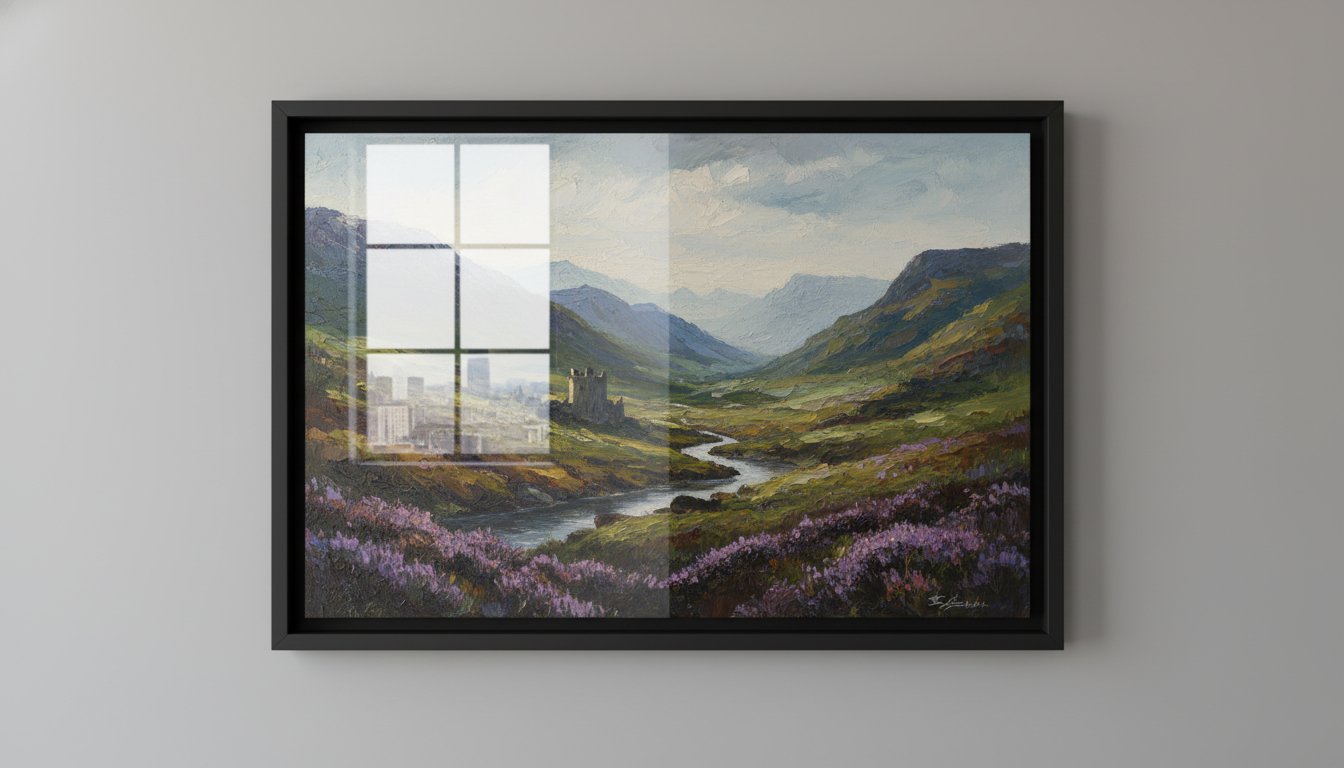
  • Anti-Reflective Glazing: A fantastic choice for a bright room, this specialised glass minimises glare and reflections, ensuring your art can be enjoyed from any angle, at any time of day.

Frame and Mount Materials that Withstand the Elements

Fluctuating temperature and humidity can cause inferior frame materials to warp, crack, or expand. For a conservatory, choose stable, high-quality materials like solid wood or premium aluminium that can withstand these changes. Just as crucial are the internal components. We always use conservation-grade, acid-free mounts and backing boards. This prevents “mat burn”—the unsightly yellow or brown staining that occurs when acidic materials leach into the artwork over time.

The Importance of a Sealed Finish

A final, critical step in professional framing is sealing the back of the frame. Our expert framers apply a special tape to the back, creating a robust barrier that protects against humidity, dust, and even insects. In a room prone to condensation and moisture, this seal is crucial for preventing the growth of mould and mildew inside the frame, which can permanently ruin your art. It’s this attention to detail that ensures your piece remains pristine. Let our experts create the perfect protective frame for your beautiful new art.

Design and Placement: Styling Art in Your Sunroom

Now for the truly rewarding part: bringing your conservatory to life with beautiful art. The goal is to choose pieces that complement the abundant light and garden views, rather than compete with them. Think of your conservatory as a seamless bridge between your home and the outdoors; the right artwork will harmonise these two worlds. By carefully considering scale, colour, and placement, you can create a spectacular and inviting atmosphere.

Creating a Focal Point on a Solid Wall

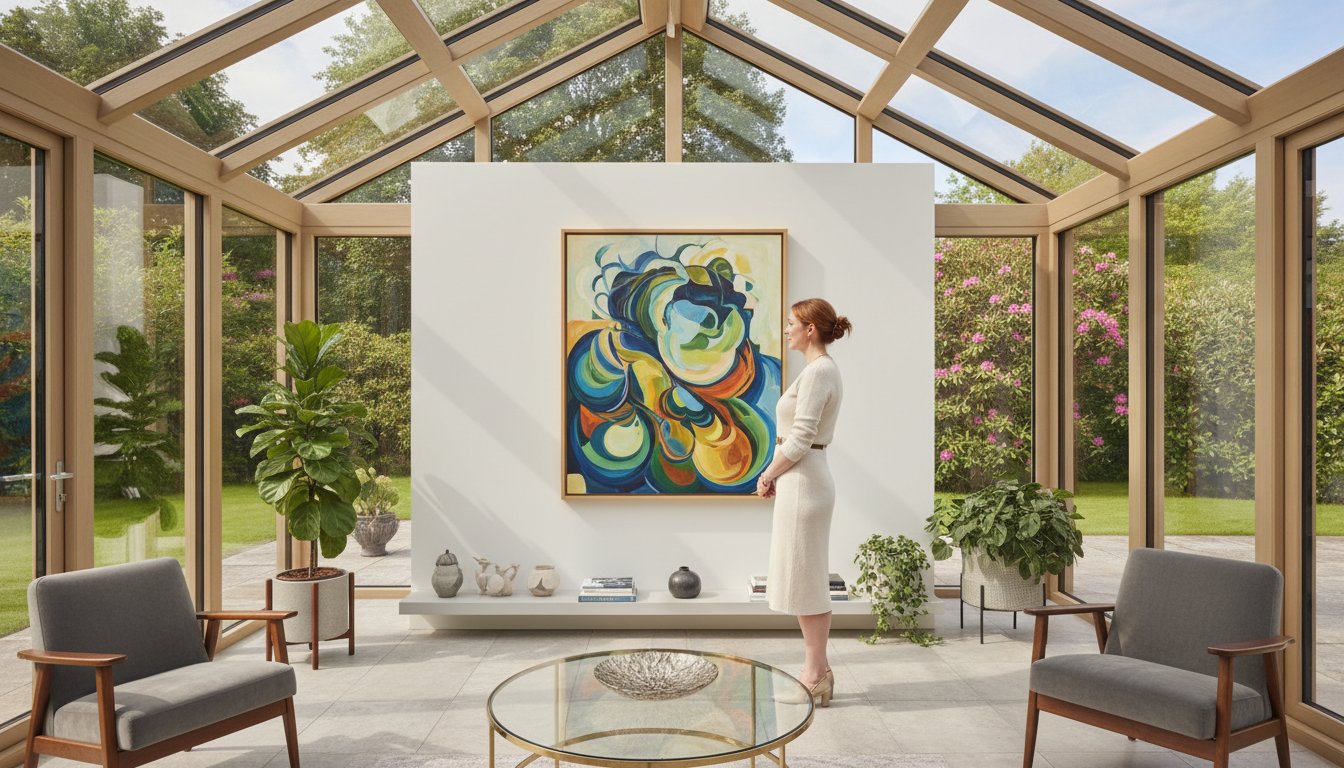
If your conservatory has a solid structural wall, it presents a perfect canvas. Use this space to hang a single, large statement piece that commands attention and anchors the room’s design. Alternatively, a curated gallery wall can tell a personal story and add deep character. Whichever you choose, ensure the art is positioned away from the path of intense, all-day sunlight to protect its vibrancy and craftsmanship for years to come.

Matching Art to Your Conservatory’s Style

The perfect art for a conservatory or sunroom should feel like a natural extension of your home’s aesthetic. Consider these styles:

  • For modern spaces: Think clean lines. Abstract prints or minimalist photography in simple, sleek frames work beautifully to maintain a contemporary feel.
  • For traditional or cottage styles: Embrace nature’s elegance. Botanical illustrations, classic landscapes, or floral watercolours in more ornate, bespoke frames will enhance the room’s charm.

A wonderful professional tip is to draw inspiration directly from your garden, letting the colours of your flowers and foliage inform the palette of your chosen artwork.

Thinking Beyond the Walls

Is wall space at a premium? It’s time to think creatively. A sturdy wooden easel offers a sophisticated and flexible way to display a favourite piece. This not only adds an artistic touch but also allows you to easily move the artwork to avoid harsh light throughout the day. Don’t overlook smaller surfaces, either. A small, professionally framed print placed on a side table or a bookshelf can add a final, polished layer to your design, completing the room with effortless style.

Feeling inspired to find the perfect piece? Our passion at First4Frames Gallery is helping you on your artistic journey. Explore our gallery to discover a curated collection of fine art prints, all available with premium, bespoke framing to suit your unique space.

Bring Your Conservatory to Life with Lasting Art

Decorating your sun-drenched space is a wonderful opportunity to turn light into life. As we’ve explored, the key is choosing the right art mediums and, most importantly, investing in professional protection. The right frame does more than just complement the artwork; it acts as a guardian against the very sunlight that makes your room so special, ensuring your investment is enjoyed for years to come.

Finding beautiful and durable art for a conservatory or sunroom is our passion. With over 20 years of bespoke framing expertise, we protect our spectacular, museum-quality Giclée prints with specialist UV-protective and anti-reflective glazing options. This guarantees their vibrant, archival inks will not fade over time, allowing you to display your chosen piece with complete confidence.

Ready to complete your beautiful space? Find the perfect, professionally framed art for your sunroom today.

Frequently Asked Questions

Can I hang an original oil painting in my conservatory?

We strongly advise against this. The intense, direct sunlight and fluctuating temperatures in a conservatory can be incredibly damaging to an original oil painting. This environment can cause the paint to crack, fade, and flake, and the canvas to warp over time. To enjoy the image without risking the original, we recommend commissioning a high-quality Giclée print. This allows you to display the art you love while keeping the valuable original safe in a more stable environment.

How can I stop my art prints from fading in a sunny room?

Protecting your prints from UV light is essential. The first line of defence is the print quality itself; always choose archival Giclée prints that use lightfast, pigment-based inks designed for longevity. The second, crucial step is professional framing that incorporates UV-protective glazing. This specialist glass can block up to 99% of harmful UV rays, preserving the vibrant colours of your print and preventing the paper from yellowing. This combination offers the ultimate protection for your art.

What is the best type of glass to use for framing conservatory art?

For a room with so much natural light, specialist glazing is a must. We highly recommend using a UV-protective glass, such as Conservation Clear or Museum Glass. Standard picture glass offers very little protection from the sun’s damaging rays. Investing in glazing that blocks 99% of UV light is the most effective way to prevent fading and ensure your artwork remains beautiful for years to come. It’s a vital component for any art displayed in such a bright space.

Is canvas art a good choice for a sunroom?

Canvas can be a spectacular choice, provided you take the right precautions. The main challenges are fading from sunlight and warping from humidity changes. To combat this, choose a high-quality Giclée canvas print that has been treated with a UV-protective varnish. This will safeguard the colours. Also, ensure your sunroom is well-ventilated to maintain a relatively stable level of humidity, which protects the wooden stretcher bars from expanding or contracting. This makes it a perfect piece of art for a conservatory or sunroom.

How do I deal with glare and reflections on my artwork?

Glare is a common problem in bright, sunny rooms, but it has a simple solution: anti-reflective glass. Often referred to as Museum Glass, this premium material has a special coating that diffuses light, making the glass seem almost invisible. This provides a crystal-clear view of your artwork from any angle, without distracting reflections. While it is a premium option, the difference is truly remarkable and allows you to fully appreciate the detail and colour of your art.

What frame materials are best for a room with high humidity?

In environments with fluctuating humidity like a conservatory, certain frame materials perform much better than others. We recommend avoiding natural wood, which can swell, warp, or even encourage mould. Instead, opt for metal frames, like sleek and modern aluminium, or composite materials such as Polcore. Polcore is a recycled polystyrene material that is completely stable in humid conditions, ensuring your frame’s joints remain tight and its shape true, protecting your artwork perfectly.

Posted on

Is Professional Framing Worth It? A Deep Dive into Cost vs. Value

You’ve found a beautiful piece of art, something you truly love, but the quote for a custom frame can be startling. Staring at that figure, it’s only natural to ask, is professional framing worth it? The temptation to grab a much cheaper, ready-made frame from a high street shop is strong, yet a nagging worry remains. Will it do justice to your treasured print, or worse, cause irreversible damage over time? This feeling of being caught between a significant cost and a potential risk is a common dilemma for art lovers across the UK.

This guide is here to bring you clarity and confidence. We will embark on a journey beyond the price tag to uncover the crucial differences between a simple border and bespoke craftsmanship. You will discover what goes into a premium, professionally finished frame—from archival materials that protect your art for a lifetime to the perfect design choices that elevate it into a spectacular centrepiece. By the end, you’ll understand the true value behind the investment and feel empowered to decide when your art deserves the lasting protection and beauty of a professionally crafted home.

Ready-Made vs. Bespoke Framing: Understanding the Core Differences

Choosing a frame is much like buying a suit. You can pick one off-the-rack that fits well enough for a single occasion, or you can invest in one that is tailored to your exact measurements for a perfect, lasting fit. The same principle applies to presenting your art. This core distinction between mass-produced and custom-made is central to understanding if professional framing is worth it for the pieces you truly cherish.

A ready-made frame is a standard-sized, mass-produced product you can buy from a high street shop. In contrast, a bespoke frame is a piece of craftsmanship, custom-built by a professional to fit your specific artwork perfectly, using premium, conservation-grade materials. To see these differences in action, this video offers some excellent professional insights:

The right choice ultimately depends on the artwork itself, its sentimental or monetary value, and your long-term goals for displaying and preserving it.

The Limitations of Ready-Made Frames

While convenient for standard-sized photos or temporary displays, off-the-shelf frames present significant drawbacks for unique or valuable art. Their one-size-fits-all approach often means compromising the presentation and longevity of your piece.

  • Standard Sizing: Odd-sized prints or original canvases rarely fit perfectly, often resulting in awkward gaps or the need to crop the art itself.
  • Inferior Materials: Typically made from MDF or plastic with flimsy backings, these frames can warp, chip, or break easily, offering minimal physical protection.
  • Acidic Damage: The backing boards and mounts in cheap frames are often acidic, which can leach into the paper over time, causing irreversible yellowing and brittleness known as ‘mat burn’.
  • No UV Protection: Standard glass offers almost no defence against harmful UV rays, leading to the colours in your artwork fading dramatically over time.

The Advantages of a Bespoke Approach

Investing in a bespoke frame is an investment in the artwork itself. It is a premium solution designed not just to display your art, but to protect and enhance it for a lifetime, making it a centrepiece in your home.

  • A Perfect Fit: Each frame is built with precision craftsmanship to the exact dimensions of your artwork, ensuring a flawless and balanced presentation.
  • Unmatched Quality & Choice: You gain access to a spectacular array of high-quality wood and metal mouldings, drawing from the rich history and styles of picture frames to find the perfect aesthetic for your piece.
  • Conservation-Grade Protection: We use only acid-free, archival materials and offer UV-protective glazing options to actively shield your art from environmental damage and decay.
  • Expert Guidance: A professional framer acts as your partner, offering expert advice to create a beautiful final product that complements both the art and your interior decor.

What You’re Really Paying For: The Four Pillars of Professional Framing

When you see the price of a bespoke frame, it’s easy to compare it to a standard one from a high-street shop and wonder, is professional framing worth it? But that comparison misses the immense value packed into the cost. You aren’t just buying four pieces of wood and a sheet of glass; you’re investing in a complete service built on a foundation of expertise, premium materials, and meticulous craftsmanship. This is the bridge between your artwork and your home, designed to both enhance and protect your treasured piece for a lifetime.

Pillar 1: The Framer’s Expertise and Guidance

A professional framer is your personal art consultant. With years of experience in design principles and handling delicate pieces, they provide guidance that goes far beyond just picking a colour. They help you choose the perfect proportions to balance the artwork, select styles that complement your décor, and understand the correct, safe way to mount everything from a delicate watercolour to a heavy textile. This expert eye ensures the final result is a harmonious part of your space.

Pillar 2: Archival, Conservation-Grade Materials

The materials used in professional framing are chosen for one primary reason: preservation. Unlike standard frames, a bespoke service uses:

  • Acid-free mount boards to prevent the dreaded ‘mat burn’—a yellow-brown stain that can permanently damage your art.
  • Premium solid wood or aluminium mouldings that are structurally sound and resist warping over time.
  • Specialist glazing options, including UV-protective glass to stop fading and anti-reflective glass for crystal-clear viewing.

These components are fundamental to the long-term care of your art, following best practices for preserving paper collections and ensuring your piece remains vibrant for decades.

Pillar 3: Precision Craftsmanship and Tools

The final pillar is the flawless execution that only comes with professional tools and skill. This is where craftsmanship truly shines. We’re talking about perfect, seamless mitre joints with absolutely no gaps at the corners. It’s about the clean, sharp bevel of a mount cut with precision machinery. The entire piece is assembled in a controlled, dust-free environment, ensuring no frustrating specks get trapped under the glass. When you combine this level of detail with a securely sealed backing and the correct hanging hardware, the answer to is professional framing worth it becomes a confident yes.

The Aesthetic Impact: How a Frame Transforms Your Art and Your Room

A frame is so much more than a simple border; it’s the final, crucial brushstroke that completes the presentation of your art. It performs the heavy lifting in the relationship between the piece and its environment, creating a deliberate and polished look. A thoughtfully chosen bespoke frame can elevate a simple print into a spectacular focal point, drawing you into the picture. Conversely, a poorly chosen, off-the-shelf frame can unfortunately make even the finest art feel disconnected and diminished. This transformative power is a key reason why so many conclude that yes, professional framing is worth it.

The Frame as a ‘Bridge’ to Your Decor

We’ve always believed a great frame acts as the perfect ‘bridge’ between your room’s décor and the artwork itself. It’s the element that creates visual harmony and makes the art feel truly at home. Consider how a sleek, black frame ties a modern abstract print to a minimalist interior, or how an ornate, natural oak frame connects a landscape painting to a cosy, traditional living room. A professional framer can help you select a frame that picks up on accent colours from your furnishings or walls, creating a seamless and professionally curated look. This principle is vital for gallery walls, where a collection of complementary frames unifies disparate pieces into a single, cohesive statement. Need help building your perfect collection? Explore our art prints.

Making the Artwork ‘Pop’: Proportions and Finish

The aesthetic details that make a piece stand out go far beyond just the colour of the moulding. The proportions of the mount board, for instance, are critical. A generous mount provides essential visual ‘breathing room’, preventing the art from feeling cramped and guiding the viewer’s eye inward. As the RISD Museum on the Art of the Frame notes, a frame’s purpose is to both protect and enhance the artwork. Techniques like using double mounts or coloured bevels can subtly pull out specific hues from within the piece, making them sing. The finish of the frame—be it a non-reflective matte for a sophisticated feel, a high-impact gloss for a modern edge, or the warm texture of natural wood—adds another layer of depth. When you ask, is professional framing worth it, this meticulous attention to proportion and finish provides a clear and compelling answer.

Long-Term Value: Protecting Your Investment and Your Memories

When you ask, “is professional framing worth it?“, it’s helpful to think of a bespoke frame not as a decorative expense, but as a vital insurance policy. Whether you’re safeguarding a limited-edition print worth hundreds of pounds or a priceless family photograph, a professionally crafted frame is the first and most important line of defence against irreversible damage. It’s an investment in preservation, ensuring the longevity of both your financial assets and your irreplaceable memories.

Preventing Irreversible Environmental Damage

An inexpensive, off-the-shelf frame simply cannot offer the same level of protection as a bespoke solution built with archival materials. Over time, your artwork is exposed to numerous household threats that cause slow but steady decay. Our professional framing directly combats these dangers:

  • UV Light: Sunlight is the primary cause of faded colours and disappearing signatures. We use specialist glazing with up to 99% UV protection to keep your art as vibrant as the day it was created.
  • Humidity and Moisture: Trapped moisture leads to mould, unsightly brown spots (foxing), and the paper wrinkling or “cockling”. Our sealed frames create a stable micro-environment.
  • Acid Degradation: Standard mount boards are often acidic and will literally burn your artwork over decades, leaving a yellow or brown stain. We use only acid-free, conservation-grade materials to ensure your piece remains pristine.
  • Physical Damage: A sturdy, properly sealed frame provides a robust barrier against dust, insects, and accidental knocks and spills that can cause catastrophic damage.

Framing for Sentimental Value

Some of the most important pieces we handle have no monetary value at all—they are emotionally priceless. Think of your child’s first drawing, a cherished wedding photograph, or the concert tickets from a magical evening. These items are tangible links to our most precious moments. Professional framing elevates them, turning a simple memento into a beautiful display piece. More importantly, it ensures these irreplaceable memories are protected, allowing them to be passed down and enjoyed by future generations. This delivers a peace of mind that is truly invaluable.

Ultimately, for any item you wish to protect and enjoy for a lifetime, professional framing is a worthwhile investment in its future. Protecting these moments is at the heart of our craft. Explore our gallery to see how beautiful, long-lasting protection can look.

An Honest Guide: When is a Ready-Made Frame Good Enough?

At First 4 Frames, we are passionate about the transformative power of bespoke framing. However, we are also dedicated to helping you make the best choice for your specific artwork and budget. Professional framing is a premium investment in preserving and enhancing your pieces, and it’s important to make that investment wisely. This guide will help you decide when a standard, ready-made frame is the perfect solution and when only professional craftsmanship will do.

Scenarios Where Ready-Made Frames Work Well

An off-the-shelf frame can be a practical and affordable choice in certain situations. If your piece falls into one of these categories, a standard frame might be all you need:

  • Temporary or Changeable Art: For inexpensive posters, decorative prints, or children’s drawings that you plan to swap out frequently, a ready-made frame is a cost-effective solution.
  • Low-Importance Areas: Artwork destined for a low-traffic area like a utility room or a temporary display for an event doesn’t always require the archival quality of a bespoke frame.
  • Strict Budgets for Non-Valuable Items: If you’re decorating on a tight budget, such as for a student dorm room, and the item holds no significant monetary or sentimental value, a standard frame is a sensible choice.

When You Should Always Choose Professional Framing

For certain items, the question of “is professional framing worth it?” is answered with a resounding yes. For pieces that are valuable, irreplaceable, or central to your home’s décor, the protection and aesthetic elevation of a bespoke frame is non-negotiable. Always opt for professional framing for:

  • Valuable Artwork: Original paintings, limited edition prints, or signed memorabilia require archival materials and expert handling to prevent damage and preserve their value.
  • Irreplaceable Sentimental Items: Heirlooms, precious family photographs, or a child’s first drawing are priceless. Professional framing protects these memories from fading, moisture, and environmental damage.
  • Unique or Delicate Media: Textiles like needlepoint, 3D objects such as medals, or fragile media like pastels need custom-built frames with the correct depth and mounting techniques to be displayed safely and beautifully.
  • A Room’s Focal Point: When a piece of art is the centrepiece of a room, a bespoke frame acts as the perfect bridge between the artwork and your décor, ensuring it commands the attention it deserves.

For these treasured items, the investment in quality craftsmanship ensures they can be enjoyed for a lifetime. Have a special piece that deserves the best? Get a bespoke framing quote today.

The Final Verdict: An Investment in Beauty and Legacy

Ultimately, the choice between a ready-made frame and a bespoke creation comes down to purpose and passion. A professional frame is far more than a simple border; it is a vital act of preservation that enhances the aesthetic of both your art and your room. It’s the final, perfect touch that transforms a picture into a centrepiece. So, when considering if is professional framing worth it, the answer is a resounding yes for any piece you truly value and wish to protect for generations to come.

At First 4 Frames, we combine a passion for craftsmanship with over 20 years of professional experience. Trusted by artists and collectors across Scotland, we use only the best conservation-grade materials to ensure your art is beautifully presented and perfectly preserved. We believe every cherished memory and beautiful artwork deserves a premium, bespoke finish.

Ready to protect and beautify your art? Explore our bespoke framing services.

Frequently Asked Questions

How much more does professional framing cost compared to a ready-made frame?

A ready-made frame from a high street shop might cost between £15 and £50. In contrast, a bespoke professional framing service typically starts from around £70 for a smaller piece and can increase based on the size, complexity, and premium materials you choose. This price reflects the superior craftsmanship, conservation-grade materials used to protect your art, and a perfect fit that a standard-size frame simply cannot offer. The investment ensures your piece is beautifully presented and preserved for years.

Can professional framing increase the value of my artwork?

While professional framing doesn’t increase the intrinsic market value of an artwork, it is crucial for preserving its current value and condition. Using archival materials prevents damage from acid, moisture, and light, protecting your investment for the long term. A beautiful, bespoke frame also enhances the piece’s aesthetic and perceived value, making it look more significant and appealing. So, if you’re asking is professional framing worth it for a valuable piece, the answer is a resounding yes for preservation alone.

How long does the bespoke framing process typically take?

The journey from consultation to a beautifully finished piece typically takes between one to three weeks. This allows our artisans the time needed for meticulous craftsmanship, from cutting the bespoke mount and frame to careful assembly. The exact timeline can vary depending on the complexity of your project and the availability of specific mouldings or materials. We always provide a clear estimated completion date when you place your order, ensuring a reliable and hassle-free service from start to finish.

What is UV-protective glass and is it really necessary?

UV-protective glass, or conservation glass, is a premium glazing option with a special coating that blocks up to 99% of harmful ultraviolet rays. These rays are the primary cause of fading and discolouration in artwork, prints, and photographs over time. If your piece will be displayed in a room with natural light, or if it holds significant sentimental or monetary value, using UV-protective glass is an essential step to preserve its vibrancy and integrity for a lifetime.

Can you frame things other than pictures, like shirts or medals?

Absolutely! Our bespoke framing service extends far beyond traditional pictures and prints. We specialise in 3D object framing, also known as box framing, to create spectacular displays for a wide range of memorabilia. From sports shirts and military medals to concert tickets and family heirlooms, we can craft a beautiful, custom-depth frame. This not only showcases your treasured items perfectly but also protects them from dust and damage, turning your memories into a work of art.

Do I need to know exactly what I want before visiting a framer?

Not at all! In fact, most people come to us with just their piece and an open mind. Our role as your trusted professional framer is to guide you through the creative process. We will show you different moulding and mount options, discuss your room’s décor, and explain the benefits of various materials. Think of it as a collaborative journey where our expertise meets your personal taste to find the perfect frame that makes your artwork sing.

Posted on

Anti-Reflective Glass for Picture Frames: The Ultimate Guide

You’ve found the perfect piece of art, a beautiful photograph or a treasured print, and you’ve had it professionally framed. Yet, when you hang it on the wall, all you see is the reflection of your window or the ceiling light. This common frustration is why selecting the right glazing is so crucial, and where premium anti-reflective glass for picture frames can completely transform your experience. It eliminates that distracting glare, allowing the vibrant colours and fine details of your artwork to shine through with spectacular clarity.

But what exactly is this specialist glass, and how does it differ from standard or non-glare options? In this ultimate guide, we’ll demystify the world of picture framing glass. We will explore the technology, compare your choices, and explain the vital role it plays in protecting your art from UV damage and fading. You’ll discover how to make the perfect choice, ensuring your treasured pieces are protected and displayed to perfection for years to come.

What is Anti-Reflective Glass? (And Why It’s Not ‘Anti-Glare’)

You’ve found the perfect piece of art, chosen a beautiful bespoke frame, and hung it in just the right spot. But instead of admiring the intricate details and vibrant colours, you see a distracting reflection of your window, your lamp, or even yourself. Standard picture frame glass can act like a mirror, forcing you to find the ‘perfect angle’ just to see the artwork properly. This is where the magic of anti-reflective glass comes in, offering a crystal-clear viewing experience that makes the glass seem to disappear entirely.

To see the remarkable difference for yourself, this short video demonstration is incredibly helpful:

The Problem: How Glare and Reflections Ruin the View

Any light source in a room can create a mirror-like effect on standard framing glass. This unwanted reflection obscures the fine details your chosen artist worked so hard to create, dulls the richness of the colours, and creates a visual barrier between you and the art. It pulls you out of the picture, forcing your eyes to fight past the glare instead of immersing yourself in the image. True appreciation requires an uninterrupted view, something standard glass simply cannot provide.

Anti-Reflective vs. Anti-Glare: The Critical Difference

While often used interchangeably, these two types of glass are fundamentally different. Understanding this distinction is key to making the right choice for your artwork.

  • Anti-Glare Glass: This glass has a micro-etched surface designed to scatter light. While this reduces sharp reflections, the etching process slightly blurs the image, reducing its sharpness and clarity. It’s a more affordable option, but it comes at the cost of image fidelity.
  • Anti-Reflective (AR) Glass: This is a premium, high-tech solution. Instead of an etched surface, it features a micro-thin optical coating that allows over 99% of light to pass through. Think of it like a professional camera lens versus an uncoated one; the coating enhances light transmission for a sharper, more vibrant result.

For fine art, where every detail and colour matters, anti-reflective glass is the superior choice for unparalleled clarity.

How Does the Magic Work? The Science of AR Coatings

The technology behind anti-reflective glass is a marvel of optical physics. The glass is coated with incredibly thin, transparent layers that are precisely engineered to manipulate light waves. As light hits the surface, these coatings cause the reflected light waves to cancel each other out. If you are interested in the technical details, you can learn more about how anti-reflective coatings work and the science of destructive interference. This is the same technology trusted for high-end eyeglasses and professional photography lenses. The result for your artwork is a viewing experience so clear and intimate, it feels as though there is nothing between you and the print. This is why we believe premium anti-reflective glass for picture frames is an essential investment for protecting and showcasing treasured art.

The Spectrum of Glazing: From Standard Float to Museum Quality

Choosing the right glazing is like selecting the perfect lens for a camera—it determines how clearly you see the picture. The glass or acrylic in your frame does more than just protect from dust; it manages reflection and shields your art from harmful light. To help you make the perfect choice for your artwork, we’ve broken down the options into a simple “good, better, best” guide that shows where anti-reflective glass for picture frames fits into the bigger picture.

Glazing Tier Clarity (Reflection) UV Protection Ideal For
Good: Standard Float ~8-10% Reflection ~45% UV Block Budget-friendly framing, posters, and prints in low-light areas.
Better: Anti-Reflective <1% Reflection ~70% UV Block Detailed artwork, family photos, and any piece where clarity is paramount.
Best: Museum Quality <1% Reflection 99% UV Block Valuable art, limited editions, and irreplaceable sentimental items.

Good: Standard Float Glass

This is the entry-level glazing you’ll find in most off-the-shelf frames. It offers basic protection from dust and physical contact but comes with significant drawbacks. Its surface reflects around 8% of light, creating noticeable glare that can obscure the details of your artwork. Furthermore, with only about 45% UV protection, it offers minimal defence against the fading effects of sunlight, making it suitable only for general-purpose framing where budget is the main concern.

Better: Anti-Reflective (AR) Glass

Here is where your viewing experience is truly transformed. Anti-reflective glass for picture frames is engineered to be virtually invisible. By using a sophisticated optical coating to reduce reflections to less than 1%, it removes the distracting glare, allowing the true colours, textures, and fine details of your art to take centre stage. It’s a spectacular upgrade that makes it feel like there’s nothing between you and the artwork. Standard AR glass also provides a better defence against fading, blocking around 70% of UV rays.

Best: Museum Glass & Optium Museum Acrylic

For treasured, valuable, or sentimental pieces, there is no substitute for museum-grade glazing. This is the pinnacle of protection and presentation, combining the incredible clarity of an anti-reflective coating with 99% UV filtering. This level of protection is the standard used by museums and professional conservators to safeguard irreplaceable works from fading and light damage. As detailed in this comprehensive conservation guide to framing glass, blocking UV radiation is critical for long-term preservation. For a shatter-resistant and lightweight alternative, Optium Museum Acrylic offers the same exceptional benefits.

The Key Benefits of Choosing Anti-Reflective Glass

Understanding the science behind anti-reflective glass is one thing, but experiencing its impact is where the true magic lies. Choosing to upgrade isn’t just a technical decision; it’s an emotional one. It’s about transforming your relationship with the art you love, removing every possible barrier to create a pure, intimate connection. Let’s explore the beautiful, practical advantages that make anti-reflective glass for picture frames a worthy investment in your home and your memories.

Unmatched Clarity: It’s Like the Glass Isn’t Even There

Imagine leaning in to admire a piece of art and seeing every delicate brushstroke, every subtle texture, and every intricate detail without a hint of glare. That is the breathtaking experience of anti-reflective glass. This incredible, ‘invisible’ effect is why it’s considered the premium glazing used by framing professionals, creating a direct and unfiltered connection between you and the artwork. It doesn’t just display your art; it invites you into it.

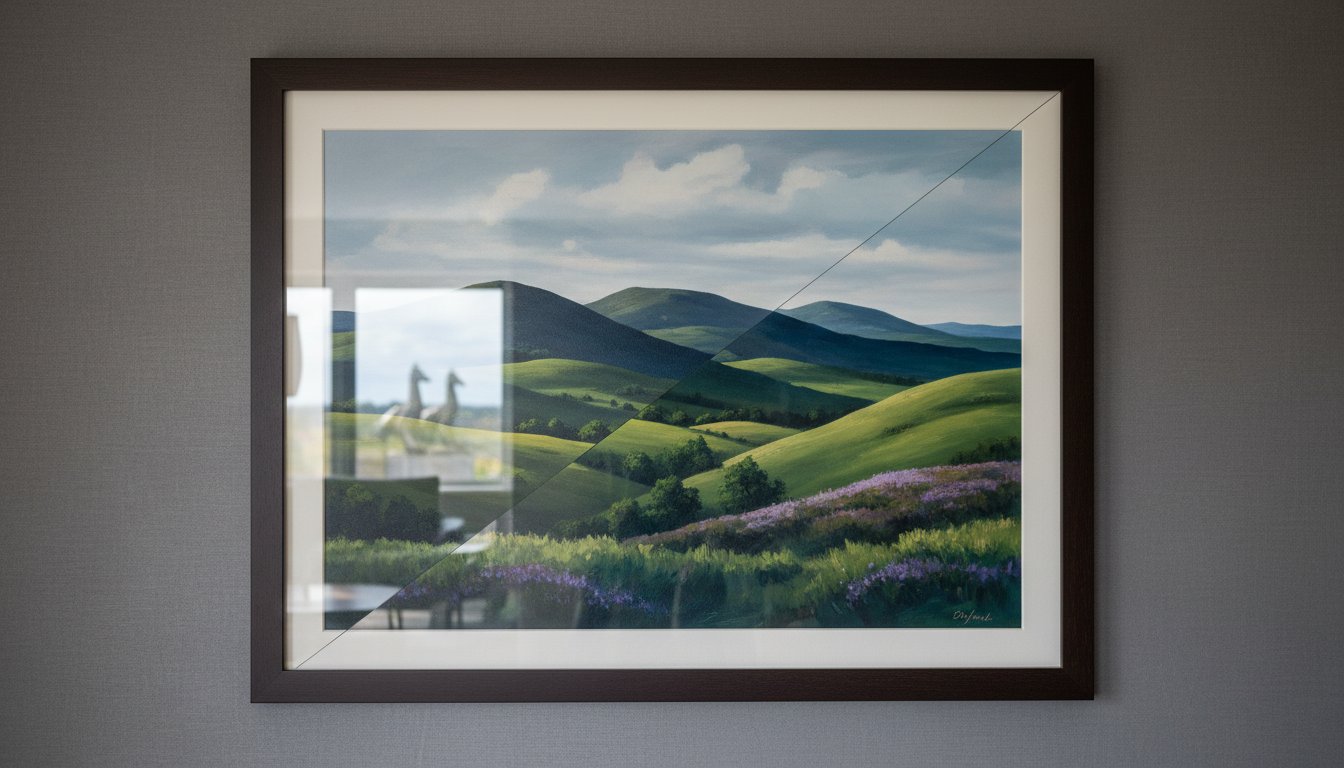
[Image Placeholder: A split image showing a framed picture with standard glass (heavy reflection) on the left and anti-reflective glass (crystal clear) on the right.]

True Colour Fidelity: See the Art as the Artist Intended

Standard float glass often carries a subtle green tint, a slight impurity that can dull vibrant colours and alter the artist’s original palette. Anti-reflective coatings, however, are applied to an optically pure, low-iron glass. This ensures that the colours you see are the colours the artist intended—rich, true, and full of life. For fine art Giclée prints where colour accuracy is paramount, this feature is absolutely essential for an authentic viewing experience.

Enhanced UV Protection: A Vital Shield for Your Art

While its main purpose is to eliminate reflections, premium anti-reflective glass also offers a significant level of UV protection—typically blocking up to 70% of harmful rays. Over time, UV light is the primary culprit behind fading and damage to photographs, prints, and original works. Think of this as an insurance policy for your most treasured pieces, preserving not just an image, but a memory or a valuable asset for years to come.

Reduced Distractions for a More Enjoyable Space

In a modern home with bright windows and layered lighting, a standard picture frame can quickly become a frustrating mirror. You find yourself shifting positions, closing curtains, or turning off lamps just to see the image behind the glare. With anti-reflective glass for picture frames, this problem vanishes. Your art remains a spectacular focal point day or night, allowing you to design your space for comfort and beauty, not to fight reflections.

Is Anti-Reflective Glass Worth It? A Practical Decision Guide

Let’s address the main question directly: premium anti-reflective glass costs more than standard options. We believe in transparency, and it’s important to see this not as an expense, but as an investment in the art you love. The real question is whether it’s the right investment for your specific piece. This guide is designed to help you decide with confidence.

To find the perfect balance between budget and visual perfection, consider these three key factors.

Consider the Artwork’s Value (Monetary and Sentimental)

The nature of your artwork is the best starting point. Not every piece requires the same level of protection or clarity. Think about what you are framing:

  • For original art, limited edition prints, or signed pieces: Museum-grade anti-reflective and UV-protective glass is essential. It preserves the monetary value by preventing fading and allows the artist’s true colours and textures to shine through without compromise.
  • For irreplaceable family photos and heirlooms: The sentimental value is immeasurable. Protecting these memories from light damage and ensuring they can be seen clearly from any angle makes the upgrade priceless.
  • For decorative posters or open-edition prints: If the piece is easily replaceable and displayed away from direct sunlight, our high-quality standard glass or acrylic may be perfectly sufficient for your needs.

Assess Your Room’s Lighting Conditions

The environment where your art will hang plays a huge role. The benefits of anti-reflective glass for picture frames are most dramatic in rooms with challenging light. Ask yourself:

  • Will the frame be placed opposite a bright window that gets hours of direct sun?
  • Is it going to be hung in a hallway or dining room directly under a spotlight?

If you answered yes, reflections will likely be a constant distraction. Here’s a simple test: hold an existing picture with standard glass in the exact spot you plan to use. If you see more of the room’s reflection than the image itself, an anti-reflective option will make a spectacular difference.

Budget vs. Long-Term Enjoyment

When you view the cost as part of the total bespoke framing project, it often represents a small fraction of the overall investment. This one-time upgrade ensures decades of perfect, uninterrupted enjoyment. Compare the modest additional cost—perhaps £30 to £60 depending on size—to the daily frustration of a glare-filled, poorly displayed piece. Investing in the right glass is an investment in your long-term connection to the artwork.

Ultimately, the choice is yours. Our passion is to ensure your art looks its absolute best on your wall. Get a bespoke framing quote with different glass options today, and our expert team will help you find the perfect solution for your art and your budget.

How to Choose and Care For Your Anti-Reflective Glass

You’ve learned the benefits, and now you’re ready to complete your project. Choosing the right glazing is a crucial final step in the bespoke framing journey. Here at First4Frames, we believe in empowering you with the knowledge to select the perfect finish and care for your beautiful investment for years to come.

Discussing Glazing Options With Your Professional Framer

The best way to understand the difference between glazing options is to see them for yourself. A trusted professional will have samples to demonstrate how each performs in the light. We encourage you to ask key questions to ensure you’re choosing the right protection for your artwork.

  • What level of UV protection does this glass offer? (e.g., 70%, 92%, or 99%)
  • Can you show me the difference in reflection between standard glass and this anti-reflective option?
  • Which material do you recommend for the size and value of my piece?

A passionate framer will be your partner, guiding you to a choice that perfectly suits your art and your space.

Glass vs. Acrylic (Plexiglass): Which is Right for You?

Both traditional glass and high-quality acrylic (often called Perspex or Plexiglass) are available as anti-reflective glass for picture frames. Your decision often comes down to the specifics of your project. Glass is renowned for its rigidity and superior scratch resistance, making it a premium choice for most standard-sized frames. Acrylic, however, is significantly lighter and shatter-resistant, making it the safer, more practical option for oversized artwork, frames in high-traffic areas, or pieces that will be shipped.

Cleaning and Maintenance: Protecting Your Investment

Proper care is essential to maintain the pristine, invisible finish of your anti-reflective coating. The most important rule is to never use ammonia-based cleaners (like Windex) or abrasive paper towels, as they can permanently damage the special coating.

For a perfect, streak-free finish, we recommend this simple method:

  • Step 1: Lightly spray an ammonia-free glass cleaner onto a clean, soft microfiber cloth—not directly onto the surface.
  • Step 2: Gently wipe the glass or acrylic in a circular motion to lift dust and smudges.
  • Step 3: Use a second, dry microfiber cloth to lightly buff the surface until it is crystal clear.

Following these steps will ensure your artwork remains the star of the show. To see beautiful examples of art protected by premium glazing, feel free to browse our online gallery.

The Final Frame: See Your Art, Not the Reflection

Choosing the right glazing is the final, crucial step in honouring your artwork. As we’ve explored, the difference is transformative: true anti-reflective glass provides an almost invisible barrier, offering superior clarity and vital UV protection that standard or anti-glare options simply can’t match. Making the decision to use high-quality anti-reflective glass for picture frames is an investment in the beauty and longevity of your most treasured pieces, ensuring they can be enjoyed without distraction for years to come.

At First 4 Frames, our passionate experts live and breathe this commitment to quality. With over 20 years of professional framing experience and a dedication to using only premium, conservation-grade materials, we ensure every piece is presented perfectly. Let us help you remove the reflections and reveal the true beauty of your art. Ready to see your art in perfect clarity? Explore our bespoke framing services today and discover the difference craftsmanship makes.

Frequently Asked Questions

How much more expensive is anti-reflective glass than standard glass?

As a premium product, anti-reflective glass represents a considered investment in your artwork’s presentation. While the exact cost depends on the size of the piece, you can generally expect it to be between £30 to £80 more than standard float glass for a medium-sized frame. This price reflects the advanced multi-layered coating that provides spectacular clarity, turning the glass virtually invisible so you can connect more deeply with the art itself.

Can I replace the glass in a picture frame I already own?

Absolutely. Upgrading the glazing in a beloved frame is a wonderful way to breathe new life into it and enhance the artwork within. We can professionally fit a new piece of bespoke anti-reflective glass into your existing frame, ensuring a perfect, secure fit. This simple change can make a dramatic difference, eliminating distracting reflections and allowing the true colours and details of your art to shine through without compromise.

Is anti-reflective glass the same as ‘museum glass’?

The terms are often used interchangeably, which can be confusing. “Museum Glass” is a brand name for a specific product that combines anti-reflective properties with high-grade UV protection (typically 99%). Many premium anti-reflective glass options we offer provide this same dual benefit of incredible clarity and conservation-grade UV filtering. Essentially, you are getting that museum-quality standard that protects and showcases your art perfectly.

Does anti-reflective glass scratch more easily than normal glass?

The advanced optical coatings on anti-reflective glass are more delicate than the surface of standard glass and require a little extra care. We recommend cleaning with a soft, ammonia-free glass cleaner and a clean microfibre cloth to avoid fine scratches. With proper care, its beautiful, reflection-free surface will remain pristine for years, ensuring your view of the artwork is always crystal clear. Think of it as caring for any piece of fine craftsmanship.

Is there an anti-reflective option that is also shatterproof for a child’s room?

Yes, there is a perfect solution. For spaces like a child’s room, nursery, or busy hallway, we recommend anti-reflective acrylic (often known as Perspex or Plexiglas). This premium material offers the same exceptional clarity and low-reflection properties as glass but is lightweight and shatter-resistant. It provides the ultimate peace of mind, ensuring your little one’s space is both beautiful and safe without compromising on the quality of the display.

Will anti-reflective glass stop my artwork from fading completely?

While no glazing can stop the effects of time completely, a high-quality anti-reflective glass for picture frames offers a spectacular level of protection. The best options block up to 99% of harmful UV light rays, which are the primary cause of fading and discolouration. This conservation-grade filtering drastically slows the ageing process, preserving the rich colours and fine details of your art for decades to come, especially when kept out of direct sunlight.

Posted on

What Type of Glass for Picture Frames? An Expert Guide

You’ve found the perfect piece of art, a spectacular print that speaks to you, and a bespoke frame that acts as the perfect bridge to your décor. But now you face a crucial, and often confusing, decision that can make or break your display: what type of glass for picture frames is the right choice? The fear of seeing your cherished memories fade, the frustration of distracting glare obscuring the view, or simply not knowing if a premium option like museum glass is worth the investment can be overwhelming. It’s the final, vital layer of protection and presentation for your artwork.

In this expert guide, we’ll demystify the options with professional clarity. We will walk you through the crucial differences between standard glazing, anti-reflective glass, vital UV-protective options, and the unparalleled quality of museum glass. By the end, you’ll feel knowledgeable and empowered to choose the perfect glazing that not only protects your precious art from damage and fading but showcases it with the spectacular, crystal-clear finish it truly deserves. Let’s ensure your art is seen exactly as the artist intended.

Why Your Choice of ‘Glass’ Matters More Than You Think

When you invest in a beautiful piece of art, the frame is the essential finishing touch. But within that frame lies an unsung hero: the glazing. More than just a transparent layer, the glazing performs two critical roles—protection and presentation. Making the right choice is a crucial step in preserving the beauty, value, and longevity of your artwork. Understanding what type of glass for picture frames to use ensures your cherished piece is both safe and seen in its best possible light.

To see these differences in action, this short video provides an excellent overview:

Protection: More Than Just a Dust Cover

The most immediate threat to your art isn’t dust or fingerprints—it’s invisible ultraviolet (UV) light. Sunlight and even some indoor lighting can cause colours to fade and paper to become brittle over time. Premium glazing with UV protection acts as a powerful shield, blocking up to 99% of harmful rays. It also provides a vital barrier against physical damage, humidity, and pollutants, preserving the life and integrity of your fine art prints and original works for decades to come.

This same principle of protecting valuables from UV damage is why high-performance glazing is also essential in modern windows and doors. If you’re considering how to protect your entire home’s interior from sun damage, you can learn more about Custom Trade Systems Ltd.

Presentation: Ensuring a Crystal-Clear View

There is nothing more frustrating than hanging a spectacular piece of art only to see a perfect reflection of your living room lamp. The primary goal of glazing is to be invisible, allowing the artwork to shine. Different types of Picture-framing glass offer varying levels of anti-reflective properties, from standard glass with noticeable glare to premium museum-grade options that are virtually reflection-free. The right choice ensures true colour accuracy and crisp detail, pulling you into the picture without distraction.

Glass vs. Acrylic (Plexiglass): The First Big Decision

Your first major choice in glazing comes down to two materials: traditional glass and modern acrylic (often known by the brand name Plexiglass). Each has distinct advantages that make it suitable for different needs.

  • Traditional Glass: Offers superior clarity and a satisfying, weighty feel that many associate with premium craftsmanship. Its hard surface is highly scratch-resistant, making it easy to clean and maintain over the years. However, it is heavier and can shatter upon impact.
  • Acrylic (Plexiglass): Significantly lighter and virtually shatter-proof, making it the perfect choice for large-scale frames or pieces that will be shipped or hung in high-traffic areas. Its main drawback is a softer surface that can be more susceptible to scratching if not cared for properly.

The Main Types of PictureFrame Glazing Explained

When considering what type of glass for picture frames, the options can seem daunting. In the world of professional craftsmanship, we refer to this protective layer as ‘glazing’, and the right choice can elevate your artwork from simply being on the wall to being truly showcased. To simplify your decision, we’ve broken down the most common options from a professional framer into a ‘Good, Better, Best’ guide, focusing on the practical benefits for your treasured pieces.

Good: Standard Float Glass

This is the most common and budget-friendly option you’ll find in most ready-made frames. Standard float glass offers excellent basic protection from dust and handling. However, it provides no UV filtering to prevent fading and can have noticeable reflections. It’s a perfectly suitable choice for inexpensive posters or easily replaceable prints where long-term preservation isn’t the primary concern.

Better: UV-Protective / Conservation Glass

A significant step up, this premium glass is coated to block up to 99% of the harmful UV rays that cause colours to fade and paper to yellow. This is an essential investment for protecting limited edition prints, original artwork, or sentimental photographs. A deeper look into Choosing The Right Glazing confirms that for anything of monetary or sentimental value, UV protection is a non-negotiable part of true, long-term preservation.

Best: Anti-Reflective (AR) Glass

If you’ve ever been frustrated by glare obscuring your view, Anti-Reflective glass is the solution. It features a sophisticated optical coating that reduces reflections to less than 1%, providing spectacular clarity. This makes the glass seem almost invisible, allowing the true colours and beautiful details of your artwork to shine through. It’s the perfect choice for pieces displayed in rooms with significant natural or artificial light.

The Ultimate: Museum Glass

For the absolute pinnacle of protection and viewing pleasure, there is Museum Glass. This option combines the best of both worlds: it offers 99% UV protection to preserve your art for a lifetime, and it features the same advanced anti-reflective coating for crystal-clear, glare-free viewing. This is the ultimate choice for irreplaceable heirlooms, valuable fine art, and any piece that deserves a truly museum-quality display.

Picture Frame Glazing at a Glance

Glazing Type UV Protection Reflection Level Best For
Standard Float Glass None High Posters, replaceable prints, budget projects
UV-Protective Glass Up to 99% High Sentimental photos, limited editions, original art
Anti-Reflective Glass ~70% (Standard) Very Low (<1%) Brightly lit rooms, dark artwork, maximum clarity
Museum Glass Up to 99% Very Low (<1%) Valuable artwork, heirlooms, ultimate display

A Closer Look at Acrylic Glazing (Perspex)

When our clients ask what type of glass for picture frames we recommend, many are surprised when we suggest acrylic. It’s time to move past the outdated idea of acrylic as a “cheap plastic” alternative. Today’s premium acrylic, often known by the brand name Perspex, is a high-performance glazing material used by galleries, museums, and professional framers for its outstanding clarity, light weight, and superior durability. It offers the same crystal-clear view as glass but with several practical advantages that make it the perfect choice for specific situations.

Far from being a compromise, modern acrylic glazing is a bespoke choice that enhances and protects your artwork. Like its glass counterpart, it is available in conservation grades that offer the highest level of protection, ensuring your beautiful art remains vibrant for a lifetime.

When to Choose Acrylic Over Glass

While traditional glass has its place, our twenty years of craftsmanship have shown us that acrylic is often the superior and safer option. We recommend choosing acrylic glazing in these key scenarios:

  • For oversized pieces: Large panes of glass are incredibly heavy, putting significant stress on the frame and making the artwork difficult and dangerous to hang. Acrylic is significantly lighter, making it the only practical choice for large-scale art.
  • In high-traffic areas or children’s rooms: Safety is paramount. Acrylic is shatter-resistant, meaning it won’t break into dangerous shards if knocked or dropped, providing peace of mind in busy homes, nurseries, or public spaces.
  • When shipping framed artwork: As professionals who ship art across the UK, we almost exclusively use acrylic for transit. It virtually eliminates the risk of breakage, ensuring your precious piece arrives in perfect condition.

Specialty Acrylic Options

Just like glass, acrylic comes in several specialist varieties to meet specific conservation and display needs. This allows for a truly tailored approach to framing your fine art.

  • UV-Filtering Acrylic: Offering up to 99% protection from harmful ultraviolet light, this is the conservation standard for protecting your prints and original artwork from fading and discolouration.
  • Anti-Static Acrylic: An essential choice for framing loose-media art like charcoal, pastels, or chalk drawings. It prevents dust and media particles from clinging to the inside of the glazing.
  • Scratch-Resistant Acrylic: For the ultimate in durability, a special hard coating is applied to make the surface more robust and less prone to fine scratches during cleaning.

How to Care for Acrylic Frames

Caring for acrylic is simple, but it requires a different approach than cleaning glass. To maintain its pristine finish, always use a soft, non-abrasive microfiber cloth. Never use standard glass cleaners, as the ammonia and alcohol they contain can damage and cloud the acrylic surface over time. For best results, use a cleaning solution specifically designed for acrylic, which will gently lift dust and dirt while reducing static charge.

How to Choose the Perfect Glazing for Your Artwork

Choosing the right glazing is more than a final touch; it’s an investment in the longevity and beauty of your artwork. The best way to answer the question of what type of glass for picture frames you need is to consider the piece itself—its monetary value, its sentimental worth, and where it will hang. Think of the glazing as the silent guardian of your art, protecting it for years to come.

Here’s a practical guide to help you make the perfect choice for your bespoke frame.

For Family Photos & Open-Edition Prints

For posters, digital prints, or family photos that can be easily and inexpensively replaced, our premium 2mm float glass is an excellent, cost-effective option. However, if you’re framing a cherished, irreplaceable family photograph, upgrading to a UV-protective glass is a wise decision. This small additional investment acts as a sunscreen, preventing the fading that can dull precious memories over time. Also, consider the location: if the frame will hang opposite a bright window, an anti-reflective glass will ensure you see the image, not your reflection.

For Limited Edition Prints & Original Art

When framing something of significant financial or artistic value, UV-protective glazing is the absolute minimum requirement. UV rays are the primary cause of fading and can irreversibly damage the pigments in original watercolours, drawings, and limited edition prints, diminishing their value. For pieces that deserve the very best, we highly recommend Museum Glass. It offers over 99% UV protection combined with incredible anti-reflective technology, providing a crystal-clear view that makes it seem as if there’s no glass there at all. It’s the ultimate way to both protect and display your investment.

For 3D Objects & Memorabilia (Box Frames)

For deeper box frames containing 3D items like sports shirts, medals, or other memorabilia, acrylic (often known by the brand name Perspex) is the superior choice. It is significantly lighter than glass, making larger frames safer to hang, and it is virtually shatterproof. For signed shirts or delicate fabrics, choosing a UV-protective acrylic is vital. The ink in signatures is notoriously susceptible to fading, and this glazing ensures your treasured items remain in pristine condition. Protecting these unique pieces is a craft we specialise in. See how we frame memorabilia at First4Frames.

Common Mistakes and Expert Framing Tips

Choosing the right glazing is a crucial step, but our twenty years of craftsmanship have taught us that a few insider tips can make the difference between a good result and a spectacular one. As passionate artisans, we want to help you avoid common pitfalls and ensure your artwork is displayed and protected perfectly.

The ‘Non-Glare’ vs. ‘Anti-Reflective’ Myth

This is one of the most frequent points of confusion. Inexpensive “non-glare” glass is typically acid-etched to scatter light. While this reduces reflections, it also softens the image, creating a fuzzy, slightly distorted look. True “anti-reflective” glass, however, uses a sophisticated optical coating—much like that on high-end camera lenses—to provide crystal-clear viewing with minimal reflection. For pristine clarity, always ask for anti-reflective glazing.

Why Your Artwork Shouldn’t Touch the Glass

A cardinal rule in professional framing is to create a small air gap between the artwork and the glass. This is the primary role of a mount board or spacers. Direct contact is a recipe for disaster, as temperature changes can cause condensation to form. This moisture can lead to mould, mildew, and permanent damage where the art physically bonds to the glass surface.

When to Upgrade the Glass in an Old Frame

Do you have a treasured piece in an old frame? Replacing its standard glass is one of the most impactful upgrades you can make. Many older frames contain thin, basic glass with no protective qualities. Swapping it for a modern UV-protective or anti-reflective option will not only breathe new life into the piece visually but also shield it from fading for decades to come. Knowing what type of glass for picture frames to choose for an upgrade is key to preserving your memories. Have a piece that needs an upgrade? Contact our framing experts.

The Perfect Finish: Choosing Your Picture Frame Glazing

Choosing the right glazing is the final, crucial step in protecting and showcasing your art. As we’ve explored, the decision goes far beyond simple glass; it involves balancing stunning clarity, essential UV protection, and the specific needs of your piece. Ultimately, the answer to what type of glass for picture frames you should choose depends on your unique artwork and its intended home.

Making that final decision can feel daunting, but you don’t have to do it alone. With over 20 years of bespoke framing experience, the team at First 4 Frames is passionate about finding the perfect solution. We use only premium, conservation-grade materials and are trusted by artists and collectors across Scotland to preserve their most treasured works.

Have a special piece to frame? Let our experts help you choose the perfect materials.

Let’s work together to give your art the beautiful, lasting presentation it deserves.

Frequently Asked Questions

What is the best glass for picture frames to reduce reflection?

For a truly uninterrupted view of your beautiful artwork, anti-reflective (AR) glass is the premium choice. This specialist glass features an optical coating that minimises reflections to less than 1%, ensuring spectacular clarity and colour vibrancy. While non-glare glass also reduces reflection by diffusing light, it can slightly soften the image details. For preserving every nuance of your piece, AR glass offers the most pristine and reflection-free experience, allowing the art to truly shine.

Is acrylic (Plexiglass) as good as real glass for picture frames?

Acrylic, often called Plexiglass, is an excellent alternative to traditional glass, with distinct benefits. It’s significantly lighter and virtually shatterproof, making it a perfect, safe choice for large frames or homes with children. Premium acrylic also offers superior UV protection. However, glass is more scratch-resistant and can offer a greater sense of weight and tradition. The choice often comes down to the specific needs of the artwork’s location, size, and your personal preference for safety and handling.

How much does UV-protective picture frame glass cost?

Investing in UV-protective glass is a wise choice to preserve your art. In the UK, you can expect to pay a premium over standard float glass. For a standard A4-sized frame, Conservation Clear glass, which blocks 99% of UV rays, might add £15 to £30 to the cost. For premium Museum Glass, which combines 99% UV protection with anti-reflective properties, the cost could be significantly higher. This investment is crucial for protecting irreplaceable or valuable pieces from long-term damage.

Will UV glass completely stop my artwork from fading?

While UV-protective glass is the single most effective defence against fading, it cannot stop the process entirely. It works by blocking up to 99% of harmful ultraviolet rays, which are the main cause of discolouration and damage. However, other environmental factors like intense visible light, heat, and humidity can still contribute to ageing over a very long period. Think of it as a powerful shield that dramatically slows down fading, preserving the vibrancy of your art for decades to come.

What is the difference between non-glare and anti-reflective glass?

The key difference lies in how they handle light. Non-glare glass has a micro-etched surface that diffuses light, scattering reflections. While effective, this process can slightly soften the image details, making it appear less sharp. In contrast, anti-reflective glass has a sophisticated optical coating that cancels out reflections, allowing over 98% of light to pass through. This provides a crystal-clear, almost invisible finish that preserves every detail and colour of your artwork without compromise.

Can I replace the glass in a frame I already own?

Absolutely! Replacing the glazing is a fantastic way to upgrade an existing frame, perhaps to add UV protection or reduce reflections. When considering what type of glass for picture frames you need for a replacement, precise measurements of the old glass or the frame’s rebate are essential. While it’s possible to do this yourself, we recommend a professional fitting to ensure the new glass is cut perfectly and installed safely, protecting both you and your precious artwork.

Posted on

Bespoke Picture Framers Glasgow: A Guide to Custom Framing

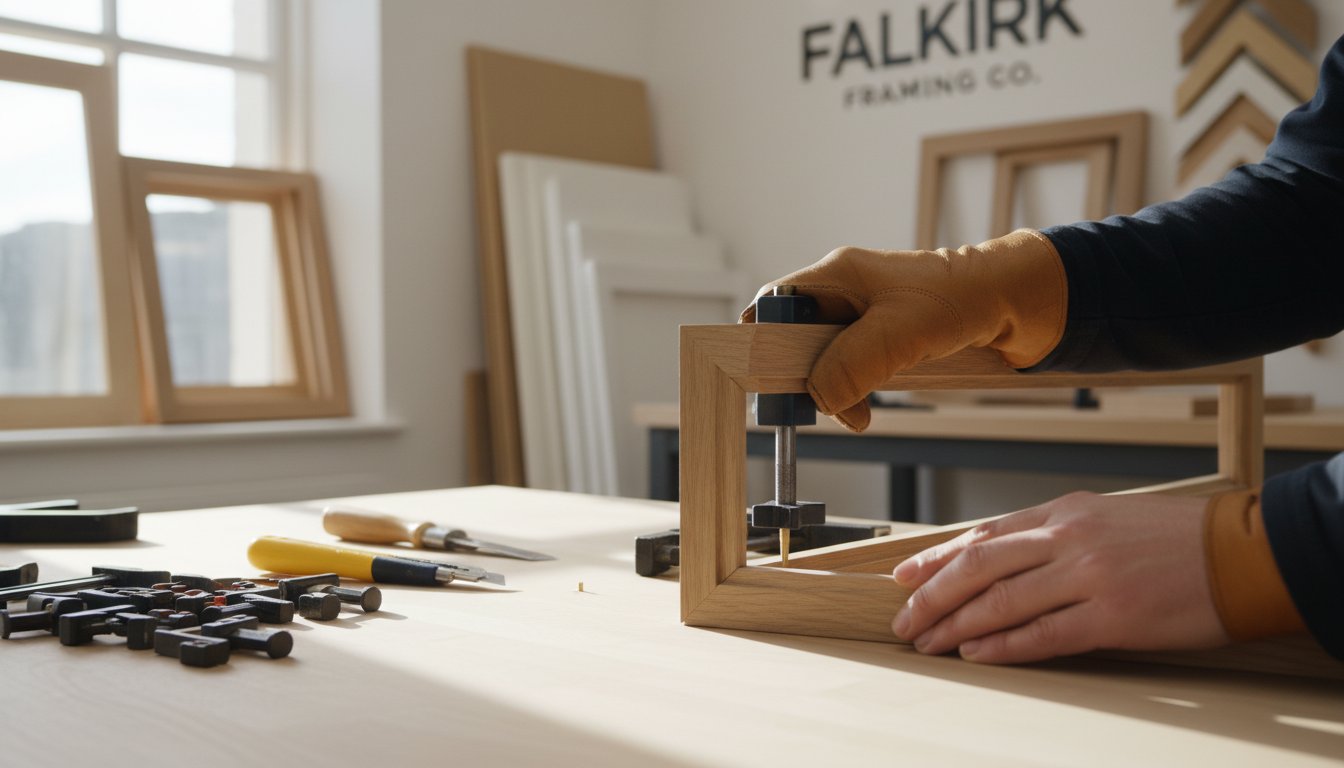
A person wearing gloves assembles a wooden picture frame using a clamp on a workbench, with tools and frame parts nearby. The words Falkirk Framing Co. are visible on the wall in the background.

That precious family photograph, the limited-edition print you finally bought, or your child’s first masterpiece—these aren’t just objects; they’re memories and investments. But the thought of framing them can feel daunting. You worry they might be damaged, the technical jargon is confusing, and you’re unsure how to choose a style that honours the art without clashing with your home. Finding the right bespoke picture framers in Glasgow shouldn’t be a stressful experience; it should be an inspiring part of your art’s journey.

This guide is here to demystify the entire process. We’ll walk you through the art of custom framing, from understanding the premium materials that offer lasting protection to choosing the perfect design that acts as a beautiful bridge between your artwork and your décor. Discover how a knowledgeable, passionate professional can make the process simple and enjoyable, helping you transform a cherished item into a spectacular centrepiece that you will be proud to display for years to come.

What is Bespoke Picture Framing (And Why It Matters)?

When you hear ‘bespoke picture framing’, you might think it simply means ‘made-to-measure’. While a perfect fit is crucial, the reality is a much richer, more creative process. It’s a collaborative journey between you and a skilled craftsperson, a dialogue designed to create the perfect home for your treasured artwork, print, or photograph. It’s about transforming an object you love into a spectacular centrepiece for your space.

To see this craftsmanship in action, take a look at the process:

A truly great frame does more than just surround a picture; it completes it. It acts as a bridge between the artwork and your room’s decor, pulling the viewer’s eye inward and enhancing the colours and textures within the piece. Working with professional bespoke picture framers glasgow ensures every detail is considered, guided by two core principles: aesthetic enhancement and physical preservation.

Bespoke vs. Off-the-Shelf: More Than Just Size

The difference between a bespoke frame and a standard, shop-bought one is night and day. It extends far beyond simple dimensions:

  • Fit: A bespoke frame is built to the exact millimetre for your artwork, eliminating awkward gaps or the need to trim your piece. Off-the-shelf frames force your art into predetermined sizes.
  • Materials: We use premium, acid-free, conservation-grade mount boards and backings that won’t yellow or damage your art. Mass-produced frames often use acidic materials that can cause irreversible harm over time.
  • Choice: The possibilities are nearly limitless. You can choose from hundreds of mouldings, mount colours, and glazing options to create a truly unique combination that reflects your style.
  • Protection: Professional framing includes options like UV-filtering glass and proper sealing to shield your art from fading light, dust, and humidity—protection that standard frames simply don’t offer.

The Goal of a Great Frame: Enhancement and Preservation

Every decision in the custom framing process serves one of two vital goals. First is enhancement—choosing colours and styles that complement the artwork, draw the eye to the focal point, and harmonise with your interior design. Second, and just as important, is preservation. While the fundamental concept of What is a Picture Frame? has always been about display, modern conservation framing elevates this to a science. A professionally constructed frame creates a stable micro-environment, protecting your piece from light damage, dust, and humidity, ensuring it remains beautiful for decades to come. A poor frame doesn’t just look bad; it can actively destroy the art it’s meant to protect.

The Bespoke Framing Journey: A Step-by-Step Guide for Beginners

Embarking on your first custom framing project is an exciting creative journey, not a complicated task. Think of it as a collaboration between you, your art, and an expert artisan. You don’t need any prior knowledge—just bring your piece and your ideas. Our team of professional bespoke picture framers in Glasgow is passionate about guiding you through every choice to create something truly special. From consultation to collection, the entire process typically takes one to two weeks.

Step 1: The Consultation and Design

Your journey begins with a friendly, no-obligation consultation. To get the most from our time together, bring your artwork, photos of the room where it will hang, and any design inspiration you have. We’ll discuss your vision, the story of the piece, and your home’s décor. The expertise of our bespoke picture framers glasgow team is in translating your ideas into a tangible design, helping you explore a curated selection of styles—from clean, minimalist designs that let the art speak for itself to ornate, traditional frames that make a spectacular statement.

Step 2: Choosing Your Frame Moulding and Mount

Here, we choose the perfect materials to build the frame. The moulding sets the tone, with a beautiful range of options from natural solid woods and hand-finished profiles to sleek contemporary metals. Just as crucial is the mount (the card border); it creates visual space that draws the eye inward and protects your art from direct contact with the glass. We’ll help you find the ideal width and complementary colour to make your artwork sing.

Step 3: Selecting the Right Glazing (Glass)

The final layer of protection is the glazing. Choosing the right glass is vital for both clarity and preservation, ensuring your art looks its best for decades to come. As experienced bespoke picture framers glasgow, we offer a premium selection to suit every piece and budget:

  • Standard Glass: Offers excellent clarity and everyday protection from dust and physical damage.
  • Anti-Reflective Glass: Minimises glare and reflections, providing a crystal-clear, almost invisible view of your art. Perfect for brightly lit rooms.
  • Conservation/UV-Protective Glass: Essential for preserving valuable or sentimental pieces, this premium glass blocks up to 99% of harmful UV rays to prevent fading over time.

Beyond Prints: Showcasing Your Treasures with Custom Framing

A beautiful frame does more than just complement a picture; it preserves a memory. While we adore framing fine art prints and paintings, the true artistry of custom framing lies in its versatility. From family heirlooms to hard-won trophies, almost any object you cherish can be transformed into a stunning display piece. This is where the problem-solving skills of professional bespoke picture framers in Glasgow truly shine, turning your treasured items into conversation starters.

Preserving Memories: Photographs, Certificates, and Canvases

Your most precious flat items deserve premium protection. For family photographs, we use conservation-grade materials and UV-protective glass to prevent fading and keep colours vibrant for generations. We can elevate university degrees and professional certificates from simple documents to proud statements of achievement. For canvases, we offer both traditional frames and contemporary float frames, which create a sophisticated ‘floating’ effect that honours the artwork’s texture and depth.

Showcasing Trophies: Sports Shirts, Medals, and Memorabilia

Celebrating a significant achievement deserves a special display. We specialise in framing sports memorabilia without causing any damage. A prized football or rugby shirt is carefully stitched—never glued—onto an acid-free backboard to ensure its integrity. We can create beautiful, bespoke arrangements for marathon or military medals, often alongside photographs or an engraved plaque. Concert tickets, vinyl records, and other beloved memorabilia can also be professionally mounted to tell their unique story.

3D Box Frames for Cherished Objects

Some memories have more than two dimensions. For these, a 3D box frame is the perfect solution. By creating a deep space between the backing board and the glass, we can house a wide range of objects. Popular choices include:

  • A baby’s first pair of shoes and hospital tag.
  • Wedding keepsakes like a dried bouquet, invitations, or favours.
  • Collectibles such as model cars, antique pocket watches, or signed memorabilia.

Our team of bespoke picture framers in Glasgow ensures every item, no matter its weight or shape, is securely and discreetly mounted for a flawless, lasting display. For inspiration, we invite you to view our gallery of past projects.

Why Glasgow Residents Trust First4Frames for Bespoke Framing

When searching for the perfect frame, Glasgow’s art lovers know that true craftsmanship is worth travelling for. At our Falkirk gallery, we have become a trusted destination for those who seek unparalleled quality and a genuine passion for art. We believe a short trip ensures a lifetime of enjoyment, offering a level of service and expertise that makes the journey an essential part of creating something truly special for your home.

A Passion for Craftsmanship and Quality

Our reputation is built on an unwavering commitment to excellence. We treat every piece of art with the respect it deserves, using only premium materials to protect and preserve your treasures for generations. Our skilled team brings years of experience to the workshop, ensuring:

  • Conservation-Grade Mounts: All our materials are acid-free to prevent discolouration and damage over time.
  • Perfectly Joined Corners: We take pride in meticulous construction for a strong, seamless finish.
  • Premium Glazing Options: Choose from a range of glass, including UV-protective options to shield your art from fading.

This meticulous attention to detail is what makes our bespoke framing a true investment in your artwork.

Your Expert Partner in Art and Framing

Unlike many traditional framers, we are a unique one-stop-shop for both fine art and framing. We specialise in professionally framing high-quality Giclée prints and work closely with talented Scottish artists to offer an exclusive collection. This means we can help you discover a beautiful new print and design the perfect frame to complement it, all under one roof. While there are many bespoke picture framers Glasgow has to offer, our integrated approach ensures a perfectly cohesive result every time.

The First4Frames Consultation Experience

We believe the framing process should be as inspiring as the art itself. That’s why we invite you for a friendly, no-obligation chat about your project. Our team takes the time to listen to your vision, understand your space, and offer expert advice tailored to your needs. We guide you through the options, making the experience simple, enjoyable, and collaborative from start to finish. Start your framing journey with us today.

Your Art Deserves the Perfect Frame

As we’ve explored, bespoke picture framing is a beautiful blend of art and preservation, transforming your cherished prints, family heirlooms, and unique treasures into stunning display pieces. It’s a personal journey that elevates your art, ensuring it’s protected and presented in a way that truly reflects its importance and your personal style.

At First4Frames, we bring over 20 years of professional framing experience to every project. As the trusted bespoke picture framers glasgow residents rely on, our passion is helping you find that perfect, handcrafted solution. Whether you have fine art, specialist Giclée prints, or a sentimental object, our team in our welcoming Central Scotland gallery is dedicated to exceptional craftsmanship.

Ready to start your creative journey? We invite you to our workshop to explore the possibilities. Book a free, friendly consultation to discuss your framing project. Let’s create something beautiful together.

Frequently Asked Questions

How much does bespoke picture framing typically cost?

The cost of bespoke picture framing varies depending on your specific choices. Key factors include the size of your artwork, the style of frame moulding, the type of mountboard, and the glazing selected. A small, simple frame might start from around £40, while a larger, more ornate frame with specialist glass could be £200 or more. We provide a detailed, no-obligation quote during your consultation, ensuring a beautiful result that perfectly suits your budget.

How long does it take to get something custom framed?

Our standard turnaround for a custom framing project is typically between 7 to 14 days. This allows our skilled team the time to apply their meticulous craftsmanship and ensure every detail is perfect. This timeframe can vary based on the complexity of the job and the availability of specific materials. If you have an urgent deadline, please let us know, and we will always do our best to accommodate your needs with our speedy, professional service.

Is it worth paying extra for UV-protective or anti-reflective glass?

Absolutely. Investing in specialist glass is one of the best ways to protect and enhance your artwork for years to come. UV-protective glass blocks up to 99% of harmful ultraviolet rays, preventing fading and preserving the vibrant colours of your piece. Anti-reflective glass, often called ‘museum glass’, offers spectacular clarity by minimising glare, making it feel as though there is nothing between you and the artwork. It’s a premium choice for a truly perfect finish.

Can you frame a very large or unusually shaped piece of art?

Yes, we certainly can. This is where the beauty of true bespoke craftsmanship comes to life. From oversized canvases and panoramic prints to circular artworks and three-dimensional objects, we relish a creative challenge. As expert bespoke picture framers serving Glasgow and the surrounding areas, we have the specialist equipment and experience to design beautiful, structurally sound frames for almost any size or shape. Bring us your unique piece, and we’ll find the perfect solution.

I live in Glasgow, is your gallery in Falkirk easy to get to?

Many of our clients travel from Glasgow and find the journey very straightforward. By car, we are conveniently located just a short drive down the M80, typically taking around 30 minutes from the city centre with ample parking available. We are also easily accessible by train, with regular services running from Glasgow Queen Street to Falkirk. We promise the short trip is well worth it for a dedicated consultation and access to our extensive range of framing options.

What should I bring with me to a framing consultation?

The most important thing to bring is the artwork itself! Seeing the piece in person allows us to properly assess its colours, texture, and condition. It is also very helpful if you can bring photos of the room where the art will be displayed, along with any wall measurements. This helps our expert team advise on a frame that acts as the perfect bridge between your art and your existing décor, ensuring a spectacular result for your home.