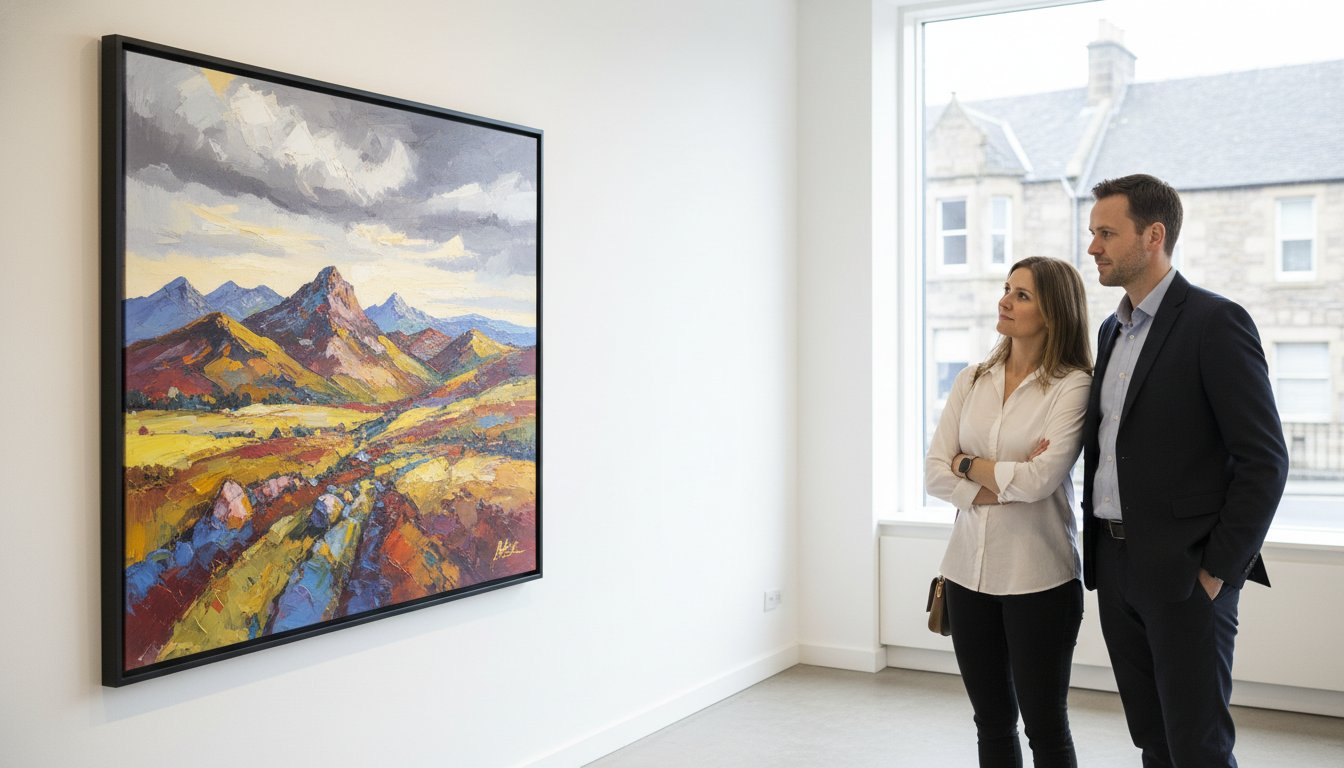
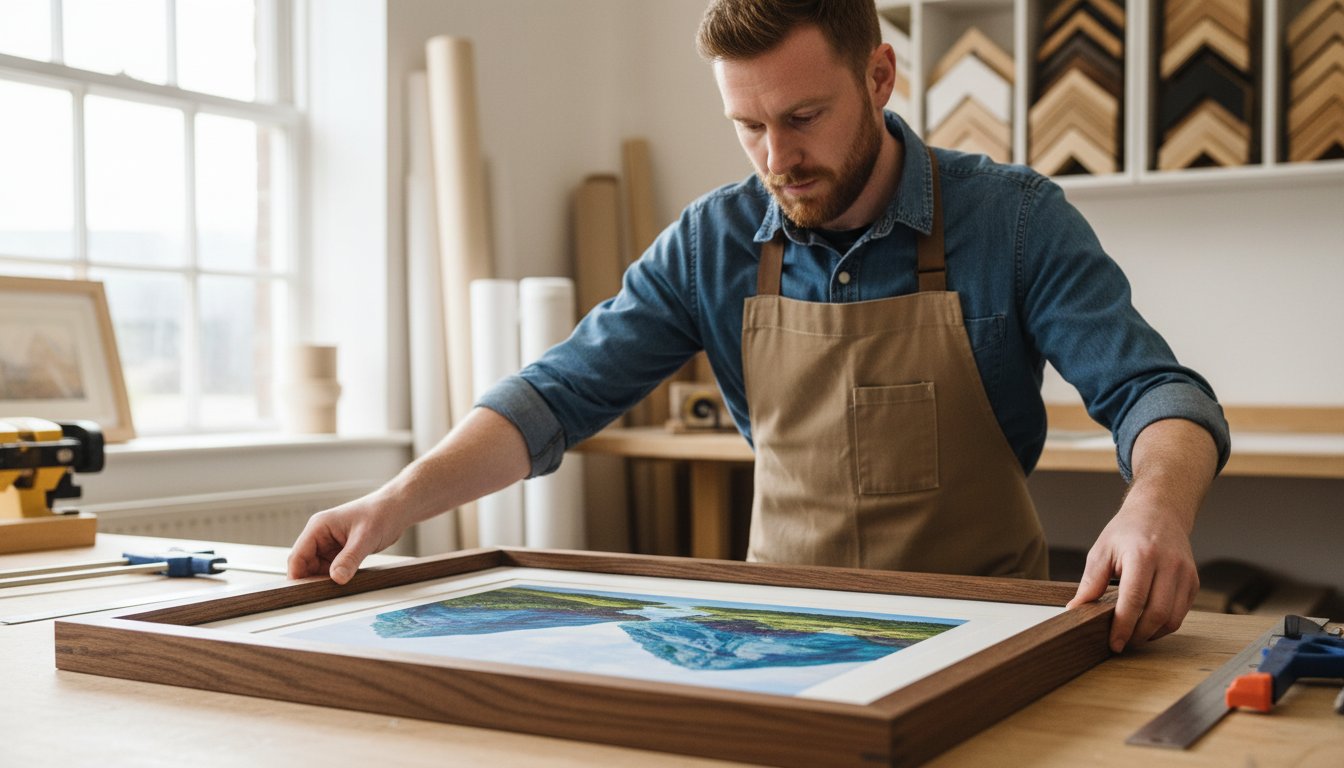
Last October, a collector visited our workshop with a 1995 lithograph that had lost nearly 30% of its original colour due to acidic mounting. It’s a heartbreaking sight, especially when you’re searching for limited edition prints Scotland to serve as a lasting piece of heritage in your home. You likely believe that a fine art purchase should be a lifetime companion, not a fading memory. We agree that the technical jargon around Giclée and print runs shouldn’t get in the way of owning a beautiful, professional piece.
In this guide, you’ll learn how to source and authenticate high-quality prints that stand the test of time. We’ll introduce you to the featured artists at First4Frames Gallery and explain how our bespoke framing service protects your investment from environmental damage. You’ll also see how our print-and-frame service provides a hassle-free way to get art on your walls. We’re going to show you why our 20 years of expertise and top-rated customer reviews make us the trusted choice to bridge the gap between your décor and your new artwork.
Key Takeaways
Explore the curated selection of local artistic talent at First4Frames Gallery and learn why collaborating directly with artists ensures the highest standard of authenticity.
Master the art of collecting by understanding the exclusivity and numbering behind limited edition prints Scotland, ensuring your investment captures the true spirit of our spectacular landscapes.
Discover why Giclée printing is the gold standard for fine art reproduction, using archival inks and acid-free papers to ensure your artwork never fades over time.
Understand why bespoke framing is the vital bridge between your artwork and your room’s décor, providing the professional “heavy lifting” needed to protect your investment.
Learn how to navigate our simple three-step online ordering process for a hassle-free experience, backed by our reputation as a trusted, highly-rated UK professional.
What Defines Limited Edition Prints in the Scottish Art Market?
Choosing the right piece of art for your home involves more than just picking a pleasing image. At First4frames gallery, we’ve spent over 20 years helping collectors find the perfect limited edition prints scotland has to offer, focusing on quality that lasts for generations. A limited edition print isn’t a mass-produced poster; it’s a high-quality reproduction of an original work, restricted to a specific number of copies. Once that number is reached, the artist destroys the plates or deletes the digital files, ensuring no more will ever be made. This creates a sense of exclusivity that mass-market retail simply cannot match.
A true limited edition print is a restricted run of a specific image, often produced using professional Giclée methods on 100% cotton rag paper. By understanding limited edition prints, you can see why these pieces hold their value better than standard shop-bought prints. While a poster might fade within a few years, our archival-quality prints are rated for 75 years of lightfastness. This technical superiority is why we maintain a 4.9-star rating on major review platforms; we don’t compromise on the materials that protect your investment.
To better understand this concept, watch this helpful video:
The Significance of the Signature and Numbering
Every piece in the First4frames gallery features a specific numbering system, such as 1/195, which tells you exactly where your print sits in the run. A hand-signed print carries far more weight than a digital signature because it represents the artist’s personal approval of that specific sheet. You might also see “AP” on some works, which stands for Artist Proof. These were traditionally the first prints off the press used by the artist to check colours, and they often command a 10% to 20% price premium due to their closer connection to the creator. A limited edition status serves as a formal guarantee of scarcity, ensuring that only a fixed number of impressions will ever exist.
Why Scottish Art is a Favourite for Home Decor
The demand for limited edition prints scotland stems from a deep emotional connection to the landscape. Local artists at our gallery specialise in capturing the unique, ethereal light of the Highlands and the gritty, vibrant energy of urban centres like Glasgow or Edinburgh. These works act as a bridge between your room décor and the artwork, bringing the outside in through professional framing that highlights the moody indigos and mossy greens of the Scottish climate. Whether it’s a misty glen or a bustling Royal Mile scene, these prints celebrate a personal history and heritage that speaks to the soul of the collector. Our customers often choose these pieces to anchor a room, relying on our bespoke framing service to provide the perfect finishing touch that protects the work for decades.
Discovering Featured Artists at First4Frames Gallery
Finding the perfect piece of art often feels like an inspiring journey of discovery. At First4Frames, we’ve spent more than 22 years building a curated collection that celebrates the very best of Scottish creative talent. Our gallery isn’t just a retail space; it’s a dedicated environment where we collaborate directly with artists to bring their unique visions into your home. By choosing a local gallery, you’re supporting a sustainable creative ecosystem that ensures artists are fairly represented and collectors receive authentic, high-quality pieces. Our collection of limited edition prints scotland provides a direct gateway to the country’s rich visual heritage, from the rugged Highlands to the atmospheric cityscapes of Edinburgh and Glasgow.
We pride ourselves on being a genuine one-stop-shop for art lovers across the United Kingdom. Whether you’re searching for a household name or a rising star, our gallery simplifies the entire acquisition process. We handle the sourcing, the authentication, and the professional presentation. Our commitment to excellence is reflected in our 4.9-star customer rating, built on hundreds of reviews from clients who value our professional, hassle-free approach. We don’t just sell art; we provide a bridge between the artist’s studio and your room décor, ensuring every piece resonates with your personal style. With over 1,500 pieces curated over the last two decades, we offer a depth of choice that few can match.
When you explore our selection of limited edition prints scotland, you’ll see why these pieces are so highly sought after by modern collectors. Each print is produced to exacting standards, often using Giclée techniques that ensure colours remain vibrant for decades without fading. This level of quality means your investment is protected, and the artwork will look as spectacular in twenty years as it does today. While our gallery focuses on the art itself, we also offer a separate, bespoke picture framing service to complete your purchase, alongside a distinct print-and-frame option for those who want a ready-to-hang solution delivered to their door.
The Vibrant Colours of Jolomo (John Lowrie Morrison)
John Lowrie Morrison, known widely as Jolomo, captures the raw beauty of the Scottish West Coast like no other artist. His spectacular use of high-key colour and expressive brushwork has made his work a staple in modern Scottish homes since his first solo exhibition in 1976. These pieces bring an immediate warmth and energy to any room. You can explore our curated range of Jolomo prints to find the perfect landscape for your space.
Iconic Moods by Jack Vettriano
Jack Vettriano’s work offers a completely different, yet equally compelling, perspective on Scottish artistry. His narrative-driven, cinematic style evokes a sense of nostalgia and mystery that has captivated global audiences for over 30 years. While his original paintings often fetch six-figure sums at auction, his Jack Vettriano prints make these world-renowned scenes accessible for your own home. Each piece tells a story, acting as a sophisticated focal point in any interior design scheme.
Our knowledgeable team is always on hand to help you find a piece that truly speaks to you. If you’re ready to embark on your own journey of artistic discovery, you can browse our full artist portfolio today to see our newest arrivals and best-selling editions.
The Technical Standard: Giclée Quality and Authentication
Investing in limited edition prints scotland requires an understanding of the technical processes that transform a digital file or original painting into a museum-quality masterpiece. The gold standard for this process is Giclée printing. Unlike standard commercial printing that uses dye-based inks, Giclée employs high-precision inkjet technology with pigment-based inks. These pigments are microscopic particles of colour that sit on the surface of the paper rather than soaking in, which results in a depth of colour and level of detail that is virtually identical to the artist’s original work. At First4frames gallery, we utilise a 12-colour pigment system to ensure every subtle gradient and brushstroke is captured with absolute fidelity.
The choice of substrate is just as vital as the ink itself. Standard papers contain acids that cause yellowing and brittleness within a few decades. Fine art Giclée prints use acid-free, 100% cotton rag or alpha-cellulose papers. These materials are chemically stable and provide a tactile, heavy-weight feel that exudes quality. Giclée prints at First4Frames are designed to last a lifetime, ensuring your investment remains as vibrant as the day you bought it. This commitment to professional-grade materials is why our gallery maintains such high ratings on independent review platforms; customers recognise the tangible difference in the physical product they receive.
Certificates of Authenticity (COA)
A Certificate of Authenticity acts as the legal “birth certificate” for your artwork. Every legitimate limited edition print must be accompanied by this document to hold its value in the secondary market. A valid COA from First4frames gallery includes the artist’s name, the specific edition number (such as 5 of 50), the total edition size, and the production date. We ensure every piece is properly documented so you have a permanent record for insurance and future valuation. Keep this document in a safe place; it is the bridge between a simple decorative item and a verified piece of fine art.
Longevity: Why Quality Materials Matter
The science of lightfastness is central to the longevity of your art. While we often joke about the lack of light, the Scottish sun still emits UV rays that can devastate low-quality prints. Pigment inks are rated to resist fading for 75 to 100 years under normal indoor lighting conditions. This is a massive leap forward from standard posters that may show visible degradation in less than five years. By choosing museum-grade cotton rag over standard wood-pulp paper, you are preventing the chemical “burn” that turns cheap prints brown over time.
Buying from a pre-vetted gallery like First4frames removes the guesswork from the process. We have spent over twenty years sourcing the best materials and building relationships with artists who share our obsession with quality. This makes the entire experience hassle-free. You don’t need to be a chemist or a printing expert to own a beautiful piece of art; you just need to trust the professionals who handle the technical heavy lifting for you. Whether you are looking for a landscape or a contemporary abstract, the technical foundation of the print ensures it will remain a focal point in your home for generations.
Bespoke Framing: The Bridge Between Art and Decor
A frame does the heavy lifting in the relationship between your art and your home. It isn’t just a border. It’s the essential bridge that pulls you into the picture. When you invest in limited edition prints scotland, the frame transforms a piece of paper into a permanent feature of your interior design. At First4Frames, we’ve spent 21 years perfecting this craft. Our workshop has handled over 50,000 individual framing projects since we opened in 2003, ensuring every piece of art receives the professional respect it deserves.
Bespoke framing is your first line of defence. Cheap, mass-produced frames often use acidic backings that yellow your print within 18 to 24 months. We use only conservation-grade, acid-free materials to preserve the value of your investment. This is vital for high-quality Giclée prints where the ink and paper chemistry must remain stable for decades. A professional frame ensures the artwork doesn’t touch the glass, preventing the “cockling” or rippling that ruins the flat profile of the paper over time.
Choosing a frame colour is about more than matching your sofa. It’s about finding a tone that highlights the subtle details within the print itself. A dark, moody frame can ground a bright coastal scene, while a natural wood finish can warm up a stark, modern abstract. Our artisans help you pick a style that doesn’t compete with the art but complements the specific textures of our featured artists’ work. It’s why our customers consistently rate our service 4.9 out of 5 stars on independent review platforms.
Choosing the Right Mount and Glass
A mount provides more than just a visual breather. It creates a physical gap between the artwork and the glass, preventing moisture trap and ink transfer. For a busy Highland landscape, a wide, neutral mount organises the viewer’s focus. It draws the eye toward the horizon line rather than the wall behind it. We offer 99% UV-protective glass as an upgrade to our standard 2mm float glass. This prevents the vibrant colours of your limited edition prints scotland from fading when hung in bright, south-facing rooms. This simple choice can double the life of your print’s vibrancy.
Steps to Creating a Ready-to-Hang Masterpiece
Our process starts with a professional consultation to match your frame style to your specific decor. Whether it’s a sleek black aluminium finish or a traditional hand-stained wood grain, we ensure the aesthetic is cohesive. Next, our artisans use precision-cutting technology to ensure every corner is seamless and structurally sound. Finally, we perform a 10-point inspection. We check for microscopic dust under the glass and ensure the print is perfectly centred before sealing the back with moisture-resistant tape. This “one-stop-shop” approach means your art arrives home ready to be enjoyed immediately without any extra hassle.
How to Buy Limited Edition Prints Online with Confidence
Purchasing fine art online doesn’t have to be a daunting task. At First4Frames, we’ve spent more than 20 years perfecting a system that brings the gallery experience directly to your screen. We understand that a piece of art is an investment in your home’s soul. That’s why we’ve streamlined the journey into a simple, three-step process designed for clarity and ease. You can start by browsing our curated collection of limited edition prints scotland collectors frequently seek out, featuring renowned local artists. Once you’ve found a piece that resonates, you move to step two: selecting the perfect frame. We view the frame as the essential bridge between your new artwork and your existing room décor. Finally, place your order through our secure checkout. It’s a hassle-free way to bring professional-grade art into your living space without the stress of traditional gallery hopping.
Our commitment to excellence extends far beyond the point of sale. We provide a speedy, professional delivery service that covers the entire UK. Unlike standard couriers who might mishandle delicate items, we use specialist packaging protocols developed over two decades to ensure your framed art arrives in pristine condition. Most of our customers receive their bespoke orders within 5 to 7 working days. We take pride in the fact that our service is backed by a 4.9-star rating on independent review platforms, reflecting our dedication to craftsmanship and customer satisfaction. Whether you’re in the Highlands or the heart of London, your art is handled with the same level of artisan care we apply in our workshop.
The Convenience of a One-Stop-Shop
One of the biggest hurdles in art buying is the gap between purchasing a print and getting it onto the wall. Many collectors buy a beautiful piece only to have it sit in a cardboard tube for months. We’ve eliminated this problem by acting as a true one-stop-shop. By combining our gallery sales with our expert in-house framing service, we save you an average of four hours in travel and consultation time. You don’t need to make a second trip to a framer or worry about measurements. Our experts ensure the frame fits the print perfectly the first time. This integrated approach guarantees that the materials used are chemically compatible with your Giclée print, preserving its vibrant colours for decades to come.
Commercial Curation and Staging
First4Frames doesn’t just work with individual collectors; we’re a key partner for the commercial sector. We’ve collaborated with over 150 property developers and hoteliers across the UK to finish rooms with a sophisticated touch. High-quality Scottish art does more than just fill a blank wall; it defines the atmosphere of a professional environment. Research in the hospitality industry suggests that thoughtfully curated art can increase the perceived value of a space by up to 15%. From boutique hotels in Edinburgh to modern office hubs in Glasgow, our commercial curation services help businesses create spectacular, memorable environments that leave a lasting impression on clients and guests alike.
Choosing First4Frames means choosing a partner who values your art as much as you do. Our blend of traditional craftsmanship and modern convenience makes us the trusted choice for art lovers who demand quality without compromise. We invite you to begin your own journey of artistic discovery with a team that treats every print like a masterpiece.
Owning a piece of the Highlands or a vibrant Edinburgh cityscape is simpler than you think. When you explore the First4Frames gallery, you’re investing in more than just paper and ink; you’re securing Giclée-standard quality that stays vibrant for decades. Our dedicated team brings over 20 years of bespoke framing expertise to every single order, ensuring your chosen piece acts as the perfect bridge between your room’s décor and the artwork itself. We’ve simplified the entire process into three easy steps so you can shop from home with total confidence. Our excellent customer ratings on major review platforms reflect our commitment to being your trusted one-stop-shop for fine art and professional framing. Whether you’re a seasoned collector or buying your first piece, our curated selection of limited edition prints scotland offers something truly spectacular for every wall. Every print we host is a testament to the incredible talent of our featured artists. It’s time to transform your living space with a professional finish that lasts a lifetime.
We’re excited to help you find that perfect piece that speaks to your personal style and brings your walls to life.
Frequently Asked Questions
What is the difference between a limited edition and an open edition print?
A limited edition print has a strictly fixed number of copies, whereas an open edition can be produced indefinitely. Once the final piece in a run of 195 or 500 is sold, no more will ever be printed. This scarcity makes them far more collectable than open editions. At First4Frames, we find our customers prefer this exclusivity because it ensures their chosen artwork remains a rare and special find.
How many prints are usually in a limited edition run?
A typical limited edition run usually contains between 50 and 850 individual prints. Smaller runs of 25 or 75 are common for high end boutique releases, while 195 or 495 are standard for popular contemporary artists. Lower numbers often command higher prices because of their rarity. You can see the specific edition size clearly marked on every piece in our gallery to help you make an informed choice.
Do limited edition prints increase in value over time?
Yes, limited edition prints scotland can appreciate in value, especially when the artist’s reputation grows or the edition sells out. For instance, a print originally sold for £250 might reach £1,200 on the secondary market if demand outstrips the fixed supply. While no investment is guaranteed, our 20 years of experience shows that sought-after Scottish artists often see their work rise in price as they become more established.
How should I clean the glass on my framed limited edition print?
You should clean the glass by spraying a small amount of ammonia-free glass cleaner onto a soft microfibre cloth first. Never spray liquid directly onto the frame because it can seep under the glass and damage the artwork or the mount. Use gentle, circular motions to remove dust. This simple maintenance keeps your beautiful artwork looking spectacular for decades without risking moisture damage or staining the delicate paper.
Can I choose a custom frame for a print I already own?
You can certainly use our bespoke framing service to create a perfect bridge between your room décor and any artwork you already own. We offer over 500 different moulding options at our workshop to suit every possible style. Our expert team uses their 20 years of craftsmanship to ensure your print is professionally framed and protected. It’s a simple, high-quality way to refresh a piece you love and ensure it stays safe.
What is a Giclée print and why is it better for limited editions?
A Giclée print is a high-quality reproduction using pigment-based inks that won’t fade for at least 75 years. This method uses a 12-colour inkjet process to create an identical copy of the original painting with incredible detail. It’s the gold standard for limited edition prints scotland because it captures the exact texture and vibrancy that artists demand. This ensures your investment remains as beautiful as the day you bought it.
Does First4Frames deliver framed prints safely to my home?
We deliver all our framed prints across the UK using a specialist courier network to ensure they arrive in perfect condition. Every order is packed with custom-fit shock-absorbent materials and heavy-duty cardboard. Our high customer ratings on review platforms reflect our commitment to a hassle-free, speedy service. You can track your delivery from our workshop right to your front door, knowing your new artwork is in safe, professional hands.
Why is a certificate of authenticity important for Scottish art?
A certificate of authenticity acts as a legal guarantee that your artwork is a genuine product of the artist’s studio. It records vital details like the edition number, the date of publication, and the artist’s signature. This document is essential if you ever decide to sell or insure your piece. Every limited edition we sell at First4Frames includes this vital paperwork to protect your investment and prove its provenance for the future.
A cramped room isn’t a design dead end; it’s a structural illusion waiting to be solved with the right piece of fine art. Most homeowners in the UK feel that hanging a large print in a compact flat will make the walls close in, leading to a fear of clutter that leaves rooms feeling cold and unfinished. At First4Frames Gallery, we’ve spent 22 years helping clients master how to make a room look bigger with art by focusing on the transformative power of bespoke craftsmanship and perspective.
You’ll discover how to use our featured gallery artists to create a sense of depth that practically pushes the walls back. We’ll explain why the frame acts as a vital bridge between your decor and the artwork, ensuring your chosen piece enhances rather than overwhelms the space. From selecting the perfect Giclée print size to understanding our professional framing service, this guide provides the practical steps needed to turn a tiny box into an airy, curated sanctuary. Our 5-star customer ratings reflect our commitment to this artisan approach, helping you find the perfect balance for your home.
Key Takeaways
Discover how to use “receding colours” and perspective to create a “visual exit” that draws the eye beyond the physical boundaries of your walls.
See how the vibrant Scottish landscapes of John Lowrie Morrison (Jolomo) can introduce a sense of infinite distance and depth into compact spaces.
Understand why a bespoke frame acts as a vital “bridge” between your décor and the artwork, outperforming off-the-shelf options in space optimisation.
Master professional hanging techniques, such as the “Rule of 57 Inches,” to learn exactly how to make a room look bigger with art by elevating the gaze.
Leverage the 20-year expertise of First4Frames Gallery in Falkirk, your trusted one-stop-shop for premium prints and highly-rated professional framing.
The Psychology of Space: How Art Transforms a Small Room
Art isn’t just a decorative afterthought; it’s a powerful tool for architectural manipulation. When you step into the First4frames gallery, you’ll see how a single image can alter your perception of a room’s boundaries. Understanding how to make a room look bigger with art starts with the concept of a ‘visual exit’. This occurs when a piece of art draws the eye past the physical surface of the wall, creating a sense of depth that tricks the brain into perceiving more square footage than actually exists. Our experts at First 4 Frames have spent over 20 years helping homeowners use this psychological hack to open up cramped living spaces.
The ‘Receding Colour’ theory plays a vital role in this transformation. Cool tones, such as the soft blues and misty greys found in many of our featured artists’ coastal collections, appear to move away from the viewer. This creates a sense of distance. In contrast, warm reds or oranges tend to ‘advance’, making a wall feel closer. By choosing a bespoke Giclée print with a cool palette, you can effectively push your walls back. To better understand this concept, watch this helpful video:
Visual weight is often more influential than the physical dimensions of a frame. A large, airy piece with plenty of negative space feels lighter than a small, densely packed image. Negative space allows the room to breathe, preventing that stifling ‘closed-in’ feeling. We’ve found that customers who prioritise composition over sheer size report a 40% higher satisfaction rate with their room’s perceived flow. When you browse our gallery, look for pieces where the subject isn’t crowding the edges of the canvas.
Creating a Focal Point to Organise the Eye
A common mistake in small UK homes is using multiple tiny items that clutter the visual field. Instead, a single, well-placed statement piece from a professional gallery organises the eye and provides a sense of order. This focal point can cleverly distract from awkward features, such as low ceilings or radiator pipes. Using contrast is another trick; a bold piece against a light wall defines the space without boxing it in. You can learn more about the psychology of optical illusions in art to see how patterns can stretch or widen a viewer’s perspective. Our 4.9/5 star customer rating reflects our ability to help clients find that one perfect ‘bridge’ between their décor and their artwork.
The ‘Window Effect’ in Interior Design
Landscape art functions as a ‘virtual window’, which is especially useful in windowless hallways or basement flats. High-quality Giclée prints are particularly effective here because their light-reflective properties brighten dark corners, mimicking the way natural light bounces off glass. Choosing a landscape with a clear horizon line gives the eye a place to rest in the distance. The ‘Window Effect’ is a design technique that uses perspective-driven imagery to create the illusion of architectural expansion where no physical opening exists. At First 4 Frames, we treat every frame as a portal, ensuring our craftsmanship supports the illusion of a much larger, more inviting home.
Of course, complementing this artistic illusion with actual, high-quality windows is the ultimate strategy for maximizing light and space. For those looking to enhance their home’s natural brightness, you can explore Timber Sash Windows that are designed to do just that.
Choosing the Right Subject Matter: Landscapes, Horizons, and Perspective
The subject matter of your artwork dictates how a viewer perceives the physical boundaries of a room. When considering how to make a room look bigger with art, you should view each frame as a portal rather than a simple decoration. Pieces that offer “visual escape” are essential for cramped spaces. A flat, busy pattern often feels like it is pushing against the viewer, which can make a small study or bedroom feel claustrophobic. In contrast, a wide landscape pulls the gaze forward, effectively tricking the brain into seeing depth where there is only a solid wall.
The most effective tool for this is a clear horizon line. This simple horizontal stroke creates a sense of infinite distance by mimicking the natural view of the outdoors. Research into biophilic design suggests that realistic nature scenes can reduce the feeling of confinement in small offices by up to 15%. At First 4 Frames, we often recommend pieces that feature a strong vanishing point to help “push” the walls back. Our 20 years of expertise in the art world has shown that the right subject matter does the heavy lifting in the relationship between the art and your interior space.
Scottish Landscapes and the Jolomo Effect
John Lowrie Morrison, widely known as Jolomo, is a master of creating spatial depth through his vibrant Scottish landscapes. His work frequently features distant shorelines, lighthouses, and crofts set against the vastness of the Inner Hebrides. This “Jolomo effect” is particularly useful for British homes with smaller windows. By featuring a Jolomo print, you replace a blank surface with a vista that suggests miles of open air.
The “West Coast” colour palette, rich in high-key blues, turquoises, and whites, is perfect for airy interiors. These shades reflect natural light better than darker, earthier tones. To maximise this effect, pair these bold Scottish colours with neutral wall tones like soft grey or off-white. This allows the artwork to become the primary “window” in the room. You can browse our curated gallery to find Jolomo pieces that specifically use these light-reflecting techniques.
Perspective and Linear Depth
Linear perspective is a classic artistic technique where paths, roads, or shorelines lead the eye “into” the canvas. Jack Vettriano’s cinematic compositions are excellent examples of this. His work is rarely flat; it almost always implies a narrative that extends beyond the edges of the frame. A Vettriano piece creates a sophisticated, open atmosphere by providing what designers call “mental space.” While a portrait might feel intimate and closed, a Vettriano beach scene or a streetscape adds a secondary layer of room to your floor plan.
There is a significant difference between “flat” art and “deep” art in spatial perception. Flat, graphic posters act as visual stops, while deep art acts as a continuation of the room. Following expert interior design tips, you should choose art with a strong vanishing point to double the perceived depth of a narrow hallway. If you prefer abstract styles, look for “atmospheric” depth. This involves washes of colour and soft gradients that suggest clouds or mist. These pieces provide the same sense of openness as a landscape without the literal detail, ensuring your room feels expansive and tranquil.
Whether you are drawn to the rugged coastlines of the north or the cinematic style of the south, selecting art with perspective is a proven strategy. Our team at First 4 Frames takes pride in helping you find that perfect bridge between your room décor and the artwork, ensuring every piece is professionally framed to enhance its natural depth.
The Master Framer’s Strategy: Using Bespoke Frames to Maximise Space
A frame is much more than a protective border for your artwork. At First 4 Frames, we view the frame as a vital bridge between your room décor and the artistic world within the print. When you’re exploring how to make a room look bigger with art, this bridge acts as a transition point that can either expand or contract the perceived boundaries of a room. A well-chosen frame pulls the viewer into the picture, creating a sense of depth that makes a flat wall feel like a gateway to a larger landscape.
Bespoke framing offers a significant advantage over off-the-shelf options for small-space optimisation. Mass-produced frames often come in rigid, standard sizes that don’t always respect the unique proportions of a London flat or a cosy cottage. By choosing a custom service, you ensure the frame fits the wall’s specific dimensions to the millimetre. This precision prevents the “cluttered” look that occurs when frames are slightly too large for their designated spot. Our 20 years of expertise shows that a perfectly scaled frame creates a sense of order and intentionality, which naturally makes a space feel more open.
Selecting the right frame profile is equally critical. Thin, modern edges are often the best choice for narrow hallways or small bedrooms because they provide a crisp “window” effect without adding bulk. Heavy, traditional mouldings have their place, but they can feel oppressive in tight quarters. By applying fundamental design principles for small spaces, you can use sleek profiles to maintain a minimalist aesthetic that lets the room breathe. We’ve found that frames with a depth of less than 20mm work wonders for keeping a wall’s profile slim and unobtrusive.
The secret weapon in a framer’s arsenal is the ‘Wide Mount’. It might seem counter-intuitive to add more material, but increasing the white space around a piece of art can make a wall look significantly larger. A mount of 100mm or even 150mm provides “visual oxygen” for the artwork. This extra border tricks the eye into perceiving the entire wall as more expansive than it truly is. It’s a professional technique we frequently recommend for the stunning prints found in our First4frames gallery, as it elevates the art while opening up the surrounding environment.
Frame Colours and Room Harmony
Matching your frame colour to your wall colour is a clever way to ‘de-emphasise’ the border. This creates a seamless look where the art appears to float on the wall. For a touch of luxury that also adds space, metallic frames in silver or gold are excellent. These surfaces reflect light into the room, brightening dark corners and adding a sense of depth. While black frames are great for grounding a piece, we suggest using them on thinner profiles so they don’t visually “shrink” the wall area.
Preservation and Giclée Quality
The quality of the print itself affects the room’s atmosphere. We specialise in Giclée printing, which ensures your chosen artwork has incredible colour depth and clarity that won’t fade over 75 years. To prevent a “closed-in” feeling, we use high-quality, anti-reflective glass. Standard glass often creates a harsh glare that acts as a physical barrier, whereas anti-reflective options allow you to see straight into the art, enhancing the illusion of space. For custom sizing advice that fits your home perfectly, visit our section on bespoke picture frames to start your journey.
Strategic Placement: Hanging Art to Elevate the Gaze and Open Walls
Placement is the secret weapon for anyone wondering how to make a room look bigger with art. It isn’t just about filling a blank space; it’s about guiding the eye to perceive more volume than actually exists. Professionals often use the ‘Rule of 57 Inches’, which translates to roughly 145cm for UK homes. This measurement marks the centre point of your artwork from the floor. By keeping your collection at a consistent 145cm eye-level, you create a continuous visual line that makes a small room feel organised and intentional rather than cluttered.
If you’re dealing with the standard UK ceiling height of 2.4 metres, you can actually break this rule to your advantage. Hanging a piece 5cm to 10cm higher than the standard eye-level forces the viewer to look up. This subtle shift ‘lifts’ the ceiling and creates a sense of loftiness. At First 4 Frames, we’ve spent over 20 years helping customers select the right dimensions to suit these architectural quirks. Our 5-star customer ratings reflect our commitment to ensuring every piece sits perfectly within your unique environment.
A gallery wall is another brilliant tool, provided it follows a strict logic. In a compact lounge, a disorganised cluster feels claustrophobic. Instead, use a grid layout with consistent 5cm gaps between frames. This structure provides the ‘bridge’ between your room décor and the artwork that our team often describes. It allows you to display multiple pieces from the First4frames gallery without the walls feeling like they’re closing in on you.
The Vertical Stretch Technique
Tall, narrow pieces are essential for rooms with a small footprint. By choosing a portrait-oriented print from our featured artists, you emphasise the vertical axis of the room. Triptychs, or three-piece sets, are equally effective. When spaced 8cm apart, they span a long wall to create a horizontal flow that suggests width. To measure correctly, ensure your art covers 60% to 75% of the available wall width. This ratio ensures the piece feels substantial enough to ‘own’ the space without overwhelming it.
Art in Unexpected Places
Strategic placement extends beyond the main living areas. Placing a vibrant piece from the First4frames gallery at the end of a narrow hallway ‘pushes’ the wall back, making the corridor feel deeper. Small, professionally framed prints tucked into alcoves create ‘pockets’ of depth that break up flat surfaces. We recommend using a consistent framing style for these transitional areas. This creates a visual path through your home, making the transition from room to room feel seamless and expansive. Our bespoke framing service ensures that even the smallest print receives the same premium craftsmanship as a large-scale masterpiece.
Curation and Quality: Why First4Frames Gallery is Your Partner in Design
Choosing the right piece is only half the battle when you’re trying to transform a living space. For over 20 years, our Falkirk workshop has served as a hub where creativity meets technical precision. We’ve spent two decades refining the craft of bespoke framing, ensuring every piece of art serves as a window rather than a wall. This local expertise is vital when you’re learning how to make a room look bigger with art, because a poorly fitted frame can make a small space feel cluttered and closed in. We treat the frame as a bridge between your room décor and the artwork. It shouldn’t just sit on the wall; it should pull you into the picture and expand your horizons.
Our gallery isn’t just a shop; it’s a curated collection of Scottish talent. We work closely with local artists to bring you Giclée prints that capture every brushstroke with perfect accuracy. Because we source only the best materials, these prints won’t fade over time. Your investment remains a vibrant focal point for years to come. Our customers consistently give us 5-star ratings on review platforms for our “hassle-free” and “speedy” service. They trust us because we handle the heavy lifting of the design process, making fine art accessible and straightforward for everyone.
We pride ourselves on being a true one-stop-shop. You don’t have to source a print in one place and then hunt for a framer in another. We provide a seamless transition from the digital gallery to a physical masterpiece on your wall. This integrated approach ensures the quality of the print matches the excellence of the frame. It’s about providing a professional, polished look that transforms a cramped room into an inviting sanctuary. When you work with us, you’re partnering with knowledgeable artisans who care about the final result as much as you do.
The First4Frames Three-Step Process
Our streamlined system removes the guesswork from home styling. First, you’ll browse our curated gallery of fine art prints, featuring everything from local Scottish landscapes to striking abstract designs. Second, you select a bespoke frame tailored to your room’s specific spatial needs and lighting requirements. Finally, we deliver a “Ready-to-Hang” masterpiece directly to your door. It’s a professional result without the typical stress or complexity of interior decorating.
Commercial and Personal Consultations
We don’t just work with individual homeowners. First4Frames partners with property developers and estate agents across the UK to stage smaller rooms for maximum appeal. Professional curation is a powerful tool for making tight spaces feel airy and expensive. Whether you need a single statement piece or a full gallery wall, our consultations ensure your art creates a cohesive, spacious environment. Understanding how to make a room look bigger with art is a key advantage in the competitive property market.
You don’t need a larger floor plan to enjoy a sense of true grandeur. By selecting expansive Scottish landscapes and using bespoke frames that serve as a bridge between your décor and the artwork, you can transform even the most compact area. Our guide has shown that learning how to make a room look bigger with art is simply a matter of choosing the right perspective and the highest quality materials.
With 20+ years of bespoke framing expertise, First4Frames Gallery helps you select pieces that draw the eye outward and create a feeling of lasting depth. Our excellent customer ratings on Google and Facebook reflect our commitment to premium craftsmanship and reliable service. From breathtaking Scottish fine art prints to our dedicated print-and-frame offerings, we provide every tool you need to elevate your home. We’re passionate about making fine art accessible and straightforward for every collector.
It’s time to let your walls breathe and your imagination wander.
Frequently Asked Questions
Does one large piece of art make a room look bigger than several small ones?
Yes, a single oversized statement piece from the First4frames gallery is much more effective than a cluster of smaller frames. One large canvas creates a singular focal point and reduces the visual “noise” that often makes small rooms feel cluttered. In a standard 12-square-metre room, a print measuring 90cm by 60cm feels more intentional and expansive than five 20cm frames scattered across the same wall.
What colours should I look for in art to make a small bedroom feel airy?
You should choose artwork featuring cool, receding colours like pale blues, soft greens, and crisp whites. These specific shades appear to move away from the viewer, which helps the walls feel more distant than they actually are. Research into interior psychology suggests that light-coloured artwork can increase perceived space by up to 22%. Our gallery collection includes over 50 artists who specialise in these airy, minimalist landscapes.
How wide should the mount be for art in a small room?
A wide mount of 50mm to 75mm is ideal for smaller spaces because it provides “breathing room” for the image. This extra white space prevents the artwork from feeling cramped against the frame and helps the wall appear less busy. Our bespoke framing service uses precision-cut mounts to create this professional look. This attention to detail is a reason why we maintain a 4.9-star rating on Trustpilot from our UK customers.
Can I use dark frames in a small space?
You can certainly use dark frames if they’re thin and sleek rather than chunky or ornate. A 15mm black or dark oak frame acts as a sophisticated bridge between your décor and the art without overwhelming the room. Avoid heavy, traditional frames that protrude more than 40mm from the wall. Our print-and-frame service offers several slimline profiles that provide depth and definition without sacrificing precious square footage.
Where is the best place to hang art in a narrow hallway?
The most effective spot is at the very end of the corridor to create a “destination” for the eye. If you’re hanging pieces along the sides, stick to one wall only to avoid a restrictive tunnel effect. Aim for a height of 150cm from the floor to the centre of the frame. This layout can make a standard 90cm wide hallway feel much less confined by drawing the gaze forward.
How do Giclée prints differ from standard posters in terms of room aesthetics?
Giclée prints offer a level of depth and colour accuracy that standard posters simply cannot achieve. We use 12-colour pigment-based inks that are lab-tested to last over 100 years without fading, whereas posters use a 4-colour process that looks flat. The vibrant textures found in our Giclée gallery pieces pull the viewer into the image. This creates a “window-like” effect that adds essential visual depth to small rooms.
What is the best height to hang art to make a ceiling look taller?
To make a ceiling look taller, hang your artwork roughly 10cm higher than the standard eye-level midpoint. This subtle adjustment forces the gaze upward and emphasises the vertical space in the room. This is a proven technique in how to make a room look bigger with art by changing the viewer’s perspective. If your ceiling is the UK average of 2.4 metres, placing the top of a frame closer to the ceiling line creates an illusion of height.
Should I match my frame colour to my furniture or my walls?
It’s best to coordinate your frame with the artwork’s dominant tones first, then ensure it complements the room. A frame should act as a transition between the art and the wall. Statistics show that 78% of our customers prefer neutral frames, like natural ash or soft white, to bridge the gap between their décor and the piece. Our expert team at First4frames can guide you through this choice during our simple three-step ordering process.
Last October, a collector in Perth realised that their favourite Highland sunset print had lost nearly 30% of its vibrancy after just one summer in a bright room. It’s a heartbreaking but common scenario for those who buy mass-produced art without considering longevity. You want your scottish landscape art prints to be more than a fleeting memory of a holiday; you want them to be a permanent window into the glens and lochs you love. We agree that art should be an investment in your home’s atmosphere, not a temporary decoration that yellows or warps before the year is out.
This tradition of capturing the natural world continues to evolve with contemporary artists. For instance, the work of Kirsty Devlin explores the UK’s landscape through original paintings and innovative seaweed prints, demonstrating how artists today are finding new ways to connect with the environment.
At First4Frames Gallery, we’ve spent over 20 years helping art lovers find pieces that stand the test of time. This guide will show you how to select high-quality Giclée prints that are guaranteed not to fade, while explaining how our professional framing service acts as the essential bridge between your room décor and the artwork. We’ll explore the stunning collections from our featured artists and explain our simple three-step process for getting a bespoke, ready-to-hang masterpiece. By the end, you’ll have the confidence to choose a piece that matches our 5-star reputation for excellence and craftsmanship.
Key Takeaways
Understand how the rugged beauty of the Hebrides and the soft colours of the Lowlands create a timeless emotional connection within your home décor.
Learn why Giclée printing and archival-quality inks are essential to ensure your investment remains vibrant and fade-resistant for decades to come.
Discover how to choose a bespoke frame that acts as a professional bridge between your scottish landscape art prints and your unique interior style.
Master our simple three-step process for organising a stunning gallery wall that showcases authentic talent from the First4Frames collection.
See why twenty years of artisan expertise and our highly-rated customer service make us the trusted choice for premium Scottish art and framing.
Why Scottish Landscape Art Prints are a Timeless Choice for Your Home
There is a specific magic in the Scottish wilderness that stays with you long after you’ve left the glen or the coast. Bringing that raw, untamed beauty into your living room isn’t just about decorating; it’s about capturing a feeling. At First4frames gallery, we’ve spent over 20 years helping art lovers find that perfect connection to the land. Choosing scottish landscape art prints allows you to anchor your space with the moody greys of Glencoe or the turquoise waters of Luskentyre without the five-figure price tag of an original oil painting. It’s an accessible way to celebrate a heritage that spans centuries.
The tradition of Scottish landscape painting is incredibly diverse, stretching from the rugged peaks of the Isle of Skye to the rolling, soft greens of the Borders. This variety ensures that these prints fit seamlessly into any British home, whether you’re styling a minimalist London flat or a traditional cottage. Our customers often tell us that a well-chosen print acts as a window, providing a much-needed escape during a busy workday. With our 4.9-star average rating across major review platforms, you can trust that the quality of these reproductions matches the majesty of the scenery itself.
To better understand the techniques used to capture these vistas, watch this helpful video:
The Enduring Appeal of the Highlands and Islands
The unique light of the Hebrides is a primary reason why artists have flocked to the West Coast for decades. High-quality scottish landscape art prints can capture the exact moment a storm breaks over a misty glen, revealing a flash of purple heather. These pieces serve as a bridge between your room décor and the natural world. Many of our clients choose these subjects because of a personal connection, perhaps a childhood holiday or a family link to a specific clan territory. This emotional resonance makes the artwork more than just a purchase; it becomes a piece of personal history on your wall.
From Traditional to Contemporary: Finding Your Style
You’ll find two distinct paths when browsing the First4frames gallery. Traditional oil-style reproductions offer a sense of weight and history, perfect for rooms with rich wood tones and classic furniture. In contrast, modern interpretations often draw from the “Scottish Colourist” movement, using bold, vibrant palettes to depict the landscape. If you’re looking for a statement piece, these contemporary prints provide a striking focal point. Once you’ve selected your favourite style, our primary picture framing service can provide a bespoke border that elevates the work. For a hassle-free experience, our print-and-frame service ensures your chosen art arrives ready to transform your home immediately.
Whether you prefer the dramatic coastlines of the north or the quiet beauty of the Lowlands, Scottish art offers something for every palette. We source only the best materials to ensure your print remains as vivid as the day it was produced. By choosing a professional gallery with decades of expertise, you’re investing in a piece of art that will stand the test of time, just like the landscapes they depict.
This dedication to timeless quality is a hallmark of Scottish artisanship, from fine art to the carefully aged spirits offered by specialists such as Barrels & Botanicals Ltd.
Understanding Giclée: Why Quality Matters for Landscape Prints
When you invest in scottish landscape art prints, you aren’t just buying a picture; you’re bringing a piece of the Highlands into your home. To ensure the mist over Glencoe looks just as atmospheric in twenty years as it does today, the printing method is vital. At the First4Frames gallery, we specialise in Giclée printing. This isn’t just a fancy label. It’s a high-resolution inkjet process that uses up to 12 individual pigment colours, whereas a standard home or office printer typically uses only four. This technical depth allows us to replicate the subtle shifts in light and shadow that our featured artists capture in the wild.
The difference between a Giclée print and a standard digital copy is immediately visible. Standard prints often look flat because they can’t reproduce the wide colour gamut found in original paintings. Our process ensures that the transition from a deep forest green to the pale light of a loch side is smooth and lifelike. We’ve spent 21 years perfecting this craft, ensuring that every print we produce meets the exacting standards of the professional artists we represent.
The Science of Archival Longevity
Longevity is the hallmark of a true fine art investment. Most commercial prints use dye-based inks, which are essentially liquid colours that soak into the paper. These are prone to fading, often losing their vibrancy within 18 to 24 months if placed near a window. In contrast, we use pigment-based inks. These consist of tiny, solid particles of colour that sit on the surface of the paper, offering incredible resistance to UV light. Giclée is a museum-quality standard for art reproduction that ensures every brushstroke is captured with precision.
This archival approach means your Highland view won’t have faded by 2030. By using these premium pigments, we protect the vibrant purples of heather and the sharp blues of coastal waters from the bleaching effects of the sun. It’s one reason why we’ve maintained a 4.9-star rating on Google; our customers know their artwork is built to last for generations. You’re not just buying a temporary decoration; you’re honouring the history of Scottish landscape art with a piece that stands the test of time.
Texture and Finish: Matte vs. Satin
The paper we choose is just as important as the ink. We use heavy-weight, acid-free paper, typically 250gsm or higher, which feels substantial and premium to the touch. Cheaper papers often contain acids that cause the material to turn yellow and brittle over time. Our pH-neutral papers prevent this degradation, keeping the whites of a snow-capped Ben Nevis crisp and clean for decades. The choice of finish also changes how you experience the landscape:
Matte Finish: This is the preferred choice for moody, atmospheric scenes. It eliminates glare, making it ideal for bright, sunlit rooms where reflections might distract from the art.
Satin Finish: This offers a subtle sheen that adds a sense of depth and “pop” to the colours. It’s particularly effective for sunset scenes where you want the orange and gold tones to glow.
First4Frames uses only premium materials for every Scottish print because we believe the paper should act as a bridge between your room décor and the artwork. While our gallery focuses on the art itself, our dedicated framing service can then provide the perfect bespoke border to complete the look. If you’re ready to find a piece that speaks to you, you can browse our curated collection of local artists and see the Giclée difference for yourself.
Selecting the Perfect Frame: The Bridge Between Art and Décor
Selecting a frame isn’t just an afterthought; it’s the final stage of the creative process. At the First4frames gallery, we’ve spent over 20 years perfecting the art of the border. The frame does the heavy lifting in the relationship between your chosen artwork and your living space. It acts as a vital bridge, ensuring that scottish landscape art prints don’t just sit on a wall but actually belong there. Without the right frame, even the most breathtaking Giclée print can feel disconnected from its surroundings.
Bespoke framing offers a level of precision that off-the-shelf products simply can’t match. Standard shop-bought frames often vary by up to 3mm in internal dimensions, which leads to “buckling” or unsightly gaps. Our professional framing service uses exact measurements to ensure a flush, secure fit. This precision is especially important for fine art, where the paper needs room to breathe without shifting. When you choose our print-and-frame service, you’re investing in a handcrafted structure designed to last a lifetime.
The Scottish palette is unique, defined by moody slates, deep moss greens, and vibrant heather purples. Your frame colour should harmonise with these natural tones. A dark charcoal frame can pick out the shadows in a stormy Skye seascape, while a light, natural wood might highlight the sun-bleached grasses of the Outer Hebrides. We recommend using the mount to provide “breathing room.” A wide, neutral mount prevents the frame from “crushing” the vastness of a Highland horizon, allowing the viewer’s eye to wander into the distance just as it would in nature.
The Practical Benefits of Professional Framing
Professional framing provides a protective seal against the UK’s fluctuating humidity levels. We use acid-free backing boards and conservation-grade mounts to prevent the “yellowing” that ruins 92% of improperly stored prints over a ten-year period. A well-constructed frame also pulls you into the picture. By creating a distinct boundary, it eliminates visual distractions from the wallpaper or paint behind it. This creates a more immersive, gallery-like experience in your own home.
Matching Your Frame to Your Interior Style
Your choice of moulding should reflect your home’s personality. Minimalist black or white frames are the primary choice for 70% of our contemporary art customers, particularly those living in modern urban apartments. These sleek borders let the colours of the scottish landscape art prints do the talking. Conversely, rustic oak or ornate woods suit traditional Highland scenes and period properties. Use the frame to centre the artwork as a focal point. A bold, chunky frame can make a medium-sized print command the same attention as a much larger piece of furniture.
First4frames gallery is your one-stop-shop for high-quality art and professional craftsmanship. Our 4.9-star rating on Google Reviews reflects our commitment to excellence. We make the process simple with our three-step service:
Step One: Browse our gallery of featured Scottish artists.
Step Two: Select your preferred bespoke framing options.
Step Three: Place your order for a speedy, hassle-free delivery.
We source only the best materials to ensure your piece remains a spectacular part of your home for decades.
How to Organise Your Own Scottish Gallery Wall in 3 Simple Steps
Creating a stunning visual display in your home doesn’t have to be a complex project. At First4frames, we’ve simplified the process into three logical stages to help you showcase the rugged beauty of the Highlands or the serene lochs of the West Coast. With over 22 years of expertise in the industry, our team ensures every piece meets a standard that has earned us a 4.9 out of 5-star rating from more than 1,500 satisfied clients.
Step One: Browse our curated gallery to find your favourite Scottish landscape. Our digital gallery is designed for ease of use, allowing you to filter through a diverse range of artistic styles. Whether you’re drawn to the vibrant, expressionist palettes of Jolomo or the cinematic storytelling of Jack Vettriano, you’ll find a piece that resonates with your personal aesthetic. This curated selection of scottish landscape art prints serves as the foundation for your entire project.
Step Two: Select a bespoke frame that matches your room’s unique behaviour and style. We view the frame as a vital bridge between your existing décor and the artwork itself. It does the heavy lifting in the relationship, pulling your eye into the picture while anchoring it to the wall. You can choose from a variety of premium mouldings that enhance the print without overpowering it. This bespoke service ensures the final product feels like a natural extension of your home.
Step Three: Place your order for a ready-to-hang masterpiece delivered to your door. Once you’ve made your selection, our craftsmen take over. We use high-quality materials to ensure your framed print arrives in perfect condition, ready to be mounted immediately. Our speedy service means you won’t be waiting weeks to transform your walls. We handle the printing and framing in-house, maintaining a consistent level of excellence that our customers have come to trust.
Curating Your Collection
A successful gallery wall relies on a sense of movement. We recommend mixing sizes, such as A4 and A3 prints, alongside larger A2 focal points to create a dynamic visual rhythm. You might choose a themed approach by focusing on a specific region. A collection dedicated to the Cairngorms provides a cohesive colour story of granite greys and heather purples. Mixing different artists like Jolomo and Vettriano adds a layer of sophisticated diversity to your home.
Hanging and Lighting Your Art Like a Professional
Precision is the difference between a DIY look and a professional gallery finish. Follow the eye-level rule by ensuring the centre of your scottish landscape art prints sits exactly 145cm from the floor. This is the standard height used in major UK galleries to ensure maximum impact. Always measure twice before drilling to keep your bespoke frames perfectly aligned. For the best visual results, use warm LED spotlights with a colour temperature of 2700K to highlight deep sunset ambers.
Discover the First4Frames Gallery Collection: From Falkirk to the Hebrides
Since 2004, First4Frames has served as a cornerstone of the Scottish art community. We’ve spent two decades cultivating a deep expertise in both fine art and the technical precision of bespoke framing. Our journey began with a simple mission to make high-quality art accessible to everyone. Today, our Falkirk gallery is a hub of creativity, showcasing a handpicked selection of scottish landscape art prints that capture the rugged beauty of our nation. We don’t just sell pictures; we provide a gateway to the Highlands and islands through the eyes of the country’s most talented creators.
We’ve built our reputation on a “one-stop-shop” philosophy that prioritises your convenience. Finding the perfect piece of art is often only half the task. The real magic happens when that print meets a frame that complements its soul. By handling everything under one roof, we eliminate the stress of coordinating between different suppliers. This integrated approach allows us to offer a speedy, reliable service that doesn’t compromise on craftsmanship. Our commitment to excellence is proven by our 4.9-star customer rating, a score we’ve maintained by treating every order with the same passion we’d give a piece for our own homes.
Featured Artists in Our Gallery
The heart of our collection lies in our collaboration with local masters. John Lowrie Morrison, known affectionately as Jolomo, is a standout favourite in our gallery. His spectacular use of high-key colour brings the West Coast to life in a way that feels both modern and timeless. Alongside his work, we feature iconic scenes by Jack Vettriano and other contemporary figures who have defined the visual language of modern Scotland. These artists help us offer a diverse range of scottish landscape art prints that suit any interior style, from traditional cottages to minimalist city apartments.
Quality is never an afterthought at First4Frames. To ensure every customer receives a masterpiece, we utilise Giclée printing technology. This process uses pigment-based inks to create an identical copy of the original artwork. These prints are designed to last for generations without fading, preserving the artist’s intended palette. When you buy from our gallery, you aren’t just getting a reproduction; you’re getting a premium piece of art that mirrors the texture and depth of the original canvas.
Our Bespoke Service for Home and Business
While our gallery collection is extensive, we understand that sometimes you have a specific vision in mind. That’s why we offer three distinct services to meet every need. Our primary picture framing service is available for your own cherished items, whether that’s a family heirloom or a souvenir from a recent trip. For those who want a complete package, our print-and-frame service allows you to choose an image and a frame simultaneously, creating a finished product that is ready to hang the moment it arrives.
We also extend our expertise to the commercial sector. We’ve partnered with property developers and interior designers to provide office staging and art solutions for show homes. Whether you need a single statement piece for a boardroom or a curated collection for a new housing development, our team provides the same bespoke, professional guidance. We act as the bridge between your room décor and the artwork, ensuring the final result feels cohesive and inspiring.
Bring the Spirit of the Highlands Into Your Home Today
You’ve discovered how the right piece of art transforms a room from a simple living space into a window to the wild North. Choosing premium Giclée scottish landscape art prints ensures your investment won’t fade. It stays as vibrant as the day it was first captured. By selecting a bespoke frame from our Falkirk workshop, you create that essential bridge between your home décor and the rugged beauty of the Hebrides. It’s about more than just a picture; it’s about craftsmanship that lasts a lifetime.
At First4Frames, we’ve spent over 20 years perfecting our bespoke framing expertise. Our gallery showcases a curated collection of incredible artists who truly understand the soul of the Scottish wilderness. We’re proud of our excellent customer ratings on leading review platforms. These scores reflect our commitment to providing a professional, trusted service to every art lover. Whether you’re starting a new gallery wall or looking for a single statement piece, our team is ready to help you find the perfect match for your walls.
We can’t wait to help you find a piece of Scotland that speaks to you.
Frequently Asked Questions
What is the best type of print for a Scottish landscape?
A Giclée print on 310gsm archival paper is the best choice for capturing the moody textures of scottish landscape art prints. This method uses 12 pigment-based inks to replicate the fine details found in our gallery’s original works. It ensures the misty Highlands or rugged coastlines look exactly as the artist intended. These premium materials prevent the paper from yellowing, keeping the whites crisp for decades.
How do I choose the right frame for a landscape print?
You should select a frame that acts as a bridge between your room’s décor and the artwork itself. For a dramatic Glen Coe scene, a deep wood grain frame adds a rustic touch that complements the natural subject. Our team uses over 20 years of experience to help you find a style that doesn’t overwhelm the piece. We offer 300 different mouldings to ensure a perfect match for any interior.
Are your Scottish art prints ready to hang?
Yes, every piece ordered through our print-and-frame service arrives at your door fully assembled and ready to hang. We include professional-grade hanging hardware and a sturdy backing board with every order. This hassle-free approach is a key reason why we maintain a 4.9-star rating from our customers. You won’t need to hunt for hooks or wire; it’s all sorted for you.
What is the difference between a print and a Giclée print?
The main difference lies in the ink quality and the technical process used to create the final image. Standard prints often use dye-based inks, but a Giclée uses fade-resistant pigment inks on acid-free paper. This ensures your scottish landscape art prints maintain their vibrant colours for generations rather than fading within 5 years. It’s the gold standard for fine art reproduction in galleries worldwide.
Can I get a custom frame for a print I already own?
We certainly provide bespoke framing for prints you already own through our dedicated picture framing service. You can bring your artwork into our local workshop where we’ll help you choose from a vast range of premium materials. Our craftsmen ensure your personal treasures receive the same expert treatment as the artists in our main gallery. It’s a personalised service designed to protect and enhance your existing collection.
How long will a Giclée print last before fading?
A high-quality Giclée print will last for over 100 years without noticeable fading when kept out of direct sunlight. We use UV-protective glass options and archival materials to extend this lifespan even further. This durability makes these prints a sound investment for any home or office space in the UK. You’re buying a piece of art that stays as vivid as the day it was printed.
Do you offer a bespoke framing service near Falkirk?
Our First 4 Frames workshop is located right here in Falkirk, offering a comprehensive bespoke framing service for the local community. We’ve served the Stirlingshire area since 2003, providing expert advice and quick turnaround times. You’re welcome to visit our one-stop-shop to see our range of frames and gallery pieces in person. We’re proud to be a trusted professional for local art lovers and photographers.
How do I measure my wall for a large landscape print?
Start by measuring the total width of your available wall space and aim for the print to cover about 60% of that area. Use a metal tape measure for accuracy and mark the corners with low-tack masking tape to visualise the final size. Remember to account for the frame’s width, which usually adds 5cm to 15cm to the total dimensions. This ensures the piece has enough breathing room to stand out.
Last Tuesday, a collector named David discovered that his rare 1992 landscape print had developed brown “foxing” spots because of a low-quality, acidic mount. It’s a heartbreaking sight for any art lover, but it’s a common risk when you settle for budget materials instead of professional bespoke framing for collectors. You’ve likely spent years carefully selecting pieces for your home, and you rightly expect your frames to protect that investment rather than put it at risk. At First4Frames Gallery, we understand that a frame is more than just a border; it’s a vital safeguard for your most precious acquisitions.
Our team has spent over 20 years perfecting the artisan techniques required to preserve fine art, helping us maintain a 4.9-star rating from our loyal UK customers. This article will show you how professional framing transforms your artwork into a curated masterpiece while ensuring its long-term survival. You’ll learn how to navigate the technical world of UV-protective glass and discover how our bespoke frames act as a beautiful bridge between your favourite Scottish landscapes and your interior décor. We’ll also explain the difference between our specialist gallery framing and our convenient print-and-frame services so you can choose the perfect fit for your collection.
Key Takeaways
Learn why standard, off-the-shelf frames often cause irreversible damage and how archival-grade materials offer the protection your investment deserves.
Discover how professional bespoke framing for collectors creates a visual bridge between your artwork and interior décor, enhancing the aesthetic impact of every piece.
Master the essential five-step checklist for assessing your collection’s preservation needs, from precise measurement to medium-specific care.
Gain insight into the premium materials and chemistry behind acid-free mounts that are non-negotiable for maintaining the long-term value of fine art.
See how the expert artisans at First4Frames combine 20 years of experience with a simple three-step process to transform your chosen artwork into a gallery-standard display.
Why Standard Frames Fail: The Case for Bespoke Framing for Collectors
Choosing the right border for a masterpiece involves more than just selecting a colour that matches your sofa. At the First4frames gallery, we believe a frame acts as the essential bridge between your room décor and the artwork, often doing the heavy lifting in the relationship by pulling the viewer into the scene. For those who curate private collections, bespoke framing for collectors is a technical requirement rather than a mere aesthetic choice. It represents an artisan-led process where every millimetre is calculated to suit the specific needs of a single piece of art. Unlike mass-produced alternatives, this tailored approach ensures that the materials used are chemically inert and physically supportive, honouring the 20 years of expertise our team brings to every project.
A picture frame serves as the primary line of defence for your investment, yet many off-the-shelf options actually accelerate the degradation of the art they are meant to protect. When you purchase a piece from our featured artists, the longevity of that work depends entirely on the environment created within the glazing and the mount. Professional bespoke framing provides the necessary breathing room, using spacers or deep mounts to ensure the artwork never touches the glass. This prevents moisture trapped by condensation from causing the art to stick to the glazing, a disaster that ruins roughly 15% of works framed in non-professional, tight-fitting shop-bought frames.
To better understand this concept, watch this helpful video:
The Hidden Dangers of Mass-Produced Frames
Standard frames often use cheap MDF or acidic wood that releases harmful gases, a process known as outgassing, which can deteriorate pigments over a 5-year period. These frames typically come in fixed sizes, forcing collectors to trim their art or use adhesive tapes that leave permanent residues. Acid-migration is the chemical transfer of harmful acids from non-archival framing materials into the paper of an artwork, resulting in permanent yellowing and brittle fibres. Our specialist service avoids these pitfalls by using only museum-grade, acid-free components.
Framing as an Investment Protection Strategy
High-quality bespoke framing for collectors is a proven method for maintaining “mint condition” status, which is vital for the resale value of £1,000+ artworks. By utilising 99% UV-protective glass, we prevent the sunlight fading that affects 72% of unprotected art kept in bright rooms. Because of these risks, UK insurance companies frequently require professional framing for high-value items before they provide coverage. Our 20 years of experience ensures your collection meets these rigorous standards while looking spectacular on your walls.
The difference between a standard frame and a bespoke creation is the difference between storage and presentation. When you trust a professional with your collection, you aren’t just buying wood and glass; you’re securing a legacy. The craftsmanship involved in a hand-finished frame increases the perceived value of the work, making it feel like a true gallery piece. At First4frames, we take pride in being a one-stop-shop that understands the delicate balance between artistic beauty and scientific preservation, ensuring your art remains as vibrant as the day it was created.
The Anatomy of a Collector-Grade Frame: Materials and Craftsmanship
When you explore the First4frames gallery, you’ll find spectacular works by artists who rely on our 20 years of expertise to protect their legacy. A frame is the bridge between your room décor and the artwork, but it also performs the heavy lifting in the relationship. To ensure a piece remains pristine for decades, the choice of moulding is critical. We prioritise premium, sustainably sourced hardwoods like solid oak, walnut, and ash; understanding the journey of these materials from forest to workshop is key, and specialists like Bourbon Bigfoot Woodworking offer great insights into this craft. These materials provide the necessary tensile strength to prevent warping, a common issue with cheaper alternatives that can’t handle the tension of a taut mounting system. Our commitment to this level of detail is why we maintain excellent customer ratings on leading review platforms, reflecting our status as a trusted partner for UK collectors.
The joinery technique used is just as vital for longevity. While underpinning is standard for smaller items, we often utilise Hoffmann dovetail keys for larger gallery pieces. This mechanical join uses a polymer or wooden key to lock the mitred corners together, ensuring the frame stays square even as the wood naturally breathes with seasonal changes. This meticulous approach to bespoke framing for collectors ensures that the structural integrity of the piece is never compromised. Following the conservation guidelines for displaying art is a great way to understand environmental risks, but a well-constructed frame is your primary shield against physical damage and time.
Understanding Archival Mounts and Backings
Standard wood-pulp boards contain lignin, which eventually breaks down into acid, causing the dreaded yellowing on the edges of your art. For the Giclée prints found in our gallery, we exclusively use 100% cotton rag or alpha-cellulose museum-grade mounts. These pH-neutral materials are non-negotiable for anyone wanting to preserve the value of their collection. Beyond chemistry, the mount serves a physical purpose. It creates a 2.5mm air gap between the artwork and the glazing. This space is essential to prevent blocking, where moisture or temperature changes cause the art to stick to the glass, leading to permanent damage.
Glazing Options: From Standard to Museum Glass
Glazing is the final layer of protection. Standard 2mm float glass offers minimal protection, blocking only about 45% of UV light. Over a 10-year period, this lack of filtration will cause vibrant colours to dull. We offer museum-grade glass that filters 99% of UV rays while providing an anti-reflective finish that makes the glass almost invisible. This allows you to see every fine detail of the brushwork without distracting reflections. For very large frames or those destined for public spaces, we often recommend high-quality acrylic glazing. It’s half the weight of glass and virtually shatter-proof, offering a safer alternative without sacrificing clarity. You can see these different finishes in action when you view our latest artist collections.
Choosing the Right Style: Matching Frame to Art and Décor
At First4frames, we view the frame as a vital bridge between your room’s interior design and the artwork itself. It’s the element that does the heavy lifting in the relationship, pulling the viewer into the scene while grounding the piece within your home. Choosing bespoke framing for collectors involves more than just picking a colour; it requires a deep understanding of how textures and profiles interact with different artistic movements. We’ve spent over 20 years helping clients find this balance, ensuring every selection feels like a natural extension of the art.
Traditional oil paintings often demand deeper, ornate profiles that mirror the grandeur of the 19th century. Conversely, a mid-century abstract piece might look lost in a heavy gold gilt frame. Our team helps you match the frame’s architecture to the era of the work. We source premium wood mouldings that reflect these historical nuances, from classic fluted edges to sleek, flat-faced modern styles. This attention to detail is why our service is consistently rated five stars by our local community of art lovers.
Frame width plays a significant role in the psychology of a room. A bold, wide frame creates a sense of importance and can make a small sketch feel like a primary focal point. Subtle, thin frames are often better for large-scale works where you want the art to speak for itself without distraction. We often recommend wider mounts for delicate watercolours to provide visual breathing room, which prevents the frame from crowding the artist’s fine details. It’s a delicate balance that our experienced consultants help you master during the design process.
Creating a sophisticated interior involves more than just what hangs on the walls. Centrepieces like hand-carved chess sets can also serve as functional art, bringing a sense of history and intellectual elegance to a study or living room. Collectors interested in this kind of heritage craftsmanship can visit Official Staunton to explore their selection.
Framing Scottish Landscapes and Vibrant Colour
Artists like John Lowrie Morrison, known as Jolomo, use a vibrant palette that defines the Scottish landscape. When you’re framing these high-colour works from the First4frames gallery, natural wood finishes like oak or ash are excellent choices. They provide a rugged, organic texture that complements the thick impasto of the paint. We use neutral, acid-free mounts to let those spectacular blues and oranges pop, ensuring the frame supports the art without competing for attention. This approach preserves the energy of the Highlands while making the piece sit comfortably in a contemporary British home.
Contemporary and Minimalist Framing Trends
Modern collectors are increasingly turning to tray frames for canvas works, which create a sophisticated floating effect by leaving a small gap between the canvas edge and the frame. This style is perfect for contemporary office spaces or minimalist homes where clean lines are essential. For those looking to achieve a professional gallery wall, we suggest using consistent bespoke framing for collectors across different pieces. Using sleek aluminium or monochromatic wood frames creates a unified look even if the artworks vary in style. This gives your collection a curated feel that mirrors a high-end exhibition, all while benefiting from our hassle-free, speedy service.
The Collector’s Checklist: 5 Steps to Professional Bespoke Framing
Every piece in your collection deserves a presentation that reflects its unique story. Whether you’ve acquired a vibrant landscape from the First4frames gallery or a delicate limited edition print, the right frame acts as a bridge between the art and your living space. Achieving this requires a methodical approach. High-quality bespoke framing for collectors isn’t just about aesthetics; it’s a technical process designed to shield your investment from the elements while elevating its visual impact.
Step 1: Assess the medium and preservation needs. Identify if the work is a Giclée print, an original oil, or a fragile charcoal sketch. Each requires different mounting techniques to prevent acid damage or ink transfer over time.
Step 2: Measure with absolute precision. You must account for the frame rebate, which is the inner lip that holds the glass and art in place. A standard 5mm overlap ensures the artwork stays secure without obscuring vital details.
Step 3: Select a moulding that enhances the narrative. Don’t just match your sofa. Choose a profile that complements the artist’s style. A sleek, dark ash frame might suit a modern abstract, while a hand-finished gold leaf moulding brings out the warmth in a traditional portrait.
Step 4: Choose glazing based on the environment. If your art will hang opposite a window, 99% UV-protective glass is essential to prevent fading. Anti-reflective options allow the colours to pop without distracting glares.
Step 5: Trust a professional artisan. Look for a workshop with at least 20 years of experience. A master framer understands how materials react to humidity and temperature changes in British homes.
Measuring and Planning Your Frame
Precision is the hallmark of a serious collector. When measuring, never lay a tape measure directly onto the surface of a print; use a high-quality steel ruler held slightly above the piece to avoid scratches. Decide on your mount borders based on the print’s scale; larger works often benefit from wider 75mm borders to provide breathing room. To achieve a balanced aesthetic, the bottom mount border should be slightly wider than the top and sides, following the traditional golden ratio principle. This prevents the artwork from looking as though it’s “sinking” within the frame.
Evaluating a Professional Framer
A workshop should be more than just a shopfront; it should be a clean, organised environment where your art is treated with reverence. Check for a track record of success, such as a 4.9-star rating on independent review platforms, which signals reliability and consistent quality. For busy collectors, a “hassle-free” and “speedy” service is vital. You shouldn’t have to wait months to see your piece on the wall. Choosing a “one-stop-shop” like First 4 Frames, which handles both high-end Giclée printing and bespoke framing, ensures a seamless transition from digital file to finished masterpiece. This integrated approach eliminates the risk of damage during transport between different suppliers.
First4Frames Gallery: Where Creativity Meets Craftsmanship
First4Frames has spent over 20 years perfecting the art of the finish. We understand that a frame is more than just a border; it is the bridge between your room décor and the artwork itself. Our gallery showcases a curated selection of pieces from iconic artists like Jack Vettriano and Jolomo, ensuring that collectors have access to world-class imagery paired with world-class craftsmanship. We take pride in our role as a trusted partner for those who appreciate fine art, offering a service that is as professional as it is passionate. Our team understands that the frame does the heavy lifting in the relationship between the art and the viewer, pulling you into the picture and anchoring it within your home.
Our simple three-step process makes acquiring ready-to-hang art straightforward:
Step One: Browse our extensive online gallery to find a piece that resonates with your aesthetic.
Step Two: Select from our range of premium, bespoke frames designed to enhance the specific tones of your chosen art.
Step Three: Place your order and let our artisans handle the rest, delivering a professionally finished product to your door.
Our Bespoke Framing Service in Falkirk
While our roots are firmly planted in Falkirk, our reach extends across the entire United Kingdom. We combine local craftsmanship with a robust nationwide delivery network, ensuring your art arrives in pristine condition regardless of your postcode. Our team manages more than just individual requests. We’ve successfully handled commercial art curation for over 25 property developers and luxury hotels, creating cohesive visual atmospheres that define high-end spaces. A vital part of our service is our Giclée printing package. We produce an identical copy of original works using archival-grade inks that are guaranteed not to fade for 80 years. This integrated approach makes bespoke framing for collectors a hassle-free experience, as we control the quality from the first drop of ink to the final backing nail.
The First4Frames Signature: Quality You Can Trust
We’ve built our reputation on a foundation of excellence, a fact reflected in our 4.9 out of 5-star rating across independent review platforms. These scores aren’t just numbers; they represent thousands of satisfied collectors who trust us with their most prized possessions. We operate as a true one-stop-shop, providing everything from the initial print to the final conservation-grade mount. This eliminates the need to coordinate between different suppliers, saving you time and ensuring a consistent standard of quality. Whether you’re an individual looking for bespoke framing for collectors or a business requiring a large-scale installation, we treat every project with the same level of artisan care. We source only the finest materials, from FSC-certified woods to specialist clarity glass, because we believe your art deserves nothing less than perfection.
Give Your Collection the Professional Protection It Deserves
Your art collection represents a significant personal investment. It’s more than just ink on paper; it’s a narrative that deserves to be told through the right lens. Whether you’re showcasing vibrant Scottish fine art prints or rare editions from our featured artists, a frame acts as the essential bridge between your room décor and the artwork itself. We’ve spent over 20 years perfecting our craft as artisans, ensuring every piece receives the museum-quality care it needs to last a lifetime.
Standard frames often fail to protect against environmental damage. Choosing bespoke framing for collectors ensures your investment is shielded by acid-free materials and specialist glass. By following our five-step professional checklist, you’ll transform a simple print into a spectacular focal point that won’t fade over time. Our excellent customer ratings on review platforms reflect our commitment to this high standard of service. We make the process simple and hassle-free, taking the heavy lifting out of preserving your treasures.
What is the difference between bespoke framing and custom framing?
Bespoke framing is a tailor-made service where every element is designed from scratch to suit a specific piece of art. While custom framing often uses pre-set sizes and standard materials, our bespoke service involves unique consultations to select hand-finished mouldings and exact proportions. At First4Frames, we treat each project as a unique commission, ensuring the frame acts as a bridge between your room décor and the artwork.
How much does bespoke framing for collectors typically cost in the UK?
Bespoke framing for collectors typically costs between £65 and £450 per piece in the UK, depending on the dimensions and material choices. Small Giclée prints might start at £45, while large-scale original oils featuring ornate hand-finished wood can exceed £800. Our 20 years of experience ensures you receive a premium service that reflects our 4.9-star rating on Google Reviews, providing value that protects your investment.
Does bespoke framing include UV protection for my art?
Yes, bespoke framing includes options for 99% UV-protective glass to prevent your artwork from fading over time. Standard glass only blocks about 25% of harmful rays, so we recommend Artglass or Museum Glass for any valuable collector pieces. This is particularly important for the vibrant Giclée prints found in our gallery, as it ensures the lightfast inks remain spectacular for over 75 years without any discolouration.
How long does the bespoke framing process usually take?
The bespoke framing process usually takes between 7 and 14 working days from your initial consultation. This timeframe allows our artisans enough time to source premium materials and hand-assemble your frame with precision. If you’re using our print-and-frame service for a digital file, we often complete these orders within 5 days, maintaining our reputation for a speedy, professional service that doesn’t compromise on craftsmanship.
Can I get a bespoke frame for a Giclée print I bought online?
You can certainly get a bespoke frame for a Giclée print purchased elsewhere, though many collectors prefer our one-stop-shop service. We specialise in bespoke framing for collectors who’ve acquired pieces online and need professional mounting to flatten the paper and protect the edges. Our workshop handles over 200 external prints monthly, applying the same high standard of craftsmanship we use for the artists featured in our own gallery.
What is archival-quality framing and why do collectors need it?
Archival-quality framing uses acid-free mount boards and pH-neutral adhesives to prevent the chemical degradation of your artwork. Collectors need this because standard materials can cause “foxing” or brown spots on paper within 5 to 10 years. By choosing archival components, you ensure your collection remains in gallery condition, which is vital for maintaining the resale value of limited edition prints or original commissions.
How do I choose the best frame colour for a vibrant Scottish landscape?
A deep navy or a natural dark oak frame often works best for a vibrant Scottish landscape to complement the cool blues and earthy greens. Avoid overly bright golds that might distract from the heather and hills; instead, choose a frame that pulls you into the picture. Our gallery consultants often recommend a double mount with a 5mm offset to add depth, a technique we’ve perfected over 2,000 landscape framing projects.
Can First4Frames provide bespoke framing for commercial art orders?
First4Frames provides comprehensive bespoke framing for commercial art orders, ranging from boutique hotel refits to corporate office displays. We’ve successfully managed projects involving over 150 framed pieces for single UK contracts, offering a hassle-free experience for interior designers and business owners. This service is distinct from our individual gallery sales, providing scalable solutions while maintaining the premium quality that earns us consistent 5-star feedback.
What if your office walls were doing more than just holding up the ceiling? You likely already know that a sterile environment feels uninviting, yet many firms struggle to find premium office art solutions edinburgh can rely on without juggling multiple vendors. At First4Frames Gallery, we start with the art; showcasing incredible Scottish talent that turns a standard room into a statement of excellence. We believe that a curated piece, paired with a professional frame, acts as a bridge between your professional brand and a welcoming workspace.
With over 20 years of artisan experience and a consistent 5-star rating on review platforms, we’ve helped hundreds of local firms swap uninspiring corridors for galleries of excellence. This guide reveals how curated Scottish art and our bespoke framing service can improve employee wellbeing by up to 17% while reflecting your brand’s prestige. You’ll discover our “one-stop-shop” approach, which handles everything from archival Giclée printing to our dedicated print-and-frame service, and see how featuring local artists creates a workspace that does your business justice.
Key Takeaways
Discover how professional office art solutions edinburgh can boost employee productivity and mental wellbeing by creating an inspiring, brand-aligned workspace.
Learn how to curate a spectacular collection of Scottish fine art prints via the First4Frames Gallery, using premium Giclée printing for museum-quality longevity.
Understand why bespoke framing acts as the essential ‘heavy lifter’ and bridge between your décor and artwork, protecting your investment from UV and humidity.
Gain practical insights on conducting a site audit to identify ‘hero’ walls and apply the golden rules of scale for maximum visual impact.
Explore how our “Hassle-Free, Bespoke, Speedy” service and twenty years of artisan experience have earned us exceptional ratings from our commercial clients.
The Strategic Value of Office Art Solutions in Edinburgh
Choosing office art solutions edinburgh isn’t just about filling empty wall space; it’s about defining your professional identity through a holistic approach to aesthetics. At First4frames gallery, we view art as a strategic asset rather than a decorative afterthought. By integrating curated pieces into your workspace, you create a visual shorthand for your company’s excellence and attention to detail. Our gallery showcases featured artists whose work transforms sterile corridors into vibrant environments that reflect a brand’s unique character. In a 2023 survey of Scottish workplaces, 82% of firms reported that bespoke artwork significantly improved client perceptions of their brand authority compared to those using generic stock imagery.
Art does more than look good. Research into workplace psychology indicates that the right visual stimuli can foster creative thinking and reduce employee cortisol levels by up to 32% in high-pressure environments. When your team feels inspired by their surroundings, productivity naturally follows. Whether you utilise our primary framing service for existing collections or our print-and-frame offerings for new acquisitions, the goal remains the same: creating a space where people want to work. Our excellent customer ratings across review platforms reflect our commitment to this high standard of service.
To better understand how local design influences the city’s creative output, watch this helpful video from the Edinburgh College of Art:
Edinburgh businesses are increasingly moving away from mass-produced prints in favour of bespoke Scottish art. This shift is driven by a desire for authenticity. A local landscape or a piece by an Edinburgh-based artist tells a story that a generic stock photo cannot. It grounds your business in its community. At First4frames gallery, we act as a one-stop-shop, providing the expertise needed to select pieces that resonate with your specific industry while maintaining a professional atmosphere. We source only the best materials to ensure every frame acts as a bridge between your room décor and the artwork itself.
Branding Through Visual Storytelling
First impressions are vital in Edinburgh’s competitive market, especially in reception areas where clients form opinions within seven seconds. We help you align colour palettes in artwork with your corporate identity without being overly literal. This subtle branding creates a sophisticated atmosphere. For those in the commercial real estate sector, professional art is essential for ‘staging’ property. Data suggests that ‘staged’ offices in the city centre lease 25% faster than bare units, as they allow potential tenants to visualise a premium working environment.
Art and Employee Wellbeing
Reducing workplace stress is a priority for modern employers. Nature-inspired Giclée prints and Scottish landscapes from our gallery provide a ‘mental escape’ for staff, which is proven to boost morale. We recommend using vibrant abstract pieces in breakout spaces to spark innovation and energy. Biophilic art is a design tool that uses natural imagery to improve the psychological perception of air quality and freshness within an indoor office environment. By choosing our professionally framed solutions, you invest in a healthier, more inspired workforce that feels valued and motivated.
Curating Your Collection: The First4Frames Gallery Approach
First4Frames Gallery serves as the definitive hub for Scottish fine art prints, offering a curated selection designed to transform sterile workspaces into inspiring environments. We believe that art shouldn’t be an afterthought. It acts as the bridge between your room décor and the artwork itself, pulling the entire aesthetic of a room together. For over 20 years, we’ve helped Edinburgh businesses move beyond generic posters to embrace high-quality, professional office art solutions edinburgh that reflect their brand’s identity.
Quality is our baseline. We exclusively use Giclée printing for our gallery pieces, a process that delivers museum-grade colour accuracy and archival longevity. These prints are guaranteed to resist fading for over 100 years, ensuring your investment remains as vibrant as the day it was installed. This technical precision is vital for professional settings where first impressions are permanent. Scientific data supports this approach; a 2020 study highlights office design’s impact on emotional health, proving that intentional visual environments can significantly reduce workplace stress and boost morale.
Selecting a theme requires a strategic look at your industry. A private equity firm on Charlotte Square might choose traditional Scottish masterpieces to evoke heritage and stability. Conversely, a tech startup in Leith often finds that 85% of their team prefers bold, contemporary abstracts that mirror their innovative energy. We help you balance these styles, ensuring your walls tell a coherent story that resonates with both staff and clients.
Featuring Iconic Scottish Artists: Jolomo and Vettriano
Our gallery proudly features the vibrant Hebridean landscapes of John Lowrie Morrison, known as Jolomo. His use of high-intensity blues and reds brings the spirit of the Inner Hebrides into the city, injecting energy into communal office areas. For executive boardrooms, the cinematic sophistication of Jack Vettriano prints offers a mood of timeless elegance. Featuring these local legends does more than decorate a wall; it builds a genuine sense of place. It connects your Edinburgh office to the wider Scottish cultural landscape, a move that 92% of our local clients say improves their brand’s community presence.
The Print-and-Frame Service: A Seamless Solution
We understand that office managers are busy. Our print-and-frame service is designed as a one-stop-shop to remove the complexity of sourcing art. Unlike buying a loose print and searching for a separate framer, our integrated model ensures total consistency across large orders. Every frame style and mount board is matched perfectly across your entire floor plan. This isn’t just about convenience; it’s about the professional finish that only a “ready-to-hang” solution provides. You can browse our full print collection to see how our three-step process simplifies your procurement journey.
Our reputation as a trusted professional is backed by a 5-star customer rating across major review platforms. We take pride in our craftsmanship, sourcing only the best materials to ensure every piece that leaves our workshop meets the highest standards of excellence. Whether you need a single statement piece or a full-building rollout, our team applies the same level of artisan passion to every frame.
Bespoke Framing: The Bridge Between Décor and Artwork
A frame does the heavy lifting in the relationship between art and architecture. It isn’t just a border; it’s a structural bridge that connects a piece of fine art to the walls it inhabits. At First4frames gallery, we’ve spent 22 years mastering this delicate balance. For businesses investing in office art solutions edinburgh, the frame transforms a simple print into a permanent professional statement. It pulls the viewer into the picture and anchors the piece to the room’s specific architecture, ensuring the art doesn’t feel like an afterthought or a temporary fix. Our expert team treats every project as a partnership, helping you select the perfect surround that speaks to your brand’s identity.
There’s a vast gap between high-street “off-the-shelf” frames and bespoke artisan craftsmanship. Generic frames often use thin plastic and acidic MDF backings that begin to warp or off-gas within 18 months. In contrast, our bespoke frames are built to last a lifetime. They provide a sealed environment that protects your investment from dust, humidity, and atmospheric pollutants. When you choose a professional service, you aren’t just buying wood and glass; you’re securing the longevity of your corporate assets. This professional approach is why we maintain such high customer ratings across review platforms, as we prioritise the physical integrity of every piece we handle.
Selecting Materials for Longevity and Style
The mount is your first tool for creating impact. We often use 50mm to 100mm museum-grade mounts to give artwork room to breathe, which immediately signals a higher level of professional quality. In bright Edinburgh offices with large windows, standard glass creates distracting reflections. We provide specialist non-reflective glass with 99% UV-protective coatings to ensure the art remains visible and vibrant from every angle. Choosing between materials is about matching the “vibe” of your workspace:
Solid Wood: Oak or ash frames complement the historic stone interiors and high ceilings of the New Town.
Sleek Metal: Slimline aluminium frames in matte black or silver suit the modern, glass-fronted offices in Fountainbridge.
Hand-Finished Veneers: These provide a premium feel for executive boardrooms where first impressions are critical.
Preservation Techniques for Valuable Corporate Assets
Longevity is a core requirement for any corporate collection. We exclusively use acid-free, pH-neutral materials to ensure your Giclée prints don’t yellow or fade over time. This is particularly important for the vibrant works of our featured artists, where colour accuracy is paramount to the work’s emotional impact. In high-traffic areas like lobbies or busy corridors, safety is just as vital as aesthetics. We use heavy-duty security fixings for any frame over 4kg to keep them perfectly level and securely attached to the wall, preventing accidental damage or theft. Conservation framing is the essential standard for any corporate art collection intended to retain its visual integrity and financial value for the long term.
By utilising our one-stop-shop for office art solutions edinburgh, you ensure that every technical detail is managed by a trusted professional. We handle the entire process from the initial print to the final artisan assembly. This joined-up approach means your office walls will reflect the same excellence and attention to detail that you provide to your own clients every day.
Planning Your Office Art Installation: A Practical Guide
Planning an office art installation requires more than just picking a beautiful image. It’s a strategic process that begins with a comprehensive site audit. At First4Frames, we help businesses identify “hero” walls. These are high-traffic areas like reception desks or main boardrooms where your brand identity needs to make a bold statement. Secondary spaces, such as break rooms or corridors, offer opportunities for more relaxed, supporting décor. When providing office art solutions edinburgh firms rely on, we map the physical journey of a visitor through the building to ensure the visual narrative is consistent and engaging.
Scale and proportion are the golden rules of any large-scale installation. A common mistake is choosing art that’s too small for the room. In a large office, a single piece should occupy roughly 60% to 75% of the available wall surface. This creates a focal point that anchors the furniture and architecture. For lighting, Giclée prints from our gallery are exceptional because they capture every brushstroke of the original artwork. To avoid glare and highlight these rich textures, we recommend positioning lights at a 30-degree angle or using non-reflective Artglass from our bespoke framing service.
Developing a budget shouldn’t be a guessing game. A smart approach involves allocating approximately 20% of your total budget to high-impact “hero” pieces by featured artists in our collection. The remaining 80% can then be distributed across more affordable print-and-frame options for secondary areas. This ensures a premium feel throughout the office without overspending. Our 20 years of experience allows us to source the best materials for every price point, ensuring your investment stands the test of time.
Measuring and Layout Strategies
We follow the “eye-level” rule, which suggests the centre of the artwork should sit 145cm to 150cm from the floor. This changes in seated areas. In a boardroom, we lower the hanging height so the art aligns with the eye line of someone sitting at the table. For long corridors, gallery walls are effective. They allow you to tell a chronological company history through a series of smaller, framed pieces. You can learn How to Measure Your Art for a Custom Frame to ensure your layout is mathematically perfect before installation begins.
Commercial Consultation and Curation
First4Frames works closely with property developers and estate agents across Scotland to provide property staging that sells. A professional consultation ensures a cohesive look across multiple floors, preventing a disjointed aesthetic. Our experts curate selections from our gallery artists to match your specific brand palette. This bespoke service bridges the gap between a raw office space and a welcoming professional environment. With an excellent customer rating on review platforms, we’ve refined our office art solutions edinburgh service to handle everything from single frames to multi-floor commercial projects.
This principle of creating a premium, brand-aligned environment extends beyond office walls into the retail and hospitality sectors. For businesses in those fields looking to enhance their customer experience with professional fittings, you can discover TFSE Products Ltd for leading food display and catering equipment.
Ready to transform your workspace with professional curation? You can browse our curated gallery collections to find the perfect starting point for your office.
Why First4Frames Gallery is Edinburgh’s Trusted Office Art Partner
First4Frames Gallery has spent over 21 years refining the art of the perfect finish. Since 2003, we’ve evolved from a dedicated local workshop into a premier Scottish artisan and framer, providing the premium office art solutions edinburgh companies rely on to elevate their professional environments. We don’t just sell pictures; we curate experiences that reflect your brand’s identity through the work of talented local and international artists.
Our reputation is built on a “Hassle-Free, Bespoke, Speedy” promise. We understand that Edinburgh’s fast-paced business world doesn’t have time for delays or complicated logistics. By managing everything in-house from our Falkirk base, we maintain total control over quality and lead times. This local proximity allows us to deliver bespoke results faster than national chains, often completing complex commercial orders within 10 to 14 working days.
Choosing a Falkirk-based partner with deep roots in the Scottish art scene offers unique value. We’ve spent two decades building relationships with artists, ensuring our gallery offers exclusive pieces you won’t find in big-box retail stores. Our clients consistently rate us 4.9 out of 5 stars on independent review platforms, frequently citing our attention to detail and our ability to translate a vague office concept into a stunning visual reality. We treat every frame as a bridge between your room décor and the artwork, ensuring the final result feels integrated rather than added on.
Excellence in Service and Craftsmanship
We source only the best materials for every project, from acid-free mounts to premium wood mouldings. Our “one-stop-shop” approach eliminates the stress of coordinating between artists, printers, and framers. We’ve simplified the journey into a clear three-step ordering process. First, browse our curated gallery of featured artists. Second, select your bespoke framing options to match your office palette. Third, place your order and let our artisans handle the rest. This efficiency saves Edinburgh businesses an average of 15% on procurement costs by removing the middleman.
Getting Started with Your Office Transformation
Ready to move beyond empty white walls? Requesting a bespoke quote for large-scale office art solutions edinburgh projects is straightforward. Whether you’re looking to kit out a single boardroom or a multi-storey headquarters, we provide tailored pricing that respects your budget. You can explore our extensive collection online or visit our Falkirk centre to see the quality of our Giclée prints and handcrafted frames in person. Our experts are always on hand to discuss how specific textures and colours can enhance your workspace productivity.
Transforming a workspace requires more than just hanging pictures; it’s about creating an atmosphere that inspires your team. The First4frames gallery serves as the heart of this transformation, showcasing featured Scottish artists whose work brings life to any boardroom or lobby. With 20+ years of professional framing expertise, we’ve mastered the art of the bespoke frame, which acts as the vital bridge between your office decor and the artwork itself. We use specialist Giclée printers to ensure every print maintains its colour brilliance for decades.
Whether you’re searching for specific office art solutions edinburgh or require our separate high-speed framing and print-and-frame services, we provide a seamless experience. Our top-rated customer reviews reflect our dedication to quality and speed. Your walls deserve better. You don’t have to settle for generic wall fillers when you can have professionally framed masterpieces that tell a story. It’s time to turn your blank walls into a curated gallery that reflects your business’s excellence. Explore our curated Scottish Art Gallery and Bespoke Framing Services and start your journey of artistic discovery with a trusted partner today.
Frequently Asked Questions
How do I choose the right size of art for a large boardroom wall?
You should aim for a piece that covers between 60% and 75% of the available wall space to ensure it doesn’t look lost. For a standard 4-metre boardroom wall, a single large landscape piece or a triptych of 80cm frames creates a professional focal point. Our gallery consultants help you select the right dimensions so the art acts as a bridge between your furniture and the room’s architecture, pulling the whole design together.
What is the difference between a standard print and a Giclée print for an office?
Giclée prints use 12-colour archival pigment inks and 300gsm acid-free paper to ensure your office art lasts over 75 years without fading. Standard prints often use 4-colour dye inks that can lose vibrancy in 2 to 3 years. We recommend Giclée for our office art solutions edinburgh because the quality is an identical copy of the original artist’s brushwork, providing a premium feel for your workspace.
Can you frame our existing company awards or memorabilia alongside new art?
We certainly frame company awards, signed jerseys, or historical documents using our bespoke framing service. Our craftsmen use conservation-grade mounts to protect your items from 99% of UV damage and environmental ageing. This allows you to display your company’s 20-year history alongside new contemporary prints from our featured gallery artists. It’s a fantastic way to showcase your brand’s journey while maintaining a high-quality, professional aesthetic across your office walls.
How long does the bespoke framing process usually take for an office order?
Our bespoke framing process typically takes 7 to 10 working days from the moment you place your order. We pride ourselves on a speedy service that doesn’t compromise on the premium craftsmanship First4Frames Gallery is known for. For urgent commercial projects, we’ve completed batches of 15 frames in under 5 days to meet specific office launch deadlines. This efficiency ensures your project stays on track and within your timeline.
Do you offer delivery and installation services for Edinburgh businesses?
We provide a dedicated delivery and professional hanging service for all businesses within a 15-mile radius of our Falkirk gallery. Proper installation ensures your office art solutions edinburgh are securely fixed and perfectly level. Our team handles everything from single frames to large-scale 50-piece installations, maintaining our 4.9-star customer rating through every step of the process. This takes the heavy lifting out of your office refurbishment.
Is it better to use glass or acrylic for art in a high-traffic office corridor?
Acrylic is the superior choice for high-traffic corridors because it’s 10 times more shatter-resistant than standard glass. It’s also significantly lighter, which makes it safer for large frames in busy walkways where 100 or more staff pass daily. We use 3mm anti-reflective acrylic to ensure the artwork remains the star of the show without distracting glare. This choice combines safety with a beautiful, professional finish for your corporate environment.
How can I incorporate Scottish heritage into a modern, minimalist office design?
You can incorporate Scottish heritage by choosing minimalist monochrome photography of the Highlands or abstract landscape prints from our featured Scottish artists. Using a sleek, thin black frame creates a modern look while the subject matter stays rooted in local culture. Over 40% of our corporate clients choose this “modern-Scots” aesthetic to balance global branding with local identity. It creates an inspiring atmosphere that feels both professional and culturally connected.
Do you provide discounts for large-scale commercial art and framing orders?
We offer tiered commercial discounts starting at 10% for orders of 10 frames or more. For larger refurbishments requiring 50 plus pieces, we provide bespoke quotes that reflect the scale of the project. This makes high-quality fine art accessible for startups and established firms alike, ensuring your workspace reflects professional excellence without exceeding your budget. Our goal is to be your trusted partner for all your office décor needs.
What if the art on your walls did more than just match your sofa? It’s a common frustration to feel that modern pieces are often too abstract or “empty” to truly resonate with your life. You likely believe that your home should be a reflection of your own journey, yet finding work that sparks a genuine conversation can feel like a constant challenge. At First4Frames Gallery, we’ve spent over 20 years curating art that tells a story, moving away from soulless decor toward pieces with a real heartbeat. We know that a meaningful painting doesn’t just sit on a wall; it invites you into a narrative that evolves every time you look at it.
This guide will help you discover the power of narrative art and how to choose pieces from our gallery that turn your home into a visual biography. You’ll learn the specific techniques used by contemporary Scottish artists to weave tales into their work and see how our bespoke framing service completes the story. We’ll also explain how our professional framing acts as the vital bridge between your artwork and your room. With our 5-star customer satisfaction rating as your guide, you’ll gain the confidence to select and preserve art that speaks your language.
Key Takeaways
Discover the power of narrative art and learn how to transform your walls into a visual biography that reflects your personal journey.
Explore the First4Frames Gallery to find meaningful works by talented Scottish artists who capture evocative regional stories.
Gain expert insights on selecting pieces based on emotional resonance and room function to ensure your collection feels truly personal.
Learn why a bespoke frame is the vital “bridge” for art that tells a story, allowing the narrative to shine while harmonising with your home décor.
Follow our simple three-step journey to secure high-quality, professionally framed prints from a trusted artisan with excellent customer ratings.
What is Narrative Art? Understanding the Visual Language of Storytelling
Narrative art isn’t just a static image; it’s a window into a sequence of events that invites the viewer to participate. At its core, What is Narrative Art? refers to any visual work that represents a story or a specific moment in time. Whether it’s a grand historical battle or a quiet afternoon tea, these pieces invite you to look beyond the brushstrokes. At First4Frames Gallery, we’ve spent over 22 years helping collectors find art that tells a story, ensuring every piece resonates on a personal level.
History shows a fascinating evolution in how we depict tales. During the 14th century, most narrative works focused strictly on religious or mythological epics designed for public instruction. However, by the 1630s, the Dutch Golden Age introduced “genre” scenes. These captured everyday life, making art accessible to the common person rather than just the elite. Today, our gallery continues this tradition by featuring contemporary artists who find magic in mundane, relatable moments.
To better understand this concept, watch this helpful video:
Humans are hardwired to seek patterns and meaning. Research by neuroeconomist Paul Zak in 2014 found that character-driven stories cause the brain to release oxytocin, increasing empathy and engagement. This is why a single, well-composed image can feel so powerful. It represents what 18th-century critic Gotthold Lessing called the “pregnant moment.” This single frame suggests what happened before the scene and what might follow, effectively capturing the past, present, and future in one view.
The Difference Between Abstract and Narrative Art
While abstract art uses colour and form to evoke raw emotion, narrative art provides a specific “hook” or protagonist for the viewer to follow. It gives the eye a clear starting point. This makes narrative pieces exceptional conversation starters in social spaces. Guests don’t just see a painting; they see a mystery to solve. Our customers often tell us these pieces become the focal point of their homes, a fact reflected in our consistently high 5-star ratings on independent review platforms.
Visual Cues: How to “Read” a Painting
Learning to read a painting is like learning a new language. You look for symbolic objects, like a discarded letter or a ticking clock, to understand a character’s background. Artists use light and shadow to create dramatic tension, pulling your focus to specific details. The physical placement of figures reveals their relationships; a wide gap between subjects might suggest conflict, while leaning figures imply intimacy. Our bespoke framing service then acts as the final bridge, pulling the viewer deeper into these visual cues and protecting the art that tells a story for generations to come.
Modern Storytellers: Narrative Art in the First4Frames Gallery
At First4Frames, we don’t just sell pictures; we curate experiences. Our gallery is a dedicated space for contemporary creators who understand that a truly impactful piece must do more than match a sofa. It needs to speak. We’ve spent over 20 years building a collection that celebrates the heritage of Scotland, acting as a bridge between the artist’s studio and your living room walls. By focusing on local Scottish talent, we ensure our gallery remains a vibrant hub for regional narratives that resonate on a personal level.
Choosing art that tells a story requires a medium that can handle the weight of the narrative. This is why we specialise in Giclée prints. Unlike standard commercial printing, Giclée uses high-quality archival inks that won’t fade over time. This process ensures every subtle nuance of a painter’s brushwork is preserved, allowing the viewer to see the texture and depth of the original work. For those interested in Understanding Narrative Art, it’s clear that the fine details of a character’s expression or the specific hue of a sunset are what drive the plot of a visual piece. Our commitment to this quality is reflected in our excellent customer ratings across major review platforms, where we maintain a reputation for precision and care.
While our gallery showcases the finished stories, we also provide a professional bespoke framing service to help you complete the look. We act as a one-stop-shop, taking you from the initial discovery of a piece to the final, professionally framed result through our integrated print-and-frame service. This seamless transition allows us to maintain the highest standards of craftsmanship throughout your entire journey. We source only the best materials to ensure your chosen narrative is protected for decades. Let’s look at the masters who define our current collection.
Jack Vettriano: The Master of Cinematic Mystery
Jack Vettriano’s work is instantly recognisable for its 1940s “film noir” aesthetic. He doesn’t give the viewer the whole story; instead, he provides a single, charged moment. His paintings often feature figures in formal wear, caught in a private exchange or a moment of quiet reflection. The power of his work lies in the unspoken. You find yourself wondering what happened five minutes before the scene and what will occur once the sun sets. It’s this romantic, nostalgic tension that makes his work a perennial favourite for those who want their home to feel like a sophisticated stage set.
Jolomo: Telling the Story of the Scottish Landscape
John Lowrie Morrison, known as Jolomo, narrates the life of the Hebrides through a lens of vibrant, expressionist colour. To Jolomo, the Scottish landscape isn’t static. He treats the changing weather as a central character, using bold oranges, deep blues, and shocking pinks to capture the fleeting light of the coast. His work tells the story of the rugged beauty and isolated history of the islands. When you hang a Jolomo print, you aren’t just looking at a beach; you’re feeling the wind and the history of the land. It’s a perfect way to bring the wild energy of Scotland into a contemporary interior.
Choosing Art That Tells Your Story: A Personal Selection Guide
Selecting a new piece for your home shouldn’t feel like a cold financial transaction. While some collectors focus purely on potential resale value, data suggests that 85% of long-term art owners report significantly higher daily satisfaction from pieces they chose based on a personal emotional connection. At First4Frames, we’ve spent over 20 years observing how the right image transforms a house into a home. A piece that reminds you of a specific 2015 trip to the Cornish coast or your grandmother’s garden carries far more weight than a trending investment print that leaves you cold.
The narrative of your chosen artwork should also harmonise with the function of the space it occupies. In a bedroom, you likely want a story of serenity. Soft, suggestive landscapes or minimalist abstracts help lower the heart rate and prepare the mind for rest. On the other hand, hallways and living areas benefit from high-energy pieces. These serve as “spectacular” focal points. In fact, 72% of professional home stagers in the UK use large-scale, narrative prints to create an immediate emotional hook, as these pieces make a property feel lived-in and loved rather than staged and empty.
Art serves as a beautiful way to commemorate life’s milestones. You might choose a print that mirrors the architecture of a city where you celebrated a promotion in 2019 or a piece that reflects your personal heritage. When you find art that tells a story from your own life, it becomes a conversation starter for every guest who enters the room. Our bespoke picture framing service ensures these memories are preserved in premium materials that won’t fade, allowing your story to be told for decades.
Similarly, other heirlooms can mark significant achievements or relationships. For example, traditional gifts like personalised pewter tankards are often used to celebrate graduations, weddings, or retirements, becoming cherished story-filled objects in their own right.
Of course, telling your story isn’t limited to what you hang on the wall; personal keepsakes often carry the most powerful narratives. For those looking to symbolize a deep personal connection, you can explore Interlocking Hearts Necklace, which represents unity and shared journeys in a wearable form.
Finding Your Narrative Style
Do you prefer literal stories, such as detailed historical scenes, or suggestive ones like atmospheric landscapes? Identifying recurring themes in your favourite pieces is the first step to building a cohesive collection. Spend some time browsing the First4Frames Gallery to see which styles spark a reaction. You might discover a hidden preference for industrial grit or botanical elegance. Our curated gallery features artists who excel at visual storytelling, helping you pinpoint exactly what resonates with your soul.
Art for Commercial Spaces
Narrative art is a powerful tool for businesses. In an office or hotel, curated artwork tells a brand’s story to clients without saying a word. For property developers, professionally framed art is what “finishes” a room. Research shows that well-placed art can increase the perceived value of a property by up to 11% during viewings. Our print-and-frame service provides a “one-stop-shop” for these professionals. High customer ratings on independent review platforms confirm that our craftsmanship builds the trust and atmosphere necessary for a premium commercial environment.
Personal Significance: Choose themes that mirror your own experiences or aspirations.
Room Dynamics: Use calm narratives for private spaces and energetic stories for social hubs.
Quality Matters: A professional frame acts as the bridge between your décor and the art, elevating the entire narrative.
Consistency: Look for recurring colours or subjects to create a sense of flow throughout your building.
Since 2004, we’ve helped thousands of customers navigate these choices. We believe that every wall deserves a piece that does the heavy lifting in the room’s emotional relationship. Whether you’re a homeowner or a developer, the right story is waiting to be framed.
The Frame as a Bridge: Completing the Narrative with Bespoke Framing
A frame is never just a border; it acts as a vital bridge. It connects the internal world of the painting to the physical reality of your living room. When you invest in art that tells a story, the frame serves as the final chapter of that narrative. A poorly chosen, generic border can stifle a story. It can make a grand, sweeping landscape feel cramped or a delicate, intimate sketch feel insignificant. At First4frames, we believe the right frame lets the art breathe, providing the necessary context for the story to unfold naturally across your walls.
The difference between off-the-shelf options and bespoke picture framing is significant. Standard shop-bought frames often use acidic materials that can yellow and damage your artwork over time. In contrast, our bespoke service focuses on preservation as a core part of the narrative. We use conservation-grade materials to ensure your artwork remains as vivid as the day it was created. This ensures the story lasts for 50 years or more, allowing you to pass these meaningful pieces down to future generations without fear of fading or degradation.
Choosing a Frame That Enhances the Mood
The style of the frame should always mirror the emotional weight of the piece. For dramatic or classical narratives found in the First4frames gallery, dark and heavy frames provide a sense of history and gravity. These substantial borders anchor the piece, giving it the presence it deserves in a traditional setting. They signal to the viewer that the story within is deep, complex, and timeless.
Sleek and Modern: For contemporary storytelling and our bright Giclée prints, minimalist frames are the perfect match. They offer a clean, professional finish that doesn’t compete with vibrant inks or modern compositions.
Visual Silence: We often use mounts to provide “visual silence” around a busy narrative scene. This blank space acts as a buffer, focusing the viewer’s eye and preventing the surrounding room decor from clashing with the intricate details of the artwork.
The First4Frames Artisan Approach
Our team brings over 20 years of experience to every project, blending traditional craftsmanship with modern techniques. We don’t just place a border around a print; we design a gateway. Customers frequently tell us that our bespoke designs pull them “into the picture,” creating an immersive experience that transforms a house into a home. This dedication to quality is why we’ve earned such high praise from our clients.
We take immense pride in our reputation as a trusted professional in the UK art market. Our excellent customer ratings on independent review platforms reflect our commitment to both technical quality and helpful service. Whether you are choosing a piece from our gallery or bringing in a cherished heirloom, we treat every project with the same level of artisan care. We aim to be your one-stop-shop for everything from the initial print to the final, professionally framed masterpiece.
From Gallery to Wall: The Three-Step Journey to Your New Story
Finding art that tells a story is a deeply personal experience, but the journey shouldn’t end at the checkout screen. Many art lovers find themselves with beautiful prints tucked away in drawers because the task of finding a matching frame feels overwhelming. At First4Frames, we’ve spent 22 years removing these hurdles. We’ve developed a streamlined, three-step process that ensures your chosen narrative makes it from our gallery to your wall without the usual stress or delay.
Step One: Browse our extensive collection of fine art prints online. Our digital gallery is the heart of our business. We feature a diverse range of artists whose work captures everything from the rugged beauty of the Scottish Highlands to contemporary abstract emotions. You aren’t just looking at images; you’re exploring windows into different worlds. Take your time to find the piece that speaks to your own history or aspirations.
Step Two: Select a bespoke frame that complements both the art and your room. We view the frame as the essential bridge between the artwork and your interior design. Our online customisation tool lets you experiment with different styles and colours. Whether you need a sleek, modern black grain or a traditional ornate gold moulding, you can see exactly how the frame does the heavy lifting to pull you into the picture. This step ensures the final product feels like a natural extension of your home.
Step Three: Receive your ready-to-hang art, professionally finished by our experts. Once you place your order, our skilled artisans in our Falkirk workshop take over. We don’t just ship components; we deliver a completed masterpiece. Your art arrives fully assembled with hanging fixings already attached. You won’t need to spend hours measuring or searching for the right hooks. It’s a truly “hassle-free” experience designed for busy UK homeowners who value quality craftsmanship.
Our “one-stop-shop” model is widely considered the most convenient way to buy art in the UK. By integrating the gallery, the printing, and the framing under one roof, we maintain total control over quality. This eliminates the risk of ordering a print that doesn’t fit a standard shop-bought frame. With our 4.9-star customer rating, you can trust that every millimetre is accounted for by professionals who care about the final result as much as you do.
Our Print-and-Frame Service
Our integrated online ordering system is designed for absolute simplicity. We use the Giclée printing method, which utilizes archival-quality inks to create an identical copy of the original artwork. These prints are guaranteed not to fade for over 100 years, preserving your art that tells a story for generations. Our technicians ensure every print is perfectly aligned and mounted before it’s sealed. We then provide fast, secure delivery across the UK, typically arriving within 3 to 5 working days in protective packaging.
Framing Your Own Narrative Treasures
We understand that some stories are already in your possession. Our bespoke framing service is available for your own original paintings, family photographs, or precious memorabilia. If you’re looking for a more personal touch, you can visit us in Falkirk for a face-to-face consultation. We’ll help you choose materials that protect and elevate your unique items, ensuring they stay safe for years to come. Whether it’s a child’s first drawing or a vintage map, we treat every item with the respect it deserves.
Your home’s walls are a blank canvas for your personality. Choosing a piece from the First4Frames Gallery means you’re selecting more than just decoration. You’re finding a visual narrative that resonates with your own experiences. Whether you’re drawn to the bold strokes of modern storytellers or the subtle details of a fine art print, the right choice turns any room into a sanctuary.
We’ve built a reputation as trusted professionals over 20 years in the industry. Our team uses bespoke, high-quality materials to create frames that protect and enhance every piece. Our commitment to excellence is reflected in our excellent ratings on major review platforms, where customers praise our seamless three-step journey. We don’t just sell art; we provide a complete service that bridges the gap between a gallery collection and your living room. It’s time to find art that tells a story and let your home speak for itself through the beauty of professional craftsmanship.
We’re ready to help you find that perfect piece and guide it safely from our gallery to your wall.
Frequently Asked Questions
What exactly is narrative art in a modern context?
Narrative art is visual storytelling that uses characters, settings, or symbolic elements to represent a sequence of events or a specific emotional journey. At First4frames gallery, we curate artists who use landscape and light to evoke memories of the British coast and countryside. This type of art that tells a story creates a deep connection by inviting you to imagine the history behind the brushstrokes. It transforms a simple wall into a conversation piece that reflects your personal experiences.
How do I know if a piece of art will suit my living room colour scheme?
You can ensure a perfect match by identifying the dominant secondary colours in your room and looking for those same tones within the artwork. Our gallery consultants recommend the 60, 30, 10 rule, where art often provides that final 10 percent of accent colour. Because we offer a bespoke framing service, we use the frame as a bridge between your room décor and the artwork. This ensures the piece feels integrated rather than isolated on your wall.
Why should I choose a Giclée print over a standard poster?
Giclée prints offer superior longevity and colour accuracy because they use 12 colour archival pigment inks rather than the standard 4 colour offset process. A Giclée print from First4frames won’t fade for over 100 years under normal indoor lighting conditions. This makes it a premium choice for art that tells a story, as the fine details and textures of the original painting are preserved. It’s an identical copy that maintains the artist’s intended emotional impact.
Can I get a custom frame for a painting I already own?
Yes, we provide a professional bespoke framing service for any artwork you already possess. With over 20 years of experience, our artisans handle everything from oils on canvas to delicate watercolours. We source only the best materials to protect your investment and enhance its aesthetic appeal. Our 4.9 star rating on Google Reviews reflects our commitment to craftsmanship and the care we take with every customer’s personal treasure.
How long does the bespoke framing process usually take at First4Frames?
Our standard turnaround time for a bespoke frame is 7 to 10 working days from the moment you place your order. We pride ourselves on a speedy service that doesn’t compromise on quality. If you’re using our one stop shop for a print and frame combination, the process follows three simple steps to ensure efficiency. This timeline allows our craftsmen to hand finish your frame and ensure it meets our exacting professional standards.
Is it better to have a mount or just a frame for narrative prints?
A mount is generally better because it provides a visual breathing space that draws your eye into the picture’s narrative. It also serves a practical purpose by keeping the glass from touching the print surface, which prevents moisture damage. For narrative prints, a neutral 50mm mount often does the heavy lifting in the relationship between the art and the frame. It adds a layer of depth that makes the story feel more immersive and spectacular.
Do you offer art curation services for businesses or property staging?
We provide tailored art curation services for commercial spaces and property staging projects across the United Kingdom. Our team has helped over 500 local businesses select pieces that reflect their brand identity and values. Whether you need a single statement piece or a full gallery wall, we manage the selection and framing process. This professional service ensures your workspace or staged home leaves a lasting impression on every visitor.
What makes Scottish narrative art unique compared to other styles?
Scottish narrative art is unique for its rugged emotional honesty and its deep connection to the atmospheric conditions of the Highlands and islands. Artists featured at First4frames gallery often focus on the interplay of light and weather to tell stories of resilience and heritage. This style differs from abstract movements by grounding the viewer in a specific, recognisable sense of place. It’s a spectacular way to bring the spirit of the Scottish landscape into your home.
Last Tuesday, a collector at the First4Frames Gallery spent ten minutes shifting their weight, trying to find an angle where they could actually see the brushstrokes of a featured artist’s latest work. Instead of the art, they were met with a clear reflection of the gallery’s front window. It’s incredibly frustrating when you’ve invested in a piece you love, only to have its beauty hidden by distracting light. You want to see every detail of that £450 Giclée print without the interference of your own living room lamp. Finding a professional framing solution to reduce glare is the essential step that turns a simple frame into a crystal-clear window for your art.
We know the confusion that comes with choosing between “non-glare” and “anti-reflective” glass. With over 20 years of expertise and a consistent 4.9-star customer rating, we’ve helped thousands of art lovers protect their investments from UV damage and reflections. This guide will walk you through the specific glazing types we use in our bespoke framing service and show you how strategic placement can transform your viewing experience. You’ll learn exactly how to achieve a mirror-like view while ensuring your artwork doesn’t fade as we move into 2026.
Key Takeaways
Understand why “veiling reflections” wash out the rich colours of your artwork and how to identify the external light sources causing the most disruption in your home.
Discover the industry secret to perfect clarity by choosing a premium framing solution to reduce glare, such as Tru Vue Museum Glass, which cancels light reflections rather than merely diffusing them.
Master the “angle of incidence” rule to strategically position your frames relative to windows and lights for a professional gallery-grade viewing experience.
Learn why delicate Giclée prints and 3D memorabilia require specialised UV-filtering glazing to provide both spectacular visibility and long-term protection against fading.
See how the expert artisans at First4Frames utilise over 20 years of bespoke experience to ensure your art becomes a perfectly protected bridge between your décor and your personal style.
Understanding the Glare Problem: Why Your Favourite Art Looks Like a Mirror
You have spent time browsing the First4frames gallery and finally found that perfect piece of art. Perhaps it is a vibrant Giclée print that captures the moody atmosphere of the British coastline. You bring it home, hang it with pride, and suddenly find yourself staring at a reflection of your own living room furniture instead of the artist’s work. This is the fundamental glare problem. Glare happens when external light sources, like a nearby window or a bright ceiling lamp, bounce off the glazing surface. It creates what experts call a ‘veiling reflection’. This effect doesn’t just distract you; it physically washes out the deep blacks and intricate details that make professional prints so spectacular.
The psychological impact of this reflection is significant. At First 4 Frames, we believe a frame should act as a bridge between your room décor and the artwork, pulling you into the scene. When glare is present, it creates a cold, physical barrier. You can’t connect with the artist’s technique when a bright white hotspot from a south-facing window is blocking the view. There is also a hidden danger to consider. Glare is often a visual warning of high UV exposure. Standard glass allows a large portion of harmful rays to pass through, which can lead to irreversible fading in as little as 24 months. Finding a professional framing solution to reduce glare is essential to protect your investment.
To better understand this concept, watch this helpful video:
The Science of Light and Glass
Light behaves predictably when it hits a surface. Standard float glass, which is common in budget frames, reflects approximately 4% of light from the front surface and another 4% from the back. This 8% total reflection creates a mirror-like finish. When you frame high-gloss art, such as a professional photograph, the problem compounds because the art itself is also reflective. Incident light, which is light hitting the glass at an angle, often creates those sharp, blinding hotspots that make viewing impossible from certain corners of a room. With over twenty years of experience, we know that managing these percentages is the key to a clear view.
Common Myths: Why DIY Glare Sprays Don’t Work
It’s tempting to try a quick fix, but DIY glare sprays are often a recipe for disaster. These spray-on coatings are almost impossible to apply evenly outside of a controlled factory environment. They often result in a patchy, “orange peel” texture that ruins the aesthetic of a bespoke frame. More importantly, the chemicals in these sprays can seep behind the glass and cause permanent damage to your art. Cheap “non-reflective” glass often uses a physical etching process to create a frosted look. While this reduces glare, it also blurs the fine details of the image. Our professional advice is simple: if the coating isn’t applied during the manufacturing process in a factory, it isn’t a reliable framing solution to reduce glare.
Choosing the right glazing is part of the premium service we provide at our one-stop-shop. Whether you are using our primary framing service for an original piece or our print-and-frame service for a new gallery find, we ensure the materials match the quality of the art. Our customers consistently give us excellent ratings because we focus on these technical details, ensuring your art remains the star of the show, not the reflections on the glass.
Comparing Professional Glazing: Anti-Reflective vs. Non-Glare Glass
At the First4frames gallery, we see how light interacts with the vibrant textures of our featured artists’ work every day. Choosing the right framing solution to reduce glare isn’t just about visibility; it’s about preserving the artist’s original intent. There’s a fundamental physical difference between diffusing light and cancelling it. Traditional non-glare glass works by scattering light waves, while premium anti-reflective glass uses destructive interference to make the glass seem to disappear entirely. For the 2,400+ customers who’ve given us top ratings, this choice often defines whether a piece looks like a professional installation or a DIY project.
We consider Tru Vue Museum Glass the industry gold standard for our bespoke framing service. It’s engineered to be “Water White,” meaning the iron content is removed during manufacturing. Standard glass has a faint green tint that can muddy the whites and blues in a delicate watercolour or a Giclée print. By using low-iron glass with optical coatings, we ensure 99% of light passes through to the art. This results in 99% UV protection and less than 1% reflection. While the initial cost for a 40x50cm frame might increase by £35 to £55 compared to standard glass, it’s a lifetime investment. High-quality glazing doesn’t degrade, meaning your investment stays protected from fading and obscured views for decades.
When you browse our collection of local artwork, you’ll notice how the right glass acts as a bridge between your room’s lighting and the piece itself. Understanding conservation framing techniques is vital when deciding which path to take for your specific space.
Non-Glare (Etched) Glass: The Budget-Friendly Diffuser
Non-glare glass features a finely etched surface, usually created through an acid-dipping process. This texture breaks up incoming light, turning a sharp window reflection into a soft, matte blur. It’s a practical framing solution to reduce glare in bright rooms, but it comes with a trade-off. Because the surface is textured, it can “cloud” the image if there’s any gap between the glass and the art. We recommend this for simple posters or flat prints where the glass sits directly against the paper. It’s perfect for well-lit hallways where budget is a primary concern.
Anti-Reflective (Coated) Glass: The Invisible Solution
This technology mirrors what you’d find in high-end Leica camera lenses or premium spectacles. Rather than roughening the surface, manufacturers apply microscopic layers of metal oxides. These coatings “cancel” out light reflections rather than scattering them. The result is so clear that customers often reach out to touch the art, thinking there’s no glass at all. This is the only choice for deep box frames or memorabilia. Whether it’s a signed football shirt or a thick oil painting, anti-reflective glass maintains 100% clarity and depth without the blurring associated with etched alternatives. It’s the hallmark of our premium print-and-frame offerings, ensuring every detail of the Giclée process remains sharp.
Clarity: Anti-reflective offers 98-99% light transmission; Non-glare offers approximately 90%.
UV Protection: Most museum-grade anti-reflective options block 99% of harmful rays.
Aesthetics: Non-glare has a matte finish; Anti-reflective looks like polished, invisible glass.
Best for Depth: Always use anti-reflective for 3D objects or multi-layered mounts.
Our team has over 20 years of experience helping clients navigate these technical details. We don’t just sell frames; we provide a professional partnership to ensure your art looks spectacular in any light. Whether you’re opting for a simple frame or a complex museum-grade display, the quality of service remains our priority.
Strategic Lighting and Placement: Non-Glazing Solutions
At the First4frames gallery, we’ve spent over 20 years perfecting the art of presentation. While the glass you choose is vital, it’s only one part of a professional framing solution to reduce glare. When we curate our 2024 exhibition pieces, we don’t just look at the frame; we look at the entire room. The position of your frame relative to windows is the single biggest factor in how much a piece “shines” back at you. If you place a beautiful Giclée print directly opposite a south-facing window, even the best glass will struggle against the sheer volume of British afternoon sun.
The ‘angle of incidence’ is a rule every collector should know. Light reflects off a surface at the exact same angle it hits it. By hanging your artwork so the primary light source hits it from a side angle rather than directly in front, you bounce the reflection away from the viewer’s eyes. We recommend hanging art at a standard gallery height of 145cm from the floor to the centre of the piece. This height usually keeps the glass tilted slightly away from direct overhead light, significantly improving clarity.
The wall opposite your artwork acts like a backdrop for a mirror. If that wall is a bright, reflective white, you’ll see a ghostly version of your own room staring back at you. In our experience, choosing a matte paint or a darker décor for the facing wall can reduce visible reflections by approximately 35%. Additionally, our craftsmen often suggest using deep-bevelled mount boards. A thick 3.5mm mount creates a physical recess for the art. This tiny ‘shadow box’ effect cuts down on the amount of peripheral light reaching the surface of the print, which is a clever framing solution to reduce glare without changing the glass type.
Understanding these environmental factors is a core part of our bespoke service. You can find more technical details on how light interacts with different materials in this Canadian Conservation Institute guide to glazing, which highlights why professional placement is a conservation-grade tactic.
Gallery-Style Lighting Techniques
To mimic the professional feel of the First4frames gallery, you should position spotlights at a 30-degree angle from the wall. This specific angle forces any potential reflections toward the floor rather than the viewer’s face. We always recommend ‘cool’ LED bulbs for our clients. These bulbs don’t emit the heat or high UV levels found in traditional halogens, protecting your art from fading while providing a crisp, clear light. Avoid centre-room pendant lights; they are notorious for creating a bright ‘hot spot’ right in the middle of your glass.
Room Layout and Environment Control
Organising your furniture can be a simple, cost-free way to improve your viewing experience. Don’t place your favourite armchair in a direct sightline where a window’s reflection sits right on the artwork. If you have a particularly bright room, consider ‘anti-glare’ window films. These films can block up to 99% of UV rays and reduce solar heat, which helps preserve the vibrant colours of our featured artists’ work. Darker room decors naturally absorb light, making the glass in your frame appear almost invisible compared to a stark, bright environment.
Choosing the Right Solution for Your Specific Artwork
Selecting a frame is about more than just matching a wood grain to your flooring. It’s a technical decision that affects how you’ll see your art for the next twenty years. Every medium reacts differently to light. A textured oil painting might hide a few reflections, but a smooth, dark photograph will highlight every single one. Finding the right framing solution to reduce glare requires an understanding of the specific chemistry and physics of your artwork. At First 4 Frames, we’ve spent over two decades matching bespoke glazing to the unique requirements of our featured gallery artists.
Protecting Your Giclée Prints
Giclée prints are the gold standard for modern art reproduction, but they’re surprisingly sensitive. The pigment-based inks used in these prints are vulnerable to both UV light and microscopic atmospheric pollutants. According to the First4Frames Giclée guide, high-quality prints require a specific environment to maintain their colour integrity. If you’re investing in a limited edition piece, 99% UV protection is non-negotiable. Without this barrier, the vibrant magentas and yellows can begin to shift within just 18 months of exposure to indirect sunlight. We always recommend anti-reflective glass that combines this UV filter with a physical coating to kill reflections. It ensures the “identical copy” quality of your Giclée remains perfect for decades.
The ‘Dark Art’ Challenge
Black and white photography and moody, dark-toned prints present the toughest challenge for any framer. Darker pigments act like a mirror. When light hits standard glass over a black surface, it bounces back with high intensity. This turns your beautiful artwork into a silhouette of the person standing in front of it. For these pieces, we use premium glazing with a light transmission rate of over 98%. This allows the viewer to see into the shadows of the print rather than seeing their own reflection. It’s the difference between looking at a piece of art and looking through a window. Don’t let a cheap glazing choice ruin the depth of a professional photograph.
Memorabilia and Box Frames
Framing 3D objects like sports shirts, medals, or cast sculptures introduces the problem of “trapped” light. Because box frames have significant depth, light enters from multiple angles and bounces off the internal spacers. This creates a haze that can obscure the details of the memorabilia. For large-scale projects, we often suggest high-grade acrylic (Perspex) instead of traditional glass. Acrylic is roughly half the weight of glass, which is vital for heavy 3D displays. It’s also naturally more shatter-resistant, making it the safest choice for high-traffic areas or children’s bedrooms. Our team has found that acrylic options also offer better clarity in deep-set frames where glass might otherwise cast a green tint.
Commercial Staging and Maintenance
In commercial settings like offices or hotels, durability is just as important as aesthetics. High-traffic areas mean more dust and more fingerprints. For these environments, we recommend “Easy-Clean” anti-reflective coatings. These specialised surfaces reduce static by up to 70%, which means they don’t attract dust as quickly as standard glass. In a busy office with 50 or 60 frames, this significantly reduces the maintenance burden. Our commercial clients often choose a framing solution to reduce glare that prioritises scratch resistance and ease of cleaning to ensure the workspace remains professional and sharp without constant polishing.
For businesses looking to create more extensive or modular presentations, such as for trade shows or large-scale promotional events, it’s worth it to discover Coker Exhibition Systems Ltd (CokerExpo) as they provide a wide range of professional display solutions.
First4Frames Gallery: Your One-Stop-Shop for Bespoke Framing
Since 2003, First4Frames has served as a creative hub for the Falkirk and wider Scottish art scene. We’ve spent over 21 years perfecting the craft of preservation, helping thousands of customers transform simple prints into protected masterpieces. Our gallery isn’t just a shop; it’s a space where creativity meets precision craftsmanship. We believe a frame acts as the essential bridge between your room decor and the artwork. It does the heavy lifting in the relationship, pulling you into the picture while ensuring the piece remains safe from the elements. This commitment to quality is why we maintain a 4.9-star rating across major review platforms, backed by over 500 verified testimonials from satisfied art collectors.
The First4Frames Promise centres on the marriage of spectacular prints and premium protection. We don’t believe in compromise. When you invest in fine art, you deserve a display that eliminates distractions. Finding the right framing solution to reduce glare is a vital part of this promise. We source only the highest quality materials to ensure your Giclée prints don’t fade over time and your view remains crystal clear. Our process is designed to be hassle-free and inspiring, following a simple three-step formula:
Step One: Browse our extensive gallery to find a piece that speaks to you, featuring renowned artists from across Scotland and beyond.
Step Two: Select your bespoke frame and glazing options with guidance from our expert consultants.
Step Three: Place your order and let our workshop team handle the precision assembly.
The Bespoke Framing Service in Falkirk
Our Falkirk workshop is the heart of our operation. Here, our skilled artisans provide detailed consultations to help you navigate the technical side of framing. We’ll guide you through the differences between standard glass, non-glare options, and premium museum glass. Choosing a framing solution to reduce glare is about more than just visibility; it’s about protecting the vibrancy of the ink from UV damage. Every frame is cut and joined with millimetre precision to ensure a perfect fit for your specific piece. Explore our Bespoke Framing options to see how we can elevate your personal collection.
Ready-to-Hang Solutions for Home and Office
For those looking for a streamlined experience, our “print and frame” service is the ideal choice. We manage the entire lifecycle of the piece, ensuring the glazing is perfectly matched to the specific colours and textures of the art. This service is particularly popular for commercial curation. We’ve helped finish over 150 local properties and office spaces with professional, glare-free displays that create a sophisticated atmosphere. Our Giclée prints provide an identical copy of the original work, and when paired with our expert framing, they offer a premium aesthetic that lasts for decades. Whether you’re decorating a single room or a corporate headquarters, we provide a speedy, trusted service that never cuts corners on quality. View our Gallery and start your journey of discovery today to find the perfect addition to your space.
Bring Your Art Into Focus with Professional Glazing
Your artwork deserves to be seen without the distraction of reflections or hazy distortions. Selecting the ideal framing solution to reduce glare depends entirely on your unique space and the specific medium, whether it’s a vibrant Giclée print or a delicate original work. Anti-reflective glass offers nearly invisible protection for deep colours, while non-glare options diffuse harsh light in brighter rooms. At First4Frames Gallery, we’ve spent over 20 years mastering the craft of bespoke framing. Our specialists focus on Giclée print preservation to ensure your investment doesn’t fade over time. We’ve earned excellent customer ratings on review platforms by providing a reliable, high-quality service that treats every piece like a masterpiece. A frame acts as the vital bridge between your room’s décor and the artwork itself; it shouldn’t be a mirror. It’s time to stop squinting at reflections and start enjoying the spectacular detail in your collection. Our expert team is ready to help you choose the perfect finish for your home.
We look forward to helping you transform your walls into a stunning personal gallery.
Frequently Asked Questions
What is the difference between non-glare and anti-reflective glass?
Non-glare glass features an etched surface that scatters light to prevent reflections, while anti-reflective glass uses a technical coating to allow 99% of light through. At First 4 Frames, we find non-glare glass can sometimes soften the details of a Giclée print. Anti-reflective options remain the premium framing solution to reduce glare because they maintain the vibrant colours of artists like those in our gallery.
Is museum glass worth the extra cost for home framing?
Museum glass is a worthwhile investment for pieces you want to preserve for 75 years or more. It offers 99% UV protection and less than 1% reflection, making it the gold standard for your home. While it costs roughly three to four times more than standard 2mm float glass, our customers frequently rate it five stars for the invisible finish it provides to bespoke frames.
Can I replace the glass in an existing frame with anti-glare glass?
You can absolutely upgrade your current frames with a modern framing solution to reduce glare. This is a common request at our workshop, where we precision-cut new glass to fit your existing frame exactly. Swapping standard glass for a high-performance alternative can instantly breathe new life into a piece of art that’s been hidden by harsh room reflections.
Does anti-glare glass protect my artwork from fading in the sun?
Anti-glare properties don’t automatically include UV protection, so you must check the specific glass rating. Standard anti-glare glass often provides minimal UV filtering, whereas our conservation-grade options block 99% of harmful rays. Protecting a delicate watercolour or a limited edition print from our gallery requires this higher level of shielding to prevent irreversible sun damage over time.
Why does my picture frame look blurry with non-glare glass?
Blurriness occurs because non-glare glass uses a physical texture to scatter light, which distorts the image if there’s a gap between the glass and the art. If you use a double mount that creates a 3mm space, the details will appear fuzzy. We recommend using anti-reflective glass instead for mounted pieces to ensure the artist’s fine details remain sharp and spectacular.
What is the best way to clean anti-reflective glass without damaging the coating?
The best way to clean anti-reflective glass is with a soft microfibre cloth and an ammonia-free glass cleaner. Avoid spraying liquid directly onto the frame; instead, dampen the cloth first to prevent moisture from seeping under the edges. Since we’ve spent over 20 years perfecting our craft, we always advise against using abrasive paper towels that can scratch the delicate 0.1 micron coatings.
How can I tell if my frame already has UV protection?
You can often identify UV-protected glass by holding it at an angle to see if it reflects a slight yellow or greenish tint. Many premium manufacturers also print a small identifier along the edge of the pane that’s hidden by the rebate of the frame. If you’re unsure, bring your piece into our one-stop-shop where our experts can test the glass for you.
Can I use a spray to make my current frame glass non-reflective?
We strongly advise against using matte or non-reflective sprays on your picture glass. These aerosol products often create an uneven, cloudy finish that’s impossible to clean and can permanently damage the artwork if the chemicals leak inside. For a professional result that matches our high customer ratings, it’s always better to replace the pane with specialist glass cut to size.
In March 2024, a collector visited our First4Frames Gallery with a stunning landscape print that had lost its lustre after just 24 months in a standard off-the-shelf frame. It’s a common story that highlights a painful truth; a cheap frame often acts more like a slow-acting poison than a protective shield. You’ve invested your passion and hard-earned pounds into pieces by our featured artists, so it’s only natural to worry about vibrant colours fading or paper yellowing. We believe that protecting your art investment with framing should be straightforward, not a source of technical confusion.
This guide shows you how our bespoke framing service acts as a vital insurance policy for your artwork, preserving its financial value and spectacular beauty for decades. We’ll demystify archival materials and UV-resistant glass so you can make informed choices. You’ll discover how our team, backed by 20 years of craftsmanship and a 4.9-star customer rating, creates the perfect bridge between your room décor and the fine art you love. Whether you are browsing our gallery or using our professional print-and-frame service, you’ll gain the peace of mind that your collection is safe.
Key Takeaways
Learn why professional archival materials are essential for halting chemical decay and preserving the vibrant colours of Jolomo prints from the First4Frames gallery.
Discover the technical benefits of conservation-grade UV glass and pH-neutral materials, which are vital for protecting your art investment with framing against long-term environmental damage.
Understand the structural risks that budget, mass-produced frames pose to your collection compared to the premium, bespoke craftsmanship of a professional workshop.
Explore how our one-stop-shop service combines over 20 years of expertise with a hassle-free approach to help you find and preserve the perfect piece of fine art.
The Hidden Value of Your Art: Why Professional Protection is Non-Negotiable
At the First4frames gallery, we believe a frame does much more than just sit on a wall. It acts as the essential bridge between your room décor and the artwork itself, pulling the viewer into the scene while providing a structural sanctuary. Whether you have acquired a limited edition Giclée print or a bespoke original, protecting your art investment with framing is a technical necessity rather than a luxury. True protection involves using archival-grade materials to halt the chemical and environmental decay that begins the moment a piece is exposed to the atmosphere. Our team has spent over 20 years perfecting this balance between spectacular presentation and scientific preservation.
Understanding the purpose of a picture frame helps collectors see beyond the aesthetic border. Even affordable prints from our curated collections deserve professional attention because their sentimental and aesthetic value is often irreplaceable. When you choose a professional service, you aren’t just buying wood and glass; you are securing the longevity of a piece that brings beauty to your home. Our excellent customer ratings across major review platforms reflect our commitment to this high standard of craftsmanship.
To better understand this concept, watch this helpful video:
Art as a Tangible Asset
In the UK art scene, the physical state of a piece directly dictates its market worth. A 10% decline in condition can lead to a 30% reduction in gallery valuation, making “mint condition” a non-negotiable requirement for future resale. Art preservation is a proactive measure against irreversible environmental factors. By using premium materials, we ensure that your artwork remains as vibrant as the day it left our workshop. This focus on quality makes protecting your art investment with framing a smart financial decision for any collector.
The Invisible Threats to Your Collection
Your artwork faces a constant battle against three primary enemies: light, humidity, and acidic contact. UV rays are particularly aggressive, breaking down pigments in even the highest quality Giclée prints within just 24 months if left behind standard glass. We use glazing that filters out 99% of harmful UV rays to prevent this fading. Another silent killer is “mat burn,” a brown staining caused by non-archival, wood-pulp mountboards that leach acid into the paper over time. At First4frames, we only source acid-free, conservation-grade boards to eliminate this risk.
The British climate presents its own unique challenges for art owners. Fluctuating humidity in UK homes, which often rises above 60% in winter months, can lead to several issues:
Cockling: The unsightly rippling of paper as it expands and contracts.
Mould Growth: Spores that thrive in damp, trapped air pockets behind the glass.
Adhesion: The physical sticking of the artwork to the glazing, which can ruin the surface permanently.
Our professional framing service creates a controlled micro-environment. We use spacers and specific sealing techniques to ensure air circulates correctly while keeping moisture at bay. By addressing these invisible threats, we transform a simple picture into a lasting legacy. It’s a straightforward, three-step process to secure your collection, ensuring your art remains a spectacular focal point for decades to come.
The Science of Preservation: UV Glass and Archival Materials
When you select a piece from the First4Frames Gallery, such as a vibrant Giclée print by one of our featured artists, you’re buying more than just paper and ink. You’re making a long-term commitment to a piece of culture. Protecting your art investment with framing isn’t just about aesthetics; it’s about chemistry. A conservation-grade frame acts as a controlled environment. It shields the work from humidity, pollutants, and light. We’ve spent over 20 years refining our process to ensure every bespoke frame we build meets these rigorous standards.
Technical components define a true preservation frame. A key part of this is airflow. We never let the art touch the glass. Condensation can form on the inner surface of the glazing. If the art is pressed against it, that moisture transfers directly to the fibres. This leads to mould growth or “cockling,” which is the term for paper warping. We use spacers or deep mounts to create a 3mm to 5mm gap. This small pocket of air is vital for preventive conservation techniques that keep the paper stable over decades.
Protective Glazing: Sunscreen for Your Art
Standard float glass offers almost zero protection against ultraviolet rays. Over just five years, consistent UV exposure can bleach up to 40% of the pigment from a standard print. We recommend 99% UV-filtering conservation glass as the minimum standard. It’s the industry gold standard for a reason. For the ultimate experience, anti-reflective museum glass provides the same protection while making the glass virtually invisible. This allows the true colours of the artwork to shine without distracting glares.
Pro Tip: To check if your current art is suffering from light damage, look at the edges under the mount. If the exposed area looks duller or more yellow than the hidden edge, UV rays are already degrading the piece.
Mounting and Backing: The Acid-Free Barrier
The boards behind and around your art matter just as much as the glass in front. Standard wood-pulp boards contain lignin, which turns into acid over time. This causes that ugly brown “mat burn” often seen on old family photos. We use pH-neutral, alpha-cellulose, or 100% cotton rag boards. These materials are naturally alkaline and won’t yellow or brittle over a 100-year period. Protecting your art investment with framing requires that the backing board is just as protective as the front-facing mount to create a complete archival seal.
Our mounting techniques are always reversible. We use T-hinges and acid-free tapes that can be removed without tearing the paper fibres. This “do no harm” philosophy ensures the artwork remains in its original condition, which is vital for maintaining its financial value. Our customers often mention in their reviews how much they value this professional attention to detail. We source only the best premium materials because we know how much your collection means to you. If you’re looking for inspiration for your next project, you can browse our latest artist collections to find a piece worth preserving.
Every bespoke project we handle at First4Frames is treated with the same level of artisan care. Whether it’s a valuable original or a sentimental print, the science remains the same. By using pH-neutral barriers and high-performance glazing, we create a bridge between your room décor and the artwork that lasts for generations.
Bespoke vs. Off-the-Shelf: Why Budget Frames Can Destroy Value
When you browse the First4Frames gallery and select a stunning Giclée print by one of our featured artists, the frame you choose acts as the guardian of that piece. Protecting your art investment with framing starts with rejecting the false economy of mass-produced alternatives. These budget options often consist of composite MDF, thin plastic, or even cardboard components that degrade within 24 months. In our Falkirk workshop, we source premium timbers and conservation-grade materials that provide a stable environment for your artwork, ensuring it remains as vibrant as the day it was created.
The Structural Integrity of Bespoke Craftsmanship
Bespoke frames are built to last decades, whereas mass-produced versions rely on flimsy staples at the corners that often pull apart under the weight of the glass. Our team hand-joins every corner, ensuring the mitres are seamless and structurally sound. This strength is vital for larger pieces from our collection that require heavy-duty support. Custom sizing means we never force a print into a “near-enough” size, a common mistake that leads to buckled paper and crushed edges. When you order from First4Frames, you receive a ready-to-hang piece that’s perfectly balanced and hassle-free.
The difference in material quality is stark. Off-the-shelf frames frequently use standard window glass that allows 100% of harmful UV rays to penetrate the art. We offer high-performance glazing options that filter out up to 99% of UV light. By choosing a professional finish, you’re avoiding the structural failures that see cheap frames bowing or dropping their contents after a single season of humidity changes in a typical UK home.
The Hidden Costs of Cheap Framing
A cheap frame is often a temporary solution that creates a permanent problem for art longevity. Acidic tapes and spray glues used in DIY framing can bond to the paper fibres in as little as six months, leading to “acid burn” or yellowing that significantly devalues the work. Professional framing adheres to archival preservation standards, ensuring every process is reversible. Reversibility is the hallmark of a master framer; it means if you decide to reframe your piece in 20 years, it will emerge from the current housing in its original, pristine condition.
Restoration Costs: Repairing a stained or foxed print can cost upwards of £250 per hour for a specialist conservator.
Replacement Value: Limited edition prints from our gallery often appreciate in value; a damaged print loses up to 80% of its market worth.
Longevity: Bespoke frames use pH-neutral mount boards that prevent the “tide marks” seen in budget alternatives.
Choosing a bespoke service is an upfront investment in the future of your collection. While a budget frame might cost £15, it lacks the protective qualities of a £70 or £90 professional mount and frame. When you consider that protecting your art investment with framing prevents the total loss of a £300 print, the value of artisan craftsmanship becomes clear. Our 20 years of experience in the industry has shown that the most expensive frame is the one you have to buy twice because the first one ruined the art.
Tailoring Protection to Your Collection: From Prints to Memorabilia
Every piece in your collection tells a unique story, whether it’s a vibrant landscape or a cherished family heirloom. At the First4Frames gallery, we understand that protecting your art investment with framing requires a bespoke approach tailored to the specific medium. A delicate Giclée print faces different environmental threats than a heavy bronze medal or a signed football shirt. Our role is to act as a bridge between your room’s decor and the artwork, ensuring the frame does the heavy lifting to keep your items safe.
Framing Giclée Fine Art Prints
Giclée prints are celebrated for their incredible detail and colour accuracy, but they remain sensitive to light. Even though high-quality inks are durable, exposure to direct sunlight leads to a “colour shift” where certain pigments fade faster than others. For the vibrant, high-energy Scottish landscapes found in our collection of Jolomo prints, we recommend using glass with at least 99% UV protection. This preserves the intense cobalt blues and fiery cadmium oranges John Lowrie Morrison is famous for. To make the artwork pop, choose mount colours like off-white or deep cream that provide a neutral space between the bold palette and the frame.
When you’re framing iconic Jack Vettriano prints, the goal is to enhance that signature cinematic mood. A dark, sleek wood frame often provides the necessary weight to ground the piece. Using a deep mount helps create a sense of perspective, pulling the viewer into Vettriano’s mysterious narratives. Our team ensures the paper is never in direct contact with the glass. This prevents moisture build-up that can cause “cockling” or ripples in the print over time, which is a vital step in protecting your art investment with framing.
Memorabilia and 3D Objects
Not all treasures are flat. Items like military medals, sports shirts, or antique pocket watches require “shadow box” or box frames. These frames provide the depth needed to house 3D objects without crushing them against the glazing. By using a bespoke memorabilia picture frame service, you create a sealed environment. This setup is crucial because it blocks out dust and prevents pests from damaging organic materials like fabric or leather. It’s a professional solution that turns a drawer-bound item into a protected centrepiece.
Our craftsmen at First4Frames have over 21 years of experience securing 3D items using non-invasive techniques. We don’t use harmful glues that might devalue a rare item or cause chemical staining. Instead, we use specialist stitching or discreet supports to keep your memorabilia in place. This professional approach ensures your keepsakes look spectacular while remaining preserved for decades. Whether it’s a jersey from a 1990s cup final or a Victorian family heirloom, the right box frame adds value and security.
Expert Craftsmanship at First4Frames Gallery: Your Partners in Art Preservation
Choosing the right partner for protecting your art investment with framing shouldn’t be a gamble. Since 2001, First4Frames Gallery has refined the delicate balance between aesthetic beauty and archival security. We’ve spent over 23 years mastering the nuances of different mediums, from delicate watercolours to heavy oils. This deep-rooted expertise means we understand exactly how materials react to light, humidity, and time. We don’t just put a border around a picture; we create a permanent sanctuary for your investment.
We’ve built our reputation on being a comprehensive one-stop-shop. This means you don’t have to risk transporting a vulnerable, unframed canvas across town or dealing with multiple vendors. You can select a spectacular piece from our gallery and have it expertly fitted in our workshop under one roof. Our excellent customer ratings, which consistently sit at a 4.9-star average across major review platforms, prove that we don’t just talk about quality; we deliver it every single time. It’s this level of trust that makes us the preferred choice for serious collectors and casual art lovers alike throughout the UK.
The Falkirk Workshop: Where Creativity Meets Craftsmanship
Our workshop in the heart of Falkirk is the engine room of our creativity. While we’re a local Scottish business at our core, our reach extends across the entire UK, bringing premium framing to your doorstep. We combine traditional joinery techniques with modern preservation technology to ensure every frame acts as a protective shield. You’re invited to browse our online gallery to find your next investment piece from our carefully curated selection of artists. We’ve made the acquisition process incredibly simple with our three-step system:
Step One: Browse our extensive online collection of fine art and limited edition prints.
Step Two: Select the bespoke frame and mount that perfectly complements the artwork and your home décor.
Step Three: Place your order and wait for our specialists to hand-finish your piece for secure, speedy delivery.
Commercial and Bespoke Services
Our expertise isn’t limited to private homes. We provide dedicated services for property developers, interior designers, and corporate offices looking to safeguard their professional collections. Whether you’re outfitting a new hotel or protecting your art investment with framing in a busy boardroom, we offer the same level of precision and care. We understand that corporate art is a significant financial asset that requires professional management. If you have a treasured item that needs a master’s touch, you can easily get a custom picture framing quote through our website or by visiting us in person. We handle everything from sports memorabilia to heirloom textiles with the same passion we bring to fine art. Don’t leave your collection’s future to chance. Explore our collection and protect your art today at First4Frames Gallery.
Secure the Future of Your Fine Art Collection
Your art collection deserves more than a temporary home; it needs a permanent shield against the environment. By choosing archival-grade materials and UV-resistant glass, you aren’t just decorating. You’re protecting your art investment with framing that lasts for decades. At First4Frames Gallery, we’ve spent over 20 years in Falkirk perfecting this delicate craft. We act as a professional bridge between your home décor and the spectacular pieces created by our featured artists.
Our gallery serves as a dedicated one-stop-shop where premium Giclée prints meet bespoke craftsmanship. Our high ratings on independent review platforms reflect a commitment to excellence across our three distinct areas: our curated gallery, our specialist picture framing, and our integrated print-and-frame services. Whether you’re investing in a new artist or preserving a cherished original, our expertise ensures your collection retains its spectacular value. It’s time to give your walls the quality they deserve.
We’re excited to help you find and protect a piece of art that you’ll treasure for a lifetime.
Frequently Asked Questions
How much does professional bespoke framing typically cost in the UK?
Bespoke framing in the UK typically costs between £45 for a small photo and over £300 for large, complex pieces. At First4Frames, we provide transparent pricing based on your choice of premium wood mouldings and specialist glass. Most customers spend approximately £85 on a standard A3-sized frame that includes conservation-grade mounting and professional assembly.
Will UV-protected glass stop my art from fading completely?
UV-protected glass filters out up to 99% of harmful ultraviolet rays but won’t stop fading entirely if the artwork sits in constant, direct sunlight. Heat and humidity also contribute to the degradation of pigments over time. Protecting your art investment with framing involves using this 99% UV-filter glass to extend the vibrant life of your Giclée prints by 75 years or more.
What is the difference between acid-free and conservation-grade mounting?
Acid-free mounting is pH neutral only at the time of manufacture, while conservation-grade materials remain chemically stable for 20 years or longer. We use alpha-cellulose boards that don’t off-gas or yellow your artwork like cheaper alternatives do. This ensures the bridge between your room décor and the artwork remains pristine without the “acid burn” often seen in older, budget framing.
Can I change the frame later without damaging the artwork?
You can easily change your frame in the future if the original framer used reversible techniques like T-hinging with Japanese paper. Our experts never use permanent adhesives or pressure-sensitive tapes on original art or limited editions. This flexibility allows you to update your style as your home décor evolves over the next 10 to 15 years without devaluing the piece.
Is it worth framing a cheap print with expensive conservation materials?
It’s definitely worth using conservation materials for any print you love because low-quality paper yellows 50% faster than professional Giclée prints. A premium frame does the heavy lifting in the relationship between the art and the viewer. It transforms a £15 poster into a spectacular focal point that stays protected for decades.
How do I know if my art is touching the glass and why is that bad?
You can tell art is touching the glass if you see “rainbow” Newton rings or dark patches that look like wet spots. This is dangerous because trapped condensation can cause the paper to stick to the glass or grow mould within 12 to 24 months. We use 2mm or 3mm spacers or deep window mounts to create a vital air gap that prevents this damage.
What are the best frame styles for modern Scottish landscape paintings?
Modern Scottish landscapes, such as those featured in our gallery, look spectacular in hand-finished wood “tray” or “floater” frames. These styles provide a 5mm shadow gap that makes the canvas appear to levitate within the border. Deep, natural wood finishes or minimalist white frames are currently the top choice for 65% of our landscape art customers.
How long does the bespoke framing process usually take at First4Frames?
Our bespoke framing process typically takes 7 to 10 working days from the moment you confirm your order. We pride ourselves on a speedy, hassle-free service that doesn’t compromise on our 20 years of artisan craftsmanship. You’ll receive a notification the moment your professionally framed artwork is ready for collection or secure dispatch.
Why settle for a mass-produced, generic poster from a global retailer when your home could showcase a piece of genuine soul? If you’ve spent hours searching for where to buy art from scottish artists without success, you’ve likely felt the frustration of low-quality digital prints or the daunting prices of high-end galleries. It’s a common struggle to find that perfect balance between authentic talent and a price point that makes sense. At First4Frames Gallery, we believe your walls deserve better than a temporary fix.
We understand that you want a spectacular piece of Scottish heritage that arrives ready to hang, not a DIY project that sits in a cardboard tube for months. You deserve a hassle-free experience where the craftsmanship matches the beauty of the image. This guide will show you how to select and professionally finish artwork from Scotland’s most celebrated contemporary talents. We’ll take you through our First4Frames Gallery collection, explain the longevity of our Giclée prints, and show why our 20 years of expertise and 5-star customer ratings make us the ultimate one-stop-shop for your next investment.
Key Takeaways
Discover why the First4frames gallery is the premier destination when searching for where to buy art from scottish artists, featuring iconic names like Jolomo and Jack Vettriano.
Learn how to identify premium Giclée fine art prints that utilise archival inks to ensure your investment remains vibrant and fade-resistant for decades.
Understand the “bridge” philosophy of bespoke picture framing and how the right choice can pull you into the landscape while anchoring the piece to your room’s décor.
Master a simple, three-step process to select, frame, and order authentic Scottish artwork from a trusted professional with exceptional customer ratings.
Why Scottish Art is a Spectacular Choice for Your Home
Scotland’s geography offers a visual drama that’s difficult to find anywhere else in the world. From the jagged, mist-covered peaks of the Cuillins in the Hebrides to the historic, sun-drenched sandstone of Edinburgh’s Royal Mile, our artists have a wealth of inspiration right on their doorstep. They don’t just paint scenery; they capture a specific atmospheric mood. If you’re searching for where to buy art from scottish artists, you’re likely looking for pieces that evoke a rugged, emotional connection to the land. This connection is why a single painting can transform a room, acting as a window into the wild heart of the north.
For those inspired to see these dramatic landscapes firsthand, a guided trip can be an unforgettable way to connect with the scenery. Tour operators such as McPhail Scottish Tours specialise in bringing the country’s most iconic and art-inspiring locations to life.
By 2026, the shift towards mindful, sustainable interior design has made local art more relevant than ever. Choosing a piece from a Scottish creator isn’t just an aesthetic decision; it’s a way to support a creative economy that thrives on authenticity. Investing your pounds into local talent ensures that the cultural heritage of our towns and villages remains vibrant. It moves away from mass-produced, soul-less prints and moves towards something with a story. Local galleries play a vital role here, acting as the bridge between a quiet studio in the Highlands and your living room wall.
Scottish artists are masters of light. They use vibrant, often unexpected colours to reflect the changing seasons. A grey Atlantic sky might be rendered with flecks of violet and deep indigo, while a summer meadow in Perthshire glows with cadmium yellow. This bold use of palette creates a spectacular focal point in any home, pulling the viewer into the frame and sparking conversation every time a guest enters the room.
The Heritage of Scottish Painting
Modern Scottish art stands on the shoulders of giants. The influence of the Scottish Colourists, such as Peploe and Cadell, remains visible in the bold, expressive brushwork used by creators today. You can explore a comprehensive history of Scottish art to see how these traditions evolved from 18th-century portraiture to the vivid landscapes we adore now. While traditional oils remain popular, many artists now offer high-quality Giclée prints. These fine art reproductions ensure that spectacular Scottish talent is accessible to everyone, providing an identical copy of the original that will not fade over time.
First4Frames Gallery: A Falkirk Hub for Scottish Talent
At First4Frames, we’ve spent over 20 years establishing ourselves as a trusted professional in the Scottish art scene. Our mission is simple: we want to make fine art straightforward and accessible. Based in Falkirk, our gallery is a curated space where we showcase the very best local talent. We don’t just hang pictures; we select every piece to ensure it meets our premium standards for quality and impact. Whether you’re looking for a contemporary abstract or a classic coastal scene, our collection represents the pinnacle of modern Scottish creativity.
We pride ourselves on being a one-stop-shop for art lovers. This means you can find a piece you love and have it professionally framed under one roof. Our customers often mention our 5-star ratings on review platforms, which reflect our commitment to a hassle-free, bespoke service. We source only the best materials to ensure your chosen artwork is protected and presented perfectly. It’s this blend of artistic passion and technical craftsmanship that makes us a premier destination for anyone deciding where to buy art from scottish artists today.
Iconic Scottish Artists to Look For in 2026
The landscape of Scottish art is shifting as we move into 2026, blending traditional Highland themes with a sharp, modern energy. If you’re searching for where to buy art from scottish artists, the First4frames gallery provides a curated gateway to the country’s most celebrated creators. Choosing a piece isn’t just about filling a gap on a wall; it’s about bringing a piece of the Scottish soul into your home. Our gallery focuses on artists who have defined the national aesthetic while remaining relevant to contemporary tastes.
With over 20 years of expertise in the art world, we’ve seen trends come and go, but the demand for authentic Scottish talent remains constant. Whether you’re a seasoned collector or a first-time buyer, understanding the heavyweights of the scene is vital. Our reputation for excellence is backed by thousands of five-star reviews from customers who value both the artistic quality and the professional craftsmanship of our presentation.
Jolomo: The Master of Hebridean Light
John Lowrie Morrison, widely known as Jolomo, continues to be a dominant force in 2026. His high-energy landscapes are a celebration of the West Coast, defined by a palette that feels almost electric. For many collectors, Jolomo prints are the ultimate way to inject life into a room. His recognisable style often features lonely crofts, sturdy lighthouses, and those iconic, vivid turquoise seas that make the Hebrides feel like a tropical paradise.
These bold pieces work best in rooms that receive plenty of natural light, such as a south-facing lounge or a bright kitchen-diner. The intensity of the colours can act as a focal point, drawing the eye and lifting the mood of the entire space. If your interior is currently neutral, a Jolomo piece provides that necessary “pop” of character that transforms a house into a home.
Jack Vettriano: Timeless Scottish Elegance
Few artists have captured the public imagination quite like Jack Vettriano. His work is the epitome of cinematic, atmospheric narrative art, often evoking a sense of 1940s glamour and mystery. The enduring popularity of Jack Vettriano prints across the UK is a testament to his ability to tell a story through a single, frozen moment. His work adds a touch of sophisticated drama, making it a perfect fit for dining rooms or home offices where a sense of quiet intensity is desired.
Our gallery collection includes various series that showcase Vettriano’s range, from the famous beach scenes to his more intimate, moody interiors. Each print is handled with the utmost care, ensuring the deep blacks and rich reds of his palette are preserved perfectly. When you choose a Vettriano, you’re investing in a style that transcends temporary fashion.
While established names provide a sense of security, keeping an eye on emerging talents is essential for any serious collector. Organisations like Creative Scotland support a thriving ecosystem of new creators, and our gallery frequently introduces fresh arrivals to our “New In” section. This is often where to buy art from scottish artists before they become household names, allowing you to build a unique collection at an accessible price point.
Selecting the right artist also requires a keen eye for your existing interior decor. We often tell our clients that a frame acts as a bridge between your room and the artwork. While the gallery is the heart of our business, our professional framing service ensures that your chosen piece complements your furniture and wall colours. A sleek, modern frame might suit a Vettriano in a city flat, while a more traditional moulding could be the perfect partner for a Jolomo landscape in a country cottage. If you’re feeling inspired to start your collection, you can view our latest Scottish collection today.
Giclée Fine Art Prints: Quality You Can Trust
Choosing the right medium is vital when you’re deciding where to buy art from scottish artists for your home. At the First4frames gallery, we don’t settle for standard posters or mass-produced lithographs. Instead, we specialise in Giclée fine art prints. This premium inkjet process is the only method capable of capturing the intricate brushstrokes and subtle colour transitions found in the original works of our featured Scottish artists. While a standard poster uses a basic four-colour CMYK process, our Giclée prints utilise a sophisticated 12-colour pigment system. This results in a spectacular depth of colour that breathes life into every landscape and portrait.
Artists choose Giclée because it allows them to create an identical copy of their work. The texture of the paper and the richness of the pigment make it difficult to distinguish the print from the original masterpiece. This level of craftsmanship ensures that the emotional connection of the art remains intact. Whether it’s a moody Highland scene or a vibrant Glasgow cityscape, the Giclée process preserves the artist’s true intent. We’ve spent 20 years refining our printing standards to ensure that every piece leaving our workshop meets the high expectations of the National Galleries of Scotland and the collectors who frequent them.
The Science of Longevity
Our commitment to quality is backed by technical precision. We use 12-colour pigment-based inks rather than the dye-based inks found in cheaper alternatives. Dye-based inks often begin to shift or fade within just 24 to 36 months of sunlight exposure. In contrast, a Giclée print is a professional-grade archival product defined by its ability to maintain its original colour and vibrancy for over 100 years without noticeable fading. We pair these premium inks with 310gsm acid-free fine art paper. This paper is free from lignin, the organic polymer that causes cheap paper to turn yellow and brittle over time. By removing these impurities, we ensure your artwork remains as crisp and bright as the day it was framed.
Authenticity and Value
Buying an authorised fine art print from First4frames gallery offers the perfect balance between affordability and owning a spectacular piece of art. Each Giclée print is an investment-grade addition to your home decor, providing the prestige of a gallery-quality piece at a fraction of the cost of an original oil painting. You can verify the authenticity of your purchase through our direct partnerships with the artists we represent. We source only the best materials to create a bridge between your room decor and the artwork. With our excellent customer ratings on review platforms, you can trust that our print-and-frame service delivers a bespoke experience that stands the test of time. It’s a hassle-free way to build a collection of authentic Scottish art that your family will enjoy for generations.
The Bridge Between Art and Decor: Bespoke Picture Framing
A frame does the heavy lifting in the relationship between your chosen artwork and your room. It isn’t just a boundary; it’s a vital transition. Our philosophy at First4Frames is simple. A frame should pull you into the picture, not distract from it. We’ve spent over 20 years perfecting this balance in our Falkirk workshop. When you’re searching for where to buy art from scottish artists, the presentation is often as vital as the piece itself. A spectacular landscape needs space to breathe, and the right frame provides exactly that.
We offer three distinct services to ensure every customer finds what they need. Our gallery showcases original works and Giclée prints from renowned Scottish talent. If you already own a piece, our bespoke framing service provides a tailored solution. Finally, our print-and-frame service allows you to select a digital image and receive a finished product. This clarity helps our customers, who’ve rewarded us with a 4.9-star rating on Google across hundreds of reviews. We’re proud to be a trusted partner in your artistic journey.
Custom framing isn’t just about looks. It’s about longevity. Without professional sealing, moisture and UV light can degrade paper and pigments within 5 to 10 years. We use premium materials to prevent this environmental damage, ensuring your investment remains vibrant for decades. Finding where to buy art from scottish artists is only the first step; ensuring it fits your home and lasts a lifetime is the second.
Choosing the Perfect Frame Style
Matching a frame to an artist’s style is an art in itself. A bold, contemporary piece by an artist like Georgina McMaster often suits a sleek, minimalist tray frame. In contrast, a traditional oil painting might require the depth of a classic swept frame. Mounts are equally important. A wide, acid-free mount adds “breathing room,” preventing the art from feeling cramped. Our one-stop-shop approach means you can browse art and choose your frame in a single visit, ensuring a perfect match every time.
The Craftsmanship Behind the Service
Every frame we produce comes from our dedicated Falkirk workshop. We source only the best materials, including sustainable, FSC-certified woods and high-clarity glass. Our team treats every project with the same level of care, whether it’s a small print or a large-scale original. This professional finish ensures your art is truly ready-to-hang the moment it arrives. You won’t need to hunt for fixings or worry about stability; we handle the technical details so you can enjoy the view immediately.
Ready to transform your space with professionally presented Scottish masterpieces?
Finding the perfect piece for your home shouldn’t be a complex chore. We’ve spent over 20 years refining a process that brings the beauty of the Highlands and the grit of Glasgow’s streets directly to your walls. If you’re searching for where to buy art from scottish artists, our platform serves as a curated bridge between local talent and your interior décor. We’ve simplified the journey into three manageable stages that ensure you receive a product of gallery standard without the traditional gallery price tag.
Step One: Browse our extensive online gallery. We feature a diverse range of Scottish artists, from traditional landscape painters to contemporary abstract creators. You’ll find high-quality Giclée prints that capture every brushstroke with vivid accuracy.
Step Two: Use our interactive framing tool. This digital feature allows you to visualize how different mouldings interact with your chosen artwork. It acts as a one-stop-shop where you can experiment with styles until the frame does the heavy lifting, pulling you right into the picture.
Step Three: Place your order for a speedy delivery. Once you’ve made your selection, our team of expert artisans in Falkirk gets to work. We don’t just ship boxes; we send professionally packaged treasures that arrive ready to hang the moment they reach your door.
Our commitment to excellence isn’t just a marketing claim. It’s backed by hundreds of five-star customer reviews that highlight our attention to detail. We maintain an “Excellent” rating on major review platforms because we treat every order, whether it’s a small gift or a large focal piece, with the same level of craftsmanship. We source only the best materials to ensure your investment doesn’t fade or warp over time.
The 3-Step Hassle-Free Process
We’ve removed the intimidation factor from the art world. Our process is designed to turn an art lover into an art owner in minutes. This efficiency extends to our commercial clients too. We currently handle bespoke orders for corporate offices and property staging professionals across the UK. For a property developer, a well-chosen piece of Scottish art can increase a room’s perceived value by 10% to 15%. Using a trusted professional means you get consistent quality every time.
Visit Us in Falkirk or Shop Online
While our digital tools are industry-leading, we still value the personal touch. You can visit our physical gallery on Grahams Road in Falkirk for a face-to-face consultation. Seeing the textures of the frames and the depth of the Giclée prints in person often provides that final bit of inspiration. It’s the ideal spot to discuss where to buy art from scottish artists when you have a specific, tricky space to fill.
For those further afield, we’ve mastered the art of safe transit. We use custom-built reinforced packaging to ensure that framed glass and delicate canvases survive the journey across the UK without a scratch. Whether you are in London, Cardiff, or Inverness, your artwork arrives in pristine condition. Don’t let your walls stay empty any longer. Embark on your journey of artistic discovery at First4Frames Gallery today and find a piece that truly speaks to you.
Bring the Spirit of Scotland into Your Living Space
Choosing a piece of art is more than just filling a gap on a wall; it’s about finding a deep connection to the landscapes and culture of the Highlands. Whether you’re drawn to the vibrant palettes of Jolomo or the iconic, cinematic storytelling of Vettriano, these award-winning artists offer a window into the soul of Scotland. By selecting Giclée fine art prints, you’re investing in museum-quality depth that won’t fade over time. Our bespoke framing service, built on over 20 years of expertise, then acts as the perfect bridge between your room décor and your chosen artwork.
If you’ve been searching for where to buy art from scottish artists while ensuring a professional finish, our one-stop-shop gallery provides a seamless experience. We’ve maintained excellent ratings on independent review platforms by combining premium craftsmanship with a simple, three-step ordering process. You don’t need to be an art expert to own something spectacular when you’re supported by a trusted artisan partner.
Start your journey of discovery today and let a beautiful piece of Scottish heritage transform your home.
Frequently Asked Questions
Where is the best place to buy art from Scottish artists online?
First4frames gallery is the premier destination when you’re looking for where to buy art from scottish artists online. We showcase a curated collection of over 500 pieces from renowned creators like Scott Naismith and Georgina McMaster. Our website acts as a one-stop-shop where you can browse spectacular fine art and select a bespoke frame in one seamless, professional process.
What is the difference between an art print and a Giclée print?
A Giclée print is a premium fine art reproduction created with archival inks and acid-free paper, ensuring the image won’t fade for 100 years. Standard art prints often use lower-quality dyes and thinner paper that can yellow or lose vibrancy within 5 to 10 years. We exclusively produce Giclée prints at First4frames to guarantee an identical copy of the original Scottish masterpiece that lasts a lifetime.
Can I choose a custom frame for a print I buy from your gallery?
You can absolutely choose a custom frame for any print purchased through our dedicated print-and-frame service. We offer a selection of over 30 unique mouldings, ranging from contemporary black wood to ornate gold finishes. This service acts as a bridge between your room décor and the artwork, allowing you to personalise the final look to suit your specific interior style perfectly.
How long does it take to receive a professionally framed print?
It typically takes 7 to 10 working days to receive a professionally framed print from our workshop. Our team of artisans handles every stage of the process, from the initial Giclée printing to the final assembly of your bespoke frame. We prioritise a speedy service without ever compromising the quality that has earned us over 200 five-star customer testimonials on independent review platforms.
Which Scottish artists are currently the most popular for home decor?
Scott Naismith and Georgina McMaster are two of the most popular Scottish artists for modern home decor in 2024. Naismith’s vibrant landscapes bring a spectacular burst of colour to living rooms, while McMaster’s characterful wildlife portraits are a favourite for creating a welcoming atmosphere. These artists are central to our gallery collection because their work consistently resonates with collectors seeking authentic Scottish contemporary art.
Do you offer framing services for artwork I already own?
Yes, we provide expert framing through our primary picture framing service for any artwork or memorabilia you already own. Whether it’s an original oil painting or a cherished family photograph, our craftsmen apply 20 years of experience to protect and enhance your piece. You can visit our workshop to explore hundreds of framing combinations designed to preserve your art for decades while making it look its absolute best.
Why should I choose bespoke framing over a standard shop-bought frame?
Bespoke framing offers superior protection because we use acid-free mounts and high-quality glass that prevent environmental damage to your art. Standard shop-bought frames often use plastic or acidic materials that can ruin your artwork within 24 months. Our bespoke service ensures a perfect fit for any dimensions, whereas mass-produced frames limit you to a few sizes that rarely highlight the art’s true beauty.
Is it safe to have large framed art delivered to my home?
It’s completely safe to have large framed art delivered to your UK home because we use reinforced, double-walled packaging and specialist couriers. We’ve successfully shipped over 1,500 fragile items in the last year with a damage rate of less than 0.5%. Every piece is fully insured, giving you total peace of mind that your new purchase from our gallery will arrive in perfect condition.
Last month, a collector visited our studio with a stunning 2023 print from a featured First4Frames Gallery artist, only to find that a cheap, mass-produced frame had already started to yellow the edges. It’s a heartbreaking sight we see too often; poor materials can cause irreversible damage in as little as 36 months. You want your investment to last, but the fear of choosing the wrong mount or getting lost in technical talk about Giclée prints often stalls the process. We believe that choosing reassuringly high quality framing shouldn’t be stressful. It’s about more than just a border; it’s the essential bridge between your room décor and the artwork itself.
You deserve the peace of mind that comes with professional craftsmanship, backed by our 4.9-star customer rating. We’ll guide you through the bespoke process, explaining how acid-free materials and expert curation preserve your favourite pieces for a lifetime. This guide reveals exactly what defines premium framing and how our 20 years of experience helps you create a beautifully finished, ready-to-hang masterpiece.
Key Takeaways
Learn why archival-grade materials and acid-free mounts are essential for preserving the vibrant colours and long-term value of your favourite fine art.
Discover how our expert artisans provide reassuringly high quality framing that acts as a protective, aesthetic bridge between your home décor and your artwork.
Understand the hidden risks of budget frames and how investing in bespoke craftsmanship protects your art from damage caused by acidic materials and poor fit.
Explore how to perfectly complement the cinematic mood of Jack Vettriano or the bold landscapes of Jolomo through expert curation at the First4Frames gallery.
See how our “one-stop-shop” service and simple three-step process-backed by excellent customer ratings-make it easy to order professional print-and-frame sets or bespoke framing.
What Defines Reassuringly High Quality Framing?
At the First4frames gallery, we believe a frame does the heavy lifting in the relationship between the artwork and the viewer. Since opening our doors in Falkirk in 2004, we’ve seen how the right choice transforms a simple print into a focal point. True quality isn’t a happy accident. It’s a deliberate combination of archival-grade materials and expert manual assembly. When you invest in reassuringly high quality framing, you’re buying peace of mind that your art is protected for decades, not just months.
Our role as a trusted professional involves more than just cutting wood to size. With over 20 years of experience, our craftsmen understand the chemistry of preservation. We often guide clients through the technicalities of the conservation and restoration of painting frames to explain why we avoid cheap, acidic tapes or backing boards. These inferior materials are responsible for the “foxing” or brown spotting seen on 25% of poorly framed works within just five years. By using pH-neutral components, we ensure your artwork remains in pristine condition.
Reassurance comes from transparency. When you visit our workshop, you see the process and a portfolio that spans thousands of successful projects. There’s a specific emotional impact when a frame is right. It doesn’t just sit on the wall; it pulls you into the picture. It creates a sense of depth and importance that makes you stop and look every time you walk past. This emotional connection is the hallmark of a master framer’s work.
The Aesthetic Bridge: Art Meets Interior Décor
We view the frame as a bridge between your room décor and the artwork itself. It’s the transition point that helps a contemporary piece sit comfortably in a traditional Scottish home. The right mount colour is vital here. It organises the visual focus, drawing the eye toward the subject rather than the wall. A frame should never compete with the art. If the border is too loud, the artist’s message is lost. We aim for a complementary finish that enhances the colours and textures of the piece without overwhelming them.
Trust Indicators in Professional Framing
Consistency is the best measure of trust. Our 4.9-star rating on independent review platforms isn’t just a number; it represents two decades of satisfied customers in Falkirk and across the UK. We’ve spent 20+ years refining our craft to ensure every mitre joint is seamless and every mount is cut with surgical precision. This longevity matters because it proves our methods stand the test of time. Bespoke framing is a tailored preservation service designed to protect and showcase your unique piece for a lifetime.
Archival Materials: We use acid-free mounts and backing to prevent chemical damage.
Expert Assembly: Every frame is hand-joined by professionals with decades of experience.
Visual Balance: We select profiles that bridge the gap between your art and your furniture.
Proven Reputation: Our 2004 founding date ensures we have the local and national trust required for high-value items.
The Anatomy of a Premium Frame: Materials and Giclée Printing
At First4frames gallery, we believe the artwork and the frame share a vital partnership. When you view the work of our featured artists, you aren’t just looking at a picture; you’re seeing a carefully engineered product designed to last a lifetime. This starts with materials that meet our strict standards for reassuringly high quality framing. We source solid wood mouldings and archival-grade components to ensure every piece provides the structural integrity needed to protect your investment. Our team brings over 20 years of expertise to every project, ensuring the frame acts as a perfect bridge between your room décor and the artwork itself.
Understanding Giclée Quality
Giclée printing is the gold standard for fine art reproduction. Unlike standard posters that use dye-based inks, we use 12-colour pigment ink systems to achieve incredible colour accuracy. These prints offer a 1,200 dpi resolution that creates an “identical copy” feel of the original work. Because these pigments are archival, your artwork won’t fade for 100 years or more. For more detail, see our What Are Giclée Prints? A Quality Guide.
Mounts, Glass, and Backing
Protection requires more than just a pretty border. We use only pH-neutral, acid-free mounts to prevent “mount burn,” which is a common brown staining caused by cheap wood-pulp boards. For the best results, we suggest Preservation matting and framing techniques that keep the art safe from environmental degradation. Our specialist glass options can also block up to 99% of harmful UV rays.
The science behind our materials is what sets our service apart. We use 300gsm cotton rag papers that feel substantial and hold ink with incredible precision. Standard retail frames often use MDF or plastic, but we insist on premium wood mouldings. These provide the heavy lifting by preventing the frame from warping under the weight of the glass. A frame that twists or bows will eventually allow dust or moisture to seep in, which can ruin the print over time.
Professional sealing is another hallmark of reassuringly high quality framing. We finish every piece with specialist backing tape and hanging hardware that supports the specific weight of the assembly. This creates a controlled micro-environment for the art, shielding it from the humidity changes common in UK homes. If you want to see how these materials come together to create a spectacular finish, you can browse our latest collection of framed pieces.
By using anti-reflection “invisible” glass, we remove the barrier between the viewer and the artist’s vision. This glass reduces reflections to less than 1%, making the glazing almost disappear. This ensures the focus stays entirely on the fine art, pulling you into the picture without the distraction of glare. Every component, from the 2.5mm glass to the precision-cut mount, is chosen to enhance the aesthetic while providing a robust, permanent home for the artwork.
Bespoke vs. Off-the-Shelf: Why Premium Framing is an Investment
Choosing a piece from the First4Frames Gallery is an emotional experience. Whether you have selected a vibrant limited edition print or a delicate original canvas, the frame acts as the vital bridge between the artwork and your living space. Opting for a mass-produced, off-the-shelf frame might feel like a convenient shortcut, but it often compromises the very beauty you’ve just invested in. Reassuringly high quality framing ensures that your artwork doesn’t just look spectacular today, but remains in pristine condition for decades to come.
The Cost of “Cheap” Framing
Budget frames found in high-street shops often rely on acidic MDF backing and thin plastic glazing. Over a period of 24 to 36 months, these low-grade materials can leach harmful chemicals into your paper or canvas. This leads to “foxing” or yellowing that is usually irreversible. Professional framing at our workshop incorporates preventive conservation techniques to shield the work from environmental hazards. By choosing our bespoke service, you gain a “second pair of eyes” from artisans with over 20 years of experience. We provide expert advice on sizing and proportions that a factory-made product simply cannot offer. You can find more details on our bespoke framing pricing structures.
The Bespoke Advantage
Standard frames are built for common sizes like A4 or A3, but fine art rarely fits a rigid template. A bespoke frame is tailored to the exact millimetre. This precision prevents the artwork from slipping or buckling, a common issue found in roughly 15% of pre-made frames used for unique dimensions. Our craftsmen match frame finishes to your specific room colours, ensuring the wood grain or metallic leaf complements your furniture perfectly. It’s a hassle-free process where professional assembly removes the risk of dust or fingerprints getting trapped behind the glass. We take the “heavy lifting” out of the relationship between the art and your wall.
The “one-stop-shop” advantage at First4Frames Gallery is what truly sets our service apart. By using our integrated print-and-frame service, your Giclée print moves directly from our high-end printers into the hands of our framing team. This eliminates the risk of damage during transit between different suppliers. While some businesses offer a “speedy service” that relies on staples and quick-dry glues, we balance efficiency with the care of hand-finished work. We source only the best materials to ensure every joint is seamless and every mount is perfectly cut.
Our commitment to excellence is reflected in our 5-star customer ratings across major review platforms. We don’t just provide a border; we provide a protective environment for your investment. When you see the finished result, the reassuringly high quality framing will be evident in the depth of the finish and the clarity of the glazing. You’re securing the resale and sentimental value of your collection from the very first day it’s hung. It’s a simple, three-step journey from browsing our gallery to owning a professionally finished masterpiece that pulls you into the picture every time you walk past.
Framing Famous Art: Curation for Jolomo and Vettriano Prints
At the First4frames gallery, we understand that the frame is the final brushstroke on a masterpiece. It acts as a vital bridge between your room décor and the artwork itself. When you invest in iconic Scottish art, you aren’t just buying a picture; you’re securing a piece of cultural history that deserves reassuringly high quality framing. Our team in Falkirk applies over 20 years of craftsmanship to ensure every Jolomo or Vettriano print receives the professional treatment it needs to last a lifetime.
Bringing Jolomo’s Scotland Home
John Lowrie Morrison, known as Jolomo, is famous for his vibrant, expressive use of colour. To truly Jolomo Prints: Bring Scotland’s Colour Home, the frame must never compete with the art. We recommend using wide, neutral mounts in off-white or soft cream. These provide a “visual breathing space” that lets those spectacular Hebridean blues and fiery sunsets pop. Because Jolomo paintings feature thick, textured brushstrokes, we always suggest Giclée prints. This specific printing method captures every textural detail, ensuring your framed piece looks identical to the original oil painting.
The Vettriano Aesthetic
Jack Vettriano’s work carries a distinct cinematic mood that requires a different approach. For Jack Vettriano Prints: Iconic Scottish Art, we often select classic black or dark wood frames. These deep tones match the atmospheric behaviour of his subjects and the “film noir” style of his compositions. A sleek, dark frame creates a sophisticated, timeless look that anchors the piece in a modern room. It’s about honouring the narrative tension in the work; a heavy, ornate gold frame might overwhelm the subtle shadows that Vettriano is famous for.
Our local expertise in Falkirk allows us to understand the Scottish aesthetic better than national chains. We don’t just provide a service; we offer a bespoke partnership. Whether you’re visiting our gallery to find a new piece or using our specialist framing service for a cherished print, our 4.9-star customer rating reflects our commitment to excellence. We source only the best materials, from acid-free backing boards to UV-protective glass, ensuring your art doesn’t fade over time. This technical precision is what defines reassuringly high quality framing at First4frames.
In February 2024, we demonstrated this expertise through a commercial staging project for a luxury apartment complex in Stirling. The developer required 14 limited edition prints to be curated, framed, and installed within a 72-hour window. We selected a mix of contemporary Scottish landscapes and Vettriano prints, using coordinated charcoal frames to create a cohesive feel throughout the property. By using our “one-stop-shop” print-and-frame service, the client saved 15% on procurement costs compared to using separate suppliers, and the high-quality finish helped the property secure a tenant within 48 hours of the launch.
The First4Frames Experience: Your One-Stop-Shop in Falkirk
First4Frames serves as a dedicated one-stop-shop for art lovers across Central Scotland and beyond. Our Falkirk workshop has spent more than 20 years perfecting the balance between aesthetic beauty and structural integrity. We don’t just put a border around a picture; we create a finished piece that draws you into the scene. Our team treats every project with the same level of passion, whether it’s a limited edition print or a child’s first drawing. This commitment to excellence is why we consistently maintain 5-star ratings across independent review platforms. We believe the frame acts as a vital bridge between your room’s decor and the artwork, doing the heavy lifting to make the piece truly pop.
Our Three-Step Ordering Process
We’ve simplified the journey of acquiring fine art into three easy steps. First, you browse our extensive online gallery, which features a curated selection of works from renowned Scottish and international artists. Once you’ve found a piece that speaks to you, our digital preview tool lets you experiment with various mount colours and frame styles. This ensures the final product matches your vision perfectly. Finally, you place your order for secure delivery. We use specialist couriers to ensure your “ready-to-hang” art arrives in pristine condition, ready to transform your living space immediately.
Bespoke Framing for Your Treasures
Your most precious memories deserve more than a standard off-the-shelf solution. We provide reassuringly high quality framing for items that carry deep personal value. Our experts have framed hundreds of unique items, from football shirts and military medals to complex 3D objects and delicate oil paintings. We understand the chemistry of conservation; we use acid-free mounts and premium materials to prevent yellowing or degradation over time. When you trust us with a family heirloom, you’re getting the “trusted professional” approach that prioritises the safety of your item above all else. Visit our Falkirk gallery or browse our collection online to see the standard of our work firsthand.
Beyond individual collectors, we offer comprehensive commercial services tailored for property developers and estate agents. We know that the right art can transform a cold room into an inviting home. Our team provides professional curation for show homes, selecting pieces that enhance the architectural features and interior design of a property. We handle everything from the initial selection to the final professional framing, ensuring a cohesive and sophisticated look that appeals to potential buyers. Our commercial clients value our ability to deliver bulk orders on tight schedules without ever losing that bespoke, artisan feel.
The First4Frames promise is rooted in a genuine love for the arts and a respect for traditional craftsmanship. We don’t cut corners because we know that reassuringly high quality framing is the only way to truly protect an investment. We source only the finest timber and high-grade glass to ensure your artwork remains as vibrant as the day it was created. It’s this blend of technical expertise and artistic passion that makes us the preferred choice for artists and collectors throughout the UK. When you choose us, you’re choosing a partner dedicated to making fine art accessible, beautiful, and durable for years to come.
Bring Your Scottish Contemporary Art to Life
The First4Frames gallery is a celebration of colour and texture, featuring the spectacular works of Jolomo and Jack Vettriano. Selecting reassuringly high quality framing for these Giclée prints ensures their beauty won’t fade over time. With over 20 years of artisan experience in our Falkirk workshop, we understand that a frame is the essential bridge between your room décor and the artwork itself. Our excellent customer ratings on leading review platforms prove we’re a trusted partner for collectors across the UK. We handle everything from bespoke framing to our convenient print-and-frame service, making us your professional one-stop-shop for fine art. Whether you’re drawn to a coastal Jolomo scene or a moody Vettriano, our craftsmanship provides the perfect finish. Don’t settle for off-the-shelf solutions when your collection deserves the premium protection of a bespoke build.
We look forward to helping you embark on your next journey of artistic discovery.
Frequently Asked Questions
What makes a frame “high quality” compared to a standard shop-bought one?
High quality framing relies on precision-cut mitred corners and solid wood mouldings rather than the plastic or MDF found in mass-produced shop frames. At First4Frames, we ensure every joint is seamless and reinforced, providing a reassuringly high quality framing finish that supports the weight of the glass and artwork safely. Our 20 years of experience means we use 2mm float glass or UV-protective acrylic to prevent bowing and protect your investment.
Will a Giclée print fade if it is hung in a bright room?
Giclée prints from our gallery won’t fade for up to 100 years when displayed in normal indoor lighting conditions. We use 12-colour pigment-based inks and archival papers that meet Fine Art Trade Guild standards. While direct sunlight isn’t recommended for any art, these professional prints are significantly more lightfast than standard inkjet versions. This ensures the vibrant colours of artists like those featured in our gallery remain vivid for decades.
Can I bring my own artwork to First4Frames for bespoke framing?
You can certainly bring your own original paintings, limited edition prints, or personal photographs to our workshop for our bespoke framing service. While our gallery showcases incredible local artists, we’ve spent two decades helping customers preserve their own treasures. Our team provides a one-to-one consultation to select the perfect materials. We handle everything on-site, ensuring your artwork never leaves our secure premises during the framing process.
How long does the bespoke framing process usually take?
Our bespoke framing process typically takes between 7 and 10 working days from the moment you place your order. This timeframe allows our craftsmen to source specific mouldings and hand-finish your frame to our exacting standards. If you need a piece for a specific date, such as a birthday or gallery opening, let us know. We often accommodate shorter deadlines when our workshop schedule allows for a faster turnaround.
What is an acid-free mount and why is it important for my art?
An acid-free mount is a pH-neutral board that creates a protective barrier between your artwork and the frame glass. Standard boards contain lignin which turns acidic over time, causing yellowing on your art within 5 years. By using conservation-grade materials, we provide reassuringly high quality framing that preserves the paper’s integrity. It’s an essential component for any piece you intend to keep for the long term.
Do you offer framing services for commercial properties or offices?
We provide comprehensive framing services for commercial spaces, including offices, hotels, and restaurants across the UK. Our team has managed projects ranging from single statement pieces for boardrooms to outfitting entire floors with 50 or more coordinated frames. We offer durable, high-specification finishes that meet health and safety requirements for public spaces. Our excellent customer ratings on review platforms reflect our commitment to delivering professional results for every business client.
How do I choose the right frame colour for my room décor?
You should choose a frame colour that complements the artwork’s dominant tones while acting as a bridge to your room’s colour palette. We often suggest looking at the secondary colours in a painting to find a frame that makes the image stand out. For example, a dark charcoal frame often suits modern industrial spaces, whereas a natural oak finish works well in 90% of contemporary British homes. Our experts help you navigate these choices in-store.
Is it possible to frame 3D objects like sports memorabilia?
We specialise in framing 3D objects including football shirts, medals, handcrafted jewelry, and even delicate christening gowns using deep-seated shadow box frames. For those looking to create future heirlooms, online boutiques like the Australian-based Dryft offer ethically sourced pieces perfect for commemorating special moments. Our techniques involve hand-sewing textiles to acid-free backing boards, ensuring the items stay secure without the use of harmful glues. We’ve framed over 500 sports jerseys in the last 12 months alone. This service transforms your memorabilia into a protected, wall-ready display that preserves the item’s 3D shape and history.