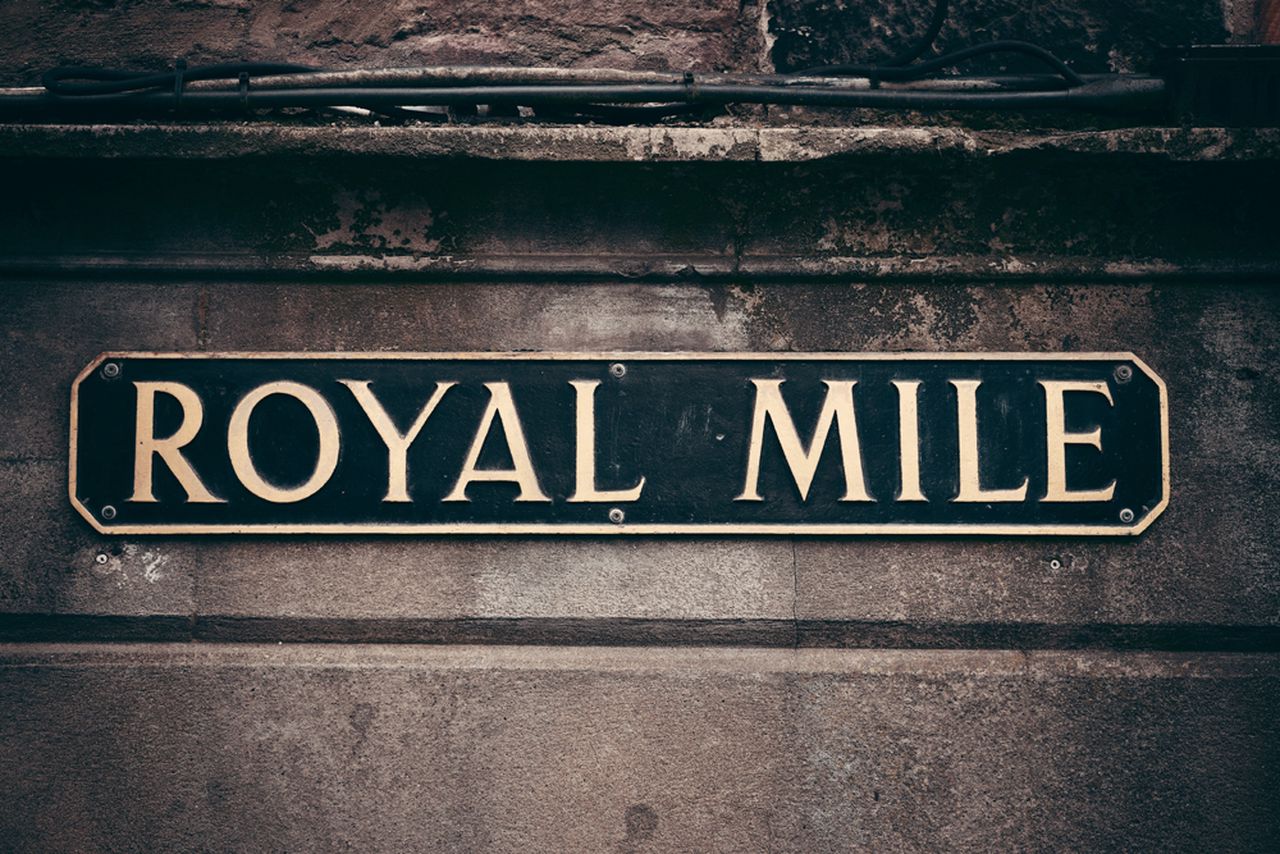
Good art for a narrow wall between windows needs a subject that reads quickly and does not depend on panoramic space. Royal Mile road sign in Edinburgh concentrates attention on one unmistakable street detail. Its strong lettering and sense of place can turn an awkward strip of wall into an intentional feature without visually narrowing the windows.
Measure art for a narrow wall between windows from the glazing inward
Measure the true clear width. Allow for window trim, handles, curtains, and the frame itself.
Keep breathing room on both sides. Equal gaps make the placement look planned even when the architecture is not perfectly symmetrical.
Check the standing sightline. A road-sign detail should feel legible from the doorway rather than being hung too high.
Control reflections. Side light can be strong between windows, so test the position at different times of day.
Why one graphic detail works
A broad landscape can feel compressed in a narrow position. This closer subject does the opposite: it treats the limited width as part of the design. The Royal Mile reference also gives a hallway, landing, or city apartment a clear Scottish identity without needing a cluster of souvenirs.
Choose a simple frame that follows the sign’s visual clarity. A generous mount can help if the wall is patterned, while a slimmer mount may suit very restricted width. Keep nearby window dressings restrained so lettering remains the focal point.
The photograph benefits from crisp reproduction, especially around lettering and surface detail. First 4 Frames produces the Giclée print in-house and completes the bespoke frame by hand, allowing the finished proportions to feel precise.
As art for a narrow wall between windows, Royal Mile road sign in Edinburgh uses clarity, vertical emphasis, and local character to solve a difficult space neatly.
Choosing black and white framed prints does not mean accepting a cold or severe room. The City of Edinburgh in Scotland on a gloomy cloudy day uses Edinburgh architecture, layered distance, and a cloud-heavy sky to create atmosphere rather than stark contrast. It can give a study, library, or reading room definition while allowing timber, textiles, and books to supply the warmth.
Use black and white framed prints to build depth, not darkness
Let architecture provide rhythm
Rooflines and distant buildings lead the eye through the image. That measured detail can balance plain walls and simple furniture without needing a busy gallery arrangement.
Restore warmth around the frame
Pair the photograph with wool, aged leather, oak, or warm lamplight. These materials soften the cooler city palette while preserving its clear structure.
A pale mount can separate a detailed skyline from a darker frame. In a compact study, that breathing space prevents the image from feeling dense. On a larger wall, allow clear space around the finished piece so the cloud and distance remain part of the composition.
Monochrome works best when tonal range, texture, and distance replace decorative colour.
First 4 Frames uses colour-managed Giclée production to retain fine tonal changes in the sky and city. The bespoke frame is hand-finished in the Falkirk workshop, giving the detailed photograph a clean, ready-to-hang edge.
As black and white framed prints go, The City of Edinburgh in Scotland on a gloomy cloudy day offers a thoughtful balance of recognisable place, architectural detail, and quiet weather-led drama.
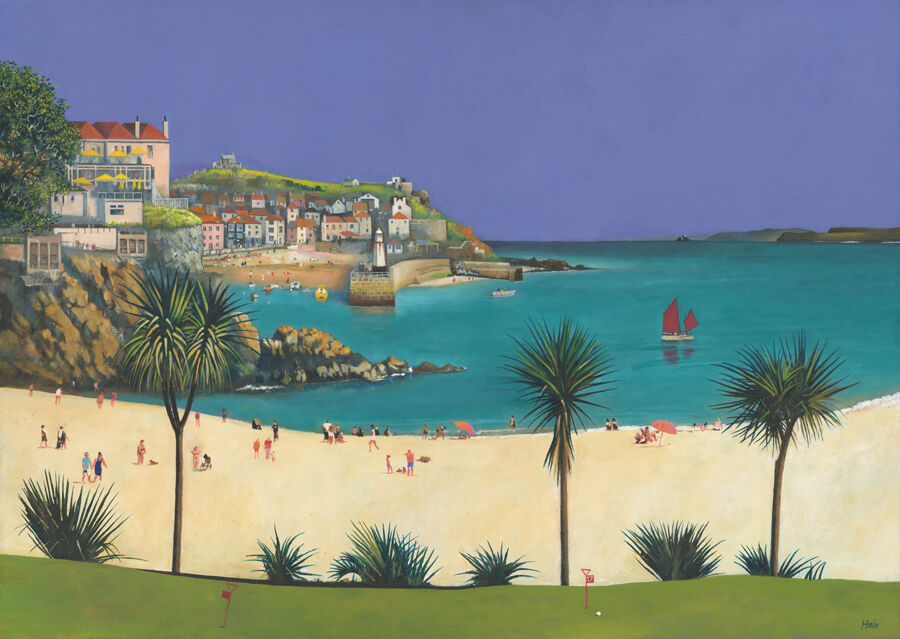
colourful wall art for a glass kitchen extension needs enough presence to hold its own beside broad views and changing daylight. In a heavily glazed room, the few solid walls matter more, not less. Sun, Sea and St Ives by Rob Hain can give one of those walls a clear purpose. Its busy beach, turquoise water, boats, palms, and clustered buildings bring human energy to a space that can otherwise feel architecturally impressive but visually unfinished.
Give a glazed room an indoor point of focus
Glass extensions naturally direct attention outside. That is part of their appeal, but it can leave the interior without a visual stopping point, especially after dark. A lively framed image offers somewhere for the eye to rest when the garden becomes reflective glass. It also makes the room feel furnished rather than simply added to the house.
Sun, Sea and St Ives works because it contains movement at several scales. People animate the foreground, boats carry the eye across the water, and the town forms a substantial backdrop. The result feels sociable and expansive, qualities that suit a kitchen-dining extension used for family meals and informal gatherings.
Where colourful wall art for a glass kitchen extension works best
Possible wall
Why it works
What to check
Above a dining bench
Creates a destination at the social end of the room
Allow comfortable head clearance
On the original house wall
Connects the extension back to the older interior
Keep clear of doors and switches
Beside tall kitchen units
Softens a large block of cabinetry
Leave breathing space around the frame
On a short return wall
Adds colour without competing with the main view
Check the picture in strong side light
Avoid a position directly over a hob, sink, or regular source of steam. Also watch how sunlight travels across the room through the seasons. A wall that seems shaded in September may receive strong direct light at another time of year. Thoughtful placement protects the artwork and reduces distracting glare.
Borrow colour without creating a seaside theme
The artwork can introduce blue-green, sandy, and warm architectural tones without dictating every finish. Repeat one or two notes in small ways: a ceramic bowl, seat fabric, or planter may be enough. Keeping those echoes limited lets the picture remain the focal point and avoids a coordinated holiday-home look.
Natural timber is an especially useful bridge between the print and a garden view. It can appear in the dining table, shelving, or frame. Dark metal offers a sharper alternative when the glazing bars, lights, or door frames are black. The best moulding should connect to the permanent finishes rather than to a temporary accessory colour.
Judge scale against the furniture, not the glass
A glass wall can make any picture seem small if it becomes the reference point. Instead, relate the finished frame to the table, bench, sideboard, or cabinet below it. A generous horizontal format can define a dining zone, while clear margins stop the solid wall from feeling overfilled.
First 4 Frames uses colour-managed Giclée production and completes bespoke framing in-house in Falkirk. That quality-led approach supports the print’s many bright details and gives it enough finish to sit confidently within a contemporary extension.
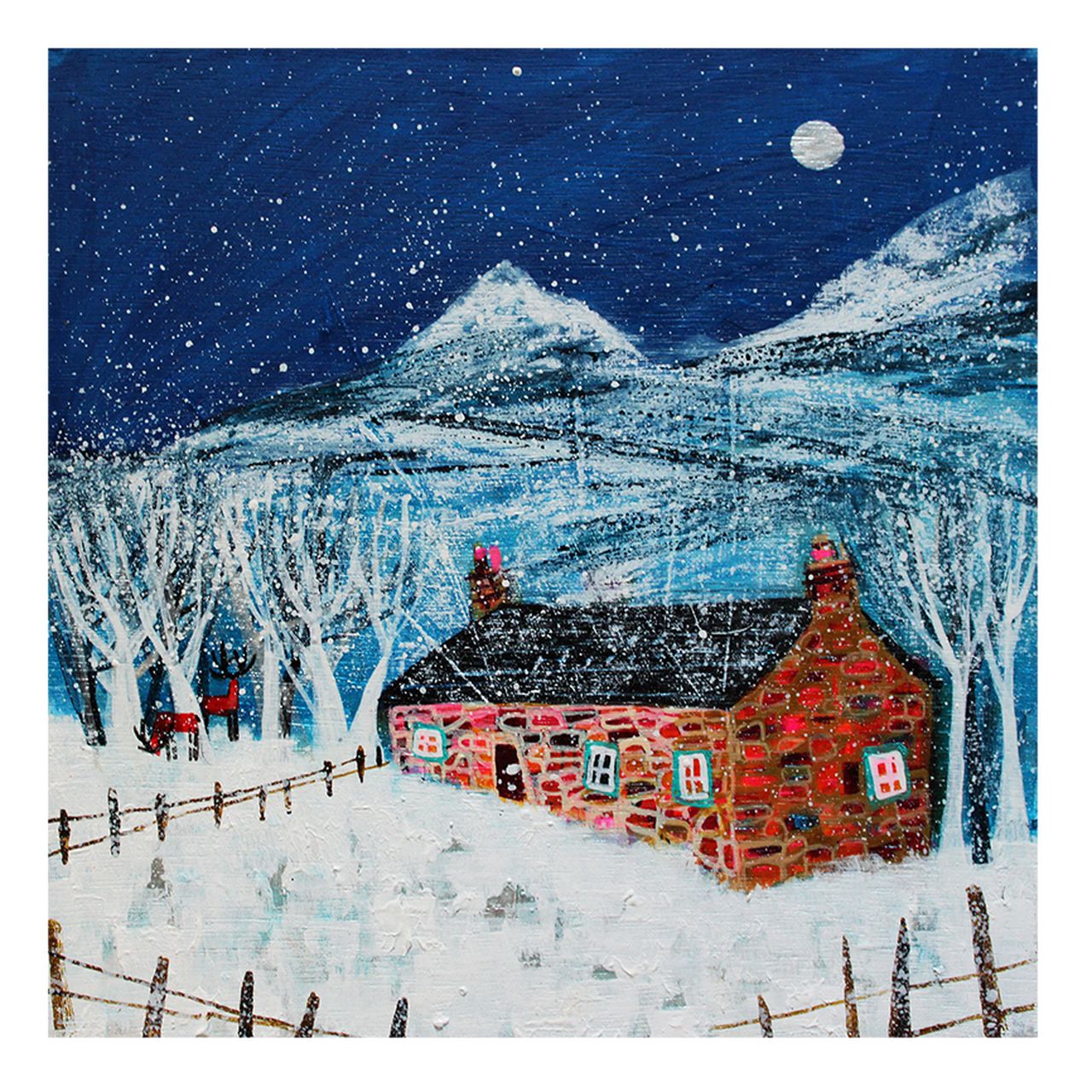
wall art for a stair half-landing can turn an awkward pause in the stairs into one of the home’s most memorable views. The challenge is to add interest without making a narrow route feel crowded. WINTER’S NIGHT, HIGHLAND VISITORS by Nikki Monaghan is well suited to the task. Its square composition, moonlit sky, welcoming cottage, and distant Highland visitors create depth while keeping the overall shape compact and settled.
Why a half-landing deserves its own focal point
A half-landing is seen in stages. The picture first appears from below, comes into clearer view at the turn, then remains visible for a moment from above. Artwork with a strong silhouette and several layers rewards that changing approach. Here, the pale moon and snowy ground register quickly, while the cottage, fence, trees, and animals offer more detail at close range.
That sense of discovery is useful in a circulation space. It gives the eye a destination and makes the turn feel intentional. Unlike a large gallery arrangement, one resolved image does not introduce a cluster of frames near handrails, doors, or changes in ceiling height.
Size wall art for a stair half-landing from both directions
Measure the clear wall. Exclude the handrail, skirting, switches, and any door swing from the usable area.
Check the first view. Stand several steps below and make sure the proposed frame will not appear clipped by the ceiling line.
Check the turn. Leave enough space around the frame for it to feel calm when viewed at close range.
Look from above. Confirm the picture still relates to the landing rather than seeming too low once you descend.
A paper template is particularly helpful here. Tape it in place, walk the stairs normally, and view it in daylight and after dark. This simple test is more reliable than choosing a centre height from the floor alone, because the viewer is nearly always moving.
Let the square format calm an irregular space
Stair walls often contain diagonals, changing ceiling lines, and short sections of masonry. A square picture provides a steady shape among those angles. It can sit comfortably on a compact return wall where a wide landscape would feel squeezed and a tall portrait might compete with the rise of the stairs.
The image itself also balances cool and warm notes. Snow, moonlight, and the dark sky bring atmosphere, while the red-brick cottage creates a welcoming centre. That contrast helps a neutral stairwell feel layered without requiring a bold paint colour or several decorative objects.
Choose a frame that stays practical on the stairs
A slim dark moulding can connect with the night sky and give the scene a crisp boundary. A mid-tone timber may work better beside oak handrails or traditional floorboards. Keep the projection and ornament restrained where people pass closely, and use secure fixings suited to the wall construction.
First 4 Frames produces colour-managed Giclée prints and completes bespoke framing in-house at its Falkirk workshop. Careful presentation matters in this location because the picture is viewed from changing distances. It preserves the small narrative details while giving the artwork a clean outline from the foot of the stairs.
What if the only thing standing between your favorite Giclée print and a gallery-worthy display is a single piece of yellowing card? Many art lovers look at a beloved piece of Scottish landscape art and ask, can I change the mount on an existing frame without causing permanent damage? It’s a valid concern when you want to modernize your decor or protect valuable photography prints from the “acid burn” caused by cheap, factory-standard materials.
We agree that your artwork deserves a presentation that matches its quality. Refreshing a mount is a great way to breathe new life into your collection while ensuring its safety. This guide will teach you how to safely disassemble your display, clean your 2mm float glass for perfect clarity, and select professional-grade mountboards. We’ll walk you through precise measuring techniques and explain when it’s best to call a professional framer in Falkirk for a bespoke touch. You’ll also learn how to use our online picture framing tools to visualise art on your wall before you buy any new components.
Key Takeaways
Discover that you definitely can I change the mount on an existing frame to upgrade from acidic factory mats to conservation-grade materials that prevent long-term damage.
Master the professional measurement process by calculating the internal rebate of your frame and ensuring a 3-5mm overlap to secure your artwork perfectly.
Learn why choosing 2mm float glass over standard perspex provides the superior clarity and protection your fine art or photography prints deserve.
Understand when to use an online picture framing tool to design your framed artwork or when to visit our Falkirk workshop for complex bespoke needs.
Understanding the Basics: Can You (and Should You) Replace a Picture Mount?
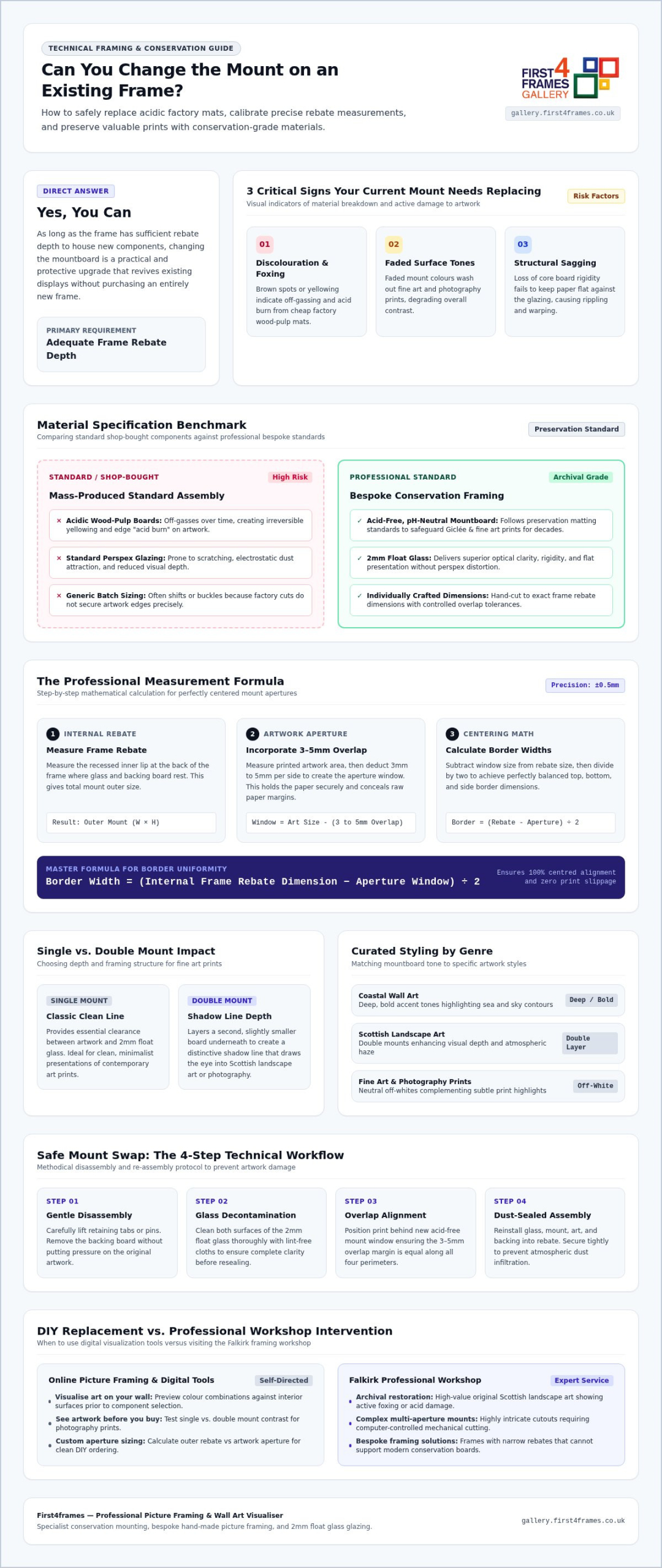
Refreshing your artwork often starts with a simple question: can I change the mount on an existing frame? The answer is a resounding yes. As long as your frame has enough depth to accommodate the new board, you can easily swap out old components. Many people choose to do this when updating their home decor or when they notice their picture framing mats have started to fade. It’s an excellent way to breathe new life into a piece without the cost of a completely new frame.
While it’s possible to do this yourself, there’s a significant difference between mass-produced mats and professional alternatives. Standard shop-bought frames often use acidic wood-pulp boards that can cause “acid burn” on your art. Upgrading to custom picture framing components ensures your Giclée prints or Scottish landscape art stay protected. Unlike cheap alternatives, our hand-made mounts are individually crafted to fit your artwork perfectly, providing a superior aesthetic and long-term preservation.
To better understand how to refresh your art using existing frames, watch this helpful video:
Signs Your Current Mount Needs an Upgrade
Your art might be trying to tell you it’s time for a change. If you are wondering can I change the mount on an existing frame, look for these warning signs first:
Discolouration: Brown spots or “foxing” suggest acid damage from low-quality materials.
Faded Tones: If the colours no longer complement your contemporary art prints, the board has likely lost its vibrancy.
Structural Sagging: When a mount loses its rigidity, it fails to keep the art flat against the 2mm float glass.
The Aesthetic Impact of a New Mount
A new mount does more than protect; it transforms. Moving from a single to a double mount creates a sophisticated shadow line that adds depth. By using an online picture framing tool, you can adopt a “see artwork before you buy” approach. This helps you choose a colour that highlights specific details in your photography prints, making the image truly pop against the wall.
Measuring and Choosing Your New Mount Like a Professional
Precision is the hallmark of a great artisan. If you’ve asked can I change the mount on an existing frame, the success of your project relies on accurate measurements. Start by measuring the internal “rebate” of your frame. This is the recessed area where the 2mm float glass and backing board rest. Next, measure your artwork itself. You should allow for a 3mm to 5mm overlap on all four sides. This ensures the mount window secures the print without showing any unprinted edges. This level of detail is why bespoke framed wall art always outperforms mass-produced alternatives.
While understanding standard photo & picture sizes helps as a baseline, bespoke cutting is always superior. It prevents the artwork from shifting or buckling over time. Once you have these figures, subtract the aperture size from the rebate size and divide by two to find your border widths. This step guarantees your art is perfectly centred within the display. Knowing you can change the mount on an existing frame gives you the creative freedom to customise every detail of your display.
Selecting the Right Colour and Texture
A new mount is a chance to elevate your aesthetic. Choose a colour that complements the subtle highlights in your fine art prints rather than the dominant shade. For dramatic coastal wall art, a bold or deep-toned mount can create a striking focal point. If you’re unsure, neutral off-whites are timeless choices. You can explore our curated gallery to see how different mount pairings influence the final look of a piece.
The Importance of Conservation-Grade Materials
Quality materials are non-negotiable for protecting your investment. We recommend following the Library of Congress preservation matting guidelines by selecting acid-free, PH-neutral mountboard. Unlike cheap alternatives that off-gas and cause yellowing, professional boards maintain the fidelity of Giclée prints for decades. This level of care ensures your contemporary art prints remain as vibrant as the day they were first framed.
Step-by-Step Guide: How to Safely Change the Mount
To successfully answer can I change the mount on an existing frame, you need a methodical approach and a clinical workspace. Begin by gathering your tools: pliers, archival tape, and a high-quality glass cleaner. Lay the frame face down on a soft surface. Carefully remove the backing board by lifting the flexipoints or staples. As you do this, take note of how the 2mm float glass is positioned. Unlike the cheap, static-prone perspex often found in high-street frames, this professional glass offers superior clarity for your photography prints.
Clean the glass thoroughly on both sides before reinserting it. When you’re ready to attach the artwork to your new mount, use the “hinge” method. This involves applying archival-safe tape only to the top edge of the print. It allows the paper to expand and contract naturally, which is vital for preserving bespoke framed wall art. This technique ensures your art remains flat and tension-free inside its housing.
Handling Glass and Artwork with Care
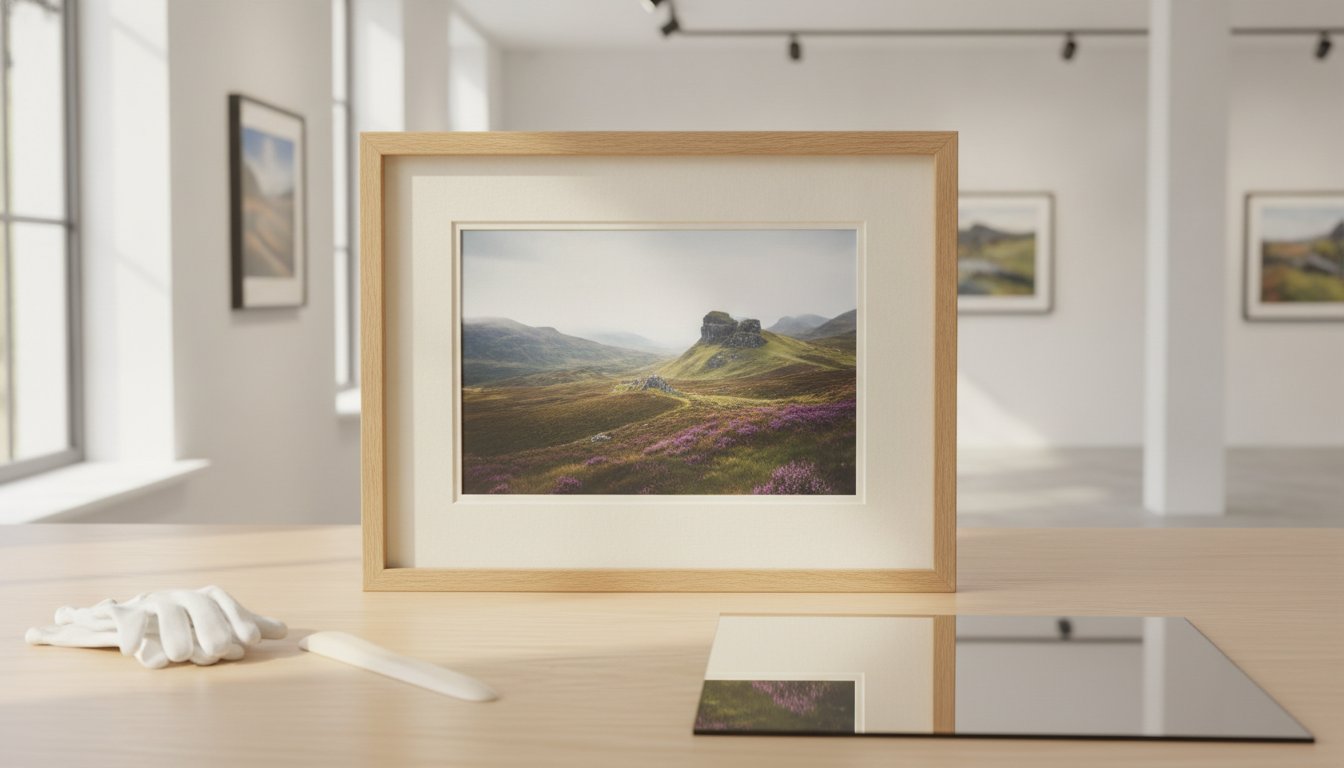
Safety is paramount when working with sharp components. Use pliers to remove old staples or flexipoints to avoid scratching the frame or yourself. When handling Giclée fine art prints, we strongly recommend wearing white cotton gloves. This prevents natural skin oils from leaving permanent fingerprints on the delicate surface of your contemporary art prints or fine art collections.
Reassembling and Sealing the Frame
Before closing the frame, ensure the environment is entirely dust-free. Any speck trapped behind the glass will be magnified. Following the Canadian Conservation Institute’s framing recommendations, verify that your frame rebate is deep enough for the new mount sandwich. Finally, seal the back with framing tape. This professional finish prevents moisture and insects from damaging your Scottish landscape art. If you’d prefer a fresh start, you can choose your frame online and let us handle the precision work for you.
When to Choose Bespoke Framing Over a DIY Mount Swap
While asking can I change the mount on an existing frame is a fantastic starting point for a refresh, a simple swap isn’t always the best solution. If your current frame is warped or the glass is compromised, a DIY fix may fail to protect your art. By choosing our online picture framing service, you can design your framed artwork from scratch. This is the ideal choice for works by best-selling artists and famous artists, where the precision of a hand-made frame is essential to maintain the piece’s value and aesthetic appeal.
Our professional art print framing service explicitly contrasts with mass-produced alternatives that use cheap, standard frames. We individually craft every order using high-quality materials, including 2mm float glass for superior clarity over standard perspex. For those looking to display their own digital memories, our print and frame service ensures your photography prints are produced to gallery standards before being housed in bespoke framed wall art.
Visualise Art on Your Wall Before You Buy
The uncertainty of DIY projects is removed when you use our wall art visualiser. This tool allows you to visualise art on your wall and choose your frame online with total confidence. Whether you are selecting custom framed art prints or contemporary art prints, the ability to see artwork before you buy ensures the final result harmonises perfectly with your room’s existing light and colour palette.
Bespoke Framed Wall Art for Commercial Spaces
For commercial clients across Scotland, professional curation is key to a polished environment. From coastal wall art to landscape wall art, we provide a complete solution that outshines simple DIY fixes. We ensure all finished pieces are fully packaged to prevent damage and dispatched via professional couriers. This reliable logistical process means your Scottish landscape art or fine art arrives ready to hang, providing a hassle-free transformation for any office or gallery space.
Give Your Art the Professional Display it Deserves
Refreshing your display is a rewarding way to modernise your home. If you’ve been wondering can I change the mount on an existing frame, you now have the tools to do so safely. By choosing conservation-grade materials and 2mm float glass, you protect your artwork from acid damage while enhancing its visual impact. Whether you’re upgrading a piece of Scottish landscape art or a contemporary Giclée print, quality components ensure your art remains vibrant for years to come.
If a simple mount swap feels like a compromise, our team is here to help. Every frame we create is individually crafted in our Falkirk workshop using premium materials that offer superior clarity over standard perspex. You can use our online picture framing tools to see artwork before you buy, ensuring a perfect match for your decor. We fully package every order for nationwide professional courier delivery. Design your bespoke framed artwork online today and let us help you create a lasting legacy for your collection.
Frequently Asked Questions
Will changing the mount damage my artwork?
Changing the mount won’t damage your art if you use conservation-grade materials. Always choose acid-free, PH-neutral mountboards to prevent yellowing. Use archival-safe tape for the “hinge” method rather than household adhesives. If you’re handling delicate Giclée fine art prints, we recommend wearing white cotton gloves. This prevents skin oils from leaving permanent marks on the surface of your contemporary art prints during the swap.
What is the best type of glass for a picture frame?
We always recommend 2mm float glass as the professional standard for glazing. It provides superior clarity compared to the cheap perspex used by many online competitors. Perspex often attracts static dust and flexes, which can touch the artwork. In contrast, 2mm float glass offers a stable, scratch-resistant surface that beautifully showcases the intricate details of Scottish landscape art and high-quality photography prints.
Can I cut a new picture mount at home?
While you can cut mounts at home, achieving a perfect 45-degree bevel is challenging without professional equipment. Hand-held cutters often produce ragged edges or visible over-cuts at the corners. If you’re wondering can I change the mount on an existing frame to get a gallery finish, ordering a bespoke, machine-cut mount is much safer. It ensures a crisp, clean border that complements your hand-made frame perfectly.
How much overlap should a mount have over the art?
The standard professional overlap is 3mm to 5mm on each side of the image. This small margin is essential for securing the print behind the mount window. It prevents the artwork from slipping out of place or showing white paper gaps around the edges. When you’re calculating measurements to see if can I change the mount on an existing frame, always include this overlap for a secure fit.
What is the difference between a mount and a mat?
These terms describe the same product. “Mount” is the preferred terminology in the UK, while “mat” is more common in the United States and Canada. Both refer to the decorative board that creates a window around your art and keeps it away from the glass. Whether you call it a mount or a mat, ensure it’s made from high-quality, acid-free materials to preserve your collection’s fidelity.
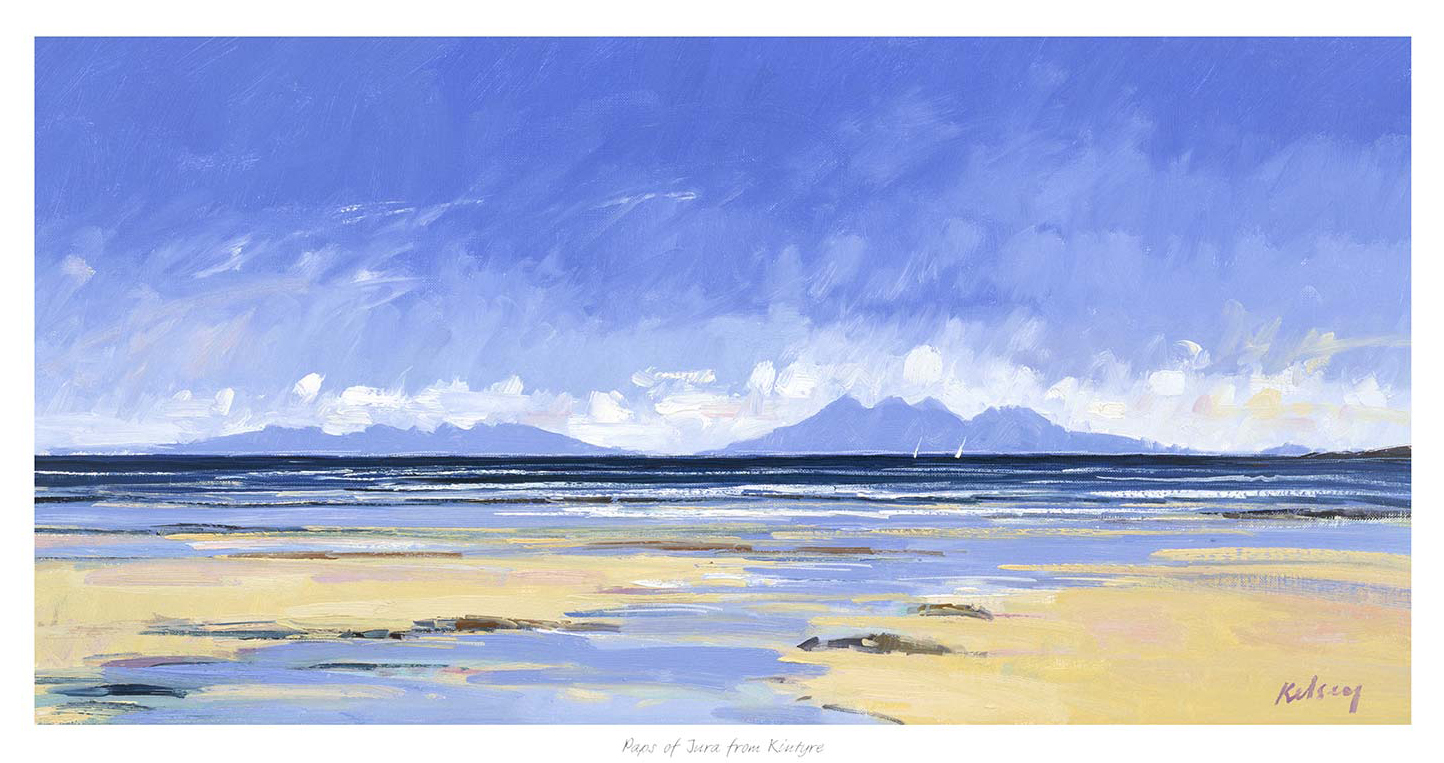
Choosing coastal wall art for a room with picture windows requires a piece that can coexist with a changing outdoor view. The Paps of Jura from Kintyre offers its own clear horizon through shallow pools, gentle water, a sandy shore, and distant mountains. It brings visual distance indoors without trying to overpower the glazing.
Place coastal wall art for a room with picture windows beyond the glare
Watch the daylight. Observe the room in the morning and afternoon before choosing the wall.
Avoid direct reflection. A side wall often works better than one directly opposite the largest pane.
Relate the horizons. Hang the print where its distant mountain line feels comfortable from a seated position.
Leave visual space. Do not crowd the frame with tall plants, lamps, or curtains.
Complement the view without copying it
The artwork can succeed whether the real windows face a garden, rooftops, or open country. What matters is the shared sense of depth. Pools and sea carry the eye towards the Paps of Jura, creating a calm route through the picture when weather outside closes in.
A room with a view still benefits from artwork that remains constant as light, weather, and seasons change.
A restrained natural frame can connect to timber window details. A pale mount supports the open sky, while a darker narrow edge may help the coastal colour hold its place in a very bright room.
Robert Kelsey’s limited-edition landscape depends on clarity of colour and confident simplicity of form. First 4 Frames uses colour-managed Giclée production and hand-finishes the bespoke frame in Falkirk, preserving the bright shore and distant mountain structure.
As coastal wall art for a room with picture windows, The Paps of Jura from Kintyre supplies a lasting second horizon that supports the architecture in every season.
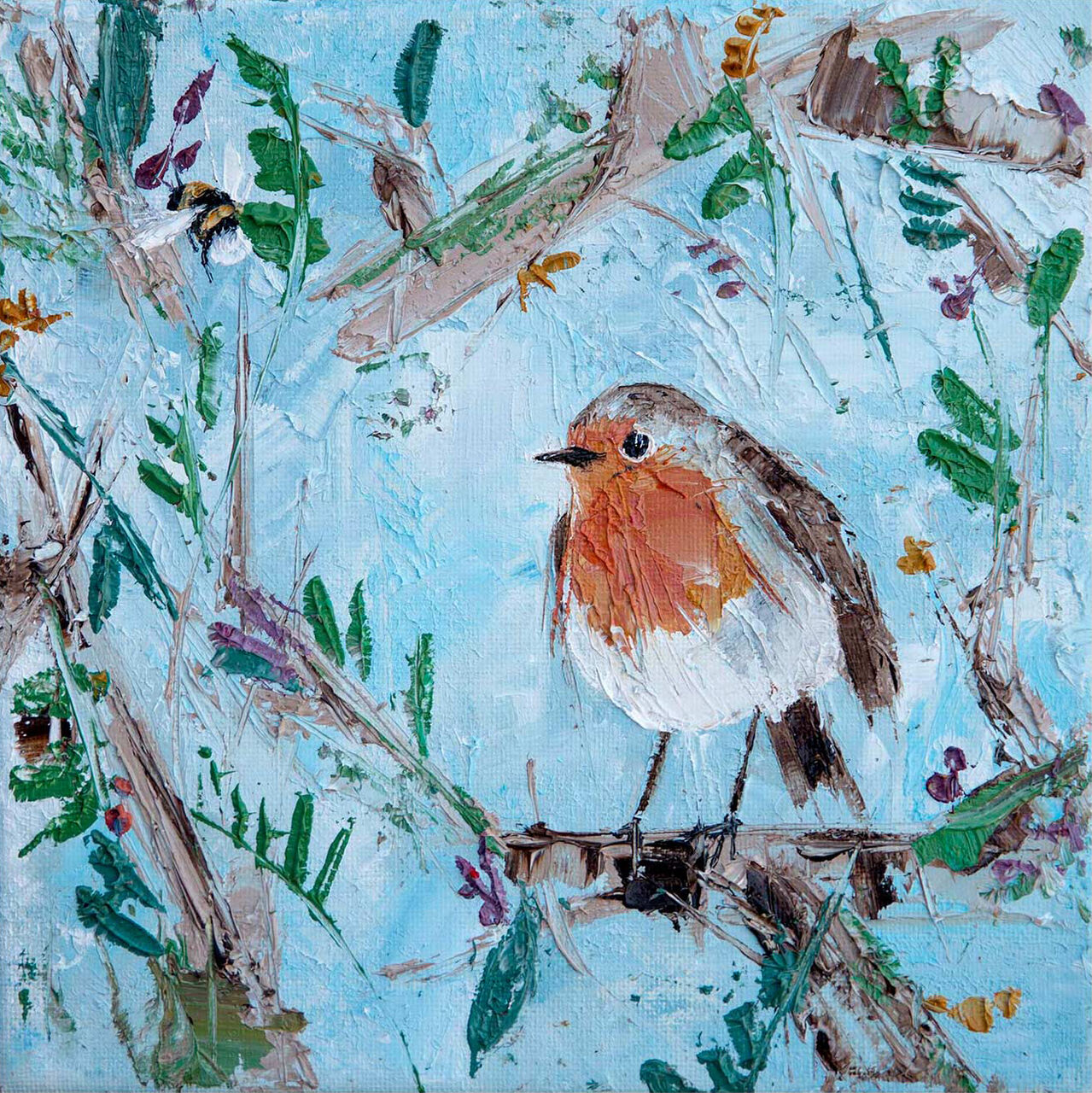
Good robin cloakroom wall art can give a very small room personality without relying on jokes, signs, or predictable bathroom imagery. Robin places a small orange-breasted bird among leaves and flowers on a pale blue ground. The close subject is easy to enjoy at short viewing distance, while the loose marks stop the room feeling fussy.
Plan robin cloakroom wall art for close viewing
Start with the safest wall
Choose a dry position away from direct splashes and regular condensation. The wall above a small radiator, immediately beside a basin, or near an opening window may be less suitable than the wall opposite the door.
Use the orange breast as one concentrated warm accent.
Let pale blue connect gently with cool paint, tile, or a small hand towel.
Keep the surrounding wall clear so the textured leaves remain legible.
Check the sightline from the doorway as well as from inside the room.
The bird subject introduces British nature without turning the cloakroom into a woodland theme. A simple frame gives the expressive image a precise boundary. In a room with patterned wallpaper, a generous mount can also create valuable breathing space.
Because a cloakroom is visited briefly, one memorable piece often works better than a group. It creates a deliberate focal point and keeps the limited wall area calm.
First 4 Frames uses colour-managed Giclée production to retain Charlotte Strawbridge’s bold texture, soft blue, and warmer orange detail. The bespoke frame is completed in-house in Falkirk, with advice available on a clean finish for the intended space.
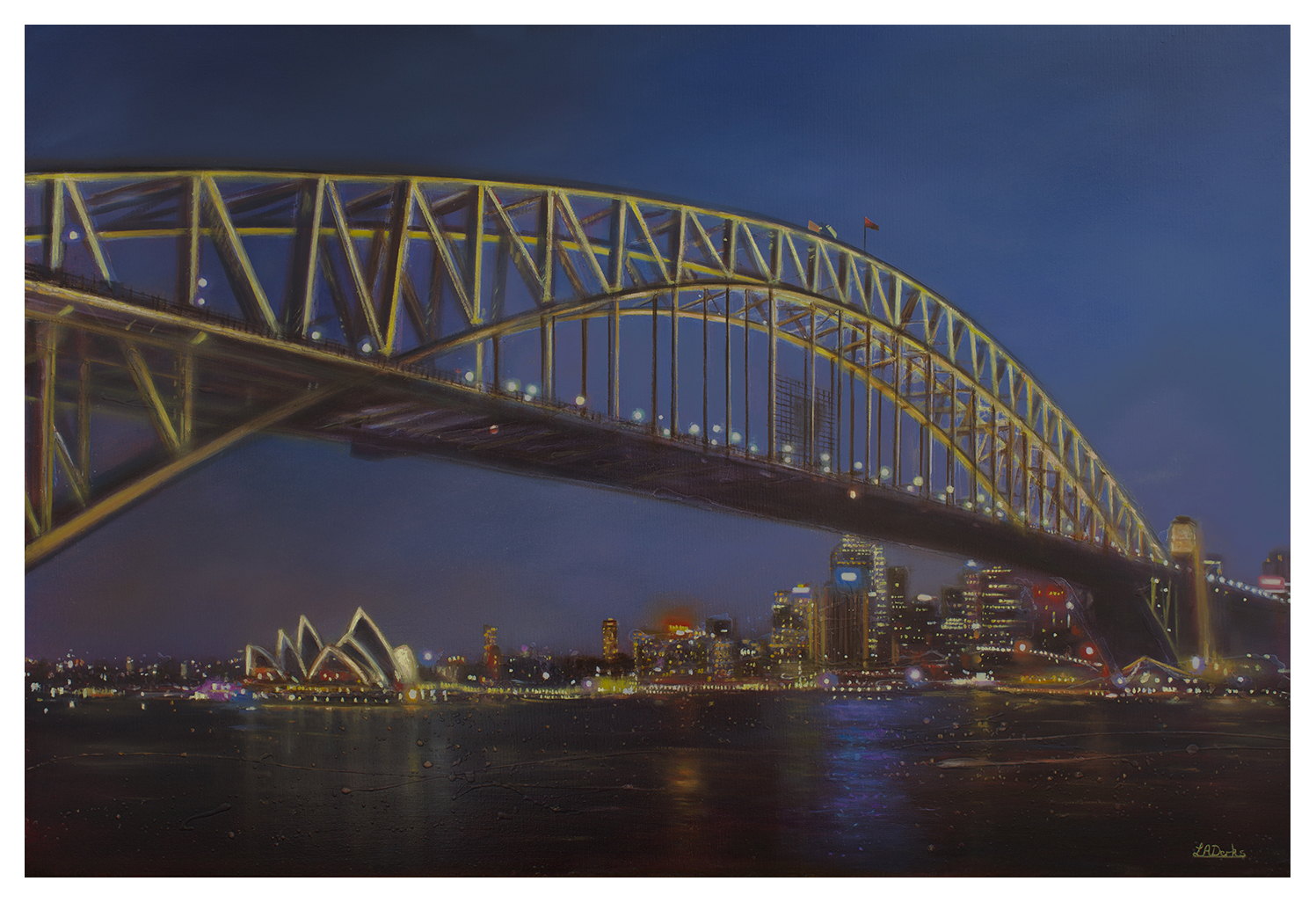
Sydney travel wall art for a study feels most personal when it recalls an atmosphere as well as a landmark. Sydney Harbour By Night shows the Harbour Bridge glowing above the water, with the Opera House and skyline beyond. Gold reflections carry the city light across the dark surface, bringing back the feeling of seeing the harbour after dusk.
Choose Sydney travel wall art for a study beyond the postcard view
The best travel picture leaves room for memory; it does not need to catalogue every landmark.
Lesley Anne Derks concentrates on light, movement, and sound in the city at night. That approach makes the image useful beyond its location. It can suit someone who has lived in Sydney, crossed the harbour on holiday, or simply enjoys cityscapes shaped by water and illumination.
For a living room
Give the wide view a clear wall and use warm lamps nearby. Reflected gold helps the print remain atmospheric in the evening.
For a study
Place it opposite the desk rather than behind a bright screen. The water and distance offer a useful visual break during focused work.
A dark frame can extend the night palette, while a slim pale mount stops the city lights disappearing into the edge. Avoid surrounding it with novelty travel signs; the recognisable view already tells the story.
First 4 Frames produces the Giclée print in its colour-managed Falkirk workshop. Careful reproduction keeps the bridge lights, skyline, and water reflections distinct. A bespoke, hand-finished frame turns the remembered view into substantial artwork rather than a casual souvenir.
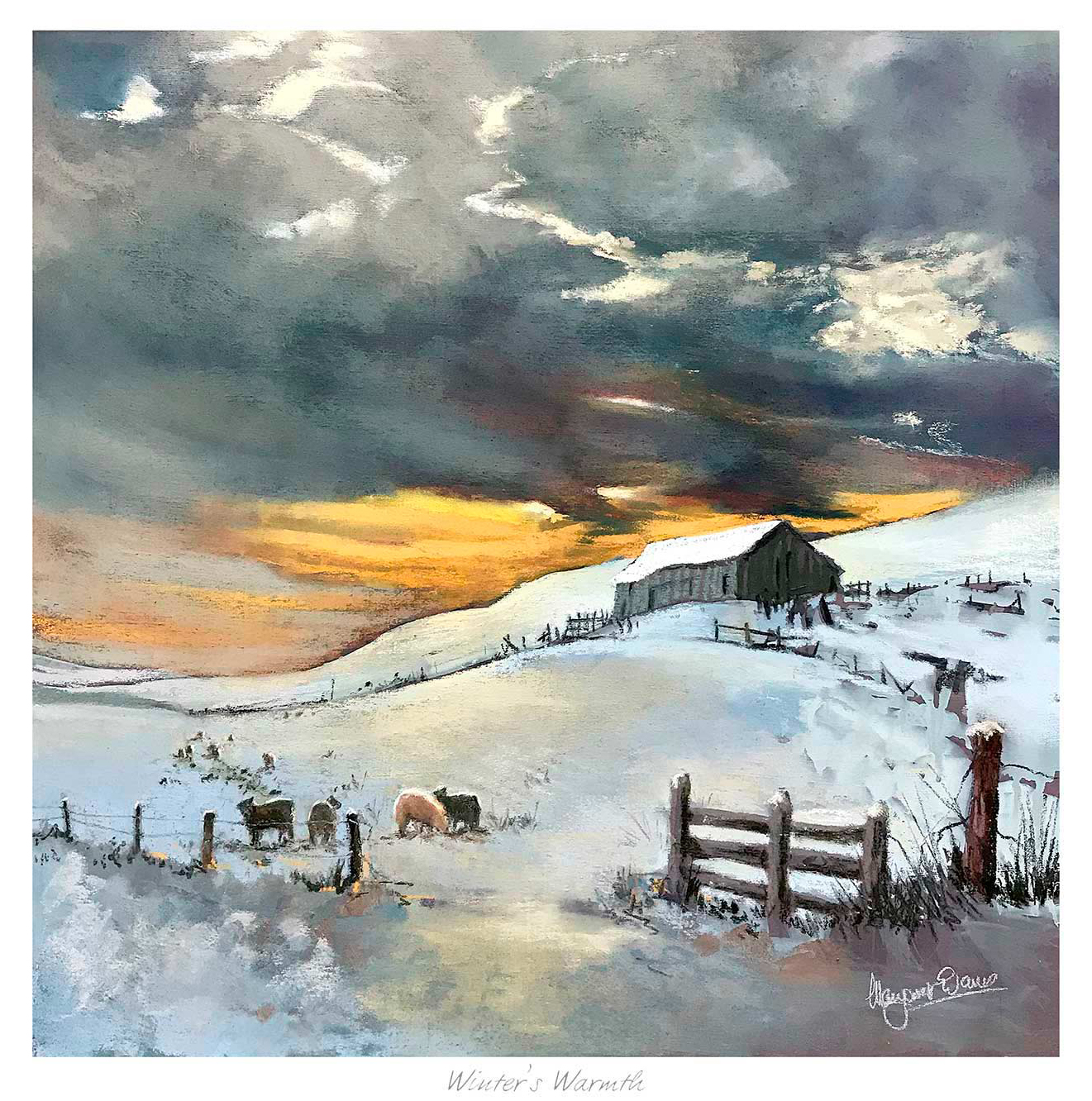
The most effective winter landscape wall art by a wood burning stove creates contrast rather than repeating flames. Winters Warmth looks across a snowy rural landscape towards a barn, grazing cattle, and a narrow orange horizon. That visual cold makes the actual warmth of the room feel even more welcoming.
Position winter landscape wall art by a wood burning stove with care
Room detail
How the artwork responds
Warm firelight
The orange horizon creates a quiet link without copying the flame.
Stone hearth
Snow, fence, and barn add rural texture while retaining visual distance.
Timber furniture
The landscape supports natural materials without turning the room overly rustic.
Dark stove
A controlled dark frame can relate to it while the pale scene keeps the wall open.
Respect heat and clearances
Do not hang framed work where heat, smoke, or repeated temperature changes can affect it. Follow the stove manufacturer’s clearance guidance and choose a neighbouring wall when the chimney breast becomes warm. A side position can still create a strong relationship across the room.
Keep nearby decoration restrained. The fence line and dramatic cloud already give the landscape structure, so the print does not need a cluster of small country accessories around it.
First 4 Frames uses colour-managed Giclée printing to retain the cool snow, deep cloud, and fine band of sunset colour. Bespoke framing is completed by hand in the Falkirk workshop, with personal guidance available for a suitable finish and position.
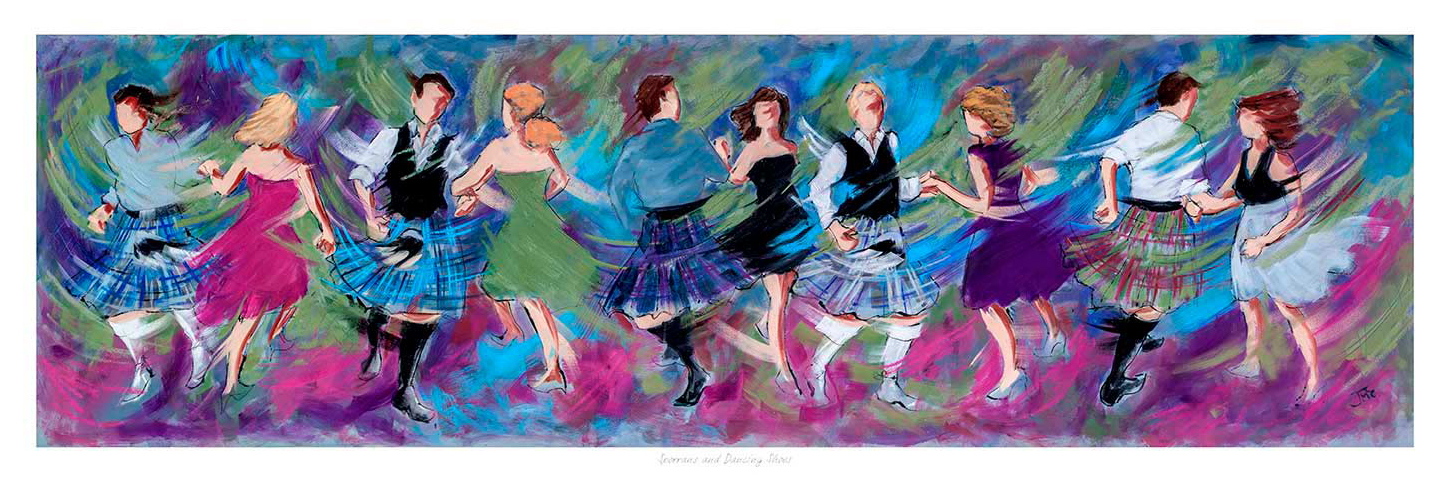
Scottish dance wall art for a dining room can make the space feel sociable even before the music starts. Sporrans and Dancing Shoes captures turning couples, visible sporrans, tartan, and quick footwork through scraped and layered colour. It conveys the pleasure of a ceilidh without asking the rest of the room to become a Scottish-themed set.
Use Scottish dance wall art for a dining room where people gather
Choose the social wall. Place the print near a dining table, music corner, or open area used when friends visit.
Allow for movement. Leave clear wall around the frame so the turning figures do not feel boxed in by shelves or tall objects.
Echo colour sparingly. One tartan note in a throw or one warm red accessory is enough to connect the image to the room.
Balance tradition with a modern finish
The subject has heritage, but the expressive surface keeps it lively. A simple frame and generous mount can emphasise that contemporary quality. This avoids the heavier look that carved furniture and multiple tartans might create.
The print can also hold personal meaning for someone who dances, attends ceilidhs, or associates Scottish music with family celebrations. Its energy remains enjoyable even when the viewer does not know a particular step.
Janet McCrorie’s limited-edition image relies on crisp changes between tartan, shoes, and gestural colour. First 4 Frames uses colour-managed Giclée production and completes the bespoke framing in-house, giving the lively surface a polished, ready-to-hang finish.