Posted on

How to Frame a Silk Painting: A Careful Step-by-Step Guide

How to Frame a Silk Painting: A Careful Step-by-Step Guide

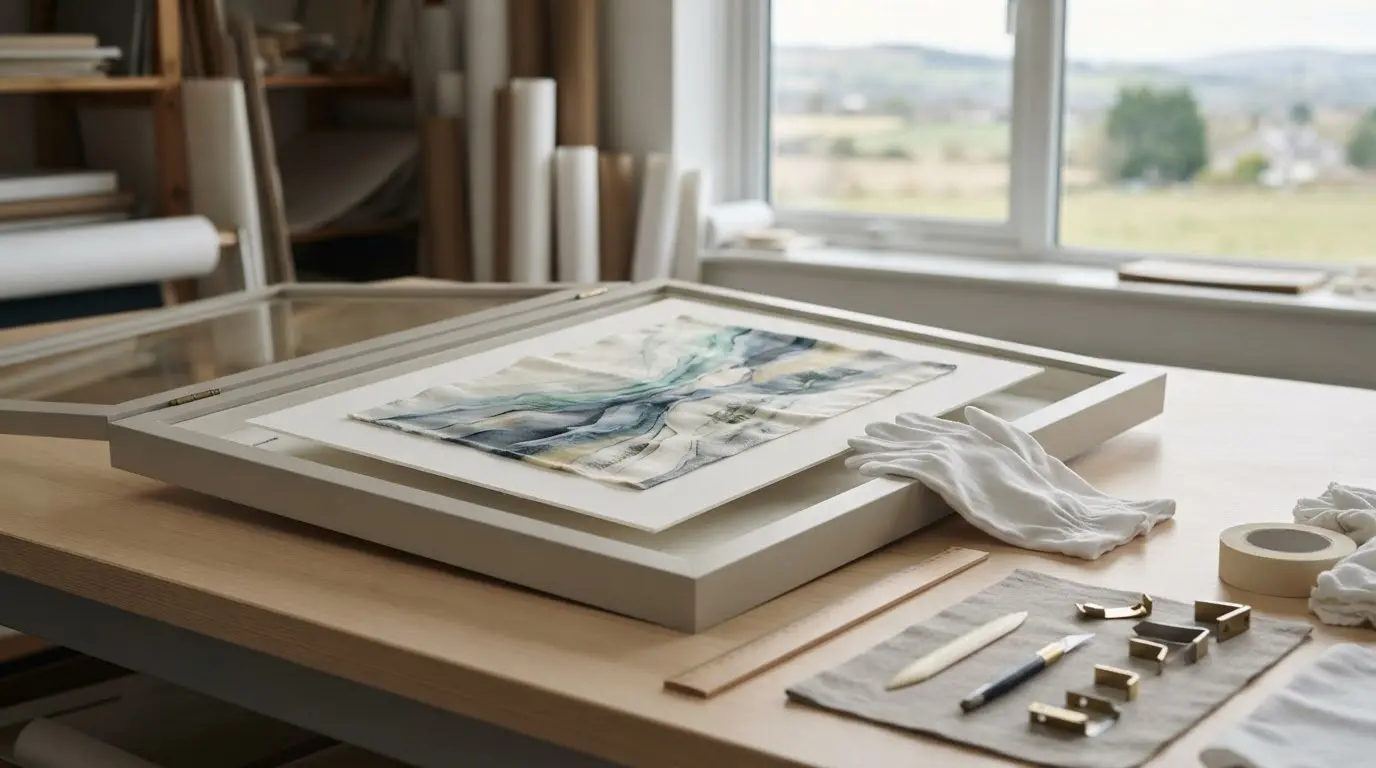
A silk painting needs to be treated as a textile before it’s treated as a picture. If you’re wondering how to frame a silk painting without pulling the fabric unevenly or letting glazing press against its surface, start by considering how the silk is supported. A thoughtful presentation can also help the piece sit beautifully alongside other framed art in your home.

It’s natural to feel cautious: silk is delicate, and a frame that works for a paper print may not suit a textile. As you plan the display, consider the artwork’s colours, scale and surroundings, whether you’re pairing it with Coastal wall art, Scottish landscape art, Fine art or Contemporary art prints. A Wall art visualiser can help you Visualise art on your wall before deciding on an arrangement.

This guide explains how to support and frame silk carefully, and when bespoke framing may be a sensible choice. If you’re exploring Online picture framing, comparing Custom framed art prints or looking to Choose your frame online, keep the artwork’s individual needs in mind. The same thoughtful approach can help you Design your framed artwork and find a place for Photography prints or Bespoke framed wall art, too.

Key Takeaways

  • Think of silk as a delicate textile: plan how to support it without disturbing its painted surface.
  • When considering how to frame a silk painting, choose a setup that holds the fabric evenly and keeps it clear of the glazing.
  • Follow a careful sequence, beginning with clean hands and a clear work surface, then inspect the artwork before framing.
  • If the piece needs an individually considered fit or presentation, bespoke framing offers another route. First4Frames Gallery professionally frames customer-supplied artwork in-house.

Why framing a silk painting calls for a textile-first approach

A silk painting may look like a flat picture, but its support behaves differently from paper. Silk is flexible, so it can shift, sag or crease if it isn’t supported evenly. The painted surface also needs space: pressure from a mount or contact with glazing can affect how the work sits and looks.

Textile-first framing means supporting the fabric evenly while keeping its painted surface undisturbed. That principle is central to how to frame a silk painting. The aim is to give the material a stable presentation without pulling it taut, trapping folds or allowing the glazing to rest against it.

What makes a silk painting different from a paper artwork?

Paper usually holds its shape as a sheet; silk can move with handling and gravity. A small fold may become more noticeable once the work is displayed, while uneven support can leave one area slack and another under tension. Touching the painted face may also leave handling marks. Handle the artwork gently, and don’t try to smooth, stretch or flatten it by force.

What should you consider before choosing a frame?

First, establish whether the silk is already mounted or remains loose. A mounted piece may have a support that affects the frame depth and how it can be presented. With loose silk, the support and fitting need particular thought so the fabric can sit evenly without being compressed.

Consider the painting’s overall size, visible condition and intended display position. A larger piece may need a different support approach from a small one, while the available wall space can help determine a suitable frame proportion and orientation. Plan for clearance between the silk and glazing, too: the painted surface shouldn’t rest against the glass.

If you notice existing creases, distortion, fragile areas or other condition concerns, pause rather than trying to correct them as part of a DIY framing project. A qualified textile conservator can assess the artwork before framing. Careful assessment helps you choose an approach that respects the piece instead of forcing it to fit a standard frame.

Choose suitable support, mount and glazing for a silk painting

Support, mount and glazing work together, but each has a different job. The support steadies the textile, the mount helps position it within the frame, and the glazing provides a front barrier. Base these decisions on the silk’s construction and condition, not a one-size-fits-all method. This is an important part of how to frame a silk painting without pulling or compressing it.

How should the silk be supported?

Aim for even, stable support that holds the artwork in position without stretching it excessively. The right attachment and tension method depends on whether the silk is loose, already mounted or has areas that need particular care. Don’t treat adhesives, pins or stitching through the artwork as universal solutions. Any of these may be unsuitable for a particular piece, so avoid choosing a method without considering the textile’s construction and condition. The American Institute for Conservation’s Textile Conservation Catalog offers further reference on textile conservation methods and material considerations.

Should glazing touch a silk painting?

Don’t assume the painted surface can safely rest against glass or acrylic. Contact may press against the textile, so consider a mount or frame spacing that creates a clear gap where appropriate. The amount of clearance and the framing arrangement should suit the artwork, not just the frame’s appearance.

First4Frames Gallery uses float glass as standard. The glazing choice should still be considered alongside the silk’s support and the space needed between the artwork and the glass. Float glass is not specialist conservation glazing, and no UV-filtering or conservation properties are claimed for it. For more on framing options, read the custom picture framing guide. You can also browse framed artwork for presentation ideas.
How to Frame a Silk Painting: A Careful Step-by-Step Guide

How to frame a silk painting step by step

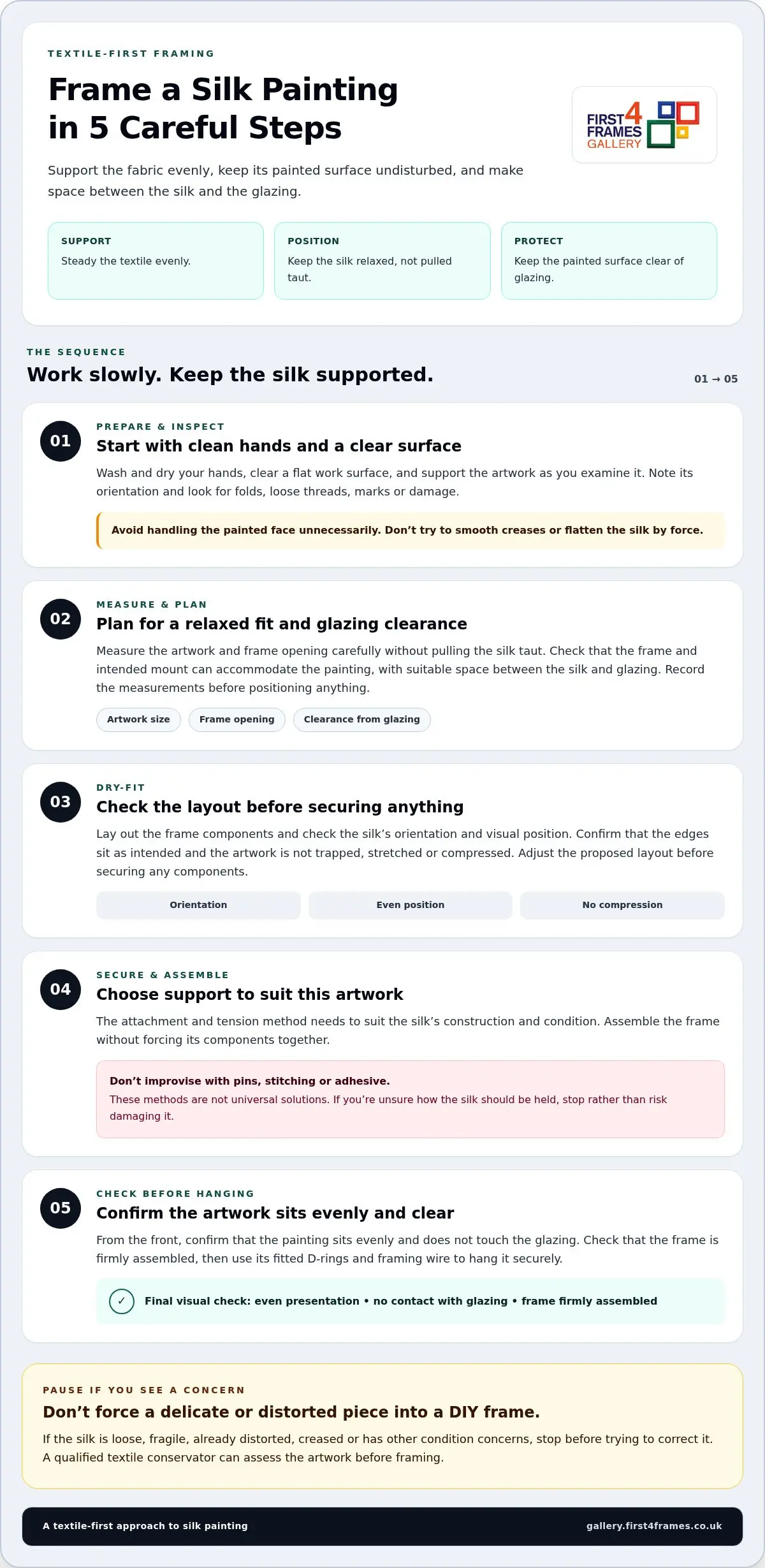
Work slowly and keep the silk supported throughout. If the fabric is loose, fragile or already distorted, don’t try to correct it by pulling or pressing. Pause before proceeding with a DIY frame.

  1. Prepare and inspect. Wash and dry your hands, clear a flat work surface, and support the artwork as you examine it. Look for folds, loose threads, marks or damage, and note the painting’s orientation. Avoid trying to smooth creases or handling the painted face unnecessarily.
  2. Measure and plan. Measure the artwork and frame opening carefully, keeping the silk relaxed rather than pulling it taut. Check that the frame and intended mount can accommodate the painting and allow suitable clearance from the glazing. Record the measurements before positioning anything.
  3. Dry-fit before securing. Lay out the frame components and check the orientation and visual position of the silk. Confirm that the edges sit as intended and that the artwork isn’t trapped, stretched or compressed. Adjust the proposed layout before securing any components.
  4. Secure and assemble with care. Any attachment and tension method needs to suit the artwork’s construction and condition. Don’t improvise with pins, stitching or adhesive. If you’re unsure how the silk should be held, stop rather than risk damaging it. Assemble the frame without forcing its components together.
  5. Check before hanging. From the front, confirm that the painting sits evenly and doesn’t touch the glazing. Check that the frame is firmly assembled, then use its fitted D-rings and framing wire to hang it securely and verify that it sits straight.

In short: inspect, measure, dry-fit, secure appropriately, then check clearance and hanging alignment. These are the essential stages in how to frame a silk painting, but the right attachment method depends on the piece itself. For inspiration on framing and presentation, explore framed artwork.

When bespoke framing is the better route for a silk painting

A standard frame may not suit silk that is loose, unusually sized or already mounted in a way that affects how it fits. Bespoke framing is worth considering if the artwork needs a particular frame depth, a carefully chosen proportion or a presentation that works around its existing support. Unlike cheap, standard frames that may not fit the artwork properly, each First4Frames Gallery frame is individually crafted for the order using high-quality materials.

If you’re unsure how to frame a silk painting or feel uneasy handling the piece, a professionally framed, individually considered fit may be a more comfortable route. Address any condition concerns before framing.

What can a bespoke framer contribute?

First4Frames Gallery professionally frames customer-supplied artwork in-house, with precision cutting and expert mounting. Customers can choose from extensive frame and mount selections on product pages, helping shape a finish that complements the artwork rather than overwhelming it. Frames use float glass as standard. Finished frames are prepared for display with D-rings and high-quality framing wire for straight wall mounting.

How to take the next step

Consider whether you’re comfortable assessing and handling the silk yourself. If it’s difficult to support evenly or you’re uncertain about its presentation, custom framing offers a professional alternative. First4Frames Gallery brings over 20 years of professional framing experience in Falkirk to customer-supplied pieces, with a wide choice of frame and mount options.

Explore frame styles and presentation ideas, then browse the gallery to find artwork that inspires your next display.

Give your silk painting a considered place to shine

Choosing how to frame a silk painting is also a chance to think about how the artwork will live in your home. Consider the wall, the light in the room and the feeling you want the finished piece to bring to the space. A thoughtfully chosen frame can give the painting a clear visual setting without asking it to fit a standard format.

If you’re still weighing up a DIY approach, decide whether you feel comfortable handling and positioning the silk. Bespoke framing offers an alternative for artwork that needs an individual fit, with frame and mount options to shape its presentation. Let the painting guide the next decision, from a quiet, understated finish to a frame that makes it a focal point.

Explore framed artwork in the gallery for ideas and inspiration. Your silk painting deserves a setting that feels right for both the artwork and the room. Browse First4Frames Gallery’s framed artwork to plan your next display.

Frequently Asked Questions

Can you frame a silk painting without glass touching it?

Yes. A frame can be arranged so the silk is separated from the glazing, but suitable spacing depends on the artwork’s construction and condition. A painting with a raised or uneven surface, for example, may need a different arrangement from a flat, securely mounted piece. Don’t assume direct contact is safe. If the painted surface or its support seems fragile, pause and have the piece assessed before framing.

Should a silk painting be stretched before framing?

Not necessarily. Stretching isn’t right for every silk painting, and pulling the fabric too tightly may alter how it looks. The decision depends on the textile’s construction, condition and any support it already has. Avoid experimenting on valuable or delicate work, particularly if it has existing folds or distortion. If you’re uncertain, have the piece assessed before changing its tension.

Can I frame a silk painting myself?

Possibly, if the painting is securely mounted and a simple, sturdy frame suits its size. If you’re learning how to frame a silk painting, consider whether you can position it without handling the painted face or straining its support. Don’t use adhesives or fasteners through the painted silk. For delicate, valuable or unusually sized pieces, bespoke framing can offer a more considered fit.

What is the best frame for a silk painting?

There isn’t one frame that’s best for every silk painting. Choose a proportion and finish that complement the artwork’s dimensions and colours without crowding it, and consider how its condition and display setting affect the support and glazing arrangement. A narrow mount may suit a small work, while a larger piece may need a different visual balance. Pause before framing if the silk is fragile or damaged.

Can a picture framer frame artwork supplied by a customer?

Yes. First4Frames Gallery offers custom framing for customer-supplied artwork, with in-house precision cutting and expert mounting. Customers can select from frame and mount options to tailor the presentation to the piece. Because silk paintings vary in construction and condition, consider the framing approach individually rather than applying one mounting method to every artwork. Note the dimensions and current support when planning the frame.
Posted on

Can I Get My Existing Frame Re-Glazed with UV Glass?

Can I Get My Existing Frame Re-Glazed with UV Glass?

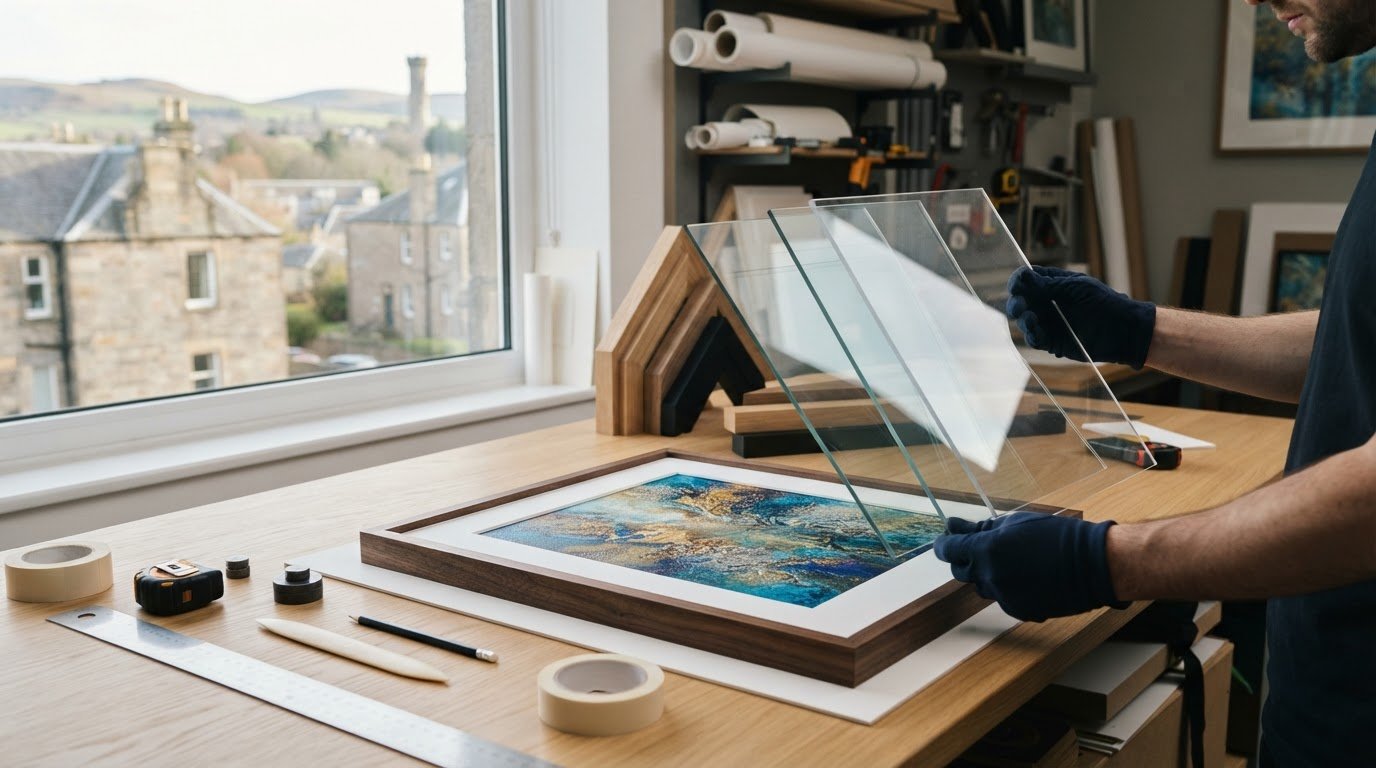
What if your frame can stay, but its glazing needs to change? If you’re asking, “can I get my existing frame re-glazed with UV glass”, the answer may be yes. A framer first needs to check whether the frame can safely accommodate the new glazing and whether it is suitable for the artwork.

It makes sense to check before replacing a frame you already love. UV protection varies between glazing options, and filtering UV light is not the same as reducing reflections or improving clarity. First4Frames Gallery specifies 2mm float glass for its framing, but standard float glass should not be mistaken for UV-protective glazing. Whether First4Frames Gallery offers UV-glass reglazing is not confirmed, so check directly before making plans.

This guide explains what a framer needs to assess, what to ask about UV performance, and how glass and acrylic differ. You’ll also learn when bespoke reframing may be a better fit, so you can make an informed choice for your artwork.

Key Takeaways

  • Wondering “can I get my existing frame re-glazed with UV glass”? A framer needs to assess the frame and artwork before confirming whether they’re suitable.
  • Compare glazing by its documented UV specification, clarity, reflections and handling needs. Don’t rely on the label “UV glass” alone.
  • Photograph your frame and describe the artwork, then ask about glazing availability, fit and whether the mount needs review.
  • If the frame is unsuitable, bespoke picture framing may provide a better fit, with each frame individually crafted for the artwork.

Can an Existing Picture Frame Be Re-Glazed with UV Glass?

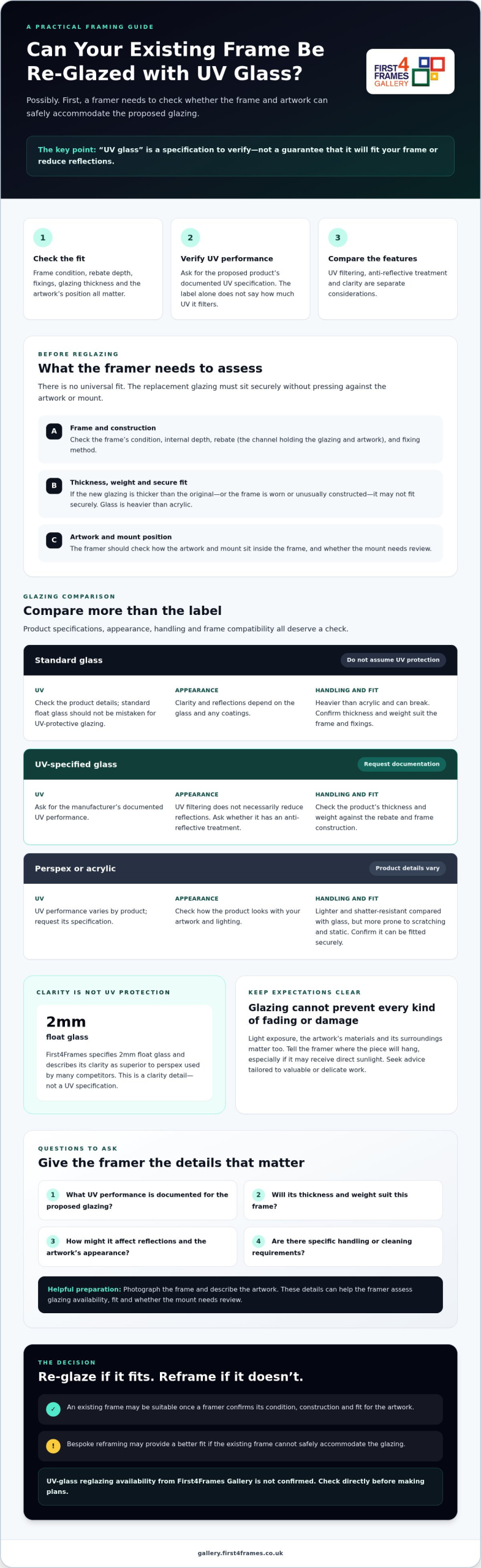
Yes, an existing frame may be suitable for UV-protective glass, but a framer needs to check the frame and artwork before confirming. The glazing must fit securely without pressing against the artwork or mount. The frame’s condition, internal depth, rebate (the channel that holds the glazing and artwork) and fixing method all affect whether it can be reused. There is no universal fit.

If you’re asking, “can I get my existing frame re-glazed with UV glass”, treat UV protection as a specification to verify, not an automatic feature of replacement glass. Ask which product is proposed and request its documented UV performance. This is separate from whether the glass is anti-reflective or offers a clear view. UV filtering can help reduce one source of deterioration, but it cannot prevent every cause of fading or damage.

What needs checking before replacing the glazing?

Ask a framer to inspect the frame, rebate depth, fixings and existing glazing. They should also check how the artwork and mount sit inside the frame. If the replacement glazing is thicker than the original, or the frame is worn or unusually constructed, it may not fit securely. An assessment can establish whether reglazing is practical or bespoke reframing would be more suitable.

What does UV-protective glass mean for framed art?

The term “UV glass” alone does not tell you how much UV the product filters. Check the manufacturer’s documented specification and ask the framer to explain what it means for your artwork. A picture frame brings together several components, including protective glazing, but glazing cannot preserve artwork on its own. Light exposure, the artwork’s materials and its surroundings matter too.

UV filtering and anti-reflective treatment are different features. One concerns UV performance, while the other reduces reflections. Ordinary glass clarity is another consideration. First4Frames specifies 2mm float glass and describes its clarity as superior to perspex used by many competitors, but this is not a claim of UV protection. Its available information confirms bespoke framing, not UV-glass reglazing, so check availability directly.

UV Glass, Standard Glass, and Perspex: What Should You Compare?

The label “UV glass” is not enough to judge whether glazing suits your artwork or frame. Compare the documented UV specification alongside appearance, handling and fit. UV filtering, anti-reflective treatment and glass clarity are separate considerations.

Glazing UV specification Clarity and reflections Handling and compatibility
Standard glass Check the product details. Don’t assume it has a UV-protective specification. Appearance and reflections depend on the glass and any coatings. Heavier than acrylic and can break. Confirm that its thickness and weight suit the frame and fixings.
UV-specified glass Ask for the manufacturer’s documented UV performance. UV filtering does not necessarily reduce reflections. Ask whether the glazing has an anti-reflective treatment. Check the chosen product’s thickness and weight against the frame’s rebate and construction.
Perspex or acrylic UV performance varies by product, so request its specification. Check the product’s appearance against your artwork and lighting. Lighter and shatter-resistant compared with glass, but more prone to scratching and static. Confirm it can be fitted securely.

First4Frames specifies 2mm float glass and describes it as clearer than perspex used by many competitors. This detail concerns clarity, not UV protection, and should not be treated as a UV specification.

Which glazing questions should you ask a framer?

Ask what UV performance is documented for the proposed glazing, whether its thickness and weight suit your frame, and how it may affect reflections and the artwork’s appearance. Check any handling or cleaning requirements as well. If you’re considering whether can I get my existing frame re-glazed with UV glass is practical, these details will help the framer assess your specific frame.

Does UV glass protect artwork from all fading?

No glazing can prevent every kind of fading or damage. Tell the framer where the piece will hang, particularly if it may receive direct sunlight, and seek advice tailored to valuable or delicate work. If reframing is a better fit, you can browse framed artwork for inspiration.

Can I Get My Existing Frame Re-Glazed with UV Glass?

How to Decide Whether to Re-Glaze or Reframe Your Artwork

A careful assessment helps protect both the artwork and the frame. Before approving new glazing, give a framer enough information to check the frame’s condition, construction and fit.

  1. Photograph the frame. Share clear images of the front, back, corners and fixings. Include a side view so the framer can see the frame’s depth.
  2. Describe the artwork. Explain what it is made from, whether it has a mount and where it is displayed. Mention any concerns about its condition or sensitivity.
  3. Ask for an assessment. Confirm whether the requested glazing is available, whether it will fit securely and what handling it needs. Ask whether removing and refitting the artwork could affect the mount or frame construction.
  4. Agree the next step. Proceed with reglazing only after a professional confirms that the frame can safely accommodate the chosen material.

When might keeping the existing frame make sense?

Reusing a frame may be practical if it is in good condition and the framer confirms that the replacement glazing fits the rebate and fixings. Even then, changing the glazing means taking the frame apart. Ask whether removing and refitting the artwork could affect it or the mount. The answer depends on the individual frame, so don’t assume it will be a straightforward swap.

When should you consider bespoke reframing?

If the frame cannot safely hold your preferred glazing, a new frame made for the artwork may be more suitable. First4Frames offers bespoke picture framing, with each frame individually crafted for the order using quality materials. Its available information does not confirm whether it accepts reglazing jobs, so check service availability before making arrangements.

For more on framing decisions, read a custom picture framing guide and a picture frame selection guide. If a new piece is the right direction, explore framed artwork for inspiration.

Your Next Step: Get the Right Framing Advice for Your Artwork

Before authorising work, ask a framer to confirm the UV specification, check that the glazing fits your frame and establish whether it is suitable for the artwork. Preparing clear details will help them assess your options.

What information should you prepare for a framing enquiry?

Gather these details before speaking to a framer:

  • Measurements: Record the outside frame dimensions and, if accessible, the artwork and rebate dimensions.
  • Photographs: Take clear pictures of the front, back and edges, including any visible damage.
  • Artwork and glazing: Describe the artwork, current glazing, display location and the UV-protection outcome you want. If you have a digital photograph, ask about print and frame options. First4Frames sells Giclée fine art prints that customers can pair with a custom frame.

First4Frames offers bespoke framing, but whether it provides UV-glass reglazing is not confirmed. If a new piece better suits your needs, explore its selection of fine art prints and ready-to-hang framed art, with a choice of frames. You can also consider bespoke framed art for your home or commercial space. Browse the framed art gallery for inspiration.

Choose the Right Next Step for Your Artwork

The answer to “can I get my existing frame re-glazed with UV glass” depends on the frame’s construction, the glazing available and what suits the artwork. Before authorising a change, ask a framer to confirm the UV specification, check the frame’s fit and consider how the artwork and mount will sit behind the replacement glazing.

Clear details make that conversation easier. Share the frame’s measurements and photographs, describe the artwork and its display location, and explain what you want UV protection to achieve. First4Frames specifies 2mm float glass for its clarity compared with perspex, but this is not a UV-protection claim. If a new frame is a better solution, First4Frames offers bespoke picture framing, with each frame individually crafted for the order.

Looking for a fresh piece instead? Explore framed art in the First4Frames Gallery for inspiration. Ask a framer to assess your existing frame, or browse the gallery to find artwork that you can pair with a frame.

Frequently Asked Questions

Can I replace the glass in my existing picture frame with UV glass?

Possibly, but a framer needs to inspect the frame and confirm that the required glazing is available. The frame’s depth, condition and fixings must suit the replacement, and the artwork must sit safely behind it. If you’re asking, “can I get my existing frame re-glazed with UV glass”, request the product’s documented UV specification and a fit assessment before approving any work.

Will UV glass fit any existing picture frame?

No, there is no universal fit. A framer needs to check the frame’s depth and rebate, its condition, and whether the fixings can hold the new glazing securely. They should also make sure the artwork and mount have enough clearance and will not press against the glass. The answer depends on the specific frame and glazing, so arrange an assessment before choosing a replacement.

Does UV glass stop artwork from fading completely?

No. UV-filtering glazing can help reduce exposure to UV radiation, but it cannot prevent every cause of fading or damage. Other light and environmental conditions matter too, including display location and direct sunlight. Ask a framer how the proposed glazing’s documented specification relates to your artwork and where it will hang. For valuable or delicate work, seek advice tailored to the piece.

Is UV glass better than perspex for picture framing?

Neither is automatically better for every artwork or frame. Compare the specific product’s documented UV performance, appearance, thickness and handling needs. Glass is generally more scratch-resistant but can break. Acrylic, often called perspex, is lighter and shatter-resistant but can scratch and attract dust through static. First4Frames specifies 2mm float glass and highlights its clarity compared with perspex, but this is not a UV-protection claim.

Can a picture framer reglaze a frame without replacing the artwork or mount?

It may be possible, but the framer should inspect the specific frame construction first. They need to consider how the glazing is held in place and whether the artwork and mount can be removed and refitted safely. The mount may need review if the replacement affects the available clearance. Don’t assume the artwork can remain untouched or that the mount will suit the new glazing.

Posted on

Mastering Custom Picture Framing: The Expert Guide to Bespoke Art Display

Mastering Custom Picture Framing: The Expert Guide to Bespoke Art Display

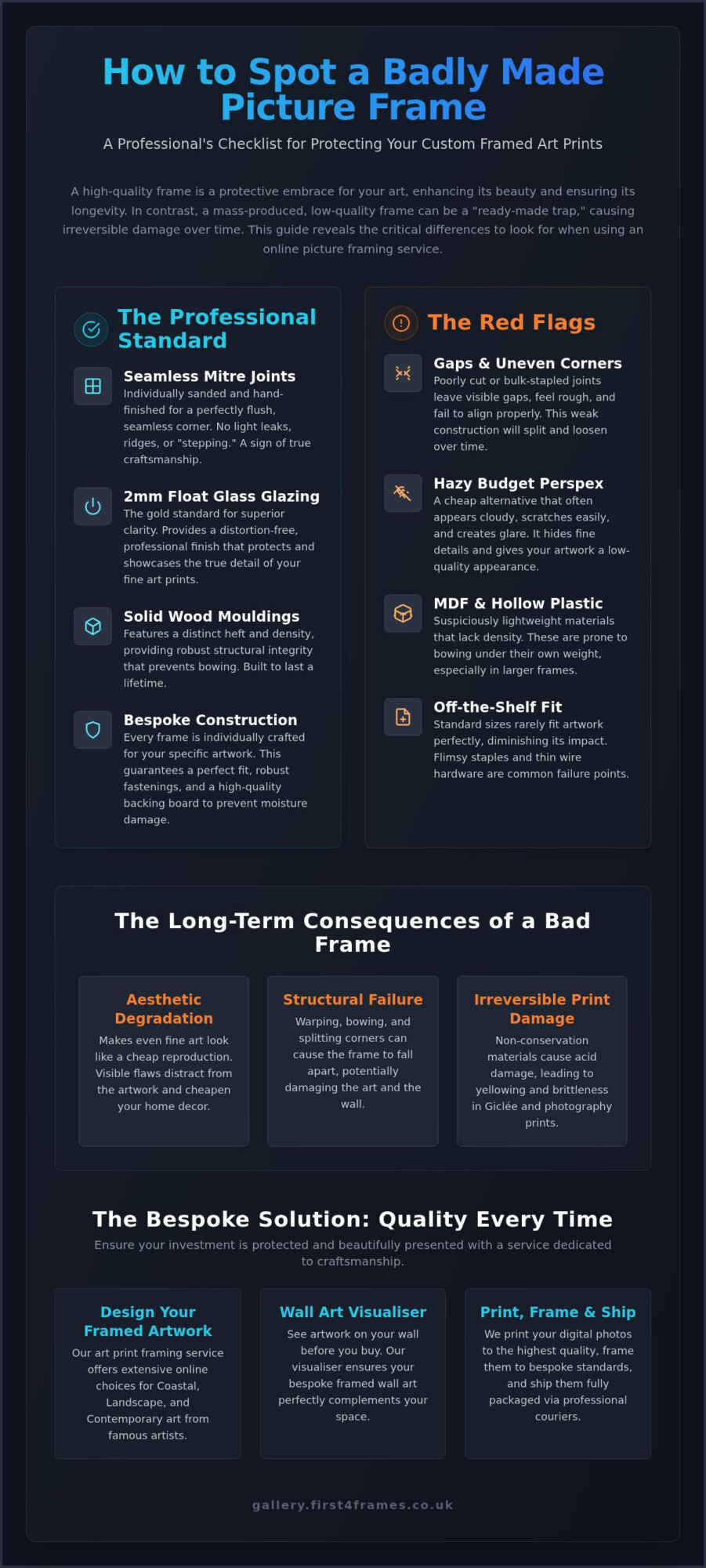
A standard, mass-produced frame is often the quickest way to diminish the soul of a truly beautiful piece of art. When you invest in professional custom picture framing, you’re doing more than just putting a border around a print; you’re choosing to preserve a legacy with artisanal precision. Most collectors worry that poor-quality materials might damage their valuable Scottish landscape art or contemporary art prints over time. It’s a valid concern, especially when high-street frames often use acidic components that cause irreversible yellowing and decay.

You deserve to feel confident that your fine art is protected and presented perfectly. This guide will show you how bespoke craftsmanship and premium materials, like our signature 2mm float glass, elevate your decor while offering superior clarity that cheap perspex simply can’t match. We’ll walk you through how to use a wall art visualiser to see artwork before you buy, ensuring your chosen frame fits your space seamlessly. From selecting the right style for your photography prints to understanding our secure courier shipping, you’ll discover everything you need to design your framed artwork with total peace of mind.

Key Takeaways

  • Understand why 2mm float glass is the professional standard for superior clarity, offering far better protection for your memories than budget perspex.
  • Learn how professional custom picture framing ensures every piece is individually crafted to order, providing a precision fit that mass-produced frames can’t match.
  • Discover how to use a wall art visualiser to see artwork before you buy, making it easy to choose the perfect moulding for your space from home.
  • Explore professional curation techniques to transform your environment, whether you’re selecting Scottish landscape art for your lounge or managing a large-scale commercial project.

Custom Picture Framing vs. Standard Frames: Why Quality Matters

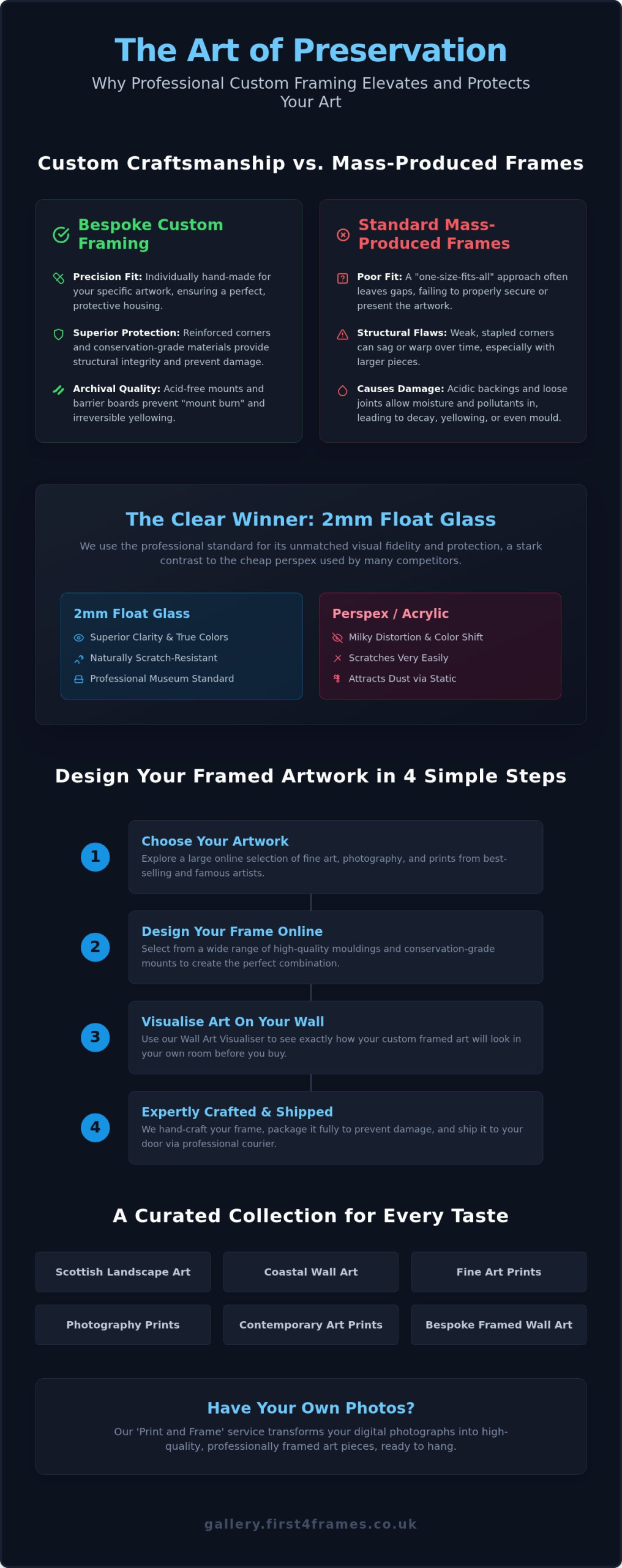
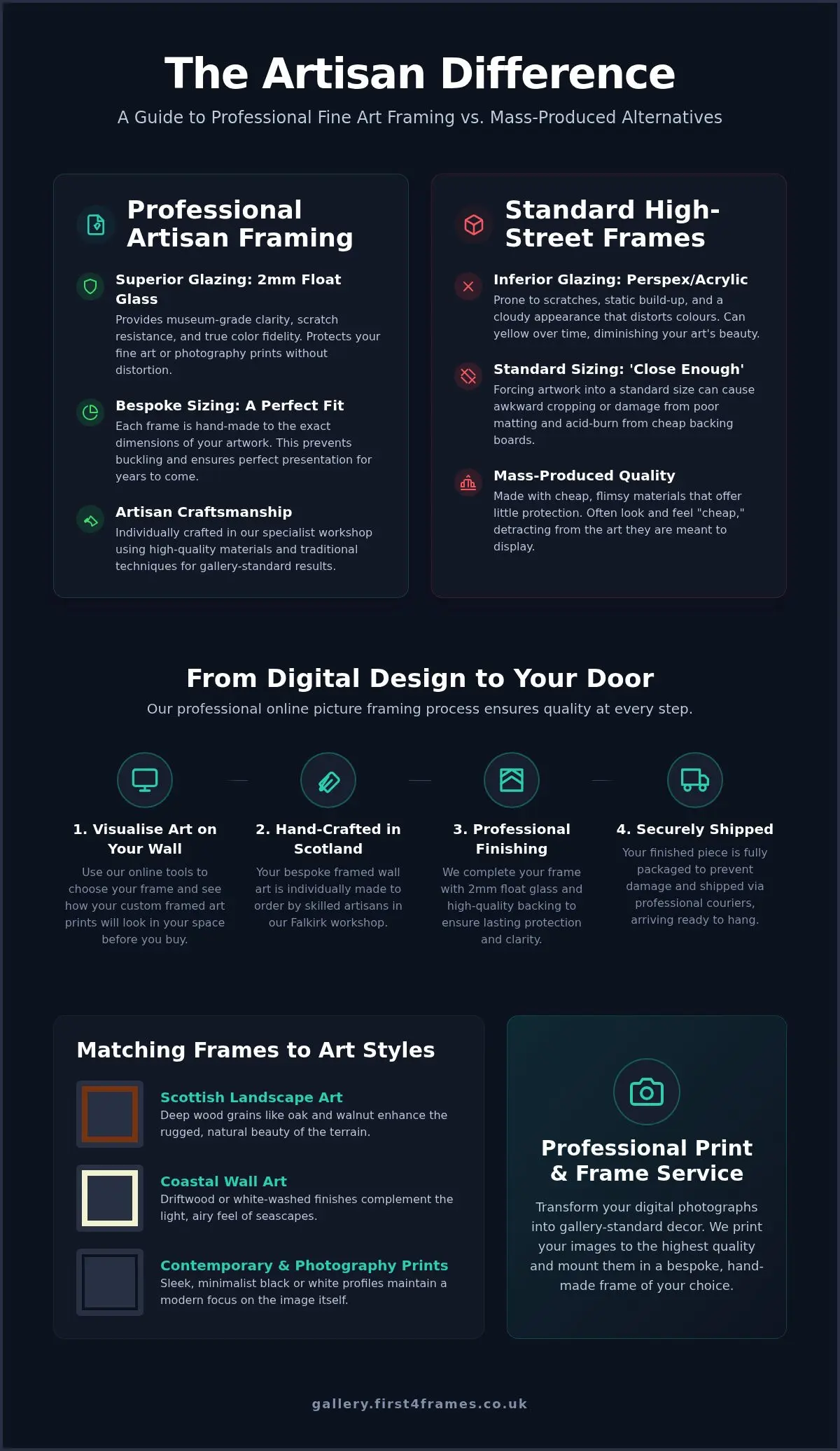
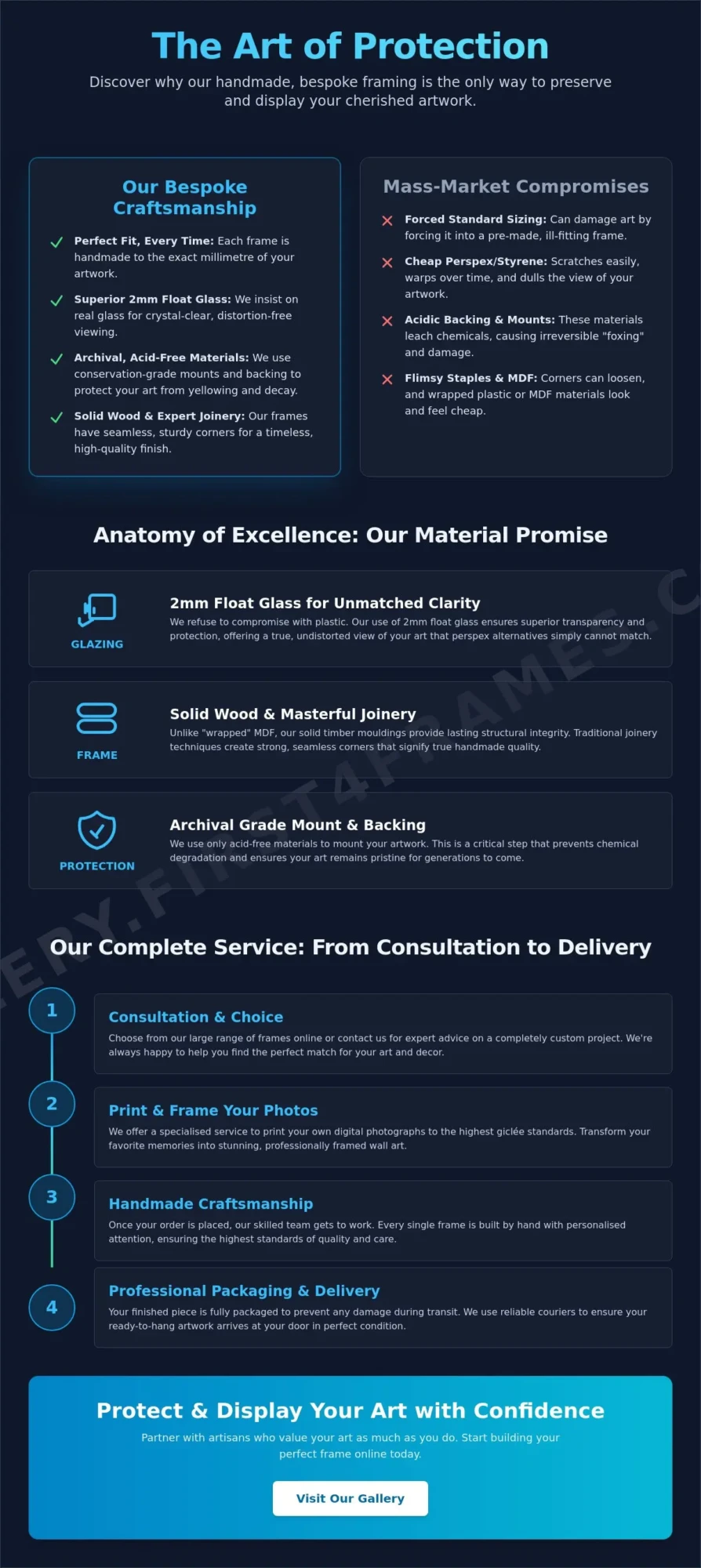
Choosing a standard frame from a big-box store might seem convenient, but you’re likely to find that “one size fits all” often fails fine art. These mass-produced options frequently use acidic backing and loose-fitting joints that allow moisture to seep in. Over time, your cherished Scottish landscape art or coastal wall art can warp, yellow, or even develop mould. Professional custom picture framing addresses these structural flaws by creating a housing specifically measured for your piece. Each frame is an individual creation, hand-made to ensure total protection and a perfect aesthetic fit.

Unlike standard frames that are stapled together in bulk, our custom picture framing involves reinforced corners and individually cut components. This manual process guarantees structural integrity, preventing the frame from sagging under the weight of larger landscape wall art. Every order is treated as a unique project, using materials that meet strict preservation standards to keep your memories safe for a lifetime.

To better understand the transformation a quality frame provides, watch this helpful tutorial:

The 2mm Float Glass Advantage

While many budget competitors use thin acrylic or perspex, we prioritize 2mm float glass for its unmatched visual fidelity. This material offers superior clarity, ensuring the true colors of your contemporary art prints shine through without the milky distortion often found in plastic. Glass is naturally scratch-resistant and doesn’t attract dust via static like acrylic does. Because of its longevity and clarity, 2mm float glass remains the gold standard for professional galleries and museums worldwide.

Bespoke Framed Wall Art as an Investment

A well-crafted frame does more than just hang a picture; it secures the Anatomy of a Bespoke Frame to ensure the art remains a valuable asset. High-quality materials prevent environmental damage, maintaining the monetary value of works by famous artists. If you’re unsure how to spot a top-tier provider, check out our guide on Choosing the Best Art Frame Shops Near Me. Investing in bespoke framed wall art ensures your collection remains a stunning focal point for decades.

The Anatomy of a Bespoke Frame: Design Your Framed Artwork

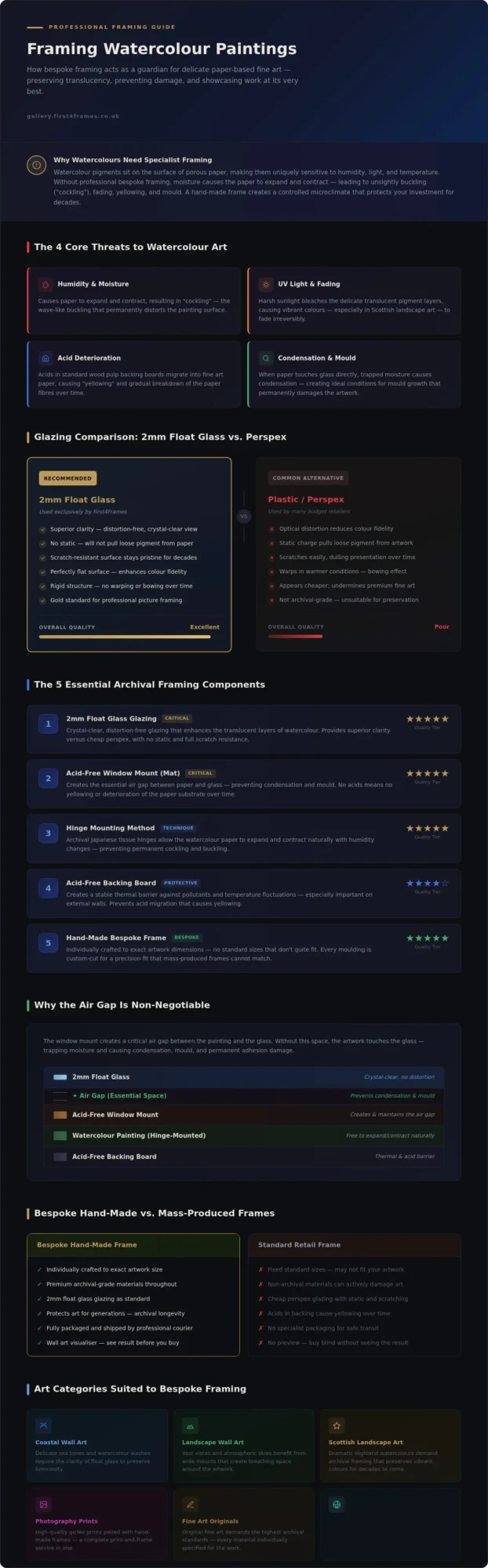
“Bespoke” isn’t just a marketing term; it describes custom picture framing built from scratch to the exact millimetre. When you design your framed artwork with us, we consider the specific chemistry of your piece. We use acid-free barrier boards and conservation-grade mounts to ensure your custom framed art prints don’t suffer from “mount burn” or yellowing. This attention to detail creates bespoke framed wall art that acts as a protective sanctuary for your most valued pieces, unlike mass-produced alternatives that use harmful acidic backings.

The mount serves a dual purpose: protection and presentation. It provides a vital air gap between the fine art and the 2mm float glass, preventing condensation damage. Choosing the right shade is equally vital. Whether you’re framing photography prints or contemporary art prints, the mount should lift the colours of the image without overpowering them. Our custom picture framing service gives you the freedom to choose your frame online, ensuring the moulding and mount work in harmony.

Using a Wall Art Visualiser to See Before You Buy

Imagining how a frame looks in your lounge is often the hardest part of online picture framing. Our First4Frames Gallery includes a professional wall art visualiser to solve this problem. You can visualise art on your wall by uploading a photo of your room or using our pre-set templates. It’s the perfect way to test if coastal wall art or minimalist Scandinavian frames suit your decor. This interactive experience means you can see artwork before you buy, removing all the guesswork from the process.

Selecting the Right Style for Scottish Landscape Art

Scottish landscape art often features bold, dramatic tones that require a frame with presence. For works by best-selling artists like Jolomo or Matylda Konecka, we often suggest deep-set mouldings that mirror the rugged beauty of the Highlands. Traditional landscape wall art might benefit from a classic wood grain, while modern pieces by famous artists look stunning in sleek, dark profiles. If you’re ready to transform your space, you can explore our full range of ready-to-hang framed art today.

Mastering Custom Picture Framing: The Expert Guide to Bespoke Art Display

Online Picture Framing: How to Order from Home

Ordering custom picture framing from your sofa shouldn’t be a daunting task. We’ve simplified the journey into four clear steps to ensure your art receives the professional treatment it deserves. First, measure your piece carefully; for precise results, consult our UK Guide for Framing. Next, select a moulding that speaks to the medium. Fine art often pairs beautifully with classic wood grains, while photography prints usually demand the clean lines of a contemporary profile.

Thirdly, choose your finishing touches. Unlike competitors who rely on static-heavy acrylic, we provide 2mm float glass for superior clarity and depth. Finally, proceed through our secure checkout. Once your frame is hand-crafted in our workshop, we don’t just put it in a standard box. We use specialized, multi-layered packaging to ensure it arrives in pristine condition. You can choose your frame online and begin your design today.

The “Print and Frame” Service for Digital Photos

You don’t need a physical print to get started. Our art print framing service allows you to upload digital memories directly to our site. We use high-quality Giclée printing to ensure your photos match the artisanal standard of our bespoke frames. This all-in-one solution transforms a digital file into a museum-quality display without you ever having to leave the house. Visit our page for Photo Printing and Framing Online to upload your images.

Safe Shipping and Professional Packaging

Shipping bespoke framed wall art requires more than just a simple “fragile” sticker. We utilize professional couriers who understand the delicate nature of 2mm float glass. Every frame is fully packaged with reinforced edges and shock-absorbent materials to prevent any damage during transit. This commitment to logistics ensures that the craftsmanship we put into your frame in our workshop is exactly what you see when you unbox it at home.

Commercial Curation and Bespoke Solutions

For property developers and estate agents, the right artwork does more than fill a wall; it stages a lifestyle. Our custom picture framing provides a professional edge that budget, off-the-shelf options simply can’t achieve. When you’re managing an office refurbishment or a new housing development, a cohesive art strategy is essential for boosting morale and establishing a premium brand identity. We ensure that every piece, whether it’s a single statement work or a volume order for a commercial installation, receives the same hand-made attention to detail.

Maintaining quality across large-scale projects is where our artisanal approach shines. While competitors might rely on flimsy, pre-assembled frames, we individually craft every order in our workshop. This ensures structural integrity and a precision fit for every piece of bespoke framed wall art. We use only 2mm float glass for these projects, providing a level of clarity and professional finish that budget perspex alternatives can’t match. This commitment to quality ensures your investment remains a lasting asset for your business environment.

Art Print Framing Service for Interior Designers

Interior designers need a partner who understands the nuance of textures and room palettes. Our art print framing service is built for collaboration, offering an all-in-one solution from initial curation to final delivery. We help you select frames that complement specific design themes, ensuring the finished product integrates perfectly with your vision. Every frame is fully packaged and shipped via professional couriers, so you don’t have to worry about damage during the final stages of a project.

Scottish Art for Business Spaces

Integrating Scottish landscape art or works by famous artists into a commercial environment creates a strong sense of place and heritage. Whether you’re selecting contemporary art prints for a modern tech hub or traditional fine art for a law firm, sourcing local talent builds a meaningful connection with clients. You can browse our extensive collection of works by best-selling artists at our Gallery for commercial inspiration. Using high-quality frames for these pieces ensures they reflect the high standards of your own brand.

Elevate Your Art with Artisanal Precision

Selecting professional custom picture framing is a long-term investment in the preservation of your collection. Every frame is individually hand-made in our UK workshop, providing a structural integrity that mass-produced options can’t offer. By using premium 2mm float glass, we ensure your contemporary art prints or Scottish fine art are displayed with museum-level clarity. This technical choice avoids the scratches common with cheap perspex; it keeps your focus exactly where it belongs: on the art. Our expert curation and digital printing services make it easy to find a style that resonates with your unique decor.

It’s time to stop settling for “close enough” and enjoy a display that’s perfectly tailored to your space. Whether you’re a private collector or a commercial manager, our bespoke approach guarantees a seamless journey from design to delivery. Your memories deserve the care that only a dedicated artisan can provide. Design your bespoke framed artwork today at First4Frames Gallery and bring your vision to life with confidence.

Frequently Asked Questions

What is the difference between custom framing and ready-made frames?

Custom framing involves individually crafting a frame to the exact millimetre of your piece, whereas ready-made frames are mass-produced in standard sizes. We use high-quality materials and preservation techniques for every order. Unlike cheap alternatives, our custom picture framing provides a precision fit that prevents artwork from sagging or warping. This ensures your Scottish landscape art or fine art remains protected and beautifully presented for decades.

Why do you use 2mm float glass instead of perspex?

We use 2mm float glass because it offers superior clarity and scratch resistance compared to the budget perspex used by many competitors. Glass provides a premium, museum-quality finish that doesn’t attract dust through static. It ensures the vibrant colours of your contemporary art prints remain true and undistorted. While acrylic can yellow or cloud over time, float glass maintains its transparency and structural integrity for a lifetime of display.

Can I frame my own digital photos through your online service?

Yes, our “print and frame” service is designed specifically for your digital memories. You can upload your photographs directly to our website, where we print them using high-quality Giclée techniques to match our artisanal framing standards. This all-in-one art print framing service transforms a digital file into bespoke framed wall art. It’s a seamless way to turn personal photography prints into professional, ready-to-hang decor for your home or office.

How do I use a wall art visualiser to see artwork before I buy?

Our wall art visualiser allows you to see artwork before you buy by placing a digital render of the piece into a room setting. Simply select your desired print and frame combination on our website to generate the preview. You can even upload a photo of your own room to check how coastal wall art or landscape wall art fits your existing decor. It removes the guesswork from online picture framing entirely.

How are bespoke framed pictures packaged for shipping in the UK?

We take logistical safety seriously by using multi-layered, professional packaging for every order. Each piece of custom picture framing is fully wrapped with reinforced corner protection and shock-absorbent materials to prevent damage. We ship exclusively via professional couriers who are experienced in handling fragile 2mm float glass. This ensures your handmade frame arrives at your UK address in the same pristine condition it left our Falkirk workshop.

Posted on

Conservation Framing Techniques: The Artisan’s Guide to Preserving Your Art

Conservation Framing Techniques: The Artisan’s Guide to Preserving Your Art

Your favorite piece of art is slowly disappearing right before your eyes, and a standard high-street frame might be the very thing accelerating its decline. It’s heartbreaking to notice the subtle yellowing of a cherished print, often because professional conservation framing techniques weren’t used to shield it. You want to preserve these memories, yet technical jargon like “acid-free” feels more like a barrier than a solution. You deserve to feel confident that your investment is protected by more than just a mass-produced plastic box.

In this guide, you’ll discover how premium materials act as a protective embrace for your artwork. We’ll show you how to distinguish hand-made artisan quality from cheap alternatives, emphasizing the superior clarity of 2mm float glass over the dull perspex used by many competitors. We’ll walk you through the essential components of museum-grade bespoke framed wall art, from archival mounting to custom framed art prints. By the end, you’ll understand exactly how to safeguard your collection against fading and environmental damage for a lifetime.

Key Takeaways

  • Understand how professional conservation framing techniques create a protective environment to shield your art from UV rays, humidity, and acid damage.
  • Learn why acid-free materials and reversible hinging are vital for preserving the integrity of everything from fine art to contemporary photography prints.
  • See why choosing 2mm float glass provides the high-fidelity clarity your artwork deserves, specifically contrasting it with the lower quality of standard perspex.
  • Explore how to design your bespoke framed wall art using a wall art visualiser to see exactly how your chosen style will look in your home.

What is Conservation Framing and Why Does Your Art Need It?

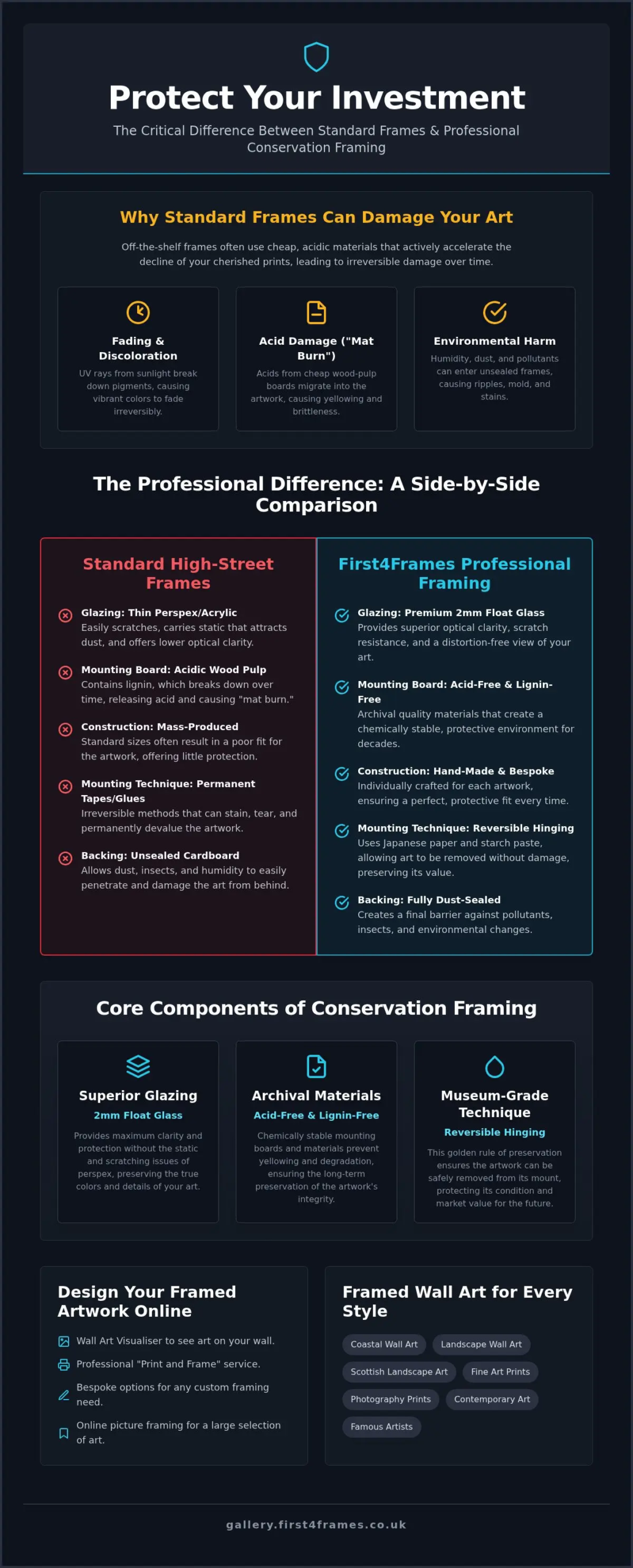
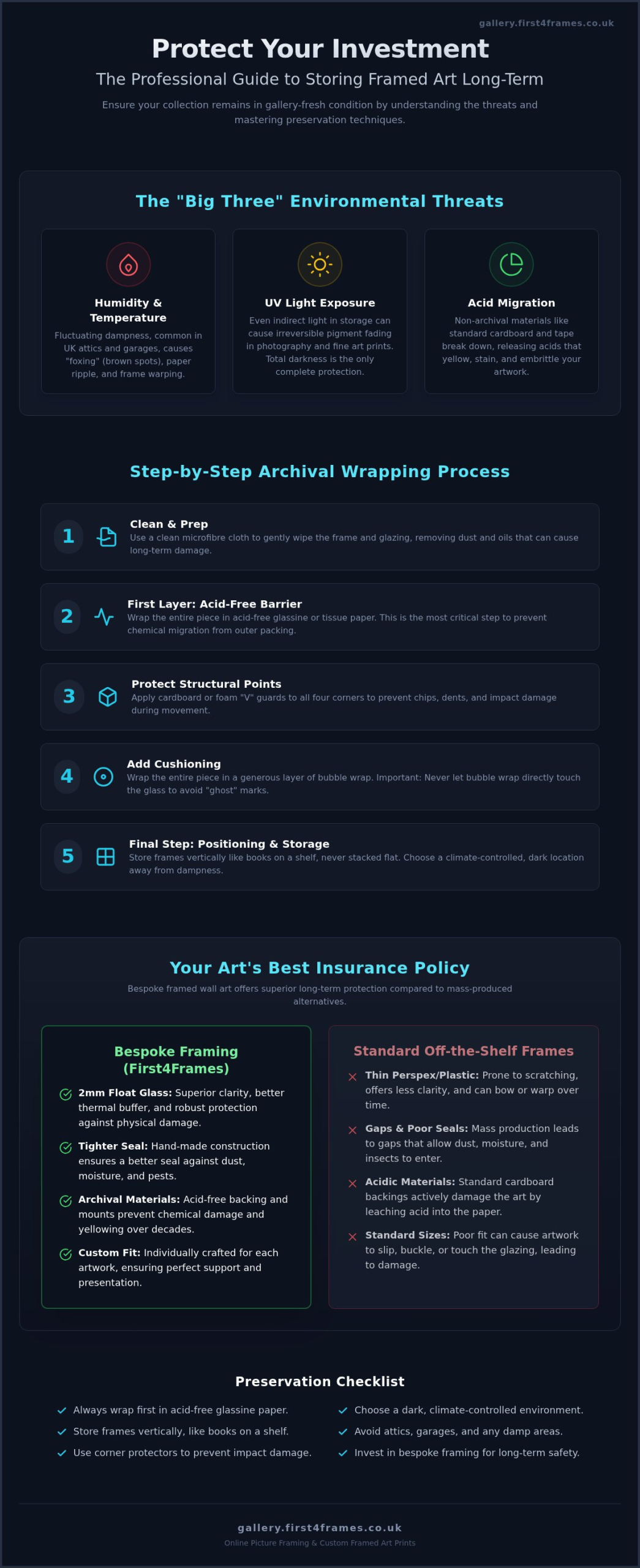
Conservation framing isn’t just a luxury; it’s a vital shield for your collection. At its heart, conservation framing techniques involve using chemically stable materials and reversible methods to protect artwork from the environment. While a standard frame might look fine for a year or two, bespoke framed wall art is designed to last for generations. Understanding the “Big Three” threats, UV radiation, humidity, and acid migration, is the first step in protecting your investment.

Scottish landscape art and delicate fine art photography are particularly vulnerable to these elements. High humidity can cause paper to ripple; acid migration from cheap backing boards leads to permanent “mat burn.” We believe every piece deserves an individual approach. Unlike mass-produced alternatives, our frames are hand-made in our Falkirk workshop to ensure a perfect, protective fit. We use 2mm float glass for superior clarity. This ensures your art looks stunning while remaining safe, unlike the dull perspex found in budget options. For more on the standards of this craft, you can read about the conservation and restoration of painting frames.

The Science of Fading: Why Standard Frames Fail

Standard, off-the-shelf frames often use wood pulp mats that contain lignin. Over time, this lignin breaks down and releases acidic gases. This “off-gassing” causes contemporary art prints to yellow and become brittle. Light is equally destructive. Without professional conservation framing techniques and proper glazing, UV rays physically break the molecular bonds of pigments. This leads to irreversible fading. When you use our service to design your framed artwork, you’re capturing a moment in time; professional framing ensures that moment doesn’t fade away.

Core Conservation Framing Techniques: Beyond the Standard Frame

Preservation starts with what’s behind the art. Professional conservation framing techniques prioritize materials that won’t harm the paper or the pigments. We use mounting boards that are both acid-free and lignin-free to prevent “mat burn,” those unsightly brown lines often seen in older, cheaper frames. Following Library of Congress guidelines ensures that the environment inside the frame remains chemically neutral for years. We also incorporate spacers. These create a “breathing” gap between the glazing and the surface, preventing ink from sticking to the glass. A dust-sealed backing then acts as a final barrier against pollutants and insects, ensuring your bespoke framed wall art remains pristine.

The Glazing Standard: 2mm Float Glass vs. Perspex

While many online retailers use perspex to save on shipping costs, we strictly use 2mm float glass. Perspex is prone to scratching and carries a static charge that pulls dust toward your art, which can be particularly damaging to charcoal or pastel works. In contrast, 2mm float glass provides superior optical clarity and stays crystal clear for decades. Using 2mm float glass enhances the visual fidelity of fine art by providing a distortion-free view that preserves the true colors and textures of the original work.

Reversible Mounting: The Golden Rule of Preservation

True artisan framing follows one golden rule: every process must be reversible. We never use permanent tapes or glues that could stain or tear the paper. Instead, we use the “hinging” technique with Japanese paper and starch-based adhesives. This allows the artwork to expand and contract naturally with temperature changes without buckling. If you want to design your framed artwork with peace of mind, these methods ensure your piece retains its full market value. It’s the difference between a temporary display and a legacy piece.

Conservation Framing Techniques: The Artisan’s Guide to Preserving Your Art

Choosing the Right Components for Your Bespoke Frame

Selecting the right aesthetics is just as important as the structural conservation framing techniques discussed earlier. It begins with matching the frame to the soul of the piece. Whether you’re showcasing vibrant coastal wall art or moody landscape wall art, the frame acts as a bridge between the artwork and your living space. You should always choose a profile that complements the art’s tones without overwhelming the composition.

Most collectors find it difficult to see artwork before you buy. Our wall art visualiser removes this guesswork. This interactive tool allows you to visualise art on your wall by uploading a photo of your room. You can then experiment with different bespoke framed wall art styles, ensuring the textures and colors harmonize perfectly with your existing decor before you commit to an order.

Designing Your Framed Artwork Online

If you’re looking to turn your own photography prints into a statement piece, our art print framing service is the ideal solution. We use professional Giclée standards to ensure every print has the highest color fidelity. Unlike generic, off-the-shelf sizes that often pinch or damage the paper, our custom framed art prints are individually crafted to the millimeter in our Falkirk workshop. You can design your framed artwork online and rest easy knowing it will be hand-finished with 2mm float glass for superior clarity.

Selecting Materials for Famous and Best-selling Artists

When you’re framing works by famous artists or best-selling artists, the stakes are higher. These pieces require the highest tier of protection to maintain their long-term value. Even when you choose your frame online for the sake of convenience, we never compromise on the quality of our components. We balance modern online picture framing ease with traditional artisan protection, ensuring that contemporary art prints receive the same museum-quality care as a traditional fine art piece.

Ready to start your collection? Browse our curated gallery to find the perfect piece for your home.

At First4Frames Gallery, our commitment to quality is deeply personal. Every frame is individually crafted for each order in our Falkirk workshop. We don’t believe in the “one size fits all” approach of competitors who use cheap, standard frames. These mass-produced options often fail to support the weight or dimensions of your artwork properly, leading to structural failure over time. By contrast, our hand-made process ensures that your bespoke framed wall art is built to last. We exclusively use 2mm float glass; it offers a level of clarity that dull, static-prone perspex simply can’t match.

Shipping high-quality glass requires precision and care. We fully package every finished frame in specialized damage-protection materials to withstand the rigors of transit. By partnering with professional couriers, we ensure your art arrives safely anywhere in the UK, ready to be hung and admired. This logistical expertise ensures that the artisan quality we create in the workshop is exactly what you receive at your doorstep.

From Digital Photo to Bespoke Masterpiece

Our art print framing service bridges the gap between digital files and heirloom-quality displays. We combine high-resolution Giclée printing with professional conservation framing techniques to ensure your memories never fade. By using archival inks and 2mm float glass, we guarantee that your photography prints look as vibrant in twenty years as they do today. Explore our full range of framing options to see how we can transform your digital collection into a stunning visual experience.

The Falkirk Artisan Heritage

Being based in Central Scotland allows us to maintain strict quality control over every piece that leaves our gallery. This local craftsmanship ensures that your Scottish landscape art or contemporary art prints receive the attention they deserve. We pride ourselves on being a trusted partner for collectors and artists alike. If you have a unique project or need specific custom framing options, we’re here to help. Contact our expert framers today to discuss how we can help you preserve your most cherished works.

Protect Your Legacy with Professional Framing

Your art is more than just a decoration; it’s a window into your personal style and a legacy worth protecting. By choosing professional conservation framing techniques, you ensure that every piece, from contemporary art prints to Scottish landscape art, remains as vibrant as the day it was created. We’ve explored how acid-free materials and reversible mounting prevent the yellowing and buckling so common in cheap, standard frames.

At First4Frames, we take pride in our artisan heritage. Every piece is individually hand-crafted in our Falkirk workshop using 2mm float glass. This premium glazing provides superior clarity that dull, static-heavy perspex simply cannot match. Once your order is complete, we use professional couriers to deliver your bespoke framed wall art in secure, protective packaging. Don’t leave your collection to chance when you can invest in museum-quality care.

Visualise art on your wall and design your bespoke framed artwork today. We look forward to helping you preserve your most cherished creative moments for decades to come.

Frequently Asked Questions

What is the difference between standard framing and conservation framing?

Standard framing uses acidic materials and permanent adhesives that damage art over time. Conservation framing techniques focus on preservation using acid-free boards, reversible mounting, and protective glazing. While standard frames are often mass-produced in generic sizes, our bespoke frames are individually hand-crafted in our Falkirk workshop. This creates a stable environment that shields your art from the “Big Three” threats: UV light, humidity, and acid migration.

Why is 2mm float glass better than perspex for picture framing?

We exclusively use 2mm float glass because it offers superior optical clarity and long-term durability. Unlike perspex, which scratches easily and carries a static charge that attracts dust, float glass remains crystal clear. This high-fidelity glazing ensures your fine art or photography prints are seen without distortion. While many competitors choose perspex to reduce shipping costs, we prioritize the protection and visual perfection that only professional-grade glass provides.

Can any artwork be framed using conservation techniques?

Yes, conservation framing is suitable for almost any piece, from delicate Scottish landscape art to modern contemporary art prints. Whether you have a valuable original or a sentimental digital photo, these techniques provide a protective shield. Our bespoke framing service accommodates custom sizes and styles, ensuring every piece receives an individual fit. Using archival materials is especially important for paper-based works, as they are most susceptible to environmental aging and chemical damage.

Is conservation framing worth the extra cost for Giclée prints?

Investing in conservation framing techniques is essential for Giclée prints to maintain their longevity and color fidelity. These high-quality prints use archival inks that deserve the protection of 2mm float glass and acid-free mounting. Without these professional standards, even the best prints can fade or yellow within a few years. By choosing bespoke framed wall art, you turn a simple print into a lasting heirloom that retains its beauty for decades.

How do I know if a framer is using truly acid-free materials?

A reputable artisan will be transparent about their components and assembly process. You should look for terms like “alpha-cellulose” or “100% cotton rag” for mounting boards, as these are naturally acid-free. At First4Frames, we individually craft every frame to order using verified archival materials. We avoid the cheap, standard frames used by high-street competitors, ensuring that every layer of your bespoke frame meets professional conservation standards for long-term safety.

Posted on

The Ultimate Guide to Fine Art Framing: Quality, Style, and Bespoke Craftsmanship

The Ultimate Guide to Fine Art Framing: Quality, Style, and Bespoke Craftsmanship

That “bargain” frame you found online might actually be hiding the true beauty of your artwork behind a layer of cloudy, static-filled plastic. It’s frustrating to invest in a beautiful piece of art only to find that standard high-street frames simply don’t fit or feel flimsy. You want your walls to reflect your personal style, but the fear of a frame arriving broken or looking “cheap” often holds you back from completing your decor. High-quality fine art framing is more than just a border; it’s an essential investment in clarity and long-term preservation.

This guide will show you how professional artisan standards transform your collection into a gallery-standard display. You’ll discover how to choose bespoke, hand-made frames that offer a perfect fit and museum-grade protection. We’ll explore the superior clarity of 2mm float glass, the benefits of traditional craftsmanship, and how to use our wall art visualiser to design your custom framed art prints with total confidence. From Scottish landscape art to contemporary photography prints, we’ll help you create a ready-to-hang masterpiece.

Key Takeaways

  • Learn why professional fine art framing utilizes 2mm float glass to provide superior clarity and lasting protection compared to the standard Perspex used in mass-produced alternatives.
  • Discover how to use a wall art visualiser and online design tools to choose your frame online and see exactly how it complements your decor before making a purchase.
  • Understand the benefits of bespoke framed wall art that is individually hand-made in a specialist workshop, ensuring a perfect fit and artisan quality for every piece.
  • Find out how to transform your digital photography prints into gallery-standard decor using a professional print and frame service that guarantees high-resolution results.

Beyond the High Street: Why Quality Fine Art Framing Matters

High-street frames often promise convenience, but they usually fail to protect your investment. Mass-produced options rely on standard sizes and thin plastic glazing that can cloud over time. Professional fine art framing takes a different approach. Every piece is individually crafted in our Falkirk workshop. We focus on longevity and fidelity, ensuring your art remains as vivid as the day it was created. Understanding the history of picture frames reveals that framing was always meant to be a bespoke craft. Our online picture framing tools make this specialized service accessible to everyone.

The Clarity of 2mm Float Glass vs. Perspex

The “Perspex problem” is a common trap. While many online retailers use acrylic to save on shipping, it’s prone to static and scratches. We use 2mm float glass as our gold standard. It provides superior clarity for Giclée and photography prints without the visual distortion found in plastic. This professional choice ensures your Scottish landscape art or contemporary art prints look sharp and vibrant from every angle. It’s a simple difference in material that makes a massive impact on your home’s aesthetic.

Choosing fine art framing that prioritises glass over plastic ensures your investment is protected from environmental factors. Glass doesn’t yellow or cloud over time, maintaining the fidelity of the artist’s original vision.

Bespoke Sizing: Why ‘Close Enough’ Isn’t Good Enough

Trying to force a unique print into a standard frame often leads to awkward cropping or poor matting. Bespoke framed wall art is designed to fit your artwork exactly, down to the millimetre. This precision prevents long-term damage like buckling or acid-burn from cheap backing boards. Whether you’re framing coastal wall art or work by famous artists, custom-made frames provide the structural integrity that standard kits simply can’t match.

You don’t have to settle for “close enough” when you can design your framed artwork online. Once complete, your order is fully packaged and shipped via professional couriers to ensure it arrives ready to hang. Using an art print framing service that respects your art’s dimensions ensures your collection is preserved for years to come.

Designing Your Space: How to Choose Your Frame Online

Designing your home is a personal expression of taste. Our online picture framing platform makes it simple to choose your frame online for everything from traditional Fine art to expansive Landscape wall art. A crucial part of this process is the mount selection, which provides a professional focus and adds depth to the presentation. Following preservation guidelines for matting and framing ensures that your chosen style also protects the longevity of the piece, preventing the art from touching the glass directly.

Matching Frame Styles to Art Categories

Different genres demand different textures. For Scottish landscape art, deep wood grains like oak or walnut highlight the rugged terrain, whereas Coastal wall art often pairs beautifully with drifted or white-washed finishes. If you are displaying Contemporary art prints or Photography prints, sleek, minimalist profiles maintain a modern focus. Our fine art framing options allow you to tailor the aesthetic to the specific mood of the piece, ensuring the frame acts as a natural extension of the artwork itself.

Visualise Before You Buy: The Online Advantage

You don’t have to guess how your custom framed art prints will look in situ. Our wall art visualiser allows you to visualise art on your wall instantly. This tool lets you see artwork before you buy, helping you design your framed artwork to match your existing room colour palette and lighting. Once you’ve created your bespoke framed wall art, our professional art print framing service ensures the final product is hand-made to perfection at First4Frames Gallery. You can browse our full gallery to begin experimenting with these styles and find the perfect match for your space.

The Ultimate Guide to Fine Art Framing: Quality, Style, and Bespoke Craftsmanship

The Craft of Bespoke Picture Framing in Central Scotland

Inside our Falkirk workshop, the sound of precision cutting and the smell of quality wood define our daily rhythm. Unlike assembly-line providers, First4Frames Gallery treats every order as a unique piece of furniture for your art. We believe that custom framed art prints require individual attention to detail rather than assembly-line speed. Every corner is joined with care, and every 2mm float glass sheet is inspected for perfection. This dedication to fine art framing ensures that your piece isn’t just “put in a box,” but is instead given a home that reflects its value.

Hand-Made in Falkirk: Local Expertise, National Quality

Choosing a local workshop in Central Scotland doesn’t mean you’re limited by geography. While we take pride in our Falkirk roots, First4Frames Gallery reaches every corner of the UK. Our team combines the personal touch of a master framer with the efficiency of a modern online store. If you’re searching for the right partner, you can learn about choosing the best art frame shops near me to see how we compare. Our commitment to high-quality materials, like acid-free mounts and solid wood mouldings, sets us apart from mass-produced retail alternatives.

Professional Packaging and Courier Logistics

Shipping glass can feel risky for any art collector. We’ve perfected a multi-layer packaging process designed to withstand the journey from our bench to your door. Each frame is wrapped in protective layers and secured in custom-fit boxes to prevent transit damage. We ship exclusively via professional couriers, providing you with full tracking and peace of mind. This logistical excellence ensures that the craftsmanship we put into your frame in Falkirk is exactly what you see on your wall. You can view our bespoke framing options at First4Frames Gallery to find the perfect style for your space today.

From Digital to Decor: Professional Print and Frame Services

The journey from a digital image to a finished piece is simple and straightforward. You can upload your digital photography prints directly to our platform, selecting the exact paper type and frame style that suits your vision. This art print framing service ensures that the technical specifications of the print perfectly align with the bespoke dimensions of the frame. It’s a hassle-free way to start your photo printing and framing online without needing to visit a physical studio. Our team handles the technical alignment, ensuring every pixel is represented with artisan precision.

Ready-to-Hang Solutions for Homes and Businesses

We believe that the final step of the creative process should be the easiest. Every order arrives as a finished, ready-to-hang piece. There’s no need to struggle with separate components or worry about dust getting trapped behind the 2mm float glass. If you’re planning a larger project or a gallery wall, you can reference our guide to standard photo and picture sizes to help map out your display. Our professional couriers handle the delivery, ensuring your fine art framing investment arrives in perfect condition, ready to transform your space immediately.

Elevate Your Collection with Artisan Craftsmanship

Choosing the right frame is the final, vital step in the creative journey. It’s the difference between a simple print and a gallery-standard display that lasts for generations. We’ve explored how 2mm float glass offers clarity that plastic can’t match and why bespoke sizing is essential for protecting your investment. By moving away from mass-produced retail options, you ensure your art is treated with the respect it deserves.

Every order at First4Frames Gallery is individually hand-made in our Falkirk workshop to meet professional standards. Whether you’re framing contemporary art prints or digital memories, our fine art framing service provides the precision and quality your home deserves. We ensure every finished piece is fully packaged and sent via secure professional couriers for reliable delivery across the UK. It’s time to stop settling for “close enough” and start creating something extraordinary. Design your bespoke framed artwork at First4Frames Gallery today and see your vision come to life.

Frequently Asked Questions

What is the best glass for fine art framing?

We use 2mm float glass as the gold standard for clarity and protection. Unlike the cheap Perspex or acrylic used by many high-street competitors, float glass provides superior optical fidelity and scratch resistance. It ensures your Giclée prints or photography prints remain vivid without the static or clouding associated with plastic. Every frame we craft in our Falkirk workshop includes this premium component as standard for a professional gallery finish.

Can I choose my frame online for a custom size?

Yes, you can easily choose your frame online for any bespoke dimensions you require. Our interactive online picture framing tool allows you to input exact measurements for your artwork, ensuring a perfect fit every time. This eliminates the risks of using standard frames for non-standard pieces, which often leads to buckling or cropping. You can design your framed artwork to match your specific vision and decor requirements.

How do I visualise art on my wall before purchasing?

You can use our integrated wall art visualiser to visualise art on your wall before you buy. This feature allows you to see artwork before you buy by placing it in a virtual room setting. It’s a reliable way to check if your chosen mount and frame style complement your existing furniture and lighting. This tool ensures you feel confident in your bespoke framed wall art selection from the comfort of your home.

Do you offer a print and frame service for my own photos?

We provide a comprehensive art print framing service specifically for your personal digital images. You can upload your photography prints directly to our site for high-resolution Giclée printing. We then pair these with our individually hand-made frames to create a ready-to-hang masterpiece. This all-in-one solution ensures your photos are printed to the highest quality standards, matching the artisan craftsmanship of our bespoke frames perfectly.

How are bespoke frames shipped to prevent breaking?

We package every frame in multiple protective layers to prevent damage during transit. Our team uses custom-fit boxes and secure internal padding specifically designed to protect 2mm float glass. Once finished, your fine art framing order is shipped via professional couriers with full tracking. This logistical care ensures that your hand-made frame arrives safely at your UK address, ready to be displayed on your wall immediately.

Posted on

How to Protect Art from Mould in Old Houses: A Preservation Guide

How to Protect Art from Mould in Old Houses: A Preservation Guide

Imagine walking into your drawing room, expecting to admire a bespoke Scottish landscape print, only to find faint, brown “tide marks” creeping across the mount. It’s a heartbreaking moment for any collector; yet it’s a common reality when living in a period property where musty smells and damp walls are part of the building’s soul. Learning how to protect art from mould in old houses is essential if you want to prevent foxing from permanently devaluing your collection. You shouldn’t have to live in fear of ruining your favourite pieces simply because of the age of your property.

At First4Frames Gallery, we believe that your home’s historic charm shouldn’t come at the cost of your precious artwork. In this guide, you’ll discover how to create a protective micro-climate using professional preservation framing and strategic environmental controls. We’ll explore the technical benefits of using 2mm float glass over standard plastic alternatives, explain why “wall-distancing” is your best defence against damp, and show you how to use our wall visualiser to find the safest hanging spots in your home.

Key Takeaways

  • Understand why solid stone walls in period properties create high-risk zones for mildew and discover how to protect art from mould in old houses by identifying early signs of foxing.
  • Learn why bespoke framing using 2mm float glass provides a superior seal and clarity compared to mass-produced frames that often use moisture-absorbing MDF backings.
  • Master the “air gap” technique using frame spacers to prevent damp transfer and use a wall art visualiser to identify the safest hanging locations in your home.
  • Explore the benefits of Giclée fine art prints and archival materials that ensure your collection maintains its fidelity even in challenging environmental conditions.

Understanding Why Old Houses Put Your Art at Risk of Mould

Living in a beautiful Victorian terrace or a rustic stone cottage comes with unique challenges for any art collector. The organic materials found in your artwork, such as paper fibres and wooden stretchers, act as a primary food source for fungal spores. “Art mould” typically manifests as mildew, a fuzzy surface growth, or foxing, which are the stubborn reddish-brown spots often seen on antique prints. Applying professional collections care principles is the first step in learning how to protect art from mould in old houses.

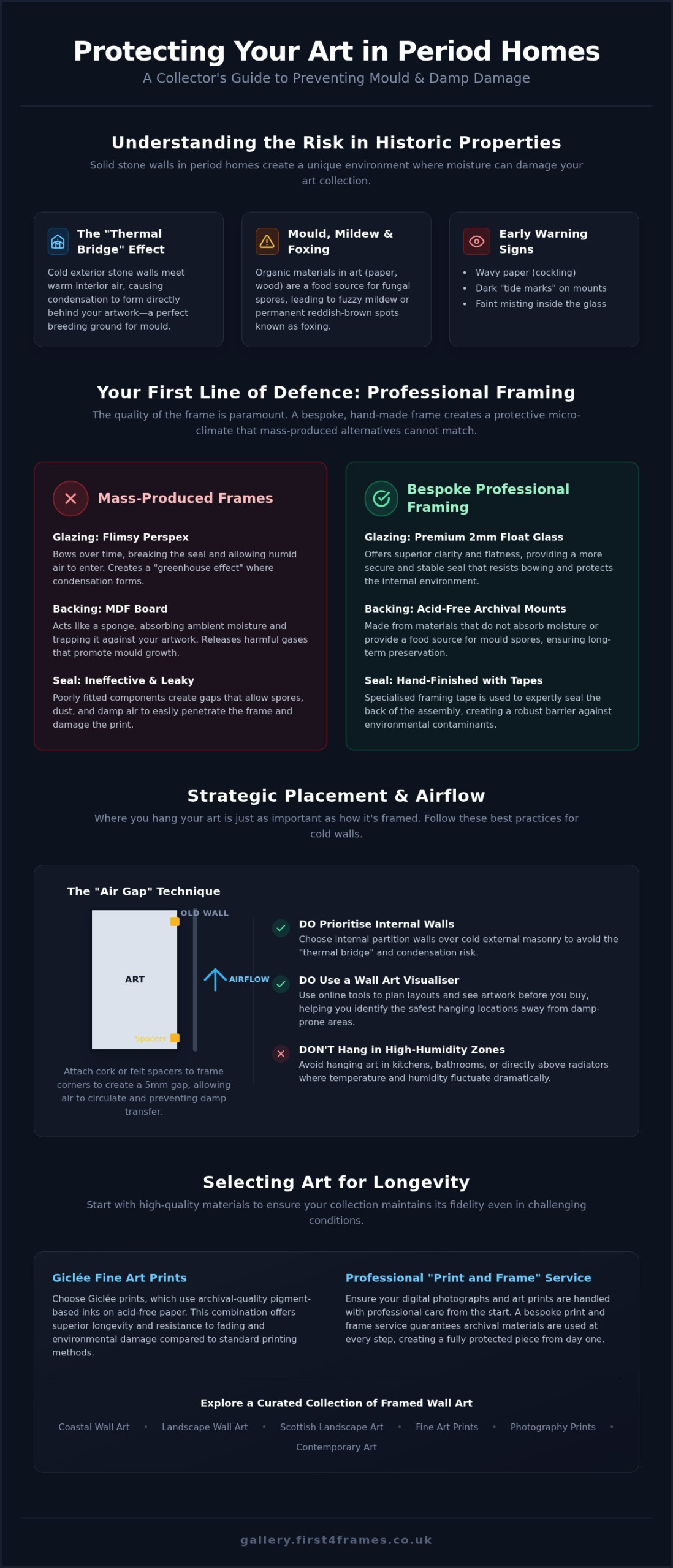
British period homes often feature solid stone or brick walls built without modern cavity insulation. These structures create “thermal bridges” where the cold exterior masonry meets the warm, humid air of a heated drawing room. Moisture condenses at this intersection, often directly behind your picture frames. Damp walls are dangerous. You should watch for early warning signs like wavy paper, known as cockling, dark “tide marks” on mount boards, or a faint misting on the interior of the glazing.

The Science of the Micro-Climate

Cheap, mass-produced frames often rely on moisture-absorbing MDF backings and thin perspex. These materials trap humidity against the artwork, creating a stagnant micro-climate where spores thrive. Knowing how to protect art from mould in old houses isn’t just about a quick wipe; it’s about controlling the atmosphere. Unlike flimsy retail alternatives, a professional, sealed environment is your best defence. We believe in the power of a bespoke framed wall art solution. By using premium 2mm float glass for superior clarity and individually crafted frames, we ensure a flatter, more secure seal. This controlled environment prevents the damp air of an old house from ever reaching the delicate Giclée print or fine art photography inside.

Professional Framing: Your First Line of Defence Against Damp

The first line of defence for your artwork isn’t just the wall it hangs on; it’s the frame that protects it. Cheap, mass-produced frames often rely on MDF backings, which act like sponges in a damp room. These boards trap moisture and release harmful gases that encourage fungal growth. When considering how to protect art from mould in old houses, you must look for acid-free mounting boards and individually crafted frames. Following the NPS guide to preventing mold, we prioritise archival materials that don’t provide a food source for spores, ensuring your collection remains pristine.

Why Glass Quality Matters for Preservation

Glazing is more than just a window; it’s a structural barrier. Many budget retailers use flimsy perspex, but we use 2mm float glass for its exceptional clarity and flatness. Perspex can bow over time, breaking the seal and allowing humid air to enter. This creates a “greenhouse effect” where condensation forms on the inside of the glass, leading to water damage and mildew. High-quality glass provides a more secure, flatter seal that’s essential for preserving fine art prints in challenging environments.

Sealing and Backing Techniques

Professional sealing is what separates an artisan frame from a standard one. We use specialised framing tape to seal the back of the assembly, creating a barrier against dust and spores. This hand-finished approach ensures a tighter fit than any pre-made frame could offer. For a seamless experience, our “print and frame” service allows you to design your framed artwork using Giclée prints that are archival from the moment they’re created. Learn more about our bespoke photo frames and printing to see how we protect your memories with professional craftsmanship.

How to Protect Art from Mould in Old Houses: A Preservation Guide

Strategic Placement and Airflow: How to Hang Art on Cold Walls

Learning how to protect art from mould in old houses requires more than just a sturdy frame; it demands a strategic approach to where you hang it. In period properties, external stone walls are often much colder than the room’s ambient temperature. This temperature difference causes moisture to settle behind the frame. To decide on the safest location, use our wall art visualiser to see artwork before you buy and test different layouts away from damp-prone corners.

  • Prioritise internal walls: Choose internal partition walls over external masonry whenever possible to avoid the “thermal bridge” effect.
  • Create a buffer: Attach cork or felt spacers to the bottom corners of your frame to ensure a 5mm gap for ventilation.
  • Monitor humidity: Use a digital hygrometer to keep room humidity within a stable 40% to 55% range.

Creating a Buffer Zone

Avoiding High-Risk Areas

Don’t hang your collection above radiators or near single-glazed windows. Rapid temperature changes from radiators can warp wooden frames, while windows are magnets for condensation. If you’re looking to safely display Scottish landscape art in a traditional drawing room, stick to well-ventilated areas with consistent lighting. Avoid “dead air” spots like the narrow gaps behind doors or deep alcoves where moisture tends to linger. Ready to protect your collection? Visualise art on your wall today and plan your perfect, safe gallery layout.

Selecting the Best Framed Wall Art for Longevity

Choosing the right medium is just as vital as the frame when you’re figuring out how to protect art from mould in old houses. Giclée fine art prints are the superior choice for period properties because they use high-stability pigment-based inks and heavy archival paper. This is especially true for vibrant Contemporary art prints or atmospheric Coastal wall art, where maintaining colour fidelity is essential. Our selection includes works by Best-selling artists, ensuring that your chosen piece isn’t just beautiful but manufactured to museum-grade archival standards.

Our online picture framing service allows you to customise every element of your display to suit your specific environment. Whether you are looking for expansive Landscape wall art or works by Famous artists, you can choose your frame online to match the structural needs of your room. We recommend using our wall visualiser to “see artwork before you buy” to accurately assess the scale. This ensures your piece fits perfectly within the safe “airflow zones” we discussed earlier, keeping it away from damp corners. Bespoke framed wall art offers a level of protection that standard, pre-made frames simply cannot provide.

Investing in Quality Materials

Handmade frames built with traditional craftsmanship naturally outlast standard retail options. At First4Frames Gallery, every order is individually crafted in our workshop, ensuring the 2mm float glass and acid-free mounts create a permanent, protective seal. This bespoke approach is the most effective way to understand how to protect art from mould in old houses over several decades. To maintain this integrity, we use professional couriers and robust packaging to ensure your art print framing service arrives with its archival seals intact. For more advice, explore our full guide to choosing and displaying picture frames.

Preserve Your Collection for Generations

Your period home’s historic charm shouldn’t be a threat to your most cherished artwork. By combining the science of a sealed micro-climate with strategic airflow, you now have the essential tools for how to protect art from mould in old houses. Remember that the secret lies in the details; choosing internal partition walls, creating a 5mm ventilation gap, and insisting on archival Giclée prints. These small adjustments transform a vulnerable display into a lasting legacy that’s built to endure.

At First4Frames Gallery, every piece we produce is individually hand-made in the UK with a deep appreciation for craftsmanship. We use 2mm float glass for superior clarity and a secure seal, ensuring your art is shielded from the damp environments of older properties. To guarantee it reaches you safely, we use secure professional courier packaging for every order. Ready to transform your space? Design your bespoke framed artwork online today and enjoy the peace of mind that comes with professional preservation. Your art deserves a home as enduring as the building it inhabits.

Frequently Asked Questions

Can I remove mould from a paper art print myself?

You should avoid attempting to remove mould from a paper print yourself. Fungal spores are delicate and often penetrate deep into the paper fibres; meaning household cleaners or physical scrubbing will likely cause permanent damage. Professional conservation is the only safe route to restore the piece. Focus instead on stabilising your room’s humidity to prevent further growth while you seek expert advice for your collection.

Does 2mm float glass really protect art better than plastic or perspex?

Yes, 2mm float glass offers vastly superior protection compared to the flexible perspex found in budget frames. Plastic glazing can bow or warp over time; which breaks the archival seal and allows humid air to reach the artwork. Our float glass remains perfectly flat and rigid. This ensures a consistent micro-climate that is vital for anyone learning how to protect art from mould in old houses.

Is it safe to hang framed prints on an external stone wall in an old house?

It’s generally safer to avoid external stone walls because they’re prone to “thermal bridging” where condensation forms. If you must use an external wall, ensure you create a 5mm air gap using cork or felt spacers on the frame’s reverse. This passive ventilation prevents moisture from the cold masonry transferring directly into the timber frame and reaching your bespoke framed art prints.

What are the first signs that mould is growing inside my picture frame?

Look for “cockling,” which is when the paper appears wavy rather than flat against the mount. You might also notice “foxing,” appearing as small reddish-brown spots, or dark “tide marks” on the mount board. Another early warning is a faint misting on the interior of the glass. Identifying these signs early is a key part of how to protect art from mould in old houses.

How often should I check my framed art for damp damage?

You should inspect your collection at least once every three months, especially during the transition into autumn and winter. These seasonal shifts often cause humidity spikes in period properties. Check the back of the frames for any dampness or musty smells. Regular monitoring allows you to relocate pieces to drier internal walls before any significant fungal growth or permanent paper staining occurs.

Posted on

The Best Way to Store Framed Pictures Long-Term: A Preservation Guide

The Best Way to Store Framed Pictures Long-Term: A Preservation Guide

What if the family portrait or limited edition landscape print you tucked away for safekeeping is actually deteriorating right now? Without the right precautions, moisture and acidic materials can quietly ruin your collection. Finding the best way to store framed pictures long-term isn’t just about finding a spare corner in the attic; it’s about understanding how to shield your investment from the elements.

At First4Frames Gallery, we understand the anxiety of moving or downsizing, from the fear of shattered glass to the appearance of “foxing” on a cherished print. You’ve likely used a tool to visualise art on your wall to ensure pieces look perfect. In this guide, we’ll share professional secrets to preservation, explaining why bespoke framed wall art stands up better to time than cheap, standard frames.

You’ll discover a checklist of archival packing materials and learn why we insist on 2mm float glass for superior clarity and protection compared to perspex. We’ll also explain how to choose storage environments that meet ISO standards for climate control. By the end, you’ll have the confidence to pack your art so it remains gallery-fresh for years to come.

Key Takeaways

  • Understand the “Big Three” environmental threats—humidity, UV light, and acid migration—to ensure your collection remains in gallery-fresh condition.
  • Master the best way to store framed pictures long-term by always wrapping your art in acid-free glassine or tissue paper before adding protective outer layers.
  • Learn why storing frames vertically like books on a shelf is the only safe way to prevent glass breakage and pressure damage over several years.
  • Discover how bespoke framed wall art, crafted with 2mm float glass, provides superior clarity and a tighter seal against dust compared to standard off-the-shelf options.
  • Gain the confidence to curate your collection using a wall art visualiser, knowing your stored pieces are protected by professional-grade packing and storage techniques.

The Science of Preservation: Why Proper Storage Matters for Framed Art

The best way to store framed pictures long-term involves protecting the chemical and physical integrity of both the artwork and the frame itself. Preservation isn’t just about avoiding a broken corner; it’s about stopping invisible reactions that can destroy your investment. The Science of Preservation identifies the “Big Three” threats to art: fluctuating humidity, UV light exposure, and acid migration. When these factors combine, they can turn a vibrant piece of bespoke framed wall art into a faded, brittle shadow of its former self.

At First4Frames, we use 2mm float glass in our hand-made frames because it provides a more stable micro-environment than cheap plastic or thin Perspex. This professional-grade glass acts as a thermal buffer, slowing down the rate at which temperature changes reach the paper. Foxing is the term for reddish-brown spots caused by fungal growth in humid conditions. High-quality glazing and sealed frame backings are your first line of defence against this common storage tragedy.

Humidity and Temperature: The Invisible Enemies

UK homes present unique challenges, particularly with dampness. UK garages and uninsulated attics are the worst places for your custom framed art prints. These spaces act like thermal rollercoasters. As the temperature spikes and drops, bespoke wood frames expand and contract, which can eventually warp the mitred joins. In damp environments, a dangerous micro-climate forms behind the glass. This trapped moisture can cause the paper to ripple or stick to the glazing, making it nearly impossible to remove without damage.

Light Exposure and UV Damage

You might assume that putting art in a box or a dark cupboard means it’s safe from light. However, even indirect UV rays can seep into poorly sealed storage areas and cause permanent pigment fading in Giclée prints. Whether you’re storing Scottish landscape art, photography prints, or contemporary art prints, light remains a constant threat. Storing your art in total darkness is the only way to halt light-based deterioration completely. This ensures that when you finally decide to hang your piece again, the colours remain as vivid as the day you first chose your frame online.

Step-by-Step: Preparing and Wrapping Your Frames for the Long Haul

Preparing your collection for a hiatus requires a meticulous approach to keep it looking gallery-fresh. The best way to store framed pictures long-term begins with a gentle but thorough cleaning. Use a clean microfibre cloth to remove dust and skin oils from the frame and the 2mm float glass. These oils can attract pests or lead to permanent staining if left for years. Following Smithsonian conservation guidelines, your first layer of protection must always be acid-free. Use glassine paper or acid-free tissue to create a barrier that prevents chemical migration between the artwork and the outer packing materials.

Once the primary layer is secure, focus on the structural points. Apply cardboard or foam “V” guards to each corner to prevent chipping or denting. For the final seal, wrap the entire piece in heavy-duty brown paper followed by a generous layer of bubble wrap. Unlike some competitors who suggest wrapping glass directly in plastic, we advise against this. Bubble wrap can leave permanent “ghost” marks on the glazing if applied directly. If you want to ensure your pieces are built to last, you can design your framed artwork with preservation in mind from the very start with First4Frames Gallery.

The Essential Packing Material Checklist

Choosing the right supplies is vital for the health of your art. Glassine is superior to plastic wrap because it allows natural wood frames to breathe, preventing moisture buildup. Ensure you use professional-grade tape, but never let the adhesive touch the frame or the glass. For extra security, create a “sandwich” by placing a sheet of stiff cardboard on both the front and back of the frame before the final wrap. This adds a critical layer of puncture protection against accidental bumps in the storage unit.

Securing Your Artwork for Transport

Moving your art to its new home is the final hurdle. At First4Frames Gallery, we use courier-grade packaging standards to ensure our bespoke framed wall art arrives in perfect condition. When packing your own boxes, use clear labels such as “Fragile,” “Glass,” and “This Side Up.” If you feel unsure about the process, you can contact our Falkirk gallery for professional packing advice. Taking these extra steps now ensures your Scottish landscape art or photography prints remain pristine for the day they finally return to your walls.

The Best Way to Store Framed Pictures Long-Term: A Preservation Guide

Choosing the Right Environment: Positioning and Climate Control

The Golden Rule of art preservation is simple: always store your framed pictures vertically. Think of your collection like books on a library shelf rather than a stack of magazines. Stacking frames flat is a common mistake that leads to shattered glass and “mount-burn” over time. The weight of the top frames puts immense pressure on the bottom piece, which can cause the glazing to crack or the artwork to fuse with the mount. The best way to store framed pictures long-term is to ensure each frame stands on its own edge, supported by its neighbours without bearing their full weight.

Moisture is another silent threat that often creeps up from below. Never place your wrapped art directly on a concrete floor. Concrete is porous and wicks moisture, which can seep through your packaging and rot the bottom of a bespoke wood frame. Use wooden pallets or simple blocks to elevate your collection at least a few inches off the ground. For total peace of mind, place a digital hygrometer in your storage space to track humidity levels. Keeping a close eye on these numbers helps you act before moisture damage begins.

Vertical Storage Physics

Storing art vertically distributes the weight of the 2mm float glass evenly across the rebate of the frame. This prevents the glass from shifting or bowing, which is a frequent issue with thin Perspex used by some competitors. Use small “spacers” like pieces of acid-free cardboard between stored frames to prevent them from scratching each other. You can consult our guide to standard photo and picture sizes to help plan your storage layout efficiently. If you find your collection is growing too large for your home, you can use our wall art visualiser to decide which pieces deserve a spot on the wall and which should go into storage.

Ideal Climate Conditions for Art

Your art thrives in the same conditions you do. Aim for a “Comfort Zone” of 18-21°C and 40-50% relative humidity. A spare bedroom or a climate-controlled unit is always superior to a damp shed or a drafty basement. Finding a stable environment is the best way to store framed pictures long-term without risking the integrity of the materials. These stable environments protect delicate Giclée prints, Scottish landscape art, and photography prints from the cycle of expansion and contraction. To keep pests at bay, place cedar blocks near your storage area. Cedar is a natural, gentle deterrent that won’t leave the harsh chemical smell associated with traditional mothballs.

Why Bespoke Framing is Your Art’s Best Insurance Policy

While previous sections focused on external care, the internal quality of a frame is your first line of defence. Bespoke framed wall art from First4Frames Gallery acts as a protective cocoon for your investment. Unlike mass-produced frames that often have loose joins or gaps, our individually crafted frames feature tight seals and conservation-grade mounts that block dust and insects. These high-quality components ensure that even after years in storage, your fine art remains pristine and free from the environmental damage that plagues cheaper, off-the-shelf alternatives.

The choice of glazing is critical for structural integrity. We insist on 2mm float glass because it provides superior clarity compared to the thin perspex used by many competitors. Perspex is prone to bowing and can attract static dust that settles on the print surface during long-term storage. Our frames use stronger joins that won’t fail under their own weight while standing vertically. By choosing a professional Art print framing service, you ensure the print stays flat and protected for decades without the risk of sagging or slipping inside the mount.

Choosing Quality Before You Store

Before you commit a piece to a storage box, use our online picture framing tool to design your framed artwork with conservation materials. Our wall art visualiser allows you to see artwork before you buy, ensuring your investment in Landscape wall art or Coastal wall art is truly worth the preservation effort. This preparation step ensures that your custom framed art prints are assembled with the precision needed to survive a long hiatus. When you choose your frame online with First4Frames Gallery, you’re opting for a product that’s built for longevity from the very first day.

The First4Frames Gallery Difference

Every piece is hand-made in our Falkirk workshop, combining traditional Scottish craftsmanship with modern technology. Our print and frame service pairs high-fidelity digital photography prints with bespoke framing for a seamless finish. From Scottish landscape art and Contemporary art prints to works by Best-selling artists and Famous artists, we provide a comprehensive solution for all your framed wall art needs. Explore our full gallery of Scottish landscape art to find stunning pieces that are crafted to last a lifetime.

Preserve Your Collection for Future Generations

By mastering the best way to store framed pictures long-term, you ensure that your Scottish landscape art or family photography prints remain as vibrant as the day they were first framed. Remember to keep your pieces vertical, maintain a stable climate, and always use acid-free materials for that first layer of protection. These simple steps prevent the heartbreak of foxing or glass damage, keeping your artwork gallery-fresh while it waits for its next moment in the spotlight.

High-quality preservation starts with the frame itself. Our bespoke frames are hand-made in our Falkirk workshop using premium 2mm float glass for superior clarity. We use expert preservation techniques for all Giclée prints to ensure they stand the test of time. Whether you’re moving house or simply rotating your collection, you can trust that professional craftsmanship provides the ultimate protection from the inside out.

Design your bespoke framed wall art today and ensure it lasts a lifetime. Your cherished memories deserve a home that’s built to last, providing peace of mind every time you pack them away or hang them back on your wall.

Frequently Asked Questions

Can I store framed pictures in bubble wrap for several years?

You shouldn’t use bubble wrap as the primary layer against your frame for long periods. Over several years, the plastic can trap moisture or leave circular “ghost marks” on the 2mm float glass that are difficult to remove. Always wrap your bespoke framed wall art in acid-free glassine paper or tissue first. Once the piece is shielded by a breathable, pH-neutral layer, you can safely use bubble wrap on the outside to provide essential impact protection.

Is it better to store framed art flat or standing up?

It’s always better to store framed art standing up, positioned like books on a library shelf. Stacking frames flat puts immense pressure on the glazing of the bottom pieces, which frequently leads to shattered glass or mount-burn. This vertical orientation is the best way to store framed pictures long-term because it distributes the weight of the frame and glass evenly across the joins, preventing the wood from warping or the mitres from failing.

How do I prevent my picture frames from getting mouldy in storage?

You prevent mould by controlling the humidity of your environment and ensuring your art isn’t in direct contact with cold surfaces. Avoid storing your collection in damp areas like UK basements or uninsulated attics where moisture levels can spike. Elevate your frames off the floor using wooden pallets to stop dampness from wicking up through concrete. Using a simple digital hygrometer helps you monitor the space to ensure humidity stays within a safe range.

What is the best temperature for storing fine art prints?

The ideal temperature for storing fine art prints is a stable room temperature between 18°C and 21°C. Consistency is vital for preservation, so you should avoid spaces that suffer from extreme heat cycles. Rapid temperature changes cause the natural wood in bespoke frames to expand and contract, which can eventually loosen the structural joins. A climate-controlled unit or a spare bedroom provides the stable environment needed to keep your prints in gallery-fresh condition.

Do I need to take the art out of the frame before storing it long-term?

You don’t need to remove your artwork if it’s already housed in a professional bespoke frame. High-quality framing uses conservation-grade mounts and tight seals that actually protect the print from dust and insects during its time in storage. Unlike cheap, standard frames that may use acidic materials, our bespoke framed wall art is designed to preserve the piece. Taking the art out often increases the risk of accidental tearing or oil transfer from your fingertips.

Posted on

How to Spot a Badly Made Picture Frame: The 2026 Quality Checklist

How to Spot a Badly Made Picture Frame: The 2026 Quality Checklist

What if that bargain frame you bought for your favorite Scottish landscape art is actually destroying it from the inside out? It’s a common worry for collectors who fear that a low-quality border might warp over time or ruin an expensive Giclée print. Knowing how to spot a badly made picture frame is essential for anyone looking to preserve fine art or photography prints for a lifetime. You deserve to feel certain that your custom framed art prints will look as professional in a decade as they do the day they arrive at your door.

We understand the frustration of receiving a wobbly frame or struggling with hazy glazing that hides the detail of your contemporary art prints. This 2026 checklist provides the red flags you need to watch for when using an online picture framing service. You’ll learn why we insist on 2mm float glass for superior clarity and how a wall art visualiser helps you see artwork before you buy. Whether you are framing coastal wall art or works by famous artists, this guide ensures you can design your framed artwork with the confidence of a professional artisan. We’ll show you why bespoke framed wall art is the only way to truly protect your investment.

Key Takeaways

  • Understand why structural flaws are more than just cosmetic and how a poor frame can actually damage your Giclée prints over time.
  • Master the “Mitre Joint Test” to learn how to spot a badly made picture frame by identifying gaps and uneven corners that signal weak craftsmanship.
  • Discover why 2mm float glass is the gold standard for clarity, offering a professional finish that hazy, budget perspex alternatives simply cannot provide.
  • Learn how to use a wall art visualiser to see artwork before you buy, ensuring your bespoke framed wall art perfectly complements your space.
  • Identify the differences between solid wood mouldings and cheap MDF substitutes to ensure your fine art prints are held in a frame built to last.

The Anatomy of Quality: Why a Badly Made Frame Matters

A frame is more than just a border; it is a protective embrace for your art. When you choose bespoke framed wall art, you’re investing in a hand-crafted shield designed to last. In contrast, mass-produced “ready-made traps” often rely on inferior components that fail to support the weight or dimensions of your piece. Understanding The Anatomy of a Picture Frame helps you see that every layer, from the backing board to the glazing, must work in harmony. If you’re wondering how to spot a badly made picture frame, start by looking at the relationship between the frame and the artwork. A standard, off-the-shelf product rarely accounts for the specific needs of unique pieces like Scottish landscape art, leading to an ill-fitting appearance that diminishes the art’s impact.

The visual consequences of a poor frame are immediate. It acts like a heavy anchor, dragging down the perceived value of your entire collection. When you buy a cheap, mass-produced border, you risk warping and moisture damage that can ruin the integrity of the piece over time. These structural failures aren’t just ugly; they’re dangerous for the longevity of your investment.

The Aesthetic Impact of Poor Craftsmanship

A low-quality frame can make even expensive fine art look like a cheap reproduction. For contemporary art prints, clarity and proportion are essential to ensure the frame enhances the composition rather than distracting with visible gaps or rough edges. Professional craftsmanship ensures that the frame complements the artwork’s scale, creating a finish that makes your home decor look intentional and curated.

The Preservation Risk

By 2026, many collectors have discovered that using non-conservation materials leads to irreversible acid damage, causing prints to yellow and brittle over time. You can explore our online gallery to see how quality framing preserves value and keeps your collection pristine for years to come. Learning how to spot a badly made picture frame is the first step in becoming a true guardian of your art.

Construction Red Flags: A Checklist for Structural Integrity

Structural integrity is the backbone of any piece of bespoke framed wall art. If the foundation is weak, the aesthetic appeal will eventually crumble. When you choose your frame online, it’s vital to look past the surface finish. Cheap frames often hide their flaws behind thin veneers or clever photography. Learning how to spot a badly made picture frame requires a keen eye for the ‘hidden’ components that mass-produced competitors ignore.

Inspecting the Mitre Joints

The corners, or mitre joints, are where a frame’s quality is most visible. For those using an online picture framing service, follow this 3-step check once your piece arrives:

  • Check for light leaks: Hold the corner up to a bright light. If you see even a sliver of light passing through the join, the cut is inaccurate.
  • Feel for ridges: Run your finger over the join. It should be perfectly flush. Any jagged edges indicate a lack of hand-finishing.
  • Look for “stepping”: The two pieces of moulding must meet at the exact same height. If one side is higher, the frame will look lopsided on your wall.

Hand-finished corners are individually sanded and joined to ensure a seamless bond. This process is far superior to mass-produced joins that are often just stapled in bulk, leaving them vulnerable to splitting as the wood naturally breathes and reacts to your home environment.

Weight and Balance

High-quality moulding has a distinct heft. If a large frame feels suspiciously light, it’s likely hollow plastic or low-density MDF rather than solid wood. This lack of density is a major red flag; it often leads to bowing, especially when protecting larger photography prints. Sturdy hanging hardware is equally important. Flimsy staples or thin wire can’t support a professional build. We ensure every frame is individually crafted with robust fastenings and high-quality backing boards to prevent moisture damage. You can visualise art on your wall through our gallery to see how these substantial materials create a premium look that lasts a lifetime.

How to Spot a Badly Made Picture Frame: The 2026 Quality Checklist

Glazing and Mounting: Spotting the Cheap Alternatives

Glazing serves as the protective shield for your artwork, yet it is often where budget manufacturers cut corners. If you are learning how to spot a badly made picture frame, pay close attention to the clarity of the surface. Many competitors in the online picture framing market use thin perspex or cheap acrylic to save on shipping costs. While these materials are lightweight, they often possess a distinct haze that dulls the colors of vibrant coastal wall art or fine art prints. Over time, low-grade plastic glazing is prone to yellowing and scratching, which can permanently obscure the details of your collection.

In contrast, we use 2mm float glass for our bespoke framed wall art. This professional standard provides superior fidelity, ensuring that the intricate textures of Scottish landscape art or contemporary art prints remain sharp and true to life. It doesn’t warp or cloud; it acts as a silent guardian for your art. Our logistics process reflects this commitment to quality. Every order is fully packaged to prevent damage and shipped via professional couriers to ensure your custom framed art prints arrive in pristine condition.

Clarity and Glare

The visual difference between professional 2mm float glass and standard discount-store glazing is stark. Cheap glazing often creates distracting reflections or a slight grey tint that flattens the image. When you choose your frame online, you should demand materials that enhance rather than hide your art. Ensuring the glazing offers high clarity is essential for maintaining the visual impact of your landscape wall art or contemporary pieces.

Mount Board Quality

A mount should draw the eye inward, not distract with ragged edges. Badly made mounts are often mass-cut from acidic wood pulp boards. You can spot these by looking at the bevel. If the inner edge looks yellow or brown, it is likely leaching acid into your photography prints. True conservation-grade mounts remain pure white at the core. When you use our art print framing service, every mount is precision-cut with a crisp, clean bevel. You can use our wall art visualiser to see artwork before you buy, allowing you to design your framed artwork and visualise art on your wall with absolute precision. Whether you are framing fine art by best-selling artists or contemporary art prints by famous artists, our process remains the same: hand-crafted quality that lasts a lifetime. Explore our collection today to start your bespoke framing journey.

The Bespoke Solution: How to Ensure Quality Every Time

Once you understand how to spot a badly made picture frame, the limitations of high-street “off-the-shelf” options become clear. Mass-produced frames are built for speed and low cost, often sacrificing the structural integrity and archival safety your art requires. Choosing to work with a specialist artisan ensures that every component is tailored to your specific piece. When you visualise art on your wall using modern digital tools, you remove the guesswork that often leads to sizing errors and aesthetic disappointment.

Quality doesn’t end at the workshop bench. The logistical process is a vital part of the professional service we provide. Unlike budget retailers who may use flimsy mailers, we ensure every finished piece is fully packaged to prevent damage during transit. By using professional couriers, we guarantee that your bespoke framed wall art arrives ready to hang, maintaining the high standards of our Falkirk workshop from our hands to your home.

Designing Your Framed Artwork Online

Our art print framing service is designed to be a collaborative journey. You don’t have to be an expert to create something beautiful. By using our wall art visualiser, you can experiment with different mouldings and mount widths to see exactly how they complement specific styles like Scottish landscape art or coastal wall art. This interactive experience allows you to see artwork before you buy, giving you the confidence that the final product will perfectly match your interior decor.

The First4Frames Guarantee

Every piece of bespoke framed wall art we produce is individually crafted for each order. We take immense pride in our traditional craftsmanship, using only premium materials like 2mm float glass for superior clarity. This dedicated approach ensures your fine art prints and photography prints are protected for a lifetime. If you have a unique project or require a specific size not listed online, please contact us to discuss your custom framing options. We are here to help you turn your creative vision into a professional reality.

Elevate Your Art with Professional Craftsmanship

You now have the essential checklist for how to spot a badly made picture frame. By focusing on structural integrity and the superior clarity of 2mm float glass, you can protect your investment from the risks of warping or acid damage. A frame is more than a utility; it’s a partner to your artwork that should enhance its beauty while ensuring it stays in pristine condition for years to come. Choosing bespoke quality means you’re no longer guessing about the safety of your favorite prints.

We take pride in every piece hand-crafted in our Falkirk workshop, a standard trusted by best-selling Scottish artists. Your art is safe with us, as every order is expertly packaged for damage-free UK shipping via professional couriers. It’s time to stop settling for “good enough” and start choosing quality that reflects your passion for art. Whether you are framing a family photograph or a limited edition print, the right construction makes all the difference.

Design your framed artwork today with our online visualiser to see your vision come to life. We look forward to crafting a bespoke home for your favorite prints that you’ll be proud to display for a lifetime.

Frequently Asked Questions

How can I tell if a picture frame is made of real wood or MDF?

You can identify real wood by looking for natural grain patterns and variations in the surface texture. MDF is a dense, engineered material that usually feels heavier than natural pine but lacks the organic character of solid timber. If the back of the moulding is visible, MDF looks like a uniform, brownish compressed board, while real wood shows distinct fibers or growth rings. Our bespoke frames always use high-quality materials to ensure your art is supported by a solid foundation.

Is perspex or glass better for framing fine art prints?

2mm float glass is the professional standard for fine art because it offers superior clarity and doesn’t cloud over time. While many budget providers use perspex to reduce shipping costs, it often has a distinct haze that dulls the colors of your contemporary art prints. Glass provides a crisp, flat surface that lets the true vibrance of your Giclée prints shine through without the static or scratching common with plastic alternatives.

What causes the corners of a picture frame to separate over time?

Corner separation usually happens because of poor mitre joinery or the use of cheap staples instead of professional wood glue. This is a common sign of how to spot a badly made picture frame. When mass-produced frames are exposed to natural changes in home temperature and humidity, the weak joints expand and contract. This eventually creates visible gaps or “light leaks” that compromise the structural integrity of your bespoke framed wall art.

Can a badly made frame actually damage my digital photography prints?

Yes, a low-quality frame can cause irreversible damage to your photography prints through acid leaching and moisture trapping. If the backing board or mount isn’t conservation-grade, chemicals can migrate into the paper, causing brown spots known as foxing. Additionally, if the frame doesn’t provide enough space between the glass and the print, the ink can stick to the glazing. This makes it impossible to remove the artwork without tearing the image.

Why does my framed art look hazy or yellowed after a few years?

Hazy or yellowed art is often the result of using low-grade acrylic glazing and non-conservation mount boards. Cheap plastic glazing reacts to sunlight, developing a cloudy film that obscures your Scottish landscape art. Yellowing edges usually indicate that the mount board is made of acidic wood pulp rather than alpha-cellulose or cotton. Choosing an expert art print framing service ensures you use materials designed to stay bright and clear for a lifetime.

Posted on

Framing Watercolour Paintings: The Professional Guide to Preservation and Style

Framing Watercolour Paintings: The Professional Guide to Preservation and Style

A watercolour painting isn’t just a static image; it’s a living, breathing arrangement of pigment and paper that reacts to every change in the atmosphere. You’ve likely felt that pang of worry when you notice the subtle wave of cockling or fear the vibrant Scottish landscape art you love might fade under harsh sunlight. It’s a common frustration for collectors exploring the best methods for framing watercolour paintings to ensure their fine art remains as crisp and luminous as the day it was painted.

This professional guide shows you how to protect and showcase your delicate pieces using bespoke techniques and premium materials. We’ll explore the importance of 2mm float glass over cheap plastics, the secrets to preventing paper buckling, and how our online tools allow you to visualise art on your wall with ease. From coastal wall art to contemporary art prints, you’ll discover how a hand-made frame acts as a guardian for your most cherished creative investments. We’ve simplified the process so you can move from inspiration to a perfectly finished display with total peace of mind.

Key Takeaways

  • Learn why 2mm float glass provides superior clarity for your custom framed art prints compared to the standard plastic glazing used by many retailers.
  • Discover the specific mounting techniques used in framing watercolour paintings to prevent paper buckling and maintain a perfectly flat, professional appearance.
  • Use our wall art visualiser to see artwork before you buy, which helps you design your framed artwork and choose your frame online with total confidence.
  • Explore our professional art print framing service, which combines high-quality giclée printing with hand-made frames for a complete, all-in-one solution.
  • Gain peace of mind with bespoke framed wall art that is individually crafted and fully packaged for safe delivery by professional couriers.

The Art of Preserving Translucency: Why Framing Watercolour Paintings Matters

Watercolours are uniquely sensitive to environmental shifts because the pigments sit on the surface of porous paper. Unlike oil or acrylics, the translucent layers of a watercolour are easily affected by humidity and light. Without professional intervention, moisture causes the paper to expand and contract, leading to “cockling” or unsightly buckling. Bespoke framing serves as the essential shield for delicate paper-based media, ensuring that your investment retains its value and structural integrity for decades. When you invest in framing watercolour paintings, you’re creating a controlled microclimate for the art.

Choosing a hand-made solution over standard retail options is the only way to guarantee a perfect fit. Mass-produced frames often use non-archival materials that can actively damage your art over time. A professional frame is much more than just a protective and decorative edging; it is a precision-engineered environment. Our custom framed art prints are individually crafted to ensure the materials never compromise the delicate nature of the pigment.

To better understand the delicate process of handling these artworks, watch this helpful video:

Protecting Against Environmental Damage

Aesthetics: Enhancing the Light of the Medium

The beauty of a watercolour lies in its light. This medium requires a “breathable” space between the paper and the glass to prevent condensation and mould growth. The right mount choice creates this essential air gap while drawing the eye into the work. Whether you are displaying contemporary art prints or coastal wall art, you can use our wall art visualiser to design your framed artwork and see the final result before you commit to a style.

Essential Components: From 2mm Float Glass to Acid-Free Mounts

The structural integrity of your artwork depends on the quality of its internal environment. When you invest in framing watercolour paintings, every layer matters. We exclusively use 2mm float glass because it offers superior clarity and a perfectly flat surface, unlike the cheap perspex often used by standard retailers. This premium glazing ensures that the subtle washes of a fine art piece are seen with absolute fidelity. 2mm float glass is the gold standard for clarity in picture framing because it provides a distortion-free view while remaining resistant to the scratches and static that plague plastic alternatives.

Glazing vs. Perspex: The Clarity Debate

While some competitors favour perspex for its lightweight nature, it often comes with hidden downsides. Plastic glazing attracts static electricity, which can pull loose pigment from the paper surface. It also scratches easily, dulling the impact of vibrant Scottish landscape art over time. In contrast, our bespoke framed wall art uses professional-grade glass to provide a rigid, crystal-clear finish that enhances the light within the medium.

Mounting Techniques for Watercolours

A window mat is not just a decorative border; it is a functional spacer. By using high-quality archival framing materials, we create a vital air gap between the painting and the glass. This prevents condensation and mould growth. We recommend the “hinge” method for securing the paper, which allows it to expand and contract naturally without causing damage. When you choose your frame online, consider how mount colours can complement coastal wall art without overpowering the delicate pigments. For those unsure of dimensions, our guide to Standard Photo & Picture Sizes provides a helpful baseline. You can easily design your framed artwork using our online picture framing tools to ensure every component fits your custom framed art prints perfectly.

Framing Watercolour Paintings: The Professional Guide to Preservation and Style

Designing Your Look: Custom Framed Art Prints and Landscapes

Matching a frame to the soul of a painting is a delicate balancing act. When you’re framing watercolour paintings, the goal is to harmonise the frame with the ethereal nature of the medium. For instance, the rugged textures of Scottish landscape art might call for a natural wood finish, while the soft blues of coastal wall art often shine best in a clean, white, or drifted grain moulding. Unlike standard retail frames that offer a generic look, our bespoke framed wall art is individually crafted to ensure the border enhances rather than competes with the artwork.

Visualise Art on Your Wall

Our wall art visualiser allows you to see artwork before you buy or frame. This tool is a game-changer for those who find it difficult to imagine a finished piece in their home. You can experiment with different mount widths and frame profiles to find the perfect match for your interior design. The online picture framing workflow is designed to be intuitive; you can choose your frame online and design your framed artwork from your living room. For more tips on placement, read The Ultimate Guide to Choosing, Hanging, and Displaying Art.

Style Guide: From Coastal to Contemporary

Framing photography prints requires a different approach than traditional watercolours. While photography often benefits from a modern, minimalist edge, a watercolour’s translucency might need the depth of a double mount to truly “pop.” Best-selling artists and famous artists choose our art print framing service because it preserves the value and fidelity of their work. Whether you are looking for contemporary art prints or fine art, our hand-made approach ensures your piece becomes a focal point. You don’t have to settle for “close enough” when you can have a frame that’s built specifically for your art.

Ready to see how your favourite piece looks in a professional frame? Use our visualiser to design your framed artwork today.

Seamless Professional Service: Bespoke Framed Wall Art Delivered

While DIY kits might seem convenient, they often lack the structural integrity required for framing watercolour paintings safely. Our professional service provides a comprehensive solution that moves beyond simple assembly to true craftsmanship. First4Frames Gallery offers a specialised art print framing service that caters to everyone from private collectors to best-selling artists. This ensures every piece of bespoke framed wall art leaving our Falkirk workshop meets the highest industry standards. Unlike mass-produced alternatives, our frames are built to last.

Our expertise extends to commercial artwork curation. We provide tailored solutions for galleries, hotels, and estate agents who require high volumes of custom framed art prints without sacrificing quality. Each order is individually crafted. This ensures that even large-scale installations of Scottish landscape art or coastal wall art maintain a cohesive and professional aesthetic. It’s about providing a reliable partner for your most ambitious projects.

From Digital Photo to Custom Framed Art

Our technical process begins with high-fidelity Giclée printing. This is perfect for those who have digital watercolour files or high-resolution photography prints. We ensure the print quality matches the premium nature of our hand-made frames. You can easily manage this through our Photo Printing and Framing Online service. This all-in-one approach means your digital files are transformed into ready-to-hang fine art with total consistency in colour and texture. You can design your framed artwork and choose your frame online with absolute confidence in the final result.

Professional Shipping and Packaging

Moving glass-fronted art requires more than a standard cardboard box. We’ve developed a multi-layered protection system specifically designed for 2mm float glass. Every frame is fully packaged to prevent impact damage during transit. We trust only professional couriers for our deliveries across the UK. This logistics chain is vital for maintaining the condition of everything from large landscape wall art to delicate contemporary art prints. If you have specific requirements for a commercial project or want to see artwork before you buy, please Contact Us to discuss custom solutions.

Visiting our gallery in Falkirk allows you to handle our materials and see the clarity of our glass in person. You can discuss the nuances of framing watercolour paintings with our skilled team of artisans. Whether you want to visualise art on your wall using our wall art visualiser or prefer a face-to-face consultation, First4Frames Gallery provides the expertise needed to protect your creative legacy. We make online picture framing straightforward, professional, and personal.

Elevate Your Art with Professional Craftsmanship

Your collection deserves more than a standard retail frame; it requires a bespoke environment that honours its delicate nature. By choosing the right acid-free mounts and the superior clarity of 2mm float glass, you ensure your investment remains vibrant for a lifetime. First4Frames Gallery has simplified the journey from inspiration to installation. Our wall art visualiser allows you to see the perfect combination of frame and mount before you commit, giving you total creative control over the final look.

At our Falkirk workshop, every frame is hand-made to order. This ensures a precise fit that mass-produced alternatives simply can’t match. We take pride in our professional delivery process, using secure UK-wide shipping to bring your finished piece safely to your door. Whether you’re displaying a best-selling artist’s work or your own creative projects, expertly framing watercolour paintings is the final step in the artistic process.

Design your framed artwork online with First4Frames Gallery today and transform your space with quality you can trust. We’re ready to help you showcase your art in its best light.

Frequently Asked Questions

Do watercolour paintings need to be framed under glass?

Yes, watercolour paintings should always be framed under glass to protect the delicate paper and water-soluble pigments from dust, humidity, and pollutants. Unlike oil or acrylic paintings, watercolours don’t have a protective varnish, making them highly vulnerable to the environment. A professional frame acts as a vital shield, ensuring your fine art stays as vibrant as the day it was painted.

What is the best type of glass for framing watercolour paintings?

2mm float glass is the professional standard for framing watercolour paintings because it offers exceptional clarity without the static or scratching issues common with perspex. Many standard retailers use cheap plastic alternatives that attract dust to the painting’s surface through static electricity. Our bespoke framed wall art exclusively uses high-quality glass to ensure you see every subtle wash of colour with absolute fidelity.

How do I prevent my watercolour painting from touching the glass?

You prevent your painting from touching the glass by using a window mat, also known as a mount, which creates a vital air gap within the frame. This space is essential because it prevents condensation from forming on the glass and transferring to the paper, which could lead to mould growth. When you design your framed artwork, always ensure the mount is made from acid-free materials to avoid long-term yellowing of the paper.

Can I use a standard shop-bought frame for an original watercolour?

It’s best to avoid using standard shop-bought frames for original watercolours because they often use non-archival materials that cause permanent damage. Mass-produced frames rarely offer the exact fit required for unique pieces, which can lead to the paper buckling or “cockling” over time. Choosing a hand-made, bespoke solution ensures your contemporary art prints or original works are preserved in a stable, high-quality environment.

How much does bespoke framing for a watercolour painting cost in the UK?

The cost of bespoke framing in the UK depends on the dimensions of your artwork and the specific materials you choose for the project. Factors such as the complexity of the moulding, the size of the mount, and the type of glazing all influence the final value of the service. You can use our wall art visualiser to see artwork before you buy or frame, helping you choose your frame online and understand the requirements for your specific piece.

Posted on

Custom Art Framing: The Professional Guide to Preserving and Displaying Fine Art (2026)

Custom Art Framing: The Professional Guide to Preserving and Displaying Fine Art (2026)

A piece of fine art is only as permanent as the materials that surround it. Whether you’ve invested in a rare giclée print or want to showcase a cherished photograph, we understand the hesitation that comes with choosing the right display. It’s common to feel overwhelmed by technical glazing options or to worry that acidic materials might silently damage your artwork over time. Achieving the perfect look requires more than just a standard, mass-produced box; it demands professional custom art framing that acts as a dedicated guardian for your visual history.

We’ve created this guide to simplify the bespoke process and show you how expert craftsmanship transforms your art. You’ll discover the vital role of archival-grade mounts and why we insist on 2mm float glass to provide superior clarity that cheap perspex simply can’t match. We’ll walk you through our sequential approach to design and protection, ensuring you feel confident in every measurement and material choice. From the initial selection to the safe arrival of your ready-to-hang frame, we’re here to provide the expert advice and dedicated care your collection deserves.

Key Takeaways

  • Learn why bespoke craftsmanship is essential for artwork preservation and how it prevents the damage caused by forcing art into standard, mass-produced frames.
  • Discover the visual and protective benefits of using 2mm float glass for superior clarity compared to the cheaper perspex alternatives often found online.
  • Understand how to select the perfect frame style and mount to create visual breathing space while beautifully complementing your home or office interior.
  • Explore our simplified process for professional custom art framing, including how we can print and frame your own digital photographs to high-quality giclée standards.
  • Learn about the professional logistics we use to ensure your finished, ready-to-hang piece arrives safely and in perfect condition.

Custom Art Framing vs. Ready-Made: Why Bespoke Quality Matters

True custom art framing is more than just a border; it is a bespoke service where every component is tailored to the exact millimetre of your artwork. Unlike off-the-shelf alternatives, this process ensures that the frame, mount, and glass work in harmony with the piece. We believe that fine art deserves a home that respects its unique dimensions and historical value. Our approach focuses on creating a physical extension of the art itself, providing a finished look that mass-produced frames simply cannot replicate.

A critical part of this process involves choosing archival-quality materials. Over decades, inferior materials can cause “foxing” or unsightly yellowing that devalues your art. Understanding The Anatomy of Excellence is vital when selecting mounts and backing boards that won’t leach harmful chemicals into the paper. At First4Frames Gallery, our team of craftsmen treats every order with personalised attention, ensuring your art remains as vibrant as the day it was created.

To see the level of detail that goes into a professional workshop, watch this timelapse of the framing process:

The Limitations of Mass-Market Frames

Many people fall for the “standard size” myth, believing that art can be easily forced into a pre-made frame. This often leads to aesthetic misalignment or, worse, physical damage. Cheap frames typically use acidic backing boards. These materials cause chemical migration, which slowly eats away at fine art prints over time. If you’re struggling with measurements, we recommend checking our guide on standard photo and picture sizes to see why a bespoke fit is usually the safer choice.

The Value of a Hand-Made Approach

The Anatomy of Excellence: 2mm Float Glass, Wood, and Mounts

The quality of a finished piece depends entirely on the components hidden beneath the surface. We believe that true custom art framing requires a commitment to premium materials that protect your investment. This begins with the selection of solid wood mouldings. Unlike the “wrapped” MDF or plastic alternatives often found in mass-market shops, solid timber provides structural integrity and a timeless aesthetic. We define archival mounting as the process of using acid-free materials to ensure the art remains in mint condition for generations. This standard is central to our work, as we follow conservation framing best practices to prevent the degradation of delicate fibres.

Why We Use 2mm Float Glass

Many online galleries use perspex or styrene to lower costs and simplify shipping. We refuse to compromise on optical clarity. We insist on 2mm float glass because it offers superior transparency without the warping often seen in plastic glazing. Glass is also significantly easier to clean and won’t develop the fine scratches that eventually dull a perspex display. You might worry about the risk of breakage during transit, but our professional packaging system is specifically designed to secure glass. We use reliable couriers to ensure your piece arrives at your door in perfect condition.

Choosing the Perfect Mount

The mount serves two vital purposes. It creates visual “breathing space” that draws the eye toward the artwork, and it provides a physical barrier that prevents the art from touching the glass. This gap is essential for preventing moisture damage. Our craftsmen are happy to give advice on the best configuration for your piece:

  • Single mounts: These offer a clean, classic border ideal for modern prints and minimalist decor.
  • Double mounts: These add a sophisticated layer of depth and a hint of accent colour, perfect for landscape photography.

We only use acid-free boards for our mounts. This is particularly important for Giclée prints, which are sensitive to chemical migration from cheaper wood-pulp boards. If you’re looking for inspiration for your next project, you can explore our curated collection of framed art to see these premium materials in action.

Custom Art Framing: The Professional Guide to Preserving and Displaying Fine Art (2026)

Selecting Your Style: From Minimalist to Ornate Curation

Selecting a frame is a creative collaboration between the artwork and its environment. The goal is always to enhance the piece without overpowering the artist’s original intent. Modern offices often suit minimalist black or white profiles for a clean, professional finish. Traditional homes might benefit from the warmth of ornate gold or deep wood tones. For layout inspiration, our Ultimate Guide to Choosing and Displaying Art explores various arrangements to suit any room.

Unlike many “DIY” websites that leave you guessing with a basic search bar, we prioritise professional guidance. We believe custom art framing is a personal journey that requires a human touch. We’re always happy to give advice to ensure you receive the best possible framing solution for your specific needs. Please contact us for a free consultation with our team of craftsmen.

Framing Scottish Landscape Art

The vibrant, bold palettes of artists like Jolomo or Nikki Monaghan require frames that can hold their own against such expressive colour. We often suggest mouldings with rustic textures to mirror the rugged beauty of the Highlands. This approach grounds the piece within a natural, earthy aesthetic that complements the artist’s vision perfectly.

Bespoke Options for Commercial Spaces

Explore our full range of Ready-to-Hang Framed Art to see how different styles transform a space.

We’ve streamlined the journey from a digital file to a physical masterpiece. At First4Frames Gallery, we offer a comprehensive photo printing and framing service that removes the logistical headache of sourcing prints and frames separately. While some providers only ship empty frames, leaving you to handle the delicate art yourself, we manage every step. This prevents the common risks of fingerprints, dust, or misalignment that occur during DIY fitting. Choosing professional custom art framing means your art is handled only by experts who understand the value of your visual history.

Printing and Framing Your Own Photography

We transform digital memories into gallery-quality wall art using premium inks and heavy-weight archival papers. To achieve the best Giclée results, we recommend ensuring your digital files are high-resolution before uploading. Our craftsmen perform a rigorous quality control check on every print to inspect colour fidelity and sharpness. Once the print is approved, it is mounted and sealed behind our signature 2mm float glass. This integrated approach ensures the art and frame are a perfect match, protecting the print from the moment it leaves the printer.

Secure Shipping and Professional Packaging

Our commitment to “perfect condition” delivery is as strong as our pride in craftsmanship. We’ve developed a robust, multi-layered packaging system specifically designed to protect fragile glass and solid wood mouldings. Each piece is secured with protective corners, wrapped in shock-absorbing layers, and placed in heavy-duty outer casing to prevent transit damage. We refuse to use budget parcel services that might treat your art as standard freight. Instead, we ship finished frames from our Falkirk workshop via reliable couriers who specialise in handling fragile items. Your art arrives fully finished and ready to hang, allowing you to enjoy the transformation of your home or office without any extra effort.

If you have a specific project in mind or need a bespoke size not listed online, we’re always happy to give advice. You can contact our workshop directly to discuss your requirements and ensure you receive the highest standard of service for your collection.

Transform Your Artwork into a Lasting Legacy

Choosing the right display for your collection is a vital step in preserving the stories you love. We’ve explored how professional custom art framing provides a level of protection and clarity that mass-market alternatives simply can’t match. From our bespoke frames hand-made in our Falkirk workshop to the precision of our specialised Giclée printing and framing services, every detail is designed to honour the artist’s original intent. By insisting on 2mm float glass for superior clarity and using archival-grade mounts, we ensure your art remains vibrant for decades.

We believe that high-quality framing should be accessible and straightforward. Whether you’re displaying a rare Scottish landscape or a cherished personal photograph, our team of craftsmen is here to provide the expert advice and material superiority your work deserves. Our multi-layered packaging and reliable courier service mean your ready-to-hang piece will arrive in perfect condition, no matter where you are in the UK. It’s time to give your art the home it truly deserves.

Browse our gallery of Scottish art or start your bespoke framing order today. We look forward to helping you create something beautiful.

Frequently Asked Questions

What is the difference between bespoke framing and ready-made frames?

Bespoke framing is a tailored service where every component is hand-made specifically for your artwork’s unique dimensions. Unlike ready-made frames that force your art into a “standard” size, professional custom art framing ensures a perfect fit and uses archival-quality materials. This approach prevents aesthetic misalignment and long-term chemical damage from the acidic backing boards often found in mass-market alternatives.

Can I order a custom frame for a digital photo I have on my phone?

Yes, we can transform your digital memories into gallery-quality wall art through our specialised printing and framing service. You simply provide the high-resolution digital file, and our craftsmen will handle the Giclée printing on premium archival paper. Once printed, we seal the piece within a bespoke frame, ensuring your personal photographs receive the same professional attention as a fine art print.

Why is 2mm float glass better than the plastic used in many online frames?

We insist on 2mm float glass because it provides superior optical clarity and scratch resistance compared to plastic alternatives. Many online galleries use cheap perspex or styrene to reduce shipping costs, but these materials can warp and scratch easily over time. Our float glass ensures your art remains perfectly visible and protected, and our robust packaging ensures it arrives safely at your door.

Do you provide advice on which frame style best suits my artwork?

Our team is always happy to give advice to ensure you receive the best possible framing solution for your specific needs. We understand that choosing between minimalist profiles and ornate designs can be daunting, so we offer professional consultations to match the frame to both the artwork and your interior decor. We act as a dedicated partner throughout your creative process.

How long does it take to receive a custom-framed order in the UK?

Production times vary based on the complexity of your hand-made order, but we prioritise both quality and efficient delivery across the UK. Once our craftsmen have finished your frame, it undergoes a final quality check before being fully packaged to prevent damage. We use reliable couriers to ensure your ready-to-hang piece arrives in perfect condition, ready for immediate display in your home or office.