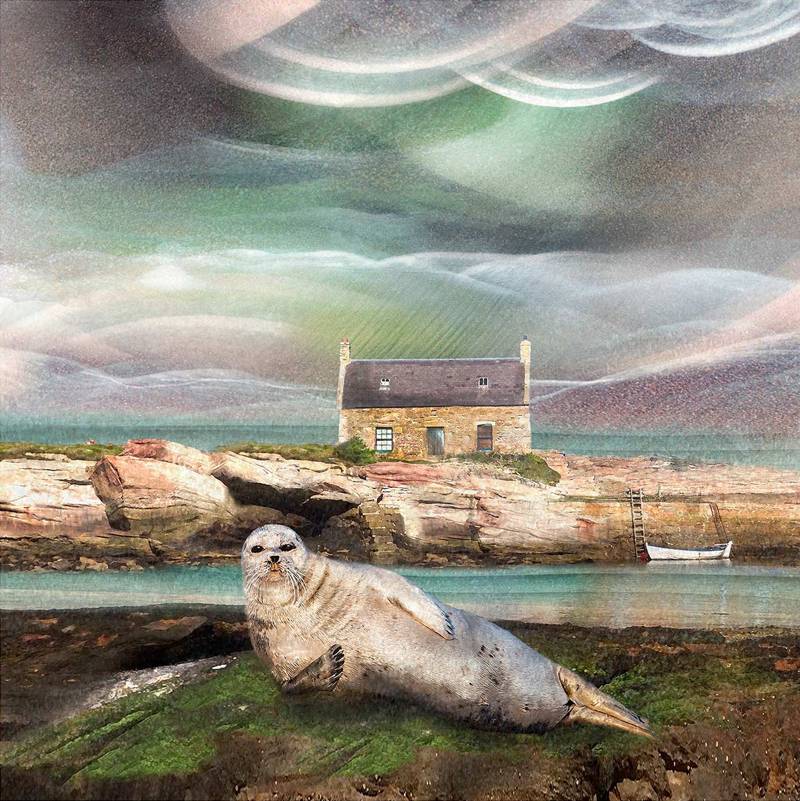
Living room wall art works hardest when it gives people something to notice while remaining comfortable to live with. Hugh Silver at Cove Bay by Esther Cohen does that through a seal resting on a mossy shore. The subject has warmth and quiet humour, yet the atmospheric light keeps it composed.
Let living room wall art create character without a theme
Use the picture as one natural focal point rather than an instruction to add shells, ropes, and blue-striped accessories. Moss green, stone, soft grey, and one deeper sea tone can connect it to upholstery or a rug. The seal supplies all the wildlife character the room needs.
For a sociable room
Hang it where the image can be enjoyed from the main seats, with enough plain wall around the frame for the shoreline to read clearly.
For a quieter lounge
Pair it with tactile wool, timber, and a warm lamp so the calm subject feels intentional rather than cool or distant.
Check the position from both the sofa and the doorway. A low sideboard can give the frame a visual anchor, but keep tall objects away from the seal and the open sky.
Preserve the softness of shore, fur, and Scottish light
The appeal lies in subtle separation between the animal, moss, water, and changing sky. Colour-managed Giclée production retains those quieter transitions. Bespoke framing completed in-house in Falkirk gives the image definition without making this gentle subject feel heavy.
As living room wall art, Hugh Silver at Cove Bay offers a memorable story and a restful atmosphere while leaving the wider room free to remain understated.
What if the artwork in a commercial space could tell a story about its Scottish setting before a guest or customer reads a single word? Finding local scottish artists for commercial projects is about more than choosing attractive images. The collection should suit the place, purpose and feel of the space, while meeting practical needs such as quantity, framing and fulfilment.
It can be hard to know where to begin when you’re weighing original works against framed prints or commissioned murals. A clear plan helps you compare options and bring the collection together without losing sight of the project’s requirements.
This guide explains how to match Scottish artwork to a commercial interior, assess sourcing options and coordinate artwork choices with professional framing. You’ll also learn how First4Frames Gallery, based in Falkirk and featuring a selection of artists primarily from Scotland, can support commercial artwork curation and provide bespoke, ready-to-hang framed prints. Frames are individually crafted for each order, bringing the artwork and its presentation together with care.
Key Takeaways
Match artwork to the space, audience and brand, while recognising the range of styles within Scottish art.
Assess local scottish artists for commercial projects against the brief, including whether prints, original works or a mural best suit the space.
Record quantities, dimensions, room locations and project constraints before shortlisting artwork and confirming formats.
Plan framing and fulfilment as part of the selection process so the finished collection feels cohesive and meets the space’s practical needs.
Why Source Local Scottish Artists for Commercial Projects?
Artwork for a commercial space has to do more than fill a wall. It should suit the room, audience and brand, while meeting practical requirements such as viewing distance and the project brief. Choosing local scottish artists for commercial projects can give a space a meaningful sense of place, provided you select the artwork for the setting as well as its regional connection.
Scottish art isn’t one look. It can draw on landscapes, communities, history or contemporary life, with artists exploring these subjects in very different ways. Commercial art curation is the considered selection and coordination of artwork to suit a space, its users and its purpose.
For a visual example of artwork in a commercial setting, watch this video:
Start with the space, audience and project brief
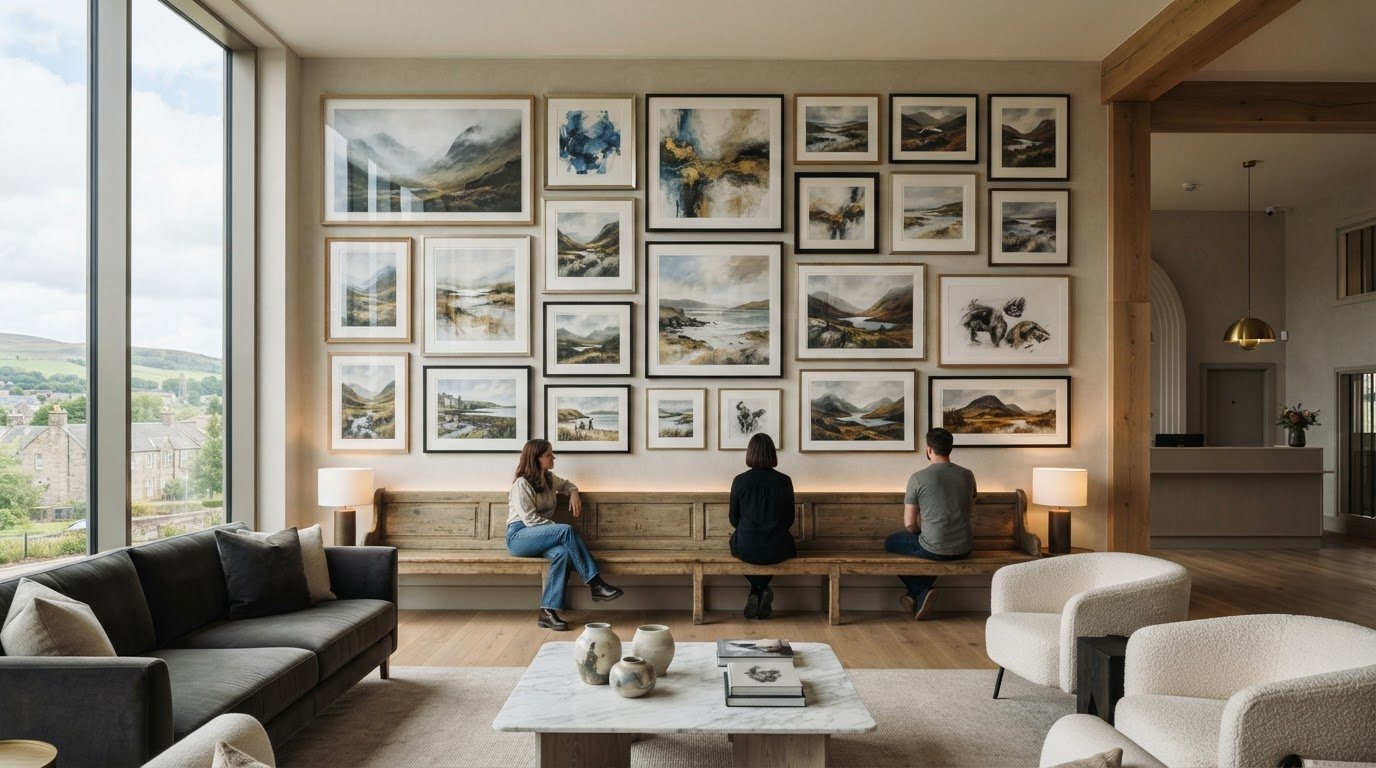
For each room, note its function, how far away people will view the artwork, the existing finishes and the atmosphere you want to create. A hotel reception might need a welcoming focal point, while an office may call for a consistent visual identity across several rooms. For property staging, artwork should complete the interior without competing with its features. Decide which matters most for each space: cohesion, local character or a polished finish.
What does local mean when sourcing Scottish artists?
Decide whether “local” means Scottish subject matter, artists based in Scotland, or both. These criteria aren’t interchangeable: an artist based elsewhere can create a Scottish landscape, while a Scotland-based artist may explore subjects beyond Scotland. A gallery’s location also doesn’t mean every artist it represents lives nearby. For context, explore this overview of the history of Scottish art, then define what regional connection matters to your project. First4Frames Gallery is based in Falkirk and offers a selection of artists primarily from Scotland.
Being specific about what you mean by local helps you choose art that connects with its setting without reducing Scottish creativity to a single subject or style.
How to Choose Scottish Artwork and the Right Commercial Sourcing Route
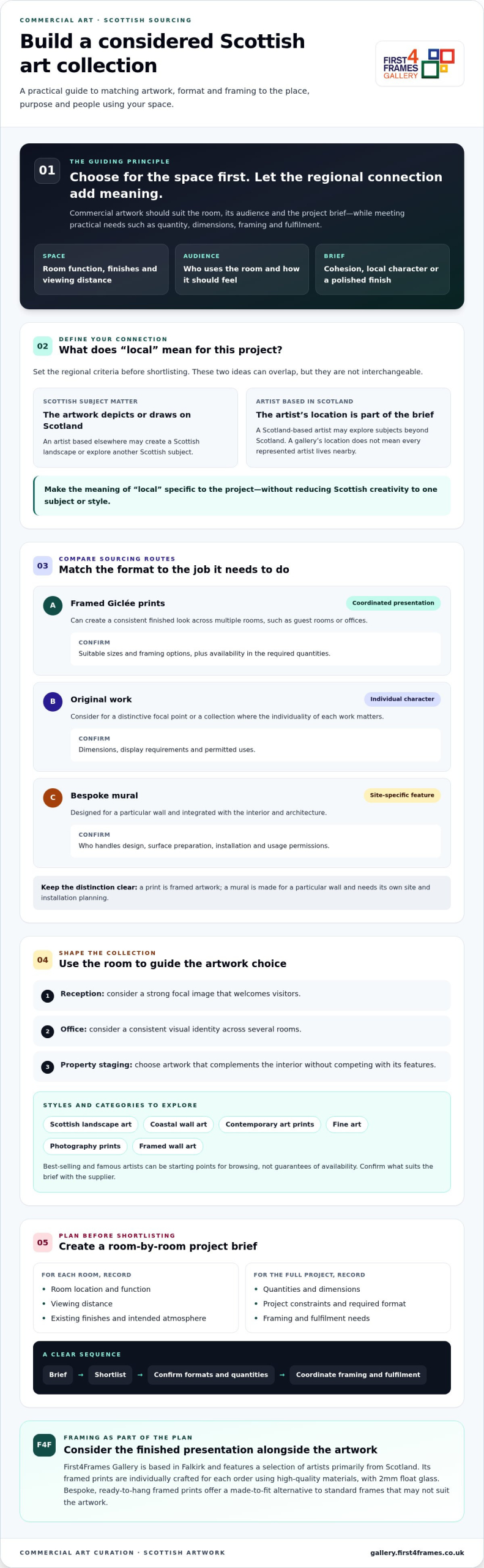
Choose a format to suit the brief, not simply the wall. Framed Giclée prints can create a coordinated look across guest rooms or offices. Original works bring individual character to a focal space, while bespoke murals are designed for a particular wall and need their own site and installation planning. When sourcing local scottish artists for commercial projects, compare each work’s subject, scale and finish with how the room will be used.
Choose artwork that works across the commercial space
A reception may benefit from a strong focal image, while a staged property may need artwork that complements its finishes without dominating them. Scottish landscape art, coastal wall art and contemporary art prints offer different ways to set a mood. Browse framed wall art categories such as fine art and photography prints, including best-selling or famous artists, as starting points rather than guarantees of availability. Ask the supplier to confirm what suits your brief.
Format
Suitable project needs
Questions to confirm
Framed Giclée print
Coordinated artwork across multiple rooms, with a consistent finished presentation.
What sizes and framing options suit the walls? Are the selected works available in the required quantities?
Original work
A distinctive focal point or a collection where individual character is central.
What are the dimensions, display requirements and permitted uses?
Bespoke mural
A site-specific feature integrated with the wall and architecture.
Who handles design, surface preparation, installation and usage permissions?
Prints and murals serve different purposes: a print is framed artwork, while a mural is made for a particular wall. For framed prints, ask about materials and finish. First4Frames Gallery frames are individually crafted for each order using high-quality materials, with 2mm float glass. This offers a made-to-fit alternative to standard frames that may not suit the artwork. For a commissioned work, consult the Scottish Contemporary Art Network’s commissioning best practices, and confirm rights, specifications and suitability directly with the artist or supplier. To explore print options, browse the Scottish artwork gallery.
How to Brief, Frame, and Coordinate a Scottish Commercial Art Project
A clear schedule connects artwork decisions with room requirements and fulfilment planning. Keep the brief, approvals and framing details together so your team and supplier can review the project scope before ordering.
Specify artwork and framing before placing an order
Work through this five-step process:
Define the brief: Record visual priorities, project constraints and the atmosphere each space should convey.
Shortlist artwork: Note the selected artist, image and intended room for every piece.
Confirm formats: Check the artwork dimensions and whether each selection is a print or original work.
Specify framing: Confirm the frame choice, glazing and any project-specific custom options with the supplier. Ask how the frame will fit the artwork and suit the planned display.
Coordinate fulfilment: Consolidate quantities, room allocations and delivery details, then confirm arrangements with the supplier.
For framed work, First4Frames uses 2mm float glass, which provides superior clarity compared with the perspex used by many competitors. Ask for custom picture framing guidance to discuss project-specific options.
Plan a simple approval and delivery process
Use one schedule to track each artwork’s dimensions, quantity, room location, framing specification and approval status. This gives the project team a shared reference before fulfilment. Confirm delivery arrangements directly with the supplier, especially if pieces are allocated across multiple locations. First4Frames finished frames are packaged for protection and shipped via professional couriers.
Review bespoke framed wall art for your project, or use the commercial artwork enquiry page to discuss requirements.
A Practical Scottish Commercial Art Solution with First4Frames
Choosing artwork for a commercial space means balancing project fit, artist and subject, format, framing and fulfilment. First4Frames Gallery, based in Falkirk, offers commercial artwork curation and a wide online selection of frames and artwork, including prints by artists primarily from Scotland. Project teams can review the options against the character and practical needs of their space.
From choosing artwork to finished framed art
Explore the selection, then Choose your frame online or ask about custom options suited to your artwork. The Art print framing service brings artwork and presentation together as Custom framed art prints. Customers supplying digital photographs can ask about the print-and-frame service: their images are printed to the highest quality to match the bespoke framing. Share the intended size and finish so framing can be considered alongside the image.
Make the next step easy for your project team
Shortlist choices by room, then Design your framed artwork around the brief. Note any questions about dimensions or framing before purchase. Reviewing options this way helps your team compare artwork consistently and see how each choice contributes to the space.
Bring a Considered Scottish Art Collection Together
The strongest commercial collections begin with the space and its purpose. Define what the artwork should contribute, choose a format that suits each room, and keep quantities, framing choices and fulfilment details together in a clear brief. This makes sourcing local scottish artists for commercial projects more manageable and helps the finished collection feel connected rather than incidental.
First4Frames Gallery supports property developers, hoteliers and estate agents with commercial artwork curation and fine art prints by artists primarily from Scotland. Frames are individually crafted using high-quality materials, finished with 2mm float glass and packaged for protection before shipment via professional couriers. This brings your selected artwork from choice to presentation with care.
How do I find local Scottish artists for a commercial project?
Start by defining the space, audience, desired atmosphere and practical requirements. Then review galleries and artist portfolios, deciding whether you prioritise artists based in Scotland, Scottish subject matter, or both. These are different criteria, so make them clear in your shortlist. Ask potential suppliers about commercial artwork curation, available formats, framing choices and fulfilment arrangements before deciding what suits the project.
What type of Scottish art works best in hotels or offices?
There’s no single subject or format that works best in every commercial interior. Consider how the room is used, its finishes, viewing distance and the impression you want to create. Scottish landscape art might complement a place-focused brief, while coastal wall art, photography prints, fine art or contemporary art prints may suit other visual directions. Compare each option with the specific room and project aims.
Can I use framed prints instead of commissioning a mural?
Yes, framed prints are an alternative to a bespoke mural, but the two formats serve different needs. Prints can be selected from a gallery and paired with a frame, while a mural is designed for a particular wall. Consider the visual effect, site requirements and installation needs before choosing. Confirm artwork specifications and any intended commercial use directly with the relevant artist or supplier.
How should I brief a commercial art supplier?
Give the supplier a concise record of the property type, room list, intended audience, approximate artwork dimensions, visual direction and project constraints. Include useful references, such as existing finishes or interior details. Before ordering, ask them to confirm artwork formats, frame choices, glazing, custom requirements, protective packaging and courier arrangements. A shared schedule of selections and room allocations can help your team review the proposed scope.
Can First4Frames help source and frame artwork for a business?
Yes. First4Frames Gallery offers commercial artwork curation for property developers, hoteliers and estate agents, alongside Giclée fine art prints by artists primarily from Scotland and bespoke framing. Its frames are individually crafted for each order using high-quality materials, with 2mm float glass. Finished frames are packaged for protection and shipped via professional couriers. Browse the gallery or contact the team to discuss your project requirements.
A Flying Scotsman wall art gift for a railway enthusiast feels more personal when it names the locomotive precisely and respects the recipient’s knowledge. LNER A3 No 60103 Flying Scotsman built 1923 at Doncaster by Rod Harrison does exactly that. The subject is specific, the illustration is purposeful, and the framed format gives the gift a life beyond the occasion.
Choose a Flying Scotsman wall art gift for a railway enthusiast thoughtfully
Start with what the recipient enjoys. Some enthusiasts care about engineering, others about railway history, childhood journeys, or the experience of seeing steam locomotives in service. A clearly identified Flying Scotsman print gives the gift a genuine point of connection without requiring invented sentiment.
For a study
Choose a measured frame that sits comfortably above books or a desk. Keep model engines and reference material nearby orderly so the print remains the focal point.
For a living space
Relate the frame to existing timber or darker accents. Avoid adding signs, clocks, and railway plaques that turn a shared room into a themed corner.
Confirm that Flying Scotsman is meaningful to the recipient.
Allow for the finished frame size, not only the printed image.
Include the product details so the subject and artist remain recorded.
Choose one strong framed gift instead of several novelty items.
This approach works for a retirement, significant birthday, or milestone visit. The occasion explains why the gift is given; the locomotive and presentation explain why it is worth keeping.
Give a technical subject a lasting presentation
Detailed railway illustration benefits from controlled lines, dependable tonal separation, and accurate reproduction. Colour-managed Giclée production supports that precision. Bespoke framing completed in-house in Falkirk turns the print into a finished gift that can be hung immediately and enjoyed for years.
As a Flying Scotsman wall art gift for a railway enthusiast, LNER A3 No 60103 Flying Scotsman built 1923 at Doncaster combines specific knowledge, useful display value, and craftsmanship without falling back on generic memorabilia.
Scottish thistle wall art for a compact entrance can establish identity without taking up practical floor or shelf space. Thistle by Lee Scammacca concentrates that identity in one framed image. It lets coats, shoes, and keys remain functional instead of turning every available surface into a Scottish display.
Give Scottish thistle wall art for a compact entrance breathing room
Choose the first clear wall
Open the door fully and identify the wall that remains visible without blocking the route. The framed work should greet the eye while staying beyond hinges, shoulders, wet coats, and bag straps.
In a small entrance, one purposeful image usually works better than a cluster. Keep a plain margin around the frame. Align it with a narrow console or bench only if that furniture already belongs there. Do not add a table simply to support the composition.
Entrance pressure
Practical response
Door swing
Mark its full arc before choosing the fixing point.
Coat storage
Keep fabric and hooks clear of the frame edge.
Limited light
Use a soft wall wash and check glare on the glass.
Too many motifs
Let the thistle carry the Scottish identity alone.
Use precise framing where the picture is seen close up
Entrance artwork is often viewed at arm’s length, so small weaknesses become obvious. Colour-managed Giclée production keeps the design and colour clean. A bespoke, hand-finished frame gives the piece protection and definition. Its graphic character can remain direct and uncluttered.
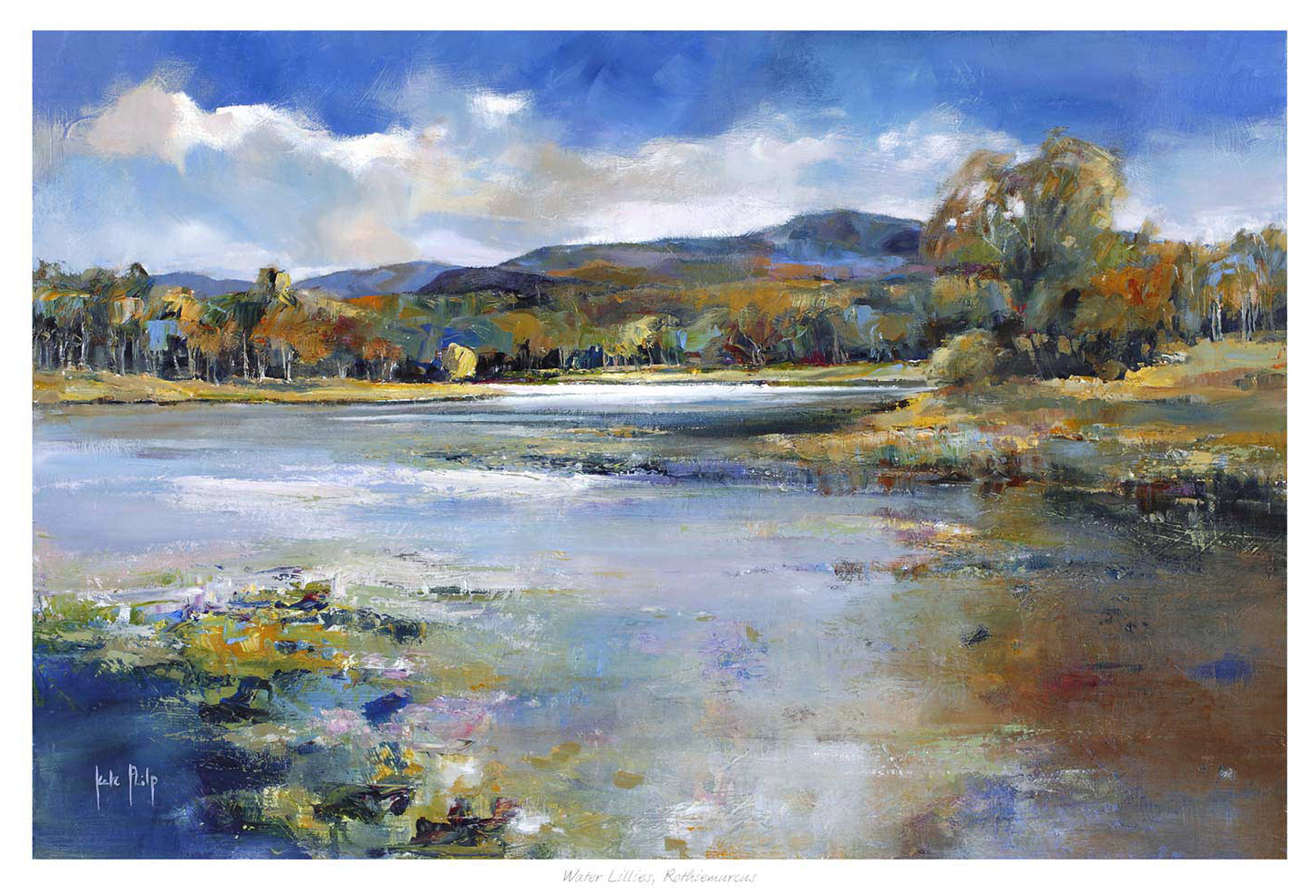
Water lily wall art for a room with garden views should create a relationship with the landscape outside, not try to copy it. Water Lillies Rothiemurcus by Kate Philp brings water and plant forms into the interior through a composed limited edition. It offers continuity even when the season, weather, and window view change.
Use water lily wall art for a room with garden views as a counterpoint
Look for the wall that sits at right angles to the main window. From there, the picture and garden can be seen in sequence without the glazing becoming a constant mirror. Hanging directly opposite a bright window may create glare and force the artwork to compete with the strongest daylight.
Should the room repeat a floral pattern?
Usually, no. The water lilies already supply organic shape and movement. Plain linen, quiet woven textures, and a few real plants will connect more naturally than matching floral curtains or cushions.
Use the painting to bridge interior materials instead. Pale timber can echo reeds and banks, while glass or a softly reflective surface can refer to water. One green, blue, or muted flower tone may be repeated in the room, but allow plenty of neutral space between those notes.
Check the picture when the garden is bright and when it is overcast.
Keep tall houseplants from covering the framed edge.
Allow the limited-edition composition to remain the indoor focal point.
Choose lighting that can support it after the window turns dark.
Preserve the quieter transitions in water and planting
Garden-led work depends on more than recognisable flowers. Colour-managed Giclée production retains the transitions between water, vegetation, and atmosphere. Bespoke framing, hand-finished in Falkirk, gives the print enough structure to hold its own beside a changing outdoor view without enclosing it too heavily.
As water lily wall art for a room with garden views, Water Lillies Rothiemurcus connects indoors and outdoors through mood and material rather than obvious pattern matching.
Gin wall art above a home bar can make the area feel intentional without covering it in cocktail slogans. Gin and Limes by Scott McGregor focuses on a clear glass, ice, gin, and limes. That concise still life gives the bar identity while keeping the wider room fresh and grown-up.
Hang gin wall art above a home bar around the working zone
Start with the usable surface
Centre the frame on the bar cabinet or serving surface, not on the full wall. Leave enough vertical clearance for bottles to be lifted safely. If tall bottles overlap the frame, edit the display or move the picture slightly higher while keeping it visually connected.
Measure the finished framed size before marking the wall.
Arrange the bottles and glassware used most often.
Check the composition from the main seating area.
Test reflections from under-cabinet and pendant lights.
Let the artwork provide the drinks motif; the bar itself can remain useful, orderly, and understated.
Lime green can be repeated once in a plant, napkin, or small ceramic detail. Clear and smoked glass also connect naturally with the subject. Avoid adding printed recipes, neon wording, and rows of decorative bottles around the frame, as these compete with the clean focus of the image.
Keep glass, ice, and citrus looking clean
The appeal of this still life rests on clarity: transparent glass, angular ice, and fresh lime need to remain separate. Colour-managed Giclée reproduction protects those relationships. Bespoke framing completed in-house gives the print a polished edge suitable for a sociable, frequently used part of the home.
As gin wall art above a home bar, Gin and Limes creates a convivial focal point while allowing the bottles, glasses, and serving surface to stay functional.
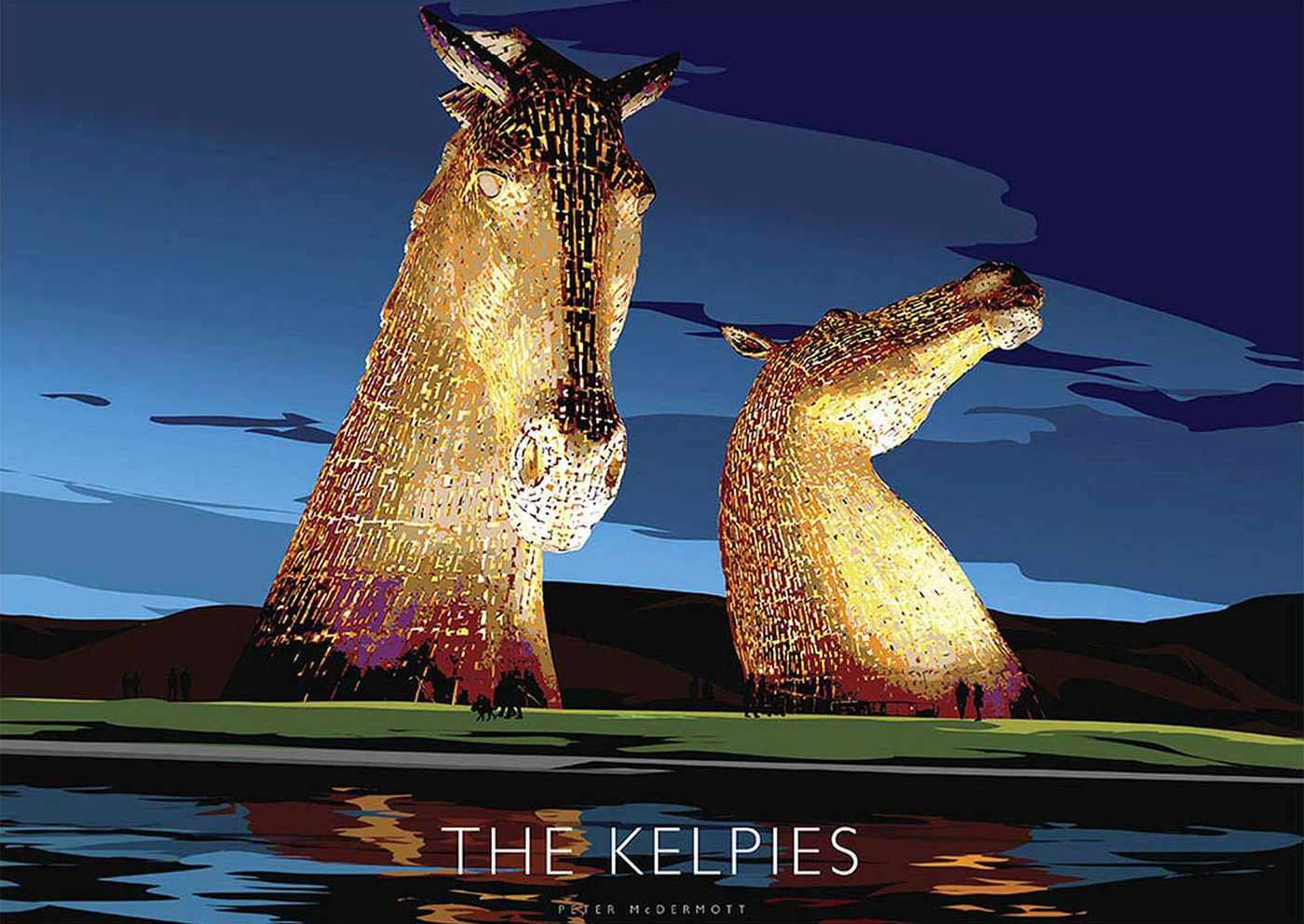
Kelpies wall art for a room with statement lighting needs more than a shared dramatic mood. The Kelpies at Night by Peter McDermott presents the Falkirk landmark after dark, when illumination shapes the sculpture. It can echo a pendant or sculptural lamp beautifully, provided neither focal point blocks the other.
Position Kelpies wall art for a room with statement lighting carefully
Separate the focal points
Place the framed work beyond the outer edge of a large pendant when viewed from the main seat. This preserves the full silhouettes and prevents the fitting from appearing to hang inside the image.
Control reflected light
Switch on every evening light before fixing the frame. Move the artwork or adjust the beam if a bright bulb reflection lands across either horse’s head.
The night subject can anchor a dining room, stair hall, or lounge where lighting already has a sculptural role. Keep nearby furniture simpler. A dark console, quiet upholstery, and one metallic detail can support the scene without turning the room into a display of competing shiny surfaces.
Judge the position in daylight and after dark.
Keep the frame clear of pendant drops and wall-light spill.
Repeat one cool or warm light note, not every colour in the image.
Leave enough plain wall for the landmark silhouette to remain legible.
Let controlled reproduction hold the night-time detail
Dark scenes need clear separation between structure, sky, and artificial light. Colour-managed Giclée production preserves those differences. A hand-finished bespoke frame gives the image definition under changing room light, while in-house assembly allows the presentation to feel precise rather than theatrical.
As Kelpies wall art for a room with statement lighting, The Kelpies at Night works best when illumination is treated as part of the hanging plan, not as an afterthought.
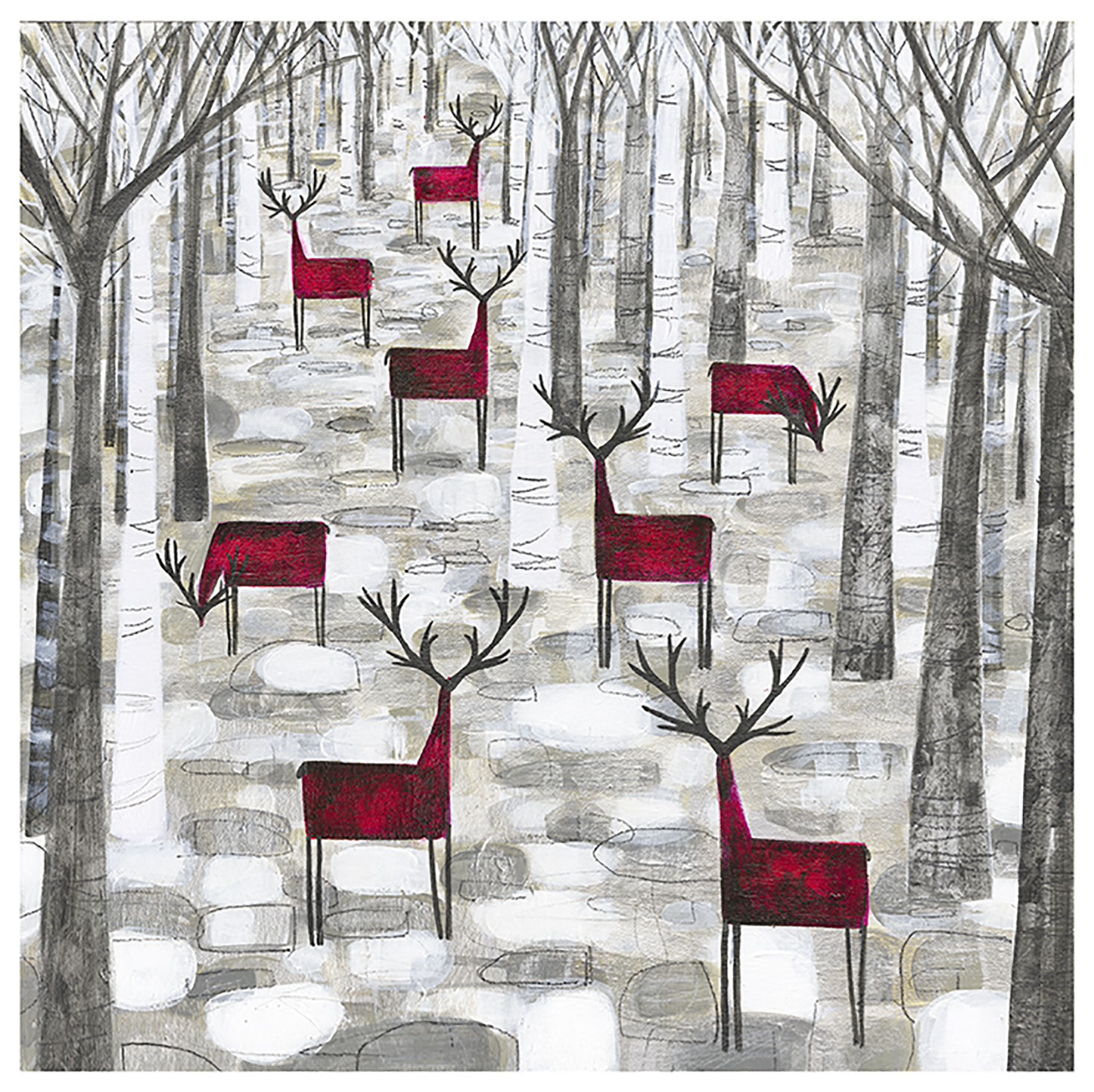
Red stag wall art for a pale blue room can stop a cool scheme feeling distant without covering it in warm accessories. Red Stags, Silver Winter by Nikki Monaghan sets its red stags against a silver winter atmosphere. The contrast introduces energy, yet it still belongs with blue-grey walls, pale timber, and soft natural light.
Balance red stag wall art for a pale blue room with restraint
Treat the stags as the warm note in the room rather than a colour instruction for everything else. One rust cushion, a small timber surface, or a muted red thread in a rug is enough. Repeating the strongest colour across curtains, lamps, and ornaments would weaken the picture’s impact.
Room element
Useful choice
Wall
Pale blue, misty blue-grey, or a quiet mineral tone.
Furniture
Light oak, painted timber, or one deeper charcoal piece.
Textiles
Natural wool and linen with a restrained rust accent.
Lighting
Warm-white light that keeps the silver winter tones clear.
Give the print an uncluttered position above a sideboard or between two low pieces of furniture. Its limited-edition character and layered marks deserve enough viewing distance for the group of stags to read together. Avoid surrounding it with antlers or woodland ornaments; the subject already supplies the Scottish wildlife identity.
Choose a frame that separates silver winter from blue walls
A pale room makes small colour shifts especially visible. Colour-managed Giclée production keeps the silver, red, and cooler background notes distinct. Bespoke framing, completed in-house in Falkirk, gives the print a clean boundary so it does not disappear into the wall or become needlessly heavy.
As red stag wall art for a pale blue room, Red Stags, Silver Winter adds warmth through the artwork itself, leaving the rest of the interior calm and coherent.
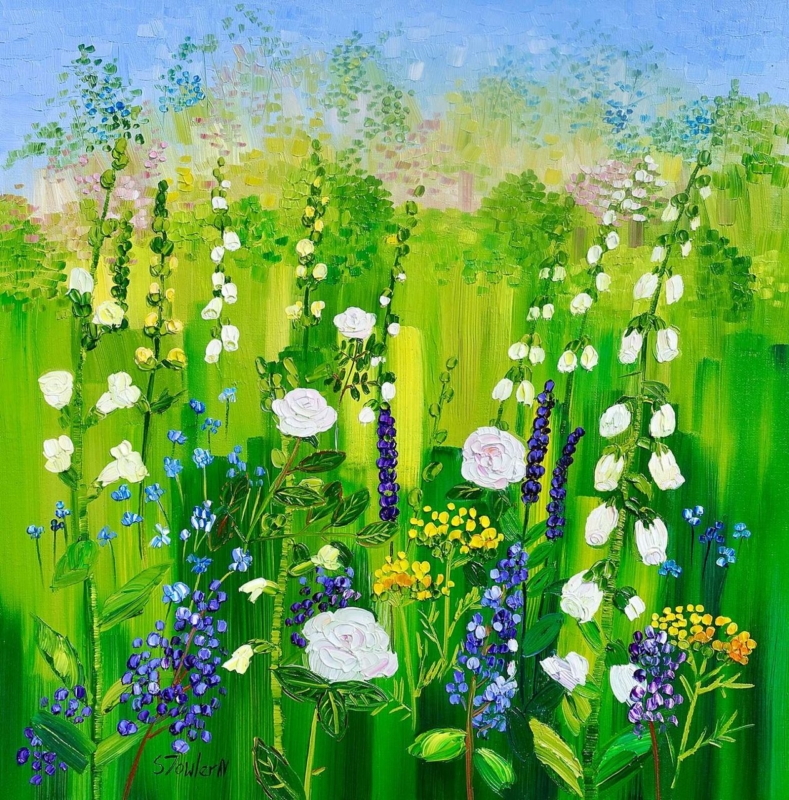
garden centre café wall art has to work across two connected experiences. Customers may arrive inspired by plants and outdoor colour, then expect the café to feel warm, comfortable, and professionally finished. Summer Border with Roses and Foxgloves by Sheila Fowler can bridge those settings. Its garden subject relates naturally to the business, while the square composition gives the dining space a clear and composed focal point.
What garden centre café wall art needs to achieve
A café inside a retail setting can easily feel like an afterthought. Menus, queue signs, retail displays, and practical furniture already compete for attention. Artwork should create atmosphere without adding more instructions or turning every surface into another sales message.
A painted border of roses and foxgloves is relevant without being literal branding. It reminds customers of the pleasure of planting and seasonal change, yet it still reads as art. That balance can make the café feel connected to the wider garden centre while giving people a visual pause during lunch or coffee.
Match the picture to the customer journey
Location
Purpose
Practical check
At the café entrance
Signal a warmer change from retail to hospitality
Keep menus and directional signs clear
Above a two-person table
Create an intimate focal point
Allow for chair movement and cleaning
On the queue sightline
Give waiting customers something pleasant to notice
Avoid competing with the ordering board
Near a seasonal display
Connect planting colour with the café interior
Leave enough wall around the frame
The available print sizes are 265 x 265 and 500 x 500 millimetres before framing. The compact option can define a smaller table or narrow return wall. The larger square can provide more presence near the entrance or on a quieter dining wall. Mock up the full framed dimensions rather than measuring only the printed image.
Use seasonal colour without constant redecorating
Fresh displays may change from spring bulbs to summer bedding, autumn foliage, and winter gifts. Permanent artwork should not need replacing with every retail season. A mixed garden border offers varied colour and recognisable planting, so it can sit comfortably beside changing displays throughout the year.
Repeat only a small part of the palette. A muted green seat fabric, a rose-toned ceramic, or natural timber may be enough. Avoid matching every flower colour across the room. Restraint helps the café feel curated and keeps the artwork from becoming part of a decorative theme.
Plan for light, cleaning, and busy service
Garden centre cafés often have generous glazing, so reflections should be checked at opening time, midday, and late afternoon. Keep framed work away from steam, drink stations, and walls exposed to frequent splashes. It should also sit beyond the path of trays, highchairs, and chairs being pulled back.
A secure fixing and a frame that complements the furniture will give the display a more permanent feel. First 4 Frames uses colour-managed Giclée printing and completes bespoke framing in-house in Falkirk. That hand-finished approach supports both the flower colour and the professional standard expected in a customer-facing space.
Effective garden centre café wall art should reinforce the setting while giving customers a comfortable place to pause. View the framed Summer Border with Roses and Foxgloves print for a floral focal point that links the café to the garden centre with colour, craftsmanship, and a polished finish.
Scottish lullaby wall art can give a child’s room a connection to family memory without relying on short-lived nursery motifs. Ally Bally Ally Bally Bee by Stewart Bremner draws on a song remembered across generations. Its bold graphic treatment also gives it enough presence to remain relevant as the room changes, from early bedtime routines to reading, play, and school years.
Why Scottish lullaby wall art can outlast the nursery stage
Many pictures chosen for a new baby are closely tied to one brief age. A familiar song works differently. Adults may know it from their own childhood, while children can gradually understand the words and the family stories around them. That gives the artwork an emotional role as well as a decorative one.
The typographic design matters just as much as the reference. Clear shapes and a poster-like composition can sit comfortably with modern furniture, painted joinery, or a simple reading corner. The piece need not be surrounded by tartan, toys, or more words. One confident image is often enough.
Choose a position that supports everyday routines
Start with the activity, not the largest empty wall. Above a low bookcase, the print can mark a reading area. Near a comfortable chair, it can become part of bedtime. On the wall seen from the doorway, it can provide a warm welcome without crowding the space around the bed.
Keep it visible: place the centre where a child can enjoy the design, not only at an adult gallery height.
Protect the frame: avoid doors, climbing furniture, and places where toys are regularly thrown or stacked.
Check reflections: test the wall in daylight and with the bedtime lamp switched on.
Allow room to grow: leave enough clear wall for changing furniture and storage needs.
Plan the size around the room, not the child’s age
The available print sizes are 420 x 594 and 594 x 840 millimetres before framing. The smaller option can suit a reading corner or a wall beside a wardrobe. The larger format can hold its own above a chest or on a clearer feature wall. Mark the full expected frame size with paper before ordering, then view it from the doorway and from the bed.
A larger picture does not automatically make a room feel smaller. Several tiny items can create more visual activity than one well-proportioned frame. A single clear composition can give toys, books, and changing accessories a calmer visual anchor.
Frame the memory without making it feel themed
A slim dark frame can reinforce the graphic edges, while a lighter timber can soften the design and relate to natural furniture. The right choice depends on the wall colour and other permanent finishes. It does not need to match every handle or lamp exactly.
First 4 Frames produces colour-managed Giclée prints and completes bespoke, hand-finished framing in-house at its Falkirk workshop. That quality-led presentation helps a piece associated with childhood feel substantial enough to keep, move to another room, or pass through the family later.
Well-chosen Scottish lullaby wall art can carry affection and identity without making a child’s room feel fixed at one age. View the framed Ally Bally Ally Bally Bee print for an expressive link between bedtime tradition, family memory, and contemporary Scottish design.