Posted on

Framing Medals and Awards: A Complete Guide to Honouring Your Achievements

Framing Medals and Awards: A Complete Guide to Honouring Your Achievements

That box tucked away in a drawer or loft – it holds more than just metal and ribbon. It contains stories of dedication, moments of triumph, and proud achievements. These symbols of accomplishment deserve to be seen and celebrated, not hidden from view. This is where the craft of framing medals and awards comes in, transforming cherished memories into a spectacular display that truly honours the journey they represent.

But where do you begin? The thought of accidentally damaging your treasured items, struggling with a layout, or finding a standard frame that simply isn’t deep enough can feel daunting. In this complete guide, we will walk you through every step of the process with professional care. You will learn how to choose premium materials that preserve your awards, arrange them in a way that tells your unique story, and select the perfect bespoke shadow box to create an elegant display you can be proud of for years to come.

Key Takeaways

  • Professional framing does more than just display your medals; it preserves their story and value for generations to come.
  • Learn how key components, like specialist glazing and acid-free mounts, work together to protect your achievements from fading and damage.
  • Discover creative and personal ideas for framing medals and awards, from single-medal displays to extensive collections that tell a complete story.
  • Our simple, step-by-step bespoke framing process makes it easy to create a display that perfectly reflects your personal style and accomplishment.

Why Professional Framing Matters for Your Medals

Your medals are more than just metal and ribbon; they are tangible symbols of dedication, sacrifice, and significant personal achievement. Whether earned on the battlefield, the sports field, or through years of dedicated service, they deserve more than being stored in a drawer. Professional framing medals and awards transforms these cherished items from simple keepsakes into a lasting tribute, creating a beautiful display that honours the moments they represent.

While a DIY approach can be tempting, bespoke craftsmanship offers a level of quality and protection that simply cannot be matched. To see how these components come together, watch this helpful video:

Preservation: Protecting Your Achievements for a Lifetime

A professional frame is a shield for your history. We use conservation-grade, acid-free mount boards that prevent the yellowing and discolouration that can damage your memorabilia over time. To protect against fading, UV-protective picture-framing glass is essential, safeguarding delicate ribbons and documents from the harmful effects of sunlight. Finally, a properly sealed frame protects your awards from dust, moisture, and even insects, ensuring they remain in pristine condition for generations to admire.

Storytelling: More Than Just Medals in a Box

A bespoke frame allows you to tell the full story behind the achievement. By incorporating other elements, you can create a rich visual narrative. Consider including:

  • Photographs of the recipient or the event.
  • An engraved nameplate with dates and details.
  • Certificates, patches, or other related memorabilia.

The art of professional framing lies in the layout. Careful spacing and arrangement guide the viewer’s eye, creating a balanced and compelling display that tells a story at a glance.

Design: Transforming Your Awards into a Work of Art

Your display should be a reflection of both your achievement and your personal style. A professional framer helps you choose the perfect frame and mount combination to complement your home decor, turning your awards into a genuine work of art. From classic, deep-set wood frames to sleek, modern designs, the right choice elevates the entire piece. Using coloured or textured mounts adds depth and a premium finish, ensuring your display has the visual impact it truly deserves.

The Anatomy of a Medal Frame: Key Components Explained

A beautiful medal frame is far more than just a box; it’s a bespoke piece of craftsmanship where every element serves a purpose. Each component, from the deep-set frame to the protective glazing, plays a vital role in both the preservation and presentation of your treasured achievements. Understanding this anatomy empowers you to collaborate with your framer, ensuring the final piece is a perfect tribute. This expert knowledge is the foundation of professionally framing medals and awards.

Choosing the Right Box Frame

Because medals are three-dimensional, a standard flat picture frame simply won’t do. The essential choice is a box frame, which features a deep rebate to create the necessary space between the backing and the glass. This depth prevents the medal from being crushed and creates a professional, gallery-style look. For the finish, classic wood frames offer warmth and tradition, while sleek metal frames provide a clean, contemporary feel. We help you select a style that honours the award and complements your interior decor.

The Importance of the Mount Board

The mount board is the coloured backdrop that makes your medals stand out. A single mount provides a clean, elegant border, while a double mount-using two stacked layers of board in complementary colours-adds a spectacular sense of depth and sophistication. We often use colour theory to pull shades from the medal’s ribbon, creating a cohesive and visually stunning display. For a truly bespoke touch, we can create custom-shaped openings for photos or plaques.

Glazing Options: Glass vs. Acrylic

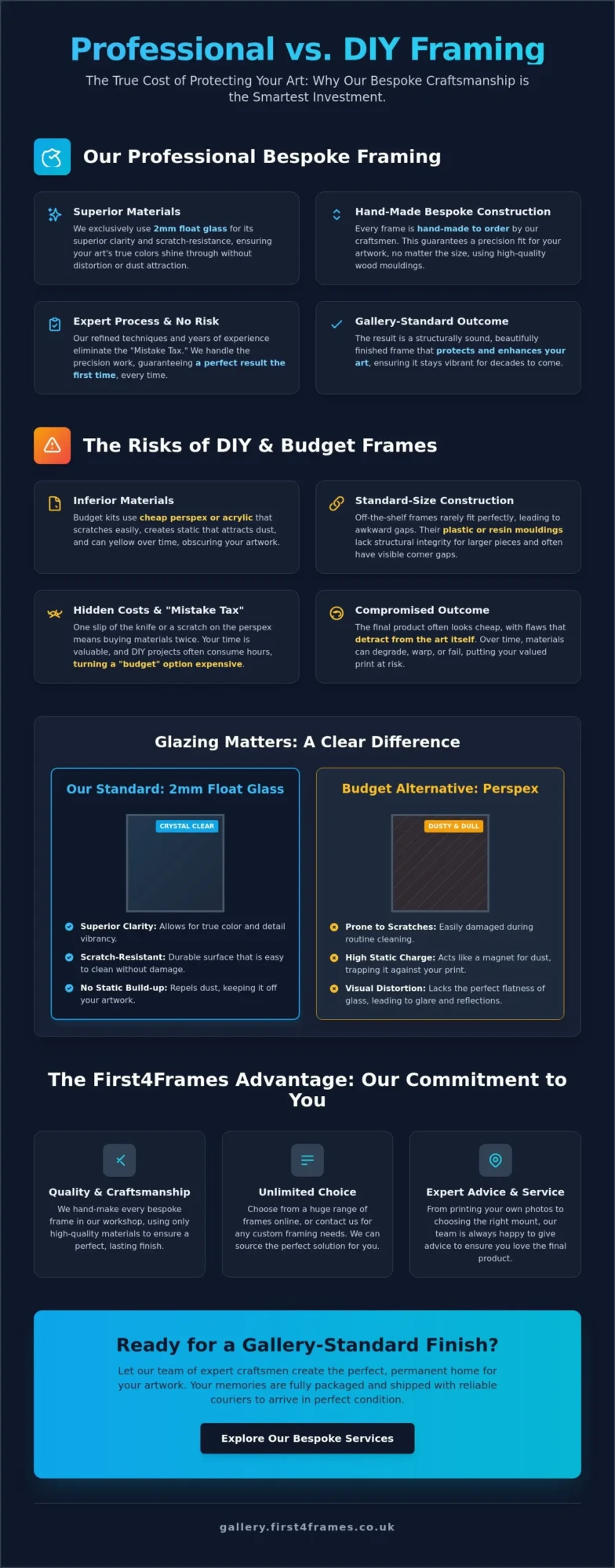
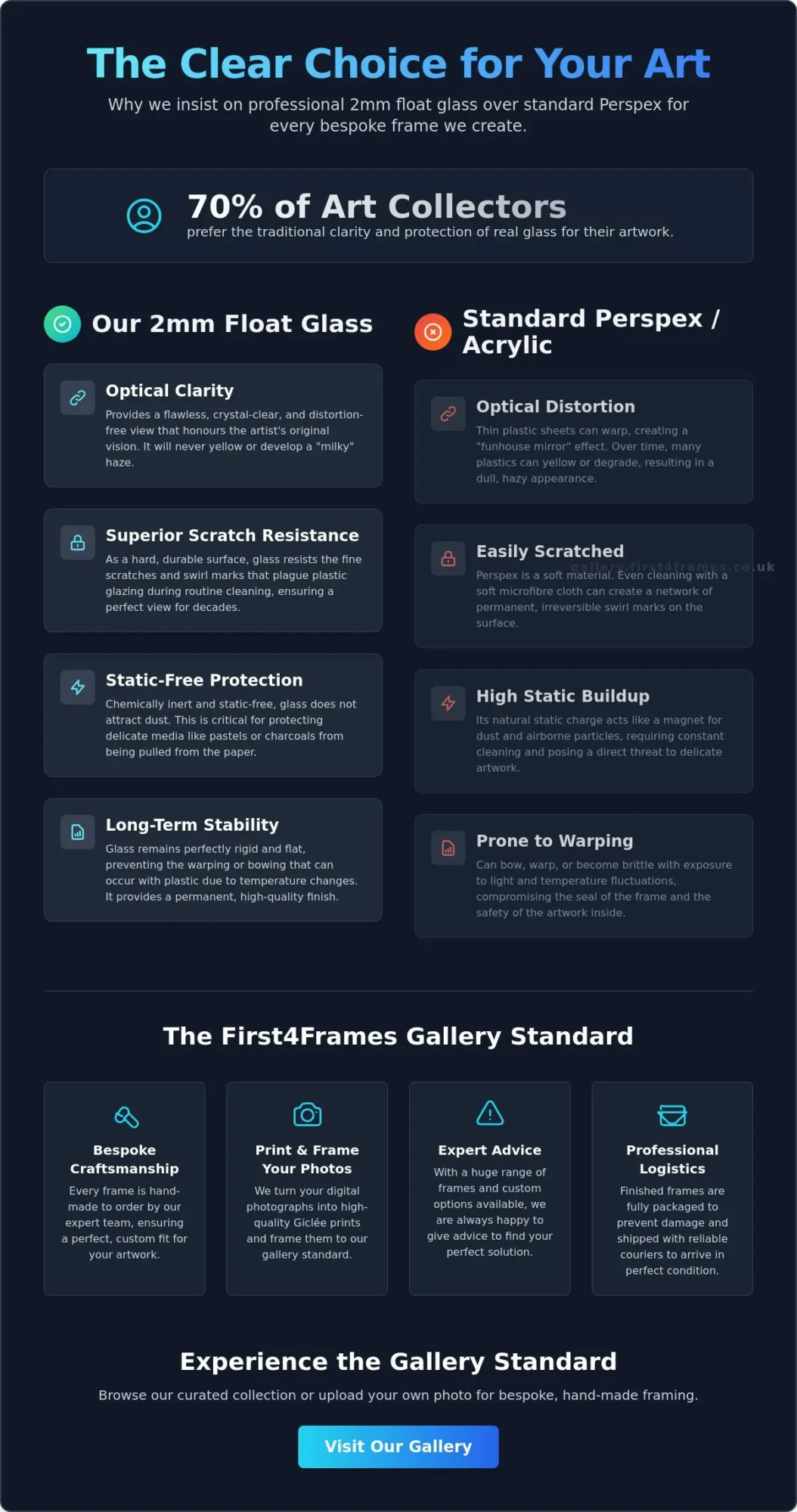
The glazing acts as a protective shield for your memorabilia. To ensure the vibrant colours of your ribbons and the lustre of your medals do not fade over time, it’s crucial to choose the right protection. Your main options include:

  • UV-Filtering Glass: The premium choice for ultimate preservation, blocking over 99% of harmful ultraviolet rays that cause fading and damage.
  • Acrylic (Perspex): A lightweight and shatter-resistant alternative, perfect for very large frames or for displays in children’s rooms or high-traffic areas.
  • Anti-Reflective Glazing: Available in both glass and acrylic, this specialist option minimises glare and reflections, offering a crystal-clear, uninterrupted view of your awards.

Mounting the Medals Securely

How the medals are affixed is perhaps the most critical part of the process. We cannot stress this enough: never use glue, tape, or other damaging adhesives, as they can cause irreversible harm to your valuable items. At First4Frames Gallery, we use professional, conservation-approved stitching techniques. Each medal and its ribbon is carefully and discreetly hand-sewn to the mount board. This method is not only secure but also completely reversible, preserving the integrity of your awards for generations to come.

An infographic titled The Anatomy of a Bespoke Medal Frame explains key components for framing medals and awards: box frame, mount board, protective glazing, and memorabilia. It details frame styles, mounting types, and glazing options with brief descriptions.

Inspirational Ideas for Framing Medals and Awards

Every medal, ribbon, and certificate represents a moment of dedication, sacrifice, and triumph. The art of framing medals and awards is about more than just preservation; it’s about telling a compelling story. A bespoke frame can transform individual items into a beautiful, cohesive display that honours the journey behind the achievement. From a single marathon medal to a lifetime of service, the possibilities are endless.

Let’s explore some inspirational ideas to help you create a display that is as spectacular as the accomplishment it celebrates.

The Classic Military Display

For military honours, presentation is paramount. A formal display often involves arranging medals in order of precedence, a tradition we respect with meticulous care. To add depth and context, consider including other meaningful items such as cap badges, rank slides, or service photographs. A professionally engraved plaque detailing the recipient’s name, rank, and years of service provides a perfect, dignified finishing touch.

Celebrating Sporting Achievements

Capture the adrenaline and pride of a sporting victory with a dynamic display. Whether it’s a first 5k or an international competition, your medal deserves a place of honour. We can create beautiful layouts that combine your achievements with other memorabilia, such as:

  • A marathon medal mounted alongside the official race bib and a finish-line photo.
  • A collection of a winning team’s medals arranged around a central team photograph.
  • A signed shirt or piece of equipment framed with the championship medal it helped win.

It’s not just traditional sports that are worth celebrating. Many people commemorate personal challenges and ‘bucket list’ achievements, like a first tandem skydive, with framed photos and certificates. If you’re looking for that kind of unforgettable experience, you can check out UK Skydiving.

Showcasing Academic and Professional Awards

Milestones in your education and career are moments of immense pride worth showcasing. Pairing an academic medal with its corresponding degree certificate creates a complete and distinguished display. For businesses, framing company awards can be a powerful tool to boost team morale and decorate an office with symbols of success. Consider framing a graduation medal with a university tassel and a professional portrait for a timeless keepsake.

Whatever story your achievements tell, our bespoke framing service can help you present it with the elegance and quality it deserves. For more beautiful examples, we invite you to view our gallery and discover the perfect way to honour your success.

Our Bespoke Medal Framing Process: Step-by-Step

Transforming your cherished achievements into a beautifully framed display should be an exciting and rewarding experience. At First 4 Frames, we’ve refined our bespoke process to be simple, collaborative, and entirely focused on you. Our expert team is here to guide you at every stage, combining your unique story with our passion for craftsmanship. From the initial idea to the finished artwork, see how we turn your vision into a piece that truly honours your accomplishments.

Step 1: The Initial Consultation

Your journey begins with a conversation. Bring us your medals, ribbons, photographs, or any other memorabilia you wish to include. We’ll sit down with you to discuss your ideas, the story behind the achievements, and where you envision hanging the final piece. Our experts will offer practical advice on layouts, colour schemes, and material options that will best protect and showcase your items for decades to come.

Step 2: Collaborative Design and Quotation

Next, we bring your ideas to life. We create a digital or physical mock-up of the layout for your approval, ensuring every element is perfectly placed. You can explore our extensive collection of premium frames and acid-free mount colours to find the perfect match for your décor. Once you are completely happy with the design for framing medals and awards, we provide a clear, detailed, no-obligation quote for your bespoke piece.

Step 3: Meticulous Craftsmanship

This is where our passion for detail truly shines. Our skilled framers use conservation-grade, reversible techniques to carefully mount each item, ensuring they are preserved without damage. The frame, mount board, and specialist glazing are all cut to your exact specifications in our workshop. Finally, your display is meticulously assembled, cleaned, and prepared for you to take home and admire.

Ready to give your achievements the display they deserve? Start your framing journey with a free consultation today.

Your Legacy, Beautifully Framed

Your medals and awards are more than just accolades; they are tangible symbols of dedication, sacrifice, and incredible achievement. As we’ve explored, professional framing does more than just display them-it preserves their integrity and elevates their story for generations to come. From selecting the right conservation-grade materials to designing a layout that reflects your unique journey, the art of framing medals and awards is a deeply personal process.

At our Falkirk workshop, our passionate craftsmen combine over 20 years of professional experience with the finest materials to create a display worthy of your accomplishments. We believe every medal has a story, and our bespoke service is dedicated to telling yours with precision and care.

Are you ready to transform your achievements into a timeless piece of art? Preserve your story. Contact us for a bespoke medal framing consultation. Let us help you create a beautiful, lasting tribute to your hard-earned success.

Frequently Asked Questions

How much does it cost to frame medals and awards?

The cost for bespoke medal framing is as unique as the achievements themselves. A simple frame for a single medal might start from around £75. For more elaborate displays featuring multiple medals, photographs, and an engraved plaque, the price could range from £150 to £300 or more. The final cost is influenced by your choice of frame moulding, the type of glazing used (such as UV-protective glass), and the complexity of the mount design. We provide a detailed quote after our initial consultation.

How long does the bespoke medal framing process take?

Our commitment to beautiful craftsmanship takes time. A typical bespoke framing project is completed within 2 to 3 weeks from your design approval. This allows our skilled team to meticulously mount your items and construct the perfect frame. More complex projects or those requiring specially ordered materials may take slightly longer, but we will always provide you with a clear and reliable timeline. We believe that such important memories are worth the wait to get them just right.

Can you frame the medal ribbons as well as the medals themselves?

Absolutely. The ribbon is an integral part of the medal’s story and presentation, and we always incorporate it into the design. We take great care to mount the ribbon correctly, either folded neatly in its traditional style or displayed at length to add colour and character to the final piece. Our expert framers will discuss the best way to present the ribbons to create a balanced and visually spectacular display that honours the full award.

Do I need to clean my medals before bringing them in for framing?

There is no need for you to perform any deep cleaning. We handle all items with the utmost care and can perform a gentle dusting if required. If you wish to clean them, we advise using only a soft, dry cloth. Please avoid using abrasive polishes or harsh chemicals, as these can damage the delicate patina and devalue older medals. Preserving the original condition of your awards is paramount, and our conservation-friendly approach ensures they are beautifully protected.

What other items can be included in a medal frame besides photos?

Our bespoke approach to framing medals and awards means we can incorporate a wide array of memorabilia to tell a richer story. Many clients choose to include items such as cap badges, rank slides, certificates of service, dog tags, or even small personal letters. Adding a custom-engraved plaque with names, dates, and a personal message is also a popular and beautiful way to add context and a finishing touch to your treasured display.

Can you re-frame medals that are in an old or damaged frame?

Yes, certainly. Giving cherished awards a new lease of life is a service we are passionate about. We can carefully remove your medals and any accompanying items from their old housing, assess their condition, and design a brand-new display. This is a perfect opportunity to upgrade to conservation-grade materials that offer better protection against fading and damage, ensuring your achievements are preserved beautifully for future generations to admire.

Posted on

Office Wall Art Ideas: The Top Trends for a Modern Workspace in 2026

Office Wall Art Ideas: The Top Trends for a Modern Workspace in 2026

Are the walls of your workspace a blank canvas of missed opportunity? A bland, uninspired environment can quietly drain creativity, but transforming it into a professional and welcoming hub often feels daunting. The fear of choosing the wrong piece, the challenge of matching art to your brand, and the complex process of sourcing and framing can be enough to put anyone off. But what if you could find a simple, all-in-one solution?

That’s where we come in. We’ve created the definitive guide to the top office wall art ideas 2026 to help you navigate this creative journey with confidence. In this article, you’ll discover the spectacular trends set to define the modern UK workspace. More importantly, you’ll learn how to select, professionally frame, and display beautiful art that not only boosts productivity and impresses clients but also perfectly reflects the values and passion at the heart of your brand.

Key Takeaways

  • Discover the leading office wall art ideas 2026, focusing on pieces that boost creativity, well-being, and brand personality.
  • Learn to create a cohesive art strategy by selecting the right artwork for different zones, from welcoming reception areas to productive focus spaces.
  • Master the essential principles of scale and placement to ensure your art makes a powerful, professional statement and avoids common display mistakes.
  • Understand why bespoke, professional framing is a non-negotiable investment that protects your art and elevates your entire workspace aesthetic.

As we look towards 2026, the era of generic, uninspired office decor is officially over. Today’s workspaces, whether a bustling corporate headquarters or a quiet home office, demand personality and purpose. The best office wall art ideas 2026 are those that do more than just fill a blank wall; they are carefully chosen to boost well-being, inspire creativity, and enhance focus. The key is to select pieces with character and combine different styles to create a dynamic, layered look that truly reflects your brand’s identity and supports your team.

For a visual look at some of these emerging styles in action, this video offers some excellent insights:

Trend 1: Biophilic & Nature-Inspired Art

Bringing the outdoors in remains a powerful trend for its proven ability to reduce stress and improve concentration. Move beyond simple plant pots and embrace spectacular, high-quality Giclée prints of lush forests, serene coastlines, and abstract botanical forms. This style is particularly effective in wellness rooms and breakout areas, creating a calming sanctuary where employees can recharge and find a moment of peace during a busy day.

Trend 2: Abstract Minimalism

For spaces that demand clarity and focus, abstract minimalism is the perfect choice. Characterised by clean lines, simple geometric shapes, and muted, sophisticated colour palettes, this trend creates an uncluttered and modern atmosphere. It complements minimalist and Scandinavian interiors beautifully, aligning with core interior design principles that favour function and form. This style is ideal for meeting rooms and individual offices where distraction-free thinking is paramount.

Trend 3: Bold Typography & Motivational Statements

Forget the clichéd motivational posters of the past. The new approach uses typography as a genuine art form. Think artfully designed prints that reinforce your company’s mission statement or core values in a stylish, impactful way. Creative agencies like Pro-Creative specialize in this, turning brand messaging into compelling visual art. A large-scale typographic piece, elevated with a premium bespoke frame, can become a powerful focal point in a reception area or communal space, making your company’s ethos a visible and inspiring part of the daily environment.

Trend 4: Celebrating Local Art & Artists

Create a unique sense of place and demonstrate community connection by showcasing art from local UK and Scottish creatives. This approach not only supports the local arts scene but also provides your office with a one-of-a-kind narrative. Featuring vibrant landscapes from artists like John Lowrie Morrison (Jolomo) in client-facing areas such as reception or boardrooms tells a story of local pride and cultural investment that resonates deeply with visitors and employees alike.

How to Choose Art for Different Office Zones

A successful office art strategy is more than just filling empty walls; it’s about creating a cohesive journey that guides the mood and function of each space. The right artwork depends entirely on the zone’s purpose and who uses it most-be it clients, employees, or both. In modern open-plan layouts, a thoughtful selection of art is a powerful tool to visually define different areas, from focused workstations to collaborative hubs. This strategic approach is central to the best office wall art ideas 2026.

The Reception Area: Making a Powerful First Impression

Your reception is the first physical touchpoint for your brand. This is where you should invest in a spectacular statement piece that communicates your company’s values and success. A large-scale abstract painting or a beautiful print of a local landmark works wonderfully. Crucially, ensure it is professionally framed; a premium, bespoke frame signals an unwavering commitment to quality from the moment someone walks through your door.

Meeting Rooms & Boardrooms: Fostering Focus and Creativity

In spaces designed for decision-making and collaboration, art should support, not sidetrack. The goal is to foster focus and creativity. Opt for engaging but non-distracting pieces like minimalist abstract prints or sleek architectural photography. A curated series of related prints can create a sophisticated gallery wall that adds texture without overwhelming the room. Avoid anything overly busy or emotionally charged that could divert attention from the agenda.

Workstations & Open-Plan Areas: Boosting Morale

For the areas where your team spends most of their day, the art should be all about boosting morale and well-being. Calming nature scenes, uplifting colourful abstracts, or a thoughtfully arranged gallery wall can inject personality and inspiration. Allowing teams some input fosters a sense of ownership. This isn’t just about aesthetics; a positive environment has a proven Impact on Psychosocial Work Environment and overall productivity. Remember to hang pieces at a comfortable eye-level for seated employees.

Breakout Spaces & Kitchens: Inspiring Relaxation

These informal zones are your chance to be more playful. Breakout areas and kitchens are perfect for art that inspires relaxation and conversation. Embrace bright colours, fun patterns, or even prints with a touch of humour that reflect your unique company culture. This is a great place to showcase team photos or art that tells a story about your brand’s journey. Consider a rotating collection to keep the space feeling fresh and dynamic throughout the year.

Infographic titled Office Wall Art Ideas 2026 showcases office wall art ideas 2026, including biophilic designs, abstract minimalism, bold typography, and collaborative art, with expert tips on placement and the perks of professional framing.

The Practical Guide: Size, Scale, and Placement

When exploring the best office wall art ideas 2026, it’s easy to focus solely on the artwork itself. However, how you size, scale, and place your chosen pieces is just as critical for achieving a polished, professional finish. The right placement transforms a beautiful print into a spectacular focal point, while the wrong scale can make even the finest art look out of place. Avoid the common mistake of hanging art that is too small for the wall by following a few simple rules. Planning your layout before you start hammering is the secret to a space that looks intentional, balanced, and expertly curated.

The Rules of Scale and Proportion

To ensure your art complements its surroundings, think like a designer. A key principle is that a piece of art should take up approximately two-thirds the width of the furniture it hangs above, like a desk or a credenza. For a large, empty wall, don’t be timid; a single oversized piece or a well-arranged gallery wall will make a much stronger statement than a lone, small frame. Always leave adequate ‘breathing room’-a clear margin of space around each piece-to prevent the wall from feeling cluttered. This allows the art to stand out and command attention.

Unsure on the perfect size for your space? Our bespoke framing service can help! We provide expert guidance to ensure your art is scaled perfectly.

Creating a Professional Gallery Wall

A gallery wall is a fantastic way to display multiple pieces and inject personality into an office. For a cohesive and sophisticated look, it’s crucial to establish a unifying element. This could be a consistent colour palette, a single artist, or a shared subject matter. Here’s a simple process for a flawless result:

  • Choose a Theme: Decide on a common thread that will tie all the pieces together.
  • Use Consistent Frames: Select frames of the same style or colour to create a unified aesthetic.
  • Plan on the Floor: Lay out your entire arrangement on the floor first. This allows you to perfect the spacing and composition without making unnecessary holes in the wall.
  • Maintain Spacing: Keep the distance between each frame consistent, typically around 2-3 inches, for a clean, organised grid.

Hanging Heights and Placement Tips

The final step is hanging your art with precision. The gallery standard is to hang art so its centre is at eye level, which is approximately 57-60 inches from the floor. This creates an immediate and comfortable connection for the viewer. In spaces like meeting rooms or lounges, consider the seated eye level to ensure the art is appreciated from every perspective. If you have smaller pieces, group them together to give them greater visual weight and presence. This mindful approach to placement is about more than just aesthetics; it’s a key component of workplace health and wellness, creating a space that feels both professional and nurturing. And finally, always use a spirit level-a slightly crooked frame can instantly undermine the professional look you’ve worked to create.

Why Professional Framing is a Non-Negotiable for Office Art

As you explore the best office wall art ideas 2026, it’s crucial to remember that the presentation is as important as the art itself. A frame is far more than a simple border; it’s the bridge between your artwork and your office décor. Professional framing elevates a simple print into a premium statement piece, signalling a commitment to quality and attention to detail that both your clients and staff will notice. It protects your investment and completes the artistic vision, turning a blank wall into a source of inspiration.

Choosing the Right Frame Style

The right frame harmonises with your office aesthetic, creating a cohesive and polished look. Consistency across your chosen pieces is key to achieving a professional atmosphere. Consider these starting points:

  • Modern Offices: Opt for clean lines with simple black, white, or natural wood frames that complement a minimalist or contemporary style.
  • Traditional Offices: Rich, dark wood or subtly ornate frames add a sense of heritage and gravitas to the space.
  • Creative Spaces: Don’t be afraid to use colour. Brightly coloured or unique frames can enhance the vibrant, innovative energy of your workspace.

The Importance of Quality Materials

A premium frame is built to last, protecting your art for years to come. Wood frames offer a classic warmth and timeless appeal, while sleek metal frames provide a sharp, modern edge. Beyond the frame itself, the mount creates vital visual space, drawing the eye inward. Most importantly, insist on UV-protective glass. This essential feature prevents fading from sunlight and office lighting, safeguarding your artwork and ensuring its colours remain vibrant. This is a small detail that makes a huge difference in preserving your investment.

The Bespoke Advantage: A Perfect Fit

Standard, off-the-shelf frames rarely offer the perfect proportions for your specific artwork or the space it will inhabit. Bespoke framing is the ultimate solution for a truly curated and high-end finish. It allows you to select the exact style, material, and dimensions needed to make your art shine. This made-to-measure approach ensures every piece looks intentional and seamlessly integrated. When finalising your office wall art ideas 2026, remember that a custom frame is the final touch that signifies true craftsmanship. Explore our custom framing options for your business and let us help you create the perfect presentation.

Bringing Your 2026 Office Vision to Life

As we’ve explored, the right art is a powerful tool for shaping your workspace culture and boosting productivity. The best office wall art ideas 2026 harmonise emerging trends with the unique needs of each office zone, ensuring every piece is perfectly sized, placed, and professionally framed to make a lasting impression. This thoughtful approach transforms your walls from blank canvases into statements of your brand’s identity and vision.

Embarking on this journey of artistic discovery can feel like a significant task, but you don’t have to do it alone. At First4Frames Gallery, we are your trusted professional partners. With over 20 years of bespoke framing experience and as specialists in high-quality Giclée prints, we provide commercial art curation services for businesses across the UK. We make finding the perfect, professionally finished art a simple and enjoyable process.

Ready to create a workspace that inspires? Discover our curated collection of ready-to-hang art for your office. Let’s build a beautiful and motivating environment together.

Frequently Asked Questions About Office Wall Art

How much should a business budget for office wall art?

Budgeting for office art can vary, but a helpful guideline is to allocate around 1-2% of your total refurbishment or fit-out cost. For a smaller office, a budget of £500-£1,500 can secure several beautiful, high-quality framed prints. For larger corporate spaces requiring statement pieces, this could extend to £5,000 or more. We believe in finding the perfect art for every budget, ensuring a spectacular result without compromising on professional impact or quality.

What kind of art is considered ‘professional’ and safe for a corporate environment?

Professional art creates an inspiring atmosphere without being distracting. Safe and popular choices include abstract compositions, serene landscapes, architectural photography, and cityscapes. These themes are universally appealing and add a touch of sophistication. The goal is to select artwork that enhances the workspace, promotes creativity, and feels welcoming to both your team and visiting clients. Steer clear of any imagery that could be considered controversial to maintain a corporate-friendly environment.

Is it better to buy a few large pieces or many smaller ones?

The choice between large statement pieces and a collection of smaller ones depends entirely on the space. A single, spectacular large artwork can create a powerful focal point in a reception area or boardroom. Conversely, a curated gallery wall of smaller prints is perfect for adding personality and visual interest to hallways or collaborative zones. We can help you assess your space to decide which approach will create the most beautiful and balanced aesthetic for your office.

How can I choose art that reflects my company’s brand and values?

Choosing art that reflects your brand is a beautiful way to tell your company’s story. Consider your brand’s colour palette and incorporate it into your art selection for a cohesive look. The subject matter should echo your values-dynamic abstract art for an innovative tech firm, or refined cityscapes for a financial consultancy. Exploring these office wall art ideas 2026 helps to create a space that is not just decorated, but is a true extension of your brand identity.

What’s the difference between a cheap poster and a high-quality Giclée art print?

The difference lies in quality and longevity. A poster is typically mass-produced on thin paper with standard inks that can fade quickly in sunlight. A premium Giclée print, however, is a work of fine art reproduction. It uses archival-quality pigment inks on heavyweight, acid-free paper, resulting in a piece with breathtaking colour accuracy and detail that is guaranteed to last for decades without fading. It is an investment in lasting beauty and craftsmanship.

Can you help source and frame a large number of pieces for a new office fit-out?

Absolutely. We specialise in providing a complete, hassle-free service for corporate projects and new office fit-outs. As your trusted professional partner, we can manage the entire process for you-from an initial consultation and art curation that aligns with your brand, to the bespoke framing of each piece. Our one-stop-shop approach ensures a seamless experience, delivering a perfectly curated and professionally framed art collection directly to your new workspace, ready for installation.

Posted on

The Cheshire Cat from Alice: A Guide to the Grinning Guide

The Cheshire Cat from Alice: A Guide to the Grinning Guide

He materialises from thin air, offers riddles wrapped in wisdom, and vanishes leaving only that famous, floating grin. Few characters in literature are as enchanting and enigmatic as the cheshire cat from alice‘s adventures in Wonderland. But is the mischievous feline from the Disney classic the same as the one on Lewis Carroll’s page? What is the true meaning behind his philosophical musings and that iconic, knowing smile? If you’ve ever felt puzzled by this grinning guide, you’ve come to the right place.

Embark on a journey with us down the rabbit hole as we provide a clear guide to this beloved character. We will explore his surprising origins, decode the wisdom in his most famous quotes, and unravel the deep symbolism that has captivated audiences for generations. By the end, you’ll have a newfound appreciation for his role in literature and discover how his timeless charm is captured in beautiful fine art, providing perfect inspiration for bringing a touch of Wonderland’s magic into your home.

Key Takeaways

  • Uncover the Cheshire Cat’s literary origins in Lewis Carroll’s 1865 novel and understand his original, enigmatic role as a guide for Alice.
  • Learn how the character’s iconic look has evolved, from the first illustrations by John Tenniel to unforgettable screen adaptations.
  • Go beyond the grin to explore the rich symbolism of the cheshire cat from alice and what he reveals about the illogical nature of Wonderland.
  • Discover why this mysterious character makes such a compelling art subject and get practical tips for choosing a beautiful print for your home.

The Origins of the Grin: Who is the Cheshire Cat?

First appearing in Lewis Carroll’s 1865 masterpiece, Alice’s Adventures in Wonderland, the Cheshire Cat is one of literature’s most enigmatic and enduring characters. He is not a simple guide but a philosophical trickster, engaging Alice in perplexing conversations that are equal parts frustrating and profound. With his iconic, lingering grin and the ability to vanish at will, he represents the surreal logic of Wonderland, a constant, knowing presence in a world of beautiful chaos.

To see one of his most famous screen appearances, watch this classic clip:

A Character in the Book

Alice first encounters the Cheshire Cat in the Duchess’s chaotic kitchen, where he sits serenely, grinning amidst the madness. Unlike the more whimsical and mischievous personality seen in many film adaptations, the literary cheshire cat from alice is a more complex figure. He challenges Alice’s understanding of reality with logic puzzles, such as his famous declaration, “We’re all mad here.” His unique power to appear and disappear, often leaving just his grin behind, gives him a special status; he is one of the few characters who seems to operate outside the tyrannical rule of the Queen of Hearts, respected and perhaps even feared by all.

The History Behind the Phrase

Lewis Carroll didn’t invent the concept of a grinning cat. The phrase “to grin like a Cheshire cat” was a common saying in 19th-century Britain, long before Alice fell down the rabbit hole. Its origins are debated, but two popular theories connect it to the county of Cheshire, Carroll’s birthplace. One suggests that local cheesemakers once molded their Cheshire cheese into the shape of a grinning cat. Another points to crudely carved smiling felines found on church towers in the region, a testament to local craftsmanship. For a more comprehensive overview of the Cheshire Cat and these fascinating origins, Wikipedia offers an excellent resource. Through his spectacular character, Carroll immortalised a piece of local folklore, giving it a permanent home in our collective imagination.

From Page to Screen: The Cheshire Cat’s Most Famous Portrayals

The Cheshire Cat’s journey from a literary enigma to a global icon is a spectacular tale of artistic evolution. While Lewis Carroll’s words gave him his paradoxical personality, it was the visual interpretations that cemented his image in our collective consciousness. Each artist and director brought their unique vision to the character, transforming him for new generations and ensuring his place in popular culture.

Sir John Tenniel’s Original Vision

The first face we ever put to the name was crafted by Sir John Tenniel for the original 1865 publication. His masterful black-and-white sketch style created a cat that was both realistic and deeply unsettling. Tenniel’s art, which you can explore further in this excellent Cheshire Cat overview, established the character’s wide, toothy grin and a subtly mischievous glint in his eye. This grounded, yet uncanny, portrayal became the foundational blueprint, influencing every artist who dared to draw the grinning feline thereafter.

Disney’s Technicolor Trickster (1951)

For millions, the definitive cheshire cat from alice is Disney’s 1951 creation. Bursting onto the screen in vibrant pink and purple stripes, this version was a triumph of surreal animation. His ability to disappear and reappear in pieces, his fluid movements, and his memorable song made him an unforgettable agent of chaos. The studio’s bold artistic choices-moving far from Tenniel’s realism-transformed him into a whimsical, slightly mad guide, cementing his place as a beloved cultural icon.

Tim Burton’s Eerie Enigma (2010)

Tim Burton’s 2010 live-action adaptation offered a striking reinterpretation for a modern audience. This Cheshire Cat was a gothic, CGI-driven marvel, with glowing turquoise eyes, an unnervingly oversized grin, and an ethereal, almost ghostly, ability to float and shapeshift. His personality became more ambiguous and morally grey-a sly survivor in a dark and twisted Wonderland. This design, with its darker aesthetic, perfectly captured the uncanny nature of the character, appealing to those who appreciate a touch of the macabre in their fantasy.

An infographic titled The Enigmatic Grin explores the Cheshire Cat from Alice’s origins, symbolism, and portrayals in the 1865 novel, a 1951 film, and a 2010 film, using icons, timelines, and text on a dark purple background.

‘We’re All Mad Here’: Unpacking the Cheshire Cat’s Symbolism

The iconic, disembodied grin of the cheshire cat from alice is one of literature’s most enduring images. But beyond his whimsical appearance, he serves as a profound symbol, representing the very essence of Wonderland’s chaotic logic. He challenges our perceptions of reality, sanity, and purpose, acting not just as a character but as a philosophical puzzle box waiting to be explored.

A Symbol of Absurd Logic

Unlike other inhabitants, the Cheshire Cat understands and embodies the fluid, nonsensical rules of Wonderland. He appears and vanishes at will, a physical manifestation of the world’s absurdity. While everyone else is frantic, he observes with a detached amusement, a commentator on the chaos. His famous grin, which has literary origins of the Cheshire Cat’s grin predating Lewis Carroll’s work, is the perfect symbol of his enigmatic nature-he is both present and absent, sane and mad, all at once.

The Philosophical Guide

Where characters like the White Rabbit or the Queen of Hearts give Alice confusing orders, the Cheshire Cat offers something far more valuable: perspective. He doesn’t tell her what to do; instead, his riddles force her to confront her own assumptions. By explaining that the path she takes “depends a good deal on where you want to get to,” he teaches her a crucial lesson in self-reliance. He is the only guide who empowers Alice to navigate Wonderland on her own terms.

Famous Quotes and Their Meanings

The dialogue of the cheshire cat from alice contains the story’s most pivotal themes, wrapped in beautifully crafted statements that question everything.

  • ‘We’re all mad here. I’m mad. You’re mad.’ – This isn’t a judgment but a declaration of fact within Wonderland. It redefines ‘madness’ not as an illness, but as an alternative state of being, inviting Alice to abandon conventional notions of sanity.
  • ‘…it doesn’t much matter which way you go.’ – Spoken when Alice admits she has no destination, this highlights the importance of purpose. Without a goal, any direction is as valid as another-a profound commentary on choice and intention.
  • ‘I’m not crazy; my reality is just different from yours.’ – Though a famous adaptation line, it perfectly captures his spirit. It champions the idea of subjective reality, suggesting that sanity is merely a matter of perspective.

This complex blend of logic and lunacy is what makes the character such a spectacular and timeless icon. His enigmatic smile serves as a beautiful reminder that sometimes, the most logical path is to simply embrace the absurd.

Bringing Wonderland Home: Choosing Your Cheshire Cat Art

Beyond his riddles and philosophical musings, the Cheshire Cat is a visual icon. His enigmatic grin and vibrant stripes have inspired artists for generations, making the cheshire cat from alice a spectacular subject for fine art. But how do you choose a piece that captures his magic and perfectly complements your home?

Finding the Right Artistic Style

Your home’s decor is unique, and your art should be too. Consider which style best captures the mischievous spirit you love:

  • Classic Illustration: Perfect for a timeless, literary feel in a study or library, honouring the original storybook charm.
  • Modern Pop Art: Uses bright, bold colours to make a spectacular statement in a contemporary living space.
  • Abstract & Surrealist: A unique, thought-provoking piece that delves into the dreamlike nature of Wonderland.
  • Minimalist Line Art: A subtle and sophisticated nod to the character, ideal for a clean, modern aesthetic.

Why Quality Matters: Giclée Prints

A beautiful image deserves a printing process that does it justice. That’s where Giclée (pronounced “zhee-clay”) printing comes in. Using specialist, archival-quality inks on premium fine art paper, this method produces a print with superior colour accuracy and depth, capturing every nuance of the artist’s original work. It offers exceptional fade resistance, ensuring your chosen artwork remains a vibrant centrepiece for decades.

The Perfect Frame: A Bridge to Your Decor

A frame is more than just a border; it’s the bridge that connects the artwork to your room’s decor. It completes the piece and seamlessly integrates it into your space. A sleek black frame offers a modern touch, ornate gold adds vintage luxury, and natural wood brings warmth. The mount is also crucial, giving the artwork breathing space and drawing the eye inward. For a truly professional finish, a bespoke framing service ensures your art is presented beautifully.

The right piece of art doesn’t just decorate a wall-it brings a story and a touch of Wonderland into your home. Ready to find your perfect piece? Explore our gallery of fine art prints.

More Than Just a Grin: The Enduring Magic of the Cheshire Cat

From his mysterious origins in English folklore to his iconic portrayals on screen, the Cheshire Cat is far more than just a floating smile. He is a symbol of absurdity, a whimsical guide through the chaos of Wonderland, and a profound reminder that a touch of madness can be enlightening. This enduring legacy makes the cheshire cat from alice a captivating subject for art, capable of adding a spark of philosophical wit and enchanting mystery to any space.

Are you ready to bring that spectacular charm into your home? As a passionate, one-stop-shop for beautiful framed art, First4Frames Gallery is here to help. With over 20 years of bespoke framing experience, we pair stunning illustrations with premium, long-lasting Giclée art prints that are built to last. Embark on a journey of artistic discovery and find the perfect framed print for your home. Let your walls tell a story as captivating as the cat himself.

Frequently Asked Questions

What are the Cheshire Cat’s most famous quotes from the book?

The Cheshire Cat offers some of Wonderland’s most profound and perplexing advice. His most famous lines include, “We’re all mad here. I’m mad. You’re mad,” which perfectly captures the essence of Wonderland. Another iconic quote, delivered to a lost Alice, is, “If you don’t know where you are going, any road will get you there.” These philosophical tidbits highlight his role as a mysterious and enigmatic guide throughout Alice’s spectacular journey.

Is the Cheshire Cat considered good or evil?

The cheshire cat from alice defies simple labels like ‘good’ or ‘evil’. He operates on his own logic, serving as a neutral yet chaotic guide. While he occasionally helps Alice navigate Wonderland, his advice is often cryptic and his motives are unclear. He represents the inherent absurdity and unpredictability of the world Alice has entered. Rather than being malicious, he is simply an agent of delightful chaos, observing the madness with an all-knowing grin.

What does the phrase ‘grinning like a Cheshire cat’ actually mean?

The phrase ‘grinning like a Cheshire cat’ describes a person with a very broad, constant, and often mysterious smile. It implies that the person knows something that others do not. The origin of the phrase predates Lewis Carroll’s book, with one theory linking it to an old sign painter in Cheshire who painted grinning lions. Carroll masterfully personified this idiom, creating a character whose iconic, lingering smile has become a beautiful and enduring image in literature.

What colour is the Cheshire Cat in the original book?

In Lewis Carroll’s original 1865 book, *Alice’s Adventures in Wonderland*, the Cheshire Cat has no specified colour. The beautiful first-edition illustrations were created by Sir John Tenniel as black and white line drawings. This left the cat’s appearance open to interpretation for decades. It wasn’t until later adaptations, most famously Disney’s animated film, that the cat was given his distinctive pink and purple stripes, which have now become his most recognised look.

Why can the Cheshire Cat disappear?

The Cheshire Cat’s ability to disappear and reappear at will is one of his defining magical traits. Within the nonsensical rules of Wonderland, this power isn’t given a logical explanation; it simply *is*. This ability symbolises his elusive and mysterious nature, as he is a character who transcends the normal laws of physics and reality. His gradual fade, leaving only his grin behind, is a perfect visual representation of his enigmatic and finely crafted personality.

Which Disney movie does the Cheshire Cat appear in?

The most famous screen appearance of the Cheshire Cat is in Disney’s classic 1951 animated feature film, *Alice in Wonderland*. In this beloved movie, he is depicted with his now-iconic pink and purple stripes and is voiced by Sterling Holloway. This version of the character cemented his place in popular culture as a mischievous, singing, and philosophising feline who both confuses and occasionally assists Alice on her spectacular journey through Wonderland.

Posted on

Picture Framing Supplies UK: The Ultimate Guide for Artists & DIYers

Have you ever held a piece of art, a cherished photograph, or your own creative work and felt that mix of pride and slight panic? You know it deserves a beautiful, bespoke frame, but navigating the vast world of picture framing supplies uk can be daunting. Which mount will complement the colours? What glazing offers the best protection? And are you investing in the right tools, or risking a costly mistake with your treasured piece?

Embark on your framing journey with confidence. This guide is your trusted partner, created to demystify the entire process. We’ll provide a clear checklist of every tool and material you need, from premium mount boards to conservation-grade tapes. You’ll learn to distinguish quality craftsmanship, achieve a professional-looking result, and ensure your artwork is protected for years to come. We’ll also help you understand when to embrace the rewarding DIY challenge and when to call in a professional for that perfect, lasting finish.

The Anatomy of a Frame: Core Supplies You’ll Need

A beautifully finished picture frame is a work of craftsmanship, a sum of carefully chosen parts working in harmony to protect and present your art. Each layer, from the visible moulding to the hidden backing board, plays a crucial role in both the final look and the long-term preservation of your piece. Understanding The Anatomy of a Picture Frame is the first step towards making informed choices when sourcing your materials. This foundational checklist will guide you through the essential components for any project.

To see how these components come together, this short video provides a helpful overview:

Before you begin, it’s important to distinguish between standard decorative framing and ‘conservation framing’. While standard framing focuses primarily on aesthetics, conservation framing uses archival-quality, acid-free materials to protect valuable or sentimental artwork from environmental damage. Choosing the right picture framing supplies uk retailers offer is key to achieving the level of protection your artwork deserves.

Frame Moulding: The Foundation of Your Design

The moulding is the structural and decorative border of your frame. The material and profile you choose set the tone for the entire piece.

  • Materials: Wood offers timeless warmth and versatility, aluminium provides a sleek, modern finish, and Polcore (a recycled polystyrene) is a durable and cost-effective alternative that beautifully mimics wood.
  • Profiles: Common styles include flat, contemporary profiles; curved ‘scoop’ profiles that draw the eye inward; ornate, traditional designs; and ‘floater’ frames for canvas art.
  • Sizing: Ensure the moulding width is proportional to your artwork-a delicate print needs a slender frame, while a large canvas demands a more substantial one. You can buy moulding in lengths to cut yourself or use a chop service for precise, mitred corners.

Glazing: Protecting Your Artwork

Glazing is the clear protective layer covering your art. Its primary job is to shield the piece from dust, moisture, and damaging light. The main options include standard glass, which is clear and scratch-resistant but heavy, and acrylic (often known by the brand name Perspex), which is lightweight, shatter-resistant, and an excellent choice for large frames or pieces that will be shipped. For precious artwork, always opt for glazing with at least 99% UV-filtering properties to prevent fading caused by sunlight.

Mountboard and Backing Board: Presentation and Preservation

The window mount (or mat) serves two purposes: it provides a visual border that draws the eye to the artwork and creates a crucial air gap between the art and the glazing. It’s vital to choose between a standard, decorative mountboard and an acid-free, conservation-grade board. Standard boards contain acids that can ‘burn’ and discolour your artwork over time, whereas conservation boards are archival quality. Finally, the backing board provides structural support and seals the frame ‘sandwich’, protecting it from behind.

Essential Tools for the DIY Framer’s Toolkit

While premium materials are the heart of a beautiful frame, the right tools are the skilled hands that bring it all together. Achieving those crisp, professional-looking corners and clean lines isn’t about luck; it’s about precision. Investing in a basic toolkit is the single most important step you can take to elevate your DIY framing from a hobby to true craftsmanship. To get started, it’s helpful to understand the Essential Tools for the DIY Framer and how they function. We’ve broken them down into three key stages: cutting, joining, and finishing.

Cutting and Sizing Equipment

Precision starts here. To create a perfect frame, every component must be sized with complete accuracy. A tiny error at this stage can compromise the entire project.

  • Mitre Saws or Guillotines: These are essential for cutting your moulding to a perfect 45-degree angle. A sharp, accurate cut is non-negotiable for seamless, gap-free corners.
  • Mat/Mount Cutters: A specialised cutter is the secret to achieving that clean, bevelled edge on your window mount, adding depth and a truly professional finish to the artwork.
  • Glass/Acrylic Cutters: A simple scoring tool allows you to cleanly and safely size your glazing to fit the frame dimensions perfectly.

Joining and Assembly Tools

Once your pieces are cut, you need the right equipment to join them securely. While professional framers use heavy-duty underpinners that drive V-nails into the corners for an instant bond, there are excellent, more accessible alternatives for the home workshop.

  • Frame or Band Clamps: An essential for the DIY framer, these tools hold the four corners of your frame tightly and squarely together while the wood glue dries, ensuring a strong, permanent bond.
  • Point Drivers or Tab Guns: This handy tool fires flexible or rigid points into the back of the frame, holding your artwork ‘sandwich’ (glazing, mount, artwork, and backing board) securely in place.

Finishing and Hanging Hardware

The final touches are what separate a good frame from a great one. Sealing the back and adding the right hardware ensures your artwork is protected and ready for beautiful display. When searching for these specific picture framing supplies UK retailers offer a wide variety to suit any project.

  • Framing Tape: Use this to seal the gap between the frame and the backing board. This creates a crucial barrier against dust, moisture, and even insects.
  • Hanging System: Choose from D-rings and picture wire for a traditional gallery hang, or a simple sawtooth hanger for smaller, lighter frames.
  • Felt Bumpers: Stick these small pads on the bottom corners to protect your wall from scuffs and allow air to circulate evenly behind the frame.

DIY vs. Professional Framing: A Cost and Quality Comparison

One of the biggest decisions you’ll face is whether to do it yourself or entrust your artwork to an expert. There’s an undeniable satisfaction in a successful DIY project, but it’s a craft that requires precision and patience. This comparison isn’t just about the initial price tag; it’s about understanding the true cost, the time involved, and matching the right approach to the value of the piece you’re framing.

The True Cost of DIY Framing

Venturing into DIY framing can be incredibly rewarding. However, before you start buying picture framing supplies UK, it’s crucial to understand the full investment. Beyond the frame moulding and mount board, you’ll need specialised tools for a quality finish. A common mistake is underestimating the cost of wastage from mis-measured mounts or poorly cut corners. For a simple poster or a child’s drawing, the DIY route can be a fun and cost-effective choice. For anything more, the costs quickly add up.

Item / Service Typical DIY Investment Typical Professional Cost (One-off)
Decent Mount Cutter £80 – £150+ Included in service
Mitre Saw / Guillotine £100 – £300+ Included in service
Tools (Glass cutter, tabs, etc.) £40 – £60 Included in service
Total Initial Tool Cost £220 – £510+ £0
Bespoke A3 Frame Service (Plus materials & time) £60 – £100

The Value of a Professional Framing Service

When you commission a professional framer, you’re not just buying a product; you’re investing in years of expertise and a guaranteed result. Professionals use specialist equipment that ensures perfectly joined corners, flawless, dust-free mounting, and structural integrity. They provide access to an extensive range of premium mouldings and conservation-grade materials designed to protect your art. These experts follow best practices, often guided by standards from the Fine Art Trade Guild, to shield your piece from UV light and environmental damage, preserving it for a lifetime. The result is a spectacular, gallery-quality finish that elevates your art and your home. See how affordable professional quality can be. Get a Bespoke Framing Quote.

Checklist: When to Choose a Professional

Still unsure which path to take? Here’s a quick checklist to help you decide when calling in an expert is the wisest choice for your art:

  • The artwork is valuable, an original, or has significant sentimental importance.
  • You are framing a large, oversized, or unusually shaped piece that requires specialist handling.
  • You need guaranteed conservation-grade, archival framing to protect your art for decades to come.
  • You want a flawless, premium finish that looks perfectly at home in a gallery, your office, or living space.

Sourcing High-Quality Picture Framing Supplies in the UK

Once you understand the essential components, the next step is finding them. The quality of your materials is not just a detail; it’s the very foundation of a beautiful, long-lasting frame. The right components act as the perfect bridge between your artwork and your decor, so choosing your source wisely is paramount to achieving a professional finish.

Where to Look for Materials

Your search for picture framing supplies UK will lead you to several types of vendors, each catering to different needs. For the widest selection of professional-grade mouldings, conservation boards, and specialist glazing, online suppliers dedicated to the framing industry are your best resource. For those just starting out or working on less critical projects, large high-street art retailers offer a good range of hobbyist and student-grade materials. And for the true artisan, local timber merchants can provide raw, unfinished wood to create bespoke mouldings from scratch.

What to Look for in a Supplier

A reliable supplier is more than just a shop; they are a partner in your creative process. When evaluating where to buy, look for these key indicators of quality and service:

  • Conservation-Grade Options: A reputable supplier will clearly label and offer a wide range of acid-free mountboards, backing boards, and UV-filtering glass or acrylic to ensure your artwork is protected from fading and degradation.
  • Helpful Services: Many online specialists offer a ‘chop service’, which provides moulding cut precisely to your required lengths with perfect mitre cuts. This saves you time and the need for specialised equipment.
  • Verified Reviews: Check customer feedback regarding the quality of the materials, the accuracy of their descriptions, and the care they take in packaging items for shipping to prevent damage.

The Professional Alternative: Let Us Source for You

While the DIY route is rewarding, it can also be a path of trial and error. Sourcing premium materials, ensuring compatibility, and achieving a flawless finish requires expertise. This is where our passion and experience come in. As professional framers, we have access to exclusive, trade-only suppliers and a deep understanding of which materials will best protect and enhance your specific piece of art.

We take the guesswork out of the equation, selecting only the finest mouldings, archival boards, and crystal-clear glazing for every project. We believe your art deserves nothing less than perfection. We source only the best materials for our frames. Discover Our Craftsmanship.

Your Masterpiece Deserves the Perfect Frame

Whether you’re an artist or a dedicated DIYer, framing your own work is a uniquely rewarding journey. This guide has equipped you with the essentials, from understanding the anatomy of a frame to sourcing the best picture framing supplies uk has to offer. The right materials and tools are the foundation of a project you can be proud of for years to come.

But for those pieces that demand an expert touch, or when you simply want a guaranteed, museum-quality result, nothing compares to professional craftsmanship. With over 20 years of experience, our Falkirk-based team at First4Frames Gallery uses only premium, conservation-grade materials to create stunning bespoke frames for art lovers across the UK.

Ready for a flawless finish? Let our experts create the perfect bespoke frame for your art. Get Your Quote Today and give your masterpiece the celebration it deserves.

Frequently Asked Questions

Is it cheaper to frame a picture yourself in the UK?

Framing a picture yourself can certainly be more cost-effective, particularly if you plan to frame multiple pieces. While there’s an initial investment in tools, the cost of materials for a single frame is often significantly lower than a bespoke framing service. For example, materials for a standard A4 frame could cost around £15-£25, whereas a professional service might start from £40. For those passionate about craftsmanship, the savings and satisfaction are well worth it.

What are the most essential supplies for a beginner picture framer?

To begin your framing journey, you’ll need a few essential tools to ensure a professional finish. We recommend starting with a quality mount cutter for crisp, clean bevels, a sturdy mitre box and saw for accurate corner cuts, and a reliable measuring tape. Wood glue for joining corners and a point driver to secure your artwork in the frame are also fundamental. These core items form the perfect foundation for your new craft, allowing you to create beautiful, bespoke frames at home.

What is conservation framing and why is it important?

Conservation framing is a premium method designed to protect and preserve your artwork for generations. It uses archival-quality, acid-free materials, including mountboards, backing boards, and tapes, to prevent yellowing and degradation. Crucially, it often incorporates special glazing that blocks up to 99% of harmful UV light, which is the primary cause of fading. This level of craftsmanship is essential for valuable or sentimental pieces, ensuring their beauty remains spectacular for years to come.

How do I choose the right size mount for my picture?

Choosing the right mount is about creating visual balance and drawing the eye towards the artwork. A good rule of thumb is to make the mount borders at least 1.5 times the width of your frame moulding, with a typical minimum of 50-65mm (2-2.5 inches). For a more traditional or dramatic effect, consider a ‘weighted’ bottom border, making it slightly deeper than the top and sides. This simple technique prevents the artwork from looking like it’s visually ‘slipping’ down.

Can I buy professional-grade frame moulding online?

Absolutely. The internet has made it incredibly easy to access a spectacular range of professional-grade materials. Many specialist retailers now offer the same high-quality frame mouldings used by bespoke framers directly to the public. When searching for picture framing supplies uk online, you can find everything from solid oak and ash to ornate Polcore and sleek aluminium profiles. This allows you to achieve a truly premium, gallery-quality finish for your projects right from your own workshop.

What’s the best way to seal the back of a picture frame?

Sealing the back of your frame provides a final, professional touch and, more importantly, protects your artwork from dust, humidity, and insects. The best method is to use a quality self-adhesive framing tape, such as brown Kraft tape. Simply apply the tape neatly over the gap where the backing board meets the frame moulding, ensuring you press it down firmly for a secure seal. This simple step elevates your work from homemade to beautifully handcrafted and ensures its longevity.

Posted on

Picture Framing Supplies UK: The Ultimate Guide for Artists & DIYers

Have you ever held a piece of art, a cherished photograph, or your own creative work and felt that mix of pride and slight panic? You know it deserves a beautiful, bespoke frame, but navigating the vast world of picture framing supplies uk can be daunting. Which mount will complement the colours? What glazing offers the best protection? And are you investing in the right tools, or risking a costly mistake with your treasured piece?

Embark on your framing journey with confidence. This guide is your trusted partner, created to demystify the entire process. We’ll provide a clear checklist of every tool and material you need, from premium mount boards to conservation-grade tapes. You’ll learn to distinguish quality craftsmanship, achieve a professional-looking result, and ensure your artwork is protected for years to come. We’ll also help you understand when to embrace the rewarding DIY challenge and when to call in a professional for that perfect, lasting finish.

The Anatomy of a Frame: Core Supplies You’ll Need

A beautifully finished picture frame is a work of craftsmanship, a sum of carefully chosen parts working in harmony to protect and present your art. Each layer, from the visible moulding to the hidden backing board, plays a crucial role in both the final look and the long-term preservation of your piece. Understanding The Anatomy of a Picture Frame is the first step towards making informed choices when sourcing your materials. This foundational checklist will guide you through the essential components for any project.

To see how these components come together, this short video provides a helpful overview:

Before you begin, it’s important to distinguish between standard decorative framing and ‘conservation framing’. While standard framing focuses primarily on aesthetics, conservation framing uses archival-quality, acid-free materials to protect valuable or sentimental artwork from environmental damage. Choosing the right picture framing supplies uk retailers offer is key to achieving the level of protection your artwork deserves.

Frame Moulding: The Foundation of Your Design

The moulding is the structural and decorative border of your frame. The material and profile you choose set the tone for the entire piece.

  • Materials: Wood offers timeless warmth and versatility, aluminium provides a sleek, modern finish, and Polcore (a recycled polystyrene) is a durable and cost-effective alternative that beautifully mimics wood.
  • Profiles: Common styles include flat, contemporary profiles; curved ‘scoop’ profiles that draw the eye inward; ornate, traditional designs; and ‘floater’ frames for canvas art.
  • Sizing: Ensure the moulding width is proportional to your artwork-a delicate print needs a slender frame, while a large canvas demands a more substantial one. You can buy moulding in lengths to cut yourself or use a chop service for precise, mitred corners.

Glazing: Protecting Your Artwork

Glazing is the clear protective layer covering your art. Its primary job is to shield the piece from dust, moisture, and damaging light. The main options include standard glass, which is clear and scratch-resistant but heavy, and acrylic (often known by the brand name Perspex), which is lightweight, shatter-resistant, and an excellent choice for large frames or pieces that will be shipped. For precious artwork, always opt for glazing with at least 99% UV-filtering properties to prevent fading caused by sunlight.

Mountboard and Backing Board: Presentation and Preservation

The window mount (or mat) serves two purposes: it provides a visual border that draws the eye to the artwork and creates a crucial air gap between the art and the glazing. It’s vital to choose between a standard, decorative mountboard and an acid-free, conservation-grade board. Standard boards contain acids that can ‘burn’ and discolour your artwork over time, whereas conservation boards are archival quality. Finally, the backing board provides structural support and seals the frame ‘sandwich’, protecting it from behind.

Essential Tools for the DIY Framer’s Toolkit

While premium materials are the heart of a beautiful frame, the right tools are the skilled hands that bring it all together. Achieving those crisp, professional-looking corners and clean lines isn’t about luck; it’s about precision. Investing in a basic toolkit is the single most important step you can take to elevate your DIY framing from a hobby to true craftsmanship. To get started, it’s helpful to understand the Essential Tools for the DIY Framer and how they function. We’ve broken them down into three key stages: cutting, joining, and finishing.

Cutting and Sizing Equipment

Precision starts here. To create a perfect frame, every component must be sized with complete accuracy. A tiny error at this stage can compromise the entire project.

  • Mitre Saws or Guillotines: These are essential for cutting your moulding to a perfect 45-degree angle. A sharp, accurate cut is non-negotiable for seamless, gap-free corners.
  • Mat/Mount Cutters: A specialised cutter is the secret to achieving that clean, bevelled edge on your window mount, adding depth and a truly professional finish to the artwork.
  • Glass/Acrylic Cutters: A simple scoring tool allows you to cleanly and safely size your glazing to fit the frame dimensions perfectly.

Joining and Assembly Tools

Once your pieces are cut, you need the right equipment to join them securely. While professional framers use heavy-duty underpinners that drive V-nails into the corners for an instant bond, there are excellent, more accessible alternatives for the home workshop.

  • Frame or Band Clamps: An essential for the DIY framer, these tools hold the four corners of your frame tightly and squarely together while the wood glue dries, ensuring a strong, permanent bond.
  • Point Drivers or Tab Guns: This handy tool fires flexible or rigid points into the back of the frame, holding your artwork ‘sandwich’ (glazing, mount, artwork, and backing board) securely in place.

Finishing and Hanging Hardware

The final touches are what separate a good frame from a great one. Sealing the back and adding the right hardware ensures your artwork is protected and ready for beautiful display. When searching for these specific picture framing supplies UK retailers offer a wide variety to suit any project.

  • Framing Tape: Use this to seal the gap between the frame and the backing board. This creates a crucial barrier against dust, moisture, and even insects.
  • Hanging System: Choose from D-rings and picture wire for a traditional gallery hang, or a simple sawtooth hanger for smaller, lighter frames.
  • Felt Bumpers: Stick these small pads on the bottom corners to protect your wall from scuffs and allow air to circulate evenly behind the frame.

DIY vs. Professional Framing: A Cost and Quality Comparison

One of the biggest decisions you’ll face is whether to do it yourself or entrust your artwork to an expert. There’s an undeniable satisfaction in a successful DIY project, but it’s a craft that requires precision and patience. This comparison isn’t just about the initial price tag; it’s about understanding the true cost, the time involved, and matching the right approach to the value of the piece you’re framing.

The True Cost of DIY Framing

Venturing into DIY framing can be incredibly rewarding. However, before you start buying picture framing supplies UK, it’s crucial to understand the full investment. Beyond the frame moulding and mount board, you’ll need specialised tools for a quality finish. A common mistake is underestimating the cost of wastage from mis-measured mounts or poorly cut corners. For a simple poster or a child’s drawing, the DIY route can be a fun and cost-effective choice. For anything more, the costs quickly add up.

Item / Service Typical DIY Investment Typical Professional Cost (One-off)
Decent Mount Cutter £80 – £150+ Included in service
Mitre Saw / Guillotine £100 – £300+ Included in service
Tools (Glass cutter, tabs, etc.) £40 – £60 Included in service
Total Initial Tool Cost £220 – £510+ £0
Bespoke A3 Frame Service (Plus materials & time) £60 – £100

The Value of a Professional Framing Service

When you commission a professional framer, you’re not just buying a product; you’re investing in years of expertise and a guaranteed result. Professionals use specialist equipment that ensures perfectly joined corners, flawless, dust-free mounting, and structural integrity. They provide access to an extensive range of premium mouldings and conservation-grade materials designed to protect your art. These experts follow best practices, often guided by standards from the Fine Art Trade Guild, to shield your piece from UV light and environmental damage, preserving it for a lifetime. The result is a spectacular, gallery-quality finish that elevates your art and your home. See how affordable professional quality can be. Get a Bespoke Framing Quote.

Checklist: When to Choose a Professional

Still unsure which path to take? Here’s a quick checklist to help you decide when calling in an expert is the wisest choice for your art:

  • The artwork is valuable, an original, or has significant sentimental importance.
  • You are framing a large, oversized, or unusually shaped piece that requires specialist handling.
  • You need guaranteed conservation-grade, archival framing to protect your art for decades to come.
  • You want a flawless, premium finish that looks perfectly at home in a gallery, your office, or living space.

Sourcing High-Quality Picture Framing Supplies in the UK

Once you understand the essential components, the next step is finding them. The quality of your materials is not just a detail; it’s the very foundation of a beautiful, long-lasting frame. The right components act as the perfect bridge between your artwork and your decor, so choosing your source wisely is paramount to achieving a professional finish.

Where to Look for Materials

Your search for picture framing supplies UK will lead you to several types of vendors, each catering to different needs. For the widest selection of professional-grade mouldings, conservation boards, and specialist glazing, online suppliers dedicated to the framing industry are your best resource. For those just starting out or working on less critical projects, large high-street art retailers offer a good range of hobbyist and student-grade materials. And for the true artisan, local timber merchants can provide raw, unfinished wood to create bespoke mouldings from scratch.

What to Look for in a Supplier

A reliable supplier is more than just a shop; they are a partner in your creative process. When evaluating where to buy, look for these key indicators of quality and service:

  • Conservation-Grade Options: A reputable supplier will clearly label and offer a wide range of acid-free mountboards, backing boards, and UV-filtering glass or acrylic to ensure your artwork is protected from fading and degradation.
  • Helpful Services: Many online specialists offer a ‘chop service’, which provides moulding cut precisely to your required lengths with perfect mitre cuts. This saves you time and the need for specialised equipment.
  • Verified Reviews: Check customer feedback regarding the quality of the materials, the accuracy of their descriptions, and the care they take in packaging items for shipping to prevent damage.

The Professional Alternative: Let Us Source for You

While the DIY route is rewarding, it can also be a path of trial and error. Sourcing premium materials, ensuring compatibility, and achieving a flawless finish requires expertise. This is where our passion and experience come in. As professional framers, we have access to exclusive, trade-only suppliers and a deep understanding of which materials will best protect and enhance your specific piece of art.

We take the guesswork out of the equation, selecting only the finest mouldings, archival boards, and crystal-clear glazing for every project. We believe your art deserves nothing less than perfection. We source only the best materials for our frames. Discover Our Craftsmanship.

Your Masterpiece Deserves the Perfect Frame

Whether you’re an artist or a dedicated DIYer, framing your own work is a uniquely rewarding journey. This guide has equipped you with the essentials, from understanding the anatomy of a frame to sourcing the best picture framing supplies uk has to offer. The right materials and tools are the foundation of a project you can be proud of for years to come.

But for those pieces that demand an expert touch, or when you simply want a guaranteed, museum-quality result, nothing compares to professional craftsmanship. With over 20 years of experience, our Falkirk-based team at First4Frames Gallery uses only premium, conservation-grade materials to create stunning bespoke frames for art lovers across the UK.

Ready for a flawless finish? Let our experts create the perfect bespoke frame for your art. Get Your Quote Today and give your masterpiece the celebration it deserves.

Frequently Asked Questions

Is it cheaper to frame a picture yourself in the UK?

Framing a picture yourself can certainly be more cost-effective, particularly if you plan to frame multiple pieces. While there’s an initial investment in tools, the cost of materials for a single frame is often significantly lower than a bespoke framing service. For example, materials for a standard A4 frame could cost around £15-£25, whereas a professional service might start from £40. For those passionate about craftsmanship, the savings and satisfaction are well worth it.

What are the most essential supplies for a beginner picture framer?

To begin your framing journey, you’ll need a few essential tools to ensure a professional finish. We recommend starting with a quality mount cutter for crisp, clean bevels, a sturdy mitre box and saw for accurate corner cuts, and a reliable measuring tape. Wood glue for joining corners and a point driver to secure your artwork in the frame are also fundamental. These core items form the perfect foundation for your new craft, allowing you to create beautiful, bespoke frames at home.

What is conservation framing and why is it important?

Conservation framing is a premium method designed to protect and preserve your artwork for generations. It uses archival-quality, acid-free materials, including mountboards, backing boards, and tapes, to prevent yellowing and degradation. Crucially, it often incorporates special glazing that blocks up to 99% of harmful UV light, which is the primary cause of fading. This level of craftsmanship is essential for valuable or sentimental pieces, ensuring their beauty remains spectacular for years to come.

How do I choose the right size mount for my picture?

Choosing the right mount is about creating visual balance and drawing the eye towards the artwork. A good rule of thumb is to make the mount borders at least 1.5 times the width of your frame moulding, with a typical minimum of 50-65mm (2-2.5 inches). For a more traditional or dramatic effect, consider a ‘weighted’ bottom border, making it slightly deeper than the top and sides. This simple technique prevents the artwork from looking like it’s visually ‘slipping’ down.

Can I buy professional-grade frame moulding online?

Absolutely. The internet has made it incredibly easy to access a spectacular range of professional-grade materials. Many specialist retailers now offer the same high-quality frame mouldings used by bespoke framers directly to the public. When searching for picture framing supplies uk online, you can find everything from solid oak and ash to ornate Polcore and sleek aluminium profiles. This allows you to achieve a truly premium, gallery-quality finish for your projects right from your own workshop.

What’s the best way to seal the back of a picture frame?

Sealing the back of your frame provides a final, professional touch and, more importantly, protects your artwork from dust, humidity, and insects. The best method is to use a quality self-adhesive framing tape, such as brown Kraft tape. Simply apply the tape neatly over the gap where the backing board meets the frame moulding, ensuring you press it down firmly for a secure seal. This simple step elevates your work from homemade to beautifully handcrafted and ensures its longevity.

Posted on

Bespoke Photo Frames London: Artisan Quality, Delivered to Your Door

Bespoke Photo Frames London: Artisan Quality, Delivered to Your Door

That beautiful piece of art you love, the one-of-a-kind print, or that cherished family photograph – it deserves more than a standard, ill-fitting frame from a high street shop. The search for truly high-quality bespoke photo frames London can be frustrating, leaving you overwhelmed by choice and worried about who to trust with your treasured items. It’s a common dilemma: you want a perfect, protective frame, but finding a skilled artisan—whether for framing or for fine foods from a specialist like The Artisan Butcher—can feel like an impossible task.

But what if you could bypass the hassle entirely? Imagine commissioning a museum-quality, handcrafted frame from our Scottish workshop and having it delivered securely to your door. In this article, we’ll guide you through our simple, expert-led process. Discover how to choose the perfect materials to create a stunning final product that not only protects your artwork but acts as a beautiful bridge between the piece and your home’s decor. Your search for the perfect frame ends here.

Key Takeaways

  • Understand how a bespoke frame goes beyond standard sizes to perfectly complement and enhance the visual impact of your artwork.
  • Discover our seamless remote process for ordering the bespoke photo frames London residents love, bringing Scottish craftsmanship directly to your door.
  • Learn to confidently choose the right frame mouldings, mounts, and glazing to protect and display your most cherished pieces.
  • Explore creative framing ideas for more than just photographs, turning personal memorabilia and unique objects into stunning displays.

Why a Bespoke Frame is the Ultimate Investment for Your Art

A standard, off-the-shelf frame forces your precious art into a pre-determined box. A bespoke frame, however, is meticulously crafted to fit your art perfectly. This is a crucial distinction that transforms a simple photograph or print into a genuine centrepiece. It guarantees a flawless fit for any piece, whether it’s an unconventionally sized canvas or a cherished family portrait, enhancing its visual impact and honouring its unique character.

To see the care and precision that goes into custom framing, this video offers a wonderful insight:

The Art of Presentation: More Than Just a Border

A truly great frame doesn’t overpower the art; it elevates it. Think of it as the perfect bridge between the artwork and your room’s decor. The right colour, finish, and style can harmonise with your interior design, making the piece feel intentional and perfectly placed. We also use premium mounts to give the artwork ‘breathing space’, which draws the viewer’s eye inward towards the image and adds a professional sense of depth and dimension. This tailored approach is the hallmark of the quality bespoke photo frames London artisans provide.

Preservation and Protection for a Lifetime

A beautiful exterior is only half the story. The materials used inside the frame are vital for protecting your art for decades to come. Unlike mass-produced frames that often use damaging acidic materials, a professional bespoke frame provides true, conservation-grade protection. This commitment to preservation has deep roots in the long history of picture frames, where protecting the art has always been a core function.

  • Acid-Free Mounts: We use only acid-free, conservation-grade mount boards. This prevents the dreaded ‘mat burn’-a permanent yellow or brown stain caused by acids in cheap materials leaching into your artwork over time.
  • Specialist Glazing: Standard glass offers minimal protection from harmful ultraviolet (UV) light, the primary cause of fading. We provide specialist glazing options with up to 99% UV protection, acting like a permanent sunscreen for your art.
  • Professional Sealing: The back of every frame is expertly sealed to create a robust barrier against dust, humidity, and even insects, ensuring the environment inside the frame remains stable and pristine.

When you invest in a handcrafted frame, you are choosing longevity and superior quality. A mass-produced alternative may look passable at first, but its low-grade materials will inevitably degrade, potentially harming the art within. Our commitment to expert craftsmanship ensures your frame is not just a beautiful container, but a permanent and protective home for your most treasured pieces.

Our Process: Seamless Bespoke Framing for London Clients

We believe that distance should never be a barrier to exceptional craftsmanship. Our goal is to make acquiring premium bespoke photo frames in London a simple and rewarding experience. We have refined a remote process that brings our workshop’s expertise directly to you, combining personal consultation with digital precision to guarantee your complete satisfaction-all from the comfort of your home. Your treasured artwork is safe with us, handled with care and transported via our fully insured, specialist courier service from start to finish.

Step 1: The Virtual Consultation

Your journey begins with a personal conversation. During a friendly phone or video call, you’ll discuss your artwork and vision with one of our framing experts. We provide professional guidance on everything from frame styles and mount colours to the perfect proportions that will make your piece sing. To get started, simply send us digital photos of your art or its precise measurements, and we’ll take it from there.

Step 2: Choosing Materials & Digital Mock-ups

We bridge the digital gap by bringing the materials to you. After our consultation, we’ll post physical samples of our premium frame mouldings and mount boards directly to your London address. This allows you to see and feel the quality and match colours perfectly with your decor. You will also receive a detailed digital mock-up, showing exactly how your finished piece will look. This ensures you can finalise every detail with absolute confidence before our artisans begin their work.

Step 3: Handcrafting & Secure Delivery

With your approval, our master craftspeople get to work in our Falkirk, Scotland workshop. Each frame is meticulously handcrafted using traditional techniques and the finest materials, reflecting skills honed over years and rooted in principles similar to those found in professional frame conservation. Once complete, we use specialist packaging designed for the safe transit of glazed artwork. Your finished piece is then dispatched via a secure, insured courier, arriving at your door perfectly finished and ready to hang.

An infographic comparing bespoke photo frames London to standard off-the-shelf frames, highlighting benefits such as acid-free mounts, specialist glazing, professional sealing, and a seamless 3-step remote process for framing artwork.

A Guide to Frame Mouldings, Mounts, and Glazing

Creating the perfect frame is a journey of artistic discovery, where every choice contributes to the final masterpiece. Understanding the core components-the moulding, mount, and glazing-empowers you to make decisions that not only protect your artwork but elevate it. Let’s demystify these key elements of craftsmanship.

Choosing the Right Moulding (The Frame Itself)

The moulding is the very foundation of your frame’s character. When selecting from the diverse options for bespoke photo frames London artisans provide, the material is your starting point. Natural woods offer timeless appeal: Oak provides a warm, classic feel with its prominent grain; Ash offers a lighter, contemporary look; and Walnut delivers a deep, luxurious finish for a touch of sophistication. Beyond natural wood, painted and stained finishes can be tailored to match any colour scheme precisely. The frame profile also plays a crucial role; simple, clean lines best complement modern art and photography, while more ornate profiles honour the tradition of classical pieces. The frame itself is an art form, a tradition celebrated in collections of artisan quality frames that demonstrate centuries of dedicated craftsmanship.

Selecting the Perfect Mount

A mount, or mat, is the elegant border between the frame and your artwork. Its primary purpose is to create visual breathing space and prevent the artwork from touching the glass. A single mount offers a clean, classic presentation. For added depth and a more formal look, a double mount-using two layers with a slight reveal of the bottom colour-is a spectacular choice. While neutral whites and creams are timeless, don’t be afraid to use colour. A bold mount can draw out specific tones in your picture, and textured options can add a subtle layer of luxury.

Understanding Your Glazing (Glass) Options

Glazing is the final, protective shield for your cherished piece. The right choice depends on your artwork’s value, placement, and your viewing preference. We offer a premium selection to ensure your art is perfectly preserved and presented.

  • Standard Picture Glass: A cost-effective and clear option that provides basic protection, though it can produce reflections in brightly lit rooms.
  • Anti-Reflective Glass: This specialist glass is treated to minimise glare and reflections, offering a crystal-clear view of your artwork from any angle.
  • UV-Protective & Museum Glass: The ultimate choice for valuable or sentimental pieces. This premium glazing blocks up to 99% of harmful UV rays, preventing fading and preserving your art for generations to come.

See how these elements come together to create stunning results in our online gallery of custom framing projects.

Beyond Photographs: Custom Framing for Every Treasure

A beautiful frame does more than just protect a picture; it elevates it. While we are passionate about photographs, our bespoke framing service in London is designed to preserve and showcase anything you hold dear. From priceless art to personal mementos, our craftsmanship turns your treasured items into spectacular displays that tell your unique story. We believe every cherished piece deserves a perfect presentation.

Fine Art Prints and Original Paintings

Your fine art deserves a frame that complements its beauty without overpowering it. We specialise in framing delicate watercolours, high-quality Giclée prints, and original oil paintings on canvas. For a contemporary, gallery-style finish, we often recommend tray frames (or floater frames) that make the artwork appear to float. Our experts ensure every piece, especially those on fragile paper, is mounted with archival-quality materials to preserve its integrity for years to come.

Memorabilia and 3D Objects

Some memories are three-dimensional. Our expertise in bespoke photo frames London extends to creating stunning deep box frames for your most cherished objects. Whether it’s a signed sports shirt, military medals, or souvenirs from a once-in-a-lifetime trip, we use secure, non-damaging mounting techniques to display them perfectly. Let us transform your precious keepsakes from a box in the attic into a breathtaking piece of wall art that sparks conversation.

Certificates, Maps, and Documents

Celebrate your achievements and interests with professional framing that commands respect. We provide premium framing for university degrees, corporate awards, and other important documents, making them ideal for display in London offices, studies, and boardrooms. We also have extensive experience in handling and preserving fragile items like antique maps and vintage posters, protecting them from environmental damage while highlighting their historic character and charm.

Your imagination is the only limit. If an item holds meaning for you, it is worthy of a beautiful, bespoke frame. Don’t let your treasures hide away; let’s work together to give them the presentation they deserve.

Have something unusual you’d like to frame? Challenge our framers with your project!

Elevate Your Art with Expert Bespoke Framing

Choosing a frame is the final, crucial step in honouring your art. A custom frame is a vital investment, protecting your precious photographs and keepsakes while elevating them into spectacular display pieces. From selecting the perfect archival-quality mount and glazing to finding a moulding that acts as the perfect bridge between your art and your decor, every detail matters in creating a finished masterpiece.

With over 20 years of professional framing experience, our passion is bringing this vision to life. All our bespoke photo frames London clients receive are handcrafted with meticulous care in our dedicated Scottish workshop. As specialists in conservation framing for fine art, we ensure your cherished memories are preserved for generations to come, giving you complete peace of mind.

Ready to give your art the stunning presentation it truly deserves? Let our expert team guide you through a simple, inspiring process. Start Your Free Online Framing Consultation Today and let’s begin the journey of creating something truly beautiful for your space.

Frequently Asked Questions

How do I safely send my own artwork to you from London?

We make the process simple and secure. Once your order is placed, we can arrange a collection from your London address with a trusted courier like DPD or Royal Mail Special Delivery. We advise placing your artwork between two sturdy pieces of cardboard and wrapping it securely. For delicate or high-value pieces, a hard-sided portfolio or tube is best. Rest assured, your art is in safe, professional hands from the moment it leaves you.

Can I really get the right frame without seeing it in person?

Absolutely. We understand the importance of getting it just right. Our website features high-resolution images and detailed descriptions of all our premium mouldings and mounts. Our online frame designer allows you to upload a photo of your art to visualise the final result, giving you a clear and accurate preview. Our team of experts is also on hand to offer personalised advice, ensuring you find the perfect frame to complement your artwork and your home.

What is the typical turnaround time for a bespoke frame delivered to London?

Our passion for craftsmanship is matched by our efficiency. For most bespoke photo frames London orders, our workshop turnaround is typically 5-7 working days. Once your beautiful frame is complete, we dispatch it using a next-day courier service directly to your London address. You will receive tracking information as soon as it’s on its way, so you know exactly when to expect your professionally framed piece. Please allow a little extra time for more complex projects.

Is it more expensive than using a local London framer?

You may be pleasantly surprised. Because we operate from a dedicated workshop rather than a high-street location, we avoid expensive London overheads. This allows us to invest in premium, conservation-grade materials and pass the savings directly on to you. We offer exceptional craftsmanship and the convenience of home delivery at a highly competitive price, often proving more cost-effective without ever compromising on the spectacular quality your artwork deserves.

What happens if my frame arrives damaged?

Your satisfaction is our highest priority. In the unlikely event your frame arrives damaged, please contact our customer service team within 48 hours with photos of the issue. We will immediately arrange to collect the damaged item free of charge and will craft and send a perfect replacement at no extra cost to you. We take immense care in our packaging, but we stand by our commitment to delivering a flawless product to your door, hassle-free.

How do I measure my artwork accurately for a bespoke frame?

Getting the perfect fit is simple. Lay your artwork on a flat, clean surface and use a firm steel measuring tape for the best accuracy. Measure the exact height and width of the image you want to be visible. Do not add any extra for clearance – our expert framers handle that for you! For precision, we recommend measuring in a couple of places and using the smallest measurement. Just enter these two dimensions into our online designer, and we’ll do the rest.

Posted on

The Mystery of Banksy: Art, Anonymity, and Activism

The Mystery of Banksy: Art, Anonymity, and Activism

A stencilled rat, a girl with a balloon, a canvas that self-destructs at auction-the world knows the work, but the artist remains a ghost. The mystery of Banksy, Banksy, Banksy is one of modern art’s greatest puzzles. He’s a cultural phenomenon, a political activist, and a master of public spectacle. Yet, for many, his work raises more questions than it answers. Is it truly fine art, or is it simply vandalism? What are the powerful messages hidden in plain sight, and how has one anonymous artist managed to captivate the globe?

Embark on a journey of artistic discovery with us as we uncover the story behind the world’s most famous anonymous artist. In this guide, we will explore the leading theories about his identity, decode the symbolism in his most iconic pieces, and examine his lasting impact on the art world and beyond. You’ll gain a deeper appreciation for the techniques and themes that define his style, helping you form your own informed opinion on this spectacular and provocative creator.

Key Takeaways

  • Discover the leading theories behind the artist’s identity and why maintaining his anonymity is central to his powerful message.
  • Explore the stories and techniques behind Banksy’s most iconic artworks, from the poignant Girl with Balloon to the satirical Dismaland.
  • Understand the impact banksy banksy banksy has had on the art world, challenging the long-standing debate between street art and fine art.
  • Learn where you can see Banksy’s art in person, with a practical guide to finding his work on the streets of the UK and in galleries worldwide.

Who is Banksy? The Enduring Mystery of an Anonymous Artist

In the world of contemporary art, no name generates more intrigue than Banksy. He is a global phenomenon, a political activist, and an artist whose work fetches millions at auction. Yet, he remains a complete enigma. This central paradox-being world-famous while completely anonymous-is the foundation of his persona. His satirical and subversive street art appears unannounced on walls, bridges, and buildings around the world, leaving behind powerful messages that challenge the establishment, consumerism, and the very nature of art itself.

To delve deeper into this fascinating enigma, watch this short documentary from CBS Sunday Morning:

The Power of Anonymity

Banksy’s anonymity is not just a gimmick; it is essential to his craft. By operating in the shadows, he is free to create illegal graffiti without fear of prosecution, allowing him to place his art directly in the public sphere where it can have the most impact. This secrecy masterfully shifts the focus away from the artist’s personality and onto the artwork’s message. The mystique created by his hidden identity only fuels public fascination, turning the search for banksy banksy banksy into a global obsession.

Popular Identity Theories and Investigations

Over the years, numerous journalistic investigations have attempted to unmask the artist. The most persistent theory points to a man named Robin Gunningham from Bristol, supported by geographic profiling and analysis by scientists at Queen Mary University of London. Other popular suggestions include Robert Del Naja of the band Massive Attack or even the idea that Banksy is a collective of artists. Despite these efforts to answer the question of Who is Banksy?, all theories remain unconfirmed, preserving the powerful mystery.

To manage his affairs and, crucially, to verify his work, Banksy operates an official handling service known as Pest Control. This is the only organisation that can authenticate his art, issuing certificates of authenticity for genuine pieces. It’s a professional, almost corporate, layer to an otherwise underground operation, ensuring that while the artist remains a ghost, his spectacular body of work is properly documented and protected from fakes.

From Street Walls to Auction Halls: Banksy’s Most Iconic Artworks

From clandestine street stencils to the world’s most prestigious auction houses, the journey of a Banksy artwork is often as compelling as the piece itself. The artist’s spectacular ability to blend sharp social commentary with striking visuals has produced a portfolio of truly iconic images. Exploring the world of banksy banksy banksy reveals a master of subversion whose work consistently challenges our perceptions. The profound nature of Banksy’s impact on the art world is best understood by examining the stories behind his most famous creations.

Girl with Balloon / Love is in the Bin

Perhaps his most universally recognised image, the original stencil depicted a small child reaching for a red, heart-shaped balloon just out of her grasp. It’s a beautiful, simple metaphor for hope, innocence, and loss. This piece achieved legendary status in 2018 during a spectacular stunt at Sotheby’s. The moment the hammer fell on a £1.04 million sale, an alarm sounded and the canvas began to self-destruct through a shredder hidden in the bespoke frame. In an instant, Girl with Balloon was gone, and a new, even more famous piece, Love is in the Bin, was born-a masterpiece of performance art.

Flower Thrower (Rage)

First appearing in Jerusalem in 2003, this powerful piece is painted on the controversial West Bank wall. The artwork features the classic silhouette of a masked protestor poised to throw a projectile. However, instead of a rock or petrol bomb, he holds a vibrant bouquet of flowers. This beautiful substitution transforms an image of aggression into a potent symbol of peace and non-violent resistance, challenging viewers to consider alternative paths to conflict resolution.

Kissing Coppers

Originally stencilled on the side of The Prince Albert pub in Brighton in 2004, Kissing Coppers shows two male British policemen in a passionate embrace. The piece was a direct and witty commentary on authority and homophobia, subverting the hyper-masculine image of law enforcement. Its popularity was immense, but it also raised complex questions about ownership when the original was removed from the wall and sold at auction, highlighting the ongoing debate over the commercialisation of public art.

Infographic titled The Banksy Enigma features sections on Banksy's anonymity, iconic works like Girl with Balloon, his methods, impact on art vs. vandalism, and authentication processes—using illustrated icons and a distinctive dark background.

The Banksy Method: Stencils, Satire, and Social Commentary

To truly appreciate the art of Banksy, one must look beyond the final image and understand the masterful technique behind it. His chosen method is not just a practical choice; it is the very engine of his commentary. The combination of multi-layered stencilling, sharp satire, and profound social critique is what makes the banksy banksy banksy phenomenon so powerful and enduring. This approach allows him to deliver complex ideas with stunning speed and visual clarity.

The Art of the Stencil

Banksy’s signature stencil technique is born from necessity. Working in the public realm, often illegally, requires incredible speed. Stencils are prepared meticulously in the studio, allowing for a piece to be executed on the street in mere minutes. This method also lends his work a distinct, graphic style-sharp lines and bold contrasts that are instantly recognisable. More than just a tool for efficiency, the stencil connects his work to a long history of protest art and political propaganda, where reproducible images are used to spread a message to the masses quickly and effectively.

Recurring Themes in His Work

The genius of Banksy lies in his ability to distil complex societal issues into a single, powerful image. His body of work is a running commentary on the state of the modern world, often returning to several key themes. You can explore many of Banksy’s most iconic artworks to see these powerful ideas in action. His work consistently challenges authority and convention through:

  • Anti-Establishment & Anti-War Messages: Pieces like CND Soldiers or Love is in the Air (Flower Thrower) subvert symbols of power and conflict, replacing violence with peace and absurdity.
  • Critiques of Consumerism: Works targeting large corporations or depicting barcodes and shopping trolleys in desolate landscapes critique the hollow promises of capitalism.
  • Social Commentary: He frequently tackles issues like poverty, surveillance (One Nation Under CCTV), and environmental decay, forcing passers-by to confront uncomfortable truths.
  • Symbolic Animals: Rats, often seen as pests that thrive in the forgotten corners of the city, are a recurring motif representing the common person or the artist himself. Monkeys are also used to question authority and intelligence.

Through this unique blend of technique and theme, Banksy uses humour and visual wit as a Trojan horse, delivering serious and often unsettling messages in a way that is both accessible and unforgettable.

Art or Vandalism? Banksy’s Impact on the Art World

Few artists provoke the “art or vandalism?” debate as fiercely as Banksy. For decades, street art was dismissed as a nuisance, but Banksy’s witty and politically charged stencils have forced the art world, and the public, to look again. He has masterfully blurred the line between the street and the gallery, challenging the very definition of where art belongs and who gets to decide its value.

Challenging the Art Establishment

Banksy’s career is built on a foundation of audacious rebellion against the traditional art system. In his early days, he famously conducted “guerrilla” installations, secretly hanging his own modified artworks in prestigious institutions like the Tate Britain and the British Museum. Larger projects, such as his 2015 “bemusement park” Dismaland, offered a spectacular, satirical critique of consumer culture. By using public walls as his canvas, he bypasses the exclusive gallery system entirely, delivering his message directly to the people.

The Commercialisation of Street Art

The ultimate irony of Banksy’s work is its immense commercial success. An artist who critiques capitalism has become a global brand, with works fetching astronomical sums. His shredded Girl with Balloon, which renamed itself Love is in the Bin, sold for a staggering £18.5 million at Sotheby’s. This “Banksy Effect” has legitimised street art for collectors but also raises complex ethical questions. Who truly owns a piece of art created on a public wall? The property owner who can cut it out and sell it, or the community for whom it was intended? The legacy of banksy banksy banksy is a fascinating paradox of anti-establishment art becoming a premium asset.

While his original street pieces remain contentious and ephemeral, their impact is undeniable. To own a piece of modern art history that speaks to this legacy, you can explore our curated collection of beautiful fine art prints, professionally framed to preserve their power and message.

Experiencing Banksy: Where to See His Work Today

The allure of Banksy lies not just in the art itself, but in the experience of discovering it. While the artist remains a mystery, his work is surprisingly accessible, inviting you on a journey of artistic discovery. You can encounter his powerful statements in two distinct ways: by hunting for them on the city streets where they first appeared, or by appreciating them in more permanent, curated settings. Each offers a unique connection to the art and its message.

On the Streets: A Global Treasure Hunt

To see a Banksy in its natural habitat is to see it as intended: a surprise interruption in the urban landscape. This modern-day treasure hunt often begins in his hometown of Bristol, where early works like Well Hung Lover can still be found. The streets of London also serve as a sprawling, unofficial gallery. Internationally, you might spot his stencils in cities from New York to Paris. However, it’s crucial to remember that street art is ephemeral. Works can be damaged, painted over, or removed entirely, making each sighting a fleeting privilege. Before you set off, we recommend checking dedicated online maps and fan blogs for the most up-to-date information on surviving locations.

In the Gallery and at Home

While the street provides context, Banksy has also orchestrated large-scale projects and exhibitions that showcase his satirical vision on a grander scale. Ambitious, temporary installations like the Dismaland “bemusement park” and the fully-functioning The Walled Off Hotel in Bethlehem demonstrate his flair for creating immersive, thought-provoking experiences. These sanctioned events offer a different, more focused way to engage with the artist’s world. For those who wish to bring his powerful message home, the opportunity lies in official, limited-edition prints. Authenticated exclusively by his handling service, Pest Control, these pieces allow you to own a genuine part of the banksy banksy banksy phenomenon. A beautiful, professionally framed print does more than just decorate a room; it becomes a statement piece, a daily reminder of art’s power to challenge and inspire.

Inspired by art with a message? Explore our collection of prints.

The Enduring Echo of Banksy’s Shadow

From the spray-painted walls of Bristol to the hallowed halls of international auction houses, Banksy’s journey is a masterclass in artistic disruption. His enduring anonymity fuels his legend, proving that a message can be more powerful than the messenger. By wielding satire and stencils, he challenges our perceptions of authority, consumerism, and the very definition of art. The question of banksy banksy banksy’s identity may never be answered, but his impact is permanently etched into the public consciousness.

The power of art is its ability to provoke thought and transform a space. While an original Banksy might be out of reach, you can capture that same spirit of inspiration in your own home. With over 20 years of bespoke framing expertise, our passionate, professional team is dedicated to craftsmanship, offering premium Giclée prints from a wide range of talented artists who spark conversation and stir emotion.

Begin your own journey of artistic discovery today. Discover art that inspires. Explore our gallery of framed prints.

Frequently Asked Questions About Banksy

How much is an original Banksy artwork worth?

The value of an original Banksy artwork varies dramatically, from tens of thousands to millions of pounds. Major canvas works like ‘Devolved Parliament’ have sold for nearly £10 million, while others have fetched even more at auction. Signed, limited edition prints are more accessible but still command significant prices, often ranging from £30,000 to over £200,000 depending on the rarity and subject. The market for banksy banksy banksy remains incredibly strong, making each piece a significant investment.

Has Banksy ever been arrested or caught?

To date, Banksy has never been officially caught or arrested. His anonymity is a crucial element of his artistic persona, allowing him to create politically charged street art without legal repercussions. While there has been intense media speculation over the years, with several names suggested, his true identity remains one of the art world’s most closely guarded secrets. This mystery only adds to the immense public fascination with his work and his enduring global appeal.

What is the meaning of the rats that appear in Banksy’s art?

Banksy’s iconic rats are a powerful and recurring motif, often seen as a symbol for the common person or the disenfranchised. Like rats, graffiti artists are often hunted and despised by the establishment, yet they are resilient, resourceful, and capable of bringing a city to a halt. The rat is also an anagram of ‘art’. This clever nod is widely believed to be an homage to the Parisian street artist Blek le Rat, a pioneer of stencil graffiti.

Is it legal to buy and sell Banksy’s street art?

In the UK, buying and selling Banksy’s public street art exists in a legal grey area. The artwork is created on property without permission, raising complex questions of ownership. Removing a piece from a building could be considered criminal damage, and its sale can be legally challenged. For this reason, the most legitimate and secure way to own a piece is by purchasing an official print or an original studio work that comes with verifiable provenance and authentication.

Did Banksy create the film ‘Exit Through the Gift Shop’?

Yes, Banksy directed the critically acclaimed 2010 film ‘Exit Through the Gift Shop’. The film, which Banksy described as “a film about a man who tried to make a film about me,” follows the story of an eccentric amateur filmmaker, Thierry Guetta. It masterfully blurs the lines between fact and fiction while exploring themes of art, commercialism, and authenticity. The documentary was nominated for an Academy Award and is considered essential viewing for any fan.

How can I be sure a Banksy print is authentic?

The only way to be certain a Banksy print is authentic is to ensure it comes with a Certificate of Authenticity (COA) from Pest Control. This is the official handling service acting on behalf of the artist, and they maintain a comprehensive record of all authentic prints. We strongly advise against purchasing any print without this official documentation, as the market is filled with fakes. Pest Control is the definitive authority on authenticating his studio work.

Posted on

Picture Framing Supplies UK: The Ultimate Guide for Artists & DIYers

Have you ever held a piece of art, a cherished photograph, or your own creative work and felt that mix of pride and slight panic? You know it deserves a beautiful, bespoke frame, but navigating the vast world of picture framing supplies uk can be daunting. Which mount will complement the colours? What glazing offers the best protection? And are you investing in the right tools, or risking a costly mistake with your treasured piece?

Embark on your framing journey with confidence. This guide is your trusted partner, created to demystify the entire process. We’ll provide a clear checklist of every tool and material you need, from premium mount boards to conservation-grade tapes. You’ll learn to distinguish quality craftsmanship, achieve a professional-looking result, and ensure your artwork is protected for years to come. We’ll also help you understand when to embrace the rewarding DIY challenge and when to call in a professional for that perfect, lasting finish.

The Anatomy of a Frame: Core Supplies You’ll Need

A beautifully finished picture frame is a work of craftsmanship, a sum of carefully chosen parts working in harmony to protect and present your art. Each layer, from the visible moulding to the hidden backing board, plays a crucial role in both the final look and the long-term preservation of your piece. Understanding The Anatomy of a Picture Frame is the first step towards making informed choices when sourcing your materials. This foundational checklist will guide you through the essential components for any project.

To see how these components come together, this short video provides a helpful overview:

Before you begin, it’s important to distinguish between standard decorative framing and ‘conservation framing’. While standard framing focuses primarily on aesthetics, conservation framing uses archival-quality, acid-free materials to protect valuable or sentimental artwork from environmental damage. Choosing the right picture framing supplies uk retailers offer is key to achieving the level of protection your artwork deserves.

Frame Moulding: The Foundation of Your Design

The moulding is the structural and decorative border of your frame. The material and profile you choose set the tone for the entire piece.

  • Materials: Wood offers timeless warmth and versatility, aluminium provides a sleek, modern finish, and Polcore (a recycled polystyrene) is a durable and cost-effective alternative that beautifully mimics wood.
  • Profiles: Common styles include flat, contemporary profiles; curved ‘scoop’ profiles that draw the eye inward; ornate, traditional designs; and ‘floater’ frames for canvas art.
  • Sizing: Ensure the moulding width is proportional to your artwork-a delicate print needs a slender frame, while a large canvas demands a more substantial one. You can buy moulding in lengths to cut yourself or use a chop service for precise, mitred corners.

Glazing: Protecting Your Artwork

Glazing is the clear protective layer covering your art. Its primary job is to shield the piece from dust, moisture, and damaging light. The main options include standard glass, which is clear and scratch-resistant but heavy, and acrylic (often known by the brand name Perspex), which is lightweight, shatter-resistant, and an excellent choice for large frames or pieces that will be shipped. For precious artwork, always opt for glazing with at least 99% UV-filtering properties to prevent fading caused by sunlight.

Mountboard and Backing Board: Presentation and Preservation

The window mount (or mat) serves two purposes: it provides a visual border that draws the eye to the artwork and creates a crucial air gap between the art and the glazing. It’s vital to choose between a standard, decorative mountboard and an acid-free, conservation-grade board. Standard boards contain acids that can ‘burn’ and discolour your artwork over time, whereas conservation boards are archival quality. Finally, the backing board provides structural support and seals the frame ‘sandwich’, protecting it from behind.

Essential Tools for the DIY Framer’s Toolkit

While premium materials are the heart of a beautiful frame, the right tools are the skilled hands that bring it all together. Achieving those crisp, professional-looking corners and clean lines isn’t about luck; it’s about precision. Investing in a basic toolkit is the single most important step you can take to elevate your DIY framing from a hobby to true craftsmanship. To get started, it’s helpful to understand the Essential Tools for the DIY Framer and how they function. We’ve broken them down into three key stages: cutting, joining, and finishing.

Cutting and Sizing Equipment

Precision starts here. To create a perfect frame, every component must be sized with complete accuracy. A tiny error at this stage can compromise the entire project.

  • Mitre Saws or Guillotines: These are essential for cutting your moulding to a perfect 45-degree angle. A sharp, accurate cut is non-negotiable for seamless, gap-free corners.
  • Mat/Mount Cutters: A specialised cutter is the secret to achieving that clean, bevelled edge on your window mount, adding depth and a truly professional finish to the artwork.
  • Glass/Acrylic Cutters: A simple scoring tool allows you to cleanly and safely size your glazing to fit the frame dimensions perfectly.

Joining and Assembly Tools

Once your pieces are cut, you need the right equipment to join them securely. While professional framers use heavy-duty underpinners that drive V-nails into the corners for an instant bond, there are excellent, more accessible alternatives for the home workshop.

  • Frame or Band Clamps: An essential for the DIY framer, these tools hold the four corners of your frame tightly and squarely together while the wood glue dries, ensuring a strong, permanent bond.
  • Point Drivers or Tab Guns: This handy tool fires flexible or rigid points into the back of the frame, holding your artwork ‘sandwich’ (glazing, mount, artwork, and backing board) securely in place.

Finishing and Hanging Hardware

The final touches are what separate a good frame from a great one. Sealing the back and adding the right hardware ensures your artwork is protected and ready for beautiful display. When searching for these specific picture framing supplies UK retailers offer a wide variety to suit any project.

  • Framing Tape: Use this to seal the gap between the frame and the backing board. This creates a crucial barrier against dust, moisture, and even insects.
  • Hanging System: Choose from D-rings and picture wire for a traditional gallery hang, or a simple sawtooth hanger for smaller, lighter frames.
  • Felt Bumpers: Stick these small pads on the bottom corners to protect your wall from scuffs and allow air to circulate evenly behind the frame.

DIY vs. Professional Framing: A Cost and Quality Comparison

One of the biggest decisions you’ll face is whether to do it yourself or entrust your artwork to an expert. There’s an undeniable satisfaction in a successful DIY project, but it’s a craft that requires precision and patience. This comparison isn’t just about the initial price tag; it’s about understanding the true cost, the time involved, and matching the right approach to the value of the piece you’re framing.

The True Cost of DIY Framing

Venturing into DIY framing can be incredibly rewarding. However, before you start buying picture framing supplies UK, it’s crucial to understand the full investment. Beyond the frame moulding and mount board, you’ll need specialised tools for a quality finish. A common mistake is underestimating the cost of wastage from mis-measured mounts or poorly cut corners. For a simple poster or a child’s drawing, the DIY route can be a fun and cost-effective choice. For anything more, the costs quickly add up.

Item / Service Typical DIY Investment Typical Professional Cost (One-off)
Decent Mount Cutter £80 – £150+ Included in service
Mitre Saw / Guillotine £100 – £300+ Included in service
Tools (Glass cutter, tabs, etc.) £40 – £60 Included in service
Total Initial Tool Cost £220 – £510+ £0
Bespoke A3 Frame Service (Plus materials & time) £60 – £100

The Value of a Professional Framing Service

When you commission a professional framer, you’re not just buying a product; you’re investing in years of expertise and a guaranteed result. Professionals use specialist equipment that ensures perfectly joined corners, flawless, dust-free mounting, and structural integrity. They provide access to an extensive range of premium mouldings and conservation-grade materials designed to protect your art. These experts follow best practices, often guided by standards from the Fine Art Trade Guild, to shield your piece from UV light and environmental damage, preserving it for a lifetime. The result is a spectacular, gallery-quality finish that elevates your art and your home. See how affordable professional quality can be. Get a Bespoke Framing Quote.

Checklist: When to Choose a Professional

Still unsure which path to take? Here’s a quick checklist to help you decide when calling in an expert is the wisest choice for your art:

  • The artwork is valuable, an original, or has significant sentimental importance.
  • You are framing a large, oversized, or unusually shaped piece that requires specialist handling.
  • You need guaranteed conservation-grade, archival framing to protect your art for decades to come.
  • You want a flawless, premium finish that looks perfectly at home in a gallery, your office, or living space.

Sourcing High-Quality Picture Framing Supplies in the UK

Once you understand the essential components, the next step is finding them. The quality of your materials is not just a detail; it’s the very foundation of a beautiful, long-lasting frame. The right components act as the perfect bridge between your artwork and your decor, so choosing your source wisely is paramount to achieving a professional finish.

Where to Look for Materials

Your search for picture framing supplies UK will lead you to several types of vendors, each catering to different needs. For the widest selection of professional-grade mouldings, conservation boards, and specialist glazing, online suppliers dedicated to the framing industry are your best resource. For those just starting out or working on less critical projects, large high-street art retailers offer a good range of hobbyist and student-grade materials. And for the true artisan, local timber merchants can provide raw, unfinished wood to create bespoke mouldings from scratch.

What to Look for in a Supplier

A reliable supplier is more than just a shop; they are a partner in your creative process. When evaluating where to buy, look for these key indicators of quality and service:

  • Conservation-Grade Options: A reputable supplier will clearly label and offer a wide range of acid-free mountboards, backing boards, and UV-filtering glass or acrylic to ensure your artwork is protected from fading and degradation.
  • Helpful Services: Many online specialists offer a ‘chop service’, which provides moulding cut precisely to your required lengths with perfect mitre cuts. This saves you time and the need for specialised equipment.
  • Verified Reviews: Check customer feedback regarding the quality of the materials, the accuracy of their descriptions, and the care they take in packaging items for shipping to prevent damage.

The Professional Alternative: Let Us Source for You

While the DIY route is rewarding, it can also be a path of trial and error. Sourcing premium materials, ensuring compatibility, and achieving a flawless finish requires expertise. This is where our passion and experience come in. As professional framers, we have access to exclusive, trade-only suppliers and a deep understanding of which materials will best protect and enhance your specific piece of art.

We take the guesswork out of the equation, selecting only the finest mouldings, archival boards, and crystal-clear glazing for every project. We believe your art deserves nothing less than perfection. We source only the best materials for our frames. Discover Our Craftsmanship.

Your Masterpiece Deserves the Perfect Frame

Whether you’re an artist or a dedicated DIYer, framing your own work is a uniquely rewarding journey. This guide has equipped you with the essentials, from understanding the anatomy of a frame to sourcing the best picture framing supplies uk has to offer. The right materials and tools are the foundation of a project you can be proud of for years to come.

But for those pieces that demand an expert touch, or when you simply want a guaranteed, museum-quality result, nothing compares to professional craftsmanship. With over 20 years of experience, our Falkirk-based team at First4Frames Gallery uses only premium, conservation-grade materials to create stunning bespoke frames for art lovers across the UK.

Ready for a flawless finish? Let our experts create the perfect bespoke frame for your art. Get Your Quote Today and give your masterpiece the celebration it deserves.

Frequently Asked Questions

Is it cheaper to frame a picture yourself in the UK?

Framing a picture yourself can certainly be more cost-effective, particularly if you plan to frame multiple pieces. While there’s an initial investment in tools, the cost of materials for a single frame is often significantly lower than a bespoke framing service. For example, materials for a standard A4 frame could cost around £15-£25, whereas a professional service might start from £40. For those passionate about craftsmanship, the savings and satisfaction are well worth it.

What are the most essential supplies for a beginner picture framer?

To begin your framing journey, you’ll need a few essential tools to ensure a professional finish. We recommend starting with a quality mount cutter for crisp, clean bevels, a sturdy mitre box and saw for accurate corner cuts, and a reliable measuring tape. Wood glue for joining corners and a point driver to secure your artwork in the frame are also fundamental. These core items form the perfect foundation for your new craft, allowing you to create beautiful, bespoke frames at home.

What is conservation framing and why is it important?

Conservation framing is a premium method designed to protect and preserve your artwork for generations. It uses archival-quality, acid-free materials, including mountboards, backing boards, and tapes, to prevent yellowing and degradation. Crucially, it often incorporates special glazing that blocks up to 99% of harmful UV light, which is the primary cause of fading. This level of craftsmanship is essential for valuable or sentimental pieces, ensuring their beauty remains spectacular for years to come.

How do I choose the right size mount for my picture?

Choosing the right mount is about creating visual balance and drawing the eye towards the artwork. A good rule of thumb is to make the mount borders at least 1.5 times the width of your frame moulding, with a typical minimum of 50-65mm (2-2.5 inches). For a more traditional or dramatic effect, consider a ‘weighted’ bottom border, making it slightly deeper than the top and sides. This simple technique prevents the artwork from looking like it’s visually ‘slipping’ down.

Can I buy professional-grade frame moulding online?

Absolutely. The internet has made it incredibly easy to access a spectacular range of professional-grade materials. Many specialist retailers now offer the same high-quality frame mouldings used by bespoke framers directly to the public. When searching for picture framing supplies uk online, you can find everything from solid oak and ash to ornate Polcore and sleek aluminium profiles. This allows you to achieve a truly premium, gallery-quality finish for your projects right from your own workshop.

What’s the best way to seal the back of a picture frame?

Sealing the back of your frame provides a final, professional touch and, more importantly, protects your artwork from dust, humidity, and insects. The best method is to use a quality self-adhesive framing tape, such as brown Kraft tape. Simply apply the tape neatly over the gap where the backing board meets the frame moulding, ensuring you press it down firmly for a secure seal. This simple step elevates your work from homemade to beautifully handcrafted and ensures its longevity.

Posted on

Picture Framing Supplies UK: The Ultimate Guide for Artists & DIYers

Have you ever held a piece of art, a cherished photograph, or your own creative work and felt that mix of pride and slight panic? You know it deserves a beautiful, bespoke frame, but navigating the vast world of picture framing supplies uk can be daunting. Which mount will complement the colours? What glazing offers the best protection? And are you investing in the right tools, or risking a costly mistake with your treasured piece?

Embark on your framing journey with confidence. This guide is your trusted partner, created to demystify the entire process. We’ll provide a clear checklist of every tool and material you need, from premium mount boards to conservation-grade tapes. You’ll learn to distinguish quality craftsmanship, achieve a professional-looking result, and ensure your artwork is protected for years to come. We’ll also help you understand when to embrace the rewarding DIY challenge and when to call in a professional for that perfect, lasting finish.

The Anatomy of a Frame: Core Supplies You’ll Need

A beautifully finished picture frame is a work of craftsmanship, a sum of carefully chosen parts working in harmony to protect and present your art. Each layer, from the visible moulding to the hidden backing board, plays a crucial role in both the final look and the long-term preservation of your piece. Understanding The Anatomy of a Picture Frame is the first step towards making informed choices when sourcing your materials. This foundational checklist will guide you through the essential components for any project.

To see how these components come together, this short video provides a helpful overview:

Before you begin, it’s important to distinguish between standard decorative framing and ‘conservation framing’. While standard framing focuses primarily on aesthetics, conservation framing uses archival-quality, acid-free materials to protect valuable or sentimental artwork from environmental damage. Choosing the right picture framing supplies uk retailers offer is key to achieving the level of protection your artwork deserves.

Frame Moulding: The Foundation of Your Design

The moulding is the structural and decorative border of your frame. The material and profile you choose set the tone for the entire piece.

  • Materials: Wood offers timeless warmth and versatility, aluminium provides a sleek, modern finish, and Polcore (a recycled polystyrene) is a durable and cost-effective alternative that beautifully mimics wood.
  • Profiles: Common styles include flat, contemporary profiles; curved ‘scoop’ profiles that draw the eye inward; ornate, traditional designs; and ‘floater’ frames for canvas art.
  • Sizing: Ensure the moulding width is proportional to your artwork-a delicate print needs a slender frame, while a large canvas demands a more substantial one. You can buy moulding in lengths to cut yourself or use a chop service for precise, mitred corners.

Glazing: Protecting Your Artwork

Glazing is the clear protective layer covering your art. Its primary job is to shield the piece from dust, moisture, and damaging light. The main options include standard glass, which is clear and scratch-resistant but heavy, and acrylic (often known by the brand name Perspex), which is lightweight, shatter-resistant, and an excellent choice for large frames or pieces that will be shipped. For precious artwork, always opt for glazing with at least 99% UV-filtering properties to prevent fading caused by sunlight.

Mountboard and Backing Board: Presentation and Preservation

The window mount (or mat) serves two purposes: it provides a visual border that draws the eye to the artwork and creates a crucial air gap between the art and the glazing. It’s vital to choose between a standard, decorative mountboard and an acid-free, conservation-grade board. Standard boards contain acids that can ‘burn’ and discolour your artwork over time, whereas conservation boards are archival quality. Finally, the backing board provides structural support and seals the frame ‘sandwich’, protecting it from behind.

Essential Tools for the DIY Framer’s Toolkit

While premium materials are the heart of a beautiful frame, the right tools are the skilled hands that bring it all together. Achieving those crisp, professional-looking corners and clean lines isn’t about luck; it’s about precision. Investing in a basic toolkit is the single most important step you can take to elevate your DIY framing from a hobby to true craftsmanship. To get started, it’s helpful to understand the Essential Tools for the DIY Framer and how they function. We’ve broken them down into three key stages: cutting, joining, and finishing.

Cutting and Sizing Equipment

Precision starts here. To create a perfect frame, every component must be sized with complete accuracy. A tiny error at this stage can compromise the entire project.

  • Mitre Saws or Guillotines: These are essential for cutting your moulding to a perfect 45-degree angle. A sharp, accurate cut is non-negotiable for seamless, gap-free corners.
  • Mat/Mount Cutters: A specialised cutter is the secret to achieving that clean, bevelled edge on your window mount, adding depth and a truly professional finish to the artwork.
  • Glass/Acrylic Cutters: A simple scoring tool allows you to cleanly and safely size your glazing to fit the frame dimensions perfectly.

Joining and Assembly Tools

Once your pieces are cut, you need the right equipment to join them securely. While professional framers use heavy-duty underpinners that drive V-nails into the corners for an instant bond, there are excellent, more accessible alternatives for the home workshop.

  • Frame or Band Clamps: An essential for the DIY framer, these tools hold the four corners of your frame tightly and squarely together while the wood glue dries, ensuring a strong, permanent bond.
  • Point Drivers or Tab Guns: This handy tool fires flexible or rigid points into the back of the frame, holding your artwork ‘sandwich’ (glazing, mount, artwork, and backing board) securely in place.

Finishing and Hanging Hardware

The final touches are what separate a good frame from a great one. Sealing the back and adding the right hardware ensures your artwork is protected and ready for beautiful display. When searching for these specific picture framing supplies UK retailers offer a wide variety to suit any project.

  • Framing Tape: Use this to seal the gap between the frame and the backing board. This creates a crucial barrier against dust, moisture, and even insects.
  • Hanging System: Choose from D-rings and picture wire for a traditional gallery hang, or a simple sawtooth hanger for smaller, lighter frames.
  • Felt Bumpers: Stick these small pads on the bottom corners to protect your wall from scuffs and allow air to circulate evenly behind the frame.

DIY vs. Professional Framing: A Cost and Quality Comparison

One of the biggest decisions you’ll face is whether to do it yourself or entrust your artwork to an expert. There’s an undeniable satisfaction in a successful DIY project, but it’s a craft that requires precision and patience. This comparison isn’t just about the initial price tag; it’s about understanding the true cost, the time involved, and matching the right approach to the value of the piece you’re framing.

The True Cost of DIY Framing

Venturing into DIY framing can be incredibly rewarding. However, before you start buying picture framing supplies UK, it’s crucial to understand the full investment. Beyond the frame moulding and mount board, you’ll need specialised tools for a quality finish. A common mistake is underestimating the cost of wastage from mis-measured mounts or poorly cut corners. For a simple poster or a child’s drawing, the DIY route can be a fun and cost-effective choice. For anything more, the costs quickly add up.

Item / Service Typical DIY Investment Typical Professional Cost (One-off)
Decent Mount Cutter £80 – £150+ Included in service
Mitre Saw / Guillotine £100 – £300+ Included in service
Tools (Glass cutter, tabs, etc.) £40 – £60 Included in service
Total Initial Tool Cost £220 – £510+ £0
Bespoke A3 Frame Service (Plus materials & time) £60 – £100

The Value of a Professional Framing Service

When you commission a professional framer, you’re not just buying a product; you’re investing in years of expertise and a guaranteed result. Professionals use specialist equipment that ensures perfectly joined corners, flawless, dust-free mounting, and structural integrity. They provide access to an extensive range of premium mouldings and conservation-grade materials designed to protect your art. These experts follow best practices, often guided by standards from the Fine Art Trade Guild, to shield your piece from UV light and environmental damage, preserving it for a lifetime. The result is a spectacular, gallery-quality finish that elevates your art and your home. See how affordable professional quality can be. Get a Bespoke Framing Quote.

Checklist: When to Choose a Professional

Still unsure which path to take? Here’s a quick checklist to help you decide when calling in an expert is the wisest choice for your art:

  • The artwork is valuable, an original, or has significant sentimental importance.
  • You are framing a large, oversized, or unusually shaped piece that requires specialist handling.
  • You need guaranteed conservation-grade, archival framing to protect your art for decades to come.
  • You want a flawless, premium finish that looks perfectly at home in a gallery, your office, or living space.

Sourcing High-Quality Picture Framing Supplies in the UK

Once you understand the essential components, the next step is finding them. The quality of your materials is not just a detail; it’s the very foundation of a beautiful, long-lasting frame. The right components act as the perfect bridge between your artwork and your decor, so choosing your source wisely is paramount to achieving a professional finish.

Where to Look for Materials

Your search for picture framing supplies UK will lead you to several types of vendors, each catering to different needs. For the widest selection of professional-grade mouldings, conservation boards, and specialist glazing, online suppliers dedicated to the framing industry are your best resource. For those just starting out or working on less critical projects, large high-street art retailers offer a good range of hobbyist and student-grade materials. And for the true artisan, local timber merchants can provide raw, unfinished wood to create bespoke mouldings from scratch.

What to Look for in a Supplier

A reliable supplier is more than just a shop; they are a partner in your creative process. When evaluating where to buy, look for these key indicators of quality and service:

  • Conservation-Grade Options: A reputable supplier will clearly label and offer a wide range of acid-free mountboards, backing boards, and UV-filtering glass or acrylic to ensure your artwork is protected from fading and degradation.
  • Helpful Services: Many online specialists offer a ‘chop service’, which provides moulding cut precisely to your required lengths with perfect mitre cuts. This saves you time and the need for specialised equipment.
  • Verified Reviews: Check customer feedback regarding the quality of the materials, the accuracy of their descriptions, and the care they take in packaging items for shipping to prevent damage.

The Professional Alternative: Let Us Source for You

While the DIY route is rewarding, it can also be a path of trial and error. Sourcing premium materials, ensuring compatibility, and achieving a flawless finish requires expertise. This is where our passion and experience come in. As professional framers, we have access to exclusive, trade-only suppliers and a deep understanding of which materials will best protect and enhance your specific piece of art.

We take the guesswork out of the equation, selecting only the finest mouldings, archival boards, and crystal-clear glazing for every project. We believe your art deserves nothing less than perfection. We source only the best materials for our frames. Discover Our Craftsmanship.

Your Masterpiece Deserves the Perfect Frame

Whether you’re an artist or a dedicated DIYer, framing your own work is a uniquely rewarding journey. This guide has equipped you with the essentials, from understanding the anatomy of a frame to sourcing the best picture framing supplies uk has to offer. The right materials and tools are the foundation of a project you can be proud of for years to come.

But for those pieces that demand an expert touch, or when you simply want a guaranteed, museum-quality result, nothing compares to professional craftsmanship. With over 20 years of experience, our Falkirk-based team at First4Frames Gallery uses only premium, conservation-grade materials to create stunning bespoke frames for art lovers across the UK.

Ready for a flawless finish? Let our experts create the perfect bespoke frame for your art. Get Your Quote Today and give your masterpiece the celebration it deserves.

Frequently Asked Questions

Is it cheaper to frame a picture yourself in the UK?

Framing a picture yourself can certainly be more cost-effective, particularly if you plan to frame multiple pieces. While there’s an initial investment in tools, the cost of materials for a single frame is often significantly lower than a bespoke framing service. For example, materials for a standard A4 frame could cost around £15-£25, whereas a professional service might start from £40. For those passionate about craftsmanship, the savings and satisfaction are well worth it.

What are the most essential supplies for a beginner picture framer?

To begin your framing journey, you’ll need a few essential tools to ensure a professional finish. We recommend starting with a quality mount cutter for crisp, clean bevels, a sturdy mitre box and saw for accurate corner cuts, and a reliable measuring tape. Wood glue for joining corners and a point driver to secure your artwork in the frame are also fundamental. These core items form the perfect foundation for your new craft, allowing you to create beautiful, bespoke frames at home.

What is conservation framing and why is it important?

Conservation framing is a premium method designed to protect and preserve your artwork for generations. It uses archival-quality, acid-free materials, including mountboards, backing boards, and tapes, to prevent yellowing and degradation. Crucially, it often incorporates special glazing that blocks up to 99% of harmful UV light, which is the primary cause of fading. This level of craftsmanship is essential for valuable or sentimental pieces, ensuring their beauty remains spectacular for years to come.

How do I choose the right size mount for my picture?

Choosing the right mount is about creating visual balance and drawing the eye towards the artwork. A good rule of thumb is to make the mount borders at least 1.5 times the width of your frame moulding, with a typical minimum of 50-65mm (2-2.5 inches). For a more traditional or dramatic effect, consider a ‘weighted’ bottom border, making it slightly deeper than the top and sides. This simple technique prevents the artwork from looking like it’s visually ‘slipping’ down.

Can I buy professional-grade frame moulding online?

Absolutely. The internet has made it incredibly easy to access a spectacular range of professional-grade materials. Many specialist retailers now offer the same high-quality frame mouldings used by bespoke framers directly to the public. When searching for picture framing supplies uk online, you can find everything from solid oak and ash to ornate Polcore and sleek aluminium profiles. This allows you to achieve a truly premium, gallery-quality finish for your projects right from your own workshop.

What’s the best way to seal the back of a picture frame?

Sealing the back of your frame provides a final, professional touch and, more importantly, protects your artwork from dust, humidity, and insects. The best method is to use a quality self-adhesive framing tape, such as brown Kraft tape. Simply apply the tape neatly over the gap where the backing board meets the frame moulding, ensuring you press it down firmly for a secure seal. This simple step elevates your work from homemade to beautifully handcrafted and ensures its longevity.

Posted on

Picture Framing Supplies UK: The Ultimate Guide for Artists & DIYers

Have you ever held a piece of art, a cherished photograph, or your own creative work and felt that mix of pride and slight panic? You know it deserves a beautiful, bespoke frame, but navigating the vast world of picture framing supplies uk can be daunting. Which mount will complement the colours? What glazing offers the best protection? And are you investing in the right tools, or risking a costly mistake with your treasured piece?

Embark on your framing journey with confidence. This guide is your trusted partner, created to demystify the entire process. We’ll provide a clear checklist of every tool and material you need, from premium mount boards to conservation-grade tapes. You’ll learn to distinguish quality craftsmanship, achieve a professional-looking result, and ensure your artwork is protected for years to come. We’ll also help you understand when to embrace the rewarding DIY challenge and when to call in a professional for that perfect, lasting finish.

The Anatomy of a Frame: Core Supplies You’ll Need

A beautifully finished picture frame is a work of craftsmanship, a sum of carefully chosen parts working in harmony to protect and present your art. Each layer, from the visible moulding to the hidden backing board, plays a crucial role in both the final look and the long-term preservation of your piece. Understanding The Anatomy of a Picture Frame is the first step towards making informed choices when sourcing your materials. This foundational checklist will guide you through the essential components for any project.

To see how these components come together, this short video provides a helpful overview:

Before you begin, it’s important to distinguish between standard decorative framing and ‘conservation framing’. While standard framing focuses primarily on aesthetics, conservation framing uses archival-quality, acid-free materials to protect valuable or sentimental artwork from environmental damage. Choosing the right picture framing supplies uk retailers offer is key to achieving the level of protection your artwork deserves.

Frame Moulding: The Foundation of Your Design

The moulding is the structural and decorative border of your frame. The material and profile you choose set the tone for the entire piece.

  • Materials: Wood offers timeless warmth and versatility, aluminium provides a sleek, modern finish, and Polcore (a recycled polystyrene) is a durable and cost-effective alternative that beautifully mimics wood.
  • Profiles: Common styles include flat, contemporary profiles; curved ‘scoop’ profiles that draw the eye inward; ornate, traditional designs; and ‘floater’ frames for canvas art.
  • Sizing: Ensure the moulding width is proportional to your artwork-a delicate print needs a slender frame, while a large canvas demands a more substantial one. You can buy moulding in lengths to cut yourself or use a chop service for precise, mitred corners.

Glazing: Protecting Your Artwork

Glazing is the clear protective layer covering your art. Its primary job is to shield the piece from dust, moisture, and damaging light. The main options include standard glass, which is clear and scratch-resistant but heavy, and acrylic (often known by the brand name Perspex), which is lightweight, shatter-resistant, and an excellent choice for large frames or pieces that will be shipped. For precious artwork, always opt for glazing with at least 99% UV-filtering properties to prevent fading caused by sunlight.

Mountboard and Backing Board: Presentation and Preservation

The window mount (or mat) serves two purposes: it provides a visual border that draws the eye to the artwork and creates a crucial air gap between the art and the glazing. It’s vital to choose between a standard, decorative mountboard and an acid-free, conservation-grade board. Standard boards contain acids that can ‘burn’ and discolour your artwork over time, whereas conservation boards are archival quality. Finally, the backing board provides structural support and seals the frame ‘sandwich’, protecting it from behind.

Essential Tools for the DIY Framer’s Toolkit

While premium materials are the heart of a beautiful frame, the right tools are the skilled hands that bring it all together. Achieving those crisp, professional-looking corners and clean lines isn’t about luck; it’s about precision. Investing in a basic toolkit is the single most important step you can take to elevate your DIY framing from a hobby to true craftsmanship. To get started, it’s helpful to understand the Essential Tools for the DIY Framer and how they function. We’ve broken them down into three key stages: cutting, joining, and finishing.

Cutting and Sizing Equipment

Precision starts here. To create a perfect frame, every component must be sized with complete accuracy. A tiny error at this stage can compromise the entire project.

  • Mitre Saws or Guillotines: These are essential for cutting your moulding to a perfect 45-degree angle. A sharp, accurate cut is non-negotiable for seamless, gap-free corners.
  • Mat/Mount Cutters: A specialised cutter is the secret to achieving that clean, bevelled edge on your window mount, adding depth and a truly professional finish to the artwork.
  • Glass/Acrylic Cutters: A simple scoring tool allows you to cleanly and safely size your glazing to fit the frame dimensions perfectly.

Joining and Assembly Tools

Once your pieces are cut, you need the right equipment to join them securely. While professional framers use heavy-duty underpinners that drive V-nails into the corners for an instant bond, there are excellent, more accessible alternatives for the home workshop.

  • Frame or Band Clamps: An essential for the DIY framer, these tools hold the four corners of your frame tightly and squarely together while the wood glue dries, ensuring a strong, permanent bond.
  • Point Drivers or Tab Guns: This handy tool fires flexible or rigid points into the back of the frame, holding your artwork ‘sandwich’ (glazing, mount, artwork, and backing board) securely in place.

Finishing and Hanging Hardware

The final touches are what separate a good frame from a great one. Sealing the back and adding the right hardware ensures your artwork is protected and ready for beautiful display. When searching for these specific picture framing supplies UK retailers offer a wide variety to suit any project.

  • Framing Tape: Use this to seal the gap between the frame and the backing board. This creates a crucial barrier against dust, moisture, and even insects.
  • Hanging System: Choose from D-rings and picture wire for a traditional gallery hang, or a simple sawtooth hanger for smaller, lighter frames.
  • Felt Bumpers: Stick these small pads on the bottom corners to protect your wall from scuffs and allow air to circulate evenly behind the frame.

DIY vs. Professional Framing: A Cost and Quality Comparison

One of the biggest decisions you’ll face is whether to do it yourself or entrust your artwork to an expert. There’s an undeniable satisfaction in a successful DIY project, but it’s a craft that requires precision and patience. This comparison isn’t just about the initial price tag; it’s about understanding the true cost, the time involved, and matching the right approach to the value of the piece you’re framing.

The True Cost of DIY Framing

Venturing into DIY framing can be incredibly rewarding. However, before you start buying picture framing supplies UK, it’s crucial to understand the full investment. Beyond the frame moulding and mount board, you’ll need specialised tools for a quality finish. A common mistake is underestimating the cost of wastage from mis-measured mounts or poorly cut corners. For a simple poster or a child’s drawing, the DIY route can be a fun and cost-effective choice. For anything more, the costs quickly add up.

Item / Service Typical DIY Investment Typical Professional Cost (One-off)
Decent Mount Cutter £80 – £150+ Included in service
Mitre Saw / Guillotine £100 – £300+ Included in service
Tools (Glass cutter, tabs, etc.) £40 – £60 Included in service
Total Initial Tool Cost £220 – £510+ £0
Bespoke A3 Frame Service (Plus materials & time) £60 – £100

The Value of a Professional Framing Service

When you commission a professional framer, you’re not just buying a product; you’re investing in years of expertise and a guaranteed result. Professionals use specialist equipment that ensures perfectly joined corners, flawless, dust-free mounting, and structural integrity. They provide access to an extensive range of premium mouldings and conservation-grade materials designed to protect your art. These experts follow best practices, often guided by standards from the Fine Art Trade Guild, to shield your piece from UV light and environmental damage, preserving it for a lifetime. The result is a spectacular, gallery-quality finish that elevates your art and your home. See how affordable professional quality can be. Get a Bespoke Framing Quote.

Checklist: When to Choose a Professional

Still unsure which path to take? Here’s a quick checklist to help you decide when calling in an expert is the wisest choice for your art:

  • The artwork is valuable, an original, or has significant sentimental importance.
  • You are framing a large, oversized, or unusually shaped piece that requires specialist handling.
  • You need guaranteed conservation-grade, archival framing to protect your art for decades to come.
  • You want a flawless, premium finish that looks perfectly at home in a gallery, your office, or living space.

Sourcing High-Quality Picture Framing Supplies in the UK

Once you understand the essential components, the next step is finding them. The quality of your materials is not just a detail; it’s the very foundation of a beautiful, long-lasting frame. The right components act as the perfect bridge between your artwork and your decor, so choosing your source wisely is paramount to achieving a professional finish.

Where to Look for Materials

Your search for picture framing supplies UK will lead you to several types of vendors, each catering to different needs. For the widest selection of professional-grade mouldings, conservation boards, and specialist glazing, online suppliers dedicated to the framing industry are your best resource. For those just starting out or working on less critical projects, large high-street art retailers offer a good range of hobbyist and student-grade materials. And for the true artisan, local timber merchants can provide raw, unfinished wood to create bespoke mouldings from scratch.

What to Look for in a Supplier

A reliable supplier is more than just a shop; they are a partner in your creative process. When evaluating where to buy, look for these key indicators of quality and service:

  • Conservation-Grade Options: A reputable supplier will clearly label and offer a wide range of acid-free mountboards, backing boards, and UV-filtering glass or acrylic to ensure your artwork is protected from fading and degradation.
  • Helpful Services: Many online specialists offer a ‘chop service’, which provides moulding cut precisely to your required lengths with perfect mitre cuts. This saves you time and the need for specialised equipment.
  • Verified Reviews: Check customer feedback regarding the quality of the materials, the accuracy of their descriptions, and the care they take in packaging items for shipping to prevent damage.

The Professional Alternative: Let Us Source for You

While the DIY route is rewarding, it can also be a path of trial and error. Sourcing premium materials, ensuring compatibility, and achieving a flawless finish requires expertise. This is where our passion and experience come in. As professional framers, we have access to exclusive, trade-only suppliers and a deep understanding of which materials will best protect and enhance your specific piece of art.

We take the guesswork out of the equation, selecting only the finest mouldings, archival boards, and crystal-clear glazing for every project. We believe your art deserves nothing less than perfection. We source only the best materials for our frames. Discover Our Craftsmanship.

Your Masterpiece Deserves the Perfect Frame

Whether you’re an artist or a dedicated DIYer, framing your own work is a uniquely rewarding journey. This guide has equipped you with the essentials, from understanding the anatomy of a frame to sourcing the best picture framing supplies uk has to offer. The right materials and tools are the foundation of a project you can be proud of for years to come.

But for those pieces that demand an expert touch, or when you simply want a guaranteed, museum-quality result, nothing compares to professional craftsmanship. With over 20 years of experience, our Falkirk-based team at First4Frames Gallery uses only premium, conservation-grade materials to create stunning bespoke frames for art lovers across the UK.

Ready for a flawless finish? Let our experts create the perfect bespoke frame for your art. Get Your Quote Today and give your masterpiece the celebration it deserves.

Frequently Asked Questions

Is it cheaper to frame a picture yourself in the UK?

Framing a picture yourself can certainly be more cost-effective, particularly if you plan to frame multiple pieces. While there’s an initial investment in tools, the cost of materials for a single frame is often significantly lower than a bespoke framing service. For example, materials for a standard A4 frame could cost around £15-£25, whereas a professional service might start from £40. For those passionate about craftsmanship, the savings and satisfaction are well worth it.

What are the most essential supplies for a beginner picture framer?

To begin your framing journey, you’ll need a few essential tools to ensure a professional finish. We recommend starting with a quality mount cutter for crisp, clean bevels, a sturdy mitre box and saw for accurate corner cuts, and a reliable measuring tape. Wood glue for joining corners and a point driver to secure your artwork in the frame are also fundamental. These core items form the perfect foundation for your new craft, allowing you to create beautiful, bespoke frames at home.

What is conservation framing and why is it important?

Conservation framing is a premium method designed to protect and preserve your artwork for generations. It uses archival-quality, acid-free materials, including mountboards, backing boards, and tapes, to prevent yellowing and degradation. Crucially, it often incorporates special glazing that blocks up to 99% of harmful UV light, which is the primary cause of fading. This level of craftsmanship is essential for valuable or sentimental pieces, ensuring their beauty remains spectacular for years to come.

How do I choose the right size mount for my picture?

Choosing the right mount is about creating visual balance and drawing the eye towards the artwork. A good rule of thumb is to make the mount borders at least 1.5 times the width of your frame moulding, with a typical minimum of 50-65mm (2-2.5 inches). For a more traditional or dramatic effect, consider a ‘weighted’ bottom border, making it slightly deeper than the top and sides. This simple technique prevents the artwork from looking like it’s visually ‘slipping’ down.

Can I buy professional-grade frame moulding online?

Absolutely. The internet has made it incredibly easy to access a spectacular range of professional-grade materials. Many specialist retailers now offer the same high-quality frame mouldings used by bespoke framers directly to the public. When searching for picture framing supplies uk online, you can find everything from solid oak and ash to ornate Polcore and sleek aluminium profiles. This allows you to achieve a truly premium, gallery-quality finish for your projects right from your own workshop.

What’s the best way to seal the back of a picture frame?

Sealing the back of your frame provides a final, professional touch and, more importantly, protects your artwork from dust, humidity, and insects. The best method is to use a quality self-adhesive framing tape, such as brown Kraft tape. Simply apply the tape neatly over the gap where the backing board meets the frame moulding, ensuring you press it down firmly for a secure seal. This simple step elevates your work from homemade to beautifully handcrafted and ensures its longevity.