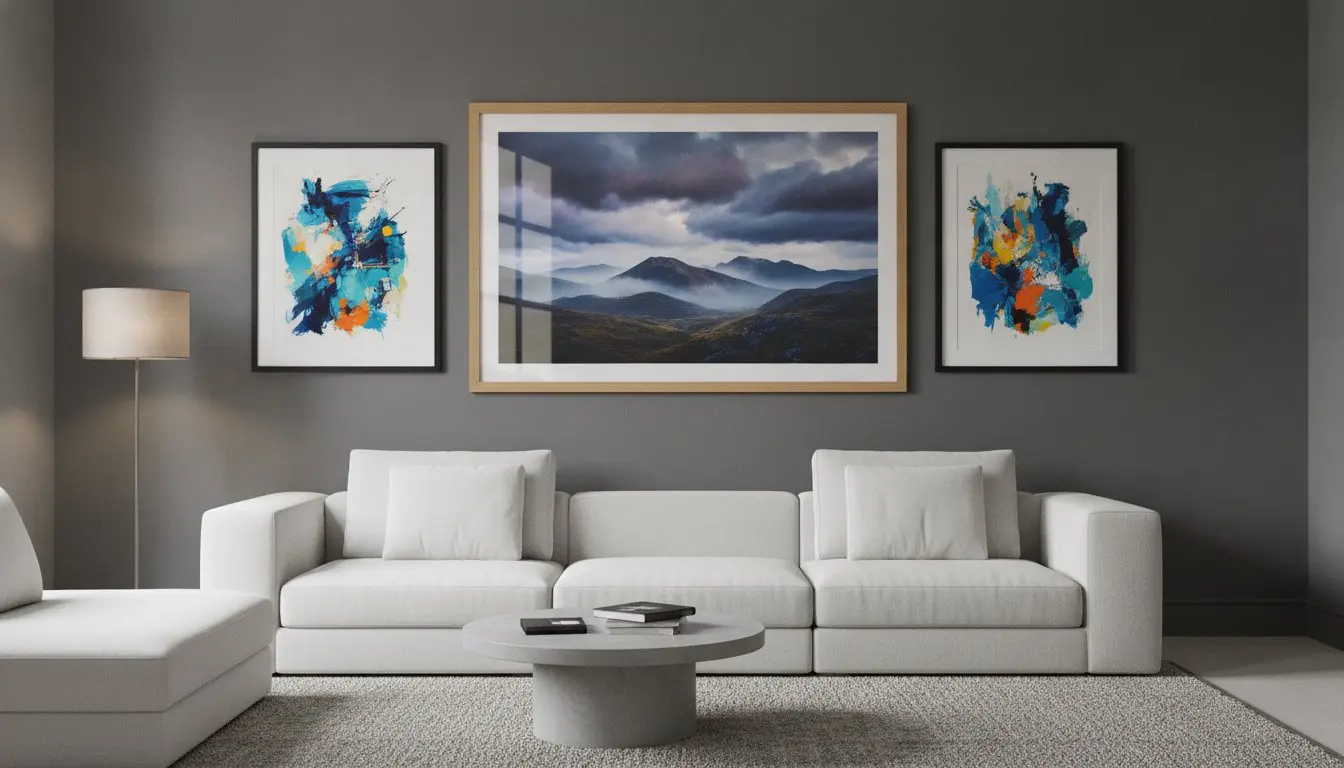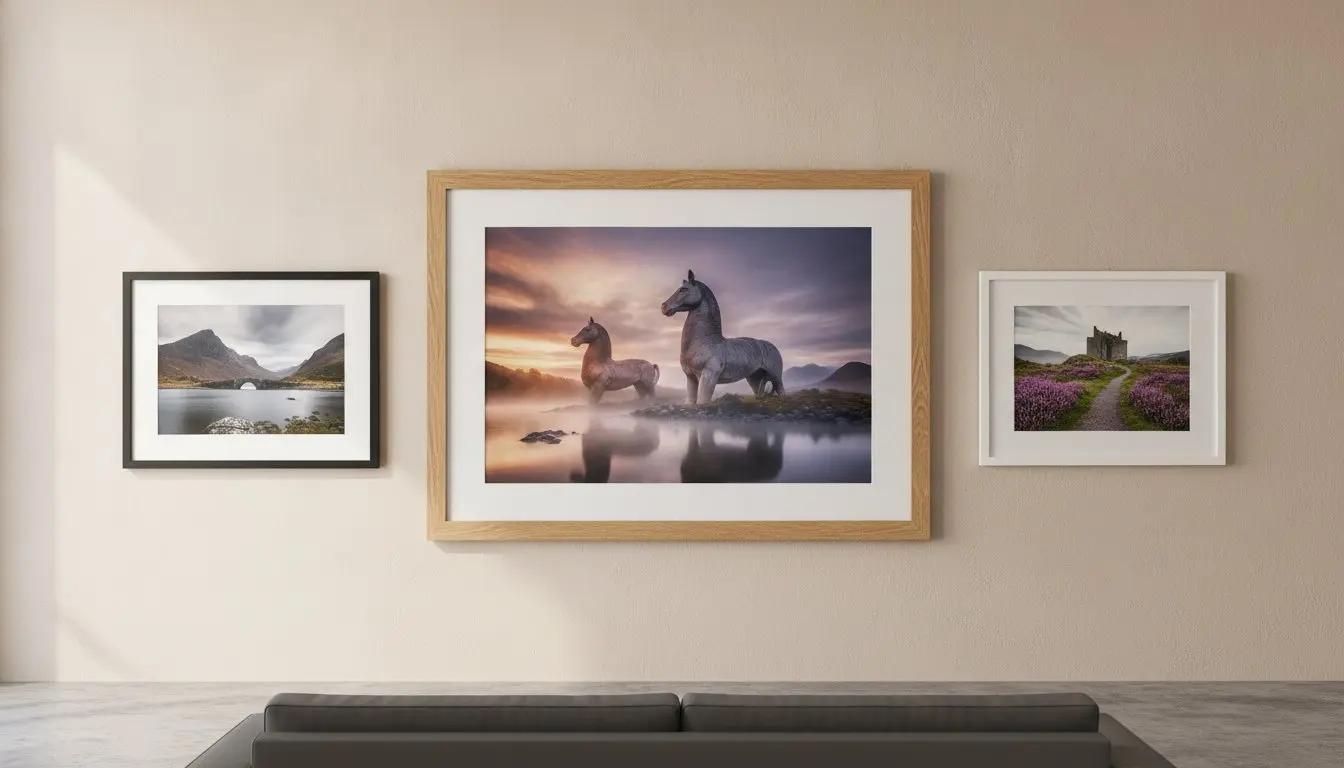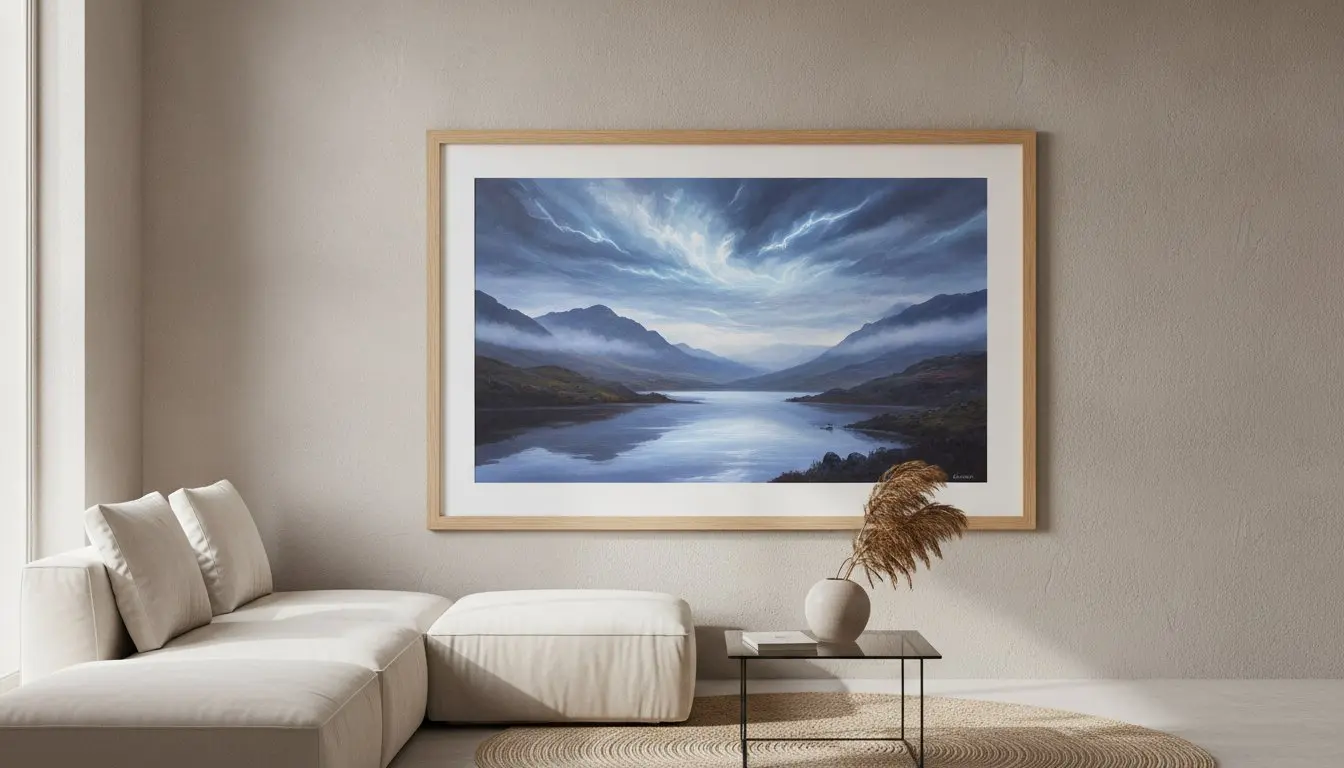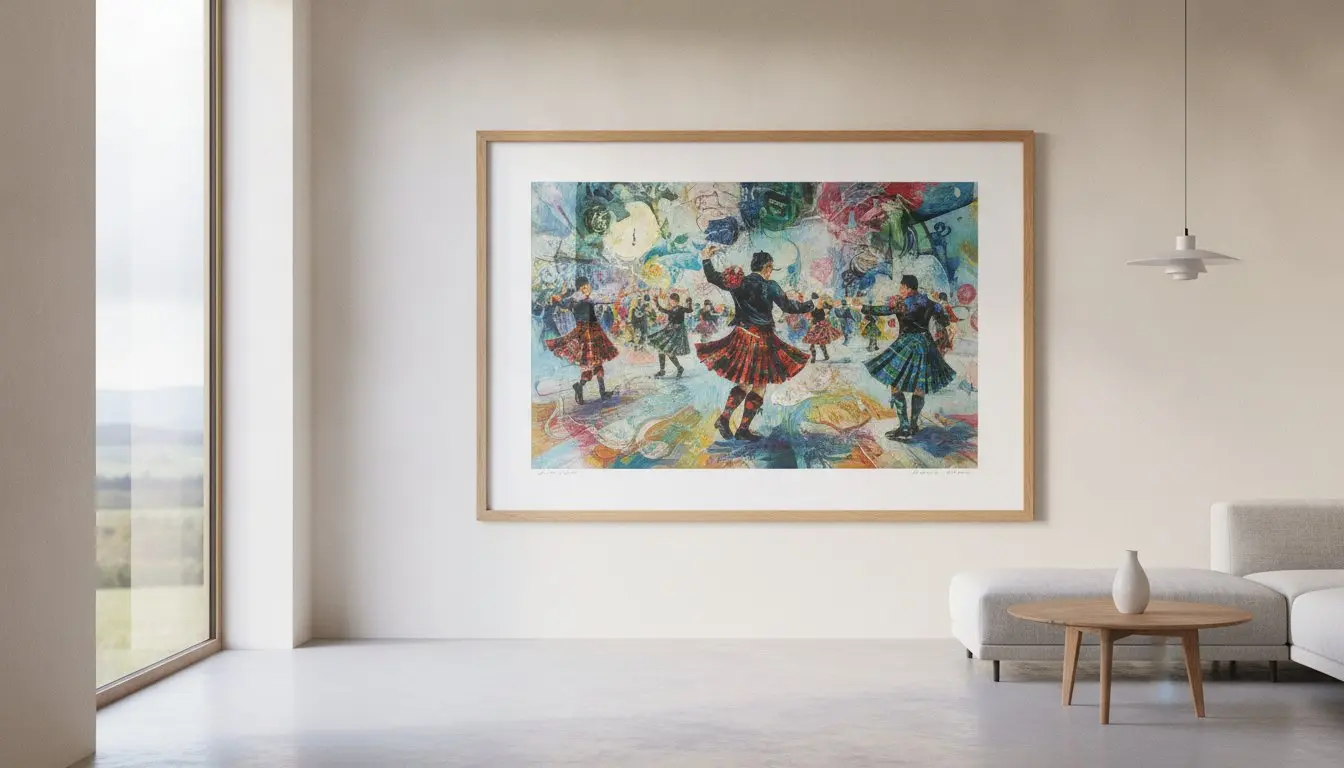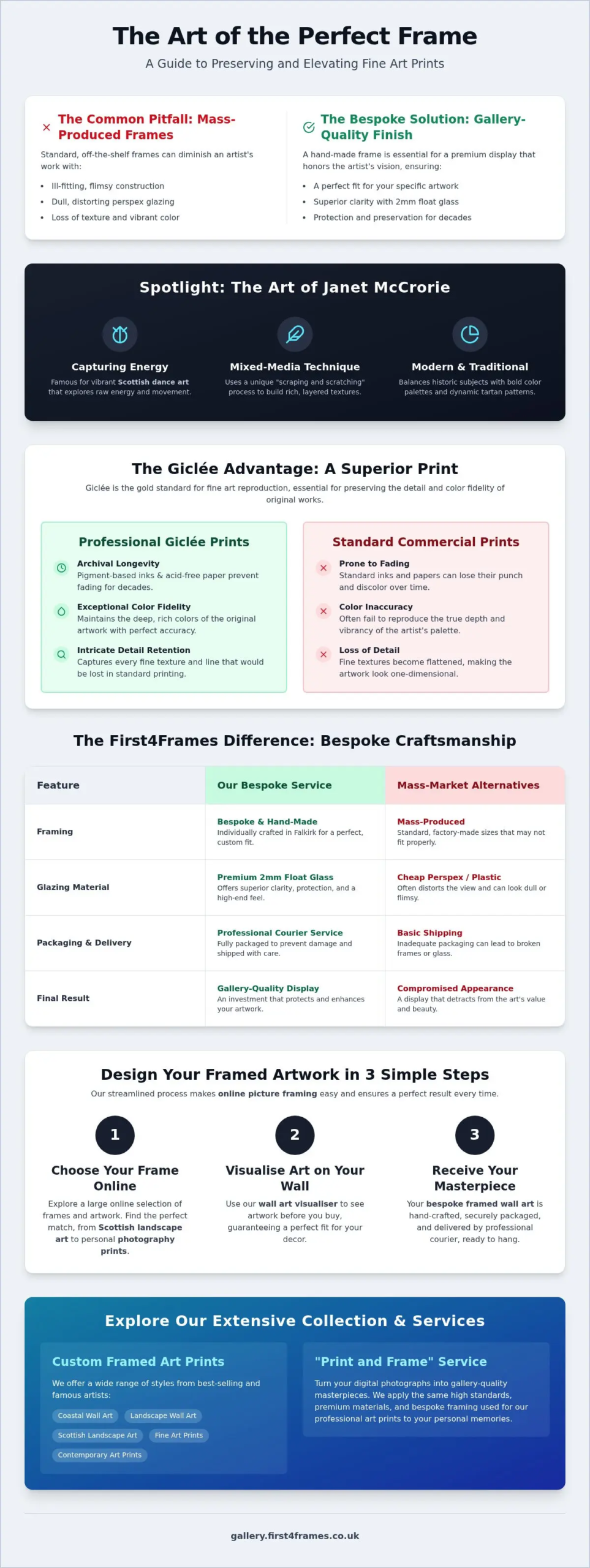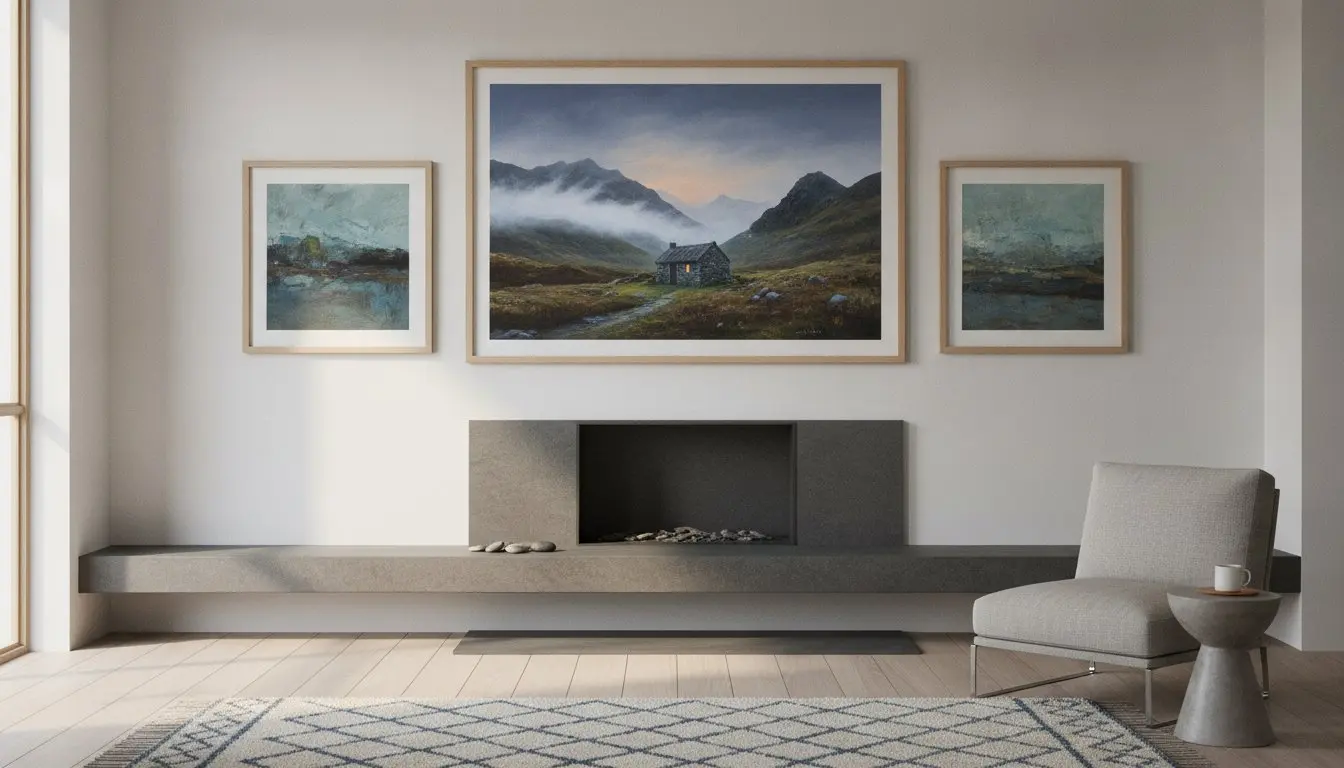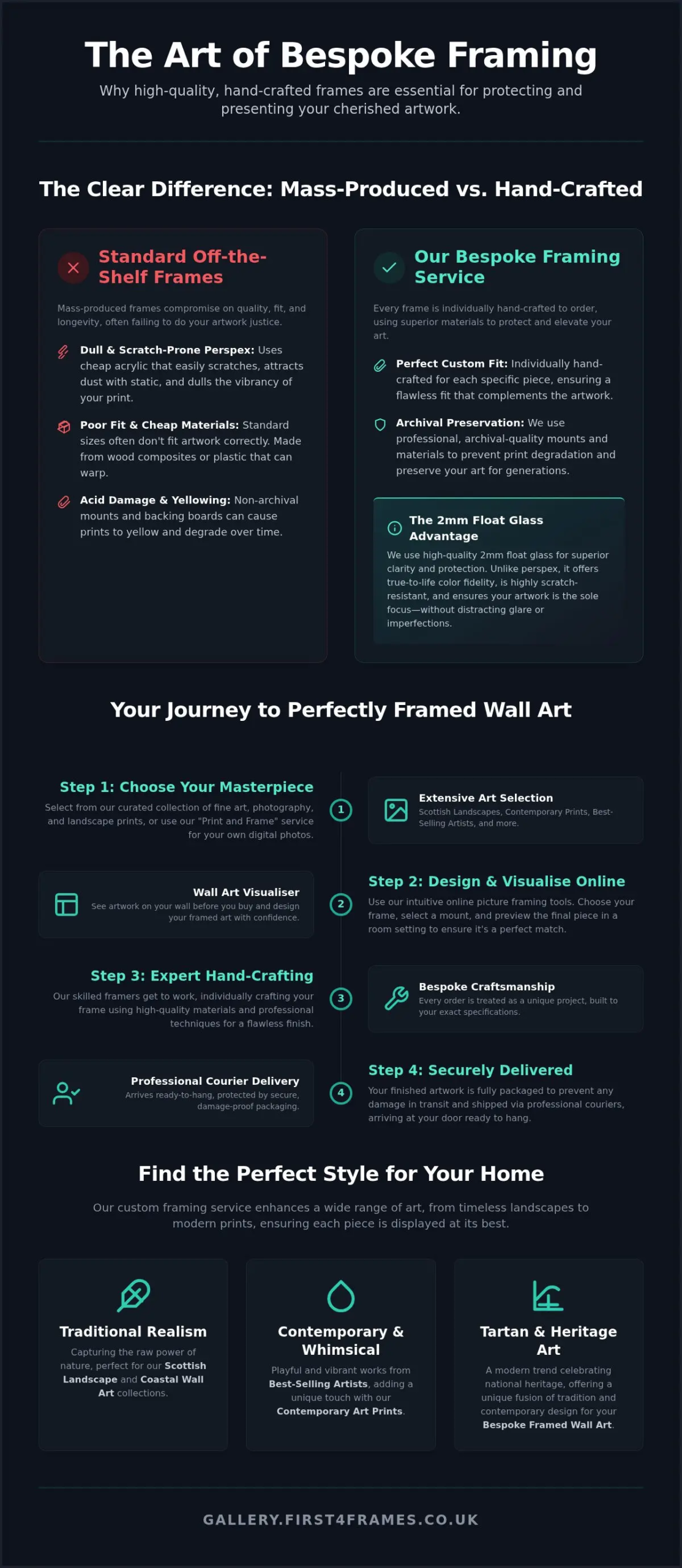
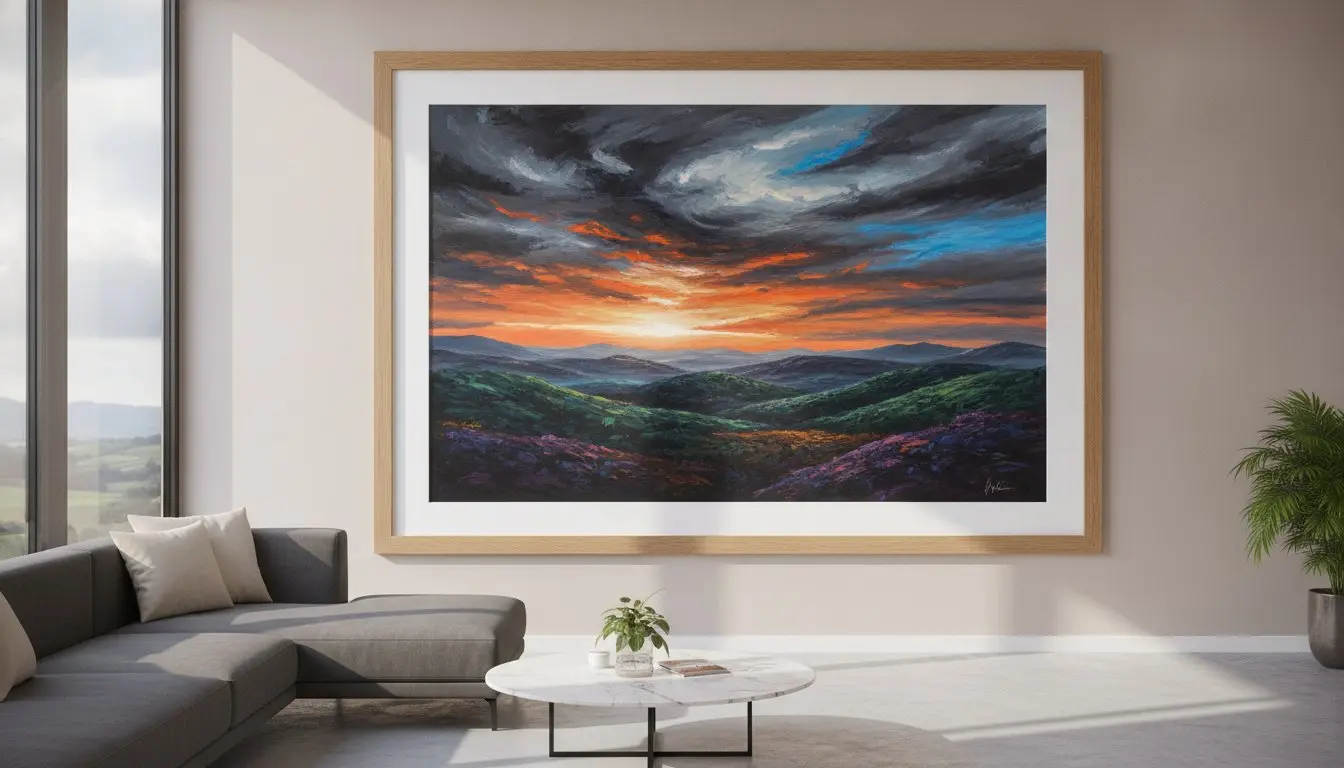
That stunning landscape you bought online loses all its soul the moment it’s trapped behind a sheet of cloudy, scratched perspex. It’s a common frustration for art lovers who want to bring the vibrant energy of modern Scottish artists into their homes but end up with flimsy frames that feel like an afterthought. We believe that a piece of art isn’t truly finished until it’s presented with the craftsmanship it deserves.
In this guide, you’ll learn how to select and visualise contemporary works while ensuring they’re protected by professional 2mm float glass for life-long clarity. We’ll show you how to use our digital tools to match art to your existing decor and why bespoke, hand-crafted framing makes the difference between a simple poster and a gallery-standard centrepiece. From choosing the right Giclée print to understanding the security of professional courier shipping, you’re about to discover how to transform your living space into a curated exhibition.
Key Takeaways
- Discover how to identify authentic Giclée prints from modern Scottish artists that meet professional standards for colour longevity and archival quality.
- Learn to use digital visualisation tools to select bespoke framing and mount colours that perfectly complement your home’s unique interior design.
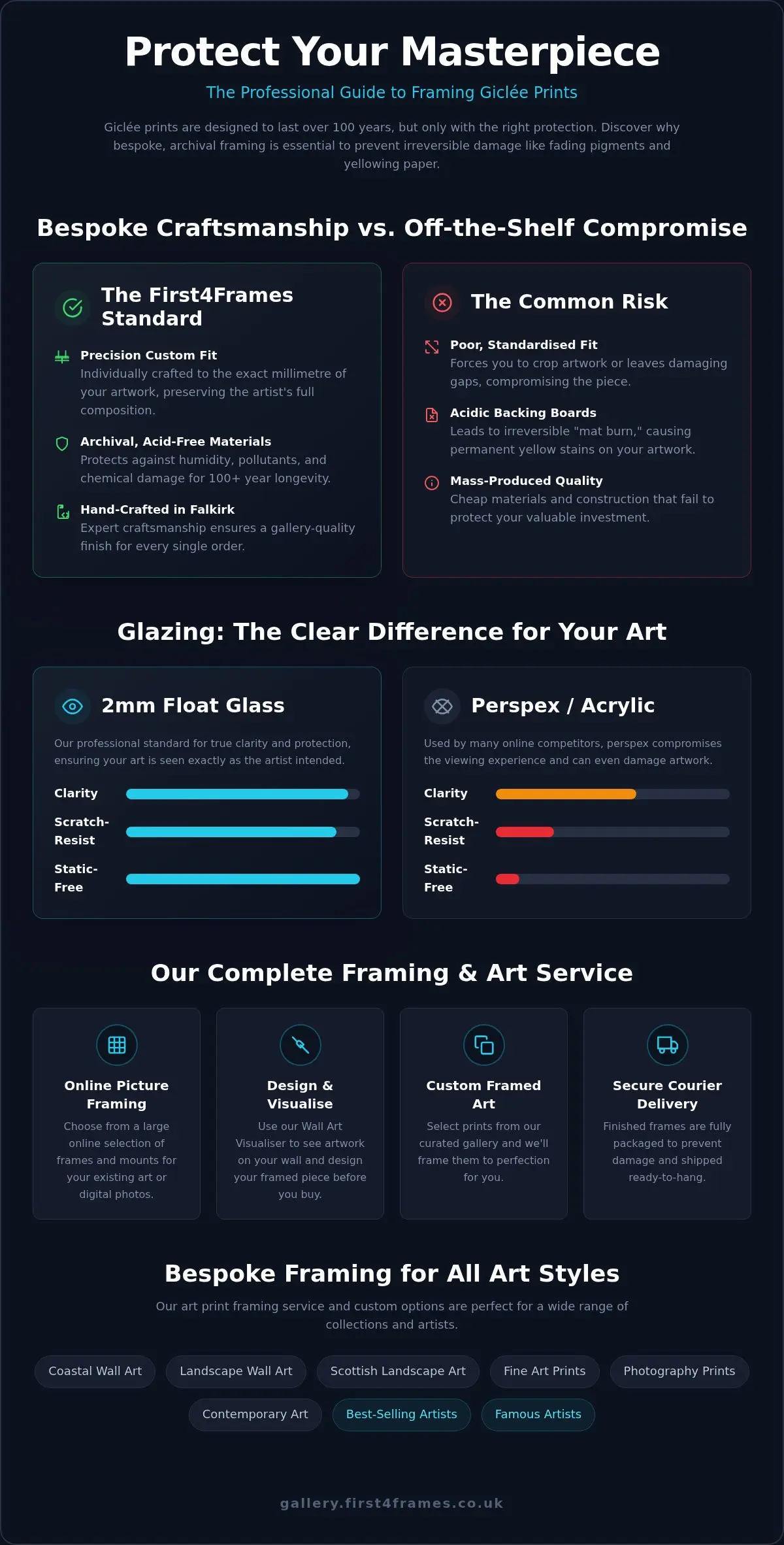
- Understand why 2mm float glass is the essential choice for gallery-standard clarity, offering a superior, scratch-resistant finish compared to cheap perspex.
- Master the professional “eye-level rule” for hanging your artwork and find out how specialist courier shipping ensures your frame arrives ready to hang.
Defining Modern Scottish Artists and the Giclée Print Standard
Modern Scottish artists often draw from a rich, complex heritage, evolving from 19th-century pioneers into a diverse 21st-century scene. To understand the history of modern Scottish art, one must look at how contemporary creators blend traditional themes with bold, abstract techniques. This movement isn’t just about oil on canvas; it’s about making these visions accessible through premium reproductions that feel as alive as the original work.
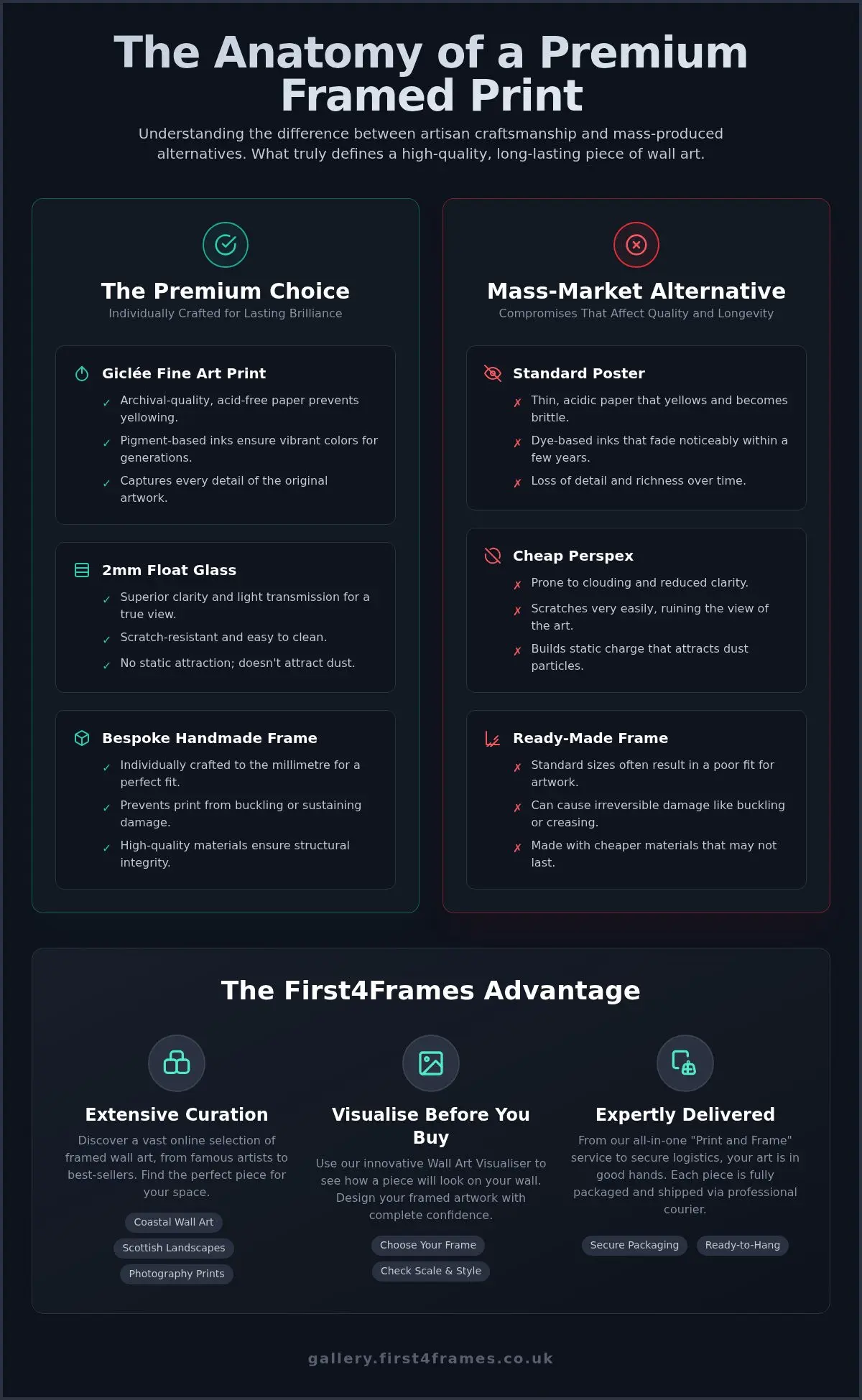
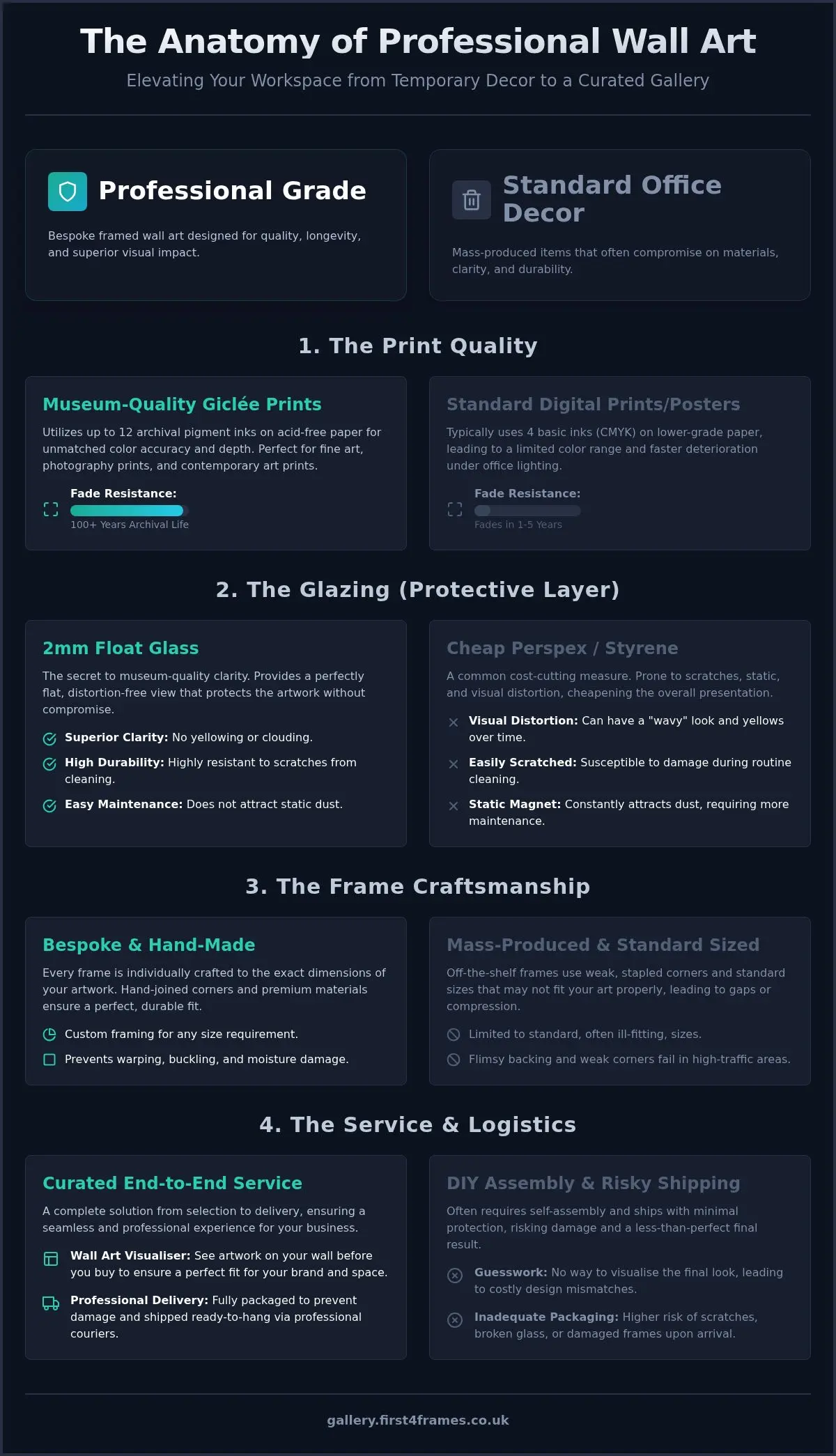
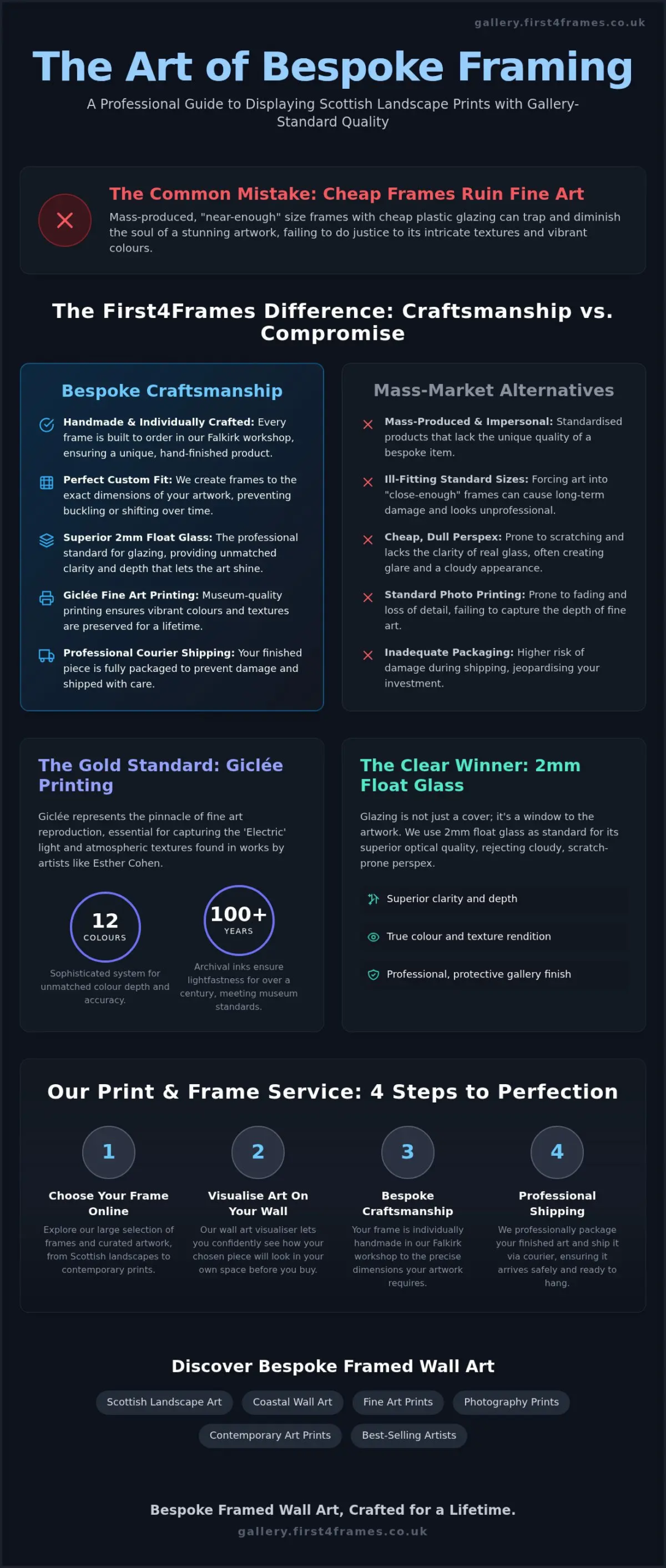
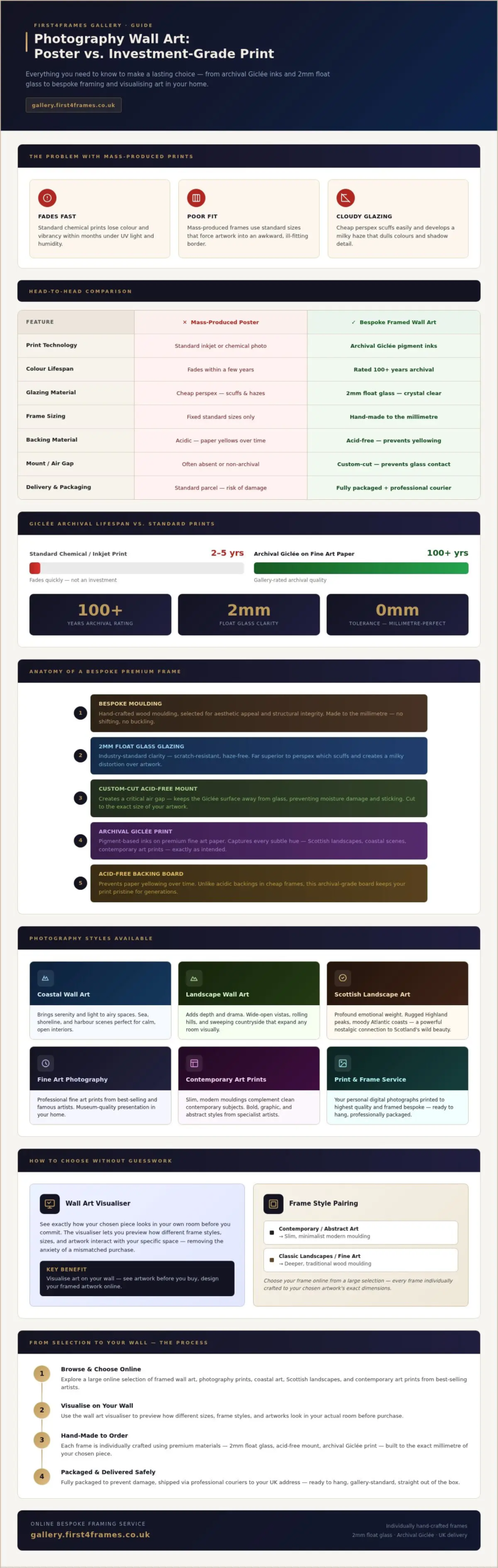
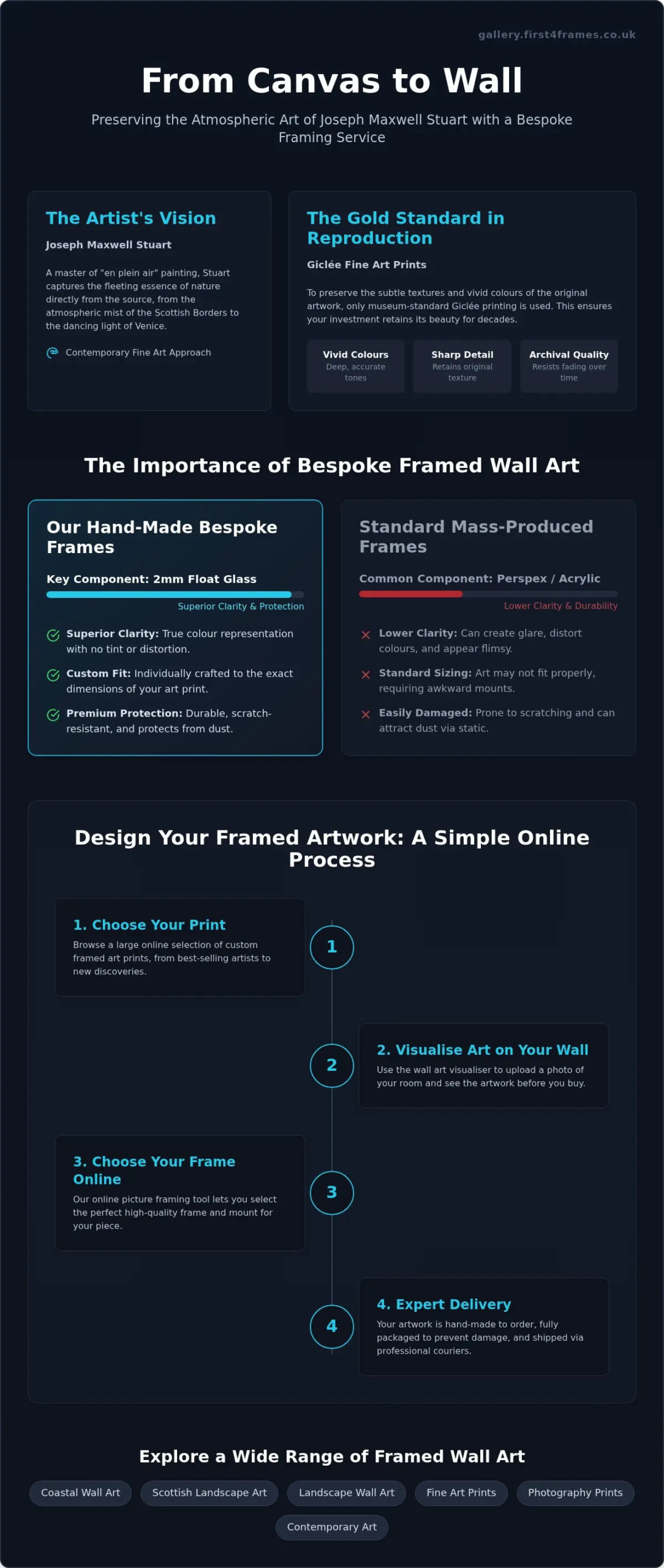
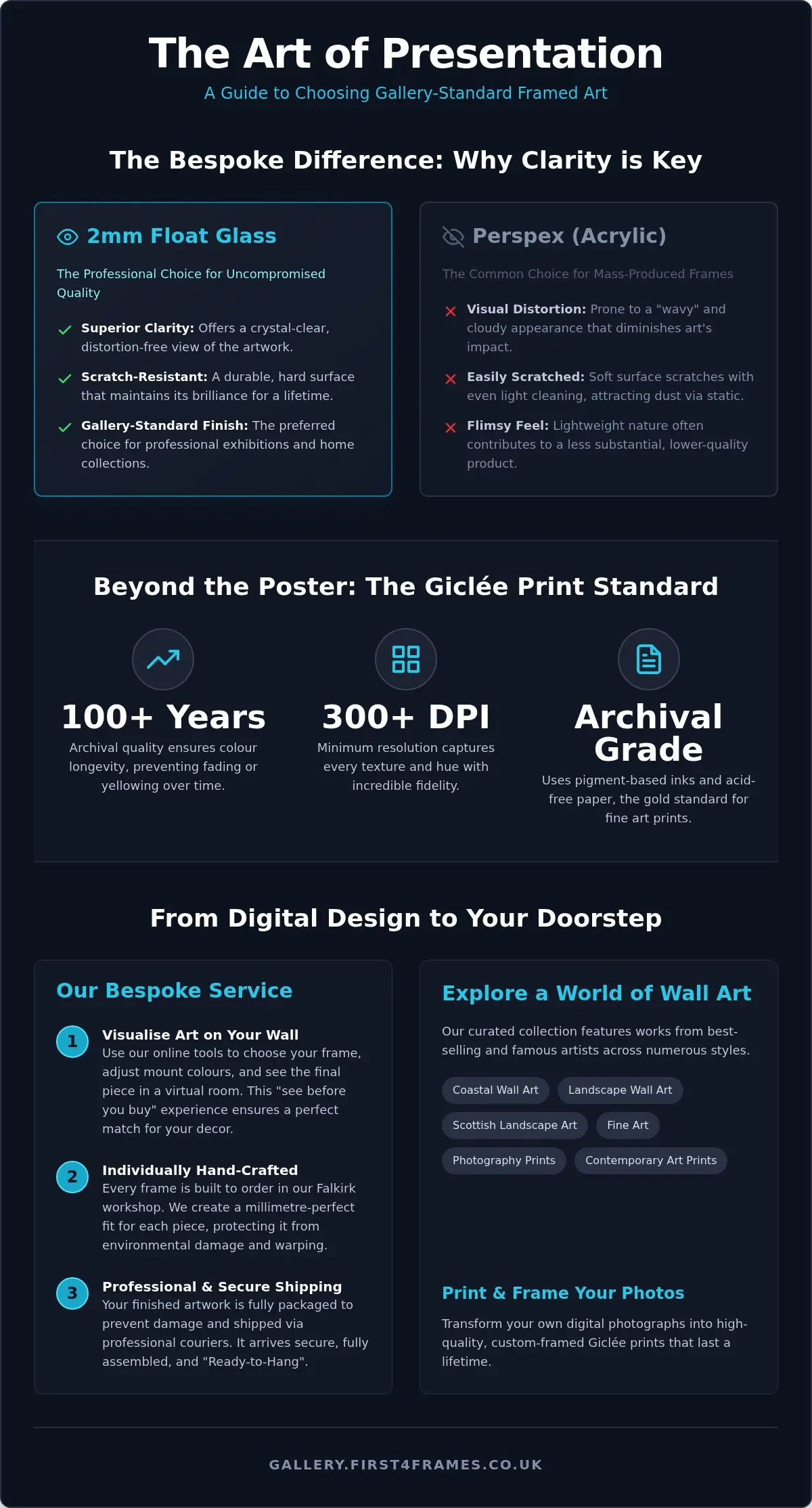
We don’t settle for standard posters. To achieve a gallery-standard aesthetic, we utilise Giclée printing. This technical standard requires pigment-based inks and archival-grade, acid-free paper to ensure your investment doesn’t yellow or fade. With a minimum resolution of 300 DPI, every texture and hue from your favourite Modern Scottish artists is captured with incredible fidelity. These prints are designed to last over 100 years, offering a lifespan that cheap, mass-produced alternatives simply can’t match.
Popular Styles: From Coastal to Scottish Landscape Art
Coastal wall art has surged in popularity across UK urban interiors. It brings a sense of airy, salt-sprayed calm to busy city homes, providing a visual window to the shore. Conversely, the enduring appeal of Scottish landscape art lies in its ability to capture the ethereal, shifting light of the Hebrides and the rugged Highlands. Whether you prefer vibrant abstract peaks or serene coastal scenes, contemporary art prints offer a sophisticated way to reflect the modern Scottish aesthetic on your own walls.
A print only becomes a true centrepiece when it’s properly housed. Moving beyond the “poster” look requires a bespoke approach. At our Falkirk workshop, we hand-craft every frame to a millimetre-perfect fit. We use 2mm float glass to provide superior clarity, avoiding the wavy, distorted look of cheap perspex. This “Ready-to-Hang” convenience is why many homeowners now choose our online gallery to find professionally finished pieces that arrive safe and ready to transform a room.
The Art of Selection: How to Choose Your Frame Online
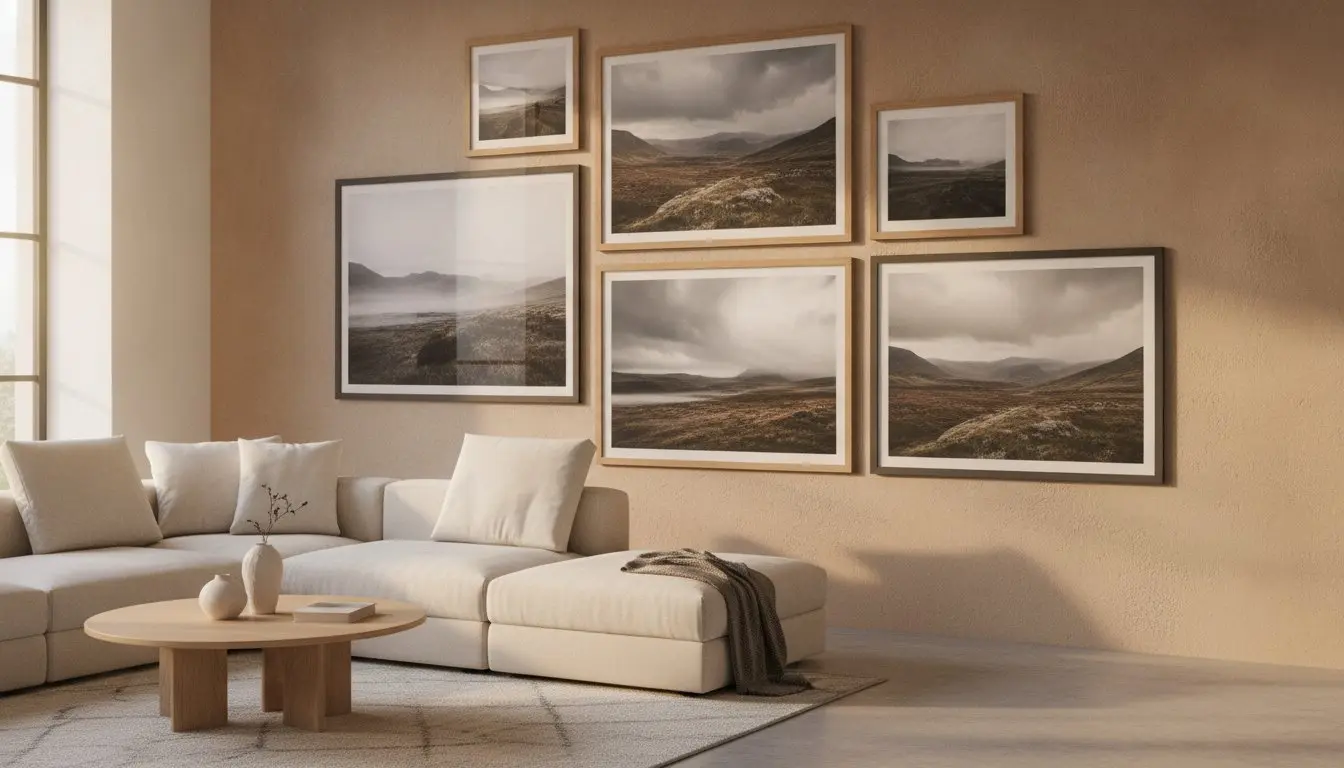
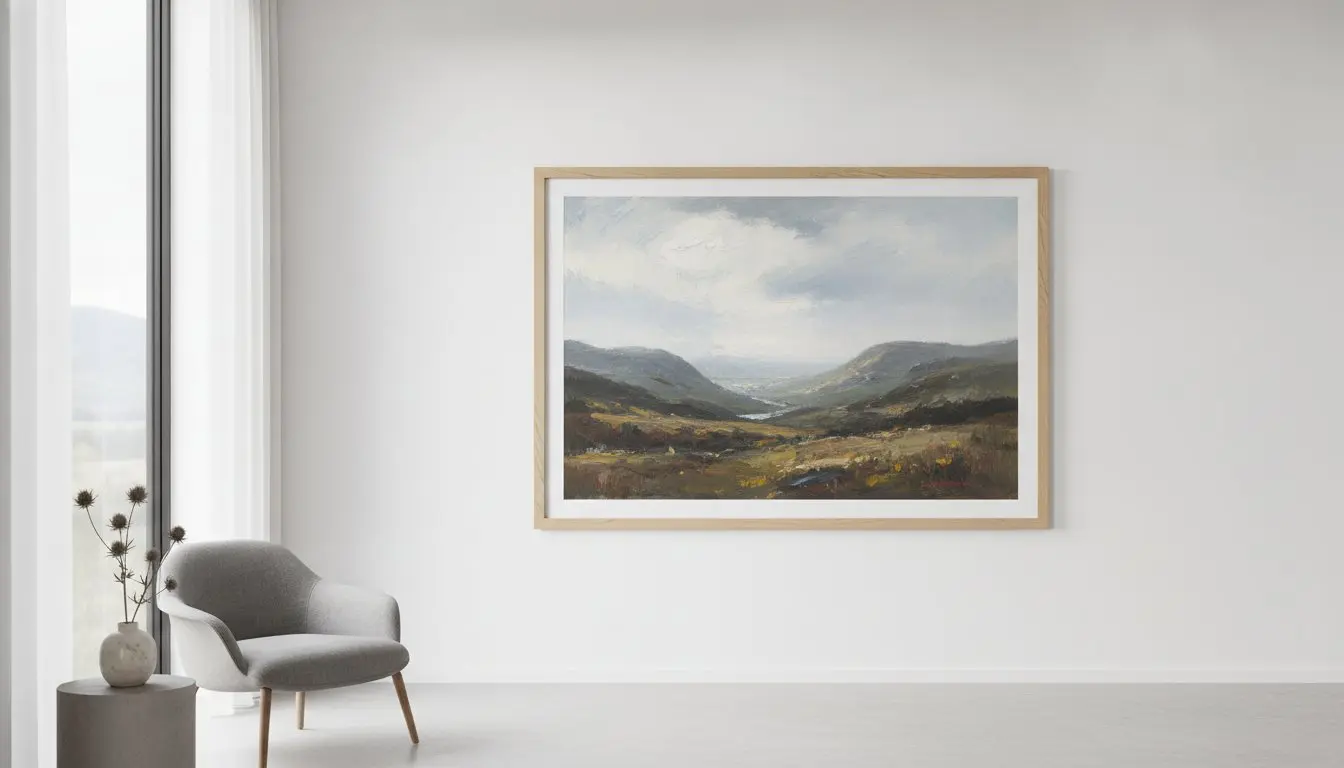
Choosing the perfect frame is a creative act. The right choice respects the vision of Modern Scottish artists while grounding the piece in your room’s architecture. A minimalist wood frame might suit a coastal abstract, whereas an ornate bespoke finish adds gravity to a traditional landscape. Matching mount colours to your wall paint or upholstery ensures the artwork feels like a permanent part of the home rather than a temporary addition. This process turns a simple image into a structured focal point.
Visualise Art on Your Wall: The Digital Gallery Experience
Buying art online shouldn’t feel like a gamble. Our First4Frames Gallery visualiser allows you to test different combinations in real-time. You can adjust mount widths and frame styles to see how they interact with your existing furniture and lighting. This “see before you buy” approach eliminates the anxiety of a mismatch. It allows you to experiment with bold colours or classic neutrals before committing to a final design, ensuring the finished piece perfectly fits your environment.
Custom Framed Art Prints for Every Space
Planning a gallery wall requires precision and a cohesive strategy. Using standard photo and picture sizes helps you create a balanced layout that looks professional. Quality is the foundation of this aesthetic. We adhere to archival paper standards to ensure your Modern Scottish artists prints remain vibrant for decades. If you’re ready to start your collection, you can browse our curated gallery today to find the perfect match for your home.
The Bespoke Difference: Why 2mm Float Glass Beats Perspex
Many online retailers choose perspex because it’s lightweight and less fragile during transit. However, it often compromises the visual impact of the work. Perspex is prone to static that attracts dust and scratches with even light cleaning. We use 2mm float glass because it offers superior clarity and a distortion-free view. When you’re displaying works by Modern Scottish artists, you want to see the true colours and fine details without the “wavy” appearance common in cheap acrylic. Real glass provides a professional, scratch-resistant finish that maintains its brilliance for a lifetime.
Precision is the foundation of preservation. A bespoke frame ensures a millimetre-perfect fit that protects your art from environmental damage. Without a proper fit, contemporary art prints can warp or buckle due to fluctuations in temperature and humidity. Our individually crafted frames provide the necessary structural integrity to keep the paper flat and secure. This artisan approach isn’t just about looks; it’s a long-term investment in the safety of your collection.
Our expertise extends to your personal collection too. Through our print and frame service, you can transform your own digital photography into gallery-standard wall art. We apply the same rigorous standards to your memories as we do to the professional works in our gallery, ensuring every piece receives a hand-finished touch.
Hand-Made Craftsmanship in the UK
Every frame we produce is hand-crafted in our Falkirk workshop. We don’t rely on mass-produced, “one-size-fits-all” solutions. By maintaining local production, we can guarantee the quality of every bespoke photo frame that leaves our doors. Real glass remains the only choice for discerning collectors who value fidelity. To understand more about the technical nuances of our process, you can read our expert guide to Mastering Custom Picture Framing.
Ready to upgrade your home aesthetic? Explore our range of hand-crafted frames and find the perfect match for your space.
Bringing the Gallery Home: Delivery and Installation
The journey from our workshop to your wall is the final, critical step in the creative process. We understand the anxiety of waiting for a fragile item to arrive. Our packaging is engineered to protect the integrity of the frame and the clarity of the glass. By using professional couriers instead of standard postal networks, we ensure that your Modern Scottish artists collection is handled by specialists who understand the value of the contents. This secure logistics chain is what allows us to deliver a truly ready-to-hang product across the UK.
Professional Shipping and Logistics
Standard delivery services often struggle with the weight and fragility of glass-fronted art. We mitigate this risk by using reinforced, impact-resistant packaging and dedicated couriers. When your order arrives, look for intact outer boxing and corner protection. This level of care ensures that the superior clarity of your 2mm float glass is preserved, arriving without the scratches or cloudiness often found in cheaper alternatives.
Once your piece is unpacked, aim for professional placement. The “eye-level rule” suggests hanging the centre of the artwork approximately 145cm from the floor. This provides a natural viewing height for most adults. For larger rooms, consider spatial grouping strategies where multiple frames are hung with consistent 5cm to 10cm gaps. To maintain your investment, clean the glass with a dry microfibre cloth; never spray liquid directly onto the frame, as moisture can damage the Giclée print over time.
Final Touches for Your Interior
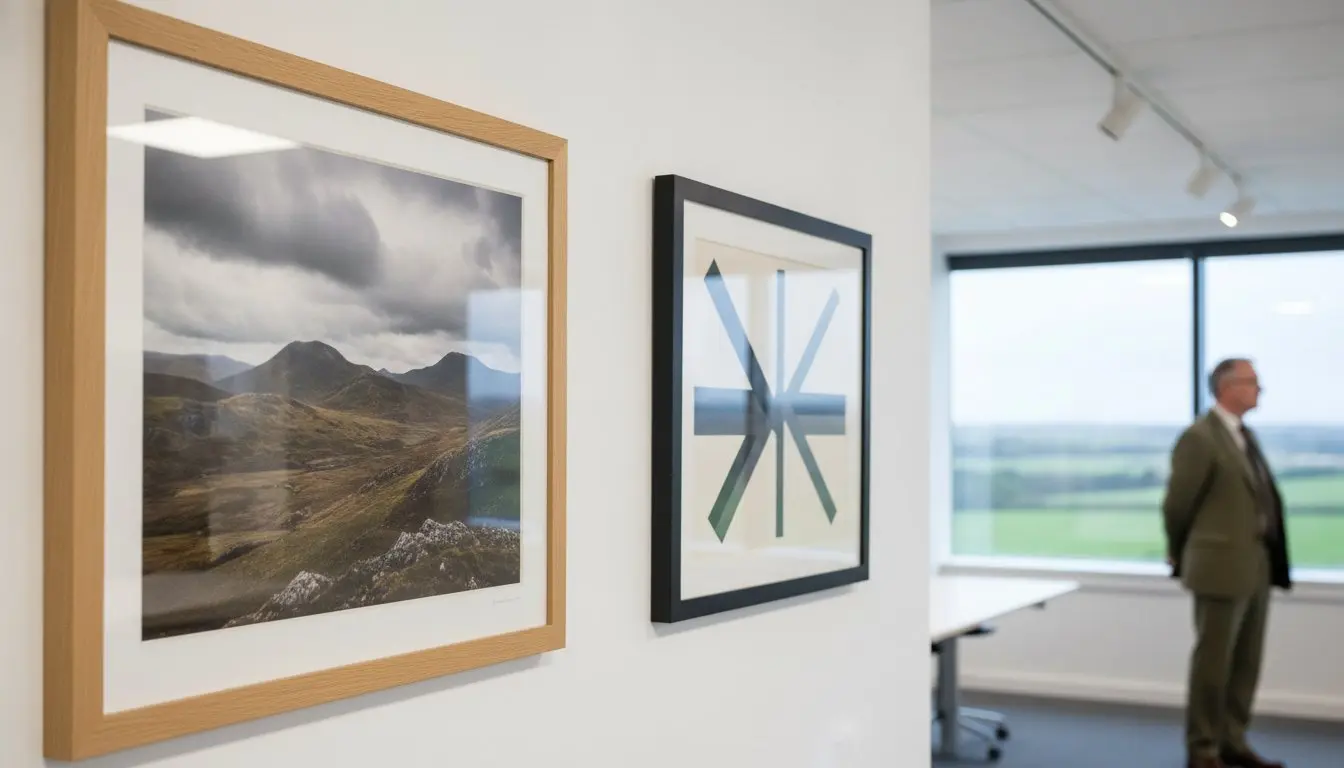
A single piece of statement landscape wall art can define an entire interior. Whether you’re showcasing Modern Scottish artists in a private lounge or a public lobby, the right placement is essential. This impact is why many UK businesses now use our commercial artwork curation services for office staging and property dressing. Well-chosen art makes a workspace feel inspiring and a listed property feel premium. If you’re looking to curate a larger space, you can contact the First4Frames team to discuss bespoke solutions tailored to your specific project needs.
Elevate Your Home with Professional Art Display
Creating a professional gallery in your own home starts with understanding the technical standards that preserve and enhance visual beauty. We’ve explored how Giclée prints and bespoke framing work together to protect the original vision of Modern Scottish artists. By choosing 2mm float glass over standard perspex, you ensure your chosen artwork remains clear, scratch-resistant, and vibrant for decades to come.
Every order we receive is individually hand-crafted in our Falkirk workshop. We combine traditional artisan skills with modern technology to deliver a finished product that’s truly ready to hang. Our secure shipping via professional UK couriers guarantees that your investment arrives in pristine condition, ready to become a focal point in your home or office. Whether you’re selecting a new coastal scene or framing a personal digital photograph, the right craftsmanship defines the final impact.
Ready to begin? Design your bespoke framed artwork at First4Frames Gallery today and start building a collection that reflects your unique style and passion for quality. We’re proud to be your partner in creating an environment you’ll love to live in.
Frequently Asked Questions
What is the difference between a Giclée print and a standard art print?
Giclée prints use pigment-based inks and archival, acid-free paper to ensure incredible colour longevity and fidelity. Unlike standard digital prints, they meet museum-quality standards, often lasting over 100 years without fading or yellowing. This makes them the preferred choice for collectors of modern Scottish artists who want to capture every brushstroke with precision. It is a professional standard that transforms a simple reproduction into a genuine fine art investment.
Why is 2mm float glass better than perspex for framing modern art?
We use 2mm float glass because it provides superior clarity and scratch resistance compared to cheap perspex alternatives. Perspex often has a wavy appearance and attracts dust through static; which can obscure the finer details of your art. Real glass offers a distortion-free view and a professional, heavy-duty feel. It ensures that the vibrant colours of your contemporary prints are seen exactly as the artist intended, without the cloudiness of acrylic.
Can I use the ‘Visualise art on your wall’ tool with my own digital photographs?
You can certainly use our digital tools to visualise how your own photographs will look when professionally framed. By uploading your images to our “print and frame” service, you can test different mount colours and frame styles against your actual wall decor. This eliminates purchase anxiety by showing you exactly how the finished piece will fit your space before we hand-craft the frame in our Falkirk workshop. It is a seamless way to design art.
How are framed prints packaged to ensure the glass doesn’t break during shipping?
Every framed print is secured using impact-resistant packaging and reinforced corner protection to prevent glass breakage. We don’t use standard postal services; instead, we rely on dedicated professional couriers who specialise in handling fragile, glass-fronted items throughout the UK. This secure logistics chain ensures your ready-to-hang piece arrives in perfect condition. Our Falkirk team monitors every stage of the delivery process to maintain our high standards of service and production quality.
Do you offer bespoke framing for art I already own, or just for prints in your gallery?
We provide a comprehensive custom picture framing service for artwork you already own as well as the prints in our gallery. Whether you have an original painting, a family photograph, or a piece by modern Scottish artists from another source, we can create a bespoke frame to your exact specifications. Every order is individually hand-finished in our Falkirk workshop to ensure a millimetre-perfect fit and a professional gallery-standard aesthetic for your home.