Chicken wall art for a kitchen can bring humour and life to the room without requiring rustic signs, checked fabric, or a collection of novelty ornaments. Bantams by Kate Philp shows six white bantams pecking across a warm, softly textured setting. Blue and red accents keep the scene bright, while the composition has enough painterly control to feel polished.
Keep chicken wall art for a kitchen clear of heat and splashes
Choose the dry zone
A breakfast corner, wall beyond the preparation area, or space above a freestanding sideboard is safer than a position beside the sink, kettle, or hob. The picture should enliven the kitchen without being exposed to grease, steam, or repeated splashes.
Let the bantams supply the personality
Repeat one blue or red note in a practical object, such as a bowl or tea towel. Stop there. Adding wire hens, egg signs, and patterned blinds would turn character into a theme and compete with the six birds.
Check the artwork from the table and the main doorway.
Keep the lower frame edge clear of small appliances.
Use a mount to separate pale feathers from a light wall.
Wipe the frame with methods suitable for its finish, not kitchen spray.
White feathers, soft earth tones, and small colour accents require careful balance. Colour-managed Giclée printing keeps those differences clear, and the limited-edition print receives a bespoke hand-finished presentation in Falkirk.
As chicken wall art for a kitchen, Bantams contributes wit, movement, and warmth while allowing the rest of the room to remain practical and understated.
Autumn park wall art for a dining room can keep the space warm and welcoming even when the table is not laid. Autumn Afternoon, Inverleith by Joseph Maxwell Stuart combines three substantial trees, vivid foliage, open parkland, and distant figures. The scene feels social without depicting a formal meal, which allows it to support everyday breakfasts as easily as evening gatherings.
Use autumn park wall art for a dining room beyond one season
Room element
How to respond to the artwork
Table timber
Let warm wood echo the foliage without trying to match every orange tone.
Upholstery
Repeat one quieter green, rust, or blue in chair fabric or a bench cushion.
Lighting
Use warm lamps after dusk, but keep pendant glare away from the glass.
Table setting
Choose plain ceramics so the picture remains the main source of seasonal colour.
The artwork does not need to disappear after autumn. Its bright sky and park depth prevent the palette from feeling closed or wintry. In spring, pair it with fresh green stems. In summer, keep textiles pale. The same framed piece can remain settled while smaller dining details change.
Judge the height from a seated position
Dining art is viewed while sitting as well as standing. Test the centre slightly lower than you might in a hallway, and leave safe clearance above a sideboard. The distant figures and tree trunks should remain easy to read across the table.
Vivid foliage can become muddy when reproduction is poorly controlled. Colour-managed Giclée printing preserves the relationship between warm leaves, cool sky, and park shadows, while in-house framing gives the scene a lasting finish.
As autumn park wall art for a dining room, Autumn Afternoon, Inverleith adds colour and convivial warmth while remaining adaptable throughout the year.
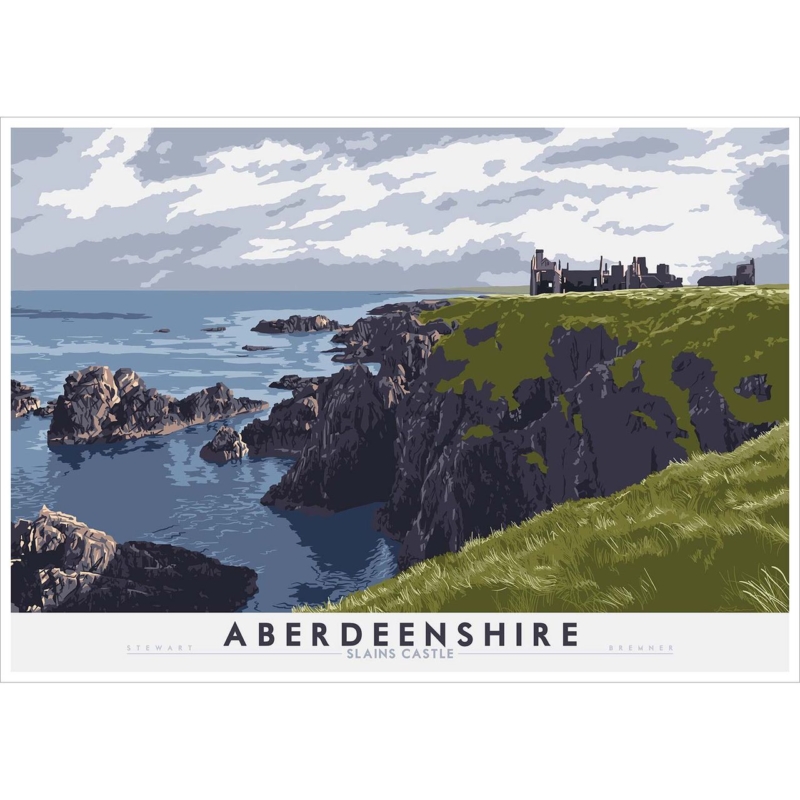
Scottish castle wall art for a library should deepen the room’s atmosphere without making shelves, timber, and reading chairs feel oppressively dark. Aberdeenshire: Slains Castle by Stewart Bremner provides ruined architecture, Aberdeenshire identity, and a story worth exploring. Its presence suits books, but it does not need theatrical Gothic accessories to make its point.
Balance Scottish castle wall art for a library with reading light
For a dark library
Use a pale mount and a frame with a clear edge. Leave wall space around the picture so castle detail remains separate from crowded shelves.
For a light library
A deeper frame can add definition against cream, stone, or soft grey paint. Relate it to one furniture tone rather than matching every bookcase.
Keep the castle clear of the shelves
Hang the piece above a low cabinet, near a reading chair, or on the short wall at the end of the room. Avoid squeezing it into a narrow gap between tall bookcases. The architecture needs enough distance to feel like a destination rather than another object stored among books.
Evening viewing check
Switch on the reading lamps and view the glazing from the main chair. Reposition any lamp whose reflection hides the castle, then confirm the page still receives enough light.
Subtle masonry, sky, and atmosphere benefit from colour-managed Giclée production. First 4 Frames can then complete the piece with a bespoke, hand-finished frame that supports the architecture without overwhelming it.
As Scottish castle wall art for a library, Aberdeenshire: Slains Castle brings place, architecture, and mystery to the room while leaving it comfortable enough for long reading sessions.
Railway wall art for a home office can suggest purpose and progress without introducing another slogan to the working day. A3 No 60057 at Galashiels by Rod Harrison shows a green steam locomotive beneath the station footbridge at Galashiels. Its billowing white smoke, passenger carriages, and open blue sky give the image movement as well as useful historical character.
Place railway wall art for a home office on the thinking wall
Choose the view between tasks
The strongest position is often opposite the desk rather than directly behind it. Looking up from a screen then reveals a scene with depth and direction. The rails and carriages carry the eye onward, while the station architecture gives the composition a steady framework.
Sit at the desk. Mark a centre point that is comfortable to view without turning.
Check the monitor. Keep bright window reflections out of the glazing.
Stand at the door. Make sure the locomotive reads clearly on entry.
Edit nearby objects. One model or railway book is enough; a collection would turn the room into a display.
Movement in an image can imply momentum more naturally than words telling someone to be productive.
A dark timber or restrained black frame can relate to the locomotive and bridge details. A lighter mount leaves room around the smoke and sky, so the finished piece feels focused rather than mechanically heavy.
Fine engineering detail depends on clean reproduction. Colour-managed Giclée printing retains the greens, white steam, and crisp station structure, while bespoke hand finishing at the Falkirk workshop gives the work professional presence.
As railway wall art for a home office, A3 No 60057 at Galashiels offers history, energy, and visual direction while keeping the workspace personal and composed.
wall art for a loft study has to work with a room that may offer excellent character but very little straightforward hanging space. Sloping ceilings, dormer windows, desks, and built-in storage quickly divide the walls. The Attic Room by Emily Little provides a thoughtful answer. Its upright proportions fit a narrower vertical section, while the painted windows and warm interior colours create an extra sense of light and depth.
Map the usable walls before furnishing the loft
Begin with the full height sections. A gable wall, chimney return, or strip beside a dormer may be more valuable for art than the long walls beneath the eaves. Reserve low areas for cupboards, files, and surfaces. This prevents the picture from being squeezed into a space where the roof line cuts across it or where furniture hides the lower half.
Next, sit at the desk and note the walls in your natural sightline. Artwork directly behind a monitor is often obscured. A piece on the return wall, opposite the desk, or beside the approach to the workspace can be easier to enjoy. It can also improve the view during breaks without becoming a distraction during focused work.
Why upright wall art for a loft study is so useful
The Attic Room is available in 230 x 322 and 360 x 500 millimetre print sizes before framing. Its vertical format uses height rather than width, which is helpful when a broad wall is interrupted by windows or storage. Mark the intended finished frame with low-tack tape and check that the top has comfortable clearance from the changing roof angle.
The composition reinforces that vertical movement. Bright window shapes draw the eye upward, while the chair and fragments of table keep the image connected to a working interior. The subject therefore relates to the room without literally repeating a desk, keyboard, or office slogan.
Balance daylight and screen light
Watch the room for a full working day. Rooflights and dormers can send strong light across different walls as the sun moves.
Avoid direct glare. Choose a position where bright reflections will not make the image difficult to see.
Keep it out of the screen’s background when needed. If video calls matter, decide whether a calm artwork backdrop helps or whether another wall gives better daily enjoyment.
Add controlled task lighting. A desk lamp should support work without throwing a hard hotspot across the glazing.
The painted windows in the artwork bring a suggestion of brightness even on overcast days. Orange and rust tones add warmth, while turquoise and pale blue details keep the image from feeling enclosed. This colour balance can help a loft study feel welcoming in winter as well as airy in summer.
Let the artwork soften practical office furniture
Loft studies often rely on efficient furniture because every section of floor and wall has a job. White cupboards, metal desk legs, and filing boxes can make the result feel temporary. The layered, semi-abstract surface of The Attic Room introduces marks, irregular edges, and human warmth without requiring extra objects on the desk.
A simple natural-timber frame can connect the orange tones to exposed beams or a wooden worktop. A narrow dark frame gives the fragmented forms a crisp boundary and may relate better to contemporary lighting or black furniture. Avoid an excessively wide moulding if the hanging section is already narrow.
Make a converted room feel permanent
A loft office can sometimes feel like spare space claimed in a hurry. One properly scaled and hand-finished piece signals that the room has a settled purpose. First 4 Frames completes colour-managed Giclée production and bespoke framing in-house in Falkirk, helping the subtler paper textures, painted colour, and pale window forms remain clear.
wall art for a home baking corner should make the space feel more enjoyable without adding to the visual clutter of mixers, scales, jars, and everyday mugs. Cup of Ambition, 9 to 5 by David Short is especially well suited to that job. Its shelves, baking tools, bright cups, and row of finished cakes celebrate the activity itself, while the square composition gathers many small details into one clear focal point.
Why wall art for a home baking corner needs a little structure
A baking area naturally contains many shapes and materials. There may be glass storage jars, metal utensils, paper cases, recipe books, and a stand mixer on show. Adding several small signs or decorative objects can make the corner feel busier. One confident artwork gives the eye a place to settle and helps the practical collection read as part of an intentional room.
Cup of Ambition, 9 to 5 reflects the same objects without trying to imitate a perfectly styled kitchen. The energetic paintwork and uneven forms make the scene feel used and sociable. That quality suits a real baking space, where flour appears on the worktop and favourite tools earn their place through regular use.
Choose the safest useful wall
Keep framed art away from direct heat, steam, and repeated splashes. The wall beside a pantry, above a freestanding sideboard, or near a kitchen table will usually be more suitable than the area immediately over a hob, kettle, or sink. A nearby position can still define the baking zone without exposing the frame and glazing to unnecessary kitchen residue.
Check how cupboard doors and appliances open before marking the hanging point. The image should remain visible when the mixer is in use, but it should not sit where a raised appliance head or open cabinet could meet the frame. A comfortable gap above the work surface also makes wiping and moving equipment easier.
Use the square shape to anchor a compact baking station
The available print sizes are 265 x 265, 500 x 500, and 800 x 800 millimetres before framing. The smallest can suit a narrow pantry wall or a modest coffee-and-baking corner. The middle size can hold its own above a sideboard. The largest needs generous clear wall and is better suited to an open-plan kitchen where it will be viewed from across the room.
What is already in the corner
Useful artwork response
What to avoid
Bright stand mixer
Repeat one of its colours lightly in the print or frame
Matching every accessory to the appliance
Open shelves and jars
Leave clear wall around one square focal piece
A cluster of many small kitchen signs
Plain fitted cabinetry
Use the painting’s strong colour to add personality
Choosing art so pale that it disappears
Patterned tiles
Frame the image simply and keep nearby extras restrained
Adding another competing decorative pattern
Borrow colour without turning the kitchen into a theme
The deep blue ground gives the image enough weight to work with navy cabinetry, dark shelves, or black hardware. Orange, pink, green, and yellow details prevent that blue from feeling cool. Pick up just one accent in a tea towel, bowl, or storage tin. The artwork should lead the palette rather than become an instruction to buy a complete matching set.
A slim dark moulding can sharpen the shelves and utensils in the composition. Natural timber can make the result feel warmer and connect it to chopping boards, a table, or open shelving. The right choice depends on the finishes already in the room, so consider the complete framed dimensions rather than the print alone.
A hand-finished focal point for an everyday ritual
First 4 Frames produces colour-managed Giclée prints and completes bespoke framing in-house at its Falkirk workshop. That careful presentation gives a lively subject a properly resolved finish. It also makes the piece suitable for a kitchen that is used hard but still deserves the same design attention as a sitting room.
The Benefits of a Lighter, Cost-Effective Alternative to Wood
When choosing a picture frame, most people naturally think of wood. Timber has been the conventional material used by picture framers for generations, and it remains an excellent choice.
However, wood isn’t the only option.
At First4Frames, we also use high-quality polymer picture-frame mouldings where they are appropriate for the artwork and the type of finished frame we’re creating.
Modern polymer mouldings can offer some significant advantages, particularly when you’re looking for a large frame or a wide, substantial moulding without the additional weight and cost that can come with an equivalent timber frame.
One of the ranges available to professional framers is Polcore® from Mainline Mouldings, which is manufactured using recycled polystyrene. Mainline currently describes Polcore as containing 80–95% recycled polystyrene and being 100% recyclable. (mainlinemouldings.com)
What is a polymer picture frame?
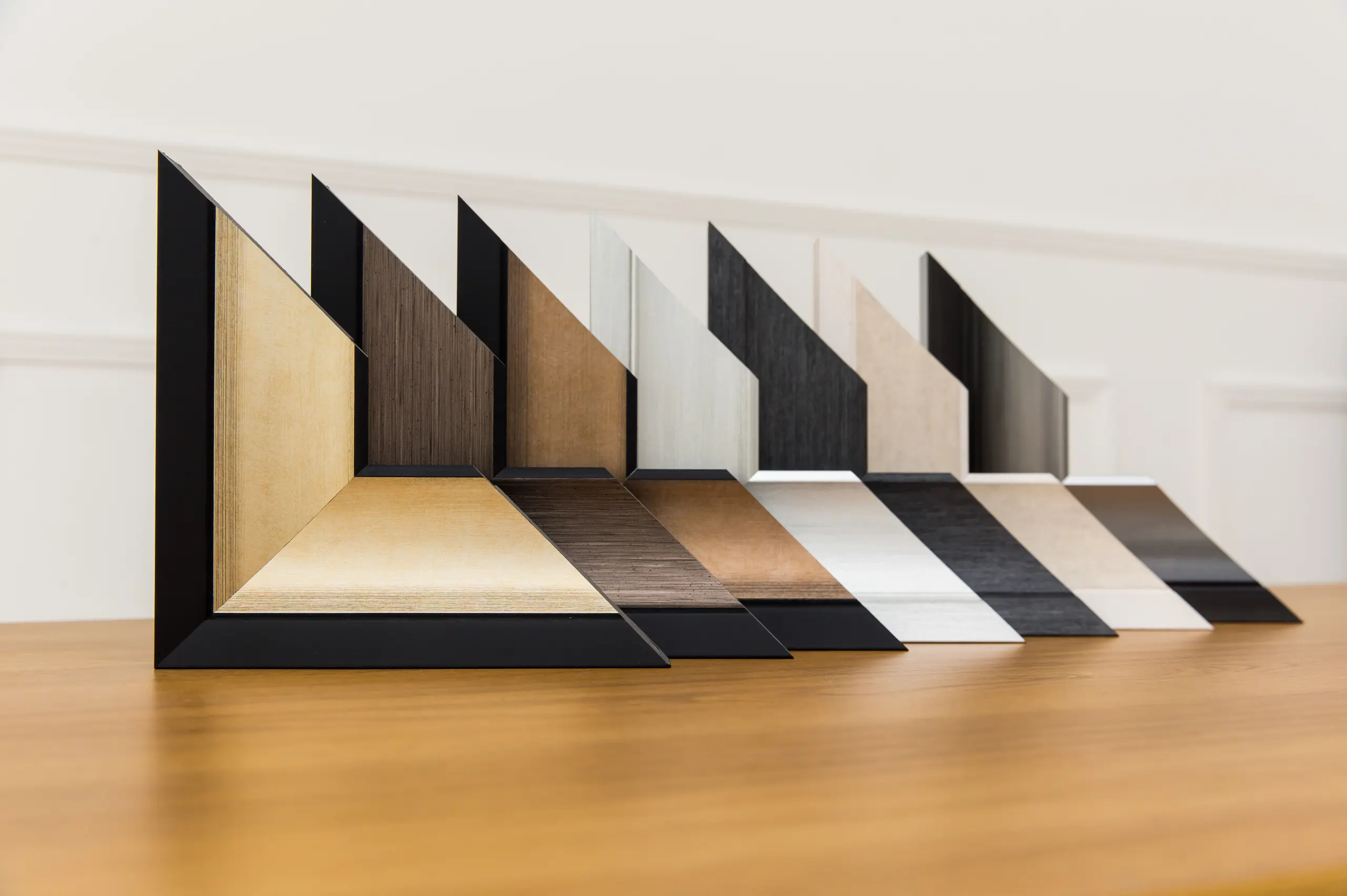
A row of wooden and polymer picture frame corners in various colours and finishes is displayed on a light wooden surface, with each frame angled upright against a white background.
A polymer picture frame uses a manufactured polymer moulding for the outer frame rather than a traditional timber moulding.
The range of styles available is surprisingly extensive. Polymer mouldings can have contemporary finishes, traditional profiles, metallic effects, ornate designs and realistic wood finishes. Mainline’s Polcore collection, for example, includes black, bronze, gold, silver, white, coloured and wood-tone mouldings. (mainlinemouldings.com)
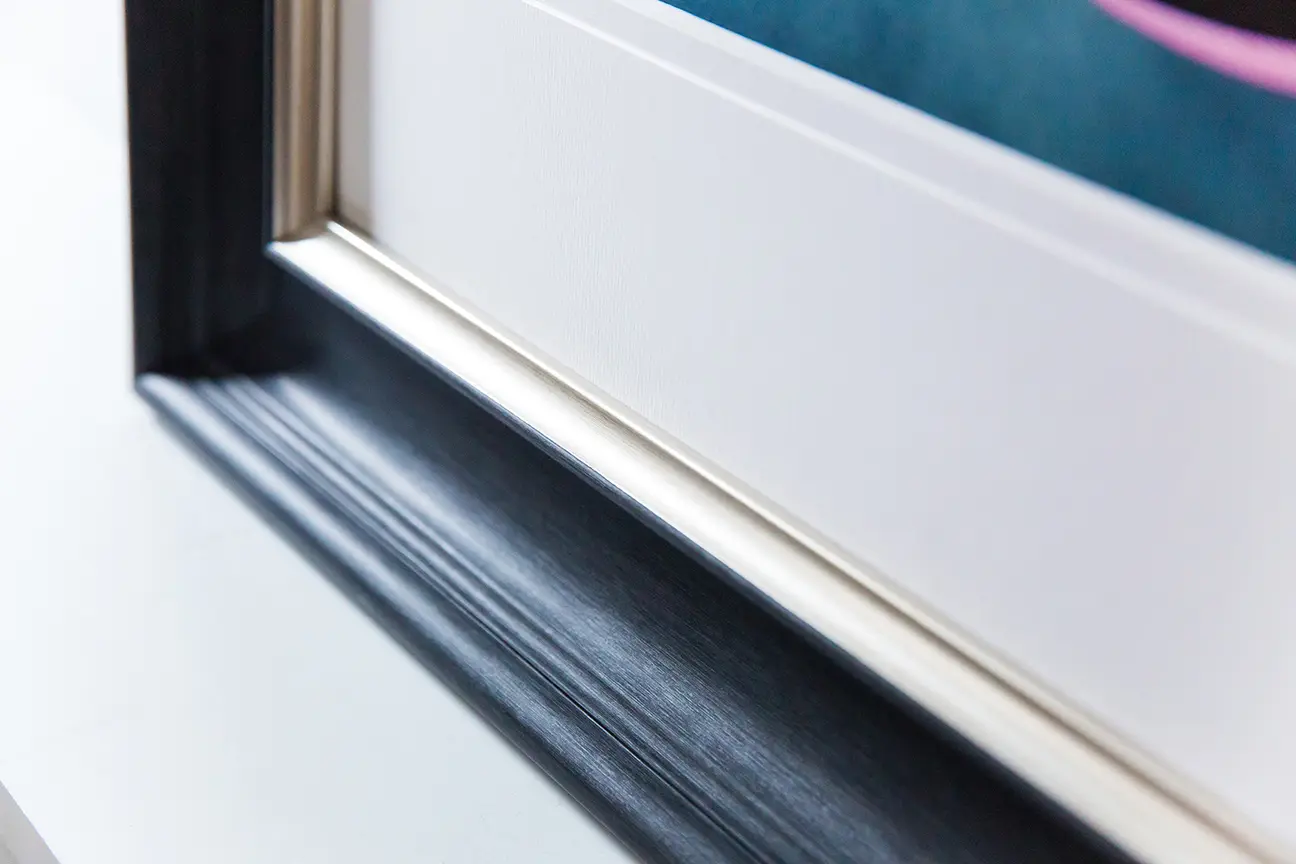
Close-up of a polymer picture frame with a black, glossy outer edge and a white inner mount, focusing on the corner where the frame and mount meet.
This means choosing polymer doesn’t necessarily restrict the appearance of your finished frame.
For many pictures, you’d be unlikely to know simply by looking at the finished frame on the wall whether the moulding underneath the decorative finish was polymer or timber.
The big advantages: cost and weight
Two ornate polymer picture frame corners, one white and one black with gold, rest on a dark blue fabric chair.
There are two particularly good reasons for considering a polymer frame: cost and weight.
Good-quality polymer mouldings can provide an impressive finished frame at a lower cost than many comparable timber mouldings. Mainline similarly describes its Polcore range as offering the appearance of traditional wood at a fraction of the weight and cost. (mainlinemouldings.com)
The difference becomes particularly interesting when we start looking at wide mouldings and large frames.
A substantial frame can require several metres of moulding. With traditional timber, increasing the width and depth of the moulding can add considerably to both the price and the overall weight of the finished picture.
A polymer moulding can give you the appearance and impact of a substantial frame while keeping the finished piece considerably lighter.
The bigger the frame, the more important weight can become
Weight isn’t necessarily a major consideration with a small picture. As frame dimensions increase, however, it becomes much more significant.
A lighter moulding makes a large finished picture easier to handle, transport and hang. Mainline also specifically highlights these weight advantages for larger Polcore frames. (mainlinemouldings.com)
This can make polymer particularly attractive when somebody wants a large statement frame or a wide moulding without unnecessarily increasing the weight hanging on the wall.
The frame may be polymer, but the rest of the framing doesn’t change
This is an important distinction.
Choosing a polymer moulding doesn’t mean choosing inferior glass, mountboard or other framing materials.
The polymer is the moulding used to create the outer frame.
We can use the same quality glass and mountboards that we would use when producing a frame with a traditional wooden moulding.
The artwork can therefore receive the same careful mounting, glazing and professional framing treatment. What changes is the material used to manufacture the outer moulding.
That allows us to take advantage of the reduced weight and cost of polymer where appropriate without compromising the other components that go into creating a quality finished picture frame.
Some examples of our finished frames
Here are a few examples showing how different moulding styles can work with very different types of artwork.
Border Bothy
Two brown hares stand on their hind legs boxing in a wildflower meadow, with a cottage, trees, and a colourful, swirling sky in the background. The scene is framed in grey and cream.
The combination of a substantial dark frame, generous mount and colourful artwork demonstrates how the frame itself can become an important part of the overall presentation.
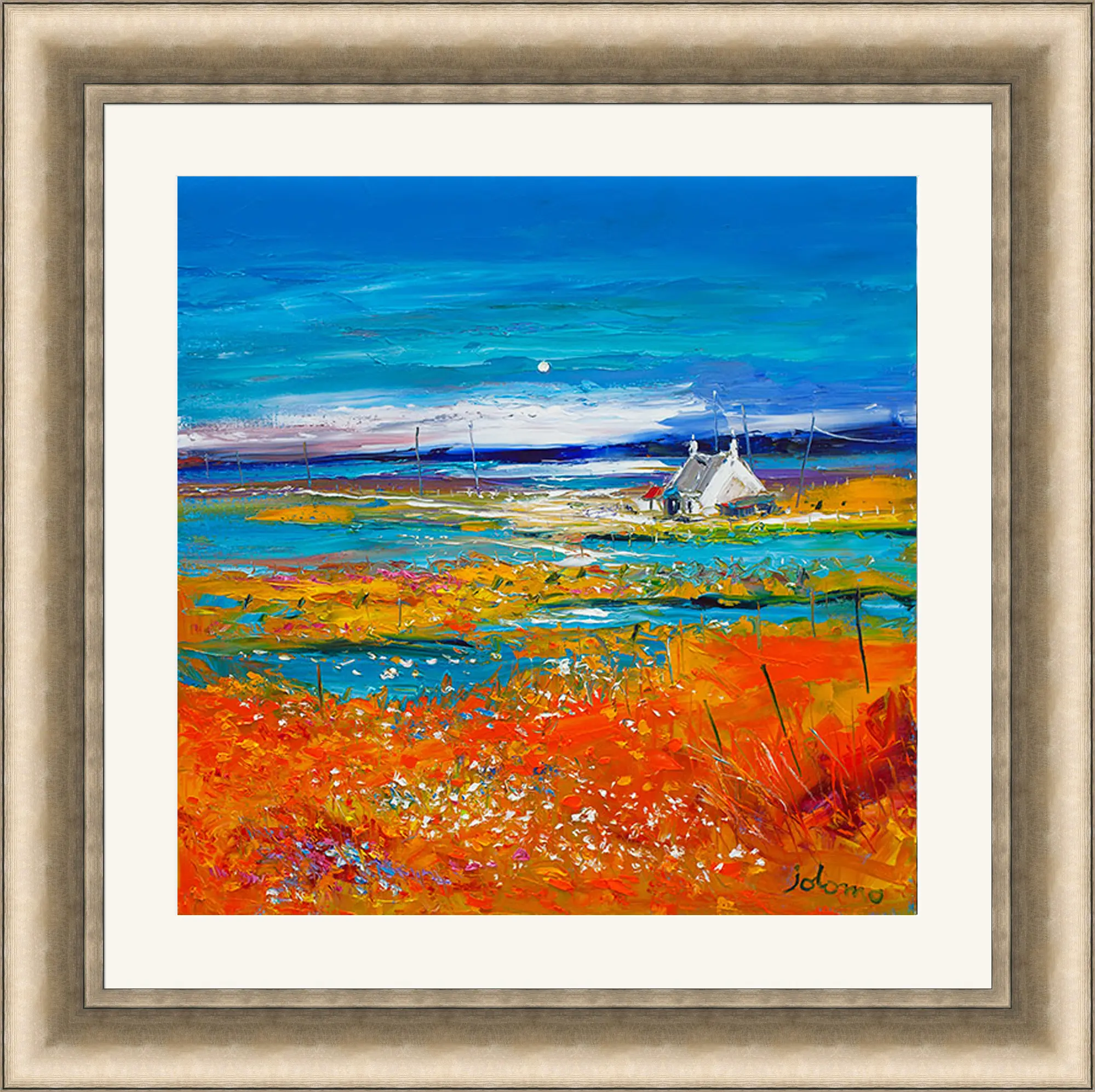
Colourful landscape painting with orange fields, a blue sky, and two small white houses by water. Impressionist style with bold brushstrokes. Framed with a beige and gold border.
A lighter-toned moulding works particularly well with the intense blues, oranges and yellows in this colourful landscape.
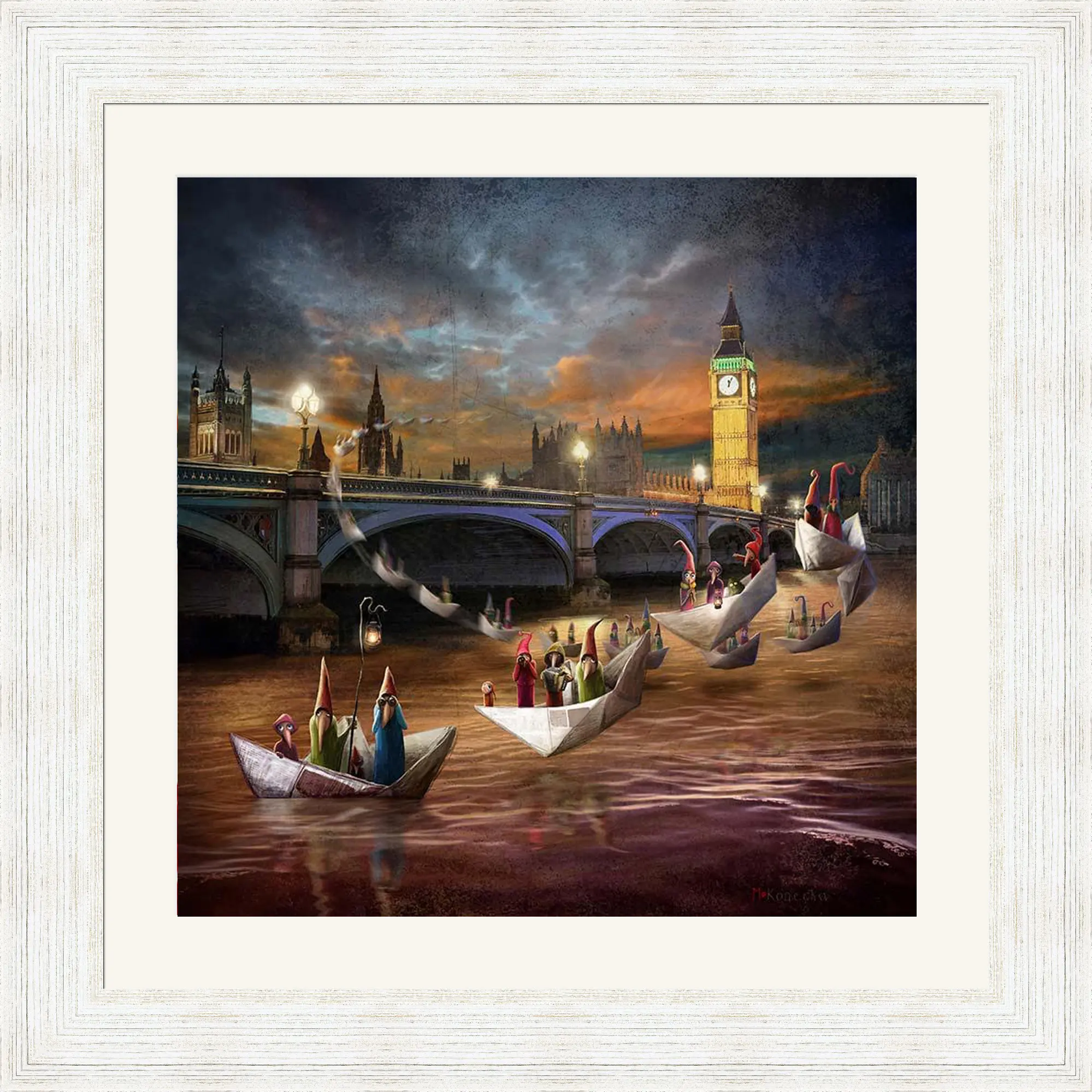
Midnight Tour London
People in paper boats float on the River Thames near Big Ben and Westminster Bridge at sunset, blending fantasy elements with a London cityscape.
The wide light-coloured frame and mount provide a strong contrast to this atmospheric London night scene.
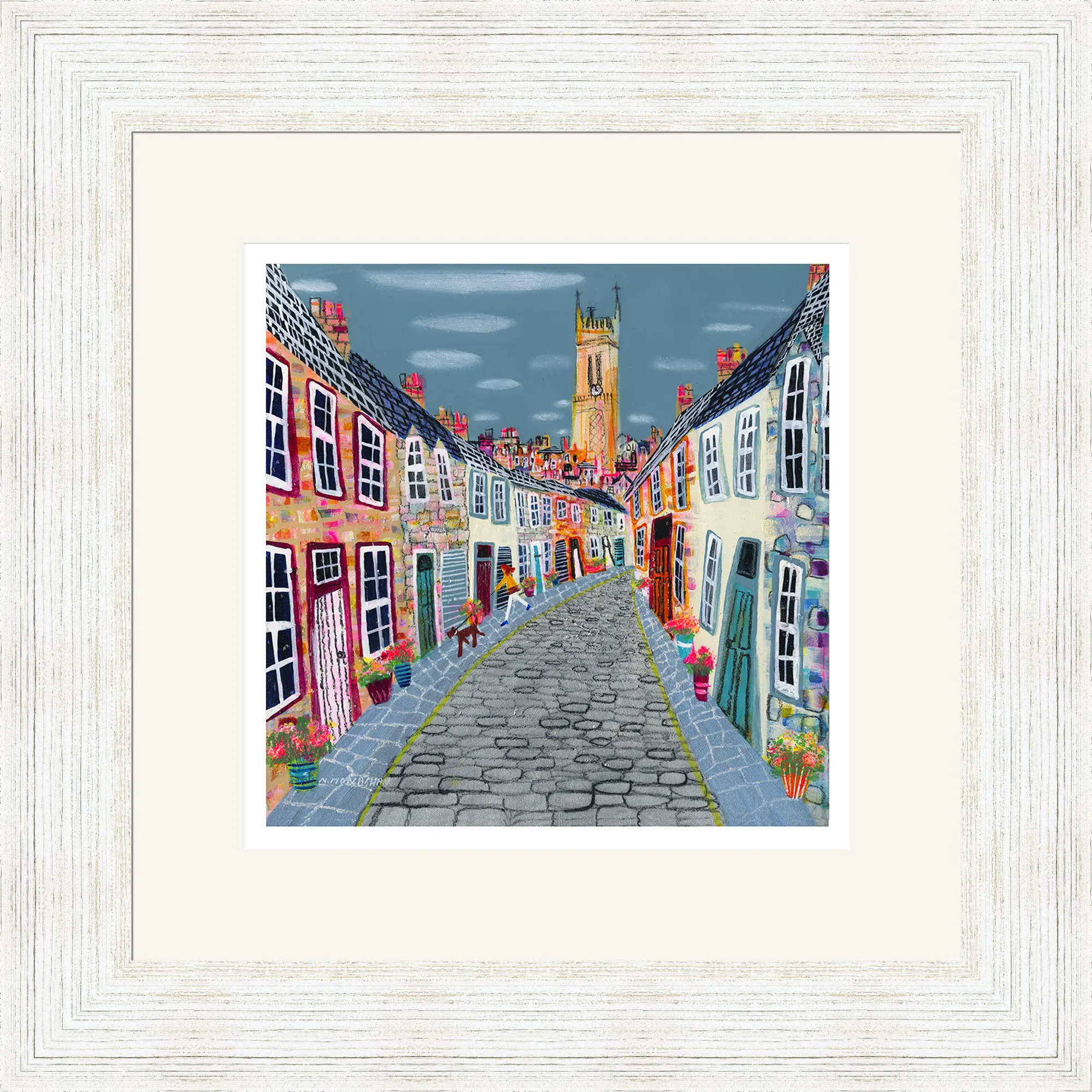
Circus Lane & Clock Tower
Colourful painting of a cobbled street lined with bright houses, flower pots, and benches, leading to a tall church tower under a cloudy sky. White wooden frame surrounds the artwork.
Another example of a wide frame giving a picture real presence, while allowing the colourful artwork itself to remain the focus.
You can see many more examples of finished artwork and framing combinations in the:
Why doesn’t every picture framer use polymer mouldings?
Working successfully with polymer mouldings requires different skills and techniques from traditional timber framing.
Although the finished frames may look very similar, polymer behaves differently when it is being cut, joined and assembled.
Depending on the moulding, a framer may need different machinery, cutting equipment or workshop settings to achieve a clean and accurate mitre. Joining also requires the correct technique to produce strong, neat corners.
At First4Frames, we also use a different type of glue specifically suited to polymer mouldings, rather than the conventional wood glue used when assembling timber frames.
Getting the combination of cutting, joining and adhesive right is particularly important with wider mouldings, where the quality and accuracy of a corner can be much more noticeable.
For a framing workshop that has traditionally worked exclusively with wood, introducing polymer mouldings can therefore mean investing in additional equipment and materials, as well as developing the practical skills and experience required to work with the material consistently.
This is one reason some picture framers choose to stay with timber.
Wood remains the conventional framing material and is an excellent choice. However, with the appropriate equipment, materials and expertise, polymer mouldings can produce strong, attractive and professionally finished frames while offering the advantages of lower weight and, in many cases, lower cost.
What about the environmental benefits?
It’s easy to assume that because a product is made from a polymer, timber must automatically be the more environmentally responsible option.
The reality deserves a little more consideration, particularly when recycled materials are involved.
According to Mainline, its Polcore mouldings are manufactured from 80–95% recycled polystyrene and are 100% recyclable. (mainlinemouldings.com)
Mainline has also published information about the lifecycle and production of Polcore. Its sustainability document states that moulding which fails its manufacturing standards is returned to the manufacturing process for reuse, while packaging includes 100% recyclable cardboard and recyclable low-density polyethylene sheets.
The same document reports a study by Hillside Environmental Services which found Polcore to be 38% more carbon efficient than an equivalent wood moulding. Mainline also states that its Polcore manufacturing sites use solar power and hydroelectric energy.
Those are Mainline’s published environmental claims and provide useful additional context when comparing the two materials.
Are there disadvantages to polymer picture frames?
As with most materials, there are advantages and disadvantages.
One consideration with polymer is repairability.
If a polymer moulding becomes badly damaged, repairing the affected section isn’t always practical. Depending on the type of damage and whether the same moulding remains available, it may be necessary to replace the complete outer frame.
Wood can sometimes offer more possibilities for repair. Depending on the finish and extent of the damage, a wooden frame may be capable of being filled, touched up, refinished or otherwise repaired.
However, it’s important to say that wooden frames aren’t always repairable either.
Serious damage, damage to a corner joint, an unusual finish or a discontinued moulding can mean that replacing a timber frame is also the most practical option.
It’s therefore something we consider alongside the many other factors when selecting an appropriate moulding.
Polymer or wood – which should you choose?
We don’t see framing as a question of polymer versus wood, with one material automatically being better than the other.
They each have their place.
There are pictures where a particular timber moulding is exactly what is required. There are other situations where a polymer moulding makes excellent practical and economic sense.
Polymer is particularly worth considering for:
Large pictures and frames
Wide or substantial mouldings
Projects where reducing overall weight is beneficial
Customers looking for the appearance of a larger frame while keeping costs under control
Projects where one of the many available polymer finishes works particularly well with the artwork
Modern polymer mouldings are available in a surprisingly broad selection of styles. Mainline’s current Polcore collection ranges from simple contemporary profiles to wood effects, metallic finishes and highly decorative traditional mouldings. (mainlinemouldings.com)
Professional picture framing from First4Frames
Ultimately, the material used to manufacture the moulding is only one part of creating a successful picture frame.
The style, proportions, mount, glazing, colour and quality of construction all need to work together with the artwork.
Our aim at First4Frames is to choose the combination that works for the individual picture. Sometimes that’s a traditional timber moulding; sometimes a polymer moulding offers exactly the appearance we want along with the practical benefits of reduced weight and cost.
And for those larger pictures and wider statement frames, those advantages can become particularly significant.
For ideas and inspiration, take a look through our online gallery to see examples of artwork professionally framed by First4Frames.
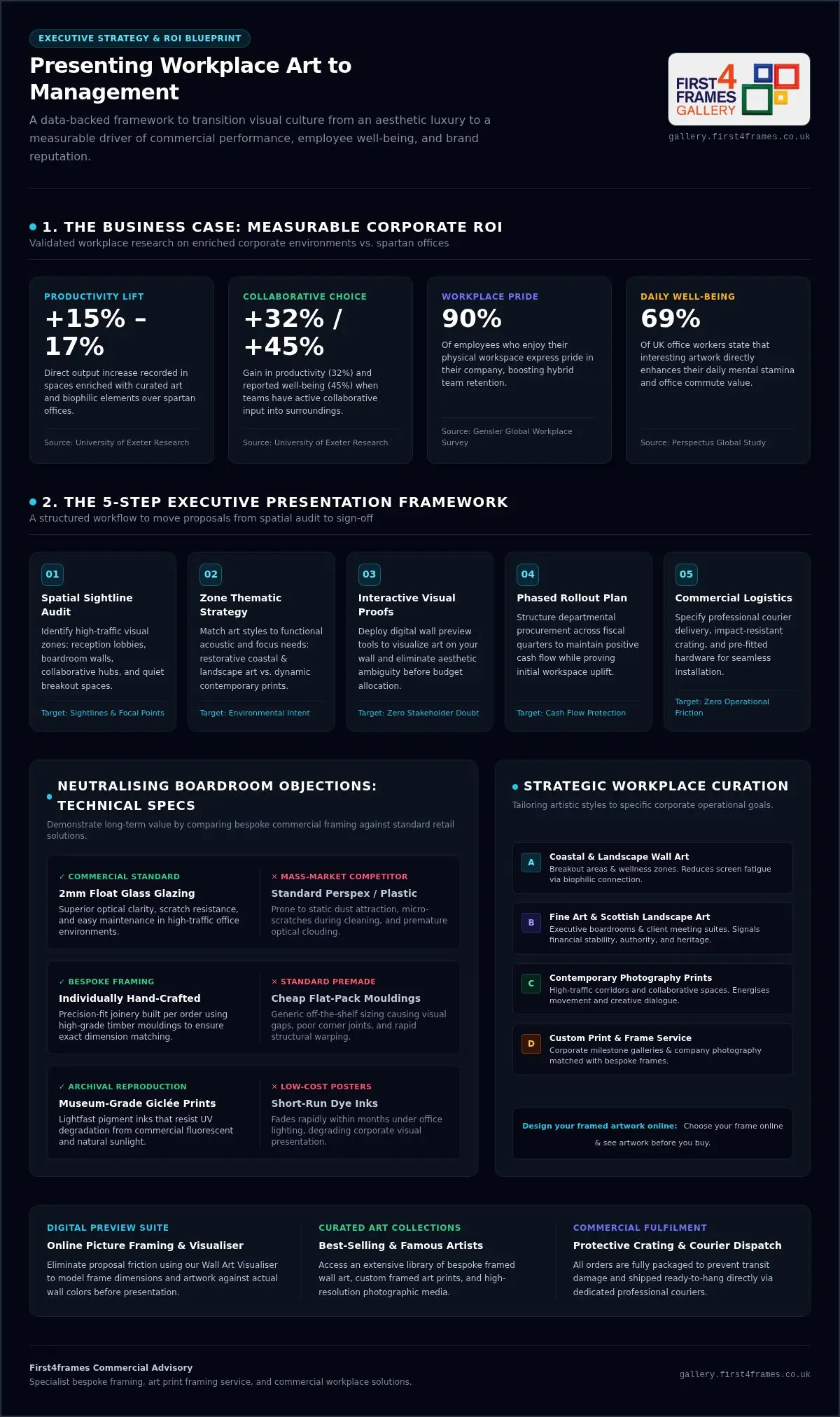
Leadership rarely rejects workplace art because they dislike inspiring surroundings; they reject proposals that treat visual culture as a frivolous aesthetic luxury. You already know that sterile, blank walls drain energy and make justifying the office commute harder for hybrid teams, but asking finance leaders for creative budgets without hard data often invites an immediate veto. Mastering how to present an office art proposal to management requires shifting the entire conversation away from subjective personal taste toward measurable commercial performance, employee well-being, and brand reputation.
This guide shows you exactly how to build an executive-ready business case that links curated workplace visuals to proven productivity gains and staff retention. You’ll discover practical ways to answer tough boardroom questions about commercial framing durability and logistics, translate aesthetic upgrades into clear commercial value, and use digital wall preview tools to secure budget sign-off with confidence.
Key Takeaways
Discover how to link curated workplace visuals directly to tangible commercial metrics, from employee retention to measurable focus and productivity gains.
Master how to present an office art proposal to management using a structured five-step framework and digital preview tools that secure confident boardroom approval.
Neutralise executive pushback regarding long-term maintenance by specifying individually crafted frames, archival Giclée prints, and scratch-resistant 2mm float glass over cheap perspex.
Eliminate operational friction by implementing phased departmental procurement plans and partnering with dedicated UK framing specialists for secure, ready-to-hang delivery.
Building the Business Case: Aligning Workplace Art with Corporate ROI
To win executive backing, you must reposition workplace visuals from an optional cosmetic expense into an active performance driver. Boardrooms evaluate capital outlays through commercial returns; understanding environmental psychology principles lets you demonstrate that enriched environments directly enhance operational output. Research from the University of Exeter reveals that employees working in spaces enriched with art and greenery are 15% to 17% more productive than those in spartan offices. When teams have collaborative input into their surroundings, productivity gains jump up to 32% alongside a 45% lift in reported well-being.
To better understand how to tailor creative proposals directly to senior leadership priorities, watch this practical guide:
Applying this commercial framing is essential when deciding how to present an office art proposal to management. According to the Gensler Global Workplace Survey, 90% of employees who enjoy their physical workspace feel proud of their company, making curated visual surroundings a tangible retention asset for hybrid teams.
Translating Visual Assets into Measurable Workplace Wellbeing
Restorative environments directly combat mental exhaustion. Incorporating biophilic themes such as coastal wall art and landscape wall art provides indirect nature connections that reduce screen fatigue. A Perspectus Global study found that 69% of UK office workers report interesting artwork directly enhances their daily well-being, turning blank communal corridors into energising spaces that justify the daily commute.
Reinforcing Corporate Identity and Client-Facing Credibility
Curated visuals establish silent authority during critical commercial negotiations. Introducing museum-grade fine art and contemporary art prints into client meeting rooms signals stability, creative ambition, and financial health. In regional offices, featuring authentic Scottish landscape art grounds corporate spaces in local heritage while elevating brand prestige through bespoke framed wall art.
How to Structure Your Proposal: The 5-Step Executive Presentation Framework
Transforming workplace walls into commercial assets requires a logical submission that leadership can review without ambiguity. Deciding how to present an office art proposal to management comes down to structuring your pitch around business clarity rather than abstract tastes. By highlighting proven productivity gains in art-enriched offices, this structured framework presents management with an accountable, boardroom-ready plan:
Step 1: Conduct a Spatial Sightline Audit: Identify high-traffic focal areas, from reception desks to primary meeting rooms.
Step 2: Establish Zone-Specific Themes: Match imagery styles directly to each department’s acoustic and focus requirements.
Step 3: Generate Interactive Visual Proofs: Deploy digital tools to eliminate stakeholder doubt before purchasing.
Step 4: Formulate a Modular Rollout: Structure procurement in phases across quarters to protect operating cash flow.
Step 5: Define Commercial Logistics: Specify professional courier dispatch, protective crating, and ready-to-hang delivery.
Conducting the Spatial Audit and Thematic Selection
Map your floor plan to separate deep-focus areas from collaborative hubs. High-energy corridors benefit from contemporary photography prints, while pairing calming coastal wall art with breakout areas creates restorative spaces that foster relaxed dialogue. If you need inspiration on balancing aesthetics with workplace functionality, explore our resource for sourcing fine art across different commercial environments.
Visualising Layouts and Demonstrating Proof of Concept
Abstract descriptions cause budget hesitation. Instead, use an intuitive digital tool to visualise art on your wall before submitting final figures to the finance director. An interactive wall art visualiser allows the executive team to see artwork before you buy, reviewing scale and moulding choices on their own meeting room walls. When you need to preview finishes or browse diverse styles, you can explore curated fine art selections to present custom framed art prints directly inside your proposal slides.
Overcoming Executive Objections: Durability, Glass Quality, and Budget Allocation
Executive hesitation usually boils down to two sharp questions: will these pieces degrade in eighteen months, and why shouldn’t the company buy cheap frames off the shelf? Knowing how to present an office art proposal to management means dismantling these objections before they stall your project. Demonstrating how art in the office boosts staff productivity justifies initial spend, but proving physical longevity protects the budget. Phasing rollout milestones across quarterly schedules also neutralises cash-flow anxiety.
The Glazing Factor: Why 2mm Float Glass Outperforms Standard Perspex
Facilities managers care deeply about maintenance lifecycles. Mass-market suppliers rely on cheap perspex, which bows across wider apertures, attracts static dust, and clouds from routine chemical cleaning. Specifying genuine 2mm float glass guarantees distortion-free optical clarity and superior scratch resistance that withstands daily office upkeep. Review our expert guide on custom picture framing to understand how commercial glazing preserves visual assets over decades.
Safeguarding Company Capital with Archival Framing Standards
Unlike off-the-shelf retail frames that warp under commercial climate control, individually crafted timber mouldings seal archival Giclée fine art prints against light exposure and humidity shifts. Choosing ready-to-hang framed art eliminates expensive on-site handyman coordination, ensuring seamless transitions from parcel arrival to wall mounting. Read our guide on selecting picture frames to evaluate structural build criteria. To finalise your hardware specifications and budget tiers, browse our full commercial gallery collection for contract-grade finishes.
Executing the Rollout: Procurement, Secure Logistics, and Seamless Installation
A bulletproof operational plan eliminates the logistical anxiety that often stalls boardroom sign-off. When resolving how to present an office art proposal to management, demonstrating that procurement and hanging won’t disrupt daily office operations is essential. Partnering with commercial artwork curation specialists provides single-point accountability. This replaces disparate framing shops and unvetted handlers with a dependable, end-to-end UK manufacturing workflow.
Selecting Works from Established and Contemporary Artists
Balancing visual tone across different business zones builds broader executive consensus. Curate statement fine art pieces alongside recognisable works from famous artists and best-selling artists in client hubs, while using atmospheric photography prints to enliven transition corridors. For corporate brand culture, an integrated print and frame service allows you to turn high-resolution digital event photography and brand milestones into sharp, archival gallery displays.
Streamlining Board Sign-Off and Ordering with Digital Tools
Modern digital ordering removes friction from the final purchasing sign-off. Utilizing online picture framing workflows allows teams to choose your frame online, test proportions, and design your framed artwork to fit corporate brand standards before committing funds. You can explore curated artwork collections at First4Frames Gallery to finalise your proposal deck with exact specifications. Finished orders of bespoke framed wall art arrive fully packaged in protective transit materials and shipped via professional couriers. This reliable art print framing service ensures every frame arrives in ready-to-hang condition, enabling effortless handover to facilities personnel.
Secure Boardroom Approval and Elevate Your Workplace
Presenting a compelling case to leadership isn’t about defending artistic taste; it’s about validating commercial value. When you master how to present an office art proposal to management, you transform bare partition walls into measurable investments in staff well-being, retention, and corporate prestige. By pairing performance metrics with durable specifications, such as genuine 2mm float glass glazing over cloudy perspex, you neutralise operational doubt before the board votes.
Backed by over two decades of bespoke framing expertise in Falkirk, Scotland, our workshop builds individually crafted displays designed to endure. Every piece arrives fully packaged for secure UK-wide courier delivery, eliminating installation headaches for facilities teams. Take the next step: explore our curated collections and visualise ready-to-hang art at First4Frames Gallery today. You’ll give your leadership team an executive-ready vision they can sign off with complete confidence.
Frequently Asked Questions
Why should executive management invest in professional office art instead of leaving walls bare?
Bare walls foster an uninspiring, transactional atmosphere that discourages hybrid staff from returning to the workplace. Professional office art actively boosts cognitive engagement, softens harsh commercial architecture, and signals stability to visiting clients. Investing in bespoke framed wall art creates a sense of collective identity, directly aligning physical workspace quality with talent retention while demonstrating to leadership that visual standards reflect commercial ambition.
How do I estimate an office art proposal budget without knowing exact framing costs upfront?
Build your initial expenditure forecast around modular spatial zones rather than individual piece pricing. When structuring how to present an office art proposal to management, group locations into tiers, such as client-facing boardrooms, collaborative breakout hubs, and functional corridors. Partnering with a dedicated commercial framing specialist allows you to request phased project estimates based on confirmed wall dimensions, keeping preliminary forecasts realistic before presenting to leadership.
What is the advantage of 2mm float glass over perspex acrylic for commercial office framing?
Genuine 2mm float glass delivers superior optical clarity, staying perfectly flat across the artwork without the bowing or wave distortion common to perspex acrylic. In commercial offices, standard perspex attracts static dust and clouds quickly under abrasive daily cleaning sprays. Float glass resists routine maintenance scratches, maintains true colour rendition over decades, and ensures contract art installations retain their professional, hand-crafted appeal without requiring frequent reglazing.
How can our proposal demonstrate what the framed artwork will look like before buying?
Digital visualisation tools bridge the gap between design concepts and boardroom approval. By uploading actual photographs of your company’s boardrooms or reception areas into an interactive wall art visualiser, you can test specific moulding profiles, mount widths, and print dimensions directly in situ. This enables management to see artwork before you buy, eliminating aesthetic guesswork and giving stakeholders clear visual proof of concept before signing off purchase orders.
How does ready-to-hang framed art minimize commercial installation downtime and disruption?
Specifying ready-to-hang framed art ensures pieces arrive completely assembled with pre-fitted heavy-duty hardware, individually tailored mouldings, and secure backing. Facilities teams avoid sourcing brackets, measuring glass, or hiring specialised joiners during standard business hours. When learning how to present an office art proposal to management, highlighting that deliveries arrive safely packaged via professional couriers reassures directors that installation requires minimal internal labour and causes zero disruption to active operations.
Seville wall art for a home office can keep the imaginative energy of travel present during an ordinary working day. Lost in Seville by Fred Carson suggests experience and place without behaving like a literal souvenir. That makes it useful for a study used for creative or focused work.
Choose the sightline for Seville wall art in a home office
Behind the desk
This position can create a distinctive video-call background. Leave blank wall around the frame so the composition remains readable on screen, and check that the camera does not crop it awkwardly.
Opposite the desk
Here the artwork becomes a place for the eye to rest between tasks. It can introduce a sense of distance that a screen, noticeboard, or shelf cannot provide.
Beside a reading chair
In a larger study, use the print to distinguish a thinking corner from the workstation. Repeat a single colour in a notebook or textile rather than collecting travel memorabilia around it.
Atmosphere and nuanced colour rely on accurate production. First 4 Frames uses colour-managed Giclée printing, then hand-finishes the bespoke frame in Falkirk for a confident professional presentation.
As Seville wall art for a home office, Lost in Seville keeps curiosity and travel close to the working day without allowing the room to become cluttered or themed.
Sunny wall art for a north-facing kitchen can make cool, steady daylight feel more welcoming without demanding a complete colour change. Here Comes the Sun by David Short supplies an optimistic focal point. The room can stay practical while the artwork contributes warmth.
Position sunny wall art for a north-facing kitchen safely
Choose the dry wall
Keep framed art away from direct steam, splashes, and heat. A breakfast corner, wall beyond the preparation zone, or space above a sideboard is usually more suitable than beside a hob or sink.
North-facing light can make whites and greys appear cooler. Warmth from the picture feels deliberate if repeated sparingly in a fruit bowl, chair seat, or ceramic. Painting every surface yellow would weaken the contrast that gives the artwork impact.
Test morning and evening views
Observe the position before breakfast and under evening lamps. The best location remains visible from the table but stays outside the busiest cooking route. Keep pendant reflections away from the glazing.
Use washable wall finishes around the frame.
Leave space above furniture.
Choose one confident size instead of several tiny prints.
Warm colour needs clean reproduction under cool daylight. Colour-managed Giclée printing and a hand-finished bespoke frame keep the image crisp, balanced, and polished.
As sunny wall art for a north-facing kitchen, Here Comes the Sun adds warmth and optimism to the daily view while the wider room remains calm and functional.